

Quick answer: Avulsion Fracture Ankle is a common foot/ankle topic that affects many patients. The 2026 evidence-based approach combines proper diagnosis, conservative-first treatment, and escalation only when needed. We treat this regularly at our Howell and Bloomfield Township practices. Call (810) 206-1402.
Medically reviewed by Dr. Tom Biernacki, DPM
Board-certified podiatric surgeon | Balance Foot & Ankle
Last reviewed: May 2026
The most important clinical decision with Avulsion Fracture Ankle isn’t which treatment to start with — it’s identifying the correct subtype. That changes everything. Call (810) 206-1402.
When “Just a Sprain” Is Actually a Fracture
You rolled your ankle, it swelled up immediately, and everyone assumed it was a sprain — including, perhaps, the emergency room. But a few weeks later the pain isn’t improving, and an X-ray finally shows a small chip of bone detached near the outer ankle. That’s an avulsion fracture, and it’s more common than most people realize. In my practice, I see avulsion fractures that were initially misdiagnosed as simple sprains all the time — often because the initial X-ray was read quickly without weight-bearing views, or because the fracture fragment was subtle and easily missed.

An avulsion fracture occurs when the force on a ligament or tendon during an injury exceeds the bone’s tensile strength at the attachment site — causing a fragment to be “avulsed” (pulled away) rather than the soft tissue to tear. It’s a spectrum with ankle sprains: in some injuries, only the ligament tears; in others, the bone gives way first. The injury mechanism is the same; the tissue that fails is different.
Common Locations for Ankle Avulsion Fractures
The most common ankle avulsion fracture sites each have distinct clinical characteristics. The lateral malleolus (fibula tip) avulsion — from the anterior talofibular ligament (ATFL) or calcaneofibular ligament (CFL) — is the most common, occurring with inversion injuries. The base of the 5th metatarsal is a classic avulsion site where the peroneus brevis tendon pulls off during a forced inversion; this is often called a “dancer’s fracture” and is frequently mistaken for a lateral ankle sprain. The anterior process of the calcaneus is avulsed by the bifurcate ligament in midfoot inversion injuries — characteristically missed on standard ankle X-rays and requiring specific oblique foot views. The posterior process of the talus can be avulsed by the posterior talofibular ligament. Knowing which site is involved guides immobilization type and duration.
Diagnosis: Why X-Ray Alone Isn’t Always Enough
Standard non-weight-bearing X-rays miss a meaningful proportion of avulsion fractures — particularly at the anterior calcaneal process, the talar dome (osteochondral), and small tip fractures at the fibula. Weight-bearing X-rays improve detection by revealing fracture displacement under load. CT scan provides definitive fracture mapping — fragment size, displacement, and articular involvement — and is particularly important before any consideration of surgery. MRI is valuable when clinical suspicion is high but X-rays are negative; it reveals bone marrow edema at the fracture site (visible as bright signal on STIR sequences) and simultaneously evaluates the attached ligament. The Ottawa Ankle Rules are a validated clinical tool for determining who needs X-rays after an ankle injury — they have high sensitivity for significant fractures but were designed to reduce unnecessary imaging, not to definitively diagnose avulsion fractures.
Key takeaway: If your ankle “sprain” isn’t improving at the expected rate — still significantly swollen and painful at 3–4 weeks — a repeat evaluation with weight-bearing X-rays and possible CT or MRI is warranted. Missed avulsion fractures can go on to non-union, causing chronic pain and instability.
Conservative Treatment
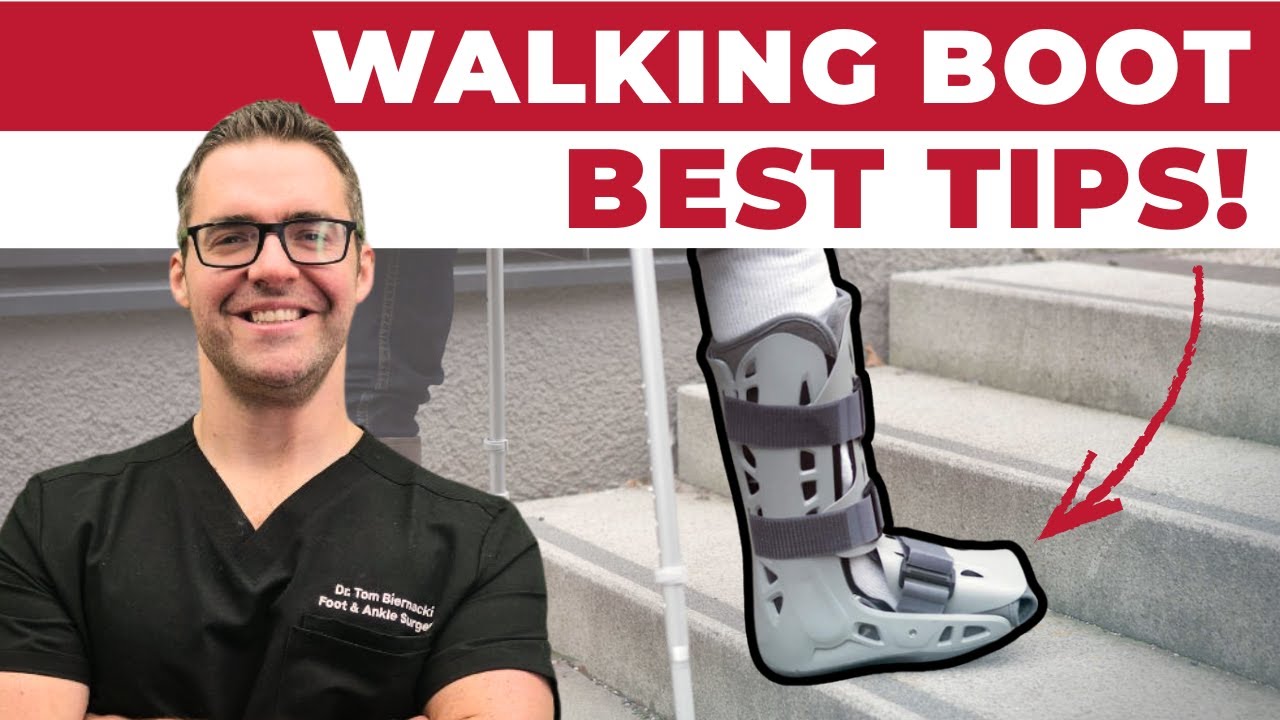
The vast majority of ankle avulsion fractures heal successfully with conservative management. Treatment depends on fragment size and displacement. For small, non-displaced or minimally displaced fragments (the majority), a short-leg walking boot for 4–6 weeks provides adequate immobilization while allowing weight-bearing. This protects the fracture site while maintaining muscle activity and preventing the aggressive deconditioning associated with non-weight-bearing casts. Ice and elevation for the first 48–72 hours reduce acute swelling. NSAIDs provide pain relief and reduce inflammation (short-term use; long-term NSAID use may impair bone healing). Physical therapy begins once acute pain settles — typically around week 3–4 — focusing on range of motion, peroneal and ankle stabilizer strengthening, proprioception training, and gradual return to activity. 5th metatarsal base avulsion fractures follow the same protocol and heal reliably in 6–8 weeks with boot immobilization; non-union is uncommon with proper treatment.
When Surgery Is Needed
Surgery for ankle avulsion fractures is uncommon but indicated in specific situations. Large fragments (typically >1 cm) that involve articular surface or attachment of critical ligaments may require open reduction and internal fixation (ORIF) to restore joint congruity and ligament mechanics. Significantly displaced fragments that are not in acceptable position for healing warrant surgical reduction and fixation. Non-union — failure of the fragment to heal after 3–4 months of conservative treatment — may require surgical excision of the fragment with ligament reattachment via suture anchors, or delayed ORIF if the fragment is large enough. In practice, I recommend surgical consultation for any avulsion fracture with articular involvement, displacement >2–3 mm, or fragment size >1 cm.
Return to Sport Timeline
Return to sport after ankle avulsion fracture follows a graduated protocol. Radiographic evidence of healing (visible callus or fragment union) typically appears at 6–8 weeks for most locations. Clinical milestones — full range of motion, no tenderness at the fracture site, normalized strength and single-leg balance — should be met before advancing. Low-impact activity (swimming, cycling) resumes at 4–6 weeks for most fractures. Jogging begins at 8–10 weeks when gait is normalized and strength is symmetric. Sport-specific drills at 10–12 weeks. Full return to contact sport or cutting activities at 3–4 months. These timelines assume uncomplicated healing — delayed union or large fragments that required extended immobilization extend the return-to-sport window proportionally.
⚠️ See a podiatrist if you have:
- Ankle or foot injury that is still significantly painful and swollen after 2–3 weeks of rest
- Pain specifically at the base of the 5th metatarsal (outer midfoot) after an ankle sprain — often an avulsion fracture
- Ankle pain that returns after initially improving — possible non-union or instability from missed fracture
- Any ankle injury in a child or adolescent — growth plate injuries can mimic avulsion fractures and require specific management
Frequently Asked Questions
How do I know if my ankle pain is a sprain or fracture?
Clinically, sprains and avulsion fractures can feel identical — both cause swelling, bruising, and pain with weight-bearing. The Ottawa Ankle Rules help identify who needs X-rays: if there is point tenderness at the posterior edge of either malleolus, the base of the 5th metatarsal, or the navicular, and/or inability to weight-bear for 4 steps, imaging is indicated. Only X-rays (and sometimes CT or MRI) definitively distinguish the two.
Can I walk on an ankle avulsion fracture?
Most small, non-displaced avulsion fractures allow protected weight-bearing in a walking boot from the start of treatment. Your podiatrist will confirm whether your specific fracture is appropriate for weight-bearing based on its location, size, and displacement. Do not return to walking without proper immobilization.
The Bottom Line
Ankle avulsion fractures are common injuries that are frequently mistaken for simple sprains. Most heal well with boot immobilization and physical therapy, with full return to sport at 3–4 months. The key is proper diagnosis — weight-bearing X-rays or advanced imaging when initial films are negative but pain persists. If you’ve had an ankle injury that isn’t improving as expected, a podiatric evaluation will confirm whether a missed fracture is part of the picture.
Sources
- Stiell IG, et al. A study to develop clinical decision rules for the use of radiography in acute ankle injuries. Ann Emerg Med. 1992;21(4):384-390.
- Polzer H, et al. Diagnosis and treatment of acute ankle injuries. EFORT Open Rev. 2019;4(8):455-469.
- van Dijk CN. Management of the sprained ankle. Br J Sports Med. 2002;36(2):83-84.
- Malliaropoulos N, et al. Lateral ankle sprains and avulsion fractures. Br J Sports Med. 2009;43(12):1026-1028.
🩺 Dr. Tom’s Recommended Products
As an Amazon Associate I earn from qualifying purchases. These are products I personally use and recommend to patients.
The OTC orthotic I recommend most. Sub-$50 before custom orthotics.
View on Amazon →
Natural menthol + arnica topical. FSA-eligible — what I switched my family to from Doctor Hoy’s Natural Pain Relief Gel.
View on Amazon →
Ankle Injury That Won’t Heal? Get It Properly Diagnosed.
Same-day appointments available in Howell & Bloomfield Township, MI
4.9★ | 1,123 Reviews | 3,000+ Surgeries
Or call: (810) 206-1402
What is Stress fracture?
Stress fracture is a common foot/ankle condition that affects mobility and quality of life. Understanding the underlying cause is the first step in successful treatment. Our podiatrists at Balance Foot & Ankle perform a hands-on biomechanical exam, review your activity history, and use diagnostic imaging when appropriate to identify the root cause—not just treat the symptom. Many patients have been told to “rest and ice” without a deeper diagnostic workup; our approach is different.
Symptoms and warning signs
Common signs of stress fracture include pain that worsens with activity, morning stiffness, swelling, tenderness when palpated, and difficulty bearing weight. If you experience sudden severe pain, inability to walk, visible deformity, numbness or color change, contact our office the same day or visit urgent care—these can signal a more serious injury such as a fracture, tendon rupture, or vascular compromise. Diabetics with any foot wound should seek same-day care.
Conservative treatment options
Most cases of stress fracture respond to non-surgical care: structured rest, supportive footwear changes, custom orthotics, targeted stretching and strengthening protocols, anti-inflammatory medications when medically appropriate, and in-office procedures such as ultrasound-guided injections. We also offer advanced therapies including MLS laser therapy, EPAT/shockwave, regenerative injections, and image-guided procedures. Treatment is sequenced from least invasive to most invasive, and we explain the rationale at every step.
When is surgery considered?
Surgery is reserved for cases that fail 3-6 months of well-structured conservative care, when there is structural pathology (severe deformity, complete tear, advanced arthritis), or when imaging shows damage that will not heal without intervention. Our surgeons have performed 3,000+ foot and ankle procedures and prioritize minimally-invasive techniques whenever appropriate. We discuss recovery timelines, return-to-activity milestones, and realistic outcome expectations before any procedure is scheduled.
Recovery timeline and prevention
Recovery from stress fracture varies based on severity and chosen treatment path. Conservative cases often improve within 4-8 weeks with consistent adherence to the protocol. Post-procedural recovery may range from a few days (in-office procedures) to several months (reconstructive surgery). Long-term prevention involves footwear assessment, activity modification, structured strengthening, and regular check-ins with your podiatrist if you have a history of recurrence. We provide written home-exercise plans and digital follow-up support.
Ready to feel better?
Same-week appointments available in Howell and Bloomfield Township, Michigan.
Book Your VisitAAOS OrthoInfo: Avulsion Fracture of the Ankle
In-Office Treatment at Balance Foot & Ankle
If home treatment isn’t providing relief for your foot and ankle conditions, our podiatry team at Balance Foot & Ankle can help with same-day evaluations and advanced in-office care.
Same-day appointments available. (810) 206-1402

Dr. Tom Biernacki, DPM is a board-certified foot & ankle surgeon (ABFAS & ABPM) at Balance Foot & Ankle Specialists in Southeast Michigan. With over a decade of clinical experience, he specializes in heel pain, bunions, diabetic foot care, sports injuries, and minimally invasive surgery. Dr. Biernacki is a member of the APMA and ACFAS, and his patient education content on MichiganFootDoctors.com and YouTube has made him one of the most-followed foot & ankle educators on YouTube.