

Quick answer: Treatment for hyperhidrosis sweaty feet treatment michigan follows a stepwise approach: 1) conservative care first (rest, ice, supportive footwear, OTC anti-inflammatories), 2) physical therapy and targeted exercises, 3) in-office treatments (injections, custom orthotics) if conservative fails at 4-6 weeks, 4) surgery for refractory cases. Most patients resolve at step 1 or 2. Call (810) 206-1402.
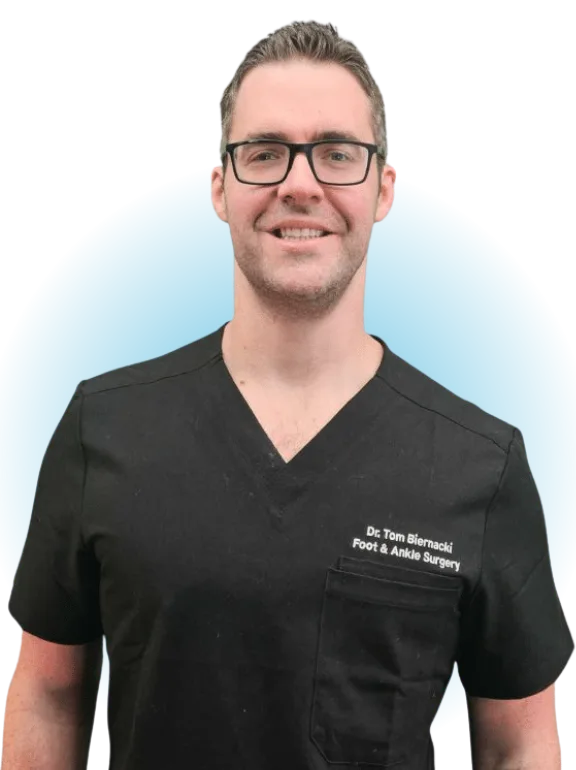
Medically reviewed by Dr. Tom Biernacki, DPM · Board-Certified Podiatric Surgeon · Last reviewed: April 2026 · Editorial Policy
Quick Answer
Hyperhidrosis of the Feet: Causes, Treatment & Complica relates to foot pain — typically caused by overuse, footwear, or biomechanics. Most patients improve in 6-12 weeks with conservative care. Appointments in Howell + Bloomfield Township: (810) 206-1402.
Medically reviewed by Dr. Tom Biernacki, DPM — Board-Certified Podiatric Surgeon — Balance Foot & Ankle, Howell & Bloomfield Township, MI. Last updated April 2026.
▶ Watch
Medically Reviewed by Dr. Tom Biernacki, DPM — Board-Certified Podiatrist, Balance Foot & Ankle Specialists, Michigan. Last updated April 2026.
Hyperhidrosis of the Feet: Causes, Treatment & Complications in Michigan
Medically reviewed by Dr. Tom Biernacki, DPM — Balance Foot & Ankle, Howell & Bloomfield Township, MI
What Is Plantar Hyperhidrosis?
Plantar hyperhidrosis is excessive, uncontrollable sweating of the feet that exceeds the body’s thermoregulatory needs. The plantar surface has the highest eccrine sweat gland density in the body — approximately 620 glands per cm² — and when these glands overproduce sweat in response to emotional stress, activity, or idiopathic autonomic dysfunction, the result is chronically wet, macerated feet with significant secondary complications. Primary focal hyperhidrosis (affecting feet, palms, and/or axillae without an underlying systemic cause) affects approximately 3–5% of the population and typically begins in adolescence or young adulthood. In our Howell and Bloomfield Township clinics, plantar hyperhidrosis is significant because it is both directly uncomfortable and a major driver of secondary conditions including athlete’s foot, plantar warts, porokeratosis, fungal toenails, and skin maceration — a cluster of conditions that recur repeatedly until the sweating itself is addressed.
Complications Directly Caused by Plantar Hyperhidrosis
Excessive foot moisture creates the ideal environment for fungal and bacterial overgrowth. Tinea pedis (athlete’s foot) is significantly more common and more recurrent in hyperhidrotic patients — treating the fungal infection without addressing the sweating results in rapid relapse. Toenail fungus similarly recurs because the moist shoe environment allows dermatophytes to reinfect treated nails. Plantar warts spread more readily in macerated skin. Porokeratosis plantaris discreta (keratotic plantar lesions from eccrine pore occlusion) is directly linked to hyperhidrosis. Bromodosis (foot odor) results from bacterial decomposition of sweat compounds — specifically isovaleric acid produced by Staphylococcus epidermidis and Brevibacterium species. Social and occupational impact is significant — hyperhidrotic patients often avoid barefoot situations, swimming, and close footwear entirely.
First-Line Treatment: Topical Antiperspirants
Aluminum chloride formulations (20% aluminum chloride hexahydrate in anhydrous ethanol — Drysol, Certain Dri) are the evidence-based first-line treatment for plantar hyperhidrosis. Protocol: apply to dry plantar skin at bedtime (moisture inactivates the aluminum chloride), cover with plastic wrap or cotton socks, wash off in the morning. Repeat nightly until sweating is controlled (typically 2–4 nights), then maintain with 1–2 applications per week. Mechanism: aluminum chloride physically occludes the eccrine duct openings, reducing sweat output at the skin surface. Efficacy: 60–80% of mild-to-moderate cases respond adequately to aluminum chloride alone. Skin irritation from the ethanol vehicle is the most common side effect — allow feet to dry completely before application and use a topical hydrocortisone cream for irritated skin.
Second-Line Treatment: Iontophoresis
Iontophoresis uses a low electrical current passed through water in which the feet are immersed to temporarily disrupt eccrine sweat gland function. It is the most evidence-backed treatment for plantar hyperhidrosis after topical antiperspirants fail. Protocol: 20–30 minute sessions, 3–4 times per week for 2–3 weeks until sweating is controlled, then maintenance sessions every 1–3 weeks. Home iontophoresis devices (Hidrex, Fischer MD-1a) are available for purchase (approximately $400–700) with a prescription. The mechanism is not fully elucidated but appears to involve eccrine duct plugging from mineral deposits and alteration of sweat gland ion transport. Response rate: 70–90% of primary focal hyperhidrosis cases. Contraindicated with cardiac pacemakers and metal implants in the treatment area.
Advanced Options: Botulinum Toxin and Sympathectomy
Botulinum toxin A (Botox) injection into the plantar skin blocks acetylcholine release at the eccrine neuroeffector junction, stopping sweat production in injected areas for 6–9 months per treatment cycle. Plantar injections require local anesthesia (nerve blocks or topical-then-injection combination) because the plantar skin is highly sensitive. Results are excellent — 90%+ reduction in sweating with onset at 2 weeks. Cost is the limiting factor: plantar Botox is not typically covered by insurance, with treatment costs of $500–1,500 per session. Endoscopic thoracic sympathectomy (ETS) — surgical division of the thoracic sympathetic chain — produces permanent resolution of plantar and palmar hyperhidrosis in over 90% of cases but carries the significant risk of compensatory hyperhidrosis (profuse sweating of the trunk and groin that can be more disabling than the original condition in 30–50% of patients). ETS is reserved for truly refractory cases after all other options have been exhausted.
Daily Foot Care for Hyperhidrosis Patients
Moisture management between treatments: moisture-wicking socks changed at midday (copper-infused or merino wool — absorb moisture better than cotton or synthetic blends), rotating footwear every 48 hours to allow complete drying, antifungal powder applied inside shoes daily (not just on feet), open-toed sandals when practical. Foot hygiene: wash feet twice daily with antibacterial soap, dry thoroughly between toes with a separate towel or hair dryer on cool setting. For bromodosis: sodium bicarbonate foot soak (baking soda in warm water) reduces bacterial load and odor transiently.
Hyperhidrosis Treatment at Balance Foot & Ankle Michigan
Dr. Tom Biernacki evaluates and treats plantar hyperhidrosis and its secondary complications at Howell and Bloomfield Township offices. Prescription aluminum chloride, iontophoresis prescription, and Botox consultation are available. Book online 24/7. Book online or call (810) 206-1402.
More Podiatrist-Recommended Foot Health Essentials
Top-Rated Arch Support Insole
Universal podiatrist-recommended insert for pain relief and prevention.
Foot Massage Ball
Daily 3-minute roll reduces most forms of foot and heel pain.
Moisture-Wicking Sock
Prevents fungus, blisters, and odor — the basics matter.
As an Amazon Associate, Balance Foot & Ankle earns from qualifying purchases. Product recommendations are based on clinical experience; prices and availability shown above update live from Amazon.
When to See a Podiatrist
If foot or ankle pain has been bothering you for more than a few weeks, home care alone may not be enough. Balance Foot & Ankle offers online booking 24/7 at our Howell and Bloomfield Township clinics — no referral needed in most cases. Bring your current shoes and a short list of symptoms and we’ll build you a treatment plan in one visit.
Call Balance Foot & Ankle: (810) 206-1402 · Book online · Offices in Howell & Bloomfield Township
Frequently Asked Questions — Sweaty Feet
What is the best treatment for extremely sweaty feet?
The evidence-based progression for plantar hyperhidrosis treatment: start with 20% aluminum chloride (Drysol) applied to dry plantar skin nightly for 2–4 nights, then 1–2 times per week for maintenance — effective for 60–80% of mild-to-moderate cases. If aluminum chloride fails, iontophoresis (low-current water bath treatment, 3–4 sessions per week for 2–3 weeks, then maintenance) achieves 70–90% response. Botulinum toxin injection provides excellent results (90%+ reduction) lasting 6–9 months for cases where iontophoresis is insufficient. Call (810) 206-1402 for a consultation to determine the right treatment level for your severity.
Can sweaty feet cause toenail fungus?
Yes — plantar hyperhidrosis is a significant risk factor for toenail fungus because the persistently moist shoe environment provides ideal conditions for dermatophyte growth. Patients with hyperhidrosis have significantly higher rates of recurrent toenail fungus and athlete’s foot. Treating toenail fungus without addressing the sweating leads to rapid reinfection. The most effective approach for hyperhidrotic patients with nail fungus is concurrent treatment: antifungal for the nails (topical or oral) plus antiperspirant treatment for the sweating plus antifungal powder in footwear.
Does insurance cover hyperhidrosis treatment for feet in Michigan?
Prescription aluminum chloride is covered by most plans with a podiatry prescription. Iontophoresis devices may be covered with prior authorization for severe hyperhidrosis — documentation of treatment failure with topical antiperspirants is typically required. Botulinum toxin for plantar hyperhidrosis has variable coverage — some BCBS and Aetna plans cover it for severe documented cases, others do not. Balance Foot & Ankle handles prior authorization attempts for all treatments. Call (810) 206-1402 to discuss coverage.
Join 950,000+ Learning About Foot Health
Dr. Tom shares honest medical advice, supplement reviews, and treatment guides you won’t find anywhere else.
Subscribe on YouTube →📍 Located in Michigan?
Our board-certified podiatrists treat this condition at two convenient locations. Book online 24/7 at either office.
Insurance Accepted
BCBS · Medicare · Aetna · Cigna · United Healthcare · HAP · Priority Health · Humana · View All →
Howell Office
4330 E Grand River Ave
Howell, MI 48843
Get Directions →
Bloomfield Township Office
43494 Woodward Ave, #208
Bloomfield Township, MI 48302
Get Directions →
Pros & Cons of Conservative Care for foot care
Advantages
- ✓ Conservative care first
- ✓ Book online 24/7
- ✓ Multiple insurance accepted
Considerations
- ✗ Self-treatment can mask issues
- ✗ See a podiatrist if pain >2 weeks
Dr. Tom’s Recommended Products for foot care
Affiliate disclosure: As an Amazon Associate, Balance Foot & Ankle earns from qualifying purchases. We only recommend products we use with patients.
Footnanny Heel Cream Dr. Tom’s Pick
Best for: Daily moisturizer for cracked heels
Ready to Get Back on Your Feet?
Appointments in Howell + Bloomfield Township. Most insurance accepted. Dr. Tom Biernacki, DPM & team.
Call Now: (810) 206-1402
Visit Balance Foot & Ankle — Online Booking 24/7
Our podiatry team serves patients throughout Michigan including Howell, Brighton, and Bloomfield Township. If you’re dealing with heel pain, ingrown toenails, or a foot injury, you can book online 24/7.
Book online 24/7. (810) 206-1402
VitaMedica Arnica Gel
Arnica gel plus 15 plant compounds for sore feet, plantar fasciitis flares and post-activity soreness. Apply a thin layer to the sore area.
Shop VitaMedica Arnica Gel →Frequently Asked Questions
How long does treatment take to work?
Most patients see improvement in 4-8 weeks with consistent conservative care. Persistent symptoms after 8 weeks need imaging and escalation.
When is surgery needed?
Surgery is reserved for cases that fail 3-6 months of conservative care, structural deformities, or fractures requiring stabilization.
Is this covered by insurance?
Most diagnostic visits and conservative treatments are covered by Medicare and major insurers. Custom orthotics often require diabetic or post-surgical justification.
Our podiatrists treat the underlying cause, not just the symptom. Appointments at our Howell and Bloomfield Township, Michigan offices.
Ready for Expert Care?
Appointments in Howell & Bloomfield Township, MI.
4.9★ | 1,200+ Reviews | 3,000+ Surgeries
Or call: (810) 206-1402

Dr. Tom Biernacki, DPM is a board-certified foot & ankle surgeon (ABFAS & ABPM) at Balance Foot & Ankle Specialists in Southeast Michigan. With over a decade of clinical experience, he specializes in heel pain, bunions, diabetic foot care, sports injuries, and minimally invasive surgery. Dr. Biernacki is a member of the APMA and ACFAS, and his patient education content on MichiganFootDoctors.com and YouTube has made him one of the most-followed foot & ankle educators on YouTube.