


| Classification | Description | Fibula Status | Mechanism | Treatment |
|---|---|---|---|---|
| Ruedi-Allgower Type I | Non-displaced; articular surface intact | Intact or minimally displaced | Low-energy axial load | Short leg cast x6-8 weeks NWB; serial X-ray to confirm maintenance |
| Ruedi-Allgower Type II | Displaced but minimal comminution; articular congruity restorable | Fibula fracture common | Moderate energy; fall from height | ORIF — fibula first, then tibial plate + screws; staged approach if swelling |
| Ruedi-Allgower Type III | Severe comminution; articular surface severely disrupted | Fibula fracture; comminuted | High-energy; MVA; fall from significant height | Staged: external fixator first; ORIF at 10-14 days when swelling resolves |
| Outcome | Type I | Type II | Type III | Notes |
|---|---|---|---|---|
| Good/excellent result | 80-90% | 60-75% | 30-50% | Outcome directly related to articular comminution severity |
| Wound complication | Low | 10-20% | 20-40% | Soft tissue management critical; staged approach reduces wound risk |
| Post-traumatic arthritis | 15-25% | 30-50% | 50-70% | Articular step-off >2mm dramatically increases arthritis risk |
| Ankle fusion rate | 5-10% | 15-25% | 30-50% | Salvage for post-traumatic arthritis; planned early fusion in severe Type III |
| Return to work (sedentary) | 4-6 months | 6-9 months | 9-18 months | High-demand work significantly longer |
Quick answer: Treatment for pilon fracture distal tibia ankle treatment follows a stepwise approach: 1) conservative care first (rest, ice, supportive footwear, OTC anti-inflammatories), 2) physical therapy and targeted exercises, 3) in-office treatments (injections, custom orthotics) if conservative fails at 4-6 weeks, 4) surgery for refractory cases. Most patients resolve at step 1 or 2. Call (810) 206-1402.
Medically Reviewed | Dr. Tom Biernacki, DPM | Board-Certified Podiatric Surgeon | Balance Foot & Ankle, Michigan

What Is a Pilon Fracture?
A pilon fracture — also called a tibial plafond fracture — is a severe fracture of the bottom of the tibia (shin bone) that involves the weight-bearing surface of the ankle joint. Unlike routine ankle fractures, pilon fractures shatter the joint surface itself, making them among the most complex injuries in foot and ankle surgery. At Balance Foot & Ankle, Dr. Biernacki has the surgical expertise to manage these challenging injuries.
How Pilon Fractures Happen
Pilon fractures result from high-energy axial loading — the ankle being driven upward with tremendous force. Common causes include falls from height (landing hard on the feet), motor vehicle accidents, and severe sports injuries. The talus bone is essentially driven into the distal tibia, shattering the joint surface. The fibula is fractured in the majority of cases as well.
Classification and Severity
Pilon fractures are classified by severity using the Ruedi-Allgower or OTA/AO systems. Type I fractures have minimal displacement. Type II fractures have significant displacement but the joint surface is still reconstructable. Type III fractures involve severe comminution (shattering into many fragments) — the most technically demanding to repair. Associated soft tissue injury — including open wounds, blistering, and compartment syndrome — also heavily influences treatment planning and timing.
Staged Surgical Treatment
Pilon fracture surgery is almost always staged to protect the soft tissues. In the first stage, the leg is placed in an external fixator — a frame of pins and rods that stabilizes the fracture without disturbing the swollen, traumatized soft tissues. After 1–3 weeks, once swelling subsides and the skin wrinkles return, the second stage proceeds: open reduction and internal fixation (ORIF) using plates and screws to reconstruct the joint surface and restore alignment. Minimally invasive percutaneous fixation techniques are used when possible to limit additional tissue damage.
Recovery Timeline
Recovery from a pilon fracture is a long process. Patients are non-weight-bearing for 10–12 weeks after ORIF while the bone heals. Physical therapy begins with range-of-motion exercises and progresses to strengthening as healing allows. Most patients achieve good functional outcomes at 12–18 months. The severity of the original fracture and joint surface damage is the primary predictor of long-term outcome — more severe injuries carry higher risk of post-traumatic ankle arthritis.
Potential Complications
Pilon fractures have higher complication rates than simpler ankle fractures due to their high-energy nature. Wound healing problems are common given the poor blood supply to the distal tibia. Infection, hardware failure, malunion, and non-union can occur. Post-traumatic ankle arthritis is the most significant long-term complication — patients with severely comminuted articular surfaces have a substantial lifetime risk of developing significant joint disease that may eventually require ankle fusion or total ankle replacement.
Expert Pilon Fracture Care in Michigan
If you or a family member has sustained a pilon fracture, prompt evaluation by an experienced foot and ankle surgeon is essential. Dr. Biernacki at Balance Foot & Ankle provides comprehensive pilon fracture management and long-term follow-up care. Contact our office in Howell, MI to schedule a consultation.
Dr. Tom's Product Recommendations
Vive Knee Scooter Walker
⭐ Highly Rated
Essential mobility aid during the prolonged non-weight-bearing recovery phase after pilon fracture surgery.
Patients in NWB phase of pilon fracture recovery
Patients with bilateral injuries or upper extremity weakness
Disclosure: We earn a commission at no extra cost to you.
Ossur Rebound Air Walker Boot
⭐ Highly Rated
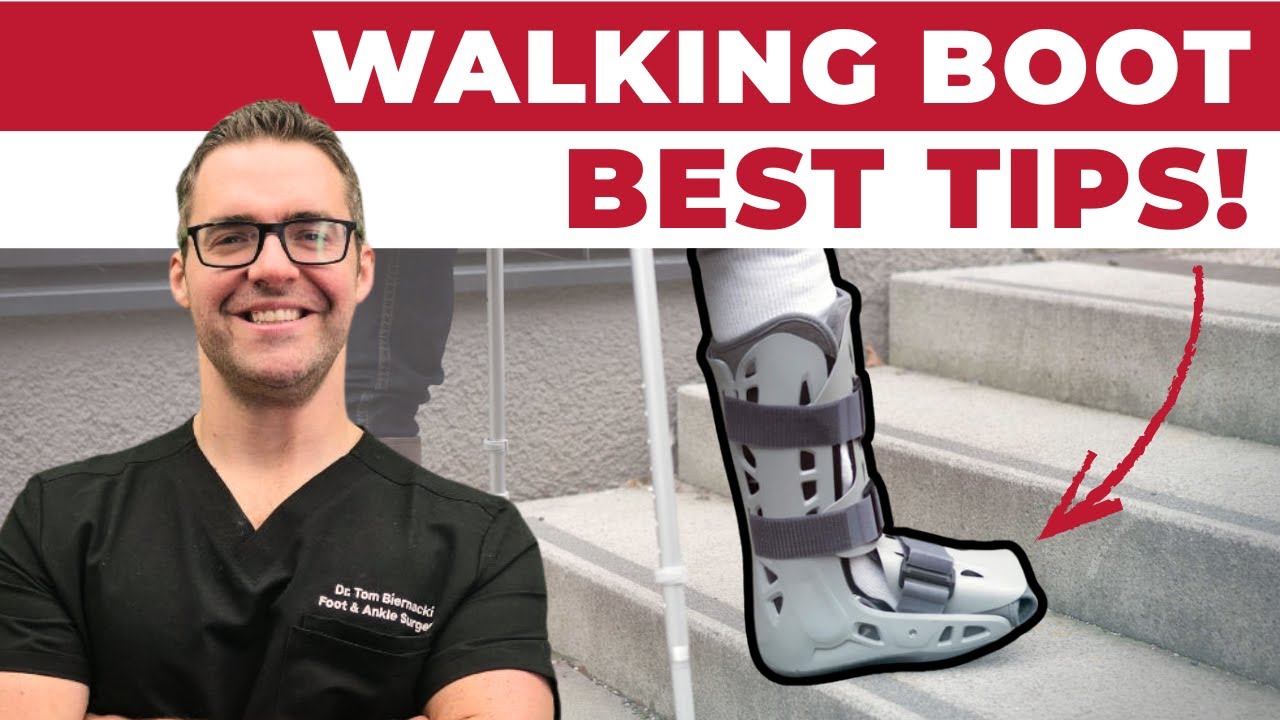
CAM walker boot for transitioning to protected weight bearing as pilon fracture healing progresses.
Patients transitioning to PWB after pilon fracture healing
Patients still fully non-weight-bearing
Disclosure: We earn a commission at no extra cost to you.
TheraBand FlexBar Resistance Bar
⭐ Highly Rated
Helps restore ankle range of motion and strength during the later phases of pilon fracture rehabilitation.
Patients in late-stage pilon fracture rehabilitation
Patients in early post-operative phase
Disclosure: We earn a commission at no extra cost to you.
✅ Pros / Benefits
- Staged surgical approach protects soft tissues
- Modern plating allows precise joint reconstruction
- Physical therapy restores functional range of motion
- Long-term outcomes improving with modern techniques
❌ Cons / Risks
- Very long recovery — 12 to 18 months
- High complication risk in severe injuries
- Post-traumatic arthritis is a common long-term issue
- Multiple surgeries often required
Dr. Tom Biernacki’s Recommendation
Pilon fractures are among the most challenging injuries we treat in foot and ankle surgery. The key is patience — both in surgical timing to protect the soft tissues, and in recovery. Patients who understand the long road ahead and commit to their rehabilitation consistently achieve the best outcomes.
— Dr. Tom Biernacki, DPM | Board-Certified Podiatric Surgeon | Balance Foot & Ankle
Frequently Asked Questions
Can a pilon fracture heal without surgery?
In rare cases of minimally displaced Type I pilon fractures, non-surgical management with a cast may be considered. However, the vast majority of pilon fractures require surgery to restore the joint surface and achieve acceptable alignment.
How long is non-weight-bearing after pilon fracture surgery?
Most patients are non-weight-bearing for 10–12 weeks after definitive ORIF surgery. Protected weight bearing in a CAM boot typically begins after this period, guided by healing seen on X-rays.
Will I get arthritis after a pilon fracture?
Post-traumatic ankle arthritis is a significant long-term risk, especially with severe, comminuted fractures. The degree of original joint surface damage is the primary factor. Some patients develop symptomatic arthritis requiring additional treatment years later.
What is the difference between a pilon fracture and an ankle fracture?
A standard ankle fracture typically involves the fibula and/or medial malleolus without severely disrupting the joint surface. A pilon fracture specifically involves shattering of the distal tibia joint surface — the weight-bearing dome of the ankle — making it far more serious and complex to treat.
Michigan Foot Pain? See Dr. Biernacki In Person
4.9★ rated | 1,200+ Reviews | 3,000+ Surgeries
Book online 24/7 · Howell & Bloomfield Township
📞 (810) 206-1402 Book Online →Ready to feel better?
Appointments available in Howell and Bloomfield Township, Michigan.
Book Your VisitIn-Office Treatment at Balance Foot & Ankle
If home treatment isn’t providing relief for your pilon fracture distal tibia ankle treatment, our podiatry team at Balance Foot & Ankle can help with expert evaluations and advanced in-office care.
Book online 24/7. (810) 206-1402
VitaMedica Arnica Gel
Arnica gel plus 15 plant compounds for sore feet, plantar fasciitis flares and post-activity soreness. Apply a thin layer to the sore area.
Shop VitaMedica Arnica Gel →
Dr. Tom Biernacki, DPM is a board-certified foot & ankle surgeon (ABFAS & ABPM) at Balance Foot & Ankle Specialists in Southeast Michigan. With over a decade of clinical experience, he specializes in heel pain, bunions, diabetic foot care, sports injuries, and minimally invasive surgery. Dr. Biernacki is a member of the APMA and ACFAS, and his patient education content on MichiganFootDoctors.com and YouTube has made him one of the most-followed foot & ankle educators on YouTube.