
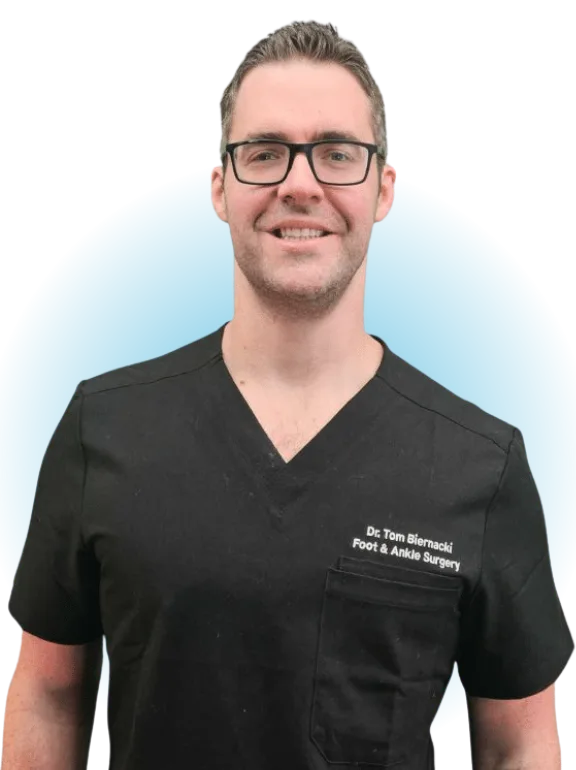
You are in the right place. Dr. Tom Biernacki, DPM, FACFAS — board-certified foot & ankle surgeon with 3,000+ surgeries — explains exactly what pinky toe pain causes means and what works. Call (810) 206-1402 to book at Howell or Bloomfield Township.

Watch: Is Bunion Surgery Worth It? [Big Toe Joint Arthritis] — MichiganFootDoctors YouTube
Pinky Toe Pain: Causes + Treatment Options
Quick answer: Pinky Toe Pain can have multiple causes. Dr. Tom Biernacki, DPM helps identify what’s behind your specific symptoms.

- Slightly Angled Heel Post: PowerStep Pinnacle Maxx insoles for men & women keep the feet from rolling inward, improve stability, and prevent problems caused by overpronation including flat feet and plantar fasciitis.
- Firm But Flexible Design: Our orthotics Pinnacle PowerStep insoles for overpronation are equipped with a deep heel insert cradle for increased comfort, stability, and motion control for standard arch support and immediate heel pain relief.
- Premium Dual Layer Cushioning: For enhanced comfort from heel to toe. As the thickest of our Pinnacle PowerStep orthotics, these need to be worn in shoes where the factory insole can be removed. HSA & FSA Eligible. Made in the USA
- The Perfect Balance of Comfort and Support: These PowerStep Pinnacle arch support inserts for men & women are unlike most other orthotics as they help to correct over-pronation which can cause ankle, knee, and hip pain in your daily routine
- No Trimming: Our arch support PowerStep insoles men & women can use can be worn in a variety of shoe styles & fit in any type with no trimming required! Unlike most insoles for flat feet and other heel pain relief products, these come ready to wear.

As an Amazon Associate, Balance Foot and Ankle earns from qualifying purchases. Product links are affiliate links and we may earn a commission at no extra cost to you. This does not influence our clinical recommendations. Last update on 2026-11-06 / Images from Amazon Product Advertising API
Common Causes
Bunion, hammertoe, neuroma, capsulitis, gout, arthritis, fracture, or shoe-related compression.
What to Do First
Rest, ice, wider toe-box shoes, anti-inflammatories. If symptoms persist over 2 weeks, see a podiatrist.
Schedule
Call (810) 206-1402.
In-Office Treatment at Balance Foot & Ankle
If home treatment isn’t providing relief for your toe condition, our podiatry team at Balance Foot & Ankle can help with expert evaluations and advanced in-office care.
Book online 24/7. (810) 206-1402
VitaMedica Arnica Gel
Arnica gel plus 15 plant compounds for sore feet, plantar fasciitis flares and post-activity soreness. Apply a thin layer to the sore area.
Shop VitaMedica Arnica Gel →Frequently Asked Questions
When should I see a doctor?
See a podiatrist if pain persists past 2 weeks, prevents normal activity, or is accompanied by red-flag symptoms (warmth, swelling, numbness, inability to bear weight).
Can I treat this at home?
Mild cases respond to RICE protocol (rest, ice, compression, elevation), supportive shoes, and OTC anti-inflammatories. Persistent symptoms need professional evaluation.
How long does it take to heal?
Most soft tissue injuries resolve in 2-6 weeks with appropriate care. Bone injuries take 6-12 weeks. Chronic conditions need longer-term management.
Ready to fix this for good?
Reading goes so far. The fastest path is a 30-minute office visit. Book online for Howell or Bloomfield Township. Call (810) 206-1402.

Dr. Tom Biernacki, DPM is a board-certified foot & ankle surgeon (ABFAS & ABPM) at Balance Foot & Ankle Specialists in Southeast Michigan. With over a decade of clinical experience, he specializes in heel pain, bunions, diabetic foot care, sports injuries, and minimally invasive surgery. Dr. Biernacki is a member of the APMA and ACFAS, and his patient education content on MichiganFootDoctors.com and YouTube has made him one of the most-followed foot & ankle educators on YouTube.
More questions patients ask
What are the most common causes of pinky toe pain?
The 5th toe and its metatarsal are among the most vulnerable structures in the foot. Common causes include: tailor's bunion (bunionette) — a bony prominence on the outer side of the 5th metatarsal head causing shoe pressure; corns and calluses at the tip of the toe or over the PIP joint from hammertoe deformity; 5th toe hammertoe or mallet toe — fixed flexion contractures pressing against the shoe toe box; 5th metatarsal fracture (from acute inversion or stress); Iselin disease in children (apophysitis at the 5th metatarsal base); and overlapping or underlapping 5th toe deformity.
What is a tailor's bunion (bunionette)?
A tailor's bunion is a bony prominence on the lateral side (outer edge) of the 5th metatarsal head — the anatomical mirror image of a standard bunion on the great toe side. It causes pain and a visible bump at the base of the little toe, often with skin redness and callus from shoe irritation. The name originates from historical tailors who sat cross-legged, stressing the outer edge of the foot. Like standard bunions, it can be hereditary and is aggravated by narrow, pointed-toe footwear.
How is 5th toe pain treated?
Treatment depends on the specific diagnosis: Tailor's bunion — wide toe box shoes, silicone bunionette pad, cortisone injection for bursitis, and surgical correction (metatarsal osteotomy) for refractory cases; Hammertoe corn — trimming by a podiatrist, silicone toe sleeve, padding, or hammertoe correction surgery; Soft corn between 4th and 5th toes — spacers to separate the toes, addressing overlapping deformity, occasionally surgical condylectomy of the bony prominence causing the corn; Fracture — boot immobilization, with surgery for displaced Jones fractures or chronic non-unions.
Why do I keep getting corns on my little toe?
Recurrent corns on the 5th toe are almost always caused by an underlying structural deformity — the corn is a symptom, not the primary problem. A hammertoe or mallet toe creates a pressure point where the flexed joint or toe tip contacts the shoe. Simply trimming the corn provides temporary relief; the corn returns because the structural deformity causing the pressure remains. Definitive treatment requires correcting the hammertoe deformity (flexor tenotomy for flexible deformity, PIP joint arthroplasty or arthrodesis for rigid cases). Silicone toe sleeves and properly fitted shoes manage symptoms while surgical correction is planned.
Still have a question about coverage or cost? Book online and we will check your benefits before your visit: Book in Howell · Book in Bloomfield Township. Prefer to talk it through first? Call (810) 206-1402.