
Xero is the brand patients bring up when they have read that modern shoes are the reason their feet hurt. Some of that argument is right. A wide toe box really is better for a bunion than a tapered one, and a foot that has been splinted in a stiff shoe for forty years really does get weak. What almost no review of this brand will tell you is what the research says happens to people who switch too quickly — which is the single most important thing a foot surgeon can add to this conversation.
The short answer
The shape of these shoes is genuinely good for a lot of feet. The transition is where people get hurt, and the injury is usually a bone, not a muscle. If you have a broad forefoot, a bunion or a neuroma, and you are healthy, patient and willing to take months over it, this design has real merit. If you have diabetic neuropathy, a rigid high arch, an acute plantar fascia, a healing stress fracture or a recent foot operation, this is the wrong category of shoe for you, and no amount of gradual transitioning changes that.
What Xero actually claims
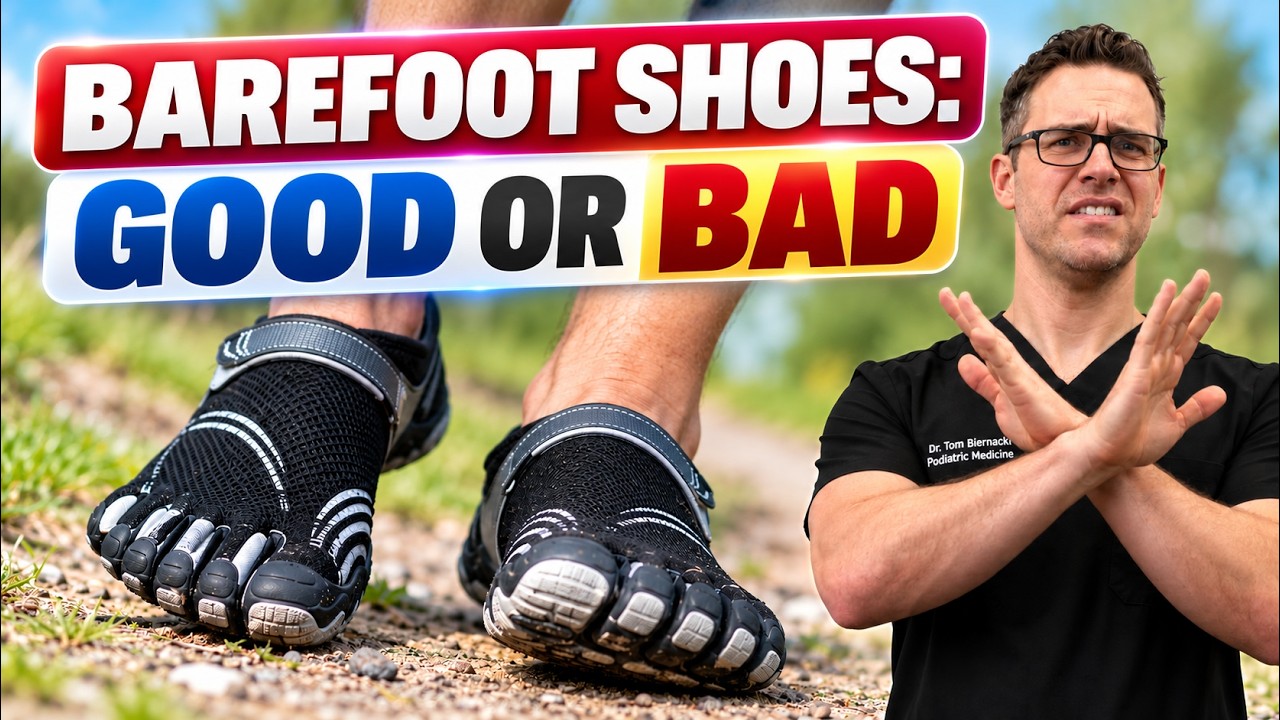
Xero sells its footwear as barefoot and minimalist. The properties it leads on across the range are a zero-drop sole (heel and forefoot the same height off the ground), a wide toe box to allow the toes to splay, a thin and highly flexible sole intended to let the foot move and feel the ground, and low weight. The company backs the outsole with a stated 5,000-mile sole warranty, and sells across running, training, hiking, water, casual, sandals and boots, including children’s styles. The warranty is worth reading in full: according to Xero’s warranty terms (read September 2026), if the sole wears below 1 mm Xero sells you a new pair of the same style at 60% off, and only for pairs bought from Xero directly.
Those are design claims about the shoe, and they are accurate descriptions of what the shoe is. They are not claims about what will happen to your feet, and the two should not be confused — which brings us to the part of this category’s history that is worth knowing.
Where the design genuinely helps
The toe box is the strongest argument, and it is a good one. Most conventional shoes taper toward the front, which pushes the big toe outward. If you have a bunion, a tailor’s bunion, a hammertoe rubbing on a seam, or a Morton’s neuroma being squeezed between the metatarsal heads, a shoe that lets the forefoot spread is doing something mechanically useful that no insole can do. The lab adds a qualification, set out below: on the Xeros it has measured, the extra room is at the toes, not across the ball of the foot. This is the reason clinicians who are skeptical of the wider barefoot claims will still sometimes point a patient at this shape.
Flexibility is helpful for a foot that is stiff for no structural reason. A foot held rigid by footwear for decades does lose intrinsic muscle capacity, and there is reasonable evidence that minimally supportive footwear increases the work those small muscles do. For a healthy foot, worked up to slowly, that is a feature.
Ground feel is a real property, and it cuts both ways. A thin sole gives you more information about the surface. For a young, well-conditioned foot with normal sensation that is useful feedback. For a foot that cannot feel, it is the removal of the last layer of protection — see below.
What a lab found when it cut seven Xeros in half
Xero publishes a weight for one size and, on some models, the thickness of the rubber, but not the two things that matter most in a barefoot shoe: how much sits under your foot, and how much room there is inside. RunRepeat has cut seven Xeros in half, and its figures can be set against 35 mainstream running and walking shoes the same lab has measured.
The sole really is thin, and the drop really is zero. Measured with the insole in, the seven stand 10.6 to 16.3 mm under the heel: about a third of the 38.7 mm median for those 35 shoes, and well under the lowest of them, the Altra Torin 9 at 25.8 mm. The drop measured between −0.1 and 1.2 mm, so the zero-drop claim holds, which is more than most brands’ drop figures manage in the same lab. All seven weigh less than the median shoe, 189 to 281 g for a men’s US 9, and the Speed Force II and the XT Max are lighter than any of the 35. The three Xeros tested for flexibility bent under 2.8 to 4.1 newtons, where the most flexible of the 35 needs 10.1 and the median 15.3.
There is almost nothing holding the heel. Three of the seven scored 1 out of 5 for heel-counter stiffness, a score none of the 35 mainstream shoes gets, and none scored above 3. The insoles are 3.4 to 4.1 mm thick and all of them lift out. That is the design working as intended, and it is exactly why a heel that needs holding, or an ankle that rolls, should look elsewhere.
The toe box is roomy at the toes, not across the ball of the foot. Three of the seven have toe-box figures from the lab’s current method. At the big toe they measure 74.4 to 79.2 mm, wider than most mainstream shoes; only the three Altras in that set beat the XT Max there. At the widest point, where the metatarsal heads and a bunion sit, they measure 92.6 to 94.1 mm, narrower than the 95.2 mm median, and the Mesa Summit is narrower there than all but one of the 34 shoes in the comparison. They are tall inside, too: the Prio’s toe box, at 33.9 mm, is higher than any of the 34. So a Xero gives a drifting big toe, curled toes and a hammertoe more room, but not a broad forefoot or the bump of a bunion; for those, the width fitting matters as much as the brand.
| Model | Heel stack | Drop | Weight | Big toe | Widest | Height |
|---|---|---|---|---|---|---|
| Scrambler Low | 16.3 mm | −0.1 mm | 261 g | — | — | — |
| Mesa Trail WP | 14.6 mm | 1.2 mm | 274 g | — | — | — |
| Mesa Summit | 13.6 mm | 0.3 mm | 281 g | 74.4 mm | 92.6 mm | 28.8 mm |
| HFS II | 13.1 mm | 1.0 mm | 244 g | — | — | — |
| Prio | 12.2 mm | 0.4 mm | 279 g | 76.2 mm | 94.1 mm | 33.9 mm |
| XT Max | 12.0 mm | 0.0 mm | 218 g | 79.2 mm | 93.5 mm | 29.4 mm |
| Speed Force II | 10.6 mm | 0.1 mm | 189 g | — | — | — |
| Median, 35 mainstream shoes | 38.7 mm | 8.5 mm | 286 g | 72.8 mm | 95.2 mm | 27.0 mm |
RunRepeat lab, one retail pair of each, men’s US 9, read September 28, 2026. Toe box: internal width at the big toe and at the widest point, and internal height, from the lab’s current method; a dash means the lab has only an older-method figure for that model, which is not comparable. Medians: 35 mainstream running and walking shoes the same lab has measured (34 for the toe box). The Mesa Trail WP is now a final-sale clearance line, and the Scrambler Low has been replaced by the Scrambler Low EV.
The transition evidence — the part reviews skip
This is the section to read even if you skip everything else.
The best-known controlled study on switching to minimalist shoes is Ridge and colleagues, published in Medicine & Science in Sports & Exercise in 2013. Thirty-six experienced recreational runners had an MRI of the feet before and after ten weeks. Seventeen kept running in their usual shoes; nineteen moved gradually into Vibram FiveFingers on an industry-suggested schedule — one short run in the new shoes in the first week, another short run added each week, then more mileage as they felt comfortable.
Ten of the nineteen runners in the minimalist group showed increased bone marrow edema in at least one bone of the foot, significantly more than in the group that kept their usual shoes (P = 0.009). The authors’ conclusion was that runners moving to minimalist shoes should transition “very slowly and gradually to avoid potential stress injury in the foot.”
Bone marrow edema is the stress reaction a bone shows on MRI before it goes on to a stress fracture. It is a stage at which many people still feel fine, which is exactly why this matters: the warning sign of a minimalist transition injury is frequently not pain until quite late.
Zero-drop is the specific thing your calf will notice
Most shoes people arrive in sit somewhere between 8 and 12 mm higher at the heel than the forefoot. Zero-drop removes that. Every millimeter you take out of the heel is load the calf and the Achilles tendon have to absorb instead, through a longer range, on every step of every day — not just when you run.
If your Achilles has ever been sore, if your calves are chronically tight, or if you are over about forty and have been in a raised heel your whole adult life, that tissue has adapted to a shorter working length and it does not lengthen on a schedule that suits you. The plantar fascia is subject to the same arithmetic, which is why an acutely painful heel is a poor moment to experiment with this category.
Who should not wear these
Reasonable candidates
- A broad forefoot, a bunion or a neuroma — the toe box is doing real mechanical work.
- Healthy feet with normal sensation and no current injury, with months rather than weeks to adapt.
- You want them for casual wear rather than mileage — far lower risk than running in them.
- You already train barefoot in the gym or at home without symptoms.
Choose something else
- Diabetic or any peripheral neuropathy — the most important line on this page.
- A rigid, high-arched (cavus) foot — it is already a poor shock absorber; a thin sole removes the one you bought.
- Acute plantar fasciitis or an irritable Achilles — zero-drop increases demand on exactly the tissue that hurts.
- A healing stress fracture, or a history of them — the documented transition injury is bone.
- Post-operative, or a Charcot foot — these feet need protection and stiffness, not ground feel.
The neuropathy point deserves its own sentence. If you cannot reliably feel your feet, the thin flexible sole that is this brand’s entire proposition is removing the protection standing between you and a puncture wound you will not notice. Diabetic foot ulceration usually begins with something trivial that nobody felt. Whatever the rest of the barefoot argument is worth, it is not worth that risk, and this is not a matter of transitioning slowly — see our diabetic shoe recommendations instead.
A note on this category’s marketing history
Worth knowing, and worth stating carefully, because it is about a different company.
In 2014 Vibram settled a US class action over its FiveFingers marketing — claims that the shoes improved posture, strengthened muscles and reduced injuries. The settlement was reported at $3.75 million, and Vibram denied any wrongdoing as part of it.
That was Vibram, not Xero. Xero was not a party to it and nothing here suggests otherwise. It is included because it is the reason this whole category became careful about the difference between describing a shoe’s construction and promising a health outcome — a line Xero’s own published claims, quoted above, stay on the right side of. When you read anything about barefoot footwear, that is the distinction to hold on to: shape and stack height are facts about the product; “will fix your feet” is not.
If you are going to do it, do it like this
The Ridge study’s most uncomfortable detail is that its runners were following a gradual, industry-suggested schedule and still developed bone stress. Treat published transition plans as a floor, not a target.
- Start by walking, not running. Wear them for ordinary daily life for several weeks before any running enters the conversation.
- Keep your old shoes in rotation. This is not a switch, it is an addition. Alternating days gives bone time to remodel.
- Add distance in small increments, and hold a step for a week or more rather than progressing whenever you feel fine — feeling fine is not the signal you need.
- Stop for any focal, pinpoint bone pain on the top or middle of the foot, especially if it is tender to one fingertip. That is the presentation that turns into a stress fracture, and it is not a stretch-it-out symptom.
- Do calf and foot work deliberately. Heel raises and slow loading, built gradually, are what actually buys the adaptation the shoe is asking of you.
For the wider research on going barefoot, see our evidence guide to barefoot and minimalist shoes; and if you want a wide toe box with more cushioning than a Xero, our Altra vs HOKA comparison covers the obvious alternative.
Where to buy
Xero sells directly at xeroshoes.com, where the current range and the sole warranty terms are listed. Xero’s returns page allows 30 days from delivery for unworn shoes only, with a return fee taken off the refund, though exchanges are free — so you cannot walk in a pair for a week and then send it back. There is deliberately no product link on this page: the right answer within this brand depends on whether you want a sandal, a casual shoe or something you intend to run in, and the running answer is the one that carries the transition risk described above.
Frequently asked questions
Are Xero Shoes good for your feet?
For a healthy foot with normal sensation and a broad forefoot, the shape is genuinely good — a wide toe box does something for a drifting big toe or a neuroma that no insole can. The risk is not the shoe, it is the switch: in the best-known controlled study, 10 of 19 runners moving to minimalist shoes over ten weeks showed new bone marrow edema in the foot on MRI. For a neuropathic, high-arched, post-surgical or acutely painful foot, this is the wrong category regardless of how slowly you go.
Are Xero Shoes good for plantar fasciitis?
Not during a flare. Zero-drop moves load onto the calf, Achilles and plantar fascia, which is the tissue already hurting, and an acutely painful heel is the worst moment to add demand to it. Once it has properly settled, some people do well in a wide, flexible shoe — but get there through a shoe that supports the fascia first, and treat minimalist footwear as something you graduate into over months, not a treatment for the flare.
Do podiatrists recommend barefoot shoes?
Plenty of us recommend the toe box and are cautious about everything else, which is a less satisfying answer than either camp wants. The wide forefoot is a real mechanical advantage. Zero-drop and a thin sole are trade-offs that suit some feet and actively harm others, and the published evidence on transitioning is not reassuring. Where podiatrists are close to unanimous is that anyone with reduced sensation in their feet should not be in this category at all.
How long does it take to transition to barefoot shoes?
Longer than the box says. The runners in the Ridge study developed bone stress inside ten weeks while following an industry-suggested schedule. Think in terms of several months of ordinary walking before any running, your previous shoes still in rotation throughout, and progression held at each step rather than advanced as soon as you feel fine — bone stress does not announce itself early.
Is zero-drop bad for your Achilles?
Not inherently, but it demands more of it. A raised heel shortens the working length the calf and Achilles operate at, and decades in one is an adaptation your tendon has genuinely made. Removing it increases the load through a longer range, on every step of the day rather than only when training. If your Achilles is currently sore, or has been repeatedly, this is a change to make slowly and deliberately or not at all.
Do Xero Shoes have a wide toe box?
Wide at the toes, not across the ball of the foot. On the three Xeros the lab has measured with its current method, the toe box is 74.4 to 79.2 mm wide at the big toe, wider than most mainstream shoes. At the widest point, where the metatarsal heads sit, they measure 92.6 to 94.1 mm, narrower than the 95.2 mm median of the 34 mainstream shoes in the comparison. They are tall inside: the Prio’s 33.9 mm is more height than any shoe in that set.
Are Xero Shoes good for bunions?
For a big toe that has drifted, often: the extra room at the toes lets it lie straighter. For the bump itself, which sits at the widest part of the shoe, a Xero is no wider than a conventional shoe on the lab’s figures, so a wide fitting of an ordinary shoe can do as much.
How thick is the sole on Xero Shoes?
Thin. Measured with the insole in, the seven Xeros the lab has cut in half stand 10.6 to 16.3 mm under the heel, against a median of 38.7 mm for 35 mainstream shoes the same lab has measured. Xero’s own pages mostly describe the rubber alone, 4.5 mm on the Speed Force II and 5.5 mm on the Prio, each with a removable insole of about 3 mm.
Sources: Ridge ST et al., “Foot bone marrow edema after a 10-wk transition to minimalist running shoes,” Medicine & Science in Sports & Exercise 2013;45(7):1363–1368 (abstract via BYU ScholarsArchive; protocol as described in BYU’s 2013 release); Xero’s product, warranty and returns pages (read September 2026); RunRepeat’s lab measurements (read September 28, 2026). Medically reviewed by Dr. Tom Biernacki, DPM, FACFAS, board-certified foot and ankle surgeon.

Dr. Tom Biernacki, DPM is a board-certified foot & ankle surgeon (ABFAS & ABPM) at Balance Foot & Ankle Specialists in Southeast Michigan. With over a decade of clinical experience, he specializes in heel pain, bunions, diabetic foot care, sports injuries, and minimally invasive surgery. Dr. Biernacki is a member of the APMA and ACFAS, and his patient education content on MichiganFootDoctors.com and YouTube has made him one of the most-followed foot & ankle educators on YouTube.