
Medically reviewed by Dr. Tom Biernacki, DPM
Board-certified podiatric surgeon | Balance Foot & Ankle
Last reviewed: May 2026

Quick answer: For podiatrist guide, podiatrists recommend shoes with structured arch support, deep heel cup, and forefoot rocker. Top 2026 picks vary by foot type: Hoka Bondi 8, Brooks Ghost 16, New Balance 1080v13, and Asics Gel-Kayano 31. Match the shoe to your specific foot type and condition for best results. Call (810) 206-1402.
Medically reviewed by Dr. Tom Biernacki, DPM · Board-Certified Podiatric Surgeon · Last reviewed: April 2026 · Editorial Policy
✅ Medically reviewed by Dr. Tom Biernacki, DPM — Board-Certified Podiatrist · Last updated April 6, 2026
The most important clinical decision with Best Shoes Podiatrist Guide isn’t which treatment to start with — it’s identifying the correct subtype. That changes everything. Call (810) 206-1402.
Pick The 100% Best Shoes For You! (Data Driven Podiatrist Guide)
We use DATA & STUDIES for the best running shoes, walking shoes for men and women, plantar fasciitis, standing all day, arthritis & MORE!
Why Trust A Podiatrist For Shoes?
- A podiatrist is a medical professional specializing in treating and diagnosing foot and ankle problems. Because of their expertise in this area, they are often considered the best choice to advise on shoes and footwear.
- Podiatrists have a deep understanding of foot anatomy, biomechanics, and pathology. They can evaluate an individual’s foot type, gait, and existing foot or ankle conditions. They can also identify any problems caused or worsened by improper footwear.
- When selecting the right shoes, podiatrists can make recommendations based on an individual’s needs, such as arch support, cushioning, or stability. They can also advise on the proper fit, material, and style of shoes to help prevent foot and ankle problems.
- Consulting with a podiatrist can provide valuable insight into proper footwear selection, leading to better foot health and overall well-being.
Find Your Perfect Pair — Trusted by Podiatrists
At Balance Foot & Ankle in Michigan, our specialists don’t just treat foot pain—we help prevent it. Book a consultation today and get personalized shoe recommendations from Dr. Tom Biernacki, a leading podiatrist who understands what your feet truly need. Your journey to foot health starts with the right footwear.
BOOK AN APPOINTMENT NOWStep Into Comfort and Confidence With Shoes Recommended by Foot Doctors.
For choosing the right footwear, not all shoes are created equal. If you’re dealing with foot pain, flat feet, plantar fasciitis, or just want to prevent future problems, investing in podiatrist-recommended shoes can make a world of difference. These shoes are designed to offer superior arch support, cushioning, and alignment—all crucial for maintaining healthy feet. In this guide, we’ll walk you through the best shoes podiatrists recommend, why they matter, and how to choose the right pair for your needs.
Shoe Guides: How to Measure Shoe Size (Step-by-Step)
Why Measuring Shoe Size Matters
Wearing the right shoe size isn’t just about comfort—it’s essential for foot health. Shoes that are too tight or too loose can lead to issues like blisters, bunions, arch pain, or even long-term deformities. Here’s how to get your exact size at home.
What You’ll Need:
- A piece of paper larger than your foot
- A pencil or pen
- A ruler or measuring tape
- Socks (if you’ll wear socks with the shoes)
Step-by-Step Instructions:
Step 1: Prepare the Surface
Place the paper on a flat, hard surface (like a tiled floor or hardwood—not carpet).
Step 2: Trace Your Foot
Put on your regular socks, stand on the paper, and trace the outline of your foot while standing. Make sure the pen is vertical for accuracy. Repeat for the other foot (they’re often slightly different sizes).
Step 3: Measure Length
Use the ruler to measure the distance from the tip of your longest toe to the back of your heel (in inches or centimeters). Record the larger foot if there’s a difference.
Step 4: Measure Width
Measure the widest part of your foot—usually across the ball of the foot. Again, record the measurement for the larger foot.
Step 5: Compare with a Sizing Chart
Use your measurements and compare them with the shoe brand’s size chart (they vary by brand and country: US, UK, EU, etc.).
Pro Tip:
Measure your feet later in the day, when they’re slightly swollen from walking. This gives a more realistic fit.
Top-Rated Best Shoes Podiatrists Guide
Trusted Solutions To Soothe, Protect, and Support Your Feet

Finding the best products for managing peripheral neuropathy and diabetic foot pain can make a world of difference in your daily comfort and mobility.

For managing foot pain from conditions like plantar fasciitis, flat feet, or diabetic neuropathy, the best orthotics can offer crucial support and relief.

Choosing the best shoes for foot conditions like neuropathy, plantar fasciitis, or flat feet is essential for pain relief and long-term foot health.
FAQs About the Best Shoes Podiatrists Recommend
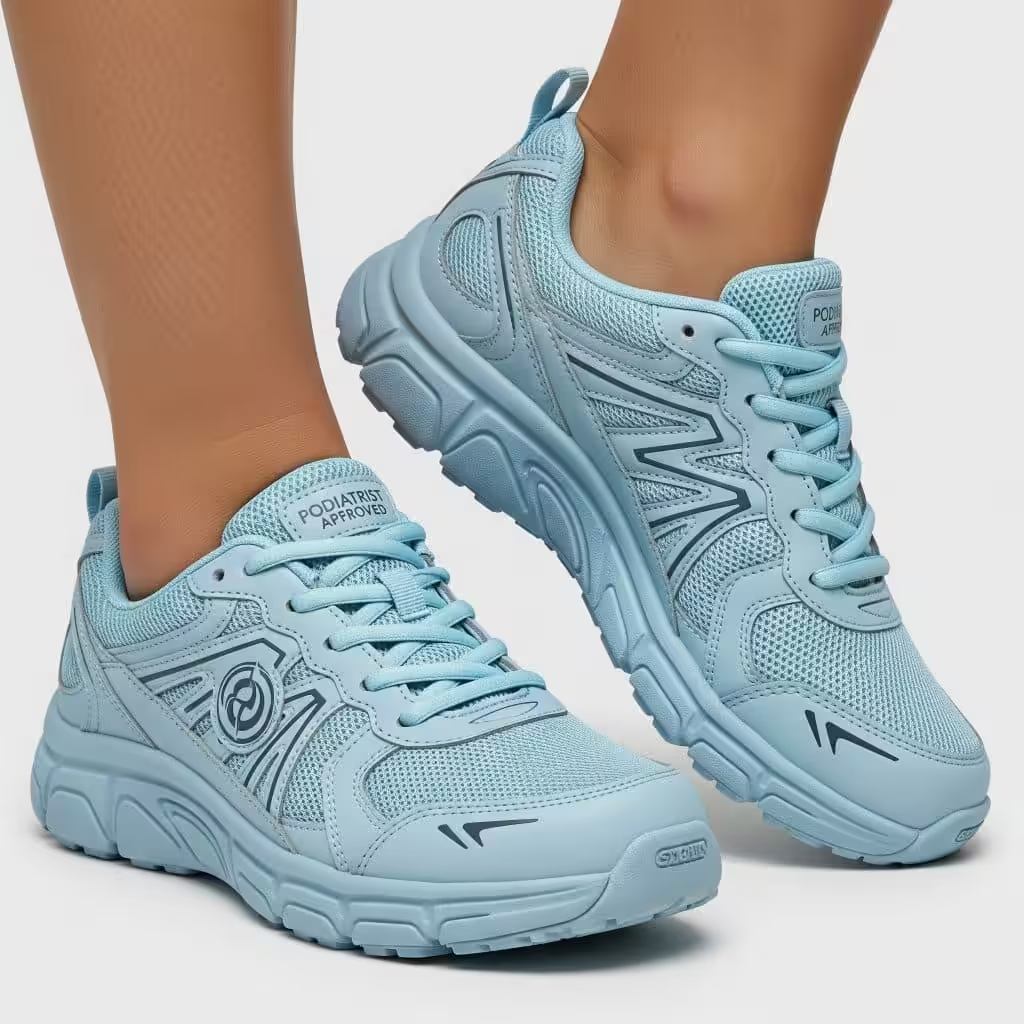
What makes a shoe podiatrist-recommended?Podiatrists look for shoes with proper arch support, firm heel counters, cushioned soles, and enough room in the toe box. Materials and shock absorption also play a key role.
Are podiatrist-recommended shoes good for plantar fasciitis?Yes, they are specially chosen to reduce strain on the plantar fascia and support your foot’s natural shape, easing inflammation and pain.
Do I need custom orthotics if I wear podiatrist-recommended shoes?Not always. Many high-quality shoes offer enough built-in support, but if you have specific foot issues, your podiatrist may still recommend custom orthotics.
Can these shoes help with flat feet or high arches?Absolutely. Different models cater to various foot shapes—podiatrists often suggest supportive insoles and firm midsole shoes for both conditions.
Are there fashionable options among podiatrist-recommended shoes?Yes! Many brands now combine style with support, so you don’t have to sacrifice appearance for comfort.
How often should I replace my supportive shoes?Every 6–12 months, depending on wear. Shoes lose cushioning and support over time, which can lead to foot strain.
Which brands do podiatrists commonly recommend?Brands like Brooks, Hoka One One, New Balance, Asics, and Orthofeet are frequently endorsed by podiatrists.
Which brands do podiatrists commonly recommend?Brands like Brooks, Hoka One One, New Balance, Asics, and Orthofeet are frequently endorsed by podiatrists.
Are running shoes good for everyday wear?Yes, many running shoes offer great cushioning and support, making them suitable for walking and standing throughout the day.
Should I get a shoe fitting from a podiatrist?If you have ongoing foot problems, a podiatrist can help assess your gait and foot shape, ensuring the best fit and function from your footwear.
Should I get a shoe fitting from a podiatrist?If you have ongoing foot problems, a podiatrist can help assess your gait and foot shape, ensuring the best fit and function from your footwear.
Where can I buy podiatrist-recommended shoes?They’re available online, at specialty footwear stores, or directly through a podiatrist’s office like Balance Foot & Ankle in Michigan.
Related Treatment Guides
- Plantar Fasciitis & Heel Pain Treatment
- Sports Foot & Ankle Injury Treatment
- Foot & Ankle Arthritis Treatment
Medical References & Sources
- American Podiatric Medical Association — Patient Education
- American Orthopaedic Foot & Ankle Society — Foot Conditions

Insurance Accepted
BCBS · Medicare · Aetna · Cigna · United Healthcare · HAP · Priority Health · Humana · View All →
Howell Office
4330 E Grand River Ave
Howell, MI 48843
Get Directions →
Bloomfield Township Office
43494 Woodward Ave, #208
Bloomfield Township, MI 48302
Get Directions →
Your Board-Certified Podiatrists



Ready to Get Back on Your Feet?
Same-week appointments available at both locations.
Book Your Appointment👟 Dr. Tom’s Complete Footwear Library
Podiatrist-Approved Guides for Every Foot Type & Condition
Clinically reviewed by Dr. Tom Biernacki, DPM — Board-Certified Podiatrist
All guides are written and reviewed by licensed podiatrists. Schedule an appointment →
More Podiatrist-Recommended Shoes Essentials
Hoka Clifton 10

Max-cushion neutral runner — podiatrist favorite for all-day comfort.
Brooks Adrenaline GTS 25
Stability runner for overpronators — great for flat feet and bunions.
New Balance 990v6
Premium walking shoe with wide toe box — bunion and flat-foot friendly.
As an Amazon Associate, Balance Foot & Ankle earns from qualifying purchases. Product recommendations are based on clinical experience; prices and availability shown above update live from Amazon.

When to See a Podiatrist
The right shoe shape, last, and stability category is more important than brand. Balance Foot & Ankle evaluates your foot type (neutral, pronator, supinator, high-arched) and recommends specific shoe models that match. Bringing in your current pair lets us spot wear patterns that reveal gait issues — a free 5-minute assessment that can prevent years of foot pain.
Call Balance Foot & Ankle: (810) 206-1402 · Book online · Offices in Howell & Bloomfield Township
Pros & Cons of Conservative Care for footwear
Advantages
- ✓ Right shoe = pain reduction
- ✓ Multiple price points
- ✓ Fast adjustment
Considerations
- ✗ Trial-and-error
- ✗ Replace every 400 miles
- ✗ Custom orthotics often needed
Dr. Tom’s Recommended Products for footwear
Affiliate disclosure: As an Amazon Associate, Balance Foot & Ankle earns from qualifying purchases. We only recommend products we use with patients.
Brooks Ghost 17 Dr. Tom’s Pick
Best for: Neutral runner
Check Price on Amazon
Brooks Adrenaline GTS 23 Dr. Tom’s Pick
Best for: Stability for flat feet
Check Price on Amazon
Altra Torin 8 Dr. Tom’s Pick
Best for: Zero-drop wide toe box
Check Price on Amazon
Ready to Get Back on Your Feet?
Same-day appointments in Howell + Bloomfield Township. Most insurance accepted. Dr. Tom Biernacki, DPM & team.
Book Today — Same-Day Appointments Available
Call Now: (810) 206-1402
About Your Care Team at Balance Foot & Ankle
Dr. Tom Biernacki, DPM · Board-Certified Foot & Ankle Surgeon. Specializes in conservative-first care, minimally invasive bunion surgery, and complex reconstruction.
Dr. Carl Jay, DPM · Accepting new patients. Specializes in sports medicine, athletic injuries, and routine podiatric care.
Dr. Daria Gutkin, DPM, AACFAS · Accepting new patients. Specializes in surgical reconstruction and pediatric podiatry.
Locations: 4330 E Grand River Ave, Howell, MI 48843 · 43494 Woodward Ave Suite 208, Bloomfield Township, MI 48302
Hours: Mon–Fri 8:00 AM – 5:00 PM · (810) 206-1402
Visit Balance Foot & Ankle — Same-Day Appointments Available
Our podiatry team serves patients throughout Michigan including Howell, Brighton, and Bloomfield Township. If you’re dealing with heel pain, ingrown toenails, or a foot injury, we have same-day appointment availability.
Same-day appointments available. (810) 206-1402
Doctor Hoy’s Natural Pain Relief Gel
Natural topical pain relief I use in our clinic. Arnica + camphor formula — apply directly to the area 3–4x daily. ($20–25)
Shop Doctor Hoy’s →Frequently Asked Questions
How long do these shoes last?
Quality running shoes last 300-500 miles. Daily walking shoes last 9-12 months. Replace when the midsole feels soft or your symptoms return.
Should I add insoles?
Yes if you have plantar fasciitis or overpronation. Powerstep Pinnacle or a custom orthotic improves results. Healthy feet often do fine with the stock insole.
Are expensive shoes worth it?
Beyond about $130 most extra cost is materials and aesthetics. Match the shoe to your foot type, not budget. The right $80 stability shoe beats the wrong $250 maximalist shoe.
Get Expert Care at Balance Foot & Ankle
Same-week appointments at our Howell and Bloomfield Township offices. Board-certified podiatric surgeons. Most insurance accepted.
Ready for Expert Care?
Same-day appointments in Howell & Bloomfield Township, MI.
4.9★ | 1,123 Reviews | 3,000+ Surgeries
Or call: (810) 206-1402

Dr. Tom Biernacki, DPM is a board-certified foot & ankle surgeon (ABFAS & ABPM) at Balance Foot & Ankle Specialists in Southeast Michigan. With over a decade of clinical experience, he specializes in heel pain, bunions, diabetic foot care, sports injuries, and minimally invasive surgery. Dr. Biernacki is a member of the APMA and ACFAS, and his patient education content on MichiganFootDoctors.com and YouTube has made him one of the most-followed foot & ankle educators on YouTube.