
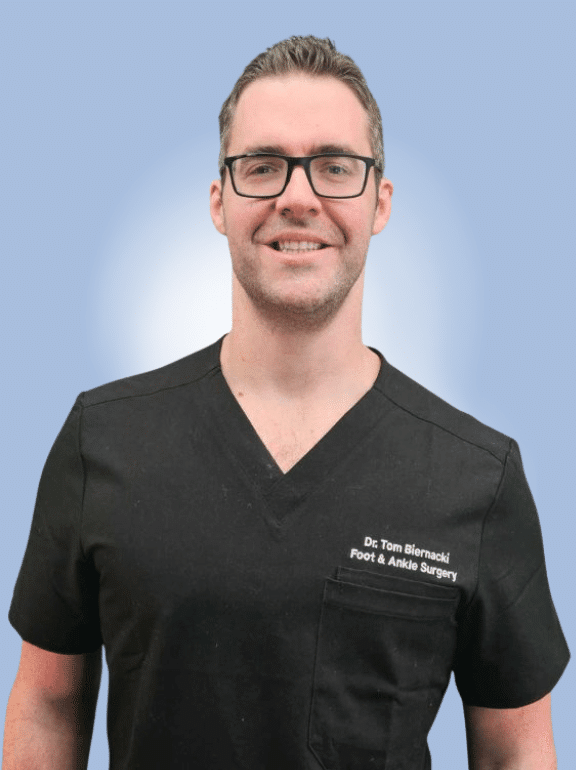
Medically Reviewed by Dr. Tom Biernacki, DPM, FACFAS · Board-Certified Podiatric Surgeon · Fellow, American College of Foot and Ankle Surgeons · Last updated April 2026
Carbon Fiber Custom Orthotics in Michigan
Ultra-thin, aerospace-grade carbon fiber orthotics custom-fabricated for your feet — stronger, lighter, and thinner than traditional plastic devices
🏅
Board-Certified DPMs
⚡
Same-Day 3D Scanning
📍
2 Michigan Locations
✅
Insurance Accepted
Quick Answer
Carbon fiber custom orthotics are precision-fabricated shoe inserts made from aerospace-grade carbon fiber composite. They are 30–50% lighter and significantly thinner than traditional plastic orthotics, allowing them to fit in dress shoes, athletic footwear, and cleats. At Balance Foot & Ankle Specialists, our podiatrists use 3D digital foot scanning and biomechanical gait analysis to design carbon fiber devices that correct pronation, redistribute pressure, and treat conditions from plantar fasciitis to post-surgical recovery.
What Are Carbon Fiber Custom Orthotics?
Carbon fiber orthotics are custom-made shoe inserts fabricated from carbon fiber composite material — the same high-performance material used in aerospace engineering, Formula 1 racing, and professional sports equipment. Unlike generic EVA foam insoles or traditional rigid polypropylene devices, carbon fiber offers an unmatched combination of strength, flexibility, and ultra-thin design.
The key advantages of carbon fiber over traditional orthotic materials include an ultra-thin profile that fits comfortably in dress shoes, athletic shoes, and even dress flats without changing shoe fit. Carbon fiber provides exceptional rigidity for firm biomechanical correction without the bulk of plastic shells, and at 30–50% lighter weight, patients often forget they are wearing them. The material also offers superior energy return — absorbing impact forces during heel strike and releasing that energy during toe-off, which benefits runners and athletes.
Carbon fiber is also exceptionally durable, with a lifespan of 3–5 years compared to 1–2 years for many foam or plastic devices. This makes them a cost-effective long-term investment in foot health despite their higher upfront cost.
Carbon Fiber vs. Traditional Orthotics
Understanding how carbon fiber compares to other orthotic materials helps you make an informed decision with your podiatrist about which device best suits your feet, lifestyle, and footwear needs.
| Feature | Carbon Fiber | Polypropylene (Plastic) | EVA Foam |
|---|---|---|---|
| Thickness | 1.5–2 mm | 3–4 mm | 6–10 mm |
| Weight | Very light (30–50% less) | Moderate | Light |
| Rigidity | High (excellent control) | Moderate–High | Low (accommodative) |
| Lifespan | 3–5 years | 2–3 years | 6–12 months |
| Energy Return | Excellent | Minimal | None |
| Fits Dress Shoes | Yes | Difficult | Rarely |
| Best For | Athletes, professionals, severe biomechanical issues | General biomechanical correction | Cushioning, diabetic accommodation |
Who Benefits From Carbon Fiber Orthotics?
While any patient requiring custom orthotics can benefit from carbon fiber, these devices are particularly valuable for patients who need thin orthotics that fit in narrow or low-volume footwear such as dress shoes, flats, and athletic cleats. Competitive and recreational athletes benefit from the energy-return properties that enhance performance during running, jumping, and cutting movements.
Patients with significant biomechanical deformities including severe flat feet, rigid high arches, and excessive overpronation benefit from carbon fiber’s superior rigidity, which provides more effective correction than flexible materials. Post-surgical patients recovering from bunion surgery, hammertoe correction, or ankle reconstruction often need precise biomechanical support during rehabilitation, and the thin profile allows carbon fiber orthotics to fit in a wider range of post-operative footwear.
Professionals who stand or walk extensively — nurses, teachers, factory workers, hospitality staff — appreciate the durability and comfort of carbon fiber for all-day wear. Patients with diabetic neuropathy may also benefit when custom accommodative modifications are integrated into the carbon fiber shell design.
Conditions Treated With Carbon Fiber Orthotics
Carbon fiber orthotics address a wide range of foot and ankle conditions by providing precise biomechanical correction and pressure redistribution. Your podiatrist at Balance Foot & Ankle Specialists will determine whether carbon fiber is the optimal material for your specific condition during your evaluation.
Rigid arch support eliminates abnormal tension on the plantar fascia during weight-bearing, reducing morning heel pain and preventing micro-tearing.
Controls excessive pronation and medial arch collapse while maintaining a low profile that fits in everyday footwear.
High Arch (Cavus Foot)
Custom cushioning and lateral column support address the rigid supinated foot type, distributing pressure more evenly across the plantar surface.
Posterior Tibial Tendon Dysfunction
Medial arch support prevents progressive flatfoot deformity by reducing strain on the posterior tibial tendon during gait.
Metatarsal pads and forefoot modifications built into the carbon fiber shell redistribute pressure away from the inflamed interdigital nerve.
Metatarsalgia & Sesamoiditis
Offloads pressure from painful metatarsal heads and the first metatarsophalangeal joint sesamoid bones through precision contouring.
Achilles Tendinopathy
Rearfoot posting and heel lift modifications control excessive pronation that increases Achilles tendon strain during push-off.
Offloads forefoot pressure points and corrects the underlying biomechanical imbalances that contribute to progressive digital deformity.
Our Carbon Fiber Orthotic Process
At Balance Foot & Ankle Specialists, we use advanced 3D digital scanning technology combined with biomechanical gait analysis to design carbon fiber orthotics with sub-millimeter precision. The entire fitting process typically takes one appointment, with your finished orthotics ready in approximately two to three weeks.
Step 1
Comprehensive Biomechanical Evaluation
Your podiatrist performs a thorough examination of your foot structure, joint range of motion, muscle strength, and alignment. We assess your gait pattern during walking and running (if applicable) to identify the exact biomechanical faults contributing to your symptoms.
Step 2
3D Digital Foot Scanning
We capture a precise three-dimensional model of your feet using digital scanning technology. This replaces the traditional plaster casting method and provides more accurate measurements of your arch height, heel position, forefoot alignment, and metatarsal geometry — all critical for carbon fiber fabrication.
Step 3
Custom Prescription & Fabrication
Your podiatrist writes a detailed orthotic prescription specifying the carbon fiber shell stiffness, arch height, rearfoot posting angle, forefoot modifications, and top cover material. The prescription and 3D scan data are sent to our orthotic laboratory where skilled technicians fabricate your devices using medical-grade carbon fiber composite.
Step 4
Fitting & Follow-Up
When your orthotics arrive, you return for a fitting appointment where we verify proper fit in your shoes, make any necessary adjustments, and provide a break-in schedule. Most patients wear their carbon fiber orthotics for 1–2 hours the first day, increasing by one hour daily over 7–10 days. We schedule a follow-up at 4–6 weeks to assess your response and make final modifications if needed.
Ready for Orthotics That Actually Fit Your Shoes?
Same-day 3D scanning at our Howell and Bloomfield Hills offices. Most insurance plans cover custom orthotics.
Book Today — Same-Day Appointments AvailableOr call (810) 206-1402
Carbon Fiber Orthotics for Athletes
Carbon fiber orthotics have become the preferred choice among competitive athletes because of their unique energy-return properties. During the stance phase of gait, the carbon fiber shell deforms slightly under load, storing elastic energy. As the foot pushes off during toe-off, that stored energy is released — providing a measurable boost in propulsive efficiency that runners, sprinters, and court sport athletes notice immediately.
The ultra-thin profile is critical for athletes who wear cleats, racing flats, or sport-specific footwear with limited internal volume. Traditional bulky orthotics change the shoe fit and can create pressure points during high-intensity activity. Carbon fiber devices maintain the intended shoe geometry while providing full biomechanical correction.
At Balance Foot & Ankle Specialists, we work with high school, collegiate, and recreational athletes across Michigan. Our biomechanical gait analysis identifies sport-specific movement patterns that inform the orthotic prescription — a sprinter’s device will differ significantly from a distance runner’s or a basketball player’s.
Insurance & Pricing
Many insurance plans cover custom orthotics when prescribed for a documented medical condition. Medicare covers one pair of custom-molded orthotics per calendar year for qualifying diagnoses. Blue Cross Blue Shield of Michigan, United Healthcare, Aetna, Cigna, HAP, Priority Health, Humana, and most other major carriers also provide orthotic benefits, though coverage varies by plan.
Carbon fiber orthotics may have a higher out-of-pocket cost than standard polypropylene devices when insurance does not fully cover the upgrade. However, their 3–5 year lifespan compared to 1–2 years for other materials means the per-year cost is often comparable or lower.
Our front office team verifies your insurance benefits before your appointment and provides a clear cost estimate so there are no surprises. Call (810) 206-1402 to check your orthotic coverage.
Caring for Your Carbon Fiber Orthotics
Carbon fiber orthotics require minimal maintenance compared to foam or leather devices. Wipe the top cover with a damp cloth and mild soap after heavy use, then allow them to air dry away from direct heat sources like radiators or clothes dryers, which can damage adhesive layers. Never submerge carbon fiber orthotics in water or put them through the washing machine.
The top cover — the soft material that contacts your foot — may need replacement after 12–18 months of daily wear, even though the carbon fiber shell remains structurally intact. This is a simple in-office procedure that extends the life of your devices. If you notice any cracking, delamination, or changes in how the orthotic feels, bring them in for evaluation.
Why Choose Balance Foot & Ankle Specialists
Board-Certified Podiatrists
Three fellowship-trained podiatric physicians with specialized training in biomechanics and orthotic prescription.
Advanced 3D Scanning
Digital scanning technology captures sub-millimeter foot measurements for precision carbon fiber fabrication — no messy plaster casts.
Gait Analysis Integration
Every orthotic prescription is informed by biomechanical gait analysis so your devices address dynamic movement patterns, not just static foot shape.
1,123+ Five-Star Reviews
Rated 4.9/5 on Google with over a thousand verified patient reviews praising our orthotic outcomes and patient care.
Frequently Asked Questions
Get Carbon Fiber Orthotics That Fit Your Life
Same-day 3D scanning · Two Michigan locations · Most insurance accepted
Book Today — Same-Day Appointments AvailableOr call (810) 206-1402
Two Convenient Michigan Locations
Howell Office
4330 E Grand River Ave
Howell, MI 48843
Mon–Fri 8:00 AM – 5:00 PM
Fax: (833) 450-6201
Bloomfield Hills Office
43494 Woodward Ave #208
Bloomfield Twp, MI 48302
Mon–Fri 8:00 AM – 5:00 PM
Fax: (833) 450-6317
Our Podiatrists


Sources
- Kirby KA. Biomechanics of the normal and abnormal foot. J Am Podiatr Med Assoc. 2000;90(1):30-34.
- Root ML, Orien WP, Weed JH. Normal and Abnormal Function of the Foot. Clinical Biomechanics Corp; 1977.
- Nawoczenski DA, Ludewig PM. The effect of forefoot and arch posting orthotic designs on first metatarsophalangeal joint kinematics. J Orthop Sports Phys Ther. 2004;34(6):317-327.
- Gross ML, Davlin LB, Evanski PM. Effectiveness of orthotic shoe inserts in the long-distance runner. Am J Sports Med. 1991;19(4):409-412.
This page is for informational purposes only and does not constitute medical advice. Custom orthotic prescription requires an in-person biomechanical evaluation. Individual results vary based on condition severity, compliance with wear schedules, and other factors. Please consult with our podiatrists to determine if carbon fiber orthotics are appropriate for your specific needs.
What to Expect at Your Appointment
3D Foot Scan
We capture a precise digital impression of your feet using advanced 3D scanning technology—no messy plaster casts.
Activity & Goal Discussion
Your podiatrist reviews your sport, training volume, and performance goals to design the optimal carbon fiber device.
Custom Fabrication & Fitting
Your orthotics are manufactured to exact specifications and fine-tuned at your fitting appointment for perfect comfort.
“My carbon fiber orthotics from Balance Foot & Ankle have completely changed my running. They’re lightweight, supportive, and fit perfectly in all my shoes.”
— David P., Custom Orthotics Patient
Your Expert Podiatrists
Serving Patients Across Southeast Michigan
Balance Foot & Ankle provides expert podiatric care from two convenient locations. Our Howell office serves patients from Brighton, Hartland, Fowlerville, Pinckney, Fenton, Hamburg, Whitmore Lake, South Lyon, and throughout Livingston County. Our Bloomfield Hills office serves Birmingham, Troy, West Bloomfield, Pontiac, Farmington Hills, Southfield, Royal Oak, Clarkston, Lake Orion, Rochester Hills, Waterford, Commerce Township, Novi, and Walled Lake across Oakland County.
Your Board-Certified Podiatrists

Ready to Get Back on Your Feet?
Same-week appointments available at both locations.
Book Your AppointmentBoard-certified care at both Michigan locations
Book your visit today
Most insurance accepted · On-site X-ray · Board-certified podiatrists
Howell · (810) 206-1402 Bloomfield · (248) 335-0322Related Conditions We Treat
Learn more about these conditions or book your appointment for a personalized treatment plan.