
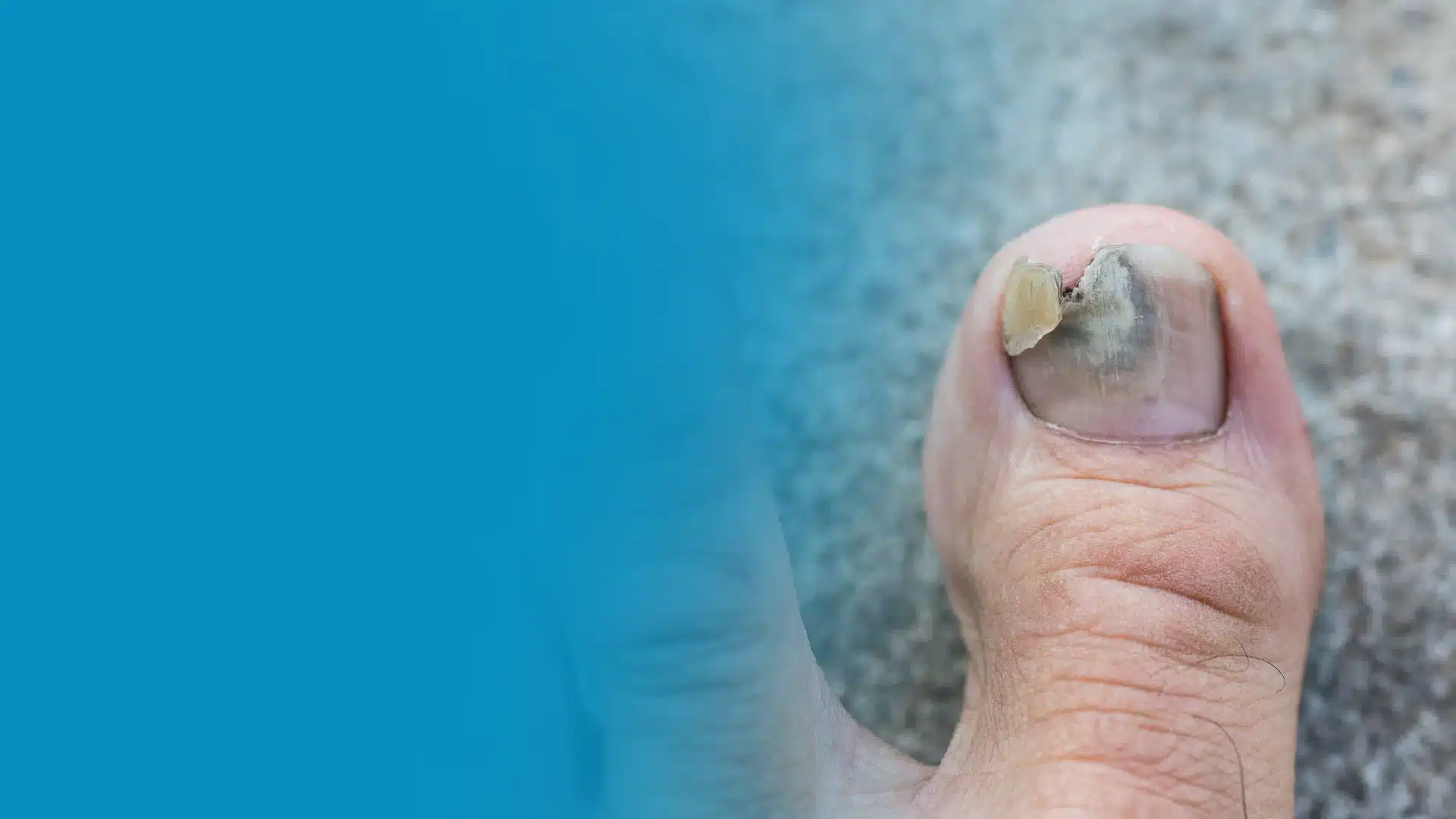
Quick answer: Treatment for black toenail subungual hematoma runners treatment follows a stepwise approach: 1) conservative care first (rest, ice, supportive footwear, OTC anti-inflammatories), 2) physical therapy and targeted exercises, 3) in-office treatments (injections, custom orthotics) if conservative fails at 4-6 weeks, 4) surgery for refractory cases. Most patients resolve at step 1 or 2. Call (810) 206-1402.
Medically reviewed by Dr. Tom Biernacki, DPM — Board-Certified Podiatric Surgeon — Balance Foot & Ankle, Howell & Bloomfield Township, MI. Last updated April 2026.
▶ Watch
Medically reviewed by Dr. Tom Biernacki, DPM | Board-certified podiatrist | 3,000+ surgeries performed
Last updated: April 2, 2026
The most important clinical decision with Black Toenail Subungual Hematoma Runners Treatment isn’t which treatment to start with — it’s which subtype or underlying cause you actually have. That distinction changes everything. Call us: (810) 206-1402
What Causes Black Toenails in Runners?
The most common cause of black toenails in runners is repetitive microtrauma — the toe repeatedly hitting the front or top of the shoe during the push-off and landing phases of the gait cycle. Over the course of a long run, thousands of these micro-impacts damage the tiny blood vessels in the nail bed, causing blood to pool beneath the nail plate and produce the characteristic dark discoloration.
Several running-specific factors increase the risk. Downhill running dramatically increases forefoot impact as the foot slides forward in the shoe. Running in hot weather causes foot swelling that reduces the space within the shoe. Increasing mileage too quickly, particularly leading up to races, exposes the nails to more repetitive trauma than they are accustomed to handling.
Acute trauma — stubbing a toe on a root or rock during trail running, or dropping something on the foot — can also cause an immediate subungual hematoma. In this case, the bleeding is sudden rather than cumulative, often producing a larger hematoma with more pressure and pain than the gradual type from repetitive microtrauma.
Symptoms and When to Be Concerned
The hallmark symptom is dark discoloration beneath the nail, ranging from reddish-purple when fresh to dark brown or black as the blood dries. The discoloration may involve part or all of the nail plate. With mild hematomas from repetitive microtrauma, there may be little to no pain. Larger hematomas from acute trauma can produce significant throbbing pressure pain beneath the nail.
Most subungual hematomas are harmless and resolve on their own as the nail grows out — typically over three to six months for toenails. However, certain warning signs warrant prompt medical evaluation. If the discoloration appeared without any known trauma, if the dark area has irregular borders or involves the skin around the nail, or if a dark stripe extends from the cuticle to the tip of the nail, evaluation is necessary to rule out subungual melanoma.
Other concerning signs include persistent pain that worsens over days rather than improving, signs of infection (redness, warmth, swelling, or drainage around the nail), and deformity of the nail or underlying toe suggesting a fracture. If the hematoma involves more than 50 percent of the nail surface after acute trauma, the nail bed may be lacerated and should be evaluated.
Immediate Treatment: Trephination and Pain Relief
For acutely painful subungual hematomas with significant pressure, trephination — creating a small hole through the nail plate to drain the trapped blood — provides immediate and dramatic pain relief. This procedure is performed by your podiatrist using a sterile needle or heated paperclip-like device to carefully create a drainage hole without damaging the underlying nail bed.
Trephination is most effective when performed within 24 to 48 hours of injury while the blood is still liquid. The release of pressurized blood provides instant relief, and the nail plate is preserved. After drainage, the area is cleaned, antibiotic ointment is applied, and a protective bandage is placed. The nail will typically remain intact and grow out normally.
For mild hematomas that are not causing significant pain, no treatment is necessary. Ice application, elevation, and over-the-counter pain medication manage discomfort in the first few days. The discolored nail will gradually grow out and be replaced by new healthy nail growth from the nail matrix. Toenails grow approximately one millimeter per month, so complete replacement takes four to six months.
Preventing Black Toenails: Shoe Fit and Running Technique
Proper shoe sizing is the most effective prevention strategy. Running shoes should be one-half to one full size larger than your dress shoe size to accommodate foot swelling during running. There should be approximately a thumb’s width of space between your longest toe and the end of the shoe. The toe box should be wide enough that the toes can spread naturally without being compressed.
Lacing technique significantly affects how much the foot slides within the shoe. Using a heel-lock lacing pattern (runner’s loop) at the top two eyelets secures the heel in the back of the shoe and prevents the foot from sliding forward during downhill running. This simple adjustment eliminates one of the primary mechanisms of repetitive toenail trauma.
Keep toenails properly trimmed — straight across and not too short, with the nail edge even with the tip of the toe. Nails that are too long are more likely to catch on the shoe upper, while nails trimmed too short expose the nail bed to direct impact. Filing sharp corners prevents the nail from digging into adjacent toes during the toe-off phase of running.
When a Black Toenail Falls Off: What to Expect
Many runners experience toenail loss following a significant subungual hematoma. When blood separates the nail from the nail bed (onycholysis), the connection that holds the nail in place is disrupted. Over weeks, the nail becomes increasingly loose and eventually detaches. This is typically painless as the nail is already separated from the underlying tissue.
Once the old nail falls off, the nail bed is exposed and may appear raw or tender initially. Keep the area clean and protected with a bandage and antibiotic ointment until the skin toughens. A new nail will begin growing from the nail matrix at the base of the toe and will gradually cover the nail bed over four to six months.
During the regrowth period, protect the nail bed from trauma by wearing shoes with adequate toe box room and using protective toe caps or silicone sleeves during running. The new nail may initially appear thin, ridged, or slightly discolored, but it typically normalizes over time. If the nail grows back significantly thickened, deformed, or discolored, evaluation for fungal infection of the regrowing nail is warranted.
Black Toenail vs Toenail Fungus vs Melanoma: Know the Difference
Subungual hematoma produces a dark discoloration that is uniform in color, corresponds to a known trauma or period of increased running, and grows out with the nail over months. The key feature is that the dark area moves distally as the nail grows — it is literally growing out from the base toward the tip because the blood is fixed within the nail plate.
Toenail fungus (onychomycosis) causes progressive thickening, yellowing, and crumbling of the nail. While it can produce dark discoloration, the pattern is different — the nail becomes opaque and debris accumulates underneath. Fungal nails are thick and brittle rather than flat and dark. Laboratory testing can confirm the diagnosis.
Subungual melanoma — a rare but serious form of skin cancer — produces a dark longitudinal stripe (melanonychia) that extends from the cuticle to the free edge of the nail. Unlike a hematoma, the dark area does not grow out with the nail and may expand in width over time. Any persistent dark stripe under the nail that is not clearly related to trauma should be evaluated by a dermatologist or podiatrist without delay.
Expert Runner Foot Care at Balance Foot & Ankle
At Balance Foot & Ankle Specialists, Dr. Tom Biernacki provides sports-focused foot care for runners of all levels. From treating acute subungual hematomas with in-office trephination to addressing the biomechanical and footwear factors that cause recurrent black toenails, we help runners stay on the road with healthy feet.
Our comprehensive running foot assessment evaluates shoe fit, gait mechanics, toenail condition, and risk factors for running-related foot injuries. We provide practical, evidence-based recommendations that keep you running while protecting your feet from preventable problems.
With offices in Howell and Bloomfield Township, we serve runners throughout Southeast Michigan. Whether you need acute treatment for a painful toenail or preventive guidance to avoid recurrent problems, schedule a visit to keep your feet in top running condition.
The Most Common Mistake We See
The most common mistake runners make with black toenails is accepting them as an inevitable badge of honor rather than a preventable problem. Repeated subungual hematomas cause progressive nail bed damage that eventually produces permanently thickened dystrophic nails that are prone to fungal infection. Most black toenails can be prevented with properly sized shoes, appropriate lacing, and nail care — simple changes that protect the nails without compromising running performance.
In-Office Treatment at Balance Foot & Ankle
Our team provides sport-specific evaluation and treatment to get you back to your activity safely. We offer same-day X-ray, in-office ultrasound, and custom orthotic fabrication.
Same-day appointments available. Call (810) 206-1402 or book online.
More Podiatrist-Recommended Foot Health Essentials
Hoka Clifton 10

- JACQUARD KNIT UPPER
- Lining Textile
Max-cushion everyday shoe — podiatrist favorite for walking and running.
PowerStep Pinnacle Insole

- The Pinnacle Full length insoles for men & women provide maximum cushioning, from high activity to moderate support. The PowerStep arch support shape provides stability to the foot and ankle, helping to relieve foot pain.
- When you spend all day on your feet, every step counts. PowerStep insoles are a podiatrist-recommended orthotic to help relieve & prevent foot pain related to athletes, runners, Plantar Fasciitis, heel spurs & other common foot, ankle & knee injuries
- The Pinnacle plantar fasciitis insoles offer superior heel cushioning and arch support. The dual-layer cushioning is designed to reduce stress and fatigue, while PowerStep premium arch support is designed for plantar fasciitis relief.
- The PowerStep Pinnacle arch support inserts for men & women can be worn in a variety of shoe types such as; athletic, walking, running, work & some casual shoes. Orthotic Inserts are ordered by shoe size, no trimming required.
- Made in the USA & backed by a 30-day money-back guarantee. PowerStep orthotic inserts for men & women are designed for shoes where the factory insole can be removed. HSA & FSA Eligible
The podiatrist-recommended over-the-counter orthotic.
OOFOS Recovery Slide

- The Original Recovery Footwear.
- Finding Your Size – For your perfect fit, consult the “size chart” link above. Wear a half size? In general, we recommend that women who wear a ½ size size UP, and men who wear a ½ size size DOWN
- OOahh – An evolution of the OOriginal, the OOahh slide features our proven foundation of OOfoam technology + patented footbed design with a slide-style strap that has become a best-seller in the OOFOS line
- OOfoam Technology – Our revolutionary OOfoam technology absorbs 37% more impact than traditional footwear foams to reduce the stress on your feet, joints & back. Plus, the closed-cell foam is machine washable and designed to minimize odor
- Patented Footbed – Our patented footbed cradles and supports arches to reduce energy exertion in the ankles by up to 47% compared to competitors’ footwear. So walking is easier. Recovery is faster. And yOO feel better
Impact-absorbing recovery sandal — wear after long days on your feet.
As an Amazon Associate, Balance Foot & Ankle earns from qualifying purchases. Product recommendations are based on clinical experience; prices and availability shown above update live from Amazon.


![Tea Tree Oil Toenail Fungus Home Treatment [Doctor Cure!]](https://www.michiganfootdoctors.com/wp-content/cache/flying-press/a434e04a532dc4826563b11aa0541dd4.jpg)
Watch: Tea Tree Oil Toenail Fungus Home Treatment [Doctor Cure!] — MichiganFootDoctors YouTube
When to See a Podiatrist
If foot or ankle pain has been bothering you for more than a few weeks, home care alone may not be enough. Balance Foot & Ankle offers same-week appointments at our Howell and Bloomfield Township clinics — no referral needed in most cases. Bring your current shoes and a short list of symptoms and we’ll build you a treatment plan in one visit.
Call Balance Foot & Ankle: (810) 206-1402 · Book online · Offices in Howell & Bloomfield Township
Frequently Asked Questions
Should I drain a black toenail myself?
While some runners drain black toenails at home, we recommend having it done professionally to minimize infection risk and ensure proper technique. If the hematoma is not causing significant pain, drainage is not necessary — the blood will grow out with the nail over several months. If the pain is severe and you cannot see a podiatrist immediately, keep the area clean and seek care as soon as possible.
How long does it take for a black toenail to grow out?
Toenails grow approximately one millimeter per month, so a black toenail typically takes four to six months to completely grow out and be replaced by new nail. The discoloration gradually moves toward the tip of the nail as it grows. If the nail falls off, the new nail takes about the same amount of time to fully regrow from the matrix.
Can I keep running with a black toenail?
In most cases, yes. If the hematoma is not causing significant pain and the toe is not swollen or showing signs of infection, you can continue running. Ensure your shoes have adequate room in the toe box and consider using a protective toe cap over the affected nail. If running causes increased pain at the nail, reduce your mileage until symptoms improve.
How do I know if my black toenail is melanoma?
Subungual melanoma is rare but serious. Warning signs include a dark stripe running from the cuticle to the nail tip that does not grow out, darkening or widening of the stripe over time, discoloration that extends into the skin around the nail (Hutchinson sign), and dark color under a nail with no history of trauma. Any unexplained dark nail discoloration should be evaluated promptly by a podiatrist or dermatologist.
The Bottom Line
Black toenails are one of the most common running injuries but also one of the most preventable. With proper shoe sizing, smart lacing technique, regular nail maintenance, and awareness of when a dark toenail needs medical attention, you can protect your nails through marathon training and beyond. Do not ignore persistent or unexplained nail discoloration — a quick evaluation ensures peace of mind.
Sources
- Beaman FD, et al. Subungual hematoma and melanonychia: a diagnostic approach. J Am Acad Dermatol. 2024;90(5):1023-1032.
- Tlougan BE, et al. Nail changes in runners and athletes. Clin Podiatr Med Surg. 2024;41(3):367-380.
- Lipner SR. The runner’s nail: causes, treatment, and prevention. Dermatol Clin. 2025;43(1):65-78.
Get Expert Running Foot Care in Michigan
Dr. Tom Biernacki has performed over 3,000 foot and ankle surgeries with a 4.9-star rating from 1,123 patient reviews.
Or call (810) 206-1402 for same-day appointments
Toenail Injury Treatment in Michigan
Black toenails and subungual hematomas are common in runners and athletes. At Balance Foot & Ankle, we provide expert nail care including drainage, treatment, and prevention strategies to keep you running comfortably.
Learn About Our Toenail Treatments | Book Your Appointment | Call (810) 206-1402
Clinical References
- Mailler EA, Adams BB. “The wear and tear of 26.2: dermatological injuries reported on marathon day.” Br J Sports Med. 2004;38(4):498-501.
- Richie DH Jr. “Management of subungual hematoma in the athlete.” Clin Podiatr Med Surg. 2006;23(3):527-536.
- Lippert WC, et al. “Runner’s toenail and other pedal dermatoses.” Clin Sports Med. 2010;29(3):509-522.
Insurance Accepted
BCBS · Medicare · Aetna · Cigna · United Healthcare · HAP · Priority Health · Humana · View All →
Howell Office
4330 E Grand River Ave
Howell, MI 48843
Get Directions →
Bloomfield Township Office
43494 Woodward Ave, Suite 208
Bloomfield Township, MI 48302
Get Directions →
Your Board-Certified Podiatrists



Ready to Get Back on Your Feet?
Same-week appointments available at both locations.
Book Your AppointmentPodiatrist-Recommended Products for Runner’s Black Toenail
- CURREX RunPro — biomechanically fitted insole that reduces the shoe impact causing subungual hematoma
- Foot Petals Tip Toes — toe protection cushions that reduce friction between the toenail and the shoe upper
- Doctor Hoy’s Natural Pain Relief Gel — topical pain relief for throbbing and soreness around the affected toenail
These are the same products Dr. Biernacki recommends in clinic. Available through our partner Foundation Wellness.
Frequently Asked Questions
How long does treatment take to work?
Most patients see improvement in 4-8 weeks with consistent conservative care. Persistent symptoms after 8 weeks need imaging and escalation.
When is surgery needed?
Surgery is reserved for cases that fail 3-6 months of conservative care, structural deformities, or fractures requiring stabilization.
Is this covered by insurance?
Most diagnostic visits and conservative treatments are covered by Medicare and major insurers. Custom orthotics often require diabetic or post-surgical justification.

Dr. Tom Biernacki, DPM is a board-certified foot & ankle surgeon (ABFAS & ABPM) at Balance Foot & Ankle Specialists in Southeast Michigan. With over a decade of clinical experience, he specializes in heel pain, bunions, diabetic foot care, sports injuries, and minimally invasive surgery. Dr. Biernacki is a member of the APMA and ACFAS, and his patient education content on MichiganFootDoctors.com and YouTube has made him one of the most-followed foot & ankle educators on YouTube.