
Medically reviewed by Dr. Tom Biernacki, DPM — Board-Certified Podiatric Surgeon — Balance Foot & Ankle, Howell & Bloomfield Hills, MI. Last updated April 2026.
Medically reviewed by Dr. Tom Biernacki, DPM | Board-certified podiatrist | 3,000+ surgeries performed
Last updated: April 2, 2026
Quick Answer
Corns and calluses are thickened skin caused by repetitive friction and pressure on the feet. Board-certified podiatrist Dr. Tom Biernacki at Balance Foot & Ankle provides professional corn and callus treatment in Michigan, addressing both the painful lesions and the underlying biomechanical causes that create them.
Understanding Corns and Calluses on the Feet
Corns and calluses are the skin’s protective response to repeated friction and pressure. When specific areas of the foot endure consistent mechanical stress, the body produces excess keratin to thicken the skin as a shield. While this response is protective, the resulting thickened tissue can become painful and limit daily activities when it builds up excessively.
Calluses are broad, diffuse areas of thickened skin that typically develop on weight-bearing surfaces — the ball of the foot, heel, and along the medial or lateral foot borders. They are generally flat, yellowish in color, and may feel rough or dry to the touch. Calluses rarely cause sharp pain but often produce a dull aching sensation under pressure.
Corns are smaller, more focused areas of thickened skin with a dense central core (nucleus) that presses into deeper tissue layers. Hard corns appear on the tops and sides of toes where they rub against shoes, while soft corns (heloma molle) develop between toes where moisture keeps the skin macerated. The concentrated pressure from a corn’s nucleus can produce intense, sharp pain that makes walking difficult.
Understanding which type of lesion you have determines the appropriate treatment approach. Dr. Biernacki evaluates the location, depth, and underlying cause of each corn or callus to develop a targeted treatment plan rather than applying a one-size-fits-all approach.
What Causes Corns and Calluses to Form?
Biomechanical abnormalities are the primary cause of corns and calluses. Hammertoes create pressure on the dorsal interphalangeal joints where the bent toe rubs against the shoe upper. Bunions shift the first metatarsal medially, causing calluses along the medial eminence and under the second metatarsal head from transferred weight-bearing load.
Ill-fitting shoes directly contribute to corn and callus formation. Shoes that are too tight compress the toes and create friction on bony prominences. Shoes that are too loose allow excessive foot movement within the shoe, generating friction from sliding. High heels shift body weight forward onto the metatarsal heads, accelerating forefoot callus formation.
Metatarsal abnormalities including a plantarflexed metatarsal, metatarsal parabola discrepancies, and loss of the transverse arch concentrate pressure under specific metatarsal heads rather than distributing it evenly across the forefoot. These structural variations explain why calluses develop under one metatarsal head while sparing others.
Dry skin accelerates callus formation because it lacks the elasticity to absorb friction. Peripheral neuropathy in diabetic patients eliminates the pain signal that would normally prompt gait adjustments, allowing calluses to build unchecked until they ulcerate — a serious complication requiring urgent care.
Professional Corn and Callus Treatment
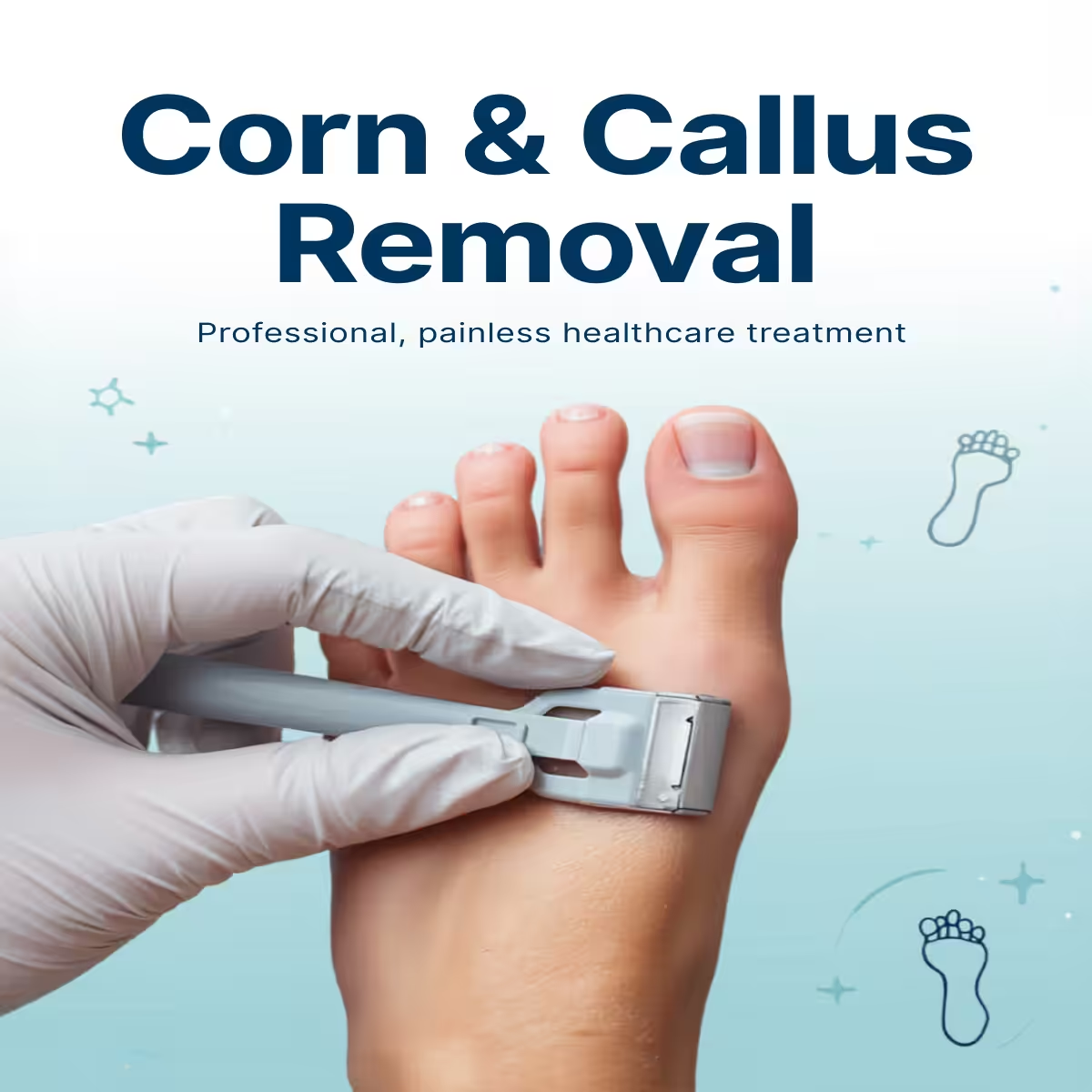
Professional debridement by a podiatrist is the safest and most effective treatment for painful corns and calluses. Dr. Biernacki uses a sterile surgical blade to carefully pare away thickened tissue, relieving pressure on underlying structures and providing immediate pain reduction. This painless in-office procedure typically takes 15 to 20 minutes and requires no anesthesia.
Enucleation of corn nuclei involves removing the dense central core that causes the sharp pain characteristic of hard corns. Simply shaving the surface of a corn provides temporary relief, but the nucleus continues pressing into deeper tissue. Proper enucleation removes the entire core, providing longer-lasting results.
Medicated padding and offloading techniques redistribute pressure away from corn and callus sites between office visits. Felt pads, silicone toe sleeves, and donut-shaped corn cushions protect vulnerable areas while allowing continued activity. Dr. Biernacki custom-fabricates padding specific to each patient’s lesion location.
Over-the-counter corn removal products containing salicylic acid should be used with extreme caution. These medicated pads do not discriminate between thickened and healthy tissue, and can cause chemical burns, particularly in patients with diabetes or peripheral arterial disease. Dr. Biernacki strongly advises against bathroom surgery with razors or scissors, which risks infection and deeper tissue injury.
Addressing the Root Cause: Preventing Recurrence
Custom orthotics redistribute plantar pressure to prevent callus recurrence under metatarsal heads. Metatarsal pads positioned behind the metatarsal heads lift and spread the transverse arch, reducing concentrated pressure on individual metatarsal heads. Total contact insoles provide uniform pressure distribution across the entire plantar surface.
Shoe modification recommendations address the external factors contributing to corn and callus formation. Dr. Biernacki evaluates each patient’s footwear and recommends appropriate styles, widths, and features based on their specific foot shape and problem areas. A wider toe box eliminates compression corns, while adequate cushioning reduces plantar callus formation.
Surgical correction of the underlying deformity may be indicated for patients with recurrent, painful corns that do not respond to conservative management. Hammertoe correction eliminates dorsal corns permanently by removing the bony prominence. Metatarsal osteotomy addresses plantar calluses caused by a plantarflexed metatarsal head. These procedures target the structural cause rather than repeatedly treating the symptom.
Moisturizing the feet daily with urea-based creams (20 to 40 percent concentration) maintains skin elasticity and slows callus reformation between debridement visits. Applying moisturizer after bathing when the skin is still slightly damp maximizes absorption and effectiveness.
Corns, Calluses, and Diabetes: Special Considerations
Diabetic patients with peripheral neuropathy face significantly higher risks from corns and calluses because they cannot feel the pressure damage accumulating beneath thickened skin. A callus that would cause pain and prompt treatment in a non-diabetic patient can silently progress to skin breakdown and ulceration in someone with neuropathy.
Diabetic foot ulcers frequently develop beneath neglected plantar calluses. The thickened tissue acts like a stone in the shoe, concentrating pressure on the underlying soft tissue until it breaks down. Regular podiatric care with scheduled debridement every four to eight weeks prevents this dangerous progression.
Patients with diabetes should never use over-the-counter corn removers, medicated pads, or sharp instruments on their feet. Impaired sensation, reduced blood flow, and compromised immune function create a perfect storm for infection and wound complications from these self-treatment methods.
Dr. Biernacki provides comprehensive diabetic foot care that includes regular corn and callus debridement, skin assessment, vascular evaluation, and patient education on daily foot inspection. This preventive approach is far more effective — and less costly — than treating diabetic foot complications after they develop.
Warning Signs Requiring Urgent Evaluation
- function bold() { [native code] } — undefined
- function bold() { [native code] } — undefined
- function bold() { [native code] } — undefined
- function bold() { [native code] } — undefined
The Most Common Mistake We See
The biggest mistake people make with corns and calluses is treating only the symptom while ignoring the cause. Repeatedly removing thickened skin without addressing the biomechanical abnormality or footwear issue that creates it guarantees the corn or callus will return within weeks. Effective long-term management requires identifying why the friction or pressure exists in the first place — whether it is a hammertoe, bunion, shoe fit issue, or metatarsal alignment problem — and correcting that underlying factor.
Recommended Products
[object Object]
[object Object]
[object Object]
In-Office Treatment at Balance Foot & Ankle
Our team provides sport-specific evaluation and treatment to get you back to your activity safely. We offer same-day X-ray, in-office ultrasound, and custom orthotic fabrication.
Same-day appointments available. Call (810) 206-1402 or book online.
Frequently Asked Questions
What is the difference between a corn and a callus?
Calluses are broad, flat areas of thickened skin on weight-bearing surfaces like the ball of the foot. Corns are smaller, focused lesions with a hard central core that presses into deeper tissue, typically on the tops or sides of toes. Corns tend to be more painful because of their concentrated pressure point.
Can I remove corns and calluses at home?
Gentle filing with a pumice stone after bathing can maintain calluses between professional visits. However, cutting corns or calluses with razors or scissors risks infection and deeper tissue injury. Medicated corn removers can burn healthy skin. Professional debridement is the safest treatment, especially for diabetic patients.
Why do my corns keep coming back?
Corns recur because the underlying cause — typically a biomechanical abnormality, ill-fitting shoes, or structural deformity like a hammertoe — continues creating friction and pressure in the same location. Long-term resolution requires addressing the root cause with orthotics, proper shoes, or surgical correction.
How often should I see a podiatrist for calluses?
Most patients benefit from professional debridement every 8 to 12 weeks. Diabetic patients with neuropathy should be seen every 4 to 8 weeks for preventive care. Your podiatrist will recommend a schedule based on how quickly your calluses reform and your overall risk level.
The Bottom Line
Corns and calluses are among the most common foot complaints and are highly treatable with professional podiatric care. Dr. Tom Biernacki at Balance Foot & Ankle provides expert debridement combined with biomechanical assessment and long-term management strategies to reduce recurrence and keep your feet comfortable.
Sources
- Freeman DB. Corns and calluses resulting from mechanical hyperkeratosis. Am Fam Physician. 2024;109(4):345-352.
- Singh D et al. Plantar calluses: pathomechanics and treatment. Clin Podiatr Med Surg. 2025;42(2):189-201.
- Bus SA et al. Diabetic foot ulcer prevention: guidelines update 2024. Diabetes Metab Res Rev. 2024;40(3):e3657.
Professional Corn & Callus Treatment in Michigan
Dr. Tom Biernacki has performed over 3,000 foot and ankle surgeries with a 4.9-star rating from 1,123 patient reviews.
Or call (810) 206-1402 for same-day appointments
Professional Corn & Callus Treatment
Painful corns and calluses are more than a cosmetic issue — they signal abnormal pressure from biomechanical problems. Dr. Tom Biernacki provides safe, professional removal and addresses the root cause to prevent recurrence.
Learn About Corn & Callus Treatment → | Book Your Appointment | Call (810) 206-1402
Clinical References
- Freeman DB. “Corns and calluses resulting from mechanical hyperkeratosis.” Am Fam Physician. 2002;65(11):2277-2280.
- Singh D, et al. “Fortnightly review: plantar fasciitis and callosities.” BMJ. 1997;315(7099):172-175.
- Grouios G. “Corns and calluses in athletes’ feet: a cause for concern.” Foot. 2004;14(4):175-184.
Insurance Accepted
BCBS · Medicare · Aetna · Cigna · United Healthcare · HAP · Priority Health · Humana · View All →
Howell Office
3980 E Grand River Ave, Suite 140
Howell, MI 48843
Get Directions →
Bloomfield Hills Office
43700 Woodward Ave, Suite 207
Bloomfield Hills, MI 48302
Get Directions →
Your Board-Certified Podiatrists



Ready to Get Back on Your Feet?
Same-week appointments available at both locations.
Book Your Appointment
Dr. Tom Biernacki, DPM is a double board-certified podiatrist and foot & ankle surgeon at Balance Foot & Ankle Specialists in Southeast Michigan. With over a decade of clinical experience, he specializes in heel pain, bunions, diabetic foot care, sports injuries, and minimally invasive surgery. Dr. Biernacki is a member of the APMA and ACFAS, and his patient education content on MichiganFootDoctors.com and YouTube has reached over one million views.
- Plantar Fasciitis: Diagnosis and Conservative Management (PubMed)
- Plantar Fasciitis (APMA)
- Diagnosis and Treatment of Plantar Fasciitis (PubMed / AAFP)
- Heel Pain (APMA)
Recommended Products from Dr. Tom