
Medically reviewed by Dr. Tom Biernacki, DPM
Board-certified podiatric surgeon | Balance Foot & Ankle
Last reviewed: April 2026
Quick answer: Field hockey foot and ankle injuries — including ankle sprains, turf toe, and metatarsal stress injuries — result from rapid direction changes and hard turf surfaces. Proper cleat selection, ankle bracing, and custom orthotics significantly reduce injury risk.
In this guide:
Foot and Ankle Demands of Field Hockey

Field hockey requires continuous multi-directional running, rapid acceleration and deceleration, low-body crouching positions unique to the sport, and frequent impact from ball contact and opposing sticks. Modern field hockey is played predominantly on water-based or sand-based artificial turf surfaces that provide faster play but generate characteristic injury patterns different from natural grass. Michigan has an active field hockey community at the high school, collegiate, and club levels, with players often participating in year-round training programs that accumulate significant foot and ankle stress.
Common Injuries
 ankle sprain and foot injury treatment” class=”wp-image-57352″ width=”800″ height=”450″ loading=”lazy” decoding=”async”/>
Lateral ankle sprains are the most frequent acute injury in field hockey, occurring during the rapid cutting and pivoting required to move around the field and execute quick directional changes with the stick. Artificial turf surfaces increase ankle sprain risk compared to natural grass because cleats grip the surface more firmly and resist the rotational foot motion that helps dissipate sprain forces on softer surfaces. Players who have sprained an ankle should complete a formal rehabilitation program including peroneal strengthening, proprioceptive training on a balance board, and sport-specific movement drills before returning to unrestricted competition.
Plantar fasciitis develops in field hockey players who train at high volumes, particularly at the start of a season when training loads increase rapidly. The low-body stance used during dribbling and defensive play concentrates plantar fascial strain. Metatarsal stress fractures — most commonly affecting the second and third metatarsals — occur in players whose training volume exceeds their bone remodeling capacity. Subungual hematomas (blood under the toenail) from ball and stick impacts are common and painful; they are most effectively drained within 24 hours to relieve pressure and prevent nail loss.
When field hockey players should see a podiatrist:
- Ankle pain or instability that recurs with cutting movements
- Ball-of-foot pain that worsens during games on artificial turf
- Toe pain or stiffness after push-off (possible turf toe)
- Heel pain during warm-ups that limits playing time
- Bruising or swelling after a ball or stick impact to the foot
Cleat Selection and Prevention
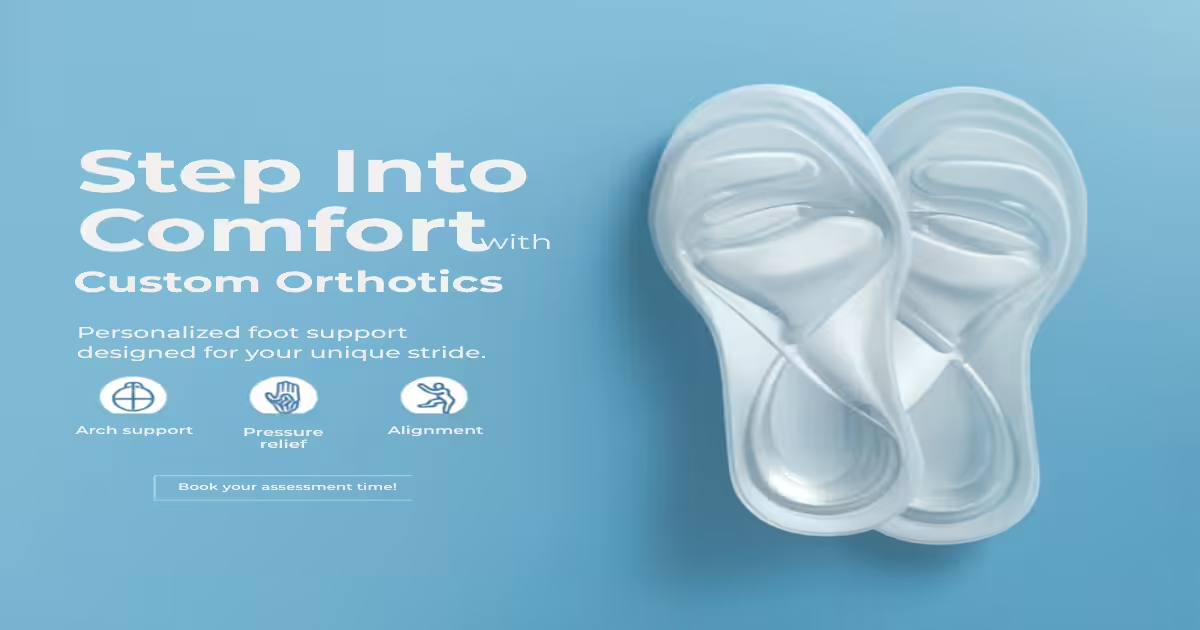
Field hockey cleats for artificial turf use rubber conical or bladed studs rather than the longer metal or plastic cleats used on natural grass. Turf-specific outsoles with numerous small studs distribute load across the surface and reduce the aggressive grip that increases ankle injury risk. Players with flat feet or high arches benefit from custom orthotics inside field hockey cleats to address biomechanical factors that contribute to overuse injuries. A pre-practice dynamic warm-up and post-practice calf and plantar fascia stretching are simple, time-efficient injury prevention measures for field hockey teams.
Recommended Products for Field Hockey Players
In our clinic, we recommend these products for field hockey athletes:
Powerstep Pinnacle Insoles — Fits inside field hockey cleats for arch support and forefoot pressure distribution. Reduces metatarsal stress from hard turf surfaces.
SB SOX Compression Socks — Post-game recovery compression reduces ankle and foot swelling. Helps manage the cumulative inflammation from repetitive turf impact.
TheraBand Foot Roller — Essential for pre-game foot warm-up and post-game recovery. Rolling the plantar fascia before play helps prevent the arch tightness that leads to heel pain.
Frequently Asked Questions
Should field hockey players wear ankle braces?
Players with a history of ankle sprains benefit from lace-up ankle braces during games. These reduce re-injury risk by 40-60% without significantly limiting the mobility needed for field hockey movements.
Why does artificial turf cause more foot injuries?
Artificial turf has less give than natural grass, increasing ground reaction forces on the feet by 15-25%. The higher friction also increases rotational forces on the ankle during cutting movements, raising sprain risk.
How do I choose the right field hockey cleats?
Look for cleats with multiple short studs rather than bladed designs for turf play. A firm heel counter, adequate toe box width, and removable insoles (so you can swap in custom orthotics) are essential features.
The Bottom Line
Field hockey foot and ankle injuries are largely preventable with proper equipment and biomechanical preparation. In our Howell and Bloomfield Hills clinics, we treat Michigan field hockey players at every level and can design sport-specific injury prevention programs. If you’re playing through foot or ankle pain, get evaluated before a minor issue becomes a season-ending injury.
Sports Injury? Get Back in the Game
Same-day appointments available in Howell & Bloomfield Hills, MI
4.9★ | 1,123 Reviews | 3,000+ Surgeries
Or call: (810) 206-1402
Insurance Accepted
BCBS · Medicare · Aetna · Cigna · United Healthcare · HAP · Priority Health · Humana · View All →
Howell Office
3980 E Grand River Ave, Suite 140
Howell, MI 48843
Get Directions →
Bloomfield Hills Office
43700 Woodward Ave, Suite 207
Bloomfield Hills, MI 48302
Get Directions →
Your Board-Certified Podiatrists



Ready to Get Back on Your Feet?
Same-week appointments available at both locations.
Book Your Appointment
Dr. Tom Biernacki, DPM is a double board-certified podiatrist and foot & ankle surgeon at Balance Foot & Ankle Specialists in Southeast Michigan. With over a decade of clinical experience, he specializes in heel pain, bunions, diabetic foot care, sports injuries, and minimally invasive surgery. Dr. Biernacki is a member of the APMA and ACFAS, and his patient education content on MichiganFootDoctors.com and YouTube has reached over one million views.
- Plantar Fasciitis: Diagnosis and Conservative Management (PubMed)
- Plantar Fasciitis (APMA)
- Diagnosis and Treatment of Plantar Fasciitis (PubMed / AAFP)
- Heel Pain (APMA)
Treatment Options Available at Our Office