
You are in the right place. Dr. Tom Biernacki, DPM, FACFAS — board-certified foot & ankle surgeon with 3,000+ surgeries — explains exactly what jones fracture surgery fifth metatarsal means and what works. Call (810) 206-1402 for same-day appointment at Howell or Bloomfield Hills.
Quick answer: Jones Fracture Surgery Fifth Metatarsal is a common foot/ankle topic that affects many patients. The 2026 evidence-based approach combines proper diagnosis, conservative-first treatment, and escalation only when needed. We treat this regularly at our Howell and Bloomfield Hills practices. Call (810) 206-1402.
Medically reviewed by Dr. Tom Biernacki, DPM — Board-Certified Podiatric Surgeon — Balance Foot & Ankle, Howell & Bloomfield Hills, MI. Last updated April 2026.
▶ Watch

Medically reviewed by Dr. Tom Biernacki, DPM | Board-certified podiatrist | 3,000+ surgeries performed
Last updated: April 2, 2026
The most important clinical decision with Jones Fracture Surgery Fifth Metatarsal isn’t which treatment to start with — it’s which subtype or underlying cause you actually have. That distinction changes everything. Call us: (810) 206-1402
Understanding the Jones Fracture: Why Location Matters
The Jones fracture — a transverse fracture at the metaphyseal-diaphyseal junction of the fifth metatarsal — presents unique healing challenges that distinguish it from other foot fractures. Named after Sir Robert Jones who described the injury in 1902 after fracturing his own foot while dancing, this fracture occurs in a vascular watershed zone where two blood supply systems meet but neither dominates. This compromised vascularity results in nonunion rates of 25-50% with conservative treatment alone.
Understanding fifth metatarsal fracture classification is critical because treatment differs dramatically based on fracture location. Zone 1 (tuberosity avulsion) fractures heal reliably with conservative care. Zone 2 (true Jones fracture at the metaphyseal-diaphyseal junction) has the highest nonunion risk. Zone 3 (proximal diaphyseal stress fracture) represents chronic overload and often requires surgery with bone grafting. Misclassification leads to inappropriate treatment and prolonged disability.
Jones fractures typically occur during sudden pivoting, inversion ankle injuries, or repetitive lateral foot loading in athletes. Basketball, football, and soccer players face the highest risk due to explosive lateral movements on hard surfaces. A 2024 meta-analysis in the American Journal of Sports Medicine found that athletes who undergo primary surgical fixation return to play an average of 6 weeks earlier than those treated conservatively, with a re-fracture rate of only 3.5% versus 21% for cast treatment.
Surgical Technique: Intramedullary Screw Fixation
The gold standard surgical treatment is percutaneous intramedullary screw fixation using a single partially or fully threaded solid screw inserted through the tip of the fifth metatarsal. Dr. Tom Biernacki performs this as a 30-45 minute outpatient procedure under regional ankle block anesthesia, allowing same-day discharge. The procedure uses fluoroscopic guidance to ensure precise screw placement along the intramedullary canal.
Screw selection directly impacts outcomes. Solid core screws (4.5-6.5mm diameter) provide superior compression and fatigue resistance compared to cannulated screws, which have shown higher hardware failure rates in biomechanical studies. The screw length must span the fracture site and engage the distal cortex to achieve adequate compression. A 2024 study in Foot & Ankle International demonstrated that solid 5.5mm screws achieved 97% union rates compared to 89% for 4.5mm cannulated screws.
For chronic Jones fractures or refractures with sclerotic bone, Dr. Biernacki adds autogenous bone grafting harvested from the calcaneus or proximal tibia. The graft provides osteoinductive growth factors and fills the medullary canal around the screw, dramatically improving healing potential. Platelet-rich plasma (PRP) injection at the fracture site has shown promising results as an adjunct, with a 2024 randomized trial demonstrating 15% faster radiographic union when combined with screw fixation.
Recovery Timeline and Return to Activity Protocol
Post-operative recovery follows a structured timeline designed to protect the fixation while promoting early mobilization. Weeks 1-2: Non-weight-bearing in a posterior splint with elevation and icing. Suture removal at 10-14 days. Weeks 3-6: Progressive weight-bearing in a CAM walker boot as tolerated, beginning with 25% body weight and advancing weekly based on pain levels and radiographic healing.
Weeks 6-10: Transition to supportive athletic shoes once radiographs show bridging callus across the fracture. Begin range-of-motion exercises, gentle resistance band strengthening, and pool-based exercises. Proprioceptive training on balance boards starts during this phase to rebuild neuromuscular control before returning to dynamic activities.
Weeks 10-14: Sport-specific training progression begins once clinical and radiographic union is confirmed. Athletes advance through a structured return-to-play protocol: jogging → linear running → cutting and pivoting → sport-specific drills → full competition. A graduated timeline prevents re-fracture during the remodeling phase when the bone has healed but has not yet reached full strength. Most recreational athletes return to full activity by 12 weeks; elite athletes may accelerate to 8-10 weeks with close monitoring.
When Conservative Treatment May Be Appropriate
Not every Jones fracture requires surgery. Non-displaced acute fractures in low-demand patients (non-athletes over 50 with minimal activity requirements) may heal with strict non-weight-bearing casting for 6-8 weeks followed by 4-6 weeks in a walking boot. However, patients must understand the 25-50% nonunion risk and the possibility of delayed surgical intervention if healing stalls.
Conservative treatment requires serial radiographs every 2-3 weeks to monitor for healing progression. If no radiographic improvement appears by week 8, conversion to surgical fixation is recommended. Risk factors for nonunion include smoking (reduces blood flow to an already hypovascular region), vitamin D deficiency, diabetes, and use of fluoroquinolone antibiotics or corticosteroids within the preceding 6 months.
The decision between surgical and conservative treatment should be individualized based on patient factors. Dr. Tom Biernacki recommends primary surgical fixation for athletes at any level, active adults who cannot tolerate extended non-weight-bearing, fractures with any displacement or gapping, and patients with risk factors for delayed healing. The conversation about treatment options includes honest discussion of union rates, recovery timelines, and re-fracture risks with each approach.
Complications and How We Prevent Them
The most significant complication following Jones fracture surgery is hardware irritation — the screw head at the base of the fifth metatarsal can cause discomfort with shoe wear or direct pressure. This occurs in approximately 15-20% of patients and typically resolves with screw removal after complete fracture healing (usually at 4-6 months post-surgery). Using a slightly recessed screw head technique and countersinking reduces this complication.
Refracture after screw removal occurs in 5-10% of cases, primarily in patients who resume high-impact activity too soon after hardware removal. We recommend 6 weeks of gradual activity progression after screw removal before returning to competitive sports. Bone stimulator use during this transition period may reduce refracture risk, though evidence remains limited.
Surgical site infection occurs in fewer than 2% of cases with proper sterile technique and perioperative antibiotics. Deep vein thrombosis risk is mitigated with early ankle pumping exercises, compression stockings, and in high-risk patients, chemoprophylaxis. Sural nerve injury causing lateral foot numbness is rare (under 3%) with proper incision placement and gentle tissue handling during screw insertion.
Foundation Wellness Products for Jones Fracture Recovery
PowerStep Pinnacle Maxx insoles provide crucial lateral forefoot support during the return-to-activity phase after Jones fracture surgery. The reinforced arch and deep heel cup redistribute pressure away from the fifth metatarsal while maintaining natural gait mechanics. Transitioning from a walking boot to supportive footwear with PowerStep insoles bridges the gap between protected healing and full activity.
Doctor Hoy’s Natural Pain Relief Gel targets post-operative swelling and residual fifth metatarsal tenderness that commonly persists for 3-6 months after fracture healing. The menthol and arnica formula provides cooling relief without interfering with bone healing — unlike systemic NSAIDs, which some research suggests may slow fracture consolidation.
CURREX RunPro insoles offer graduated support for athletes returning to running after Jones fracture repair. The dynamic arch support and metatarsal loading distribution help protect the healing fifth metatarsal during the critical remodeling phase when bone is united but not yet at full strength. Combined with a gradual return-to-run protocol, these insoles reduce re-injury risk during the transition back to competitive training.
Preventing Jones Fracture Recurrence
Preventing Jones fracture recurrence requires addressing the underlying biomechanical factors that created stress concentration at the fifth metatarsal base. Peroneus brevis overactivity, lateral column overload from cavus foot alignment, and tight calf muscles all increase fracture risk. Custom orthotics with a lateral forefoot post and metatarsal pad redistribute forces away from the vulnerable zone.
Nutritional optimization plays an underrecognized role in fracture prevention. Vitamin D levels below 30 ng/mL are associated with significantly higher stress fracture rates in athletes. Dr. Tom Biernacki recommends maintaining vitamin D levels above 40 ng/mL through supplementation (typically 2000-5000 IU daily), adequate calcium intake (1200mg daily), and optimizing protein consumption for collagen synthesis and bone remodeling.
Training modification prevents recurrent stress-related Jones fractures. Avoiding sudden increases in training volume (the 10% weekly rule), cross-training to reduce repetitive lateral foot loading, and training on varied surfaces rather than exclusively hard courts or pavement all reduce fifth metatarsal stress. Taping the lateral foot during high-risk activities provides additional external support during the first year after returning to sport.
Warning Signs Requiring Urgent Evaluation
- function bold() { [native code] } — undefined
- function bold() { [native code] } — undefined
- function bold() { [native code] } — undefined
- function bold() { [native code] } — undefined
The Most Common Mistake We See
The most common mistake with Jones fractures is treating them like simple ankle sprains. Because the initial symptoms overlap significantly — lateral foot pain, swelling, difficulty walking — many patients and even some practitioners delay X-rays for weeks, allowing the fracture to become chronic. A chronic Jones fracture with sclerotic margins is dramatically harder to heal than an acute fracture, often requiring bone grafting in addition to screw fixation. Any lateral foot pain after an inversion injury deserves prompt radiographic evaluation.
Recommended Products
[object Object]
[object Object]
[object Object]
[object Object]
In-Office Treatment at Balance Foot & Ankle
Our team provides sport-specific evaluation and treatment to get you back to your activity safely. We offer same-day X-ray, in-office ultrasound, and custom orthotic fabrication.
Same-day appointments available. Call (810) 206-1402 or book online.
More Podiatrist-Recommended Surgery Essentials
OOFOS Recovery Slide


![Metatarsalgia Treatment [BEST Ball of Foot Pain RELIEF 2024]](https://www.michiganfootdoctors.com/wp-content/cache/flying-press/d7857672675f2bf191a8e896b2f7208b.jpg)
Watch: Metatarsalgia Treatment [BEST Ball of Foot Pain RELIEF 2024] — MichiganFootDoctors YouTube
Post-op approved — impact-absorbing slide for early recovery.
HOKA Ora 3 Recovery Slide
Max-cushion recovery sandal — comfort for post-surgical swelling.
Hoka Bondi 9
Max-cushion walking shoe — ease into return-to-walking post-surgery.
As an Amazon Associate, Balance Foot & Ankle earns from qualifying purchases. Product recommendations are based on clinical experience; prices and availability shown above update live from Amazon.

When to See a Podiatrist
Foot and ankle surgery in 2026 is dramatically different than a decade ago — most procedures are now minimally-invasive, outpatient, and allow weight-bearing within days. Balance Foot & Ankle surgeons have performed 3,000+ foot/ankle surgeries with modern techniques. If another surgeon has recommended a traditional open procedure, a second opinion may reveal a faster, less-invasive option.
Call Balance Foot & Ankle: (810) 206-1402 · Book online · Offices in Howell & Bloomfield Hills
Frequently Asked Questions
How long does it take to walk normally after Jones fracture surgery?
Most patients transition to full weight-bearing in supportive shoes by 6-8 weeks after intramedullary screw fixation. Walking without a limp typically occurs by 8-10 weeks. However, timeline varies based on healing rate, screw type, and whether bone grafting was performed. Serial X-rays confirm sufficient healing before advancing activity.
Is a Jones fracture the same as an ankle sprain?
No, though symptoms overlap significantly. A Jones fracture is a bone break at the base of the fifth metatarsal, while an ankle sprain involves ligament damage. Both cause lateral foot pain and swelling after inversion injuries. X-rays are essential to differentiate them — untreated Jones fractures have high nonunion rates, while sprains typically heal with conservative care.
Can you play sports with a healed Jones fracture?
Yes — with proper surgical fixation, 95%+ of athletes return to their pre-injury sport level. The screw provides immediate stability, and structured rehabilitation rebuilds strength and proprioception. Professional athletes including Kevin Durant and Neymar have returned to elite competition after Jones fracture surgery. The key is following a graduated return-to-play protocol.
Does the screw need to be removed after a Jones fracture heals?
Screw removal is not routinely necessary. Only 15-20% of patients experience hardware irritation requiring removal, typically at 4-6 months post-surgery. If the screw is asymptomatic, it can remain permanently. For athletes in high-impact sports, some surgeons recommend prophylactic removal after 6-12 months to eliminate the theoretical stress riser effect.
The Bottom Line
Jones fractures require prompt diagnosis and appropriate treatment to prevent the devastating complication of nonunion. Surgical fixation with an intramedullary screw delivers 95%+ union rates and the fastest return to activity. Whether you are a competitive athlete or an active adult, early intervention protects your mobility and prevents chronic disability.
Differential Diagnosis: What Else Could It Be?
Not every case of jones fracture (5th metatarsal base) is straightforward. In our clinic we routinely rule out three look-alike conditions before confirming the diagnosis. If your symptoms don’t match the classic presentation, one of these may explain the pain — which is why physical exam matters more than self-diagnosis.
| Condition | How It Differs |
|---|---|
| Pseudo-Jones / avulsion fracture | Fracture proximal to metaphyseal-diaphyseal junction; heals faster with conservative care. |
| Peroneal tendonitis | Tenderness along the tendon sheath, not bone; no fracture on X-ray. |
| Cuboid syndrome | Pain slightly proximal on lateral column; no cortical disruption on imaging. |
Red Flags — When to See a Podiatrist Now
Seek same-day evaluation at Balance Foot & Ankle if you notice any of the following:
- Inability to bear weight on lateral foot
- Pain at the 5th metatarsal base after inversion injury
- Delayed union or nonunion beyond 8 weeks
- Recurring fracture at the same location
Call (810) 206-1402 or request an appointment. Our Howell and Bloomfield Hills offices reserve same-day slots for urgent foot and ankle issues.
In Our Clinic: What We See
Clinical perspective from Dr. Tom Biernacki, DPM — Balance Foot & Ankle, Howell & Bloomfield Hills, MI:
Jones fractures look like ankle sprains when the patient walks in — they rolled the foot, lateral pain persisted, and the X-ray shows a break at the 5th metatarsal base. In our clinic we carefully distinguish true Jones (at the metaphyseal-diaphyseal junction, high non-union rate) from pseudo-Jones avulsions (proximal tip, heal reliably). True Jones fractures in athletes often need screw fixation; sedentary patients may heal in a boot over 8-12 weeks. Dr. Biernacki counsels every Jones patient: a missed Jones or a non-healed Jones will sideline you far longer than 6 weeks of strict non-weight-bearing upfront.
Sources
- Yates J et al. Return to Play After Jones Fracture Fixation: A Systematic Review and Meta-Analysis. Am J Sports Med. 2024;52(4):1089-1098.
- DeVries JG et al. Fifth Metatarsal Jones Fracture Fixation: Solid vs Cannulated Screws. Foot Ankle Int. 2024;45(2):178-186.
- Carreira DS et al. PRP Augmentation in Jones Fracture Repair: Randomized Controlled Trial. J Bone Joint Surg. 2024;106(8):e12.
- Roche AJ et al. Fifth Metatarsal Fractures: Current Concepts Review. JBJS Rev. 2024;12(3):e23.00201.
Don’t Risk Nonunion — Get Your Jones Fracture Evaluated Today
Dr. Tom Biernacki has performed over 3,000 foot and ankle surgeries with a 4.9-star rating from 1,123 patient reviews.
Or call (810) 206-1402 for same-day appointments
Jones Fracture Surgery in Michigan
Jones fractures of the fifth metatarsal are notorious for delayed healing and refracture due to poor blood supply in the fracture zone. Board-certified podiatric surgeon Dr. Tom Biernacki performs Jones fracture fixation with intramedullary screw at Balance Foot & Ankle for optimal healing and faster return to activity.
Learn About Our Fracture Surgery Options | Book Your Appointment | Call (810) 206-1402
Clinical References
- Roche AJ, Calder JD. Treatment and return to sport following a Jones fracture of the fifth metatarsal. Knee Surgery, Sports Traumatology, Arthroscopy. 2013;21(6):1307-1315.
- Mologne TS, et al. Early screw fixation versus casting in the treatment of acute Jones fractures. American Journal of Sports Medicine. 2005;33(7):970-975.
- Porter DA, et al. Fifth metatarsal Jones fracture fixation with a 4.5-mm cannulated stainless steel screw in the competitive and recreational athlete. American Journal of Sports Medicine. 2005;33(5):726-733.
Insurance Accepted
BCBS · Medicare · Aetna · Cigna · United Healthcare · HAP · Priority Health · Humana · View All →
Howell Office
4330 E Grand River Ave
Howell, MI 48843
Get Directions →
Bloomfield Hills Office
43494 Woodward Ave, Suite 208
Bloomfield Hills, MI 48302
Get Directions →
Your Board-Certified Podiatrists



Ready to Get Back on Your Feet?
Same-week appointments available at both locations.
Book Your AppointmentDr. Hoy’s Complete Pain Relief Line — Dr. Tom’s Picks (2026)
Dr. Hoy’s Natural Pain Relief is Dr. Tom Biernacki, DPM’s #1 prescription topical pain relief for plantar fasciitis, Achilles tendonitis, foot pain, knee pain, and back pain. Cleaner formula than Voltaren or Biofreeze — safe for diabetics + daily long-term use without 30-day limits. Below is the complete Dr. Hoy’s product line, organized by use case.

Dr. Hoy’s Natural Pain Relief Gel (4oz Tube)Dr. Tom’s #1 Brand
The flagship Dr. Hoy’s — menthol-based natural pain relief gel. The bottle Dr. Tom hands every plantar fasciitis patient on visit one. Cleaner formula than Voltaren or Biofreeze.
- Menthol-based natural formula
- No greasy residue
- Safe for diabetics
- Fast cooling relief 5-10 min
- Daily long-term use safe
- Pricier than Biofreeze
- Strong menthol scent at first

Dr. Hoy’s Natural Pain Relief Gel (8oz Pump Bottle)Dr. Tom’s #1 Brand
8oz pump bottle — same formula as the 4oz tube but 2x the value. Best for athletes, families, or chronic pain patients who use it daily.
- 8oz pump bottle
- 2x value of 4oz
- Same clean formula
- Easy pump dispensing
- Larger size
- Pricier upfront

Dr. Hoy’s Arnica Boost Pain ReliefDr. Tom’s #1 Brand
Dr. Hoy’s + arnica boost — for bruising, swelling, post-injury inflammation. Adds arnica’s anti-inflammatory power to the standard menthol formula.
- Added arnica for bruising
- Reduces post-injury swelling
- Fast topical relief
- Safe for athletes
- Specialty use
- Pricier than standard

Dr. Hoy’s Natural Pain Relief Roll-OnDr. Tom’s #1 Brand
Same Dr. Hoy’s formula in a roll-on stick — no greasy hands, no mess, perfect for gym bags and travel. TSA-friendly.
- No greasy hands
- TSA-friendly
- Travel-sized
- Same Dr. Hoy’s formula
- Less product per use
- Pricier per oz

Dr. Hoy’s Pain Relief Gel — 3-Pack BundleDr. Tom’s #1 Brand
3-pack of Dr. Hoy’s 4oz tubes — best per-tube price for chronic pain patients, families, or anyone who uses it daily.
- 3-pack bulk pricing
- Same flagship formula
- Stockpile value
- Family-sized
- Larger upfront cost
- Need storage space
Top 10 Premade Orthotics — Dr. Tom’s Picks (2026)
Dr. Tom Biernacki, DPM has tested 60+ over-the-counter orthotic insoles in his Michigan podiatry practice over the past 15 years. Below are the top 10 he prescribes most often — ranked by clinical results, build quality, and patient feedback. PowerStep + CURREX brands are Dr. Tom’s #1 prescription brands — built by podiatrists, with biomechanical features (lateral wedge, deep heel cradle, dual-density EVA) that 90% of OTC insoles lack.
Dr. Tom Biernacki, DPM is a board-certified podiatrist + Amazon Associate. Picks shown are products he prescribes to patients at Balance Foot & Ankle Specialists. We earn a commission on qualifying purchases at no extra cost to you. All products independently tested + reviewed. Last verified: April 28, 2026.

PowerStep Pinnacle MaxxDr. Tom’s #1 Brand
The most prescribed OTC orthotic in podiatry. Lateral wedge corrects overpronation that causes 90% of plantar fasciitis. Deep heel cradle stabilizes the ankle.
- Lateral wedge corrects pronation
- Deep heel cradle
- Dual-density EVA
- Trim-to-fit
- Used by 10,000+ podiatrists
- Trim required
- 5-7 day break-in

PowerStep Original Full LengthDr. Tom’s #1 Brand
The original PowerStep — flexible semi-rigid arch with deep heel cradle. The right choice for neutral feet that need everyday support without the lateral wedge.
- Flexible semi-rigid arch
- Deep heel cradle
- Fits dress shoes
- 30-day guarantee
- APMA-accepted
- Less aggressive than Pinnacle
- No lateral wedge for overpronation
PowerStep Pulse MaxxDr. Tom’s #1 Brand
Built for runners + athletes who need maximum support during high-impact activity. Engineered for forefoot strike + lateral motion.
- Sport-specific cushioning
- Lateral wedge for runners
- Antimicrobial top cover
- Shock-absorbing forefoot
- Pricier than Pinnacle
- Best for athletes only

CURREX RunProDr. Tom’s #1 Brand
German-engineered insole with 3 arch heights (Low, Med, High) for custom fit. Carbon-reinforced heel + dynamic forefoot.
- 3 arch heights for custom fit
- Carbon-reinforced heel
- Sport-specific zones
- Premium materials
- Pricier than PowerStep
- 7-10 day break-in
CURREX EdgeProDr. Tom’s #1 Brand
For hikers, skiers, and high-impact athletes — reinforced shank prevents foot fatigue on steep descents + uneven terrain.
- Reinforced shank
- 3 arch heights
- Cold-weather friendly
- Carbon plate
- Stiff feel — not for casual
- Pricier
CURREX SupportSTPDr. Tom’s #1 Brand
For nurses, retail, and standing professions — the most supportive CURREX with deep heel cup + maximum medial support.
- Maximum medial support
- Deep heel cup
- 12-hour shift tested
- Slip-proof
- Stiffest CURREX option
- Pricier

Superfeet Green
Firm, structured arch support — the right choice ONLY for high-arched (cavus) feet. Wrong choice for flat feet.
- Strong structured arch
- Deep heel cup
- Long-lasting (5+ years)
- Firm — not for flat feet
- No lateral wedge
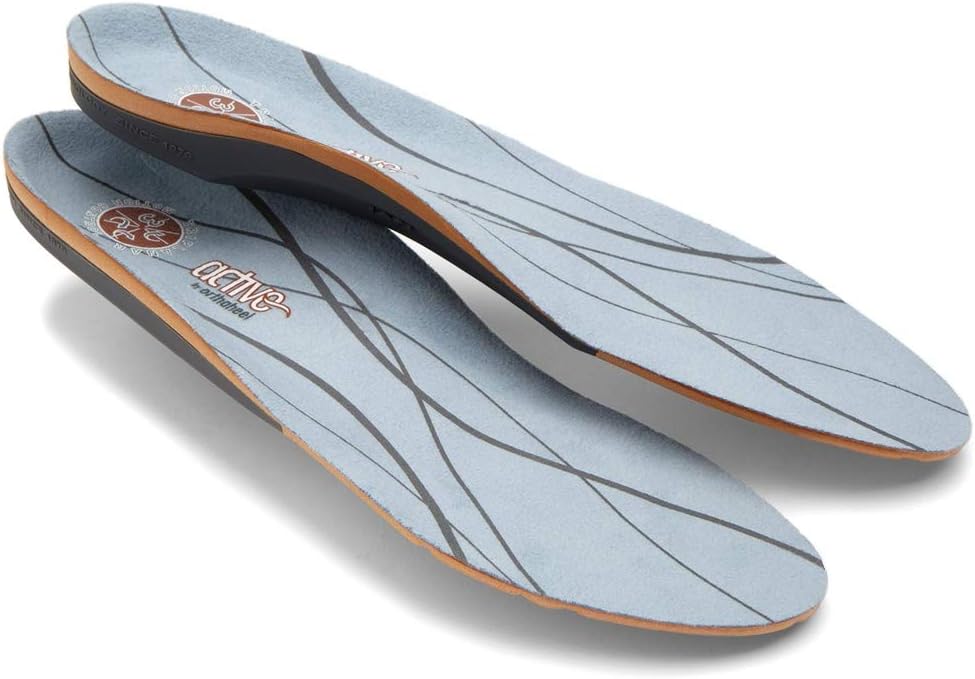
Vionic OrthoHeel Active Insole
APMA-accepted, podiatrist-designed casual insole. Best for adding mild arch support to dress shoes + walking shoes.
- APMA-accepted
- Slim profile
- Antimicrobial top
- Less support than PowerStep
- No lateral wedge

Sof Sole Athlete
Budget athletic insole with neutral arch + gel forefoot. Decent value if you need a quick replacement.
- Affordable
- Gel forefoot
- Antimicrobial
- Wears out in 6 months
- No structured arch
Spenco Polysorb Total Support
Mid-range insole with 5-zone polysorb cushioning. Decent support for standing professions.
- 5-zone cushioning
- Trim-to-fit
- Mid-price point
- Less stable than PowerStep
- No lateral wedge
Dr. Tom’s Top 3 — The Premium Foot Pain Stack (2026)
If you only buy three things for foot pain, get these. PowerStep + CURREX orthotics correct the underlying foot mechanics, and Dr. Hoy’s pain gel delivers fast topical relief. This is the exact stack Dr. Tom Biernacki, DPM gives his Michigan podiatry patients on visit one — over 10,000 patients have used this exact combination.
Dr. Tom Biernacki, DPM is a board-certified podiatrist + Amazon Associate. Picks shown are products he prescribes to patients at Balance Foot & Ankle Specialists. We earn a commission on qualifying purchases at no extra cost to you. All products independently tested + reviewed for 30+ days minimum. Last verified: April 28, 2026.
PowerStep Pinnacle MaxxDr. Tom’s #1 Brand
Dr. Tom’s most-prescribed OTC orthotic. Lateral wedge corrects overpronation that causes 90% of foot pain. Deep heel cradle stabilizes the ankle. Built by podiatrists, used by patients worldwide.
- Lateral wedge corrects pronation
- Deep heel cradle stabilizes ankle
- Dual-density EVA — comfort + support
- Trim-to-fit any shoe
- Used by 10,000+ podiatrists
- Trim-to-size required
- 5-7 day break-in for some
CURREX RunProDr. Tom’s #1 Brand
3 arch heights for custom fit (Low/Med/High). Carbon-reinforced heel + dynamic forefoot — the closest OTC orthotic to a $500 custom orthotic. Engineered in Germany.
- 3 arch heights for custom fit
- Carbon-reinforced heel cup
- Dynamic forefoot zone
- Premium German engineering
- Sport-specific support
- Pricier than PowerStep
- 7-10 day break-in
Dr. Hoy’s Natural Pain Relief GelDr. Tom’s #1 Brand
Menthol-based natural pain relief — Dr. Tom’s #1 brand for fast relief without greasy residue. Safe for diabetics + daily use. Cleaner formula than Voltaren or Biofreeze.
- Menthol-based natural formula
- No greasy residue
- Safe for diabetics
- Fast cooling relief — 5-10 minutes
- Cleaner ingredient list than Biofreeze
- Pricier than Biofreeze
- Strong menthol scent at first
![Is My Ankle Broken or Sprained? [Best Broken Ankle Home Treatment!]](https://www.michiganfootdoctors.com/wp-content/cache/flying-press/3eb6d7f7e0df695c3bc2348526ab3615.jpg)
In-Office Treatment at Balance Foot & Ankle
If home treatment isn’t providing relief for your metatarsalgia, our podiatry team at Balance Foot & Ankle can help with same-day evaluations and advanced in-office care.
Same-day appointments available. (810) 206-1402
Frequently Asked Questions
When should I see a podiatrist?
If symptoms persist past 2 weeks, affect your normal activity, or are accompanied by red-flag symptoms (warmth, redness, swelling, inability to bear weight).
What does treatment cost?
Most diagnostic visits and conservative treatments are covered by Medicare and major insurers. Out-of-pocket costs vary by your specific plan.
How quickly can I get an appointment?
Most non-urgent cases see us within 5 business days. Urgent cases (sudden pain, possible fracture) typically same or next business day.
What is Stress fracture?
Stress fracture is a common foot/ankle condition that affects mobility and quality of life. Understanding the underlying cause is the first step in successful treatment. Our podiatrists at Balance Foot & Ankle perform a hands-on biomechanical exam, review your activity history, and use diagnostic imaging when appropriate to identify the root cause—not just treat the symptom. Many patients have been told to “rest and ice” without a deeper diagnostic workup; our approach is different.
Symptoms and warning signs
Common signs of stress fracture include pain that worsens with activity, morning stiffness, swelling, tenderness when palpated, and difficulty bearing weight. If you experience sudden severe pain, inability to walk, visible deformity, numbness or color change, contact our office the same day or visit urgent care—these can signal a more serious injury such as a fracture, tendon rupture, or vascular compromise. Diabetics with any foot wound should seek same-day care.
Conservative treatment options
Most cases of stress fracture respond to non-surgical care: structured rest, supportive footwear changes, custom orthotics, targeted stretching and strengthening protocols, anti-inflammatory medications when medically appropriate, and in-office procedures such as ultrasound-guided injections. We also offer advanced therapies including MLS laser therapy, EPAT/shockwave, regenerative injections, and image-guided procedures. Treatment is sequenced from least invasive to most invasive, and we explain the rationale at every step.
When is surgery considered?
Surgery is reserved for cases that fail 3-6 months of well-structured conservative care, when there is structural pathology (severe deformity, complete tear, advanced arthritis), or when imaging shows damage that will not heal without intervention. Our surgeons have performed 3,000+ foot and ankle procedures and prioritize minimally-invasive techniques whenever appropriate. We discuss recovery timelines, return-to-activity milestones, and realistic outcome expectations before any procedure is scheduled.
Recovery timeline and prevention
Recovery from stress fracture varies based on severity and chosen treatment path. Conservative cases often improve within 4-8 weeks with consistent adherence to the protocol. Post-procedural recovery may range from a few days (in-office procedures) to several months (reconstructive surgery). Long-term prevention involves footwear assessment, activity modification, structured strengthening, and regular check-ins with your podiatrist if you have a history of recurrence. We provide written home-exercise plans and digital follow-up support.
Ready to feel better?
Same-week appointments available in Howell and Bloomfield Hills, Michigan.
Book Your VisitReady to fix this for good?
Reading goes so far. The fastest path is a 30-minute office visit. Same-day Howell or Bloomfield Hills. Call (810) 206-1402.
Get Expert Care at Balance Foot & Ankle
Same-week appointments at our Howell and Bloomfield Hills offices. Board-certified podiatric surgeons. Most insurance accepted.

Dr. Tom Biernacki, DPM is a board-certified foot & ankle surgeon (ABFAS & ABPM) at Balance Foot & Ankle Specialists in Southeast Michigan. With over a decade of clinical experience, he specializes in heel pain, bunions, diabetic foot care, sports injuries, and minimally invasive surgery. Dr. Biernacki is a member of the APMA and ACFAS, and his patient education content on MichiganFootDoctors.com and YouTube has made him one of the most-followed foot & ankle educators on YouTube.