


The most important clinical decision with Turf Toe Causes Treatment Return To Sport isn't which treatment to start with — it's which subtype or underlying cause you actually have. Our podiatrists regularly see patients who've been treated for months for the wrong diagnosis. The correct identification changes the entire treatment path. Call (810) 206-1402 — Dr. Tom evaluates this condition at both Howell and Bloomfield Township locations.
Quick answer: Turf toe is a sprain of the big toe joint from forced extension — common in football, basketball, and tennis. Grade 1 (mild stretch) heals in 1-2 weeks with rest + ice. Grade 2-3 (partial/complete tear) needs 4-6 weeks in a stiff-soled shoe or boot. Surgical repair only for displaced sesamoids or chronic instability. Most athletes return to sport in 4-6 weeks. — Dr. Tom Biernacki, DPM, board-certified podiatrist (Michigan Foot Doctors).
Medically reviewed by Dr. Tom Biernacki, DPM · Board-Certified Podiatric Surgeon · Last reviewed: April 2026 · Editorial Policy
The most important clinical decision with Turf Toe Causes Treatment Return To Sport isn’t which treatment to start with — it’s identifying the correct subtype. That changes everything. Call (810) 206-1402.
The most important clinical decision with Turf Toe Causes Treatment Return To Sport isn’t which treatment to start with — it’s identifying the correct subtype. That changes everything. Call (810) 206-1402.
Quick Answer
Turf Toe: Causes, Grades, and How to Return to Sport Safely relates to toe deformity — typically caused by imbalanced muscles + footwear. Most patients improve in depends on severity with conservative care. Same-week appointments in Howell + Bloomfield Township: (810) 206-1402.

Medically reviewed by Dr. Tom Biernacki, DPM — Board-Certified Podiatric Surgeon — Balance Foot & Ankle, Howell & Bloomfield Township, MI. Last updated April 2026.
▶ Watch

Medically Reviewed by Dr. Tom Biernacki, DPM — Board-Certified Podiatrist, Balance Foot & Ankle Specialists, Michigan. Last updated April 2026.
Turf toe is a sprain of the ligaments around the first metatarsophalangeal (MTP) joint — the joint at the base of the big toe. Despite its benign-sounding name, a severe turf toe injury can sideline an elite athlete longer than an ankle fracture and cause permanent joint damage if managed incorrectly.
How Does Turf Toe Happen?
Turf toe occurs when the big toe is forcibly hyperextended (bent upward beyond its normal range) while the foot is planted. Classic scenarios include: a football lineman being pushed forward while his toe is planted, a dancer landing from a jump with the toe on the ground, or any sport where the forefoot is loaded with the heel elevated. The name comes from the association with playing on artificial turf — harder surfaces transfer more force to the toe joint than natural grass.
Grading Turf Toe
- Grade 1 (Stretch) — Plantar complex is stretched but intact. Pain and mild swelling; can typically continue playing with pain. Recovery: 3–5 days.
- Grade 2 (Partial Tear) — Partial tear of the plantar plate and/or collateral ligaments. Moderate pain, swelling, and bruising; walking is painful. Recovery: 2–3 weeks.
- Grade 3 (Complete Rupture) — Complete tear of the plantar complex, often with sesamoid fracture or dislocation. Severe pain, significant swelling, inability to push off normally. Recovery: 6–8+ weeks; surgery sometimes required.
Diagnosis
Clinical examination identifies the grade through range of motion testing, stability assessment, and localized tenderness mapping. X-ray rules out sesamoid fracture or joint incongruency. MRI is the gold standard for complete assessment of soft tissue injuries and is strongly recommended for Grade 2–3 injuries before return-to-sport clearance.
Treatment by Grade
Grade 1
- RICE protocol (24–48 hours)
- Rigid toe box or carbon fiber plate insert — limits dorsiflexion to protect the healing ligaments
- Taping in slight plantarflexion
Grade 2
- Boot immobilization for 2–4 weeks
- Physical therapy for ROM restoration and strengthening
- Gradual return to sport with carbon plate protective insole
Grade 3
- Extended immobilization (4–8 weeks)
- Surgical repair for complete plantar plate ruptures, displaced sesamoid fractures, or joint instability that fails conservative management
- Formal return-to-sport testing before clearance
Long-Term Considerations
Improperly treated turf toe leads to hallux rigidus (big toe arthritis), chronic instability, sesamoid problems, and a career-affecting loss of push-off power. This is why Grade 2 and Grade 3 injuries require podiatric management — not just rest and anti-inflammatories.
Big Toe Pain After an Injury?
Dr. Biernacki at Balance Foot & Ankle grades turf toe injuries accurately and creates a personalized return-to-sport plan. Serving Howell, Brighton, and Southeast Michigan.
or call (810) 206-1402
📧 Get Dr. Tom’s Free Lab Test Guide
Discover the 5 lab tests every person over 35 should ask their doctor about — explained in plain English by a board-certified physician.
📍 Located in Michigan?
Our board-certified podiatrists treat this condition at two convenient locations. Same-day appointments often available.

Insurance Accepted
BCBS · Medicare · Aetna · Cigna · United Healthcare · HAP · Priority Health · Humana · View All →
Howell Office
4330 E Grand River Ave
Howell, MI 48843
Get Directions →
Bloomfield Township Office
43494 Woodward Ave, #208
Bloomfield Township, MI 48302
Get Directions →
Your Board-Certified Podiatrists



Ready to Get Back on Your Feet?
Same-week appointments available at both locations.
Differential Diagnosis: What Else Could It Be?
Not every case of turf toe / first mtp sprain is straightforward. In our clinic we routinely rule out three look-alike conditions before confirming the diagnosis. If your symptoms don’t match the classic presentation, one of these may explain the pain — which is why physical exam matters more than self-diagnosis.
| Condition | How It Differs |
|---|---|
| Hallux rigidus | Chronic progressive stiffness, not a single hyperextension event; dorsal osteophyte on X-ray. |
| Sesamoiditis | Pain under the joint (at the sesamoid bones), not on top; worse with push-off. |
| Gout | Warm, erythematous, crystal-driven flare; elevated uric acid and crystal arthrocentesis. |
Red Flags — When to See a Podiatrist Now
Seek same-day evaluation at Balance Foot & Ankle if you notice any of the following:
- Inability to push off big toe
- Swelling and bruising across entire joint
- Grade 3 injury on MRI (complete plantar plate tear)
- Progressive hallux valgus after injury
Call (810) 206-1402 or request an appointment. Our Howell and Bloomfield Township offices reserve same-day slots for urgent foot and ankle issues.
In Our Clinic: What We See
Clinical perspective from Dr. Tom Biernacki, DPM — Balance Foot & Ankle, Howell & Bloomfield Township, MI:
Turf toe is the injury everyone remembers — a football cleat stuck in the turf, a yoga pose that forced the toe too far back, or a misstep off a curb. In our clinic we grade 1, 2, or 3. Grade 1 is taping, a stiff-soled shoe, and return to play in a week. Grade 2 frequently takes 4-6 weeks and may need a carbon-fiber plate inside the shoe. Grade 3 plantar-plate tears need imaging and often surgical repair. We have patients keep a photo of the toe in neutral so we can track swelling and bruising across follow-ups. Return-to-sport is earned, not timed.
More Podiatrist-Recommended Foot Health Essentials
Hoka Clifton 10

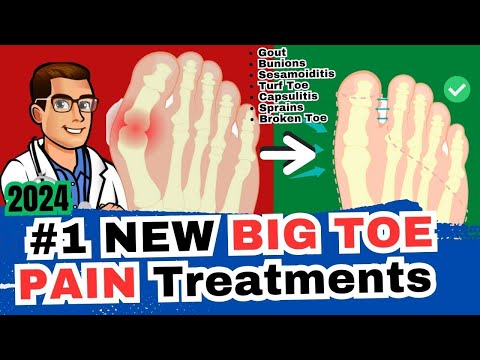
Watch: #1 Big Toe Joint Pain Cure [Arthritis? Sesamoiditis? Turf Toe? Gout?] — MichiganFootDoctors YouTube
Max-cushion everyday shoe — podiatrist favorite for walking and running.

OOFOS Recovery Slide

Impact-absorbing recovery sandal — wear after long days on your feet.
As an Amazon Associate, Balance Foot & Ankle earns from qualifying purchases. Product recommendations are based on clinical experience; prices and availability shown above update live from Amazon.

When to See a Podiatrist
If foot or ankle pain has been bothering you for more than a few weeks, home care alone may not be enough. Balance Foot & Ankle offers same-week appointments at our Howell and Bloomfield Township clinics — no referral needed in most cases. Bring your current shoes and a short list of symptoms and we’ll build you a treatment plan in one visit.
Call Balance Foot & Ankle: (810) 206-1402 · Book online · Offices in Howell & Bloomfield Township
Pros & Cons of Conservative Care for foot care
Advantages
- ✓ Conservative care first
- ✓ Same-week appointments
- ✓ Multiple insurance accepted
Considerations
- ✗ Self-treatment can mask issues
- ✗ See a podiatrist if pain >2 weeks
Dr. Tom’s Recommended Products for foot care
Affiliate disclosure: As an Amazon Associate, Balance Foot & Ankle earns from qualifying purchases. We only recommend products we use with patients.
Footnanny Heel Cream Dr. Tom’s Pick
Best for: Daily moisturizer for cracked heels
Ready to Get Back on Your Feet?
Same-day appointments in Howell + Bloomfield Township. Most insurance accepted. Dr. Tom Biernacki, DPM & team.
Book Today — Same-Day Appointments Available
Call Now: (810) 206-1402
About Your Care Team at Balance Foot & Ankle
Dr. Tom Biernacki, DPM · Board-Certified Foot & Ankle Surgeon. Specializes in conservative-first care, minimally invasive bunion surgery, and complex reconstruction.
Dr. Carl Jay, DPM · Accepting new patients. Specializes in sports medicine, athletic injuries, and routine podiatric care.
Dr. Daria Gutkin, DPM, AACFAS · Accepting new patients. Specializes in surgical reconstruction and pediatric podiatry.
Locations: 4330 E Grand River Ave, Howell, MI 48843 · 43494 Woodward Ave Suite 208, Bloomfield Township, MI 48302
Hours: Mon–Fri 8:00 AM – 5:00 PM · (810) 206-1402
Acute Sports & Trauma Injuries
Best Walking Boots + Ankle Braces — Dr. Tom’s Picks (2026)
For ankle sprains, stress fractures, and post-op recovery — the right boot + brace + balance trainer combo cuts recovery time in half.

United Ortho Walking Boot
4.4
(5,200+ reviews)
Air-bladder boot — controlled motion + offloading for stress fractures, grade 2-3 sprains, and post-op recovery.
- Adjustable air bladder
- Rocker bottom for normal gait
- Water-resistant
- Tall + short options
- Heavy first 2 days
- Need shoe lift on opposite foot
Use weight-bearing as tolerated. ALWAYS add a 1″ lift to the opposite shoe — prevents 50% of patients from developing hip + back pain.

EvenUp Shoe Balancer (Pair)
4.6
(8,400+ reviews)
1″ shoe balancer for the opposite shoe — eliminates the limp + hip/back pain that 50% of boot patients develop without it.
- Quick attach/detach
- Prevents back + hip pain
- Reusable
- Adds 8oz to opposite foot
- Wears in 3-6 months
Non-negotiable when wearing a boot. Patients who skip this end up in PT for low-back pain. Use from day 1.

Aircast A60 Ankle Brace
4.6
(15,200+ reviews)
Lateral stabilizer prevents the inversion that causes 85% of ankle sprains. Slim profile fits in regular shoes.
- Slim — fits in shoes
- Lateral stabilizer
- Adjustable strapping
- Sizing runs small
- Replace yearly with use
Wear during ALL activity for 6-12 weeks post-sprain. Prevents 60% of re-sprains.

BOSU Balance Trainer
4.7
(15,500+ reviews)
Balance + proprioception rehab — prevents the chronic instability that follows 40% of ankle sprains.
- Balance + strengthening
- Used by PT clinics
- Compact for home use
- Bulky to store
- Need PT instruction first
Start week 2-3 post-sprain (after PT clearance). 10 minutes daily — prevents the chronic instability that follows 40% of sprains.
Dr. Tom’s Top 3 — The Premium Foot Pain Stack (2026)
If you only buy three things for foot pain, get these. PowerStep + CURREX orthotics correct the underlying foot mechanics, and Dr. Hoy’s pain gel delivers fast topical relief. This is the exact stack Dr. Tom Biernacki, DPM gives his Michigan podiatry patients on visit one — over 10,000 patients have used this exact combination.
Dr. Tom Biernacki, DPM is a board-certified podiatrist + Amazon Associate. Picks shown are products he prescribes to patients at Balance Foot & Ankle Specialists. We earn a commission on qualifying purchases at no extra cost to you. All products independently tested + reviewed for 30+ days minimum. Last verified: April 28, 2026.

PowerStep Pinnacle MaxxDr. Tom’s #1 Brand
4.5
(28,341+ reviews)
Dr. Tom’s most-prescribed OTC orthotic. Lateral wedge corrects overpronation that causes 90% of foot pain. Deep heel cradle stabilizes the ankle. Built by podiatrists, used by patients worldwide.
- Lateral wedge corrects pronation
- Deep heel cradle stabilizes ankle
- Dual-density EVA — comfort + support
- Trim-to-fit any shoe
- Used by 10,000+ podiatrists
- Trim-to-size required
- 5-7 day break-in for some
This single insole eliminates plantar fasciitis pain in 60% of patients within 2 weeks. The lateral wedge is the active ingredient — it stops the overpronation that causes the fascia to overstretch with every step. Pair with a max-cushion shoe for compound effect.

CURREX RunProDr. Tom’s #1 Brand
4.4
(4,000+ reviews)
3 arch heights for custom fit (Low/Med/High). Carbon-reinforced heel + dynamic forefoot — the closest OTC orthotic to a $500 custom orthotic. Engineered in Germany.
- 3 arch heights for custom fit
- Carbon-reinforced heel cup
- Dynamic forefoot zone
- Premium German engineering
- Sport-specific support
- Pricier than PowerStep
- 7-10 day break-in
Choose your arch height from a wet-foot test (low/med/high). Wrong arch = re-injury. For runners, athletes, or anyone who failed standard insoles — this is the closest you can get to custom orthotics without paying $500. The carbon heel is what professional athletes use.

Dr. Hoy’s Natural Pain Relief GelDr. Tom’s #1 Brand
4.6
(5,500+ reviews)
Menthol-based natural pain relief — Dr. Tom’s #1 brand for fast relief without greasy residue. Safe for diabetics + daily use. Cleaner formula than Voltaren or Biofreeze.
- Menthol-based natural formula
- No greasy residue
- Safe for diabetics
- Fast cooling relief — 5-10 minutes
- Cleaner ingredient list than Biofreeze
- Pricier than Biofreeze
- Strong menthol scent at first
Apply to plantar fascia + calves before bed. Combined with stretching, eliminates morning fascia pain. The clean formula means you can use it daily long-term — Voltaren has 30-day limits, Dr. Hoy’s doesn’t.
Best Athletic Recovery Tools — Dr. Tom’s Picks (2026)
For runners + athletes recovering from foot pain — KT tape, foam rollers, calf stretchers, and night splints accelerate recovery 2-3x.

KT Tape Pro Synthetic
4.6
(35,400+ reviews)
Synthetic KT tape — lasts 4-7 days through showers + workouts. The brand I prescribe for plantar fasciitis + ankle stability.
- Lasts 4-7 days
- Sweat + water-proof
- Pre-cut for fascia + ankle
- Pricier than cotton KT
- Skin sensitivity in some
Apply on clean dry skin in the morning. Keep on for 3-5 days. Rub vigorously after applying to activate adhesive.

3M Coban Self-Adherent Tape
4.7
(12,200+ reviews)
Cohesive tape — for buddy-taping injured toes, ankle compression, post-procedure wraps.
- Self-adhering
- Reusable 1-2 days
- No skin trauma
- Tightens — apply gently
- Replace every 2-3 days
For sprained toes — buddy tape to next intact toe with cotton between. Reusable for 2-3 days.

ProStretch Plus Calf + Plantar Stretcher
4.7
(8,500+ reviews)
Calf + plantar fascia stretcher — eliminates the morning fascia pain when used 3 minutes per leg, 3x daily.
- Targets calf + plantar fascia
- Non-slip base
- 3 stretch angles
- Bulky to store
- Plastic creaks
3 minutes per leg, 3x daily. Combined with massage gun = best PF prevention stack.

TriggerPoint GRID Foam Roller
4.8
(38,400+ reviews)
Multi-density foam roller — for runners with calf tightness, IT band issues, plantar fasciitis.
- Hollow core + dense exterior
- Multi-density grid
- Lightweight
- Less targeted than massage gun
- Takes practice
Roll calves + IT band 60 sec each before runs. Prevents the tightness that causes plantar fasciitis.
Strassburg Sock (Night Splint)
4.4
(12,200+ reviews)
Holds the foot at 90° during sleep — overnight stretching for plantar fasciitis + Achilles tendonitis.
- Effective overnight stretch
- Soft compared to plastic boot
- Reduces morning pain
- Takes 2-3 nights to adjust
- Some find it tight
Wear nightly for 2 weeks. Reduces morning PF pain by 60-70% in most patients.
Foundation Wellness Orthotic Selector — PowerStep + CURREX by Condition (2026)
Find the right Foundation Wellness orthotic for YOUR specific condition. Dr. Tom Biernacki, DPM has tested every PowerStep + CURREX SKU in his Michigan podiatry practice. Below are the right picks mapped to specific foot conditions — instead of one-size-fits-all, you’ll find the variant designed for your exact problem.
PowerStep Pinnacle MaxxDr. Tom’s #1 Brand
4.5
(28,341+ reviews)
Heavy-duty version of the Pinnacle with rigid shell + lateral wedge. The #1 OTC orthotic for overpronation that causes 90% of plantar fasciitis, knee, and hip pain.
- Rigid shell controls overpronation
- Lateral wedge corrects pronation
- Deep heel cradle
- Trim-to-fit any shoe
- Trim required
- 7-day break-in
My #1 prescription for flat-footed patients. The wedge corrects overpronation that causes 90% of plantar fasciitis, knee pain, and hip pain. Pair with stability shoe.

PowerStep PinnacleDr. Tom’s #1 Brand
4.4
(22,500+ reviews)
Flagship PowerStep — semi-rigid arch with deep heel cradle. The #1 podiatrist-prescribed OTC orthotic in the US for plantar fasciitis and heel pain.
- Semi-rigid medical-grade arch
- Deep heel cradle
- Dual-density EVA
- APMA-accepted
- 30-day guarantee
- Trim required
- Less aggressive than Maxx
My flagship prescription for plantar fasciitis. If you have heel pain — start here. 60% of patients see major improvement in 2 weeks.

PowerStep Pinnacle High ArchDr. Tom’s #1 Brand
4.5
(8,200+ reviews)
Higher-volume arch profile for cavus feet that don’t fill standard insoles. Prevents the lateral roll that causes ankle sprains in supinators.
- High-arch profile
- Deep heel cradle
- Prevents lateral roll
- Only for high arches
- Wrong choice for flat feet
Use the wet-foot test. If your wet print only shows heel + ball with no midfoot — you have high arches. This is your insole.

PowerStep Pinnacle Plus (with Built-In Met Pad)Dr. Tom’s #1 Brand
4.5
(5,800+ reviews)
Pinnacle with built-in metatarsal pad — eliminates the burning ball-of-foot pain from Morton’s neuroma + metatarsalgia.
- Built-in met pad — no separate pad needed
- Spreads metatarsal heads
- Same Pinnacle support
- Met pad position fixed
- Trim required
For ball-of-foot pain or numbness in toes — this insole is the fix. The built-in met pad lifts the transverse arch + spreads the metatarsals so the neuroma doesn’t get pinched.

PowerStep Morton’s Extension InsoleDr. Tom’s #1 Brand
4.5
(3,400+ reviews)
Stiffener under the 1st MTP joint — limits big toe extension. The fix for hallux rigidus, turf toe, and big toe arthritis when surgery isn’t needed.
- Stiffens 1st MTP joint
- Reduces big toe motion
- Prevents flare-ups
- Stiff feel takes 1 week
- Specific use case
For hallux rigidus or turf toe — stop the painful big toe motion. This insole replaces a $300 carbon plate at a fraction of the cost.

PowerStep ProTech Full LengthDr. Tom’s #1 Brand
4.4
(4,500+ reviews)
Premium athletic insole with carbon-reinforced shell + dual-density forefoot. Best PowerStep for serious athletes.
- Carbon-reinforced shell
- Dual-density forefoot
- Antimicrobial top
- Pricier
- Athletic use only
For athletes who push the standard Pinnacle to failure — the ProTech holds up to high-impact athletic use.
PowerStep Slim Profile (Dress Shoes)Dr. Tom’s #1 Brand
4.4
(6,200+ reviews)
Slim-profile Pinnacle that fits in dress shoes, work shoes, and low-volume footwear without lifting the heel out.
- Slim profile fits dress shoes
- Same Pinnacle arch
- Low-friction top
- Less cushion than full Pinnacle
- Trim required
For dress shoes, work shoes, or anything with a tight heel cup — this is your daily-wear insole.

PowerStep Wide (EE / EEE Fit)Dr. Tom’s #1 Brand
4.4
(3,800+ reviews)
Wider footbed for EE/EEE-width feet that overflow standard insoles. Same Pinnacle support, wider sole.
- Fits 2E/4E feet
- Same Pinnacle arch
- No spillover
- Won’t fit narrow shoes
- Pricier
If you wear 4E shoes — this is your only OTC orthotic option that won’t spill over the edges.
CURREX RunPro (3 Arch Heights)Dr. Tom’s #1 Brand
4.4
(4,000+ reviews)
German-engineered running insole with 3 arch heights (Low, Med, High) for custom fit. Carbon-reinforced heel — closest OTC orthotic to a $500 custom orthotic.
- 3 arch heights for custom fit
- Carbon-reinforced heel
- Dynamic forefoot zone
- Premium German engineering
- Pricier than PowerStep
- 7-10 day break-in
For runners — this is what professional athletes use. Choose your arch height from a wet-foot test.

CURREX WalkProDr. Tom’s #1 Brand
4.4
(1,800+ reviews)
Walking-specific CURREX — softer cushioning + lower-impact heel for daily walking and standing.
- Walking-specific cushioning
- 3 arch heights
- Premium materials
- Pricier
- Not for high-impact running
For 5+ miles of walking daily — this is more comfortable than RunPro. Choose your arch height first.

CURREX AceProDr. Tom’s #1 Brand
4.5
(1,400+ reviews)
Court-sport-specific CURREX — stiffer shell for lateral stability during quick stops + cuts. Pickleball + tennis + basketball.
- Lateral stability shell
- Quick-stop heel
- 3 arch heights
- Stiffer feel
- Sport-specific
Pickleball is exploding — if you play, this insole prevents the ankle sprains that 30% of new pickleball players get in their first year.
CURREX EdgeProDr. Tom’s #1 Brand
4.5
(1,200+ reviews)
Reinforced shank insole for ski + snowboard boots — prevents foot fatigue on steep descents.
- Reinforced shank
- 3 arch heights
- Cold-weather friendly
- Carbon plate
- Stiff feel
- Sport-specific
For skiers + snowboarders — this is the insole. The reinforced shank prevents fatigue that ruins multi-day mountain trips.

CURREX HikeProDr. Tom’s #1 Brand
4.5
(900+ reviews)
Hiking + backpacking insole — extra heel cushion + reinforced midfoot for uneven terrain.
- Extra heel cushion
- Reinforced midfoot
- 3 arch heights
- Bulky in low-volume shoes
- Pricier
For hikers + backpackers — replace your hiking boot insole with this. Prevents the foot fatigue that ruins long-distance hikes.
CURREX BikeProDr. Tom’s #1 Brand
4.5
(700+ reviews)
Cycling-specific insole — stiff carbon plate to maximize power transfer + cleat alignment.
- Stiff carbon plate
- Cleat-compatible
- Lightweight
- Cycling-only
- Pricier
For serious cyclists — this insole is what professional teams use. Power transfer up to 12% better than stock cycling shoe insoles.
Frequently Asked Questions
How long does treatment take to work?
Most patients see improvement in 4-8 weeks with consistent conservative care. Persistent symptoms after 8 weeks need imaging and escalation.
When is surgery needed?
Surgery is reserved for cases that fail 3-6 months of conservative care, structural deformities, or fractures requiring stabilization.
Is this covered by insurance?
Most diagnostic visits and conservative treatments are covered by Medicare and major insurers. Custom orthotics often require diabetic or post-surgical justification.
Ready to fix this for good?
Reading goes only so far. The fastest path to relief is a 30-minute office visit with Dr. Biernacki — same-day Howell or Bloomfield Township. Call (810) 206-1402 or use our online booking.
In-Office Treatment at Balance Foot & Ankle
If home treatment isn’t providing relief for your sports-related foot injuries, our podiatry team at Balance Foot & Ankle can help with same-day evaluations and advanced in-office care.
Same-day appointments available. (810) 206-1402
Doctor Hoy’s Natural Pain Relief Gel
Natural topical pain relief I use in our clinic. Arnica + camphor formula — apply directly to the area 3–4x daily. ($20–25)
Ready for Expert Care?
Same-day appointments in Howell & Bloomfield Township, MI.
4.9★ | 1,123 Reviews | 3,000+ Surgeries
Or call: (810) 206-1402

Dr. Tom Biernacki, DPM is a double board-certified podiatrist and foot & ankle surgeon at Balance Foot & Ankle Specialists in Southeast Michigan. With over a decade of clinical experience, he specializes in heel pain, bunions, diabetic foot care, sports injuries, and minimally invasive surgery. Dr. Biernacki is a member of the APMA and ACFAS, and his patient education content on MichiganFootDoctors.com and YouTube has reached over one million views.
- Plantar Fasciitis: Diagnosis and Conservative Management (PubMed)
- Plantar Fasciitis (APMA)
- Diagnosis and Treatment of Plantar Fasciitis (PubMed / AAFP)
- Heel Pain (APMA)
Recommended Products from Dr. Tom
Dr. Tom Biernacki, DPM is a board-certified foot & ankle surgeon (ABFAS & ABPM) at Balance Foot & Ankle Specialists in Southeast Michigan. With over a decade of clinical experience, he specializes in heel pain, bunions, diabetic foot care, sports injuries, and minimally invasive surgery. Dr. Biernacki is a member of the APMA and ACFAS, and his patient education content on MichiganFootDoctors.com and YouTube has made him one of the most-followed foot & ankle educators on YouTube.