

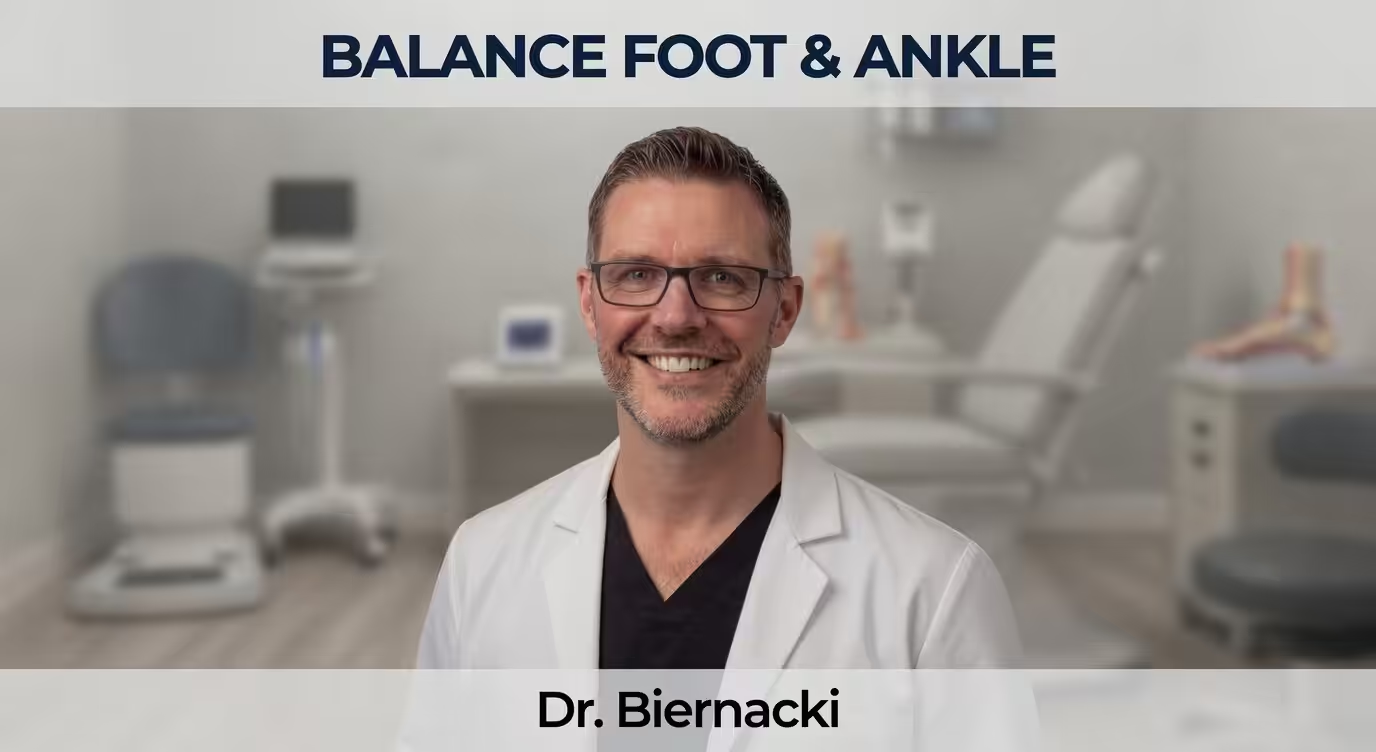
Medically Reviewed by Dr. Tom Biernacki, DPM, FACFAS — Board-certified podiatrist & foot surgeon | Balance Foot & Ankle | Last updated: May 2026
Gastrocnemius recession is a 20-minute outpatient surgery that lengthens a chronically tight calf muscle to relieve heel pain, plantar fasciitis, Achilles tendinopathy, and equinus contracture. Most patients walk the same day and return to normal shoes in 4–6 weeks. It’s one of the most underperformed yet effective procedures in foot and ankle surgery.
What Is Equinus and Why Does Tight Calf Muscle Matter?
Equinus is the medical term for limited ankle dorsiflexion—the ability to flex your foot upward. When the gastrocnemius muscle or Achilles tendon is chronically tight, your ankle cannot bend beyond neutral (90°) without the heel rising. This forces the foot to compensate with abnormal pronation, forefoot overload, and excessive pressure on the plantar fascia and metatarsals. In our clinic, we measure equinus with a knee-extended Silfverskiöld test—a finding of less than 10° of dorsiflexion with the knee straight but normal with the knee bent isolates the problem to the gastrocnemius specifically, making this muscle the ideal surgical target.
Equinus Treatment Options Compared
| Treatment | Best For | Timeline | Lasting? |
|---|---|---|---|
| Calf Stretching Program | Mild tightness, motivated patients | 3–6 months | Partial; requires daily maintenance |
| Night Splints / AFO | Moderate tightness, heel pain | Ongoing use | Compensatory only |
| Botox Injection | Temporary relaxation, assess candidacy | 3–4 months effect | Temporary |
| Gastrocnemius Recession (Surgery) | Failed conservative care ≥6 months | 4–6 weeks recovery | Permanent structural correction |
| Vulpius/Strayer Procedure | Severe equinus, spastic cases | 6–8 weeks recovery | Permanent; more extensive release |
How Gastrocnemius Recession Surgery Works
The procedure is performed through a 2–3 cm incision on the inner calf, approximately mid-leg. I identify and partially release the gastrocnemius aponeurosis—the broad tendinous sheath of the muscle—at the Baumann point, allowing the muscle-tendon unit to lengthen by 1–2 cm. This small lengthening has an outsized effect: clinical studies show it increases ankle dorsiflexion by 10–15° on average and reduces plantar fascia tension by approximately 40%. The procedure takes 20–25 minutes under ankle block anesthesia, and most patients walk out of surgery the same day in a surgical boot.
Conditions Treated by Calf Lengthening
Gastrocnemius recession addresses the biomechanical root cause driving many common foot problems. The conditions most consistently improved include chronic plantar fasciitis (when equinus is confirmed), insertional Achilles tendinopathy, metatarsalgia and stress fractures (forefoot overload from compensatory pronation), recurrent ankle sprains from limited dorsiflexion, and diabetic forefoot ulcers where equinus perpetuates plantar pressure. Identifying which of these conditions is being driven by equinus—rather than other causes—is the critical diagnostic step before surgery is recommended.
Treating plantar fasciitis or Achilles pain for years without measuring ankle dorsiflexion. A simple clinical test—asking the patient to squat or measuring dorsiflexion with a goniometer—immediately reveals whether equinus is the underlying driver. Many patients receive cortisone injections, shockwave therapy, and custom orthotics when the real solution is calf lengthening. If you’ve been treated for plantar fasciitis repeatedly without lasting relief, equinus testing should be your next step.
Frequently Asked Questions
How long is recovery from gastrocnemius recession?
Most patients walk immediately after surgery in a boot and transition to regular shoes at 4–6 weeks. Running and sport return typically occurs at 3–4 months. The incision is small and located on the inner calf, making this one of the faster-recovering foot and ankle surgeries. Physical therapy for gait retraining is recommended for 4–6 weeks post-op.
Does insurance cover calf lengthening surgery?
Yes—when equinus is documented with objective measurements and conservative treatment has failed for at least 3–6 months, most PPO plans and Medicare cover gastrocnemius recession. ICD-10 code M67.20 (equinus deformity) combined with the primary condition code (e.g., plantar fasciitis M72.2) typically supports medical necessity. Our billing team at Balance Foot & Ankle handles pre-authorization for both Michigan locations.
Can both legs be done at the same time?
Bilateral gastrocnemius recession in a single session is possible but generally not recommended because it temporarily limits independent ambulation. Most surgeons stage bilateral procedures 4–6 weeks apart. This allows the first side to recover enough for weight-bearing before the second leg is addressed, maintaining patient mobility throughout recovery.
Is gastrocnemius recession permanent?
Yes. Unlike stretching or bracing, surgical lengthening creates a structural change in the gastrocnemius aponeurosis that does not reverse. Studies with 10-year follow-up show maintained dorsiflexion gains and high patient satisfaction rates. The procedure does not weaken push-off strength in most patients—the remaining soleus muscle fully compensates for the released gastrocnemius.
What’s the difference between gastrocnemius recession and Achilles lengthening?
Gastrocnemius recession selectively lengthens the gastrocnemius muscle while preserving the soleus, maintaining push-off strength. Achilles tendon lengthening (TAL or Hoke procedure) lengthens the entire Achilles complex and risks significant weakness. For isolated gastrocnemius tightness (positive Silfverskiöld test), recession is the preferred procedure with a superior risk-benefit profile.
Chronic Heel or Arch Pain That Won’t Resolve? Test for Equinus.
Dr. Tom Biernacki performs gastrocnemius recession at Balance Foot & Ankle — Howell and Bloomfield Township, MI. Same-week appointments available for surgical evaluations.
Book a Same-Day Visit (810) 206-1402Related Resources
- Plantar Fasciitis: Causes, Treatment & When to See a Podiatrist
- Achilles Tendon Pain & Treatment Options
- Custom Orthotics in Michigan
- What Is a Podiatrist? When to See One

In-Office Treatment at Balance Foot & Ankle
If home treatment isn’t providing relief for your foot and ankle conditions, our podiatry team at Balance Foot & Ankle can help with same-week evaluations and advanced in-office care.
Same-week appointments available. (810) 206-1402
VitaMedica Arnica Gel
Arnica gel plus 15 plant compounds for sore feet, plantar fasciitis flares and post-activity soreness. Apply a thin layer to the sore area.
Shop VitaMedica Arnica Gel →
Dr. Tom Biernacki, DPM is a board-certified foot & ankle surgeon (ABFAS & ABPM) at Balance Foot & Ankle Specialists in Southeast Michigan. With over a decade of clinical experience, he specializes in heel pain, bunions, diabetic foot care, sports injuries, and minimally invasive surgery. Dr. Biernacki is a member of the APMA and ACFAS, and his patient education content on MichiganFootDoctors.com and YouTube has made him one of the most-followed foot & ankle educators on YouTube.