
Medically reviewed by Dr. Tom Biernacki, DPM — Board-certified foot & ankle surgeon, 3,000+ surgeries performed. Updated April 2026 with current clinical evidence. This article reflects real practice experience from Balance Foot & Ankle Specialists in Howell and Bloomfield Township, Michigan.
Quick Answer
Most foot and ankle problems respond to conservative care — proper footwear, supportive inserts, activity modification, and targeted stretching — within 4-8 weeks. Persistent pain beyond that window, or any symptom that prevents walking, warrants a podiatric evaluation to rule out fracture, tendon tear, or systemic cause.
Medically reviewed by Dr. Tom Biernacki, DPM — Board-Certified Podiatric Surgeon — Balance Foot & Ankle, Howell & Bloomfield Township, MI. Last updated April 2026.
Medically reviewed by Dr. Tom Biernacki, DPM — Board-certified podiatrist at Balance Foot & Ankle Specialists, serving Howell and Bloomfield Township, Michigan.
Quick Answer: Peripheral artery disease (PAD) reduces blood flow to the feet, causing leg cramping during walking (claudication), slow-healing wounds, cold feet, and in severe cases, tissue death requiring amputation. Early detection through ankle-brachial index testing and podiatric vascular assessment prevents complications and preserves limb function.

What Is Peripheral Artery Disease?
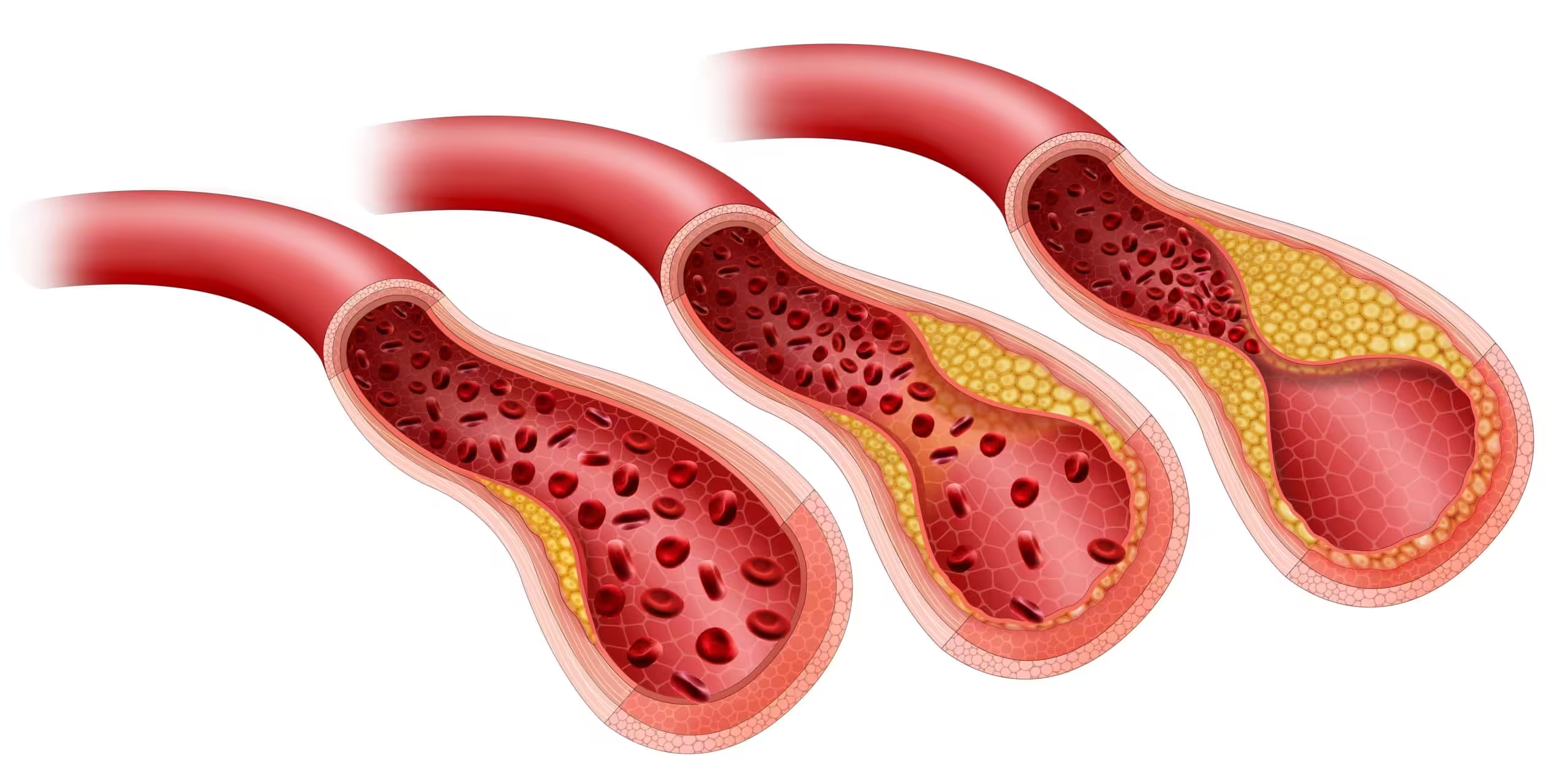
Peripheral artery disease is a condition where atherosclerosis — the buildup of fatty plaques inside artery walls — narrows or blocks the arteries that supply blood to your legs and feet. This reduced blood flow means your tissues receive less oxygen and fewer nutrients, impairing healing and causing pain.
PAD affects approximately 6.5 million Americans over age 40, and is strongly associated with coronary artery disease and stroke. The same plaque buildup damaging your leg arteries is often happening in your heart and brain simultaneously. A PAD diagnosis is a serious systemic warning sign.
PAD exists on a spectrum of severity. Mild PAD may cause only intermittent claudication (cramping when walking). Severe PAD can result in critical limb ischemia — constant rest pain, non-healing wounds, and in the worst cases, gangrene requiring amputation. Diabetic patients face exponentially higher risk of progression.

PAD Symptoms in the Feet and Legs
Peripheral artery disease symptoms are often dismissed as “normal aging” or “just tired legs.” Don’t make that mistake. These signs deserve medical evaluation:
Classic claudication symptoms: Cramping, aching, or fatigue in your calf, thigh, or buttock muscles during walking that reliably stops within a few minutes of rest. The distance you can walk before symptoms hit often shortens over time.
Foot-specific PAD symptoms include:
- Persistently cold feet, especially when one foot is noticeably colder than the other
- Numbness or weakness in the feet or legs
- Skin color changes — paleness when the foot is elevated, redness/purplish discoloration when dependent
- Shiny, tight, or hairless skin on the lower legs and feet
- Thickened, slow-growing toenails
- Non-healing wounds, ulcers, or sores on the feet or toes
- Pain in the foot or toes at rest (a severe sign called “rest pain”)
- Gangrene or blackened tissue (a medical emergency)
Important note: Many PAD patients have no leg pain at all — up to 40% are asymptomatic. Regular foot examinations by a podiatrist are especially important for diabetic patients and those with cardiovascular risk factors, even without symptoms.
Causes and Risk Factors
PAD is caused by atherosclerosis — the same process that causes heart attacks and strokes. Risk factors include:
- Diabetes mellitus — the single largest risk factor; diabetic patients are 4x more likely to develop PAD
- Smoking — the most modifiable risk factor; smokers are 3–5x more likely to develop PAD
- Hypertension (high blood pressure)
- Hyperlipidemia (high cholesterol)
- Age over 65 (or over 50 with diabetes or smoking history)
- Family history of cardiovascular disease
- Obesity and sedentary lifestyle
- Chronic kidney disease
The combination of diabetes and smoking is particularly dangerous — together they dramatically accelerate arterial narrowing and impair healing to the point where minor foot injuries can quickly become limb-threatening.
How PAD Is Diagnosed
Diagnosis begins with a thorough history and physical examination. Your podiatrist or physician will check pulses in your feet (dorsalis pedis and posterior tibial arteries), assess skin temperature and color, and examine any wounds.
Ankle-Brachial Index (ABI): The most common first test. A simple, painless measurement comparing blood pressure in your ankle to your arm. Normal ABI is 1.0–1.4. ABI below 0.9 suggests PAD. ABI below 0.4 indicates severe ischemia.
Toe-Brachial Index (TBI): More sensitive than ABI in diabetic patients (who may have falsely elevated ABI due to arterial calcification). Uses a small cuff on the toe.
Duplex ultrasound: Visualizes blood flow through arteries and identifies blockage locations. Non-invasive and widely used.
CT angiography or MR angiography: Detailed imaging for surgical or interventional planning.
Conventional angiography: The gold standard for interventional procedures — a catheter-based test that allows simultaneous diagnosis and treatment (balloon angioplasty, stenting).
Treatment and Management
PAD treatment spans a spectrum from lifestyle modification to surgical revascularization. The goal is twofold: reduce cardiovascular risk and improve quality of life / limb function.
Medical Management
Risk factor modification is non-negotiable: Smoking cessation is the most impactful intervention — it slows progression and reduces cardiovascular mortality. Blood sugar control (HbA1c <7%), blood pressure management, and statin therapy are also essential.
Antiplatelet therapy: Aspirin or clopidogrel reduces the risk of heart attack and stroke in PAD patients.
Supervised exercise therapy: Structured walking programs (under medical supervision) can significantly increase walking distance by stimulating collateral blood vessel formation. Insurance typically covers supervised exercise therapy for PAD.
Interventional and Surgical Options
Percutaneous transluminal angioplasty (PTA): A balloon catheter is used to open narrowed arteries. Often combined with stent placement to keep the artery open.
Atherectomy: Devices that remove or modify plaque within the artery.
Bypass surgery: For extensive disease, a vein graft or synthetic conduit reroutes blood around blocked segments. Bypass surgery is more invasive but durable.
Amputation: The last resort when limb salvage is not possible. Podiatrists and vascular surgeons work aggressively to avoid amputation with wound care, revascularization, and orthotic management.
Podiatrist-Recommended Foot Care for PAD Patients
Foot care is critically important when you have peripheral artery disease. Reduced blood flow means even minor injuries can fail to heal and become infected. The right products help protect your feet while managing the discomfort PAD causes.
Disclosure: This page contains affiliate links. We may earn a small commission at no cost to you. We only recommend products Dr. Biernacki trusts for his own patients.
Protective Insoles: PowerStep Pinnacle
PAD patients are at high risk for pressure ulcers and skin breakdown due to reduced blood flow. Proper cushioning and pressure redistribution is not optional — it’s wound prevention. PowerStep Pinnacle Orthotic Insoles provide firm arch support with cushioning that helps distribute weight away from vulnerable pressure points on the ball of the foot and heel.
PAD patients should never walk barefoot, even indoors. Insoles that keep feet properly supported within well-fitted shoes help prevent the microtraumas that can turn into non-healing wounds.
PowerStep Pinnacle insoles fit most supportive footwear and can be transferred between shoes. For diabetic PAD patients, a custom diabetic insole or offloading device may be more appropriate — ask Dr. Biernacki at your next visit.
Topical Pain Relief: Doctor Hoy’s Natural Pain Relief Gel
PAD can cause persistent aching, burning, and discomfort in the feet and lower legs. Doctor Hoy’s Natural Pain Relief Gel uses a menthol and arnica-based formula that provides targeted topical relief without systemic side effects.
Important note for PAD patients: avoid massage or deep friction over areas with active wounds or gangrene. Use Doctor Hoy’s on intact skin areas where you experience aching or cramping discomfort. It absorbs quickly and can be applied before activity or at bedtime for rest-pain comfort.
Doctor Hoy’s does not contain NSAIDs or ingredients that interfere with PAD medications. It’s a safe topical option when oral pain medications are not ideal — always discuss with your physician.
🚨 Warning Signs — Seek Immediate Care
Go to the emergency room or call 911 if you experience any of the following:
- Sudden, severe foot or leg pain at rest — could indicate acute arterial occlusion (medical emergency)
- A foot wound or ulcer that is not healing after 2 weeks of proper care
- Black or dark tissue on any toe or area of the foot (gangrene)
- Rapidly spreading redness, warmth, or foul odor from a foot wound
- Sudden foot coldness with pallor or blue/purple color — could be acute ischemia
- High fever with foot infection — sepsis risk in PAD patients is significant
🔑 The Most Common Mistake PAD Patients Make
Wearing compression stockings without vascular clearance. Patients are often told “compression is good for circulation” — but for PAD patients, compression stockings can be dangerous. If your arteries are already narrowed, external compression can critically reduce blood flow and cause ischemia. Never use compression socks or wraps for PAD without your vascular specialist explicitly approving them and specifying the pressure level. This is one of the most preventable causes of PAD-related complications we see.
Watch: Peripheral Artery Disease and Foot Health
Dr. Biernacki explains what PAD means for your feet, how to spot early warning signs, and what to do if you’re at risk:

Treatment Bridge: Related Conditions and Services
PAD rarely occurs in isolation. If you’ve been diagnosed or are at risk, these related pages may be helpful:
- Diabetic Foot Care & Wound Management — PAD and diabetes together are the leading cause of non-traumatic lower limb amputation
- Foot Wound and Ulcer Care — specialized wound management for arterial and mixed ulcers
- Peripheral Neuropathy — often coexists with PAD, masking warning pain signals
- Custom Orthotics for Offloading — pressure redistribution for PAD wound prevention
Seek Immediate Medical Attention: If you experience sudden severe leg or foot pain at rest, a foot wound that turns black or develops a foul odor, sudden coldness or pallor in one foot compared to the other, or new onset of foot numbness with skin color changes. These may indicate critical limb ischemia, which is a medical emergency requiring immediate vascular intervention.
More Podiatrist-Recommended Foot Health Essentials
Hoka Clifton 10


![Diabetic Foot Ulcer Treatment & Early Stages [Diabetic Neuropathy]](https://www.michiganfootdoctors.com/wp-content/cache/flying-press/736454be2c58ebb20f519158cfe72457.jpg)
Watch: Diabetic Foot Ulcer Treatment & Early Stages [Diabetic Neuropathy] — MichiganFootDoctors YouTube
Max-cushion everyday shoe — podiatrist favorite for walking and running.

OOFOS Recovery Slide

Impact-absorbing recovery sandal — wear after long days on your feet.
As an Amazon Associate, Balance Foot & Ankle earns from qualifying purchases. Product recommendations are based on clinical experience; prices and availability shown above update live from Amazon.
When to See a Podiatrist
If foot or ankle pain has been bothering you for more than a few weeks, home care alone may not be enough. Balance Foot & Ankle offers same-week appointments at our Howell and Bloomfield Township clinics — no referral needed in most cases. Bring your current shoes and a short list of symptoms and we’ll build you a treatment plan in one visit.
Call Balance Foot & Ankle: (810) 206-1402 · Book online · Offices in Howell & Bloomfield Township
Frequently Asked Questions About Peripheral Artery Disease in the Feet
Can a podiatrist treat peripheral artery disease?
A podiatrist plays a critical role in PAD management, specifically for foot care, wound management, pressure offloading, and toenail care — but PAD itself is treated by a vascular specialist. Dr. Biernacki coordinates directly with vascular surgeons and cardiologists and can help initiate the diagnostic workup if PAD is suspected based on foot examination findings.
What does PAD feel like in the feet?
PAD in the feet often feels like persistent coldness, numbness, or a dull aching or burning sensation. During walking, you may notice cramping in your calf that stops when you rest. In more severe PAD, you may experience a constant deep aching at rest — especially when you lie down and improve your feet. Skin changes, hair loss on the lower legs, and thickened toenails are also characteristic.
Is PAD reversible?
The arterial narrowing from atherosclerosis is not fully reversible, but progression can be slowed and symptoms significantly improved. Smoking cessation, aggressive risk factor management, supervised exercise, and interventional procedures (angioplasty, bypass) can restore meaningful blood flow and dramatically improve quality of life. Early intervention offers the best outcomes.
Can I walk with peripheral artery disease?
Yes — and you should. Supervised walking exercise is actually one of the most effective PAD treatments. A structured program of walking to the point of mild-moderate claudication, then resting and repeating, helps build collateral circulation. Always follow a physician-supervised program. Avoid walking barefoot or in poorly fitted shoes, and inspect your feet after every walk.
How serious is PAD if left untreated?
PAD left untreated significantly increases your risk of heart attack, stroke, and limb loss. Approximately 1–2% of claudication patients per year progress to critical limb ischemia. Diabetic patients with PAD have a 10–30 times higher risk of major amputation than those without. The systemic cardiovascular mortality risk is also substantial — PAD patients have a 3–5x higher risk of cardiovascular events than age-matched controls.
Sources
- Gerhard-Herman MD, et al. “2016 AHA/ACC Guideline on the Management of Patients With Lower Extremity Peripheral Artery Disease.” Journal of the American College of Cardiology. 2017;69(11):e71-e126.
- Hirsch AT, et al. “PAD Awareness, Risk, and Treatment: New Resources for Survival (PARTNERS Program).” JAMA. 2001;286(11):1317–1324.
- Armstrong DG, Boulton AJM, Bus SA. “Diabetic Foot Ulcers and Their Recurrence.” New England Journal of Medicine. 2017;376:2367-2375.
- McDermott MM. “Exercise Rehabilitation for Peripheral Artery Disease: A Review.” Journal of Cardiopulmonary Rehabilitation and Prevention. 2018;38(2):63–69.
- Fowkes FG, et al. “Comparison of Global Estimates of Prevalence and Risk Factors for Peripheral Artery Disease in 2000 and 2010.” The Lancet. 2013;382(9901):1329-1340.
Concerned About Peripheral Artery Disease?
Dr. Tom Biernacki and the team at Balance Foot & Ankle Specialists provide vascular foot assessments and PAD management in Howell and Bloomfield Township, Michigan.
Book Your AssessmentCall (810) 206-1402 | Same-day appointments available
Vascular Foot Care at Balance Foot & Ankle
Peripheral artery disease can cause dangerous foot complications including non-healing wounds and gangrene. Our podiatrists provide vascular foot assessment and wound care at our Howell and Bloomfield Township offices.
Learn About Wound Care | Book Your Appointment | Call (810) 206-1402
Clinical References
- Hirsch AT, et al. Peripheral arterial disease detection, awareness, and treatment in primary care. JAMA. 2001;286(11):1317-1324.
- Criqui MH, Aboyans V. Epidemiology of peripheral artery disease. Circ Res. 2015;116(9):1509-1526. doi:10.1161/CIRCRESAHA.116.303849
- Norgren L, et al. Inter-society consensus for the management of peripheral arterial disease (TASC II). J Vasc Surg. 2007;45(1 Suppl):S5-S67.
Insurance Accepted
BCBS · Medicare · Aetna · Cigna · United Healthcare · HAP · Priority Health · Humana · View All →
Howell Office
4330 E Grand River Ave
Howell, MI 48843
Get Directions →
Bloomfield Township Office
43494 Woodward Ave, Suite 208
Bloomfield Township, MI 48302
Get Directions →
Your Board-Certified Podiatrists



Ready to Get Back on Your Feet?
Same-week appointments available at both locations.
Book Your AppointmentWatch: Peripheral Artery Disease (PAD) in Feet
Dr. Tom on PAD — claudication, rest pain, ulcer risk, ABI testing, when vascular referral is urgent.

PAD Foot Protection Kit
PAD feet are fragile — pressure, temperature, and skin protection matter. Dr. Tom’s kit:
As an Amazon Associate, Balance Foot & Ankle earns from qualifying purchases. This supports our free patient education content.
Reduces wound-risk pressure points.
Accompanying neuropathy support.
Flare/edema — but avoid direct contact if numb.
Calf claudication topical adjunct.
Related: Diabetic Foot Care · Wound Care · Book Same-Week Appointment
In-Office Treatment at Balance Foot & Ankle
If home care isn’t resolving your your foot or ankle concern, a visit with a board-certified podiatrist is the fastest path to accurate diagnosis and a personalized plan. At Balance Foot & Ankle Specialists, Dr. Tom Biernacki, Dr. Carl Jay, and Dr. Daria Gutkin offer same-day and next-day appointments at both our Howell and Bloomfield Township offices. We perform on-site diagnostic ultrasound, digital X-ray, conservative care, advanced regenerative treatments, and minimally invasive surgery when indicated.
Call (810) 206-1402 or request an appointment online. Most insurance plans accepted, including Medicare, Blue Cross Blue Shield, Aetna, Cigna, and United Healthcare.
Most Common Mistake We See
The most common mistake we see is: Waiting too long before seeking care. Fix: any foot pain lasting more than 4 weeks, or any sudden severe symptom, deserves a professional evaluation rather than more rest.
Warning Signs That Need Same-Day Care
Seek immediate evaluation at Balance Foot & Ankle if you experience any of the following:
- Unable to bear weight
- Severe swelling with skin colour change
- Fever with foot pain (possible infection)
- Diabetes plus any new foot symptom
Book online or call (810) 206-1402 — same-day and next-day appointments at our Howell and Bloomfield Township offices.
Frequently Asked Questions
What causes this condition?
Causes include mechanical stress, biomechanical imbalance, age-related changes, and sometimes systemic disease. Our clinical exam plus imaging identifies the specific driver.
Can it go away on its own?
Mild cases sometimes resolve with rest and supportive footwear. Persistent symptoms past 4-6 weeks rarely resolve without active treatment.
Is surgery required?
Most patients resolve with non-surgical care. Surgery is reserved for refractory cases or structural deformity.
What is Wound care?
Wound care is a common foot/ankle condition that affects mobility and quality of life. Understanding the underlying cause is the first step in successful treatment. Our podiatrists at Balance Foot & Ankle perform a hands-on biomechanical exam, review your activity history, and use diagnostic imaging when appropriate to identify the root cause—not just treat the symptom. Many patients have been told to “rest and ice” without a deeper diagnostic workup; our approach is different.
Symptoms and warning signs
Common signs of wound care include pain that worsens with activity, morning stiffness, swelling, tenderness when palpated, and difficulty bearing weight. If you experience sudden severe pain, inability to walk, visible deformity, numbness or color change, contact our office the same day or visit urgent care—these can signal a more serious injury such as a fracture, tendon rupture, or vascular compromise. Diabetics with any foot wound should seek same-day care.
Conservative treatment options
Most cases of wound care respond to non-surgical care: structured rest, supportive footwear changes, custom orthotics, targeted stretching and strengthening protocols, anti-inflammatory medications when medically appropriate, and in-office procedures such as ultrasound-guided injections. We also offer advanced therapies including MLS laser therapy, EPAT/shockwave, regenerative injections, and image-guided procedures. Treatment is sequenced from least invasive to most invasive, and we explain the rationale at every step.
When is surgery considered?
Surgery is reserved for cases that fail 3-6 months of well-structured conservative care, when there is structural pathology (severe deformity, complete tear, advanced arthritis), or when imaging shows damage that will not heal without intervention. Our surgeons have performed 3,000+ foot and ankle procedures and prioritize minimally-invasive techniques whenever appropriate. We discuss recovery timelines, return-to-activity milestones, and realistic outcome expectations before any procedure is scheduled.
NCBI: Peripheral Artery Disease — Foot & Ankle Symptoms
Recovery timeline and prevention
Recovery from wound care varies based on severity and chosen treatment path. Conservative cases often improve within 4-8 weeks with consistent adherence to the protocol. Post-procedural recovery may range from a few days (in-office procedures) to several months (reconstructive surgery). Long-term prevention involves footwear assessment, activity modification, structured strengthening, and regular check-ins with your podiatrist if you have a history of recurrence. We provide written home-exercise plans and digital follow-up support.
Ready to feel better?
Same-week appointments available in Howell and Bloomfield Township, Michigan.
Book Your VisitCan’t get to the office? We make house calls across Michigan → — in-home podiatry for homebound and mobility-limited patients, including nail care, wound care and diabetic foot checks.

Dr. Tom Biernacki, DPM is a board-certified foot & ankle surgeon (ABFAS & ABPM) at Balance Foot & Ankle Specialists in Southeast Michigan. With over a decade of clinical experience, he specializes in heel pain, bunions, diabetic foot care, sports injuries, and minimally invasive surgery. Dr. Biernacki is a member of the APMA and ACFAS, and his patient education content on MichiganFootDoctors.com and YouTube has made him one of the most-followed foot & ankle educators on YouTube.
More questions patients ask
Is peripheral artery disease reversible?
Arterial narrowing from atherosclerosis is not fully reversible, but progression can be slowed and symptoms significantly improved. Smoking cessation, aggressive risk factor management, supervised exercise, and interventional procedures can restore meaningful blood flow and dramatically improve quality of life.
Still have a question about coverage or cost? Book online and we will check your benefits before your visit: Book in Howell · Book in Bloomfield Township. Prefer to talk it through first? Call (810) 206-1402.