
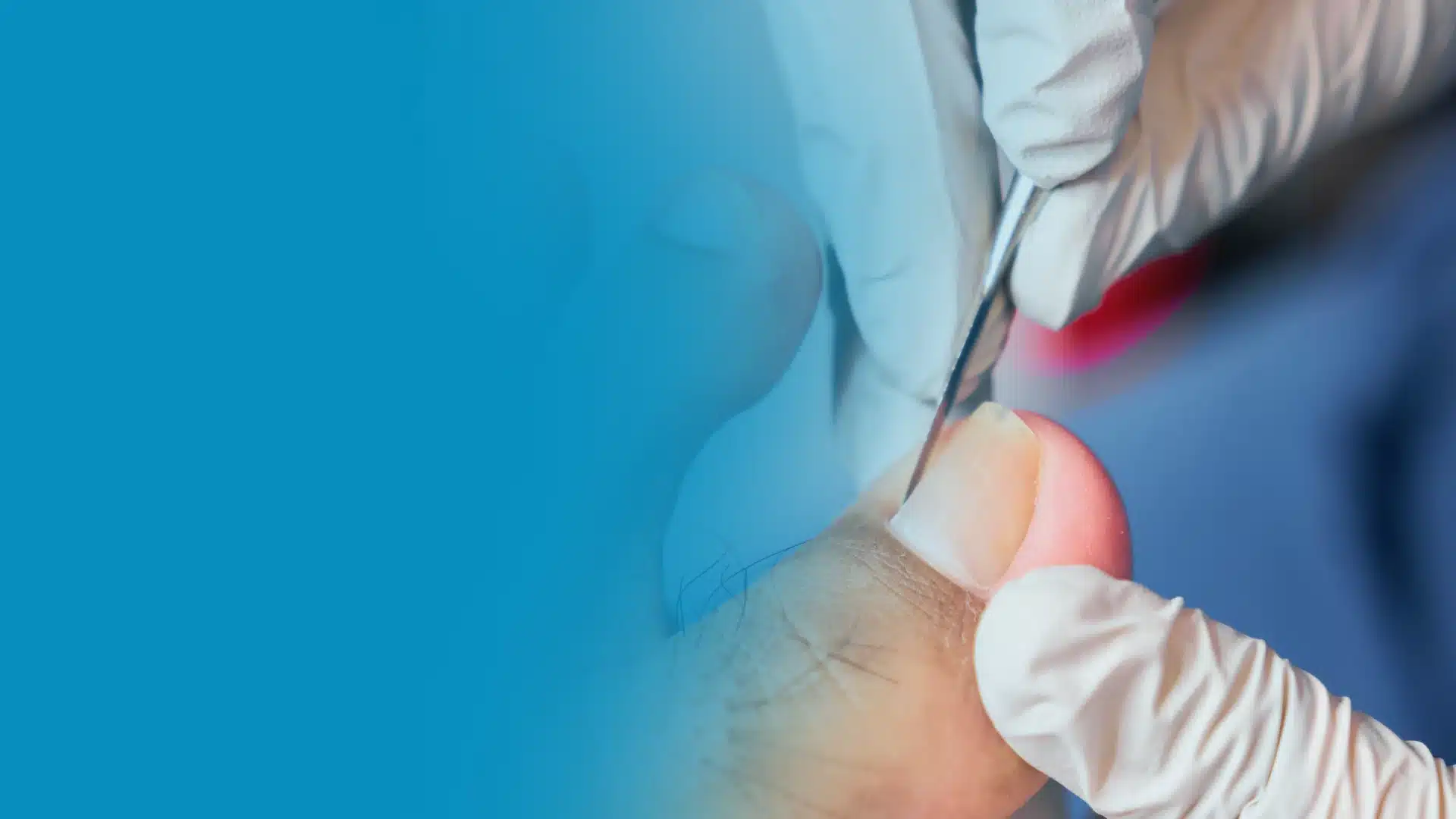
You are in the right place. Dr. Tom Biernacki, DPM, FACFAS — board-certified foot & ankle surgeon with 3,000+ surgeries — explains exactly what Pseudomonas nail infection (green nail) means and what actually works. Call (810) 206-1402 for a same-day appointment at our Howell or Bloomfield Township office.
Quick answer:A green or blue-green toenail is often a Pseudomonas bacterial infection, which grows in the moist gap when the nail lifts from its bed. It is usually harmless but persistent — a podiatrist can trim the affected nail, keep it dry, and treat it so the discoloration grows out. Call (810) 206-1402.
Medically reviewed by Dr. Tom Biernacki, DPM — Board-qualified foot & ankle surgeon, founder of Balance Foot & Ankle PLLC. Updated May 2026. We treat pseudomonas (green nail syndrome) every week at our Howell and Bloomfield Township clinics — this is exactly how we work it up and clear it.
You looked down at your toenail and it was green. Or blue-green. Or almost black-green at the edges. The color did not wash off. The nail was loose. And the smell — if you noticed it — was faintly sweet or grape-like, not the cheesy odor of athlete’s foot. You almost certainly have pseudomonas nail infection, also called green nail syndrome or chloronychia. It looks alarming. It is treatable. And in our clinic we have learned that the patients who come in early do exceptionally well, while the ones who let it go for months sometimes lose the nail entirely. This guide is exactly what we tell our patients on day one.
What is pseudomonas of the toenail?
Pseudomonas aeruginosa is an opportunistic, gram-negative bacterium that lives in soil, water, and damp environments. It does not normally invade healthy nails, but when a toenail becomes lifted from its bed — from trauma, fungal infection, or chronic moisture — pseudomonas finds the warm, dark, wet space underneath and colonizes it. The bacterium produces two pigments — pyocyanin (blue-green) and pyoverdin (yellow-green) — that stain the underside of the nail plate the characteristic green color.
In our clinic we see green nail syndrome most often in three groups: people whose feet stay damp (athletes, kitchen workers, people with hyperhidrosis), patients with pre-existing onychomycosis where the nail has lifted, and patients who have had a recent toenail trauma. The condition is more common on toenails than fingernails because shoes create the perfect dark, warm, damp environment.
Why is the nail green? The pigment story
The green color is not the nail itself — it is bacterial pigment under the nail. Pseudomonas excretes pyocyanin (a blue pigment) and pyoverdin (a yellow-green pigment); together they paint the underside of the nail plate in shades from emerald green to dark blue-green to nearly black. The color does not scrub off and does not respond to soap or hand sanitizer. It only fades as the bacteria are killed and the nail grows out. Patients sometimes try to bleach or sand it off — do not. The pigment is mechanically embedded in the nail keratin and trying to remove it physically only damages the nail further.
Causes and risk factors
Pseudomonas does not cause a healthy, fully attached nail to lift. The lifting comes first; the bacterium colonizes the gap that already exists. The classic risk-factor stack we see in clinic:
- Pre-existing onychomycosis — fungal toenail that already lifted the plate, creating the void.
- Recent toenail trauma — jamming the toe into shoes, dropping something on it, or a partial nail avulsion.
- Chronic moisture exposure — runners with sweaty feet, kitchen workers, dishwashers, gardeners.
- Hyperhidrosis — excessive foot sweat that keeps the nail bed permanently damp.
- Tight or non-breathable footwear — non-leather work boots, plastic shoes, occlusive socks.
- Immunosuppression — diabetes, chemotherapy, steroids, biologics.
- Acrylic or gel manicures on toenails (less common but documented).
- Poor toe-clipping technique — cutting too short, creating ingrown corners that lift the nail.
Symptoms and the typical timeline
The presentation is usually obvious once you know what to look for. Patients describe a sequence:
- Loose nail appears first — usually painless, often noticed during clipping.
- Faint yellow-green discoloration appears at the edge of the lift, deepening to dark green over weeks.
- Nail color stabilizes in a band or wedge, often along one side or at the tip.
- Mild odor — sometimes grape-like or sweet (a known feature of pseudomonas).
- Pain or tenderness only develops if there is co-existing fungal infection, paronychia (nail-fold infection), or invasive bacterial soft-tissue spread.
- Surrounding redness, swelling, or pus means the infection has progressed beyond simple chloronychia and needs in-office care.
Conditions that mimic green nail syndrome
Not every dark or green-tinged toenail is pseudomonas. Several conditions can look similar at a glance, and getting the diagnosis right changes the treatment:
- Subungual hematoma — trapped blood under the nail after trauma; starts dark red or purple, then darkens to brown or black, never green.
- Onychomycosis — fungal nail; usually yellow-brown or white, not green; nail thickens and crumbles.
- Subungual melanoma — brown-black streak in the nail (Hutchinson’s sign extends to the cuticle); never green; biopsy mandatory if suspected.
- Drug-induced nail discoloration — minocycline, chemotherapy agents, antimalarials.
- Mold infections of the nail — Aspergillus or Scopulariopsis; can produce green-black tones; requires nail clipping for fungal culture.
- Iron or copper staining from environmental exposure (occupational).
- Nail polish staining — some shellac/gel polishes leave persistent stain after removal.
How we diagnose pseudomonas nail infection
The diagnosis is usually clinical — a green nail in a patient with a known lifted nail and a damp-environment history is pseudomonas until proven otherwise. Our six-step diagnostic walkthrough:
- History — trauma, prior fungal nail, occupation, hyperhidrosis, immunosuppression.
- Inspection — the green color is under the nail plate, not on it; lifting (onycholysis) is almost always present.
- Wood’s lamp — pseudomonas may fluoresce yellow-green under UV, supporting the diagnosis.
- Nail clipping with culture and sensitivity — for refractory or atypical cases; can also rule in fungal co-infection.
- KOH/PAS stain on nail clippings — to identify or exclude onychomycosis.
- Biopsy — reserved for atypical lesions where melanoma cannot be excluded by exam alone (any dark streak that involves the cuticle — Hutchinson’s sign — gets biopsied).
Home treatment — the 4-step protocol we hand to every patient
Most cases of pseudomonas nail infection respond to dry, simple home care over 2–4 weeks. The fundamental principle: pseudomonas needs moisture. Take away the moisture, treat the lifted nail, and the infection dies. Here is the exact protocol we give every patient on day one:
- Trim back the lifted nail. Cut the nail back to where it is firmly attached to the bed. This is the single most important step — pseudomonas cannot survive without the dark, damp pocket. Use clean nail nippers; trim straight across; do not dig into corners.
- Soak twice daily in a 1:1 solution of white vinegar (5% acetic acid) and water for 10 minutes. Acetic acid kills pseudomonas effectively at this dilution. Continue for at least 14 days after the green is gone.
- Dry thoroughly after every soak, every shower, every workout. Use a clean towel, then air-dry for 5–10 minutes before putting on socks. A hairdryer on cool helps.
- Change socks any time they are damp. Carry a spare pair if your feet sweat or you are exposed to wet conditions. Wool or synthetic only — never cotton in damp environments. For workout-related sweat, we use moisture-wicking socks plus an antiperspirant on the foot for severe hyperhidrosis cases.
In-office and prescription treatment
When home care is not enough — either because the lift is too aggressive to trim safely, the patient is diabetic or immunosuppressed, or there is co-existing fungal disease — we move up the ladder. The treatments we use in clinic, in order of escalation:
- Aggressive in-office nail debridement. We trim back all lifted nail, debride the underside, and culture if anything looks atypical. This alone clears many cases that home soaks could not.
- Topical 2% acetic acid — pharmacy-compounded or commercial. Twice daily for 2–4 weeks.
- Topical ciprofloxacin 0.3% drops (otic or ophthalmic) — applied once or twice daily under the lifted nail. Excellent pseudomonas coverage with minimal side effects.
- Topical gentamicin or polymyxin B-bacitracin ointment — alternatives when fluoroquinolones are not appropriate.
- Antifungal therapy — if fungal co-infection is confirmed (terbinafine 250 mg daily for 12 weeks for a confirmed dermatophyte; topical efinaconazole or tavaborole for milder cases).
- Partial or complete nail avulsion — in rare cases where the lift is severe and infection is recurrent; the nail is removed in a 5-minute office procedure under local anesthesia.
- Oral antibiotics — reserved for invasive soft-tissue infection, immunocompromised patients, or systemic signs (fever, lymphangitis). Oral ciprofloxacin is first line.
Pseudomonas in diabetics — a different risk profile
In a healthy adult, green nail syndrome is mostly a cosmetic problem. In a patient with diabetes, peripheral neuropathy, or peripheral arterial disease, the same green nail can be the visible tip of a much more serious infection. Pseudomonas in compromised patients can spread into the nail fold (paronychia), into the deep tissue (cellulitis), into the bone (osteomyelitis), or through the bloodstream (bacteremia). We treat any diabetic patient with green nail syndrome aggressively: in-office debridement on day one, culture, topical antibiotic, and a low threshold for oral therapy. If you have diabetes and notice a green or discolored toenail, do not soak at home for weeks — come in.
Prevention — keep it from coming back
Once a patient has had pseudomonas nail infection, the lifted nail and damp environment that allowed it tend to persist — recurrence is common without active prevention. Our 8-point prevention checklist:
- Treat any underlying fungal nail — the lifted, damaged nail is the gateway.
- Keep nails trimmed short and straight across — never dig into corners.
- Dry feet thoroughly after every shower, soak, or workout.
- Change damp socks immediately. Wool or synthetic; never cotton in damp environments.
- Rotate shoes so each pair has 24–48 hours to dry between wearings.
- Use a foot antiperspirant if you have hyperhidrosis (aluminum chloride 12–20% prescription strength for severe cases).
- Wear shower shoes in pools, gyms, locker rooms.
- Annual podiatry visit if you have recurrent nail problems.
Call a podiatrist within 1 week if:
- The green color does not improve after 2 weeks of home care
- You have diabetes, peripheral arterial disease, or take immunosuppressive medication
- The toe becomes painful, hot, or swollen
- Pus is draining from around the nail
- You suspect fungal co-infection (thickened, crumbly nail)
- You have a dark streak in the nail that extends to the cuticle (must rule out melanoma)
When pseudomonas becomes an emergency
Call your doctor or 911 same day if:
- Spreading red streaks up the foot or leg (lymphangitis)
- Fever, chills, or feeling systemically unwell
- Rapidly spreading swelling, blistering, or skin necrosis
- Severe pain disproportionate to the appearance (rule out deeper infection)
- You are immunocompromised and have any signs of infection beyond simple discoloration
The most common mistake we see
The single most common mistake we see is treating green nail syndrome as a fungus — usually with months of OTC antifungal lacquer or pills. Pseudomonas is bacterial, not fungal. Antifungals do nothing for it, and during the months a patient spends on the wrong drug the lifted nail keeps getting worse. The second most common mistake is trying to bleach or sand off the green color — the pigment is embedded in the keratin and physical removal damages what is left of the nail. The third is ignoring it for months because it does not hurt — in healthy adults that often works out, but in diabetics it can become a deep infection while the patient assumes it is harmless.
In-Office Treatment at Balance Foot & Ankle
If home treatment isn’t providing relief for your toenail condition, our podiatry team at Balance Foot & Ankle can help with same-day evaluations and advanced in-office care.
⭐ 4.5★ | 8K+ Sold
Keep nails separated during pseudomonas treatment — reduces moisture buildup and prevents spread to adjacent nails.
PowerStep Pinnacle Arch Support Insoles
⭐ 4.7★ | 50K+ Sold
Maintain proper foot mechanics while recovering from nail infection — reduces pressure on affected toes.
Frequently asked questions about pseudomonas nail infection
Is green nail syndrome contagious?
Pseudomonas itself is everywhere in the environment, but green nail syndrome does not spread easily from person to person. You cannot “catch” it from sharing a towel with a healthy contact. The risk is mostly to the same person developing recurrence in another nail with the same vulnerability (lift, moisture).
How long does it take for the green color to go away?
Once the bacteria are killed, the existing pigment grows out with the nail — toenails grow about 1.5 mm per month, so a fully discolored nail can take 6–12 months to grow out clear. The infection itself is usually gone in 2–4 weeks of correct treatment; it is just the cosmetic stain that takes longer.
Will vinegar really kill pseudomonas?
Yes — acetic acid at 1–5% concentration is bactericidal against pseudomonas, and 2% acetic acid soaks have been used effectively in clinical practice for decades. Standard household white vinegar (5% acetic acid) diluted 1:1 with water is approximately 2.5% and works well for routine cases.
Do I need oral antibiotics?
Almost never for simple green nail syndrome. Oral antibiotics are reserved for invasive infection (cellulitis, lymphangitis, fever) or immunocompromised patients. Most cases respond to nail trimming, drying, and topical therapy alone.
Can I paint over a green nail?
No — nail polish creates an occlusive layer that traps moisture under the nail and feeds the bacteria. Wait until the green is fully grown out and the nail has been dry for at least 4 weeks before applying any polish or treatment.
Will the nail fall off?
Sometimes yes, particularly in long-standing cases or when there is significant fungal co-infection. A nail that has been lifted for many months may shed on its own; treatment can also include planned partial or complete avulsion. The good news: a healthy new nail almost always grows back, though it can take 9–12 months for a toenail to fully regrow.
The bottom line
A green toenail is almost always pseudomonas (chloronychia) — a treatable bacterial infection of a lifted, damp nail. Most cases clear in 2–4 weeks with three things: trim back the lifted nail, soak in dilute vinegar twice daily, and dry the feet aggressively. Stubborn cases respond to topical ciprofloxacin or in-office debridement. Diabetics and immunosuppressed patients should be seen quickly — what is cosmetic in healthy adults can be the start of a deep infection in compromised patients. If you have a green or blue-green nail and you are not sure what is going on, come see us — we can usually settle the diagnosis and start treatment in a single visit.
Have a green or discolored toenail? Get a clear diagnosis fast.
Dr. Tom Biernacki, DPM — Howell & Bloomfield Township, Michigan. Same-week appointments.
Book your visit or call (810) 206-1402
Sources
- Chiriac A, Brátu D, Moldovan T, Pinteala T, Foia L. Chloronychia: Green nail syndrome caused by Pseudomonas aeruginosa in elderly persons. Clin Interv Aging. 2015;10:265-267. PMC4309781.
- Bae Y, Lee GM, Sim JH, Lee S, Lee SY, Park YL. Green nail syndrome treated with the application of tobramycin eye drop. Ann Dermatol. 2014;26(4):514-516.
- Geizhals S, Lipner SR. Retrospective case series on risk factors, diagnosis, and treatment of Pseudomonas aeruginosa nail infections. Am J Clin Dermatol. 2020;21(2):297-302.
- Schwartz JJ, Bushman E. Acetic acid for pseudomonas nail infection. Cutis. 2009;83(2):75-76.
- Rigopoulos D, Rallis E, Gregoriou S, et al. Treatment of pseudomonal infections of the nails with ciprofloxacin otic solution. J Eur Acad Dermatol Venereol. 2009;23(11):1314-1315.
Podiatrist-Recommended Products for Nail Infections
- Doctor Hoy’s Natural Pain Relief Gel — natural topical formula with antimicrobial properties for nail and surrounding skin infections
- FLAT SOCKS No-Sock Insoles — no-show insoles that reduce the warm, moist shoe environment where Pseudomonas thrives
- Plantar Fasciitis Compression Socks — moisture-wicking compression socks that keep feet drier to limit nail pathogen growth
These are the same products Dr. Biernacki recommends in clinic. Available through our partner Foundation Wellness.
Frequently Asked Questions
How long does it take a toenail to grow back?
6-12 months for a full big toenail. Smaller toenails 4-6 months. Speed varies with age, circulation, and nutrition.
Will this affect other nails?
Trauma affects only the injured nail. Fungal infection can spread without treatment. Systemic causes affect multiple nails simultaneously.
Should I cover the nail or leave it open?
Cover with a breathable bandage during work or activity. Leave open at night for healing. Keep dry and clean.
Ready to feel better?
Same-week appointments available in Howell and Bloomfield Township, Michigan.
Book Your VisitReady to fix this for good?
Reading goes only so far. The fastest path to relief is a 30-minute office visit with Dr. Biernacki — same-day Howell or Bloomfield Township. Call (810) 206-1402 or use our online booking.
Get Expert Care at Balance Foot & Ankle
Same-week appointments at our Howell and Bloomfield Township offices. Board-certified podiatric surgeons. Most insurance accepted.

Dr. Tom Biernacki, DPM is a board-certified foot & ankle surgeon (ABFAS & ABPM) at Balance Foot & Ankle Specialists in Southeast Michigan. With over a decade of clinical experience, he specializes in heel pain, bunions, diabetic foot care, sports injuries, and minimally invasive surgery. Dr. Biernacki is a member of the APMA and ACFAS, and his patient education content on MichiganFootDoctors.com and YouTube has made him one of the most-followed foot & ankle educators on YouTube.
More questions patients ask
What causes a pseudomonas nail infection?
Pseudomonas aeruginosa, a Gram-negative bacterium, infects the nail when it penetrates between the nail plate and nail bed through a gap caused by trauma, fungal infection, or onycholysis. Prolonged moisture exposure (wet work, frequent handwashing, acrylic nails) significantly raises risk.
Why does my nail turn green from pseudomonas?
The characteristic blue-green discoloration of pseudomonas nail infection comes from pyocyanin and pyoverdine, pigments produced by Pseudomonas aeruginosa. The color can range from yellow-green to dark green or blue-black depending on the severity and depth of infection.
How do podiatrists treat pseudomonas nail infection?
Treatment involves trimming and debriding the affected nail, applying topical antibiotics (gentamicin, ciprofloxacin drops, or acetic acid solution), and keeping the area dry. Oral antibiotics are rarely needed. Addressing underlying onycholysis or fungal infection is critical to prevent recurrence.
Still have a question about coverage or cost? Book online and we will check your benefits before your visit: Book in Howell · Book in Bloomfield Township. Prefer to talk it through first? Call (810) 206-1402.