
Medically reviewed by Dr. Tom Biernacki, DPM · Board-Certified Podiatric Surgeon · Last reviewed: April 2026 · Editorial Policy
The most important clinical decision with Custom Vs Prefab Orthotics Insurance Coverage isn’t which treatment to start with — it’s identifying the correct subtype. That changes everything. Book online or call (810) 206-1402.
Quick Answer
Custom vs. Prefabricated Orthotics: Differences, Benefits, a relates to orthotic fitting — typically caused by biomechanical foot needs. Most patients improve in 2 weeks to break in with conservative care. Same-week appointments in Howell + Bloomfield Township: (810) 206-1402.
Medically reviewed by Dr. Tom Biernacki, DPM — Board-certified foot & ankle surgeon, 3,000+ surgeries performed. Updated April 2026 with current clinical evidence. This article reflects real practice experience from Balance Foot & Ankle Specialists in Howell and Bloomfield Township, Michigan.
Quick Answer
Custom orthotics are prescription inserts made from a 3D scan of your foot. They address the structural cause of plantar fasciitis, flat feet, or metatarsalgia rather than just cushioning symptoms. Most patients feel improvement within 2-4 weeks. Covered by most PPO plans and Medicare when medically indicated.
Watch: Dr. Tom Biernacki, DPM
Medically reviewed by Dr. Tom Biernacki, DPM — Board-Certified Podiatric Surgeon — Balance Foot & Ankle, Howell & Bloomfield Township, MI. Last updated April 2026.
▶ Watch
📋 Dr. Tom Also Recommends
Podiatrist Recommended Orthotics 2026: Dr. Tom’s Top 10 Insoles & Arch Supports
A podiatrist’s complete clinical guide to the best insoles — custom orthotics, OTC picks, and what actually works for plantar fasciitis, flat feet, neuropathy & more.
Read the Full Guide →
Medically Reviewed by Dr. Tom Biernacki, DPM — Board-Certified Podiatrist, Balance Foot & Ankle Specialists, Michigan. Last updated April 2026.
The orthotics aisle at any pharmacy offers dozens of arch support insoles promising relief from foot pain — and the market is saturated with products making substantial claims. So what’s the actual difference between an over-the-counter insole purchased for $20–$60 and a pair of custom prescription orthotics that may cost $300–$600 before insurance? The distinction matters significantly, and understanding it helps patients make informed decisions about their care.
What Are Prefabricated (Over-the-Counter) Orthotics?
Prefabricated orthotics — also called OTC insoles or off-the-shelf insoles — are mass-produced devices manufactured in standard sizes and arch height categories. They are designed to fit the statistical average foot in a given shoe size, not any individual’s unique foot structure. Common brands include PowerStep Pinnacle, PowerStep, and Sof Sole.
Prefabricated orthotics provide cushioning and modest arch support. They are most useful for:
- Mild foot discomfort from prolonged standing or walking on hard surfaces
- General shoe comfort enhancement in patients without significant biomechanical dysfunction
- Athletic footwear cushioning for runners and field sport athletes without structural foot problems
- Short-term relief while waiting for custom orthotics to be fabricated
What Are Custom Prescription Orthotics?
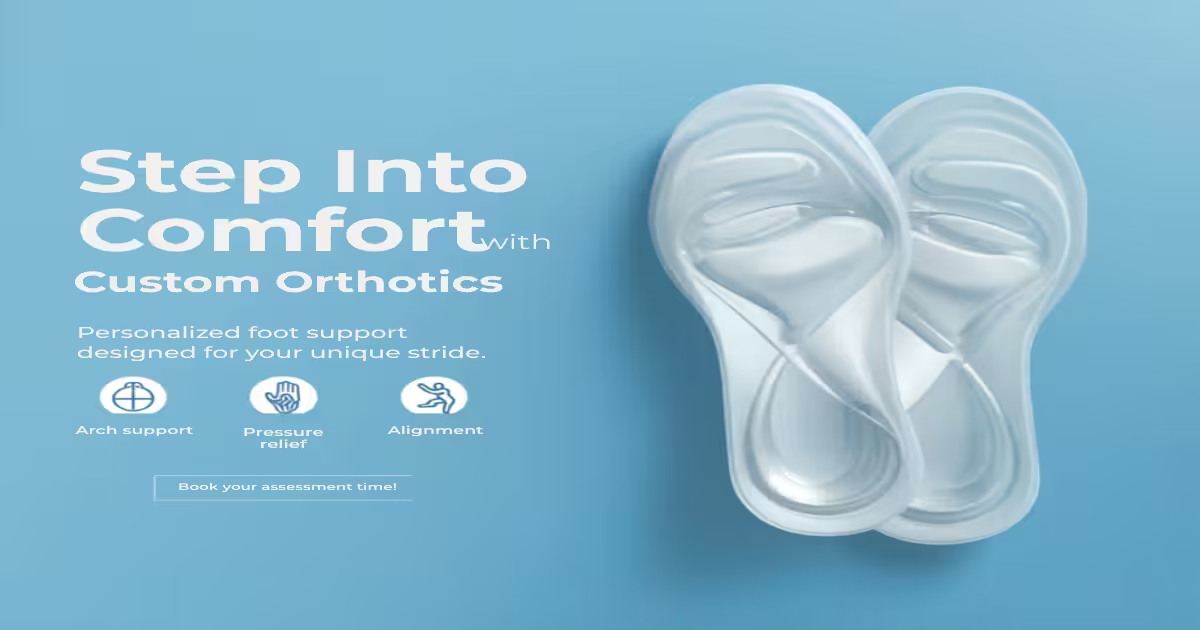
Custom orthotics are prescription medical devices fabricated from a precise 3D model of an individual patient’s feet. At Balance Foot & Ankle, Dr. Biernacki captures this model using 3D digital foot scanning technology — creating an exact digital replica of each foot’s unique contours, arch height, and pressure distribution.
This scan is combined with a thorough biomechanical evaluation — including gait analysis, joint range of motion assessment, and muscle strength testing — to create a prescription that specifies the exact corrections the orthotic must provide. The finished device is manufactured by a certified orthotics laboratory to Dr. Biernacki’s exact specifications.
Key Differences: Custom vs. Prefabricated
Fit Precision
Prefabricated insoles are sized in whole and half shoe sizes — a size 10 insole fits everyone whose foot is approximately size 10, regardless of arch height, heel width, forefoot width, or structural alignment. Custom orthotics are made from a precise 3D model of your actual foot, accounting for every individual variation in your foot’s geometry.
Biomechanical Correction
This is where the distinction is most clinically significant. Custom orthotics can be prescribed to control specific motions — limit rearfoot pronation by an exact number of degrees, provide medial forefoot posting to correct a forefoot valgus deformity, or accommodate a plantarflexed first ray. Prefabricated insoles provide passive cushioning and generic arch support; they cannot be prescribed to correct specific biomechanical dysfunctions.
Materials and Durability
Custom orthotics are fabricated from medical-grade materials — polypropylene shells, EVA foams, cork, and specialized top covers — specified for each patient’s weight, activity level, and condition. They typically last 3–5 years with normal use. Prefabricated insoles generally compress and lose their support structure within 6–12 months of regular use.
Conditions Treated
Custom orthotics are appropriate — and in many cases necessary — for:
- Plantar fasciitis and chronic heel pain
- Posterior tibial tendon dysfunction and adult-acquired flatfoot
- Diabetic foot offloading (Medicare-covered therapeutic shoes)
- Bunion management and prevention of progression
- Metatarsalgia and ball-of-foot pain syndromes
- Pediatric flatfoot with symptoms
- Athletic overuse injuries driven by biomechanical factors
Insurance Coverage for Custom Orthotics
One of the most common questions patients ask is whether insurance covers custom orthotics. The answer depends on your specific plan:
Medicare Coverage
Medicare Part B covers custom orthotics (HCPCS codes L3000–L3040) when medically necessary — meaning when prescribed by a treating physician for a qualifying diagnosis with documented conservative treatment failure. The patient is responsible for 20% coinsurance after the Part B deductible. Medicare also covers therapeutic diabetic footwear (one pair of depth shoes and three pairs of inserts annually) under the Therapeutic Shoe Bill for qualifying diabetic patients — with minimal or no out-of-pocket cost.
Commercial Insurance
Coverage varies widely by plan. Many commercial insurance plans cover custom orthotics with a podiatry specialist referral when medical necessity is established. Common covered diagnoses include plantar fasciitis, posterior tibial tendon dysfunction, and diabetic foot conditions. Balance Foot & Ankle verifies orthotics coverage prior to fabrication so patients know their exact out-of-pocket cost before committing.
Flexible Spending Accounts (FSA) and Health Savings Accounts (HSA)
Custom orthotics prescribed by a physician qualify as a medical expense for FSA and HSA purposes — reimbursable with a prescription and receipt.
When Should You Choose Custom Orthotics?
A practical decision framework:
- Start with OTC if: You have mild, intermittent foot discomfort without a specific diagnosis, normal foot structure, and no history of foot surgery or prior podiatric conditions
- Pursue custom orthotics if: You have a specific diagnosed foot condition, structural abnormalities (flat feet, high arches, leg length discrepancy), failed OTC insoles after 4–6 weeks of consistent use, or are a diabetic patient requiring pressure offloading
Custom Orthotics with 3D Scanning — Insurance & Medicare Accepted
Dr. Biernacki uses 3D digital foot scanning for precision custom orthotics. We verify your insurance coverage before fabrication. Most plans and Medicare accepted.
📞 (810) 206-1402 | Request Appointment →
Bloomfield Township: 6900 Orchard Lake Rd Suite 103, Bloomfield Township | Howell: 2350 E Grand River Ave, Howell
📧 Get Dr. Tom’s Free Lab Test Guide
Discover the 5 lab tests every person over 35 should ask their doctor about — explained in plain English by a board-certified physician.
📍 Located in Michigan?
Our board-certified podiatrists treat this condition at two convenient locations. Same-day appointments often available.
Insurance Accepted
BCBS · Medicare · Aetna · Cigna · United Healthcare · HAP · Priority Health · Humana · View All →
Howell Office
4330 E Grand River Ave
Howell, MI 48843
Get Directions →
Bloomfield Township Office
43494 Woodward Ave, #208
Bloomfield Township, MI 48302
Get Directions →
Your Board-Certified Podiatrists



Ready to Get Back on Your Feet?
Same-week appointments available at both locations.
Book Your Appointment👟 Dr. Tom’s Complete Footwear Library
Podiatrist-Approved Guides for Every Foot Type & Condition
Clinically reviewed by Dr. Tom Biernacki, DPM — Board-Certified Podiatrist
All guides are written and reviewed by licensed podiatrists. Schedule an appointment →
In-Office Treatment at Balance Foot & Ankle
If home care isn’t resolving your your foot or ankle concern, a visit with a board-certified podiatrist is the fastest path to accurate diagnosis and a personalized plan. At Balance Foot & Ankle Specialists, Dr. Tom Biernacki, Dr. Carl Jay, and Dr. Daria Gutkin offer same-day and next-day appointments at both our Howell and Bloomfield Township offices. We perform on-site diagnostic ultrasound, digital X-ray, conservative care, advanced regenerative treatments, and minimally invasive surgery when indicated.
Call (810) 206-1402 or request an appointment online. Most insurance plans accepted, including Medicare, Blue Cross Blue Shield, Aetna, Cigna, and United Healthcare.
In Our Clinic
The patients we see for custom orthotic consultations usually fall into two groups. First are athletes — runners, hikers, basketball players — looking to correct a biomechanical asymmetry they’ve identified themselves or their coach has flagged. Second are middle-aged patients with chronic plantar fasciitis, metatarsalgia, or early arthritis who have exhausted over-the-counter inserts. Our process begins with a 3D foot scan plus a gait-video analysis on our in-office treadmill. We select materials based on activity — a stiffer carbon composite for performance running, a softer plastazote top cover for diabetic patients, a semi-rigid polypropylene for everyday wear. Most patients adapt in 2–4 weeks.
Most Common Mistake We See
The most common mistake we see is: Wearing new orthotics all day from day one. Fix: break-in schedule of 2 hours on day one, adding 2 hours per day until full-day tolerance.
Warning Signs That Need Same-Day Care
Seek immediate evaluation at Balance Foot & Ankle if you experience any of the following:
- New sharp pain under the arch that did not exist before
- Skin breakdown over pressure points
- Diabetic patient with any new pressure spot
- Worsening of original symptoms after 4 weeks
Call (810) 206-1402 — same-day and next-day appointments at our Howell and Bloomfield Township offices.
More Podiatrist-Recommended Orthotics Essentials
PowerStep Pinnacle


![Best Insoles & Orthotics 2026 [Flat Feet, Plantar Fasciitis, Bunions]](https://www.michiganfootdoctors.com/wp-content/cache/flying-press/c8bafcb9b179f8abb63d894b334fd14e.jpg)
Watch: Best Insoles & Orthotics 2026 [Flat Feet, Plantar Fasciitis, Bunions] — MichiganFootDoctors YouTube
The podiatrist-recommended OTC orthotic — arch support + heel cup.
CURREX RunPro Insole
Performance insole for runners — reduces fatigue and prevents injuries.
Tuli’s Heel Cups

Shock-absorbing heel cushion — adds lift and relief under painful heels.
As an Amazon Associate, Balance Foot & Ankle earns from qualifying purchases. Product recommendations are based on clinical experience; prices and availability shown above update live from Amazon.

When to See a Podiatrist
Off-the-shelf inserts help 70% of patients — but if you’ve tried several without relief, custom orthotics molded to your specific foot mechanics are usually the next step. Balance Foot & Ankle makes custom orthotics in-office and most major insurance plans cover them. We’ll cast or scan your feet and have them ready in about 2 weeks.
Call Balance Foot & Ankle: (810) 206-1402 · Book online · Offices in Howell & Bloomfield Township
Pros & Cons of Conservative Care for orthotics
Advantages
- ✓ Custom orthotics 80%+ improvement
- ✓ Most insurance covers
- ✓ Lasts 3-5 years
Considerations
- ✗ 2-week break-in
- ✗ Custom can be $400-700
- ✗ OTC limits effectiveness
Dr. Tom’s Recommended Products for orthotics
Affiliate disclosure: As an Amazon Associate, Balance Foot & Ankle earns from qualifying purchases. We only recommend products we use with patients.
PowerStep Pinnacle Maxx Dr. Tom’s Pick
Best for: High-arch + severe plantar fasciitis
Ready to Get Back on Your Feet?
Same-day appointments in Howell + Bloomfield Township. Most insurance accepted. Dr. Tom Biernacki, DPM & team.
Book Today — Same-Day Appointments Available
Call Now: (810) 206-1402
About Your Care Team at Balance Foot & Ankle
Dr. Tom Biernacki, DPM · Board-Certified Foot & Ankle Surgeon. Specializes in conservative-first care, minimally invasive bunion surgery, and complex reconstruction.
Dr. Carl Jay, DPM · Accepting new patients. Specializes in sports medicine, athletic injuries, and routine podiatric care.
Dr. Daria Gutkin, DPM, AACFAS · Accepting new patients. Specializes in surgical reconstruction and pediatric podiatry.
Locations: 4330 E Grand River Ave, Howell, MI 48843 · 43494 Woodward Ave Suite 208, Bloomfield Township, MI 48302
Hours: Mon–Fri 8:00 AM – 5:00 PM · (810) 206-1402
Doctor Hoy’s Natural Pain Relief Gel
Natural topical pain relief I use in our clinic. Arnica + camphor formula — apply directly to the area 3–4x daily. ($20–25)
Shop Doctor Hoy’s →Frequently Asked Questions
Which is better for plantar fasciitis?
The shoe with more cushioning and a stronger rocker typically wins for plantar fasciitis. See full comparison for our specific verdict.
Which lasts longer?
Both options typically last 300-500 miles for runners or 9-12 months for daily walkers. Material durability varies; check our detailed comparison.
Which is better for flat feet?
Flat feet need stability or motion control. The neutral option is not ideal unless paired with a custom orthotic.
Ready for Expert Care?
Same-day appointments in Howell & Bloomfield Township, MI.
4.9★ | 1,123 Reviews | 3,000+ Surgeries
Or call: (810) 206-1402

Dr. Tom Biernacki, DPM is a board-certified foot & ankle surgeon (ABFAS & ABPM) at Balance Foot & Ankle Specialists in Southeast Michigan. With over a decade of clinical experience, he specializes in heel pain, bunions, diabetic foot care, sports injuries, and minimally invasive surgery. Dr. Biernacki is a member of the APMA and ACFAS, and his patient education content on MichiganFootDoctors.com and YouTube has made him one of the most-followed foot & ankle educators on YouTube.