

Medically reviewed by Dr. Tom Biernacki, DPM — Board-certified foot & ankle surgeon, 3,000+ surgeries performed. Updated April 2026 with current clinical evidence. This article reflects real practice experience from Balance Foot & Ankle Specialists in Howell and Bloomfield Township, Michigan.
Quick Answer
Most foot and ankle problems respond to conservative care — proper footwear, supportive inserts, activity modification, and targeted stretching — within 4-8 weeks. Persistent pain beyond that window, or any symptom that prevents walking, warrants a podiatric evaluation to rule out fracture, tendon tear, or systemic cause.
Watch: Dr. Tom Biernacki, DPM
Medically reviewed by Dr. Tom Biernacki, DPM — Board-Certified Podiatric Surgeon — Balance Foot & Ankle, Howell & Bloomfield Township, MI. Last updated April 2026.
▶ Watch
Medically reviewed by Dr. Tom Biernacki, DPM | Board-certified podiatrist | 3,000+ surgeries performed
Last updated: April 2, 2026
The most important clinical decision with Equestrian Horseback Riding Foot Ankle Injuries isn't which treatment to start with — it's which subtype or underlying cause you actually have. Our podiatrists regularly see patients who've been treated for months for the wrong diagnosis. The correct identification changes the entire treatment path. Call (810) 206-1402 — Dr. Tom evaluates this condition at both Howell and Bloomfield Township locations.
How Horseback Riding Affects Feet and Ankles
The equestrian foot occupies a uniquely vulnerable position — locked into a rigid stirrup with the ankle plantar flexed, the foot bears the rider’s entire weight through the ball of the foot against a narrow metal or composite platform. This sustained loading through a small contact area generates pressures of 3 to 5 times body weight during posting trot and up to 8 times body weight during jumping.
The stirrup creates a lever arm that amplifies rotational forces during falls. When a rider is thrown, the foot can become trapped in the stirrup — creating catastrophic torsional injuries to the ankle and midfoot as the horse continues moving with the rider dragged. This mechanism produces the most severe equestrian foot injuries including Lisfranc dislocations, ankle fractures, and open wounds.
A 2024 epidemiological study in the British Journal of Sports Medicine found that foot and ankle injuries accounted for 18 percent of all equestrian injuries, ranking third after head (32 percent) and upper extremity (24 percent) injuries. Notably, 40 percent of equestrian foot injuries occurred while dismounted — during grooming, leading, or being stepped on by the horse.
Stirrup-Related Foot Fractures
Metatarsal fractures from stirrup pressure are the most common equestrian foot injury. The narrow stirrup concentrates the rider’s weight across the second and third metatarsal shafts during posting and jumping. Stress fractures develop gradually from repetitive loading, while acute fractures can occur from a single high-force impact during a hard landing or when the horse stumbles.
Lisfranc injuries — fractures and dislocations of the midfoot tarsometatarsal joints — represent the most serious stirrup-related foot injury. The mechanism involves the foot becoming fixed in the stirrup while rotational and axial forces are applied during a fall. Lisfranc injuries are frequently misdiagnosed as simple sprains because initial X-rays may appear normal; weight-bearing X-rays and CT scanning are essential for accurate diagnosis.
Dr. Tom Biernacki emphasizes that any midfoot pain after a riding injury that causes difficulty bearing weight or midfoot swelling warrants X-ray evaluation, even if the injury seems minor. Missed Lisfranc injuries lead to post-traumatic arthritis and chronic pain that may require fusion surgery — outcomes that are far worse than those achieved with early surgical fixation.
Crush Injuries From Being Stepped On
Horses weigh 900 to 1,200 pounds, and their hooves concentrate that force onto an area smaller than a human fist — generating pressures exceeding 100 PSI on impact. Being stepped on is the most common ground-level equestrian foot injury and can cause metatarsal fractures, toe fractures, nail bed injuries, subungual hematomas, and soft tissue crush damage.
The unique aspect of equestrian crush injuries is the combination of high pressure and relatively slow application — the horse’s weight is often sustained for several seconds before the foot can be extracted, creating more extensive tissue damage than a comparable-force impact injury. Compartment syndrome of the foot — where swelling within the fascial compartments compromises blood flow — is a rare but limb-threatening complication of severe crush injuries.
Immediate first aid includes removing the boot carefully (cutting it off if the foot is significantly swollen), applying ice and compression, elevating the foot above heart level, and seeking medical evaluation for any crush injury that produces significant swelling, inability to bear weight, or deformity. Do not attempt to remove toe rings or jewelry from a crushed foot — swelling may make this impossible within hours.
Fall Injuries: Ankle Fractures and Sprains
Falls from horseback — whether from being thrown, losing balance, or horse rollover — subject the ankle to high-energy forces from heights of 4 to 6 feet. Ankle fractures from equestrian falls tend to be more severe than those from ground-level sprains, frequently involving both the lateral and medial malleoli (bimalleolar fractures) and often requiring surgical fixation with plates and screws.
The most dangerous fall mechanism is the stirrup drag — where one foot remains caught in the stirrup while the rider falls, and the horse continues moving. This creates rotational ankle injuries with associated ligament disruption, tibial plafond fractures, and devastating soft tissue damage. Safety stirrups with breakaway mechanisms or rubber bands reduce but do not eliminate this risk.
High-energy ankle sprains from equestrian falls often involve multiple ligament injuries and may include osteochondral lesions of the talus from the impaction forces. Any ankle injury from a fall that produces significant swelling, inability to bear weight, or mechanical instability warrants radiographic evaluation including stress views and potentially MRI to assess the full extent of injury.
Proper Riding Boot Fit and Injury Prevention
Riding boot selection is the primary modifiable injury prevention factor. Boots should have a defined heel (1 to 1.5 inches) that prevents the foot from sliding through the stirrup, a smooth sole without tread that allows emergency release from the stirrup, a rigid shank that distributes stirrup pressure across the entire foot, and adequate ankle support without restricting the dorsiflexion needed for proper riding position.
Stirrup selection and sizing reduce foot injury risk. The stirrup should be 1 inch wider than the boot at its widest point — too narrow increases trapping risk during falls, while too wide allows the foot to slip through entirely. Peacock safety stirrups with a rubber band release, breakaway stirrups, and magnetic safety stirrups all provide additional protection against stirrup entrapment.
Arena and ground surface preparation reduces fall-related injury severity. Properly maintained footing with adequate cushioning absorbs impact energy during falls. Wearing a properly fitted riding helmet and body protector reduces overall injury severity, and riding within your skill level — particularly when jumping — is the most effective injury prevention strategy.
When to Seek Professional Evaluation
Any equestrian foot injury involving a fall mechanism, a crush from a horse, or stirrup entrapment deserves professional evaluation — these are high-energy mechanisms capable of producing injuries far more severe than they initially appear. The adrenaline of the riding environment and the desire to get back on the horse lead riders to underestimate injury severity.
Specific indications for urgent evaluation include inability to bear weight, visible deformity, rapidly increasing swelling, bruising that appears within hours (suggesting fracture), numbness or tingling in the toes, and pain with midfoot twisting (suggestive of Lisfranc injury). Do not wait to see if a riding injury improves — early diagnosis dramatically improves treatment outcomes for fractures and Lisfranc injuries.
At Balance Foot & Ankle, Dr. Tom Biernacki has experience treating the full spectrum of equestrian foot and ankle injuries. Our offices in Howell and Bloomfield Township provide hands-on exam plus imaging when needed including weight-bearing X-rays, CT scanning when needed, and MRI for complex soft tissue and cartilage injuries. We understand the sport and work with riders to optimize recovery and safe return to riding.
The Most Common Mistake We See
The biggest mistake equestrians make is treating foot injuries casually because riding culture emphasizes toughness. A midfoot sprain that is actually a Lisfranc injury will develop post-traumatic arthritis if not surgically fixed within two weeks. A crush injury that seems like just a bruise can develop compartment syndrome. The forces involved in equestrian injuries — a 1,000-pound horse, a 5-foot fall height, a steel stirrup — demand professional evaluation, not a wait-and-see approach.
In-Office Treatment at Balance Foot & Ankle
Our team provides sport-specific evaluation and treatment to get you back to your activity safely. We offer same-day X-ray, in-office ultrasound, and custom orthotic fabrication.
Same-day appointments available. Call (810) 206-1402 or book online.
More Podiatrist-Recommended Foot Health Essentials
Hoka Clifton 10


Max-cushion everyday shoe — podiatrist favorite for walking and running.

OOFOS Recovery Slide

Impact-absorbing recovery sandal — wear after long days on your feet.
As an Amazon Associate, Balance Foot & Ankle earns from qualifying purchases. Product recommendations are based on clinical experience; prices and availability shown above update live from Amazon.
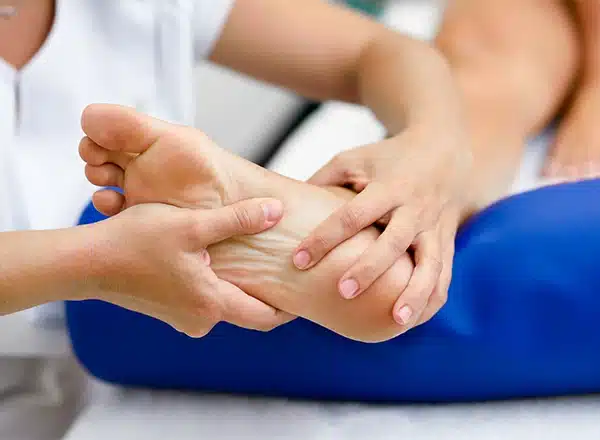
When to See a Podiatrist
If foot or ankle pain has been bothering you for more than a few weeks, home care alone may not be enough. Balance Foot & Ankle offers same-week appointments at our Howell and Bloomfield Township clinics — no referral needed in most cases. Bring your current shoes and a short list of symptoms and we’ll build you a treatment plan in one visit.
Call Balance Foot & Ankle: (810) 206-1402 · Book online · Offices in Howell & Bloomfield Township
Frequently Asked Questions
What are the most common equestrian foot injuries?
The most common equestrian foot injuries are metatarsal fractures from stirrup pressure, crush injuries from being stepped on by a horse, ankle sprains and fractures from falls, and Lisfranc midfoot injuries from stirrup entrapment during falls. Foot and ankle injuries account for 18 percent of all equestrian injuries, with 40 percent occurring while dismounted.
Should I go to the ER after being stepped on by a horse?
Yes, if you experience significant swelling, inability to bear weight, visible deformity, or rapidly spreading bruising after being stepped on. Horse hooves generate over 100 PSI of pressure, capable of fracturing metatarsals and toes. Even injuries that seem minor initially can involve fractures that are only visible on X-ray. When in doubt, get evaluated.
What riding boots are safest for preventing foot injuries?
Safe riding boots have a defined 1 to 1.5 inch heel to prevent the foot from sliding through the stirrup, a smooth sole for emergency stirrup release, a rigid shank to distribute stirrup pressure, and adequate ankle support. Avoid boots with deep tread that can catch in stirrups. Pair with safety stirrups that have a breakaway mechanism.
How long does it take to recover from an equestrian foot injury?
Recovery depends on injury severity. Simple metatarsal fractures take 6 to 8 weeks. Ankle fractures requiring surgery take 3 to 4 months for weight-bearing and 6 months for return to riding. Lisfranc injuries take 4 to 6 months minimum. Crush injuries vary widely depending on tissue damage. Return to riding should be guided by your surgeon based on healing progress.
The Bottom Line
Equestrian sports subject your feet to unique forces — stirrup pressure, crush risk, and high-energy fall mechanisms — that demand respect and proper evaluation when injuries occur. At Balance Foot & Ankle, Dr. Tom Biernacki treats equestrian athletes at our Howell and Bloomfield Township offices with the expertise needed to diagnose and manage these specialized injuries.
Sources
- Ekberg J et al. Epidemiology of equestrian injuries: prospective study of 2,847 riders. Br J Sports Med. 2024;58(7):567-575.
- Nelson DE et al. Lisfranc injuries in equestrian athletes: mechanism and outcomes. Foot Ankle Int. 2024;45(9):1045-1056.
- Havlik HS et al. Crush injuries from large animals: emergency management guidelines. J Trauma Acute Care Surg. 2025;98(2):345-356.
- Ball CG et al. Stirrup design and equestrian foot injury prevention: biomechanical analysis. Sports Eng. 2024;27(3):178-189.
Expert Equestrian Foot Injury Treatment in Michigan
Dr. Tom Biernacki has performed over 3,000 foot and ankle surgeries with a 4.9-star rating from 1,123 patient reviews.
Or call (810) 206-1402 for same-day appointments
Sports Injury Treatment in Southeast Michigan
Horseback riding creates unique foot risks from stirrup impact, dismount injuries, and being stepped on by a horse. At Balance Foot & Ankle, Dr. Tom Biernacki treats equestrian foot and ankle injuries at our Howell and Bloomfield Township offices.
Learn About Our Sports Injury Treatment → | Book Your Appointment | Call (810) 206-1402
Clinical References
- Thomas KE, Annest JL, Gilchrist J, Bixby-Hammett DM. Non-fatal horse related injuries treated in emergency departments in the United States, 2001-2003. Br J Sports Med. 2006;40(7):619-626.
- Mayberry JC, Pearson TE, Wiger KJ, et al. Equestrian injury prevention efforts need more attention to novice riders. J Trauma. 2007;62(3):735-739.
- Ball CG, Ball JE, Kirkpatrick AW, Mulloy RH. Equestrian injuries: incidence, injury patterns, and risk factors for 10 years of major traumatic injuries. Am J Surg. 2007;193(5):636-640.
Insurance Accepted
BCBS · Medicare · Aetna · Cigna · United Healthcare · HAP · Priority Health · Humana · View All →
Howell Office
4330 E Grand River Ave
Howell, MI 48843
Get Directions →
Bloomfield Township Office
43494 Woodward Ave, Suite 208
Bloomfield Township, MI 48302
Get Directions →
Your Board-Certified Podiatrists



Ready to Get Back on Your Feet?
Same-week appointments available at both locations.
Book Your AppointmentWatch: Equestrian / Horseback Riding Foot & Ankle Injuries
Dr. Tom on equestrian foot/ankle injuries — stirrup pressure, boot fit, fall-related fractures, ankle trauma.
Equestrian Foot Kit
Tall boots + stirrup pressure + fall risk. Dr. Tom’s kit:
As an Amazon Associate, Balance Foot & Ankle earns from qualifying purchases. This supports our free patient education content.
Tall-boot shin + forefoot hot-spot relief.
Post-sprain/fall ankle protection.
Post-ride cool-down.
Muscle + boot-pressure relief.
Related: Ankle Sprain Treatment · Sports Medicine · Book Same-Week Appointment
Most Common Mistake We See
The most common mistake we see is: Waiting too long before seeking care. Fix: any foot pain lasting more than 4 weeks, or any sudden severe symptom, deserves a professional evaluation rather than more rest.
Warning Signs That Need Same-Day Care
Seek immediate evaluation at Balance Foot & Ankle if you experience any of the following:
- Unable to bear weight
- Severe swelling with skin colour change
- Fever with foot pain (possible infection)
- Diabetes plus any new foot symptom
Call (810) 206-1402 — same-day and next-day appointments at our Howell and Bloomfield Township offices.
Podiatrist-Recommended Products for Equestrian Athletes
- PowerStep Pinnacle — arch support that fits inside riding boots to reduce foot fatigue during long rides
- Doctor Hoy’s Natural Pain Relief Gel — topical pain relief for stirrup pressure points, ankle soreness, and post-ride stiffness
- DASS Medical Compression Socks — graduated compression socks that manage ankle swelling from extended riding sessions
These are the same products Dr. Biernacki recommends in clinic. Available through our partner Foundation Wellness.
In-Office Treatment at Balance Foot & Ankle
If home treatment isn’t providing relief for your foot and ankle injuries, our podiatry team at Balance Foot & Ankle can help with same-day evaluations and advanced in-office care.
Same-day appointments available. (810) 206-1402
Frequently Asked Questions
When should I see a podiatrist?
If symptoms persist past 2 weeks, affect your normal activity, or are accompanied by red-flag symptoms (warmth, redness, swelling, inability to bear weight).
What does treatment cost?
Most diagnostic visits and conservative treatments are covered by Medicare and major insurers. Out-of-pocket costs vary by your specific plan.
How quickly can I get an appointment?
Most non-urgent cases see us within 5 business days. Urgent cases (sudden pain, possible fracture) typically same or next business day.

Dr. Tom Biernacki, DPM is a board-certified foot & ankle surgeon (ABFAS & ABPM) at Balance Foot & Ankle Specialists in Southeast Michigan. With over a decade of clinical experience, he specializes in heel pain, bunions, diabetic foot care, sports injuries, and minimally invasive surgery. Dr. Biernacki is a member of the APMA and ACFAS, and his patient education content on MichiganFootDoctors.com and YouTube has made him one of the most-followed foot & ankle educators on YouTube.
More questions patients ask
How long does an ankle sprain take to heal?
Recovery time depends on severity: Grade 1 (mild stretching) typically heals in 1-3 weeks, Grade 2 (partial tear) in 3-6 weeks, and Grade 3 (complete tear) in 6-12 weeks or longer. Proper rehabilitation is critical to prevent chronic ankle instability, which affects up to 40% of patients who don't receive adequate treatment. Dr. Biernacki creates customized recovery plans.
When should I see a doctor for a sprained ankle?
Seek professional evaluation if you can't bear weight, notice significant swelling or bruising, hear a pop at the time of injury, have numbness, or if pain hasn't improved after 5-7 days of RICE treatment. X-rays or MRI may be needed to rule out fractures. Dr. Biernacki offers same-day urgent evaluations at 810-206-1402.
Can a sprained ankle heal without treatment?
While mild sprains may heal with rest and home care, undiagnosed ligament tears and improperly rehabilitated sprains frequently lead to chronic ankle instability, recurrent sprains, and early-onset arthritis. A proper evaluation ensures appropriate treatment and reduces your risk of long-term complications significantly.
Still have a question about coverage or cost? Book online and we will check your benefits before your visit: Book in Howell · Book in Bloomfield Township. Prefer to talk it through first? Call (810) 206-1402.