
Quick answer: After ingrown toenail removal with chemical matrixectomy, expect normal drainage for 2–6 weeks, daily soaking and dressing changes, and full healing by 4–6 weeks. You can walk in normal shoes immediately. The procedure permanently prevents regrowth in 95% of cases. Increasing redness, warmth, and foul-smelling pus — not normal drainage — signals infection.
| Stage | What’s Normal | What To Do |
|---|---|---|
| Days 1–3 | Mild throbbing as the anesthetic wears off | Dressing change once daily; elevate; OTC pain reliever |
| Days 3–7 | Yellow or amber drainage from the nail fold | Normal footwear is fine; keep up daily dressing changes |
| Weeks 2–4 | Drainage gradually decreases | Daily 10-minute Epsom salt soaks |
| Weeks 4–6 | Nail fold resurfaced; most patients fully healed | Resume all activity; call us if redness or pus increases |
In This Article


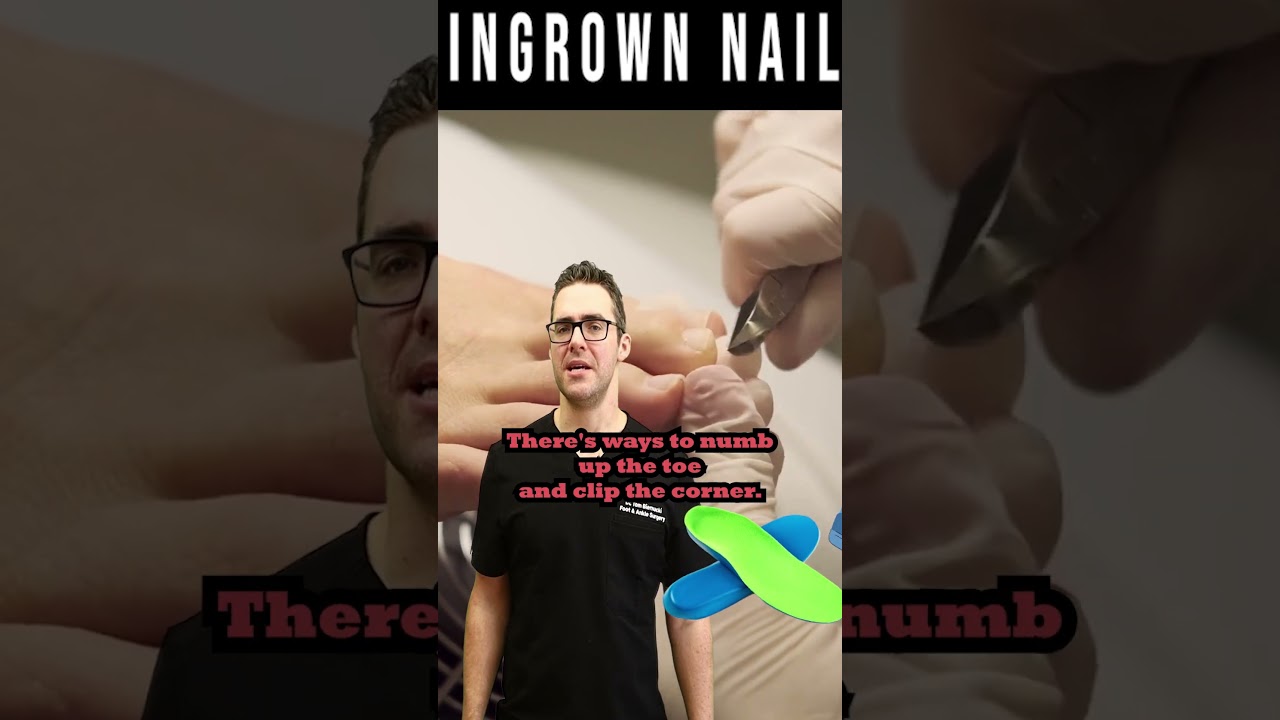
Watch: Ingrown Toenail Self Care & Home Treatment — Dr. Tom Biernacki, Michigan Foot DoctorsMichiganFootDoctors YouTube
You’ve just had your ingrown toenail removed — or you’re scheduled to have it done — and you want to know exactly what to expect over the next few weeks. Having performed hundreds of these procedures at Balance Foot & Ankle, I can walk you through recovery day by day so nothing surprises you.
What Happens During Ingrown Toenail Removal?
The standard procedure for a recurrent or infected ingrown toenail is a partial nail avulsion with chemical matrixectomy — often called a permanent procedure. Under a digital nerve block (two injections at the base of the toe), the offending nail border is cut straight back to the nail matrix and removed. Phenol solution (89%) is then applied to the exposed matrix for 30 seconds to chemically ablate the nail-producing cells so the nail never regrows in that section. The procedure takes 10–15 minutes and is essentially painless once the block is effective. A simple avulsion (removing the nail border without phenol) is used for first-time presentations where the goal is healing without permanent intervention.
Ingrown Toenail Recovery Timeline
Recovery is very predictable when post-procedure care instructions are followed correctly. The most important thing to understand is that drainage from the procedure site is normal for the first 2–6 weeks — this is not infection, it is the phenol reaction and normal healing.
- Day 1–3: The digital block wears off 2–4 hours after the procedure. Mild throbbing pain is normal; over-the-counter ibuprofen or acetaminophen manages it well for most patients. Keep the foot elevated when possible. A dressing change is performed at home once daily.
- Days 3–7: Some yellow or amber drainage from the nail fold is normal — this is a sterile reaction to the phenol, not infection. The skin around the nail fold may look pink or slightly inflamed. Normal footwear (wide, closed-toe) is permitted immediately in most cases.
- Weeks 2–4: Drainage gradually decreases and the nail fold skin begins to heal over the treated area. The toe remains tender to direct pressure during this phase. Soaking the toe once daily in warm water with Epsom salt (10 minutes) helps keep the area clean and reduces inflammation.
- Weeks 4–6: Most patients are fully healed by 4–6 weeks. The nail fold has closed, drainage has stopped, and the toe is comfortable in any footwear. A small visible groove where the nail border was removed will be permanent but is not painful.
- 3+ months: The remaining nail widens very slightly as the existing nail grows — most patients are very happy with the cosmetic result, which is far better than a chronic ingrown nail.
Key takeaway: Drainage from the toe for 2–6 weeks after the procedure is completely normal and expected — it does not mean the wound is infected. Infection has a specific pattern: increasing redness, warmth, swelling, and pus with a foul odor, usually 7+ days after the procedure.
Post-Procedure Care Instructions
Proper wound care in the first 3–4 weeks is what determines how quickly and cleanly the toe heals. In our practice, we give every patient written instructions, but here are the key points.
- Daily soaking: Soak the toe in warm water with Epsom salt for 10 minutes once daily starting the day after the procedure. This softens the drainage and reduces the risk of crust buildup trapping bacteria.
- Wound dressing: After soaking, pat dry, apply a thin layer of antibiotic ointment (Neosporin or Bacitracin) to the nail fold, and cover with a small bandage. Keep covered until healed.
- Footwear: Wear a wide, comfortable closed-toe shoe that does not press on the nail fold. Sandals are acceptable once the dressing is no longer needed (usually 3–4 weeks).
- Activity: Light activity (walking) is fine immediately. Avoid running, court sports, and swimming for 2–3 weeks. Pool water introduces bacteria to the open wound.
- No picking: Do not pick at the nail fold skin or attempt to pull drainage crusts. This disrupts healing and increases infection risk.
Dr. Tom’s Picks: Post-Procedure Recovery Kit
Epsoak Epsom Salt (Unscented, USP)
For your daily 10-minute soaks during weeks 1–4. Plain magnesium sulfate USP — skip scented blends on an open nail fold.
View on Amazon →Band-Aid Hurt-Free Non-Stick Pads (2” x 3”)
Non-stick sterile pads for your daily dressing change — they lift off without tearing the healing nail fold.
View on Amazon →Doctor Hoy’s Natural Pain Relief Gel
Apply around (not on) the procedure site for post-removal soreness. Arnica + menthol, FSA-eligible — what we use in our Howell clinic for post-procedure discomfort.
Check Price →Breathable Gel Toe Protector
Once the nail fold has fully closed (after week 4–6), a vented gel cap protects the toe from shoe friction during sports or work boots. Not for use on an open wound.
View on Amazon →As an Amazon Associate I earn from qualifying purchases. As a Foundation Wellness partner I may also earn commission.
⚠️ Signs of post-procedure infection — call us immediately:
- Increasing (not decreasing) redness, warmth, and swelling 7+ days after the procedure
- Pus with a yellow-green color or foul odor (different from the clear/amber normal drainage)
- Red streaking up the toe or foot (possible cellulitis)
- Fever — any temperature over 100.4°F in the context of a foot wound requires prompt evaluation
The Most Common Mistake We See
The most common mistake is stopping the daily soaking and dressing changes too early because the toe “looks better.” Patients who discontinue wound care at 2 weeks often develop hypertrophic granulation tissue (proud flesh) in the nail fold — a red, raw, overgrown healing response that requires additional treatment. Daily care until the nail fold is fully resurfaced (4–6 weeks) prevents this complication entirely.
In-Office Treatment at Balance Foot & Ankle
When ingrown toenail recovery concerns or recurrent ingrown toenails isn’t improving with conservative care, our podiatry team at Balance Foot & Ankle offers advanced treatment at our Howell and Bloomfield Township locations.
Same-day appointments. (810) 206-1402
Frequently Asked Questions
Can I treat an ingrown toenail at home?
Very early-stage ingrown nails — mild redness, no pus, nail barely at the skin edge — can sometimes be managed with warm soaks 2–3x daily, gentle lifting of the nail edge, and proper nail trimming (straight across, not curved). Once there’s infection (pus, significant swelling, or fever), home treatment is insufficient. And once you’ve had two or more recurrences on the same toe, home treatment is no longer appropriate — a permanent matrixectomy is the right intervention.
Does the ingrown toenail procedure hurt?
The procedure itself is nearly painless. We use a local anesthetic — two small injections at the base of the toe — that completely numbs the area within 60 seconds. Most patients are surprised by how comfortable the process is. There’s mild soreness for 24–48 hours afterward, manageable with ibuprofen. The anticipatory anxiety is almost always worse than the actual procedure. The entire visit, start to finish, takes about 20 minutes.
How long does it take for an ingrown toenail to heal after treatment?
Simple nail trimming: most patients are comfortable within 3–5 days. Partial nail avulsion (removing one side permanently): 2–4 weeks for the treated area to heal, light walking right away, with running and pool swimming off-limits for 2–3 weeks. Full nail avulsion: 3–6 weeks. The nail typically looks normal 6–12 months later as surrounding tissue fills in. Post-procedure care is straightforward — daily soaks and a non-stick dressing until the nail fold is fully resurfaced (4–6 weeks).
What’s the difference between a simple trim and a permanent matrixectomy?
A simple nail trimming removes the ingrown portion — quick and painless, but 70% recurrence rate. A partial matrixectomy removes the nail edge permanently using phenol to destroy the nail matrix. It has a 95%+ success rate with no recurrence. We recommend the permanent procedure for anyone who has had two or more ingrown nails on the same side of the same toe. The recovery is identical to a simple trimming — the only difference is whether the nail grows back.
Why do ingrown toenails keep coming back?
Four main causes: (1) Nail shape — naturally curved or thick nails are genetically predisposed. (2) Improper trimming — cutting nails curved or too short leaves a sharp edge that digs in. (3) Shoe pressure — narrow toe boxes force the nail into the skin. (4) Trauma — repetitive trauma from sports or work. If you’ve had 2+ recurrences, the nail matrix (growth plate) should be permanently treated rather than repeatedly trimming the same ingrown edge.
Can ingrown toenails be dangerous?
Untreated infected ingrown nails can become serious — particularly in patients with diabetes, peripheral arterial disease, or immune compromise. The infection can spread to bone (osteomyelitis) or soft tissue (cellulitis spreading up the foot). In diabetic patients, any foot infection warrants same-day evaluation. In healthy patients, a mild infection is uncomfortable but manageable; a spreading infection with red streaking up the foot requires urgent treatment and possibly antibiotics.
What causes ingrown toenails in the first place?
The most common causes in our clinic: improper nail trimming (curved or too short), narrow-toed footwear, and genetic nail shape (naturally curved or wide nails). Less common but significant: toe trauma (stubbing, sports impact), tight hosiery, and hyperhidrosis (excessive sweating that softens the skin). In adolescents, rapid nail growth during growth spurts is often the trigger. Once you’ve identified your cause, we can target prevention.
Can children get ingrown toenails?
Ingrown toenails are common in children and teenagers — particularly boys ages 10–16 during growth spurts and with increased sports activity. Treatment is identical to adults: local anesthetic and nail procedure. Children are typically excellent procedure patients once the anesthetic takes effect. We see patients as young as 6 for ingrown nail procedures. If your child has been limping or refusing to wear shoes due to toe pain, don’t wait — infections progress faster in high-activity kids.
Does insurance cover ingrown toenail treatment?
Most health insurance plans — including Medicare and Medicaid — cover ingrown toenail procedures as medically necessary treatment. Even simple trimmings are typically covered under standard outpatient office visit benefits. Coverage is rarely a barrier. Call us at (810) 206-1402 and we’ll verify your specific plan before your appointment. Same-day and next-day appointments are almost always available for acute ingrown nail cases.
How do I prevent ingrown toenails from coming back?
The four rules that prevent recurrence: (1) Trim nails straight across — never curved, never below the skin edge. (2) Keep nails at or slightly above the end of the toe. (3) Wear shoes with adequate toe box width — your toes should never feel compressed. (4) If you’re prone to ingrown nails, consider a permanent matrixectomy on the affected side. Patients who follow these rules after a simple trimming still have a 30% recurrence rate — which is why permanent treatment is worth discussing.
The Bottom Line
Ingrown toenail removal is one of the most reliably successful minor procedures in podiatry — over 95% of patients are permanently cured with a single chemical matrixectomy. Recovery takes 4–6 weeks of consistent wound care but does not limit daily activities. If you’re dealing with a recurring or infected ingrown toenail, we’d be glad to help you get permanent relief at Balance Foot & Ankle in Howell or Bloomfield Township.
Sources
- Heidelbaugh JJ, Lee H. Management of the ingrown toenail. Am Fam Physician. 2009.
- Rounding C, Bloomfield S. Surgical treatments for ingrowing toenails. Cochrane Database Syst Rev. 2005.
- Bostanci S et al. Chemical matrixectomy for ingrown toenails. Dermatol Surg. 2001.
Related Conditions
Ready to Get Relief?
Same-day appointments available in Howell & Bloomfield Township, MI
4.9★ | 1,123 Reviews | 3,000+ Surgeries
Or call: (810) 206-1402
🦶 Speed Recovery After Ingrown Toenail Removal
- Doctor Hoy’s Natural Pain Relief Gel — Apply around (not on top of) the surgical site once cleared by your podiatrist. Arnica + camphor reduces surrounding tissue inflammation and speeds recovery.
- FLAT SOCKS — Reduce friction on the recovering nail bed during the healing phase. Moisture-wicking antimicrobial insert — especially helpful during the first 2 weeks when socks can irritate the site.
Recovery questions after your procedure? We’re always available. See our ingrown toenail treatment → · Book follow-up → · (810) 206-1402
Ready to feel better?
Same-week appointments available in Howell and Bloomfield Township, Michigan.
Book Your VisitGet Expert Care at Balance Foot & Ankle
Same-week appointments at our Howell and Bloomfield Township offices. Board-certified podiatric surgeons. Most insurance accepted.
Same-Week Appointments in Howell & Bloomfield Township
Three board-certified podiatric surgeons. 1,123+ five-star reviews. Most insurance accepted.

Dr. Tom Biernacki, DPM is a board-certified foot & ankle surgeon (ABFAS & ABPM) at Balance Foot & Ankle Specialists in Southeast Michigan. With over a decade of clinical experience, he specializes in heel pain, bunions, diabetic foot care, sports injuries, and minimally invasive surgery. Dr. Biernacki is a member of the APMA and ACFAS, and his patient education content on MichiganFootDoctors.com and YouTube has made him one of the most-followed foot & ankle educators on YouTube.
More questions patients ask
How long does ingrown toenail removal take to heal?
Most patients walk out the same day in normal shoes. Mild throbbing is normal for the first 1–3 days, light yellow or amber drainage can continue for 2–6 weeks, and the nail fold is typically fully healed by 4–6 weeks.
What should I do after ingrown toenail removal?
Change the dressing once daily, add a daily 10-minute Epsom salt soak as drainage decreases, and use antibiotic ointment as directed. Do not stop daily care early just because the toe looks better — stopping too soon can lead to hypertrophic granulation tissue (proud flesh).
Will my toenail look normal after ingrown toenail surgery?
After a partial nail avulsion with chemical matrixectomy, the nail grows back very slightly narrower on the treated border — most people never notice. The procedure prevents regrowth of the painful border in about 95% of cases.
Still have a question about coverage or cost? Book online and we will check your benefits before your visit: Book in Howell · Book in Bloomfield Township. Prefer to talk it through first? Call (810) 206-1402.