
Medically reviewed by Dr. Tom Biernacki, DPM — Board-Certified Podiatric Surgeon — Balance Foot & Ankle, Howell & Bloomfield Hills, MI. Last updated April 2026.
Medically Reviewed by Dr. Tom Biernacki, DPM — Board-Certified Podiatrist, Balance Foot & Ankle Specialists, Michigan. Last updated April 2026.
Injection therapy plays an important role in the management of plantar fasciitis when structured conservative care — stretching, orthotics, night splints, and anti-inflammatory measures — fails to achieve adequate pain relief. Two injection options have emerged as the primary choices: corticosteroid injection, the traditional approach with decades of clinical use, and platelet-rich plasma (PRP) injection, a newer regenerative technique with a growing evidence base. Understanding the mechanisms, evidence, risks, and appropriate patient selection for each guides optimal clinical decision-making.
Treatment at Balance Foot & Ankle: EPAT Shockwave for Heel Pain →
Corticosteroid Injection: Rapid Relief with Important Limitations
Corticosteroid injection delivers a potent anti-inflammatory agent (typically methylprednisolone or triamcinolone acetonide) directly to the origin of the plantar fascia at the medial calcaneal tuberosity, rapidly suppressing the inflammatory cascade and providing pain relief. Multiple randomized controlled trials demonstrate that corticosteroid injection produces significant pain reduction within 1–4 weeks — faster than most other interventions. This speed of effect is its principal advantage for patients with acute, disabling heel pain who require rapid functional restoration. The limitations, however, are significant: corticosteroid effect is typically temporary, with pain frequently returning to baseline by 3–6 months in patients with chronic plantar fasciitis. Repeated corticosteroid injections carry cumulative risks: plantar fascia rupture (incidence 2–10% with multiple injections), fat pad atrophy at the injection site producing permanent loss of the heel’s natural cushioning, and, rarely, calcaneal osteomyelitis. For these reasons, most podiatric surgeons limit corticosteroid injections to 1–2 per year at a given site and avoid repeat injection in patients who have already experienced partial fascia rupture or significant fat pad loss.
Platelet-Rich Plasma (PRP) Injection: Sustained Regenerative Effect
PRP is prepared from the patient’s own blood by centrifugation to concentrate platelets (typically 5–7× baseline concentration) and the growth factors they contain — including platelet-derived growth factor (PDGF), transforming growth factor-beta (TGF-β), vascular endothelial growth factor (VEGF), and insulin-like growth factor (IGF-1). These growth factors stimulate fibroblast recruitment, collagen synthesis, neovascularization, and tissue remodeling at the injection site — addressing the underlying tendinopathic degeneration of the plantar fascia rather than simply suppressing inflammation. Multiple well-designed randomized controlled trials and systematic reviews demonstrate that while PRP produces slower onset of relief than corticosteroid (peak effect at 3–6 months), it produces substantially more durable improvement at 6–12 month follow-up. A pivotal comparison trial (Mahindra et al.) demonstrated PRP superiority over corticosteroid at 6 months, with PRP patients maintaining greater functional improvement at 12 months. PRP carries no risk of plantar fascia rupture or fat pad atrophy, making it the preferred injection modality for patients with chronic plantar fasciitis, those who have had previous corticosteroid injections, and patients in whom long-term durability is the priority over speed of relief.
Ultrasound-Guided Injection: Accuracy Matters
Both corticosteroid and PRP injections are substantially more effective when delivered with ultrasound guidance, which confirms placement precisely at the thickened, hypoechoic fascia origin. Blind injection studies demonstrate inaccurate needle placement in 20–30% of cases, reducing both efficacy and potentially increasing adverse events. Dr. Biernacki at Balance Foot & Ankle performs ultrasound-guided PRP and corticosteroid injections for plantar fasciitis, tailoring injection selection to each patient’s clinical history, prior treatment responses, and recovery timeline priorities. Call (810) 206-1402 to discuss which injection approach is appropriate for your heel pain.
📧 Get Dr. Tom’s Free Lab Test Guide
Discover the 5 lab tests every person over 35 should ask their doctor about — explained in plain English by a board-certified physician.
📍 Located in Michigan?
Our board-certified podiatrists treat this condition at two convenient locations. Same-day appointments often available.
PRP vs. Cortisone for Plantar Fasciitis
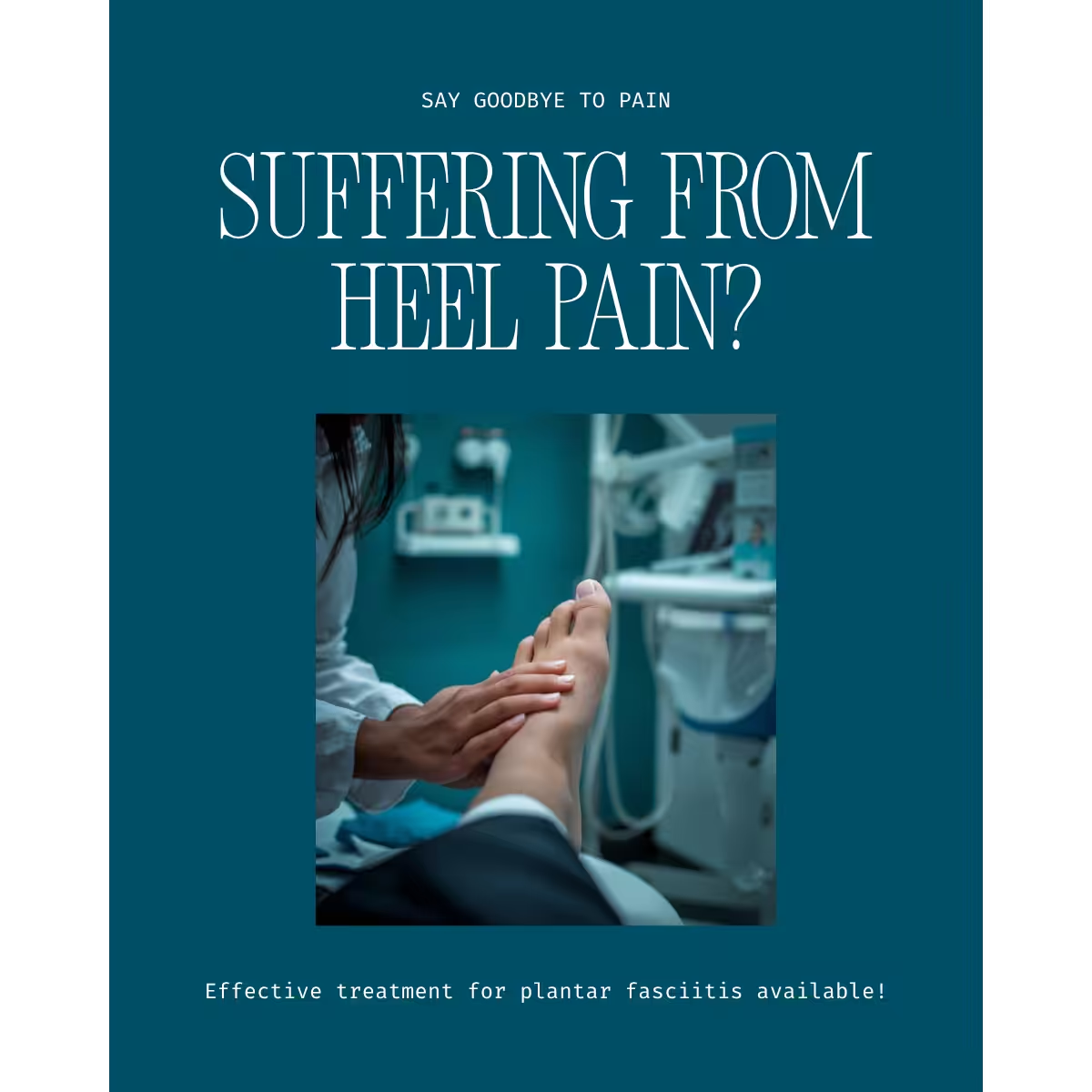
PRP (platelet-rich plasma) and corticosteroid injections both treat plantar fasciitis but work differently and have different risk profiles. Our podiatrists help you choose the best injection therapy based on your condition severity and treatment goals.
Discuss Injection Options With Our Team → | Book Your Appointment | Call (810) 206-1402
Clinical References
- Mahindra P, et al. “Chronic Plantar Fasciitis: Effect of Platelet-Rich Plasma, Corticosteroid, and Placebo.” Orthopedics. 2016;39(2):e285-e289.
- Acosta-Olivo C, et al. “Platelet-Rich Plasma Versus Corticosteroids for Plantar Fasciitis: A Systematic Review and Meta-Analysis.” Journal of Foot and Ankle Surgery. 2022;61(1):169-175.
- David JA, et al. “Injected Corticosteroids for Treating Plantar Heel Pain in Adults.” Cochrane Database of Systematic Reviews. 2017;6:CD009348.
Insurance Accepted
BCBS · Medicare · Aetna · Cigna · United Healthcare · HAP · Priority Health · Humana · View All →
Howell Office
3980 E Grand River Ave, Suite 140
Howell, MI 48843
Get Directions →
Bloomfield Hills Office
43700 Woodward Ave, Suite 207
Bloomfield Hills, MI 48302
Get Directions →
Your Board-Certified Podiatrists



Ready to Get Back on Your Feet?
Same-week appointments available at both locations.
Book Your Appointment
Dr. Tom Biernacki, DPM is a double board-certified podiatrist and foot & ankle surgeon at Balance Foot & Ankle Specialists in Southeast Michigan. With over a decade of clinical experience, he specializes in heel pain, bunions, diabetic foot care, sports injuries, and minimally invasive surgery. Dr. Biernacki is a member of the APMA and ACFAS, and his patient education content on MichiganFootDoctors.com and YouTube has reached over one million views.
Frequently Asked Questions
What is the fastest way to cure plantar fasciitis?
Is plantar fasciitis covered by insurance?
Can plantar fasciitis go away on its own?
- Plantar Fasciitis: Diagnosis and Conservative Management (PubMed)
- Plantar Fasciitis (APMA)
- Diagnosis and Treatment of Plantar Fasciitis (PubMed / AAFP)
- Heel Pain (APMA)
Related Treatments at Balance Foot & Ankle
Our board-certified podiatrists offer advanced treatments at our Bloomfield Hills and Howell locations.
Recommended Products from Dr. Tom