
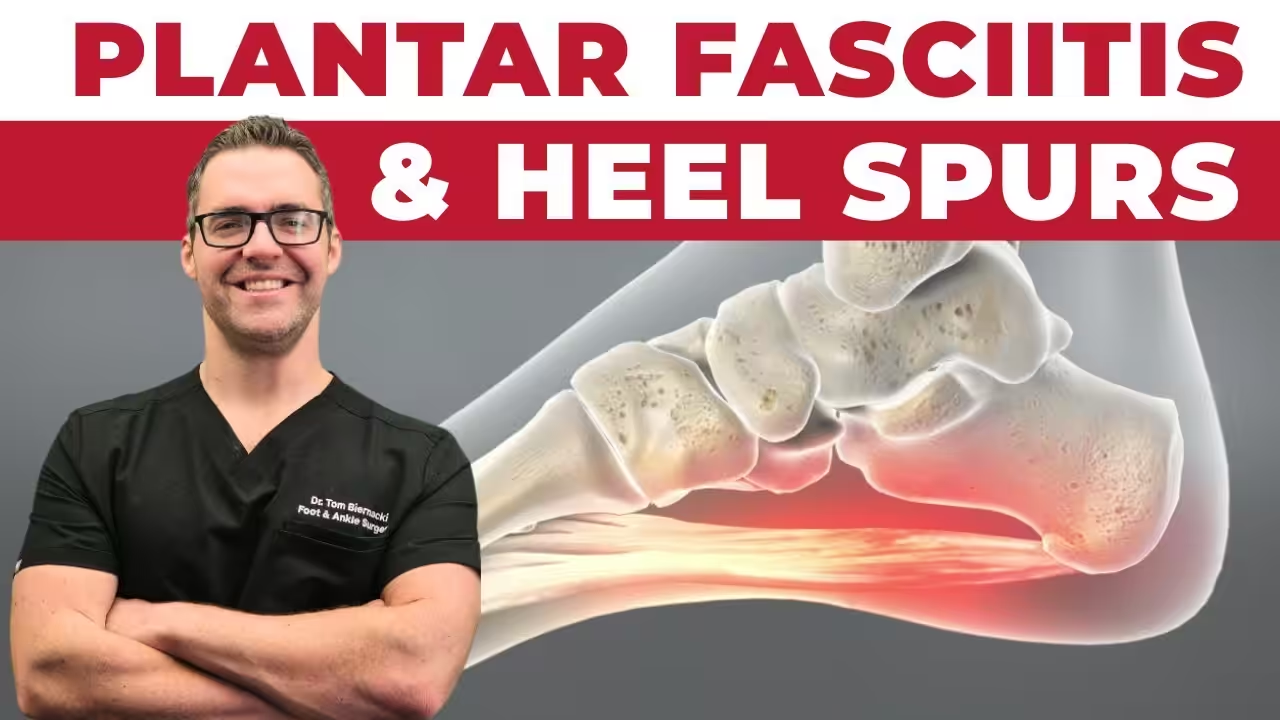
✅ Medically reviewed by Dr. Thomas Biernacki, DPM — Board-Certified Podiatrist · Last updated April 6, 2026
Shockwave Therapy for Plantar Fasciitis: Does It Actually Work?
Shockwave Therapy for Heel Pain: The Evidence-Based Answer
Extracorporeal Shockwave Therapy (ESWT) — or EPAT (Extracorporeal Pulse Activation Technology) — has emerged as one of the most effective treatments for chronic plantar fasciitis and heel spurs. I’ve performed hundreds of shockwave treatments and the outcomes have been consistently excellent for the right patients. Here’s a complete, evidence-based breakdown.
What Is Shockwave Therapy?
Shockwave therapy uses high-energy acoustic (sound) waves directed into the injured tissue. These waves stimulate the body’s healing response by: increasing blood flow to the chronically inflamed area, stimulating growth factor release that promotes collagen repair, disrupting pain signal transmission (providing both short and long-term pain relief), and breaking up calcium deposits in the plantar fascia.
Treatment at Balance Foot & Ankle: EPAT Shockwave for Heel Pain →
The technology was originally developed to break up kidney stones. Researchers noted it also stimulated healing in surrounding tissues, leading to its application in musculoskeletal medicine.
The Evidence: Does It Actually Work?
Multiple randomized controlled trials support shockwave therapy for plantar fasciitis. Meta-analyses show: 70-80% of chronic plantar fasciitis patients achieve significant improvement, outcomes are superior to cortisone injections at 12-month follow-up (cortisone provides faster initial relief but shockwave has better long-term outcomes), and it’s significantly better than conservative care alone for patients who have failed initial treatment.
What a Treatment Session Feels Like
Each session takes 15-20 minutes. Ultrasound gel is applied to the heel. The shockwave handpiece is moved over the plantar fascia attachment. During treatment: most patients feel a tapping sensation that ranges from mild to moderately uncomfortable depending on settings and individual sensitivity. After treatment: some soreness for 24-48 hours (this is part of the stimulated healing process), followed by gradual improvement. Most protocols involve 3-5 sessions, typically spaced 1 week apart.
Who Is a Good Candidate?
Ideal candidates: patients with chronic plantar fasciitis (symptoms for 3+ months), those who have tried and failed conservative treatments (stretching, orthotics, NSAIDs), patients wanting to avoid cortisone injections or surgery. Not appropriate for: pregnancy, blood clotting disorders, patients on certain blood thinners, active infection or malignancy at the treatment site.
Shockwave vs. Cortisone Injections
Cortisone: faster relief (often within days), lower cost, but effects can wear off after weeks to months, and repeated injections risk plantar fascia weakening. Shockwave: takes 4-8 weeks to see full effect, higher upfront cost (typically not covered by insurance), but addresses the underlying healing process rather than just masking inflammation. Studies consistently show shockwave has superior outcomes at 6 and 12 months.
Products Our Doctors Recommend
- Night Splints — complement shockwave therapy
- Orthotics — maintain benefits post-treatment
- Browse All Products →
📧 Get Dr. Tom’s Free Lab Test Guide
Discover the 5 lab tests every person over 35 should ask their doctor about — explained in plain English by a board-certified physician.
Ready to try shockwave therapy? We offer EPAT shockwave therapy at both our Howell and Bloomfield Hills offices.
📞 Call (810) 206-1402 | 📅 Book Online →
Serving Howell, Bloomfield Hills, and communities across Livingston & Oakland Counties.
Frequently Asked Questions
How many shockwave treatments do I need?
Most protocols involve 3-5 sessions spaced 1-2 weeks apart. Some patients with severe chronic cases may need up to 8 sessions. Results continue to improve for up to 12 weeks after the final treatment as the stimulated healing process continues.
Is shockwave therapy painful?
Moderately. The treatment area will feel a tapping/pounding sensation that can be uncomfortable, especially if the plantar fascia is very inflamed. Settings can be adjusted for tolerance. Post-treatment soreness for 1-2 days is normal and expected. The discomfort during treatment is brief and the outcomes justify it for most patients.
Does insurance cover shockwave therapy for plantar fasciitis?
Most insurance plans, including Medicare, do not currently cover ESWT for plantar fasciitis, classifying it as experimental despite the robust evidence base. Out-of-pocket costs vary by provider. Many patients find the investment worthwhile given the avoidance of ongoing injections or surgery.
How long until shockwave therapy works?
Improvement typically begins 4-6 weeks after starting treatment. Full results are usually apparent by 12 weeks. Don’t expect immediate relief after the first session — shockwave works by stimulating a healing process that takes time.
Can shockwave therapy make plantar fasciitis worse?
Temporary soreness after treatment is normal. True worsening is rare. In a small percentage of patients, shockwave therapy is not effective — this typically indicates the diagnosis needs re-evaluation (the pain may not be plantar fasciitis, or there may be a complicating factor like tarsal tunnel syndrome).
About the Author: Dr. Tom Biernacki, DPM is a board-certified podiatric surgeon and founder of Balance Foot & Ankle Specialists, with locations in Howell and Bloomfield Hills, Michigan.
Related Treatment Guides
- Plantar Fasciitis & Heel Pain Treatment
- Custom 3D Orthotics
- Sports Foot & Ankle Injury Treatment
- Bunion Treatment
- MLS Laser Therapy for Plantar Fasciitis
- Shockwave Therapy: Complete Evidence Guide
Medical References & Sources
- American Podiatric Medical Association — Plantar Fasciitis
- PubMed Research — Plantar Fasciitis Treatment Studies
- American Orthopaedic Foot & Ankle Society — Heel Pain
Dr. Tom’s Recommended Products for Plantar Fasciitis & Heel Pain
📍 Located in Michigan?
Our board-certified podiatrists treat this condition at two convenient locations. Same-day appointments often available.
These are products I personally use and recommend to my patients at Balance Foot & Ankle.
- PowerStep Pinnacle Insoles — Firm arch support with dual-layer cushioning — the #1 podiatrist-recommended OTC insole for plantar fasciitis
- PowerStep Pinnacle Insoles — High-profile biomechanical stabilizer cap controls overpronation and reduces fascia tension at the insertion
- Brooks Adrenaline GTS 24 — GuidRails support system with 12mm heel drop — the most-prescribed running shoe for plantar fasciitis in our practice
Affiliate disclosure: As an Amazon Associate, Balance Foot & Ankle earns from qualifying purchases. We only recommend products we trust for our own patients.
Join 950,000+ Learning About Foot Health
Dr. Tom shares honest medical advice, supplement reviews, and treatment guides you won’t find anywhere else.
Subscribe on YouTube →Tried Everything for Plantar Fasciitis? Try Shockwave
Extracorporeal shockwave therapy breaks up scar tissue and stimulates healing in chronic plantar fasciitis — even when other treatments have failed. No surgery, no downtime.
Clinical References
- Gerdesmeyer L, et al. “Radial extracorporeal shock wave therapy is safe and effective in the treatment of chronic recalcitrant plantar fasciitis.” American Journal of Sports Medicine. 2008;36(11):2100-2109.
- Yin MC, et al. “Is extracorporeal shock wave therapy clinical efficacy for relief of chronic, recalcitrant plantar fasciitis? A systematic review and meta-analysis.” PLoS One. 2014;9(7):e102290.
- Rompe JD, et al. “Plantar fascia-specific stretching versus radial shock-wave therapy as initial treatment of plantar fasciopathy.” Journal of Bone and Joint Surgery. 2010;92(15):2514-2522.
Insurance Accepted
BCBS · Medicare · Aetna · Cigna · United Healthcare · HAP · Priority Health · Humana · View All →
Howell Office
3980 E Grand River Ave, Suite 140
Howell, MI 48843
Get Directions →
Bloomfield Hills Office
43700 Woodward Ave, Suite 207
Bloomfield Hills, MI 48302
Get Directions →
Your Board-Certified Podiatrists



Ready to Get Back on Your Feet?
Same-week appointments available at both locations.
Book Your Appointment
Dr. Tom Biernacki, DPM is a double board-certified podiatrist and foot & ankle surgeon at Balance Foot & Ankle Specialists in Southeast Michigan. With over a decade of clinical experience, he specializes in heel pain, bunions, diabetic foot care, sports injuries, and minimally invasive surgery. Dr. Biernacki is a member of the APMA and ACFAS, and his patient education content on MichiganFootDoctors.com and YouTube has reached over one million views.
Frequently Asked Questions
What is the fastest way to cure plantar fasciitis?
Is plantar fasciitis covered by insurance?
Can plantar fasciitis go away on its own?
Recommended Products from Dr. Tom