
Last Updated: March 2026 | Reading Time: 8 min
This article is for informational purposes only and does not replace professional medical advice. Schedule an appointment for personalized care.
Quick Answer
Ingrown toenail surgery (partial nail avulsation) is a 15–20 minute in-office procedure performed under local anesthesia with a 95% success rate when phenol matrixectomy is used to prevent regrowth. Most patients walk out of the office immediately and return to normal shoes within 1–2 weeks. The procedure removes only the ingrown nail border, not the entire nail. Post-operative care involves daily soaking and antibiotic ointment for 2–3 weeks.
Medically Reviewed by Dr. Tomasz Biernacki, DPM · Board-Qualified Podiatrist · Balance Foot & Ankle Specialists, Howell & Bloomfield Hills, MI · Last updated March 2026
Ingrown Toenail Surgery: What to Expect, Pain Level & Recovery
Ingrown Toenail Surgery: The Honest Guide
Ingrown toenail surgery sounds intimidating, but it’s one of the most commonly performed in-office procedures in podiatry — and one of the most immediately gratifying for patients. Most people are back to normal shoes within 1-2 weeks, and the relief from a chronically infected ingrown nail is dramatic. Here’s exactly what to expect.
When Is Surgery Needed?
Not every ingrown toenail requires surgery. Home management (warm soaks, gentle lifting with dental floss, proper cutting) works for mild cases in early stages. Surgery is needed when: the nail is severely embedded and can’t be managed at home, there’s significant infection (pus, spreading redness), it’s a recurring problem (third or more episode), there’s granulation tissue (the raised red tissue that bleeds easily), or the patient is diabetic (all ingrown nails in diabetics should be evaluated professionally).
The Procedure Step-by-Step
Step 1: Numbing. A digital block — two small injections at the base of the toe — completely numbs the toe within 2-3 minutes. This is the most uncomfortable part of the entire procedure. I use the thinnest needle available and buffered lidocaine to minimize this. After the numbing kicks in, you feel pressure but no pain.
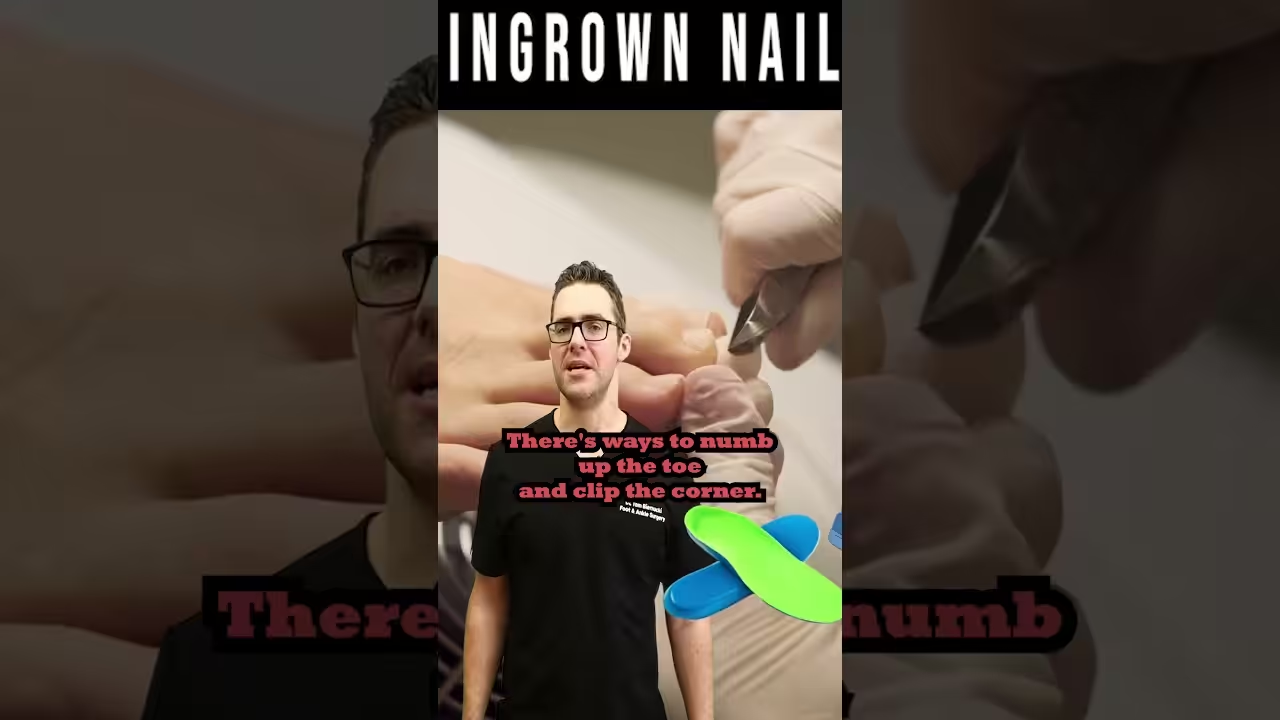
Step 2: Nail avulsion. Using a nail splitter, I separate the offending nail border from the nail bed and remove the ingrown portion. In a partial nail avulsion, only the problematic side is removed. The nail plate remaining looks narrower but natural.
Step 3: Chemical matrixectomy (for permanent procedures). For recurrent or severely embedded nails where we want to prevent regrowth, phenol (a chemical) is applied to the nail matrix (growth cells) at the base. This permanently prevents regrowth of that nail border. The procedure has a 95%+ success rate in preventing recurrence.
Step 4: Dressing. A non-stick dressing is applied. You walk out of the office in your regular (or slightly wider) shoes.
Pain Level: The Honest Answer
The numbing injection is a 4-6/10 on a pain scale — a sharp sting lasting about 10 seconds. After that: 0/10 during the procedure. Post-procedure (as numbness wears off over 2-4 hours): 2-4/10 soreness that responds well to ibuprofen. Most patients are genuinely surprised by how comfortable the recovery is compared to the pain they had before from the infected nail.
Recovery Timeline
Days 1-3: soak foot in warm water + Epsom salts once daily, apply antibiotic ointment and non-stick bandage. Days 4-14: continue dressing changes, can wear open-toe shoes or wide shoes comfortably. 2 weeks: most patients back to normal footwear. The treated area takes 4-6 weeks to fully heal, but activity is rarely restricted after the first few days.
Products Our Doctors Recommend
- Post-Procedure Foot Care — our nail surgery recovery kit recommendations
- Wide/Open-Toe Shoes for Recovery
- Browse All Products →
📧 Get Dr. Tom’s Free Lab Test Guide
Discover the 5 lab tests every person over 35 should ask their doctor about — explained in plain English by a board-certified physician.
Ingrown toenail causing you pain? Same-day appointments available — most procedures take under 30 minutes.
📞 Call (810) 206-1402 | 📅 Book Online →
Serving Howell, Bloomfield Hills, and communities across Livingston & Oakland Counties.
Frequently Asked Questions
Can I drive home after ingrown toenail surgery?
If the procedure is on your right foot and you drive an automatic transmission: it’s safest to arrange a ride, as pressing the gas pedal may be uncomfortable with a numb, bandaged toe. Left foot: driving is generally fine. After 24 hours, most patients drive comfortably.
Will the nail grow back after ingrown toenail surgery?
If phenol matrixectomy was performed: the treated nail border does not grow back. The nail will appear slightly narrower but this is rarely noticeable cosmetically. Without chemical treatment (simple avulsion only): the nail regrows in approximately 3-6 months, and the ingrown may recur.
What can I eat/drink before the procedure?
No dietary restrictions are needed for digital block procedures done under local anesthesia. You can eat normally before and after your appointment.
How do I prevent ingrown toenails from coming back?
Cut nails straight across (not curved), maintain length just at or slightly beyond the toe tip (not too short), wear shoes with adequate toe box width, and avoid picking at nail corners. If your nails are genetically curved, periodic professional trimming is a practical long-term solution.
Is phenol matrixectomy better than surgical nail removal?
For recurrent or chronically ingrown nails, yes. Chemical matrixectomy has a 95%+ success rate in preventing recurrence vs. much higher recurrence rates with simple nail removal alone. The chemical permanently destroys the nail-growing cells in the treated area without requiring surgical incision of the nail matrix.
About the Author: Dr. Tom Biernacki, DPM is a board-certified podiatric surgeon and founder of Balance Foot & Ankle Specialists, with locations in Howell and Bloomfield Hills, Michigan.
Related Treatment Guides
- Ingrown Toenail Treatment
- Plantar Fasciitis & Heel Pain Treatment
- Custom 3D Orthotics
- Sports Foot & Ankle Injury Treatment
Medical References & Sources
- American Podiatric Medical Association — Ingrown Toenails
- PubMed Research — Ingrown Toenail Treatment Outcomes
Dr. Tom’s Recommended Products for Ingrown Toenails
📍 Located in Michigan?
Our board-certified podiatrists treat this condition at two convenient locations. Same-day appointments often available.
These are products I personally use and recommend to my patients at Balance Foot & Ankle.
- Dr. Scholl’s Ingrown Toenail Pain Reliever — Sodium sulfide solution softens nail edge for painless removal — reduces redness and swelling within 24 hours
- Onyfix Nail Correction System — Composite strip guides nail growth away from skin — non-invasive correction without any cutting
- Proper Nail File and Nipper Set — Professional-grade stainless steel nippers and sapphire file — correct nail trimming prevents future ingrowth
Affiliate disclosure: As an Amazon Associate, Balance Foot & Ankle earns from qualifying purchases. We only recommend products we trust for our own patients.
Join 950,000+ Learning About Foot Health
Dr. Tom shares honest medical advice, supplement reviews, and treatment guides you won’t find anywhere else.
Subscribe on YouTube →Ingrown Toenail Treatment FAQs
What does a podiatrist do for an ingrown toenail?
A podiatrist numbs the toe with local anesthesia, then carefully removes the ingrown nail border. For recurring ingrown toenails, a chemical matrixectomy permanently prevents the nail edge from regrowing. The entire procedure takes about 15-30 minutes.
How long does ingrown toenail surgery recovery take?
Most patients resume normal activities within 24-48 hours. The nail groove fully heals in about 2 weeks. You can usually wear regular shoes within 3-5 days, though open-toed shoes are recommended for the first week.
Can an ingrown toenail heal on its own?
Mild ingrown toenails may improve with warm soaks and proper nail trimming. However, if you see redness, swelling, pus, or increasing pain, professional treatment is needed to prevent infection from spreading.
How much does ingrown toenail removal cost?
With insurance, most patients pay a standard office visit copay. Without insurance, ingrown toenail removal typically costs $200-500 depending on severity. Balance Foot and Ankle accepts most major insurance plans.
Related Foot Care Resources
- How to Fix an Ingrown Toenail — home treatment guide
- Curved Toenail Treatment — related nail conditions
- Toenail Fungus Treatment — fungal nails can contribute to ingrown toenails
- Nail Care Services — routine podiatric nail care
- New Patient Information — what to expect at your first visit, insurance accepted
In-Office Ingrown Toenail Treatment at Balance Foot & Ankle
At our Howell and Bloomfield Hills offices, Dr. Tom Biernacki performs partial nail avulsions with chemical matrixectomy — the gold standard for recurring ingrown toenails. The procedure takes approximately 15 minutes under local anesthesia with minimal downtime. Most patients return to normal shoes within 1-2 days. For severe or infected ingrown toenails, same-day appointments are available.
⚠️ YouTube Gap: Ingrown Toenail Surgery: What to Expect & Recovery [8-12 min] — recommended future video for @MichiganFootDoctors channel.
Ready to get relief? (810) 206-1402 | Book your appointment →
Recommended Products for Ingrown Toenail Recovery
Dr. Tom’s Pick: Doctor Hoy’s Natural Pain Relief Gel — Natural topical pain relief I use in our clinic. Arnica + camphor formula — apply directly to the area 3-4x daily for post-procedure comfort. Not ideal for: open wounds or broken skin.
Ingrown Toenail Tool Kit — Professional-grade pedicure tools for safe nail trimming. Includes nail file, lifter, and clipper. Always cut straight across — never round corners. Not ideal for: diabetic patients with neuropathy (see your podiatrist instead).
Dr. Teal’s Epsom Salt Soak — Warm epsom salt soaks 2-3x daily reduce swelling and soften the nail border. Use for mild ingrown toenails before they become infected. Not ideal for: infected ingrown toenails with pus or spreading redness — see DPM immediately.
Affiliate disclosure: We may earn a commission on purchases. This does not affect our clinical recommendations.
Browse all podiatrist-recommended products → Shop Now
Related Guides
- When to See a Podiatrist for Ingrown Toenails
- Podiatrist-Recommended Shoes 2026
- What to Expect at Your First Visit
Frequently Asked Questions About Ingrown Toenail Surgery
How long does ingrown toenail surgery recovery take?
Most patients return to normal shoes within 1-2 days after a partial nail avulsion. Complete healing of the nail bed takes 2-4 weeks. Dr. Tom recommends open-toed shoes for the first 48 hours and keeping the area clean and dry. Avoid strenuous exercise for 1 week post-procedure.
Does ingrown toenail surgery hurt?
The procedure is performed under local anesthesia — you won’t feel pain during the surgery. Post-procedure discomfort is mild and typically managed with over-the-counter pain relief for 1-2 days. Most patients report the numbing injection is the most uncomfortable part.
Will my ingrown toenail grow back after surgery?
With chemical matrixectomy (phenol application to the nail root), the recurrence rate drops to approximately 5%. Without matrixectomy, recurrence rates are 30-50%. At Balance Foot & Ankle, we perform matrixectomy on all recurring ingrown toenails to minimize the chance of regrowth.
Does insurance cover ingrown toenail surgery?
Yes — most PPO plans and Medicare cover ingrown toenail surgery when medically indicated (infection, recurring ingrowns, or failed conservative treatment). We accept BCBS and most Michigan insurers. Call (810) 206-1402 to verify your coverage.

Dr. Tom Biernacki, DPM is a double board-certified podiatrist and foot & ankle surgeon at Balance Foot & Ankle Specialists in Southeast Michigan. With over a decade of clinical experience, he specializes in heel pain, bunions, diabetic foot care, sports injuries, and minimally invasive surgery. Dr. Biernacki is a member of the APMA and ACFAS, and his patient education content on MichiganFootDoctors.com and YouTube has reached over one million views.
Recommended Products from Dr. Tom