

You are in the right place. Dr. Tom Biernacki, DPM, FACFAS — board-certified foot & ankle surgeon with 3,000+ surgeries — explains exactly what best shoes for kids — podiatrist guide means and what actually works. Call (810) 206-1402 for a same-day appointment at our Howell or Bloomfield Township office.
Quick answer: For kids podiatrist guide, podiatrists recommend shoes with structured arch support, deep heel cup, and forefoot rocker. Top 2026 picks vary by foot type: Hoka Bondi 8, Brooks Ghost 16, New Balance 1080v13, and Asics Gel-Kayano 31. Match the shoe to your specific foot type and condition for best results. Call (810) 206-1402.
Best Shoes for Kids: A Podiatrist’s Guide to Growing Feet (2026)
Medically reviewed by Dr. Tom Biernacki, DPM
Board-certified podiatric surgeon | Balance Foot & Ankle
Last reviewed: May 2026
Kids’ Shoes: Getting It Right for Growing Feet
Children’s feet are not just small adult feet — they’re still developing, and the shoes they wear during these critical years have a lasting impact on their foot structure, gait, and overall musculoskeletal health. Here’s what I tell every parent who asks about shoes for their child.
When Should Babies Start Wearing Shoes?
Before a child is walking outdoors, soft-soled pre-walkers that protect feet without restricting them are appropriate. The moment a child starts walking independently outdoors, proper shoes are needed. Indoor barefoot walking and barefoot time on safe surfaces is actually beneficial for foot development — it builds intrinsic muscle strength and proprioception. Avoid stiff, structured shoes for infants who aren’t yet walking outdoors.
What to Look for in Children’s Shoes
At any age: firm heel counter (resist the urge to buy floppy shoes because they’re “cute”), flexibility at the toe box (the shoe should bend at the ball, not at the middle of the arch), non-slip sole, room to grow (thumb’s width of space at the toe), and breathable upper material. Avoid: pointy toe boxes that crowd developing toes, very stiff soles that restrict natural foot motion, and flip flops for primary daily footwear.
Flat Feet in Children: When to Worry
Nearly all toddlers have flat feet — the arch doesn’t typically develop until ages 5-6 and may not fully form until age 8-10. Flexible flat feet (arch appears when on tiptoe) in children without pain are generally normal and require no treatment. Concerning signs: pain with activity, one foot flatter than the other, stiff flat feet (no arch even on tiptoe), toe walking beyond age 3, or significant tripping and clumsiness. See a podiatrist if any of these are present.
Top Shoe Picks by Age
Toddlers (1-3): New Balance 574 Toddler (flexible, wide toe box), Stride Rite (supportive and flexible). Elementary (4-10): New Balance 990v6 Kids, Brooks Glycerin Kids (excellent for flat-footed kids). Tweens/Teens: Same criteria as adults — prioritize support and fit over fashion brands.
Products Our Doctors Recommend
Concerned about your child’s feet? We see pediatric patients and can evaluate gait, arch development, and whether orthotics or treatment is needed.
📞 Call (810) 206-1402 | 📅 Book Online →
Serving Howell, Bloomfield Township, and communities across Livingston & Oakland Counties.
Dr. Tom’s 7 Kids’ Shoes â Toddler Through Teen (2026)
Every shoe below has been screened against the four pediatric podiatry priorities: a flexible sole that bends at the ball of the foot (not the midfoot), a wide toe box for natural toe splay, lightweight construction, and an age-appropriate closure (velcro for younger kids, laces for older). Each pick has 500+ verified Amazon reviews and a 4.3-star or higher rating.
As an Amazon Associate, Balance Foot & Ankle earns from qualifying purchases at no extra cost to you. Picks are based on clinical experience treating pediatric patients in Howell and Bloomfield Township.

1. Crocs Kids’ Classic Clog (Toddler 4 – Little Kid 10)
Wide rounded toe box gives toes maximum splay during development. Croslite foam stays flexible and bends at the 1st MTP for natural toe-off. Ventilation ports keep feet cool; the heel strap converts a slip-on into a secure shoe for active play.
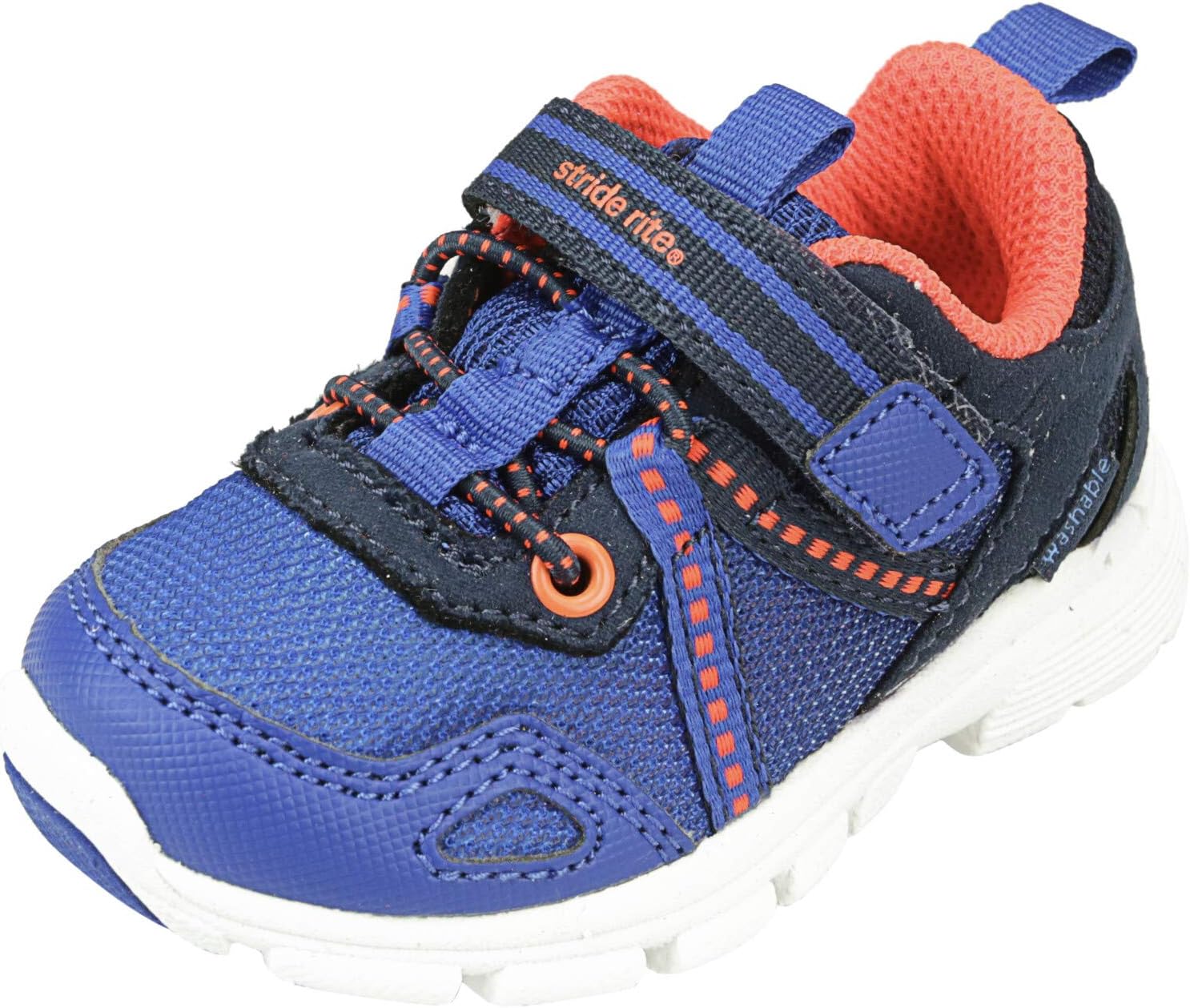
2. Stride Rite Made2Play Harley Sneaker (Toddler 3 – 7)
APMA-recommended toddler shoe with Stride Rite’s Soft Motion flex pattern engineered for kids learning to walk and run. Memory-foam insole, machine-washable upper, hook-and-loop closure. The dual-density outsole flexes at the forefoot only â exactly where a toddler’s foot is supposed to bend.

3. adidas Tensaur Run K (Kids Running) (Little Kid 4 – Big Kid 13)
A lightweight EVA midsole and breathable mesh upper make this one of Amazon’s best-selling kids’ running shoes. The last is built wider than the adult Tensaur â important for growing feet. Velcro hook-and-loop in toddler sizes; lace variants in big-kid sizes for kids old enough to tie their own shoes.
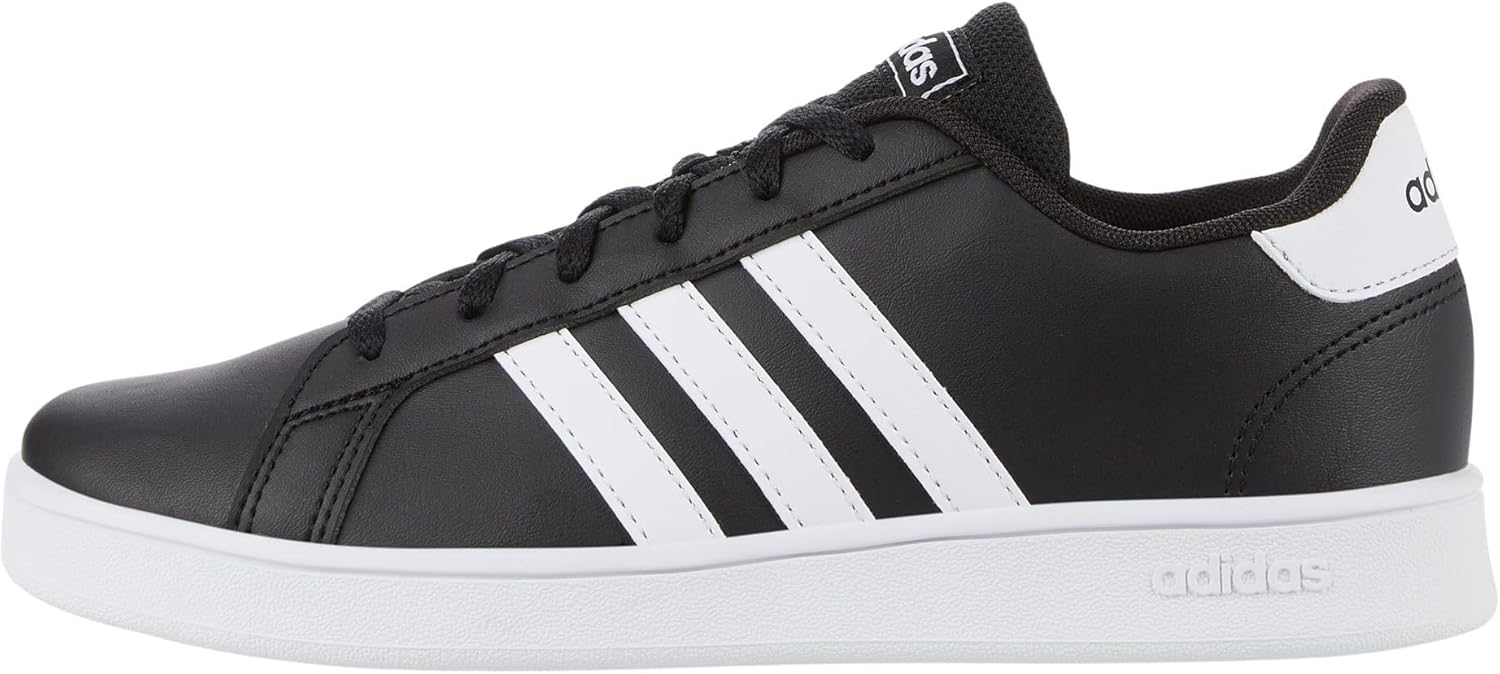
4. adidas Kids’ Grand Court (School & Dress) (Little Kid 4 – Big Kid 12)
A leather-look court shoe that passes most uniform dress codes and school-photo days â without the rigid sole of a traditional dress shoe. Removable insole means a custom pediatric orthotic fits cleanly if your child has been prescribed one. Available in hook-and-loop and lace-up variants by size.

5. New Balance Kid’s Fresh Foam 880 V11 (Big Kid 6 – 13)
Same Fresh Foam midsole as the adult 880 V11 (my premium daily-trainer pick for adults) downsized for big kids. Wide widths available â critical for kids with wide feet who otherwise end up in pinched adult shoes. The best premium athletic shoe for tween and teen runners and middle-school cross-country athletes.

6. Native Jefferson Bloom Kids Slip-On (Toddler 2 – Little Kid 8)
One-piece EVA construction â feather-light, fully washable, no break-in period. The Bloom-foam upper resists odor (a real win for any parent who has smelled a 6-year-old’s sneakers). Wide forefoot with deep flex grooves cut at the ball of the foot. Perfect summer, camp, and pool-deck slip-on that doesn’t compromise on flex or fit.

7. KEEN Newport H2 Kids (Closed-Toe Water Sandal) (Toddler 4 – Big Kid 13)
The gold-standard kids’ sandal. Closed-toe bumper protects against stubs on rocks and playground edges. The bungee plus velcro closure lets parents dial fit precisely as feet swell through a hot afternoon. Hydrophobic mesh dries quickly; the siped outsole works wet or dry. The only sandal I recommend for active kids â gives a sandal’s breathability with a sneaker’s protection.
As an Amazon Associate, Balance Foot & Ankle earns from qualifying purchases. Picks above are pediatric SKUs only â no adult products. Prices update live from Amazon.
How often should kids’ shoes be replaced?
Children’s feet grow rapidly — check shoe fit every 2-3 months. A thumb’s width of space at the toe is ideal. Most children need new shoes every 4-6 months, especially during growth spurts. Always measure both feet when shoe shopping.
Are expensive kids’ shoes worth it?
In the $50-80 range for children, quality genuinely matters for support and durability. Clearance premium brands often offer the best value. You don’t need to spend $120+ on children’s shoes, but the $15 discount store options typically lack the structural support developing feet need.
Should kids wear orthotics?
Custom pediatric orthotics are appropriate for children with symptomatic flat feet, significant overpronation, or structural conditions affecting their gait. They’re not needed for the typical asymptomatic flexible flat feet most young children have. A podiatric evaluation determines whether orthotics are appropriate for your child.
Is toe walking normal?
Occasional toe walking in toddlers under age 2 is normal. Persistent toe walking beyond age 3, especially if rigid (the child can’t put heels down when asked), needs evaluation. Causes include tight Achilles tendons, autism spectrum considerations, and neurological conditions — all of which benefit from early diagnosis and intervention.
My child trips constantly — is this a shoe issue?
Frequent tripping in children can be caused by: internal tibial torsion (feet pointing inward — usually resolves with growth), flat feet causing coordination issues, or muscular weakness. While many cases resolve naturally, a podiatric evaluation is worthwhile if tripping is affecting your child’s confidence or safety.
About the Author: Dr. Tom Biernacki, DPM is a board-certified podiatric surgeon and founder of Balance Foot & Ankle Specialists.
Comprehensive Foot and Ankle Care in Michigan: Balance Foot & Ankle
Michigan patients seeking expert podiatric care for any foot or ankle condition — from the most common (plantar fasciitis, bunions, ingrown toenails, heel spurs) to the most complex (diabetic foot ulcers, Charcot neuroarthropathy, ankle reconstruction, limb salvage) — will find the clinical expertise and personalized care they need at Balance Foot & Ankle. Our fellowship-trained podiatrists have the training and experience to diagnose and treat the full spectrum of foot and ankle pathology with both conservative and surgical interventions.
Related Treatment Guides
- Pediatric Foot Care
- Plantar Fasciitis & Heel Pain Treatment
- Custom 3D Orthotics
- Sports Foot & Ankle Injury Treatment
Our Michigan locations serve patients throughout Southeast Michigan: the Howell office at 4330 E Grand River serves Livingston County and surrounding communities; the Bloomfield Township office at 43494 Woodward Ave #208 serves Oakland County and surrounding communities. Both offices offer convenient scheduling, in-office diagnostic imaging, same-week appointments for most conditions, and acceptance of all major Michigan insurance plans. Call Balance Foot & Ankle at (810) 206-1402 to schedule your appointment today — our team is ready to provide the evidence-based podiatric care that keeps you active and comfortable throughout your daily life.
Medical References & Sources
- American Podiatric Medical Association — Patient Education
- American Orthopaedic Foot & Ankle Society — Foot Conditions
📋 Dr. Tom Also Recommends
Podiatrist Recommended Orthotics 2026: Dr. Tom’s Top 10 Insoles & Arch Supports
A podiatrist’s complete clinical guide to the best insoles — custom orthotics, OTC picks, and what actually works for plantar fasciitis, flat feet, neuropathy & more.
Read the Full Guide →Dr. Tom’s Recommended Products for Podiatrist-Recommended Footwear
📍 Located in Michigan?
Our board-certified podiatrists treat this condition at two convenient locations. Same-day appointments often available.
These are products I personally use and recommend to my patients at Balance Foot & Ankle.
- Brooks Ghost 16 — The most versatile podiatrist-recommended running shoe — neutral cushion for normal-to-mild-pronation feet
- Brooks Adrenaline GTS 24 — GuidRails support for overpronators — the #1 stability shoe prescribed at Balance Foot & Ankle
- HOKA Clifton 9 — Maximum cushion with meta-rocker geometry — reduces plantar fascia and metatarsal load with every step
Affiliate disclosure: As an Amazon Associate, Balance Foot & Ankle earns from qualifying purchases. We only recommend products we trust for our own patients.
Dr. Tom’s Recommended Insoles
PowerStep is the brand I prescribe most — medical-grade OTC support without the custom orthotic price tag.
- PowerStep Pinnacle Insoles — The OTC orthotic I recommend most — medical-grade arch support at a fraction of custom orthotic cost. Works in most shoes.
- PowerStep Maxx Insoles — For severe arch pain or flat feet — maximum correction and support when Pinnacle isn’t enough.
Affiliate disclosure: As an Amazon Associate, Balance Foot & Ankle earns from qualifying purchases. We only recommend products we trust for our own patients.
Join 950,000+ Learning About Foot Health
Dr. Tom shares honest medical advice, supplement reviews, and treatment guides you won’t find anywhere else.
Subscribe on YouTube →Worried About Your Child’s Feet? We Can Help
From flat feet to in-toeing, our podiatrists evaluate children’s foot development and provide gentle, effective treatment to ensure healthy growth.
Clinical References
- Pfeiffer M, et al. “Prevalence of flat foot in preschool-aged children.” Pediatrics. 2006;118(2):634-639.
- Evans AM, Rome K. “A Cochrane review of the evidence for non-surgical interventions for flexible pediatric flat feet.” European Journal of Physical and Rehabilitation Medicine. 2011;47(1):69-89.
- Morrison SC, et al. “Footwear influences on young children’s gait patterns.” Early Human Development. 2018;118:69-75.
Insurance Accepted
BCBS · Medicare · Aetna · Cigna · United Healthcare · HAP · Priority Health · Humana · View All →
Howell Office
4330 E Grand River Ave
Howell, MI 48843
Get Directions →
Bloomfield Township Office
43494 Woodward Ave, #208
Bloomfield Township, MI 48302
Get Directions →
Your Board-Certified Podiatrists



Ready to Get Back on Your Feet?
Same-week appointments available at both locations.
Book Your Appointment👟 Dr. Tom’s Complete Footwear Library
Podiatrist-Approved Guides for Every Foot Type & Condition
Clinically reviewed by Dr. Tom Biernacki, DPM — Board-Certified Podiatrist
All guides are written and reviewed by licensed podiatrists. Schedule an appointment →
In This Article
About Your Care Team at Balance Foot & Ankle
Dr. Tom Biernacki, DPM · Board-Certified Foot & Ankle Surgeon. Specializes in conservative-first care, minimally invasive bunion surgery, and complex reconstruction.
Dr. Carl Jay, DPM · Accepting new patients. Specializes in sports medicine, athletic injuries, and routine podiatric care.
Dr. Daria Gutkin, DPM, AACFAS · Accepting new patients. Specializes in surgical reconstruction and pediatric podiatry.
Locations: 4330 E Grand River Ave, Howell, MI 48843 · 43494 Woodward Ave #208, Bloomfield Township, MI 48302
Hours: Mon–Fri 8:00 AM – 5:00 PM · (810) 206-1402
Supporting Kids’ Foot Health Beyond the Shoe
- PowerStep Pinnacle — For children with flat feet: PowerStep Pinnacle provides medical-grade arch support in properly fitted kids’ shoes. Helps prevent compensatory knee and back pain.
- Doctor Hoy’s Natural Pain Relief Gel — Growing pain and Sever’s disease: arnica gel applied to the heel in growing athletes reduces calcaneal apophysitis pain.
- DASS Medical Compression Socks — Kids with swollen ankles from hypermobility: light graduated compression reduces end-of-day joint swelling.
Child with flat feet, in-toeing, or persistent foot pain? We evaluate pediatric foot mechanics at Balance Foot & Ankle. Schedule a pediatric evaluation → (810) 206-1402
In-Office Treatment at Balance Foot & Ankle
If home treatment isn’t providing relief for your foot condition, our podiatry team at Balance Foot & Ankle can help with same-day evaluations and advanced in-office care.
For the specifications rather than the recommendations, see Best Shoes for Kids on our review site, where every figure is printed with its source.
Related Conditions
Get Expert Care at Balance Foot & Ankle
Same-week appointments at our Howell and Bloomfield Township offices. Board-certified podiatric surgeons. Most insurance accepted.
How do I know if my child needs arch support in shoes?
Most children under age 5 have physiologically flat feet — the arch fat pad hasn’t been reabsorbed and the arch muscles haven’t fully developed. This is normal and doesn’t require arch support. Arch support becomes relevant when: (1) flat feet persist after age 7-8 with associated pain; (2) the child toes-in or toes-out significantly; (3) you notice early heel wear on one side; or (4) the child complains of foot or leg pain after activity. A pediatric podiatrist can distinguish pathological flat feet from the normal developmental variant.
What shoe features are most important for growing children’s feet?
Key features for children’s shoes: (1) accurate fit with a thumb’s width of space at the toe (children’s feet grow 2-3 shoe sizes per year); (2) flexible forefoot that bends at the ball of the foot — not in the arch; (3) firm heel counter that doesn’t collapse with hand pressure; (4) lightweight construction under 10% of body weight; (5) breathable upper. Skip rigid ankle boots for healthy children — mobility during play is more important than lateral support. Replace shoes every 3-4 months for toddlers, every 4-6 months for older children.
When should children see a podiatrist?
Bring your child to a podiatrist if they complain of foot pain more than occasionally, if you notice uneven shoe wear, if one foot looks significantly flatter than the other, or if they’re walking on their toes past age 3. Balance Foot & Ankle provides pediatric foot evaluations — (810) 206-1402.
For a complete clinical overview: Our Complete Podiatrist-Recommended Shoes Guide — covers podiatrist-approved footwear for every foot condition, with current top picks by category.
Ready for Expert Care?
Same-day appointments in Howell & Bloomfield Township, MI.
4.9★ | 1,123 Reviews | 3,000+ Surgeries
Or call: (810) 206-1402

Dr. Tom Biernacki, DPM is a board-certified foot & ankle surgeon (ABFAS & ABPM) at Balance Foot & Ankle Specialists in Southeast Michigan. With over a decade of clinical experience, he specializes in heel pain, bunions, diabetic foot care, sports injuries, and minimally invasive surgery. Dr. Biernacki is a member of the APMA and ACFAS, and his patient education content on MichiganFootDoctors.com and YouTube has made him one of the most-followed foot & ankle educators on YouTube.
More questions patients ask
What should I look for in children's shoes?
Children's shoes should have: adequate length (1/2" growth room beyond longest toe), flexible forefoot (can bend), firm heel counter (doesn't collapse when you squeeze the sides), appropriate width (especially important for wide-footed kids), lightweight, breathable materials, no elevated heels, secure closure (Velcro for young children), and no excessively thick or rigid soles. Avoid shoes that are too stiff — children's feet need flexibility for proper development.
When should my child see a podiatrist?
See a pediatric podiatrist if your child: complains of foot or leg pain (children shouldn't have significant foot pain), walks on tiptoes past age 3, has a significant limp, refuses to walk or participate in activities, has flat feet causing tripping or pain, toes point inward or outward significantly, has one foot much flatter than the other, develops sores or calluses from shoes, or has ingrown toenails.
Do children need arch support in shoes?
Most young children (under 6) naturally have flat-appearing feet due to a fat pad — genuine flat feet become apparent by age 6-7. Moderate flexible flat feet rarely need intervention unless they cause pain or functional problems. Children who repeatedly trip, tire easily, or complain of foot/leg pain with flat feet may benefit from custom orthotics. A pediatric podiatrist evaluation determines if intervention is needed versus natural development.
Is it normal for children to have growing pains in their feet?
True 'growing pains' are felt in the legs (usually calves, thighs, and knees) at night in children ages 3-12 — foot-specific pain is not typical growing pain and should be evaluated. Common causes of children's foot pain include Sever's disease (heel pain in active children ages 8-14 from growth plate irritation), plantar fasciitis, ingrown toenails, warts, stress fractures, and hypermobile flat feet. Don't dismiss children's foot pain as 'just growing pains.'
What features make a good shoe for kids according to podiatrists?
Balance Foot & Ankle recommends children's shoes with a firm heel counter, flexible forefoot (the front should bend, not the middle), adequate toe box width and length, breathable materials, non-slip soles, and secure closure. Avoid hand-me-down shoes — children's feet need properly sized, unworn footwear. Get feet measured professionally every few months for growing children.
Should children's shoes have arch support?
The need for arch support in children's shoes depends on the child's foot type and any symptoms. Children with symptomatic flat feet benefit from supportive shoes and potentially custom orthotics from Balance Foot & Ankle. Most children with flexible flat feet that don't cause pain don't need special arch support. Avoid forcing arch support into symptom-free feet.
What shoes should toddlers wear when learning to walk?
Balance Foot & Ankle recommends flexible, lightweight shoes for toddlers that allow normal foot motion and sensory feedback. Extremely rigid soles can actually impede normal development. The shoes should be correctly sized — no room to grow in length is actually correct for toddlers. Barefoot on safe surfaces at home is beneficial for toddlers' foot development.
How often do children need new shoes?
Growing children typically need new shoes every 3 to 4 months as feet grow rapidly. Signs that shoes are too small include calluses, toenail bruising, complaints of discomfort, and visible cramping of toes. Balance Foot & Ankle recommends having children's feet measured professionally rather than estimating growth. Call (810) 206-1402 if you notice any concerns.
When should I bring my child to a podiatrist about their shoes or feet?
Bring your child to Balance Foot & Ankle if they complain of foot pain, refuse to wear shoes, walk on their toes after age 2, have significant in-toeing or out-toeing, show unusual shoe wear patterns, develop blisters or calluses, or if you notice flat feet causing problems. Our Howell (4330 E Grand River) and Bloomfield Township (43494 Woodward Ave #208) offices welcome children of all ages.
Still have a question about coverage or cost? Book online and we will check your benefits before your visit: Book in Howell · Book in Bloomfield Township. Prefer to talk it through first? Call (810) 206-1402.