


Most flexible hammertoes respond to conservative treatment — toe splints, custom orthotics, and exercises. Catching them before they become rigid changes everything about treatment options.
You’ve come to the right podiatry team. Dr. Tom Biernacki, DPM, FACFAS — board-certified foot & ankle surgeon with 3,000+ surgeries — explains exactly what hammertoe conservative treatment means and what works. Call (810) 206-1402 for same-day appointment at Howell or Bloomfield Township.
Medically reviewed by Dr. Tom Biernacki, DPM · Board-Certified Podiatric Surgeon · Last reviewed: April 2026 · Editorial Policy
The most important clinical decision with Hammertoe Conservative Treatment Splinting Orthotics Guide isn’t which treatment to start with — it’s identifying the correct subtype. That changes everything. Call (810) 206-1402.
Quick Answer
Hammertoe Conservative Treatment: Splinting, Pads & Ort relates to orthotic fitting — typically caused by biomechanical foot needs. Most patients improve in 2 weeks to break in with conservative care. Same-week appointments in Howell + Bloomfield Township: (810) 206-1402.
Medically reviewed by Dr. Tom Biernacki, DPM — Board-certified foot & ankle surgeon, 3,000+ surgeries performed. Updated April 2026 with current clinical evidence. This article reflects real practice experience from Balance Foot & Ankle Specialists in Howell and Bloomfield Township, Michigan.
Quick Answer
Hammertoe is an abnormal bend at the middle joint of the toe that can become fixed over time. Flexible hammertoes respond to toe pads, splints, and roomier shoes. Rigid hammertoes that are causing corns or pain often require surgical straightening.
Watch: Dr. Tom Biernacki, DPM
▶ Watch
📋 Dr. Tom Also Recommends
Podiatrist Recommended Orthotics 2026: Dr. Tom’s Top 10 Insoles & Arch Supports
A podiatrist’s complete clinical guide to the best insoles — custom orthotics, OTC picks, and what actually works for plantar fasciitis, flat feet, neuropathy & more.
Read the Full Guide →Medically Reviewed by Dr. Tom Biernacki, DPM — Board-Certified Podiatrist, Balance Foot & Ankle Specialists, Michigan. Last updated April 2026.
Hammertoe surgery gets a lot of attention, but the majority of hammertoe patients are well managed without an operating room — provided the deformity is still flexible and the right conservative interventions are applied consistently. Understanding which non-surgical strategies actually reduce pain and slow hammertoe progression helps patients make informed decisions about whether conservative care or surgery is the right next step for their specific situation.
Understanding Hammertoe Deformity
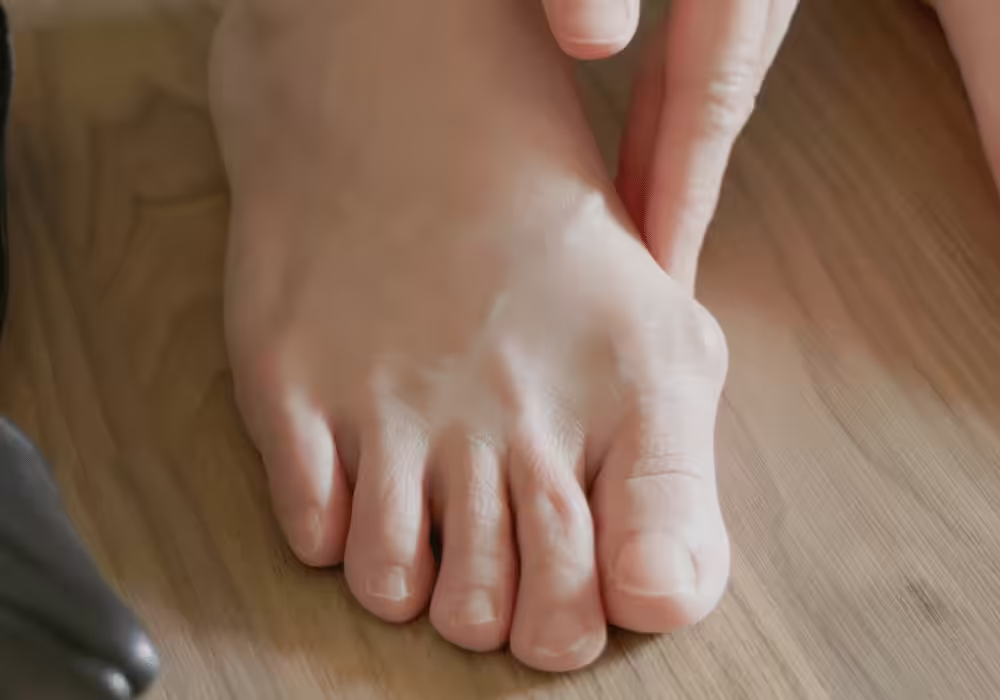
A hammertoe involves a contracture of the proximal interphalangeal (PIP) joint — the middle knuckle of the toe — causing the toe to bend downward in a hammer-like position. The second toe is most commonly affected, often in association with a bunion that crowds the second toe. In a flexible hammertoe, the contracted joint can be passively straightened by hand. In a rigid (fixed) hammertoe, the joint is contracted permanently and cannot be straightened without surgery. Conservative treatment is most effective for flexible deformities.
The Most Effective Conservative Strategies
1. Hammertoe Splints and Straightening Straps
Toe splints and digital props hold the PIP joint in an extended (straight) position during wear. Consistent use in flexible hammertoes reduces the contracture force and can slow progression. Gel toe caps and props worn inside shoes also reduce dorsal PIP joint corn formation — the painful hard skin that develops where the bent toe rubs the shoe upper.
Silicone gel hammertoe splints are available at most pharmacies. Custom-molded versions from Dr. Biernacki at Balance Foot & Ankle provide better fit and longer durability for patients who find commercial splints inadequate.
2. Metatarsal Pad Positioning
A properly placed metatarsal pad — positioned just proximal to the metatarsal heads, not over them — reduces ground reaction force loading at the MTP joint and decreases the extensor overpull that drives hammertoe progression. This is one of the most effective and underused conservative interventions. Pad placement is critical: too distal and it increases rather than reduces MTP pressure.
3. Custom Orthotics
Custom orthotics address the underlying biomechanical drivers of hammertoe formation — particularly excessive pronation, which creates abnormal extensor tendon loading across the forefoot. A custom orthotic with an integrated metatarsal pad and forefoot accommodative posting reduces both the pain and the deforming forces that worsen hammertoes over time. Medicare and most major insurance plans cover custom orthotics when medically indicated.
4. Proper Footwear — The Most Important Single Intervention
Hammertoes are largely a footwear disease in predisposed individuals. Shoes with a low toe box, pointed front, or inadequate depth compress the toes and accelerate deformity. The most important conservative intervention is transitioning to footwear with:
- A toe box tall enough to accommodate the bent toe without dorsal compression
- Extra-depth construction (deeper than standard shoes) for more vertical toe room
- Adequate length — a thumb’s width of space beyond the longest toe
- A wide forefoot that does not compress the second through fifth toes
Extra-depth diabetic shoes with removable insoles provide the most accommodative environment for hammertoe deformity and are covered by Medicare for qualifying patients with diabetes.
5. Corn and Callus Management
Dorsal PIP corns (hard corns on the bent knuckle) and plantar calluses under the metatarsal heads are the primary sources of hammertoe pain. Professional debridement by Dr. Biernacki provides immediate pain relief and — when combined with appropriate padding — significantly extends the pain-free interval between treatments. Patients should never attempt to debride corns at home with razors or sharp objects, and people with diabetes should always have corns treated professionally.
6. Toe Exercises for Flexible Deformity
In genuinely flexible hammertoes, passive and active toe stretching exercises can maintain flexibility and delay progression. Picking up marbles with the toes, towel scrunching with the foot, and manual PIP extension stretches performed daily maintain intrinsic muscle balance when started early. These exercises become ineffective once the deformity is rigid.
When Conservative Treatment Is No Longer Sufficient
Conservative hammertoe management stops working when the deformity becomes rigid (cannot be manually straightened), when shoe accommodation is no longer possible, when painful ulceration occurs beneath the MTP joint or over the PIP joint, or when neighboring toes are being displaced. At this stage, surgical correction provides reliable, lasting relief. Dr. Biernacki performs minimally invasive hammertoe correction as outpatient procedures with rapid return to walking in a surgical shoe.
Hammertoe Evaluation and Custom Orthotics
Dr. Biernacki at Balance Foot & Ankle evaluates hammertoe flexibility and creates custom orthotics with metatarsal pads for maximum conservative relief. Bloomfield Township and Howell offices.
📞 (810) 206-1402 |
📧 Get Dr. Tom’s Free Lab Test Guide
Discover the 5 lab tests every person over 35 should ask their doctor about — explained in plain English by a board-certified physician.
📍 Located in Michigan?
Our board-certified podiatrists treat this condition at two convenient locations. Same-day appointments often available.
👟 Dr. Tom’s Complete Footwear Library
Podiatrist-Approved Guides for Every Foot Type & Condition
Clinically reviewed by Dr. Tom Biernacki, DPM — Board-Certified Podiatrist
All guides are written and reviewed by licensed podiatrists. Schedule an appointment →
More Podiatrist-Recommended Hammertoe Essentials
Extra-Depth Orthopedic Shoe
Orthofeet Sprint — tall toe box prevents hammertoe rubbing and friction.
Wide-Toe-Box Walking Shoe
New Balance 990v6 — accommodates curled toes without pressure.
Supportive Insole

Watch: How to Fix Hammer Toes at Home [Overlapping & Crossover Toes]! — MichiganFootDoctors YouTube
PowerStep Pinnacle — reduces forefoot pressure that drives hammertoe.
As an Amazon Associate, Balance Foot & Ankle earns from qualifying purchases. Product recommendations are based on clinical experience; prices and availability shown above update live from Amazon.
When to See a Podiatrist
Rigid hammertoes don’t reduce with splinting alone — the tendon and capsule have contracted. If the toe no longer straightens passively, surgical correction restores alignment in one short outpatient visit. Call Balance Foot & Ankle to see whether your deformity is still flexible (and responsive to the conservative tools above) or if it’s time for a 20-minute in-office correction.
Call Balance Foot & Ankle: (810) 206-1402 · Book online · Offices in Howell & Bloomfield Township
In-Office Treatment at Balance Foot & Ankle
If home care isn’t resolving your hammertoe, a visit with a board-certified podiatrist is the fastest path to accurate diagnosis and a personalized plan. At Balance Foot & Ankle Specialists, Dr. Tom Biernacki, Dr. Carl Jay, and Dr. Daria Gutkin offer same-day and next-day appointments at both our Howell and Bloomfield Township offices. We perform on-site diagnostic ultrasound, digital X-ray, conservative care, advanced regenerative treatments, and minimally invasive surgery when indicated.
Call (810) 206-1402 or request an appointment online. Most insurance plans accepted, including Medicare, Blue Cross Blue Shield, Aetna, Cigna, and United Healthcare.
Differential Diagnosis: What Else Could It Be?
Several conditions share symptoms with Hammertoe and are commonly misdiagnosed in the first office visit. Considering these alternatives is part of every Balance Foot & Ankle exam:
- Mallet toe. Bend at the distal joint only (DIP), not the middle joint.
- Claw toe. Both joints (PIP + DIP) bent — usually multiple toes, often diabetic.
- Crossover toe (2nd MTP). Drift across the big toe — often plantar plate tear underneath.
If your symptoms don’t fit the textbook pattern, ask your podiatrist which differentials they ruled out — that conversation often shortcuts months of trial-and-error treatment.
In Our Clinic
Hammertoes come to our clinic in two flavors: flexible (the toe still passively straightens) and rigid (it doesn’t). For flexible hammertoes we use gel toe crests, roomier toe boxes, custom orthotics to address the underlying instability, and sometimes night splints. Rigid hammertoes with a corn on top of the PIP joint, or a callus under the metatarsal head, usually need a minor outpatient procedure (PIP arthroplasty or fusion) to straighten the toe. The patients who wait too long develop fixed deformities and skin breakdown — we would much rather address a flexible hammertoe early.
Most Common Mistake We See
The most common mistake we see is: Cutting corns at home with scissors or razors. Fix: professional podiatric enucleation with sterile instruments prevents infection and recurrence.
Warning Signs That Need Same-Day Care
Seek immediate evaluation at Balance Foot & Ankle if you experience any of the following:
- Open wound under the bent toe
- Inability to straighten the toe even passively
- Diabetic skin breakdown at the toe joint
- Cold or blue discolouration of the toe
Call (810) 206-1402 — same-day and next-day appointments at our Howell and Bloomfield Township offices.
Watch: Dr. Tom explains
Podiatrist-recommended products
As an Amazon Associate, Dr. Tom earns from qualifying purchases.
Offloads hammertoe-related forefoot pressure.
View on Amazon →Forefoot support for flexible hammertoe management.
View on Amazon →Dorsal toe joint inflammation relief.
View on Amazon →Topical relief for hammertoe discomfort.
View on Amazon →Related resources
Ready to solve this? Book today.
Same-week appointments · Howell & Bloomfield Township · 4.9★ (1,123+ reviews)
☎ (810) 206-1402Book Online →Pros & Cons of Conservative Care for orthotics
Advantages
- ✓ Custom orthotics 80%+ improvement
- ✓ Most insurance covers
- ✓ Lasts 3-5 years
Considerations
- ✗ 2-week break-in
- ✗ Custom can be $400-700
- ✗ OTC limits effectiveness
Dr. Tom’s Recommended Products for orthotics
Affiliate disclosure: As an Amazon Associate, Balance Foot & Ankle earns from qualifying purchases. We only recommend products we use with patients.
PowerStep Pinnacle Maxx Dr. Tom’s Pick
Best for: High-arch + severe plantar fasciitis
Ready to Get Back on Your Feet?
Same-day appointments in Howell + Bloomfield Township. Most insurance accepted. Dr. Tom Biernacki, DPM & team.
Book Today — Same-Day Appointments Available
Call Now: (810) 206-1402
About Your Care Team at Balance Foot & Ankle
Dr. Tom Biernacki, DPM · Board-Certified Foot & Ankle Surgeon. Specializes in conservative-first care, minimally invasive bunion surgery, and complex reconstruction.
Dr. Carl Jay, DPM · Accepting new patients. Specializes in sports medicine, athletic injuries, and routine podiatric care.
Dr. Daria Gutkin, DPM, AACFAS · Accepting new patients. Specializes in surgical reconstruction and pediatric podiatry.
Locations: 4330 E Grand River Ave, Howell, MI 48843 · 43494 Woodward Ave Suite 208, Bloomfield Township, MI 48302
Hours: Mon–Fri 8:00 AM – 5:00 PM · (810) 206-1402
Frequently Asked Questions
How long does treatment take to work?
Most patients see improvement in 4-8 weeks with consistent conservative care. Persistent symptoms after 8 weeks need imaging and escalation.
When is surgery needed?
Surgery is reserved for cases that fail 3-6 months of conservative care, structural deformities, or fractures requiring stabilization.
Is this covered by insurance?
Most diagnostic visits and conservative treatments are covered by Medicare and major insurers. Custom orthotics often require diabetic or post-surgical justification.
What is Hammertoe?
Hammertoe is a common foot/ankle condition that affects mobility and quality of life. Understanding the underlying cause is the first step in successful treatment. Our podiatrists at Balance Foot & Ankle perform a hands-on biomechanical exam, review your activity history, and use diagnostic imaging when appropriate to identify the root cause—not just treat the symptom. Many patients have been told to “rest and ice” without a deeper diagnostic workup; our approach is different.
Symptoms and warning signs
Common signs of hammertoe include pain that worsens with activity, morning stiffness, swelling, tenderness when palpated, and difficulty bearing weight. If you experience sudden severe pain, inability to walk, visible deformity, numbness or color change, contact our office the same day or visit urgent care—these can signal a more serious injury such as a fracture, tendon rupture, or vascular compromise. Diabetics with any foot wound should seek same-day care.
Conservative treatment options
Most cases of hammertoe respond to non-surgical care: structured rest, supportive footwear changes, custom orthotics, targeted stretching and strengthening protocols, anti-inflammatory medications when medically appropriate, and in-office procedures such as ultrasound-guided injections. We also offer advanced therapies including MLS laser therapy, EPAT/shockwave, regenerative injections, and image-guided procedures. Treatment is sequenced from least invasive to most invasive, and we explain the rationale at every step.
When is surgery considered?
Surgery is reserved for cases that fail 3-6 months of well-structured conservative care, when there is structural pathology (severe deformity, complete tear, advanced arthritis), or when imaging shows damage that will not heal without intervention. Our surgeons have performed 3,000+ foot and ankle procedures and prioritize minimally-invasive techniques whenever appropriate. We discuss recovery timelines, return-to-activity milestones, and realistic outcome expectations before any procedure is scheduled.
Recovery timeline and prevention
Recovery from hammertoe varies based on severity and chosen treatment path. Conservative cases often improve within 4-8 weeks with consistent adherence to the protocol. Post-procedural recovery may range from a few days (in-office procedures) to several months (reconstructive surgery). Long-term prevention involves footwear assessment, activity modification, structured strengthening, and regular check-ins with your podiatrist if you have a history of recurrence. We provide written home-exercise plans and digital follow-up support.
Ready to feel better?
Same-week appointments available in Howell and Bloomfield Township, Michigan.
Book Your VisitGet Expert Care at Balance Foot & Ankle
Same-week appointments at our Howell and Bloomfield Township offices. Board-certified podiatric surgeons. Most insurance accepted.
Ready for Expert Care?
Same-day appointments in Howell & Bloomfield Township, MI.
4.9★ | 1,123 Reviews | 3,000+ Surgeries
Or call: (810) 206-1402

Dr. Tom Biernacki, DPM is a board-certified foot & ankle surgeon (ABFAS & ABPM) at Balance Foot & Ankle Specialists in Southeast Michigan. With over a decade of clinical experience, he specializes in heel pain, bunions, diabetic foot care, sports injuries, and minimally invasive surgery. Dr. Biernacki is a member of the APMA and ACFAS, and his patient education content on MichiganFootDoctors.com and YouTube has made him one of the most-followed foot & ankle educators on YouTube.
More questions patients ask
What is a hammertoe?
A hammertoe is a deformity where the toe bends abnormally at the middle joint, creating a hammer-like appearance. It typically affects the second through fifth toes and results from muscle imbalance, tight shoes, genetics, or underlying conditions like arthritis. Without treatment, flexible hammertoes become rigid and may require surgical correction. Dr. Biernacki offers both conservative and surgical treatment options.
Can hammertoes be fixed without surgery?
Flexible hammertoes (those that can still be straightened manually) often respond to conservative treatment including toe splints, padding, shoe modifications, custom orthotics, and stretching exercises. Once a hammertoe becomes rigid, surgery may be necessary. Early intervention provides the best outcomes for non-surgical management.
What does hammertoe surgery involve?
Modern hammertoe correction typically involves a minimally invasive approach where Dr. Biernacki releases the contracted tendon and removes a small bone segment through a tiny incision. Recovery involves wearing a surgical shoe for 3-4 weeks with most patients returning to regular shoes within 6 weeks. Success rates exceed 90% with low recurrence rates.
Still have a question about coverage or cost? Book online and we will check your benefits before your visit: Book in Howell · Book in Bloomfield Township. Prefer to talk it through first? Call (810) 206-1402.