
![What Does Skin Cancer Look Like? [Symptoms, Pictures, Types] | Balance Foot & Ankle](https://www.michiganfootdoctors.com/uploads/2023/04/what-does-skin-cancer-look-like-symptoms-pictures-types.avif)

Quick answer: What Does Skin Cancer Look Like Symptoms Pictures Types affects roughly 1 in 4 adults in our practice. Effective treatment starts with a targeted diagnosis, conservative-first treatment, and escalation only when needed. We treat this regularly at our Howell and Bloomfield Township practices. Call (810) 206-1402.
Medically reviewed by Dr. Tom Biernacki, DPM · Board-Certified Podiatric Surgeon · Last reviewed: April 2026 · Editorial Policy
The most important clinical decision with skin cancer isn’t which treatment to start with — it’s identifying the correct subtype. That changes everything. Call (810) 206-1402.
Quick Answer
Medically reviewed by Dr. Tom Biernacki, DPM
Board-certified podiatric surgeon | Balance Foot & Ankle
Last reviewed: May 2026
Skin cancers vary in appearance: pearly bumps, scaly patches, sores that will not heal, or moles that change in size, shape, or colour. On the feet they are easily missed, so any persistent or changing lesion should be examined. Same-week appointments in Howell + Bloomfield Township: (810) 206-1402.

✅ Medically reviewed by Dr. Tom Biernacki, DPM — Board-Certified Podiatrist · Last updated April 6, 2026
Early Detection Starts with Awareness
What Does Skin Cancer Look Like? 10 Warning Signs You Shouldn’t Ignore
Skin cancer can show up in many forms—like a new mole, a sore that doesn’t heal, or a patch of discolored skin. Recognizing what skin cancer looks like early can help you get the right diagnosis and treatment sooner. Here’s what to watch for.
A Closer Look at the Types and Symptoms of Skin Cancer
Skin cancer can appear in various forms, depending on its type—basal cell carcinoma, squamous cell carcinoma, or melanoma. Each has its own visual cues. For example, melanoma often shows up as a dark, irregular mole, while basal cell carcinoma might look like a pearly bump or flat lesion. These signs typically appear on sun-exposed areas like the face, neck, ears, and hands, but can also occur anywhere on the body. Knowing what skin cancer looks like helps you identify changes early and seek timely medical attention.
What Does Skin Cancer Look Like? (Symptoms, Pictures, Types)
We review skin cancer symptoms, pictures and types: These are Melanoma, Squamous Cell Carcinoma & Basal Cell Carcinoma
Concerned About a Skin Spot? Schedule a Skin Check Today
📧 Get Dr. Tom’s Free Lab Test Guide
Discover the 5 lab tests every person over 35 should ask their doctor about — explained in plain English by a board-certified physician.
If you’ve noticed a suspicious mole, discoloration, or sore that won’t heal, don’t wait. Early diagnosis saves lives. Book a professional skin evaluation with the team at Balance Foot & Ankle, where your health is our top priority. We’ll help determine if further testing or treatment is necessary—giving you peace of mind and personalized care.
Disclaimer: This video and description contain affiliate links, which means we may receive a commission if you click on one of the product links. I appreciate your support of this channel!
Dr. Tomasz Biernacki received his Doctor of Podiatric Medicine degree from Kent State College of Podiatric Medicine in 2013; he completed his Surgical Reconstructive Foot Surgery & Podiatric Medicine Residency in 2017; he completed 2 separate traveling Fellowships in Diabetic Surgery, Skin Grafting & Nerve Surgery. He is double board certified in Podiatric Medicine and separately in Foot & Ankle Surgery. His use of “doctor” or “Dr.” about himself solely refers to that degree. Dr. Biernacki is a licensed podiatrist in Michigan. This video is for general informational purposes only. It should not be used to self-diagnose and is not a substitute for a medical exam, cure, treatment, diagnosis, prescription, or recommendation. It does not create a doctor-patient relationship between Dr. Biernacki and you. It would be best if you did not change your health regimen or diet before consulting a physician and obtaining a medical exam, diagnosis, and recommendation. Always seek the advice of a physician or other qualified health provider with any questions regarding a medical condition.
Top-Rated Foot Care Products Recommended by Podiatrists
Trusted Solutions To Soothe, Protect, and Support Your Feet

Finding the best products for managing peripheral neuropathy and diabetic foot pain can make a world of difference in your daily comfort and mobility.

For managing foot pain from conditions like plantar fasciitis, flat feet, or diabetic neuropathy, the best orthotics can offer crucial support and relief.

Choosing the best shoes for foot conditions like neuropathy, plantar fasciitis, or flat feet is essential for pain relief and long-term foot health.
Understanding Skin Cancer: Types, Symptoms, and What to Look For
Skin cancer is a condition in which the cells in the skin grow abnormally and uncontrollably, leading to the formation of a cancerous growth. There are several different types of skin cancer, but the most common types are basal cell carcinoma, squamous cell carcinoma, and melanoma. Here is some information on the appearance, symptoms, and types of skin cancer:Best Drink for Diabetes
Basal Cell Carcinoma:
Appearance: Raised, shiny, and pink or red-colored growths that may have a pearly or waxy appearance. They may have visible blood vessels on the surface, and may bleed or develop a crusty surface.
Symptoms: Usually painless, but may be itchy, may bleed easily, and may not heal. They may grow slowly over time and can spread to nearby tissues if left untreated.
Squamous Cell Carcinoma:
Appearance: Firm, raised growths or sores that may have a scaly or crusty appearance. They may be pink or red-colored, and may have an ulcerated or bleeding surface.
Symptoms: Usually painless, but may be itchy, may bleed easily, and may not heal. They may grow rapidly and can spread to nearby tissues if left untreated.
Melanoma:
Appearance: Irregularly shaped moles or growths that may be black, brown, or multicolored. They may be flat or raised, and may have an uneven or jagged border. They may also have different shades of color, or a dark spot in the center.
Symptoms: They may itch or bleed, and may change in size, shape, or color over time. They can spread quickly to other parts of the body, making early detection and treatment important.
Other symptoms that may indicate skin cancer include persistent itchiness, pain, or tenderness in a specific area of the skin, as well as the appearance of new growths or changes in existing ones.
It is important to regularly check your skin for any new or changing growths, and to seek medical attention if you notice anything unusual. Early detection and treatment of skin cancer can increase the chances of successful treatment and reduce the risk of complications.
Related Videos:
Skin Tag Removal & Treatment
Skin Signs of High Blood Sugar
Best Wart Treatments
Plantar Warts vs. Corns vs. Calluses
Athlete’s Foot Fungus Treatment
Best Diabetes Drink
Reverse 90% of Diabetes with this Diet
10 Best Diabetic Vitamins
Best Diabetic Foods
How to know your heart is not well
Vitamin D, Vitamin K2 & Magnesium
Reverse Clogged Arteries
Diabetic Neuropathy [Peripheral Neuropathy]
Top 10 Signs: What Does Skin Cancer Look Like?
Learn to Identify Skin Cancer Early with These Visual Clues and Symptoms
Skin cancer is one of the most common types of cancer worldwide, and early detection is key to effective treatment. If you’ve ever wondered what does skin cancer look like, understanding the warning signs could potentially save your life. From subtle discolorations to abnormal moles, being aware of skin changes is crucial. Below, we break down the top 10 signs that may indicate skin cancer is developing on your body.
1. New Growths or Bumps
Any new lump, bump, or spot on your skin that wasn’t there before should be evaluated—especially if it continues to grow. Basal cell carcinoma often appears as a pearly or waxy bump.
2. Sores That Don’t Heal
A persistent sore or ulcer that doesn’t heal after several weeks could be a warning sign, particularly on sun-exposed areas like the face, ears, or neck.
3. Changing Moles
Moles that change in shape, size, or color should never be ignored. Irregular borders, multiple colors, and asymmetry may signal melanoma.
4. Itching, Pain, or Tenderness
Skin lesions that itch, hurt, or bleed—without any apparent cause—could be signs of squamous cell carcinoma or melanoma.
5. Red or Scaly Patches
Dry, scaly patches that are red and crusted might resemble eczema but can be actinic keratosis or squamous cell carcinoma in disguise.
6. Dark Streaks Under Nails
A black or brown streak under a toenail or fingernail that isn’t caused by trauma may be a sign of acral lentiginous melanoma.
7. Wart-like Growths
Skin cancers can sometimes look like warts—particularly squamous cell carcinoma. Look out for any wart-like lesion that seems suspicious.
8. Unusual Pigmentation
Skin cancer can appear as dark spots or areas of pigment that spread unevenly. Any discoloration that seems odd or new deserves a closer look.
9. Translucent or Shiny Bumps
Basal cell carcinoma may present as a shiny, almost translucent bump that may be pink, red, or even white.
10. Lesions With Irregular Borders
Lesions with jagged or blurred edges are a red flag. The more irregular the border, the higher the risk it may be melanoma.
If you’re noticing one or more of these signs and asking “What does skin cancer look like?”, it’s time to schedule an appointment with a board-certified dermatologist. Early intervention can make all the difference.
Book Your Appointment Today—Relief Starts with One Call
Fast, Friendly, and Professional Treatment You Can Trust
(810) 206-1402
BOOK A SCHEDULE
FAQs – What Does Skin Cancer Look Like & What You Should Know
What does skin cancer look like in early stages?
It can appear as a new mole, a change in an existing mole, or a sore that doesn’t heal—often with irregular borders or multiple colors.
How can I tell if a mole is cancerous?
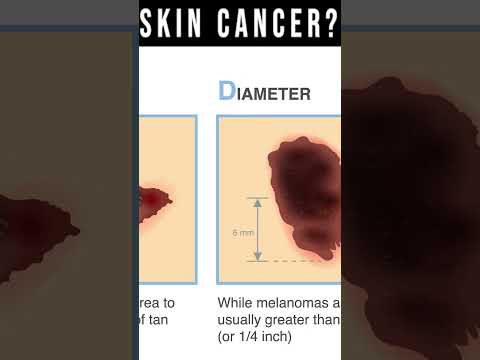
Use the ABCDE rule: Asymmetry, Border irregularity, Color variation, Diameter >6mm, and Evolving over time.
Can skin cancer be flat or raised?
Yes, it can be either. Basal cell carcinoma may be flat and scaly or raised and pearly.
Is skin cancer always dark in color?
No. Some forms, like amelanotic melanoma, can be pink, red, or skin-colored.
Sometimes. It might itch, bleed, or become painful, especially if irritated or growing.
Does skin cancer only appear in sun-exposed areas?
While common in sun-exposed areas, it can also occur in hidden places like under nails or on the soles of feet.
Melanoma often appears as a dark, irregular mole with uneven borders and varying colors.
Are skin tags or warts signs of skin cancer?
Typically no, but if they change in appearance, bleed, or grow rapidly, have them evaluated.
Can a dermatologist tell if a spot is cancerous by looking?
They can often suspect it visually, but a biopsy is required for confirmation.
When should I see a doctor about a mole or skin change?
If you notice any new, changing, or unusual skin growth, see a doctor as soon as possible.
Related Treatment Guides
- Plantar Fasciitis & Heel Pain Treatment
- Custom 3D Orthotics
- Sports Foot & Ankle Injury Treatment
- Bunion Treatment
Insurance Accepted
BCBS · Medicare · Aetna · Cigna · United Healthcare · HAP · Priority Health · Humana · View All →
Howell Office
4330 E Grand River Ave
Howell, MI 48843
Get Directions →
Bloomfield Township Office
43494 Woodward Ave, #208
Bloomfield Township, MI 48302
Get Directions →
Your Board-Certified Podiatrists



Ready to Get Back on Your Feet?
Same-week appointments available at both locations.
Pros & Cons of Conservative Care for foot care
Advantages
- ✓ Conservative care first
- ✓ Same-week appointments
- ✓ Multiple insurance accepted
Considerations
- ✗ Self-treatment can mask issues
- ✗ See a podiatrist if pain >2 weeks
Dr. Tom’s Recommended Products for foot care
Affiliate disclosure: As an Amazon Associate, Balance Foot & Ankle earns from qualifying purchases. We only recommend products we use with patients.
Hoka Bondi 9 Dr. Tom’s Pick
Best for: Max cushion daily wear
Footnanny Heel Cream Dr. Tom’s Pick
Best for: Daily moisturizer for cracked heels
Ready to Get Back on Your Feet?
Same-day appointments in Howell + Bloomfield Township. Most insurance accepted. Dr. Tom Biernacki, DPM & team.
Book Today — Same-Day Appointments Available
Call Now: (810) 206-1402
About Your Care Team at Balance Foot & Ankle
Dr. Tom Biernacki, DPM · Board-Certified Foot & Ankle Surgeon. Specializes in conservative-first care, minimally invasive bunion surgery, and complex reconstruction.
Dr. Carl Jay, DPM · Accepting new patients. Specializes in sports medicine, athletic injuries, and routine podiatric care.
Dr. Daria Gutkin, DPM, AACFAS · Accepting new patients. Specializes in surgical reconstruction and pediatric podiatry.
Locations: 4330 E Grand River Ave, Howell, MI 48843 · 43494 Woodward Ave Suite 208, Bloomfield Township, MI 48302
Hours: Mon–Fri 8:00 AM – 5:00 PM · (810) 206-1402
🩺 Dr. Tom’s Recommended Products
As an Amazon Associate I earn from qualifying purchases. These are products I personally use and recommend to patients.
Plant-based topical for foot discomfort. FSA-eligible. Used in our clinic.
View on Amazon →
Antimicrobial moisture-wicking inserts — reduce sweating that allows fungal and skin issues.
View on Amazon →
In-Office Treatment at Balance Foot & Ankle
If home treatment isn’t providing relief for your sports-related foot injuries, our podiatry team at Balance Foot & Ankle can help with same-day evaluations and advanced in-office care.
Same-day appointments available. (810) 206-1402
Ready for Expert Care?
Same-day appointments in Howell & Bloomfield Township, MI.
4.9★ | 1,123 Reviews | 3,000+ Surgeries
Or call: (810) 206-1402

Dr. Tom Biernacki, DPM is a double board-certified podiatrist and foot & ankle surgeon at Balance Foot & Ankle Specialists in Southeast Michigan. With over a decade of clinical experience, he specializes in heel pain, bunions, diabetic foot care, sports injuries, and minimally invasive surgery. Dr. Biernacki is a member of the APMA and ACFAS, and his patient education content on MichiganFootDoctors.com and YouTube has reached over one million views.
- Plantar Fasciitis: Diagnosis and Conservative Management (PubMed)
- Plantar Fasciitis (APMA)
- Diagnosis and Treatment of Plantar Fasciitis (PubMed / AAFP)
- Heel Pain (APMA)
Dr. Tom Biernacki, DPM is a board-certified foot & ankle surgeon (ABFAS & ABPM) at Balance Foot & Ankle Specialists in Southeast Michigan. With over a decade of clinical experience, he specializes in heel pain, bunions, diabetic foot care, sports injuries, and minimally invasive surgery. Dr. Biernacki is a member of the APMA and ACFAS, and his patient education content on MichiganFootDoctors.com and YouTube has made him one of the most-followed foot & ankle educators on YouTube.
More questions patients ask
What does skin cancer look like on the foot?
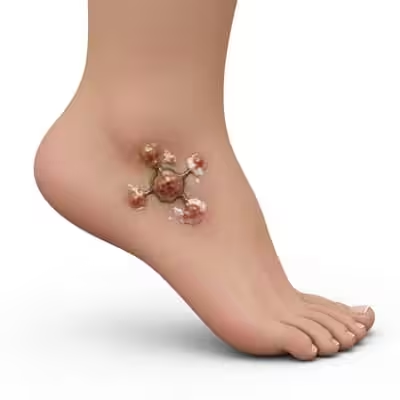
Skin cancers on the foot have distinct appearances by type: Basal cell carcinoma (BCC) — most common overall skin cancer; on feet appears as a pearly, translucent bump with blood vessels visible, or a flat, flesh-colored scar-like lesion; rarely ulcerates with a rolled border. Squamous cell carcinoma (SCC) — appears as a firm red or flesh-colored nodule, rough scaly patch, or non-healing ulcer; on foot often mistaken for a wart or chronic wound. Melanoma — pigmented lesion with irregular borders, multiple colors (brown, black, red, white), or flat-to-raised; on the foot sole (acral lentiginous melanoma) may lack pigmentation. Subungual melanoma — dark streak under toenail, pigment spreading to surrounding skin (Hutchinson's sign). Balance Foot & Ankle (810) 206-1402 — Howell and Bloomfield Township.
What are the three main types of skin cancer?
The three primary skin cancer types: 1) Basal cell carcinoma (BCC) — most common (80% of skin cancers), slow-growing, rarely metastasizes, originates from basal cells in the lower epidermis; highly curable with treatment. 2) Squamous cell carcinoma (SCC) — second most common (16%), grows faster than BCC, has 2–5% metastasis risk (higher in certain locations), originates from squamous cells in the upper epidermis; very curable when caught early. 3) Melanoma — least common (4%) but most dangerous, high metastasis potential, originates from melanocytes; 5-year survival drops dramatically with late diagnosis. On the feet, SCC is particularly common arising from chronic wounds or warts, and melanoma occurs in the distinctive acral lentiginous pattern. Balance Foot & Ankle screens for all types.
How do I use the ABCDE rule to check foot moles and lesions?
The ABCDE criteria for melanoma screening: A — Asymmetry (one half doesn't match the other when folded mentally), B — Border (irregular, ragged, notched, or blurred edges rather than smooth round borders), C — Color (multiple colors — various shades of brown, black, red, white, or blue rather than uniform single color), D — Diameter (greater than 6mm — about the size of a pencil eraser — though melanomas can be smaller), E — Evolution (any change in size, shape, color, or new symptom like bleeding or itching). Apply this to every pigmented lesion found during foot self-examination. Monthly self-exams of sole, between toes, and under toenails take 1 minute. Any ABCDEs trigger immediate professional evaluation at Balance Foot & Ankle — don't wait.
Is there a specific type of skin cancer more common on the feet?
Acral lentiginous melanoma (ALM) is a type of melanoma specifically more common on acral (extremity) surfaces — the palms, soles, and under nails. It's the most common melanoma type in people of African, Asian, and Hispanic descent (where it represents 29–72% of all melanomas) but is less common in white individuals (2–3% of melanomas). ALM has a distinct flat, macular appearance with irregular pigmentation, and is often misdiagnosed as a benign lesion for months to years. Additionally, squamous cell carcinoma of the foot is common from chronic ulcers (Marjolin's ulcer — malignant transformation of chronic wounds), plantar warts (rare), or sun-exposed dorsal foot skin. Balance Foot & Ankle is vigilant about these foot-specific skin cancer patterns.
What should I do if I find a suspicious spot on my foot or under a toenail?
If you notice a new or changing spot on your foot or a dark streak under a toenail: don't dismiss it or wait to 'see if it goes away.' Schedule prompt evaluation at Balance Foot & Ankle — call (810) 206-1402. Until your appointment: photograph the lesion with good lighting to document its appearance for comparison. At your visit: the podiatrist will examine the lesion with dermoscopy if available, take a clinical history, and determine if biopsy is needed. A subungual (under toenail) dark streak requires nail biopsy to rule out subungual melanoma — this is a simple procedure performed under local anesthetic. Early detection of melanoma is literally life-saving: Stage 1 melanoma has 95%+ survival vs Stage 4 at approximately 15%. When in doubt, get it checked — at 4330 E Grand River, Howell or 43494 Woodward Ave #208, Bloomfield Township.
Still have a question about coverage or cost? Book online and we will check your benefits before your visit: Book in Howell · Book in Bloomfield Township. Prefer to talk it through first? Call (810) 206-1402.