
You are in the right place. Dr. Tom Biernacki, DPM, FACFAS — board-certified foot & ankle surgeon with 3,000+ surgeries — explains exactly what ankle arthritis non-surgical options means and what actually works. Call (810) 206-1402 to book an appointment at our Howell or Bloomfield Township office.
Quick answer: Treatment for ankle arthritis non surgical treatment options follows a stepwise approach: 1) conservative care first (rest, ice, supportive footwear, OTC anti-inflammatories), 2) physical therapy and targeted exercises, 3) in-office treatments (injections, custom orthotics) if conservative fails at 4-6 weeks, 4) surgery for refractory cases. Most patients resolve at step 1 or 2. Call (810) 206-1402.
Medically reviewed by Dr. Tom Biernacki, DPM
Board-certified podiatric surgeon | Balance Foot & Ankle
Last reviewed: May 2026
The most important clinical decision with Ankle Arthritis Non Surgical Treatment Options isn't which treatment to start with — it's which subtype or underlying cause you actually have. Our podiatrists regularly see patients who've been treated for months for the wrong diagnosis. The correct identification changes the entire treatment path. Call (810) 206-1402 — Dr. Tom evaluates this condition at both Howell and Bloomfield Township locations.
Why Ankle Arthritis Is Different From Knee or Hip Arthritis
If you’re living with ankle pain that never fully goes away — stiffness in the morning, aching after walks, or a grinding sensation with every step — ankle arthritis may be the diagnosis you’ve been waiting for. What surprises most of our patients is that ankle arthritis is actually less common than knee or hip arthritis, but it follows a fundamentally different path: roughly 70–80% of ankle arthritis cases are post-traumatic, stemming from an old ankle fracture or ligament injury rather than age-related wear alone.
That distinction matters for treatment. Your ankle bears about 1.5 times your body weight with every step and has much tighter joint tolerances than the knee or hip. This means even modest cartilage loss changes how the joint moves — and why a targeted, structured non-surgical approach can dramatically slow progression and restore function without ever going to the operating room.


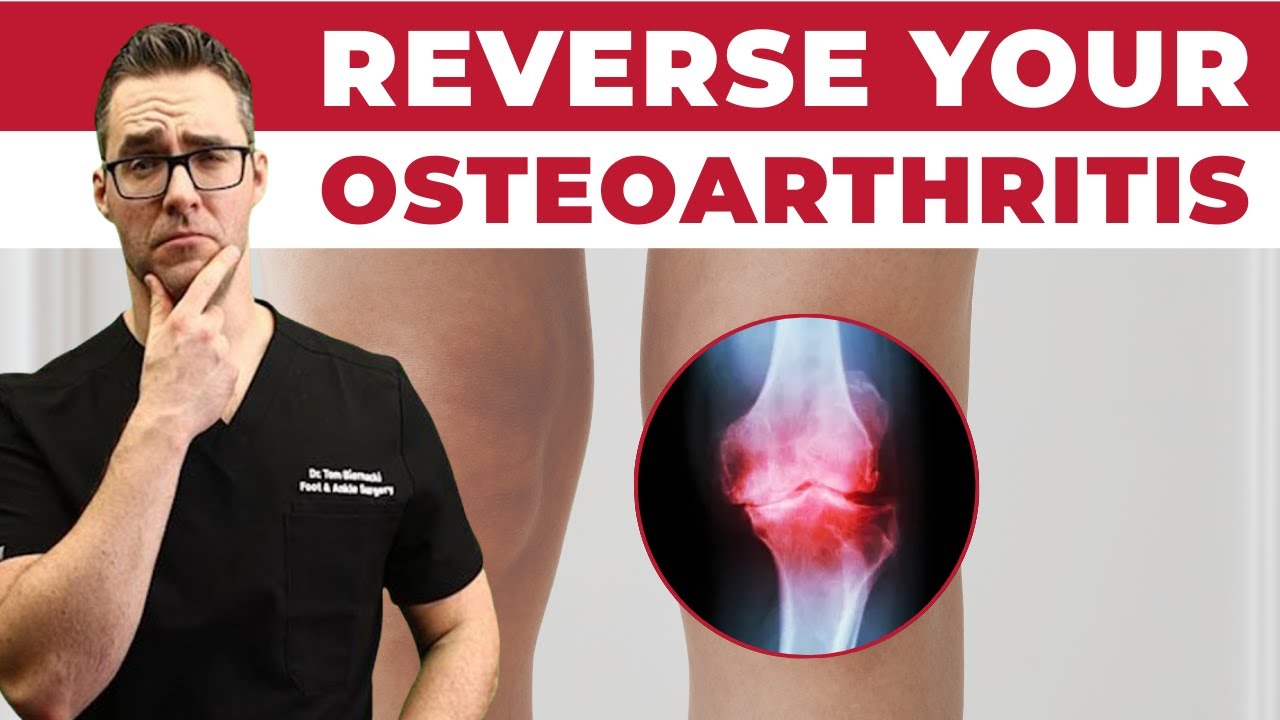
Watch: How to Regrow Cartilage & Reverse OsteoArthritis? [Can We Do It?] — MichiganFootDoctors YouTube
Grading Ankle Arthritis: Why Stage Determines Strategy
Ankle arthritis non-surgical treatment is most effective when calibrated to disease severity. In our clinic, we use the Kellgren-Lawrence grading system (Grade 0–4) alongside clinical findings to guide the right intervention. Grade 1–2 (mild to moderate) patients almost always do well with conservative care. Grade 3 patients often achieve significant relief, though their trajectory requires closer monitoring. Grade 4 (bone-on-bone with deformity) may eventually need surgical consultation, but even then, many patients delay surgery for years with the right program.
Key takeaway: Most ankle arthritis patients — even Grade 3 — can achieve meaningful, durable pain relief without surgery when treatment is individualized to their arthritis stage and lifestyle demands.
The Core Non-Surgical Treatments That Actually Work
Non-surgical management of ankle arthritis is built around three goals: unload the joint, reduce inflammation, and restore movement patterns. Every treatment below serves one or more of these goals. The most effective programs combine several approaches simultaneously rather than trying one at a time.
1. Custom Orthotics and Rocker-Bottom Footwear
Custom foot orthotics redistribute ground-reaction forces across the ankle, reducing peak loading on damaged cartilage. For ankle arthritis specifically, a UCBL (University of California Biomechanics Lab) orthotic with a medial or lateral heel wedge is often prescribed to correct frontal-plane malalignment that accelerates degeneration. Pairing orthotics with rocker-bottom soled shoes (e.g., Hoka Bondi, Brooks Beast) further reduces ankle dorsiflexion demand with each stride.
2. Ankle Bracing
A well-fitted ankle brace limits end-range motion — the part of the range where arthritic ankles experience the most pain and instability. Lace-up stirrup braces and Arizona-style custom AFOs are the two main categories. Lace-ups suit active patients who need dynamic support; Arizona-style AFOs are preferred for patients with more advanced stiffness or deformity. Unlike knee bracing for OA, ankle bracing for arthritis has strong supportive evidence: a 2020 study in Foot & Ankle International found significant VAS pain reduction with consistent AFO use over 12 weeks.
3. Physical Therapy and Proprioception Training
Arthritis doesn’t just erode cartilage — it degrades proprioceptive feedback, the ankle’s ability to sense its own position. This is why arthritic ankles feel “wobbly” and why falls become more common. A targeted PT program focusing on peroneal and gastrocnemius-soleus strengthening, combined with single-limb balance training, rebuilds joint stability and redistributes stress away from damaged cartilage. In our clinic, patients who complete 8–12 weeks of structured PT consistently report better outcomes than those who rely on injections alone.
4. Anti-Inflammatory Medications
NSAIDs (ibuprofen, naproxen, topical diclofenac) remain first-line for ankle arthritis flares. Topical diclofenac gel (Voltaren) is preferred for older patients or those with GI sensitivities because it delivers high local drug concentration with minimal systemic absorption. Scheduled dosing during flares (7–14 days) is more effective than PRN use. Prolonged NSAID use requires monitoring for renal and GI effects — we always review this with patients before long-term prescribing.
5. Corticosteroid Injections
Intra-articular corticosteroid injections provide short-to-medium-term pain relief (typically 4–12 weeks) by reducing synovial inflammation. Ultrasound guidance improves accuracy significantly — a 2019 study found sonographically guided ankle injections achieved 94% intra-articular accuracy versus 71% with landmark-guided technique. We limit to 3–4 injections per year to minimize the risk of cartilage degradation with repeated use.
6. Hyaluronic Acid (Viscosupplementation) Injections
Hyaluronic acid (HA) injections — often called “gel shots” — supplement depleted synovial fluid and provide a lubricating, shock-absorbing matrix. The evidence for HA in ankle OA is moderate but meaningful: a 2021 meta-analysis in Journal of Orthopaedic Surgery and Research found significant improvements in pain and function at 6 and 12 months compared to placebo. HA injections are particularly useful for patients who cannot tolerate repeated steroids or are managing with activity modification alone.
Key takeaway: Combining bracing, orthotics, physical therapy, and targeted injections produces better and more durable outcomes than any single treatment alone. The sequence and timing matter as much as the individual interventions.
Activity Modification: The Treatment Most Patients Overlook
One of the most underused non-surgical strategies is structured activity modification — not “stop doing everything,” but strategically substituting high-impact activities with lower-impact alternatives that maintain fitness and joint health. Cycling, swimming, and elliptical training preserve cardiovascular fitness and muscle strength while dramatically reducing ankle joint loading compared to running or court sports. In our clinic, we develop individualized activity plans so patients don’t have to choose between staying active and protecting their ankle.
Emerging Options: PRP and Regenerative Injections
Platelet-rich plasma (PRP) injections for ankle arthritis are increasingly offered as an alternative to steroids, with growing evidence suggesting a more durable effect. A 2022 RCT in Foot & Ankle Orthopaedics found PRP superior to corticosteroid injections at 6 months for pain and function scores. PRP is not yet covered by most insurance plans, but for patients seeking a longer-lasting biological option, it represents an important emerging tool in the non-surgical armamentarium.
⚠️ When to see a podiatrist urgently:
- Sudden severe ankle swelling with inability to bear weight
- Ankle that locks or catches mid-stride, suggesting loose bodies
- Progressive deformity (ankle rolling inward or outward) over weeks
- Night pain that wakes you from sleep
- No improvement after 6–8 weeks of consistent conservative care
The Most Common Mistake: Treating Pain, Not the Cause
The most common mistake we see with ankle arthritis is patients cycling through repeated injections without addressing the mechanical contributors — malalignment, muscle weakness, or inappropriate footwear. Injections quiet the inflammation, but if the biomechanical drivers aren’t corrected, symptoms return faster each cycle. The most effective non-surgical programs treat the whole kinetic chain: foot alignment, ankle stability, calf flexibility, and gait pattern simultaneously.
Frequently Asked Questions
Can ankle arthritis be reversed without surgery?
Cartilage loss cannot be reversed, but symptoms, function, and quality of life can improve significantly without surgery. Many patients with moderate ankle arthritis maintain active lifestyles for years — sometimes indefinitely — with consistent non-surgical management. The goal is slowing progression, reducing pain, and preserving the mobility you have.
How long does non-surgical treatment take to work?
Most patients notice meaningful improvement within 6–12 weeks of starting a structured program. Orthotics and bracing provide faster mechanical relief (days to weeks), while physical therapy benefits accumulate over 8–12 weeks of consistent exercise. Injections typically provide relief within 1–2 weeks and may last 4–12 weeks depending on the type used.
Is walking good or bad for ankle arthritis?
Moderate walking in proper footwear with good support is generally beneficial — it maintains muscle strength and joint lubrication. High-impact activities like running, basketball, or hiking on uneven terrain are more problematic. We typically recommend 20–30 minutes of flat-surface walking daily in rocker-bottom shoes with custom orthotics as the foundation of an active lifestyle for ankle arthritis patients.
The Bottom Line
Ankle arthritis non-surgical treatment works — when it’s structured, staged, and consistent. The most effective programs combine joint unloading (orthotics and bracing), inflammation management (medications and injections), and functional restoration (physical therapy and proprioception training). Surgery is not inevitable, and with the right team guiding your care, most patients achieve durable, meaningful relief without it.
Sources
- Saltzman CL, Salamon ML, Blanchard GM, et al. Epidemiology of ankle arthritis. Foot Ankle Int. 2005;26(3):213-217.
- Herrera-Pérez M, et al. Ultrasound-guided vs. landmark-guided ankle injections. Foot Ankle Surg. 2019;25(4):484-488.
- Witteveen AG, et al. Hyaluronic acid injections for ankle OA: meta-analysis. J Orthop Surg Res. 2021;16:349.
- Repetto I, Biti B, Cerruti P, et al. Conservative treatment of ankle osteoarthritis. J Am Acad Orthop Surg. 2017;25(5):334-342.
Ankle Arthritis Pain? We Can Help.
Book online 24/7 in Howell & Bloomfield Township, MI
4.9★ | 1,200+ Reviews | 3,000+ Surgeries
Or call: (810) 206-1402
Frequently Asked Questions
How long does treatment take to work?
Most patients see improvement in 4-8 weeks with consistent conservative care. Persistent symptoms after 8 weeks need imaging and escalation.
When is surgery needed?
Surgery is reserved for cases that fail 3-6 months of conservative care, structural deformities, or fractures requiring stabilization.
Is this covered by insurance?
Most diagnostic visits and conservative treatments are covered by Medicare and major insurers. Custom orthotics often require diabetic or post-surgical justification.

Dr. Tom Biernacki, DPM is a board-certified foot & ankle surgeon (ABFAS & ABPM) at Balance Foot & Ankle Specialists in Southeast Michigan. With over a decade of clinical experience, he specializes in heel pain, bunions, diabetic foot care, sports injuries, and minimally invasive surgery. Dr. Biernacki is a member of the APMA and ACFAS, and his patient education content on MichiganFootDoctors.com and YouTube has made him one of the most-followed foot & ankle educators on YouTube.
More questions patients ask
What non-surgical treatments help ankle arthritis?
See our full guide from Dr. Tom Biernacki DPM at Balance Foot & Ankle, Howell & Bloomfield Township, MI.
What is the best conservative treatment for ankle arthritis?
See our full guide from Dr. Tom Biernacki DPM at Balance Foot & Ankle, Howell & Bloomfield Township, MI.
When does ankle arthritis require surgery?
See our full guide from Dr. Tom Biernacki DPM at Balance Foot & Ankle, Howell & Bloomfield Township, MI.
When should I see a podiatrist for ankle arthritis?
See Dr. Tom Biernacki at Balance Foot & Ankle — book online 24/7. Call (810) 206-1402. Howell & Bloomfield Township, MI.
Does insurance cover ankle arthritis treatment?
Most PPO and Medicare plans cover medically necessary foot care. We accept BCBS and most Michigan insurers. Call (810) 206-1402.
Still have a question about coverage or cost? Book online and we will check your benefits before your visit: Book in Howell · Book in Bloomfield Township. Prefer to talk it through first? Call (810) 206-1402.