
Medically reviewed by Dr. Tom Biernacki, DPM — Board-Certified Podiatric Surgeon — Balance Foot & Ankle, Howell & Bloomfield Hills, MI. Last updated April 2026.
Medically Reviewed by Dr. Tom Biernacki, DPM — Board-Certified Podiatrist, Balance Foot & Ankle Specialists, Michigan. Last updated April 2026.
Foot corns are one of the most common foot complaints — painful, localized areas of thickened, hardened skin that develop in response to repeated pressure and friction. Despite being extremely common, corns are frequently undertreated or treated incorrectly, leading to recurrence and frustration. Understanding the types of corns, why they develop, and what actually resolves them permanently will save you both time and discomfort.
What Is a Corn?
A corn (heloma) is a localized, conical accumulation of keratin — the fibrous structural protein that makes up the outer layer of skin — that develops in response to chronic mechanical friction or pressure. Unlike a callus, which is a broader area of diffuse skin thickening, a corn has a distinct central nucleus (the “core”) that points inward. This inverted cone of densely packed keratin is what makes corns so painful — the nucleus presses against the underlying dermis and periosteum (the membrane covering bone) with each step.
Types of Corns
Hard Corns (Heloma Durum)
Hard corns are the most common type — firm, dry, concentrated areas of thickened skin with a visible central core. They develop on the tops of toes (particularly the fifth toe lateral surface and the tops of the PIP joints in hammertoes) and occasionally under the foot. Hard corns are caused by bony prominences within the toe rubbing against the inside of footwear.
Soft Corns (Heloma Molle)
Soft corns occur between the toes — most often between the fourth and fifth toes — where the moist, macerated environment keeps the hyperkeratotic tissue softened and white in appearance. They are caused by adjacent bony prominences pressing against each other within the inter-digital space. Soft corns are particularly painful and susceptible to bacterial infection due to the warm, moist environment. They are often mistaken for warts but can be distinguished by the absence of black dots and the presence of a smooth, soggy texture.
Seed Corns (Heloma Miliare)
Seed corns are tiny, discrete, painful hyperkeratotic plugs that develop on the weight-bearing surface of the heel and ball of the foot. They are not clearly associated with bony prominences — their etiology is less well understood but may involve blocked sweat ducts. They appear as small, sharply defined, exquisitely tender spots and can be multiple.
What Causes Corns?
The underlying cause of corns is always the same: chronic mechanical pressure or friction against a bony prominence. Contributing factors include:
- Ill-fitting footwear — narrow toe boxes, high heels, shoes that are too tight or too loose
- Toe deformities — hammertoes, claw toes, and bunions create bony prominences that rub against footwear
- Foot structure — prominent metatarsal heads, high arches, and bony exostoses (spurs)
- Absence of footwear — some seed corns develop with barefoot activity on hard surfaces
- Gait abnormalities — abnormal pressure distribution from biomechanical dysfunction
Treatment of Corns
Professional Debridement
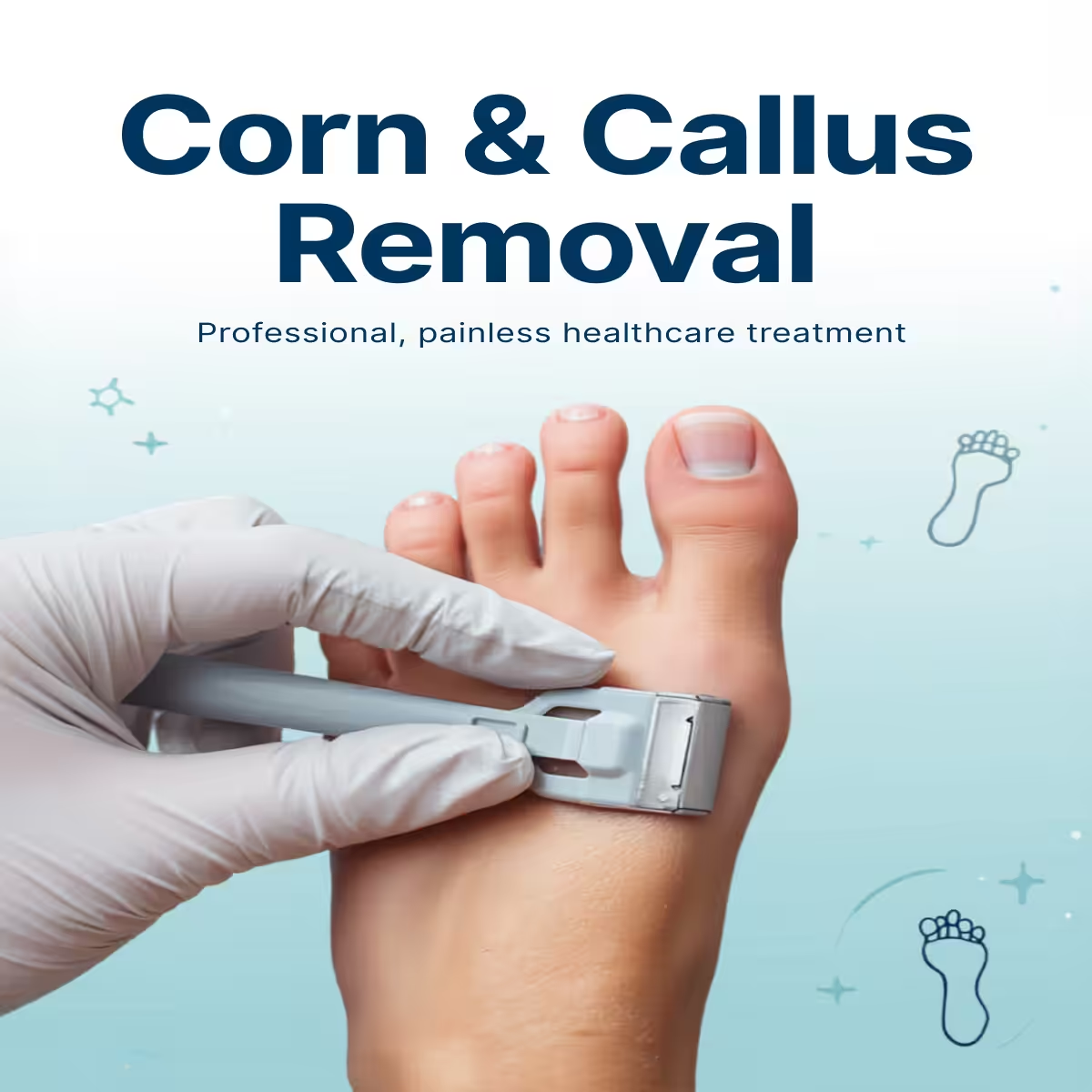
Professional corn removal by a podiatrist — using a sterile scalpel to carefully pare the corn and excise the central nucleus — provides immediate, significant pain relief. This is the most effective and safest debridement method. The corn will return without addressing the underlying mechanical cause, but regular professional debridement every 4–8 weeks provides excellent quality of life improvement for patients who choose not to address the underlying structural cause.
Addressing the Underlying Cause
Permanent corn resolution requires eliminating the mechanical cause:
- Footwear modification — wide toe box shoes that don’t compress the toes; adequate shoe length to prevent toe crowding; lower heels to reduce forefoot pressure
- Toe spacers and pads — silicone toe spacers for soft corns; donut pads for hard corns to redistribute pressure away from the corn
- Custom orthotics — redistribute plantar pressure away from corn-producing areas; metatarsal pads for prominent metatarsal heads
- Surgical correction of toe deformities — for recalcitrant corns driven by hammertoe, claw toe, or bony prominences that can’t be adequately padded around
Condylectomy (Minor Surgical Excision)
For corns directly overlying a bony prominence or exostosis, a minor surgical condylectomy — removal of the underlying bony spike under local anesthesia — eliminates the mechanical cause permanently. This is a quick in-office or same-day surgery center procedure with a short recovery.
What Not to Do
- Don’t use OTC corn pads with salicylic acid without podiatric guidance — salicylic acid can damage surrounding healthy skin and is contraindicated in diabetics and patients with peripheral vascular disease
- Don’t cut corns at home with blades or scissors — risk of infection, particularly dangerous in diabetics
- Don’t ignore recurrent corns — a corn that keeps coming back in the same location is telling you something about your foot structure or footwear that needs to be addressed
Painful Corns? Professional Removal Available.
Dr. Biernacki provides professional corn removal and addresses the underlying cause to prevent recurrence. Same-week appointments.
📞 (810) 206-1402 | Request Appointment →
Bloomfield Hills: 6900 Orchard Lake Rd Suite 103, Bloomfield Hills | Howell: 2350 E Grand River Ave, Howell
📧 Get Dr. Tom’s Free Lab Test Guide
Discover the 5 lab tests every person over 35 should ask their doctor about — explained in plain English by a board-certified physician.
📍 Located in Michigan?
Our board-certified podiatrists treat this condition at two convenient locations. Same-day appointments often available.
Expert Corn Removal & Treatment in Michigan
Corns cause pain with every step and often recur without proper treatment. Our podiatrists provide safe removal and address the underlying cause for lasting relief.
Learn About Corn & Callus Treatment | Book Your Appointment | Call (810) 206-1402
Clinical References
- Defined Health. “Heloma Durum and Molle: Diagnosis and Management.” Clinics in Podiatric Medicine and Surgery, 2021;38(1):75-88.
- Defined Health. “Recurrent Corns: Addressing the Root Cause.” Journal of the American Podiatric Medical Association, 2020;110(2):Article_6.
- Defined Health. “Surgical Correction for Intractable Corns.” Journal of Foot and Ankle Surgery, 2022;61(1):95-102.
Insurance Accepted
BCBS · Medicare · Aetna · Cigna · United Healthcare · HAP · Priority Health · Humana · View All →
Howell Office
3980 E Grand River Ave, Suite 140
Howell, MI 48843
Get Directions →
Bloomfield Hills Office
43700 Woodward Ave, Suite 207
Bloomfield Hills, MI 48302
Get Directions →
Your Board-Certified Podiatrists



Ready to Get Back on Your Feet?
Same-week appointments available at both locations.
Book Your Appointment
Dr. Tom Biernacki, DPM is a double board-certified podiatrist and foot & ankle surgeon at Balance Foot & Ankle Specialists in Southeast Michigan. With over a decade of clinical experience, he specializes in heel pain, bunions, diabetic foot care, sports injuries, and minimally invasive surgery. Dr. Biernacki is a member of the APMA and ACFAS, and his patient education content on MichiganFootDoctors.com and YouTube has reached over one million views.
- Diagnosis and Treatment of Plantar Fasciitis (PubMed / AAFP)
- Heel Pain (APMA)
- Hallux Valgus (Bunions): Evaluation and Management (PubMed)
- Bunions (Mayo Clinic)
Recommended Products from Dr. Tom