

✅ Medically reviewed by Dr. Thomas Biernacki, DPM — Board-Certified Podiatrist · Last updated April 6, 2026
Bruised Heel How to Spot It, Treat It, and Prevent It from Getting Worse
A bruised heel may seem like a minor injury, but it can cause serious discomfort with every step. Whether you’re an athlete, a runner, or just someone who spends a lot of time on your feet, bruising beneath the heel can interfere with your daily routine. Understanding what causes this pain and how to manage it properly is key to a speedy recovery. In this guide, we’ll cover everything from symptoms and treatment options to when it’s time to see a doctor.
Schedule Your Consultation TodayWhat Is a Bruised Heel and What Causes It?
A bruised heel—also known as a fat pad contusion—occurs when the protective layer of fat under your heel bone gets damaged from impact or overuse. It’s common in sports, running, hiking, or simply from walking barefoot on hard surfaces. The result is a deep, aching pain under the heel that worsens with pressure or activity. While not usually a serious injury, ignoring a bruised heel can lead to long-term discomfort or even chronic conditions like plantar fasciitis.

Don’t Let Heel Pain Hold You Back!
Medial ankle pain shouldn’t interfere with your daily life. At Balance Foot & Ankle Specialist, our podiatrists use advanced diagnostic tools and personalized treatments to get to the root of your pain and provide lasting relief. Whether you’re dealing with tendon issues, arthritis, or injury-related pain, we’re here to help. Schedule your consultation today and take the first step toward healing. BOOK NOwBruised Heel Bone or Pad Causes, Symptoms & Best Treatment!
95% of the time a bruised heel bone is a contusion or damage to the tissues under the heel causing pain. There may also be a heel spur or plantar fasciitis! Bruised Heel Bone Overview:- A bruised heel is a bruise of the fat pad in the heel.
- It can result from stepping on a hard object and it can be very painful.
- If you have a bruise heel, it may feel as if you are walking on a pebble.
- This pain is persistent and it takes a few days to improve.
What Is A Bruised Heel?
- A bruised heel is a deep contusion that forms mainly on the heel of the foot. This can extend into the fat pad of the heel. Although a bruised heel can happen on the ball of the foot, the main common site of injury is the heel. As mentioned earlier, if you have a bruised heel, you will feel like you are walking on a pebble.
- The bruised tissue is damaged, come cells burst, and the inflammatory response is triggered. As with any other tissue inflammation, dolor, or pain is a common symptom. So the pain that you may be feeling is due to inflammation and can be alleviated by the use of anti-inflammatory medication.
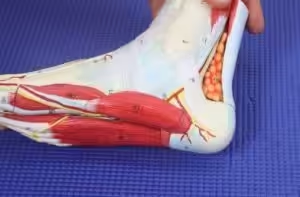
- A bruised heel can be caused by either a sudden impact (such as landing heavily) or repetitive pounding. The heel bone (calcaneus) is protected by a pad of fat. Repeated pounding of the heel can cause the fat pad to be pushed up the side of the heel leaving less of a protective layer causing heel pain.
- This injury is also sometimes known as Policeman’s heel. It is common in sports requiring a lot of impact onto the heel and in particular soldiers marching up and down on the parade square.
How do you get a Bruised Heel?
The heel is the most common location of a bruised heel because when a person runs or falls, the large majority of the body’s weight rests on the heels. bruised heels occur more often in older people or in people who have a thin fat pad under the heel bone. You may be at risk of developing Bruised Heel if:- You have a thin fat pad under your heel bone.
- If you are 50 years of age or older
- You are overweight
- You engage of physical activities that put pressure on the feel such as running and skating
- You do not wear shoes that support your feet.
How do you get a Bruise on the ball of the foot?
- The ball of the foot is the second most common location for a stone bruise.
- Although the majority of the weight of the body rests on the heels, the ball of the foot has a much thinner padding than the hell.
- For this reason, it is more likely to bruise under the right circumstances.
- As you get older, your fat pad becomes thinner and therefore, your foot is more likely to bruise.
Bruised Heel Recovery Time?
The bruised heel may take a couple to a few days to get better. The recovery time depends of the severity of the bruise.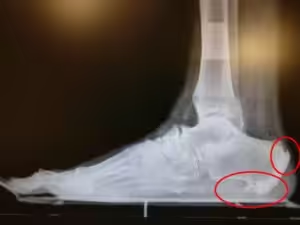
How to treat a Bruised Heel?
A bruised heel causes a lot of pain. This is mainly because if the activated inflammatory response. In order to decrease the recovery time, it is important to try to reduce the inflammation in the area. Here are some treatment options:- Treatment consists or rest, ice & elevation.
- There is no secret to a bone bruise, it will get better very quickly.
- It is also possible to take anti-inflammatories, but the pain will likely be better by the time they take effect.
- If the pain is consistent, consider fat pad atrophy.
- To treat fat pad atrophy, consider cushioned gel shoes & especially getting new shoes.

- Rest until there is no more heel pain.
- Pad the heel of shoes with shock absorbing insoles or heel pads. These should be worn in both shoes, even if only one heel is bruised.
- Wearing a raise in only one shoe causes a leg length difference which can cause further problems higher up!
- Replace running shoes if they are old (more than 400 miles of running) or the soles are weakened through use.
- A sports injury professional will confirm the diagnosis. View our video on heel pain from sports podiatrist Ian Sadler.
- Advise on insoles (orthotics) or heel pads to protect the fat pad in the heel.
- Tape the heel to provide pain relief and compress the soft tissue under the heel giving more protection to the bone.
- If you catch heel pain early and rest then it should recover quite quickly – within a few days.
- If you ignore the first onset of pain and the fat pad gets damaged beyond easy repair then this is a very difficult injury to treat. Rest means rest.
- There is no point you stopping running for a week if you put up scaffolding for a living and are on your feet every day. If you have to be on your feet then ensure you put a shock absorbing and cushioning heel insert into your shoes.
Bruised Heel Bone Home Treatment:
- These are great treatment options for a bruised heel bone.
- Even doing all the right stuff it can take a few days to start getting better!
- Bottom of the foot pain needs to be controlled in 2 phases: Inflammation control and correcting the biomechanics.
Best Compression Socks Plantar Fasciitist: Trusted Foot & Ankle Solutions
Step into knowledge — before you step into treatment.
Athlete’s Foot
Ball of Foot
Achilles Tendon
Bunion
Big Toe
Callus
Foot Fungus
Gout
Ingrown
Orthotics
Outside of Foot Pain
Sports Podiatrist
Why Choose Balance Foot & Ankle Specialist in Howell and Bloomfield Hills?
Our specialized bruised heel treatments combine advanced techniques, precision, and compassionate care to relieve pain and restore nail health. Using modern podiatric methods, we reduce discomfort, prevent further damage, and promote proper healing so your toenail recovers naturally. Trusted by patients throughout Southeast Michigan, we emphasize personalized treatment plans and patient education to ensure the best results. With expert bruised toenail care, you can get back on your feet—comfortably and confidently.l Book Your Podiatrist Visit Now
Bruised Heel FAQs: What You Need to Know
What does a bruised heel feel like? It feels like a deep, dull pain under the heel, often worse when walking or standing for long periods. It feels like a deep, dull pain under the heel, often worse when walking or standing for long periods. Most cases heal within 1–3 weeks, but severe bruises may take longer depending on activity level and care. Can you walk on a bruised heel? Yes, but it’s recommended to minimize pressure and wear cushioned shoes to avoid worsening the injury. What causes a bruised heel? Repetitive impact, poor footwear, sports injuries, or stepping on a hard object can all cause heel bruising. How is a bruised heel diagnosed? A podiatrist will examine your symptoms, physical activity history, and possibly use imaging to rule out fractures. Should I see a doctor for a bruised heel? Yes, if the pain is severe, persistent, or not improving after rest and self-care. Is a bruised heel the same as plantar fasciitis? No, but they share similar symptoms. A professional evaluation can differentiate the two. What’s the best treatment for a bruised heel? Rest, ice, elevation, cushioned footwear, and avoiding high-impact activity until the pain subsides. Can a bruised heel become chronic? Yes, repeated trauma without proper healing can lead to long-term heel pain or fat pad degeneration.Related Treatment Guides
Medical References & Sources
- American Podiatric Medical Association — Patient Education
- American Orthopaedic Foot & Ankle Society — Foot Conditions
📧 Get Dr. Tom’s Free Lab Test Guide
Discover the 5 lab tests every person over 35 should ask their doctor about — explained in plain English by a board-certified physician.
📍 Located in Michigan?
Our board-certified podiatrists treat this condition at two convenient locations. Same-day appointments often available.
Dealing With a Bruised Heel?
A bruised heel (fat pad contusion) causes deep, aching pain with every step. Our podiatrists distinguish heel bruises from stress fractures and plantar fasciitis, then provide targeted treatment to speed your recovery.
References
- Rome K, et al. Heel pad thickness: a contributing factor to heel pain. Foot. 2002;12(1):10-14.
- Wearing SC, et al. The biomechanics of restricted movement in adult hallux valgus. J Foot Ankle Res. 2012;5:3.
- Buchanan BK, Kushner D. Plantar Fasciitis. StatPearls Publishing; 2024.
Insurance Accepted
BCBS · Medicare · Aetna · Cigna · United Healthcare · HAP · Priority Health · Humana · View All →
Howell Office
3980 E Grand River Ave, Suite 140
Howell, MI 48843
Get Directions →
Bloomfield Hills Office
43700 Woodward Ave, Suite 207
Bloomfield Hills, MI 48302
Get Directions →
Your Board-Certified Podiatrists



Ready to Get Back on Your Feet?
Same-week appointments available at both locations.
Book Your Appointment
Dr. Tom Biernacki, DPM is a double board-certified podiatrist and foot & ankle surgeon at Balance Foot & Ankle Specialists in Southeast Michigan. With over a decade of clinical experience, he specializes in heel pain, bunions, diabetic foot care, sports injuries, and minimally invasive surgery. Dr. Biernacki is a member of the APMA and ACFAS, and his patient education content on MichiganFootDoctors.com and YouTube has reached over one million views.