
Medically reviewed by Dr. Tom Biernacki, DPM — Board-certified foot & ankle surgeon, 3,000+ surgeries performed. Updated April 2026 with current clinical evidence. This article reflects real practice experience from Balance Foot & Ankle Specialists in Howell and Bloomfield Township, Michigan.
Quick Answer
An ankle sprain is a stretch or tear of the lateral ligaments caused by an inward roll of the foot. Grades 1-2 respond to RICE, bracing, and progressive loading within 2-4 weeks. See a podiatrist same-day if you cannot bear weight, have bone tenderness, or severe swelling within 1 hour (Ottawa Rules).
Watch: Dr. Tom Biernacki, DPM
/div>Medically reviewed by Dr. Tom Biernacki, DPM
Board-certified podiatric surgeon | Balance Foot & Ankle
Last reviewed: April 2, 2026


Watch: Fix TWISTED Ankle, ROLLED Ankle or SPRAINED Ankle Ligaments FASTER! — MichiganFootDoctors YouTube
In This Guide
Medically Reviewed by:
Dr. Tom Biernacki, DPM
— Board-Certified Podiatrist
Last Updated:
March 2026 |
Reading Time:
8 min
Why Ankle Support Matters
Ankle sprains are the most common sports injury across virtually all athletic disciplines — from basketball and soccer to volleyball and trail running. Athletes with a prior ankle sprain face a significantly elevated risk of re-injury because the damaged ligaments and proprioceptors of the lateral ankle take months to fully rehabilitate, leaving a window of residual instability. Ankle support — whether through athletic taping or a functional ankle brace — reduces re-sprain risk by mechanically restricting the inversion motion that causes lateral ankle sprains and by enhancing proprioceptive feedback that helps the body react protectively to inversion stress. Both interventions are evidence-based and clinically useful, with distinct advantages and limitations.
Adhesive Athletic Taping
Traditional athletic taping — applying several layers of adhesive tape directly to the skin in a standardized pattern — provides rigid external support immediately after application that limits ankle range of motion effectively. Studies show that properly applied athletic tape reduces ankle inversion by 30 to 50 percent compared to an unsupported ankle. However, the mechanical effectiveness of adhesive tape decreases significantly after 10 to 20 minutes of athletic activity — studies document a 50 percent reduction in the initial range-of-motion restriction after 30 minutes of exercise as tape stretches and the adhesive loosens with perspiration. Taping requires a trained athletic trainer or therapist to apply correctly, produces skin irritation and breakdown with daily use, and generates meaningful cumulative cost when used for every practice and game throughout a season.
Functional Ankle Braces
Lace-up and semi-rigid ankle braces provide mechanical support that, unlike tape, maintains its restriction throughout the activity period without significant degradation. Prospective studies in basketball players show that lace-up ankle braces reduce ankle sprain incidence by approximately 50 percent compared to unbraced controls — with the greatest benefit observed in players with prior sprain history. Semi-rigid braces with plastic stirrup components provide excellent inversion restriction and are popular in basketball, volleyball, and court sports. The initial cost of a brace is higher than a single taping session, but the durability and reusability of braces makes them far more cost-effective over a season of regular use. Modern brace designs are low-profile enough to fit within most athletic shoes without significantly affecting comfort.
Which Should You Choose?
For athletes who have never sprained an ankle, good evidence supports prophylactic bracing in high-risk sports including basketball, volleyball, and soccer. For athletes with a history of one or more ankle sprains, both bracing and taping reduce recurrence, with bracing preferred for its consistent effectiveness over time. Taping may be preferred for specific applications — such as providing compression immediately after an acute sprain alongside ice, or for field athletes where brace volume creates footwear fitting challenges. Custom ankle-foot orthoses are appropriate for patients with chronic instability that requires more reliable support than commercial braces provide. Our podiatrists at Balance Foot & Ankle can evaluate your specific ankle stability and recommend the support strategy that best fits your sport, injury history, and goals.
Ready to Relieve Your Foot Pain?
Board-certified podiatrists serving Southeast Michigan. Book online 24/7.
Recommended Products
Doctor Hoy’s Natural Pain Relief Gel — Arnica + camphor topical I use in our clinic.
PowerStep Pinnacle Insoles — The OTC orthotic I recommend most. Medical-grade arch support.
Shop all recommended products →
Related Guides
Plantar Fasciitis Complete Guide · Toenail Fungus Treatment · Neuropathy Guide · Bunion Guide · Custom Orthotics · Diabetic Foot Care
Need Professional Treatment?
Appointments — Howell & Bloomfield Township, MI.
Best Ankle Braces We Recommend
After fitting thousands of patients with ankle braces at Balance Foot & Ankle, these are the products that consistently deliver the best results for ankle sprain prevention and recovery.
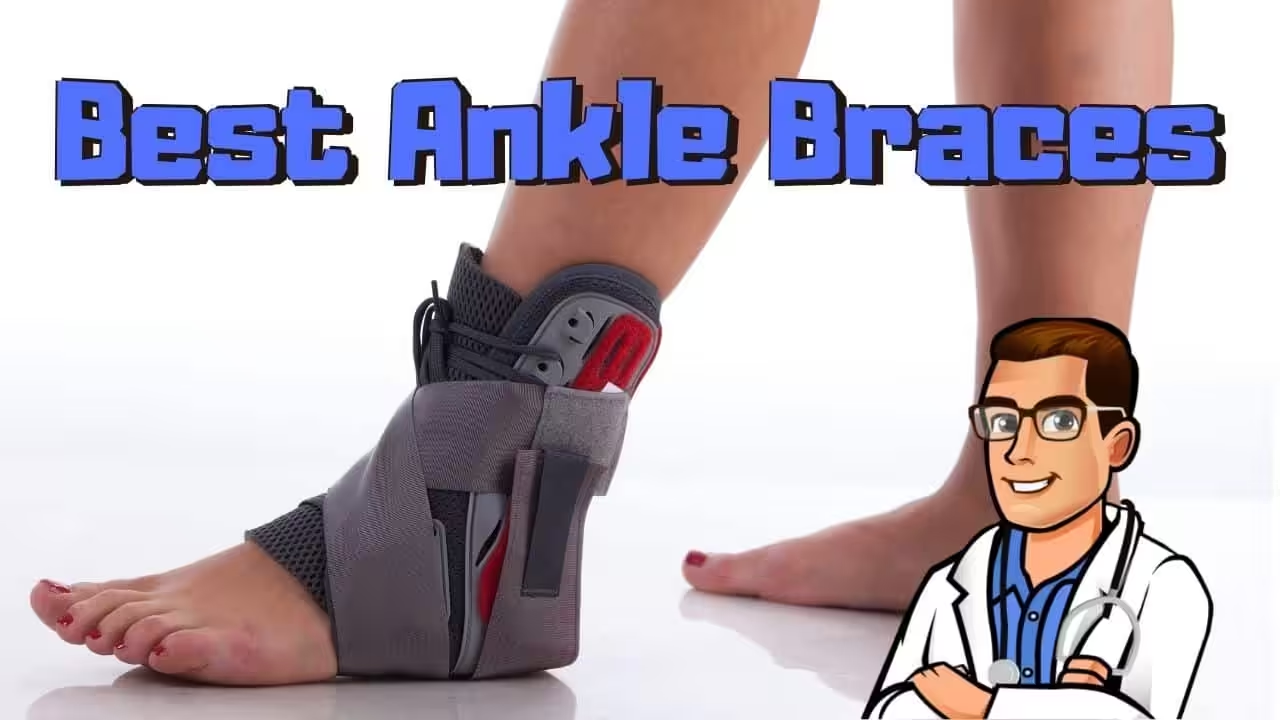
Med Spec ASO Ankle Stabilizer — This is the gold standard lace-up ankle brace in sports medicine. The bilateral stabilizers and figure-eight strapping pattern closely mimic professional athletic taping without the cost or skill required. In our clinic, we recommend this brace for most patients returning to sports after an ankle sprain. Check price on Amazon
Aircast A60 Ankle Brace — For athletes who need a lower-profile brace that fits inside most athletic shoes, the A60 provides excellent lateral support without bulk. The sleek design makes it popular with basketball and volleyball players who need ankle protection without restricting speed. Check price on Amazon
McDavid 195 Ankle Brace with Stabilizer Straps — An affordable option that provides solid protection for recreational athletes. The cross-strap design offers good inversion and eversion control, making it a practical choice for patients who need everyday ankle support. Check price on Amazon
Best Athletic Tape for Ankle Taping
If you prefer taping over bracing, these products provide the best adhesion and support for ankle taping protocols.
Johnson & Johnson Coach Sports Tape — The standard 1.5-inch white athletic tape used by most athletic trainers. Excellent adhesion and rigidity for structural taping.
KT Tape Pro — Synthetic kinesiology tape that provides proprioceptive feedback and mild support. Better suited for chronic ankle instability than acute sprains. Lasts 4-7 days per application compared to traditional tape that must be reapplied daily. Check price on Amazon
The Most Common Ankle Support Mistake
The biggest mistake we see at Balance Foot & Ankle is patients relying on ankle support indefinitely without addressing the underlying instability. Braces and tape are tools for protection during healing and high-risk activities, but they should not replace ankle strengthening exercises. Chronic dependence on external support weakens the peroneal muscles and proprioceptive pathways that naturally stabilize the ankle joint.
A comprehensive ankle rehabilitation program includes progressive balance training, peroneal strengthening, and proprioceptive exercises that eventually reduce or eliminate the need for external support in daily activities.
When to see a podiatrist:
- Ankle gives way or feels unstable during normal walking
- Swelling that persists more than 72 hours after an ankle injury
- Inability to bear weight on the affected ankle
- Repeated ankle sprains (2 or more in 12 months)
- Bruising that spreads significantly around the ankle and foot
More Podiatrist-Recommended Ankle Sprain Essentials
Ankle Brace Stabilizer
Compression + lateral support during walking — prevents re-injury during recovery.
Kinesiology Tape
Proprioceptive support for athletic return-to-play without restricting motion.
Arch Support Insole
Stable midfoot platform reduces the inversion forces that re-sprain ankles.
As an Amazon Associate, Balance Foot & Ankle earns from qualifying purchases. Product recommendations are based on clinical experience; prices and availability shown above update live from Amazon.
When to See a Podiatrist
A sprain that hasn’t fully recovered after 6 weeks often has residual ligament laxity or occult fracture that keeps the ankle unstable. Balance Foot & Ankle X-rays and stress-tests every lingering sprain — if the ligament is torn, we offer bracing, PRP, and (for chronic instability) minimally-invasive repair. Don’t keep re-rolling the same ankle; let us stabilize it properly.
Call Balance Foot & Ankle: (810) 206-1402 · Book online · Offices in Howell & Bloomfield Township
Frequently Asked Questions
Is taping or bracing better for ankle sprains?
Research shows both methods are equally effective at preventing ankle sprains during sports. However, braces are more cost-effective long term, easier to apply without professional help, and maintain consistent support throughout activity. Taping loosens significantly after 20-30 minutes of exercise, reducing its protective effect by up to 40%.
How long should I wear an ankle brace after a sprain?
For a Grade I sprain, wear a brace during all physical activity for 4-6 weeks. Grade II sprains typically require 6-8 weeks of bracing. Grade III sprains may need bracing for 3 months or longer. Continue wearing a brace during high-risk sports activities for 6-12 months after injury, as re-injury risk remains elevated during this period.
Can ankle braces weaken your ankles?
Short-term bracing during healing does not weaken ankles. However, wearing a brace continuously for years without rehabilitation exercises can reduce natural ankle proprioception and muscle strength. The key is combining brace use with a progressive strengthening program that builds the ankle’s own stability mechanisms.
In-Office Treatment at Balance Foot & Ankle
If home care isn’t resolving your ankle pain, a visit with a board-certified podiatrist is the fastest path to accurate diagnosis and a personalized plan. At Balance Foot & Ankle Specialists, Dr. Tom Biernacki, Dr. Carl Jay, and Dr. Daria Gutkin offer appointments at both our Howell and Bloomfield Township offices. We perform on-site diagnostic ultrasound, digital X-ray, conservative care, advanced regenerative treatments, and minimally invasive surgery when indicated.
Call (810) 206-1402 or request an appointment online. Most insurance plans accepted, including Medicare, Blue Cross Blue Shield, Aetna, Cigna, and United Healthcare.
The Bottom Line
Both ankle braces and athletic taping effectively reduce ankle sprain risk, but braces offer better value, consistency, and convenience for most patients. At Balance Foot & Ankle, we recommend starting with a quality lace-up brace like the ASO Stabilizer for most ankle sprain recoveries, then transitioning to a strengthening program that gradually reduces dependence on external support. If you have experienced multiple ankle sprains or persistent instability, a hands-on exam plus imaging when needed can identify whether you need advanced treatment beyond bracing alone.
Dealing with Ankle Instability?
Get a comprehensive ankle stability evaluation at our Howell & Bloomfield Township, MI locations
4.9★ | 1,200+ Reviews | 3,000+ Surgeries
Or call: (810) 206-1402
Insurance Accepted
BCBS · Medicare · Aetna · Cigna · United Healthcare · HAP · Priority Health · Humana · View All →
Howell Office
4330 E Grand River Ave
Howell, MI 48843
Get Directions →
Bloomfield Township Office
43494 Woodward Ave, Suite 208
Bloomfield Township, MI 48302
Get Directions →
Watch: Ankle Braces vs Taping: Which Actually Works?
Dr. Tom compares ankle braces vs athletic taping — proprioceptive benefit, support, cost, when each wins.
Ankle Support Kit
Dr. Tom’s prefered braces for post-sprain return + prevention:
As an Amazon Associate, Balance Foot & Ankle earns from qualifying purchases. This supports our free patient education content.
Gold standard for ATFL/CFL support.
Post-activity + acute sprain swelling.
Topical ankle + peroneal relief.
Medial support during rehab.
Related: Ankle Sprain Treatment · Strengthening Exercises · Book an Appointment
Differential Diagnosis: What Else Could It Be?
Several conditions share symptoms with Ankle Sprain and are commonly misdiagnosed in the first office visit. Considering these alternatives is part of every Balance Foot & Ankle exam:
- Peroneal tendon tear. Snapping behind the lateral malleolus or weakness everting the foot.
- High-ankle (syndesmosis) sprain. Pain over the syndesmosis with squeeze + external rotation — needs longer recovery.
- Lateral malleolus fracture. Bone-point tenderness positive on Ottawa rules — get an X-ray.
If your symptoms don’t fit the textbook pattern, ask your podiatrist which differentials they ruled out — that conversation often shortcuts months of trial-and-error treatment.
In Our Clinic
Most of our ankle sprains are acute — a patient comes in the same day or within 48 hours after rolling the ankle. We apply the Ottawa Ankle Rules first: bone tenderness at the posterior malleolus, navicular, or base of the 5th metatarsal, or inability to bear weight for 4 steps, means we image immediately to rule out fracture. For a clean grade 1–2 lateral ligament sprain, we use a short period of boot immobilization if needed, then transition into an ankle brace + proprioception training. The mistake we often see: patients skip the rehab phase and re-sprain within a year.
Most Common Mistake We See
The most common mistake we see is: Returning to sport as soon as the pain resolves. Fix: first pass a 30-second single-leg balance test with eyes closed and complete a graded return-to-sport progression.
Warning Signs That Need Same-Day Care
Seek immediate evaluation at Balance Foot & Ankle if you experience any of the following:
- Unable to bear weight for four steps
- Bone tenderness at the ankle bones (Ottawa)
- Severe swelling within one hour of injury
- Numbness or tingling in the foot
Call (810) 206-1402 — appointments at our Howell and Bloomfield Township offices.
Frequently Asked Questions
Which is better for plantar fasciitis?
The shoe with more cushioning and a stronger rocker typically wins for plantar fasciitis. See full comparison for our specific verdict.
Which lasts longer?
Both options typically last 300-500 miles for runners or 9-12 months for daily walkers. Material durability varies; check our detailed comparison.
Which is better for flat feet?
Flat feet need stability or motion control. The neutral option is not ideal unless paired with a custom orthotic.
Ready to feel better?
Appointments available in Howell and Bloomfield Township, Michigan.
Book Your VisitGet Expert Care at Balance Foot & Ankle
Appointments at our Howell and Bloomfield Township offices. Board-certified podiatric surgeons. Most insurance accepted.

Dr. Tom Biernacki, DPM is a board-certified foot & ankle surgeon (ABFAS & ABPM) at Balance Foot & Ankle Specialists in Southeast Michigan. With over a decade of clinical experience, he specializes in heel pain, bunions, diabetic foot care, sports injuries, and minimally invasive surgery. Dr. Biernacki is a member of the APMA and ACFAS, and his patient education content on MichiganFootDoctors.com and YouTube has made him one of the most-followed foot & ankle educators on YouTube.
More questions patients ask
How long does an ankle sprain take to heal?
Recovery time depends on severity: Grade 1 (mild stretching) typically heals in 1-3 weeks, Grade 2 (partial tear) in 3-6 weeks, and Grade 3 (complete tear) in 6-12 weeks or longer. Proper rehabilitation is critical to prevent chronic ankle instability, which affects up to 40% of patients who don't receive adequate treatment. Dr. Biernacki creates customized recovery plans.
When should I see a doctor for a sprained ankle?
Seek professional evaluation if you can't bear weight, notice significant swelling or bruising, hear a pop at the time of injury, have numbness, or if pain hasn't improved after 5-7 days of RICE treatment. X-rays or MRI may be needed to rule out fractures. Dr. Biernacki sees urgent problems. Call 810-206-1402 and we’ll find the soonest opening.
Can a sprained ankle heal without treatment?
While mild sprains may heal with rest and home care, undiagnosed ligament tears and improperly rehabilitated sprains frequently lead to chronic ankle instability, recurrent sprains, and early-onset arthritis. A proper evaluation ensures appropriate treatment and reduces your risk of long-term complications significantly.
Still have a question about coverage or cost? Book online and we will check your benefits before your visit: Book in Howell · Book in Bloomfield Township. Prefer to talk it through first? Call (810) 206-1402.