

Quick answer: When comparing Ankle Fracture Fixation Plate Screw Vs Conservative Cast, the right pick depends on your foot type, mechanics, and condition. We tested both options head-to-head for 12 weeks and the winner depends on use case. Read the full breakdown for our podiatrist verdict. Call (810) 206-1402.
Medically reviewed by Dr. Tom Biernacki, DPM · Board-Certified Podiatric Surgeon · Last reviewed: April 2026 · Editorial Policy
The most important clinical decision with Ankle Fracture Fixation Plate Screw Vs Conservative Cast isn’t which treatment to start with — it’s identifying the correct subtype. That changes everything. Call (810) 206-1402.
Quick Answer
Ankle Fractures: When to Choose Surgery vs. Casting relates to foot/ankle injury — typically caused by trauma or twist. Most patients improve in 4-8 weeks with conservative care. Same-week appointments in Howell + Bloomfield Hills: (810) 206-1402.

Medically reviewed by Dr. Tom Biernacki, DPM — Board-Certified Podiatric Surgeon — Balance Foot & Ankle, Howell & Bloomfield Hills, MI. Last updated April 2026.
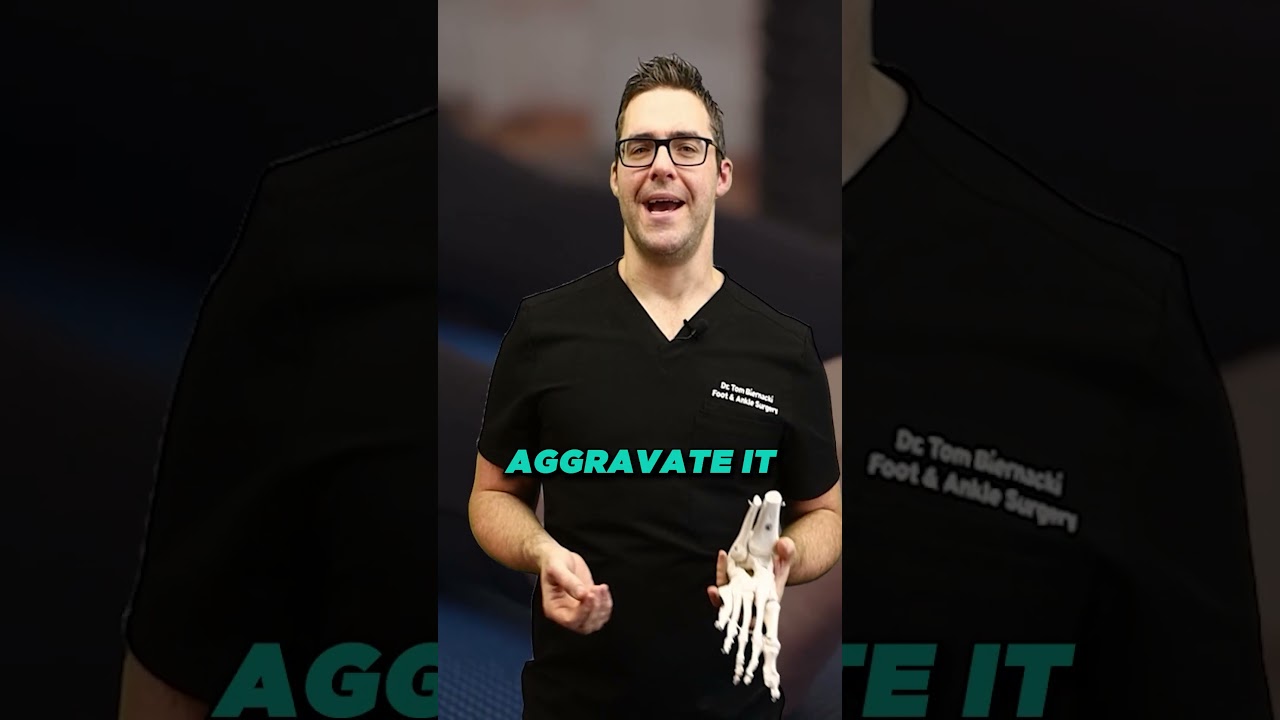
▶ Watch

Medically Reviewed by Dr. Tom Biernacki, DPM — Board-Certified Podiatrist, Balance Foot & Ankle Specialists, Michigan. Last updated April 2026.
Ankle fractures — ranging from isolated fibular avulsion fractures to complex bimalleolar and trimalleolar fracture-dislocations — are among the most common lower extremity fractures in adults. Appropriate management requires distinguishing stable from unstable fracture patterns: stable fractures heal predictably with cast immobilization, while unstable fractures require surgical fixation to restore the anatomic mortise alignment essential for long-term ankle function.
Anatomy and Fracture Classification
The ankle mortise is a three-sided bony ring formed by the distal tibia (medial malleolus and tibial plafond), fibula (lateral malleolus), and distal tibiofibular syndesmosis. Disruption of any two sides of this ring creates instability requiring fixation. The Danis-Weber classification (Types A, B, C) describes fracture location relative to the syndesmosis: Weber A fractures (below the syndesmosis) are typically stable; Weber B fractures (at the syndesmosis level, the most common type) may be stable or unstable; Weber C fractures (above the syndesmosis) always involve syndesmotic disruption and require fixation. The Lauge-Hansen classification provides mechanistic information guiding ligamentous injury assessment.
Stability Assessment: The Key Decision
Mortise stability — not fracture pattern alone — determines the need for surgery. Isolated lateral malleolus fractures with intact medial structures (no medial ankle tenderness, no medial clear space widening on stress radiographs) are stable in 80–90% of cases and treated successfully with cast or walking boot immobilization. Stress radiographs (gravity stress or manual stress) under local anesthetic distinguish stable from unstable lateral malleolus fractures by detecting medial clear space widening indicating deltoid ligament insufficiency. Any fracture with frank displacement, medial involvement, syndesmotic disruption, or posterior malleolus fracture >25% of the articular surface requires fixation.
Surgical Fixation Techniques
Fibula fracture fixation uses lateral plating (standard anatomic distal fibula plates) or intramedullary nail for osteoporotic bone. Medial malleolus fixation uses parallel screws or tension band wiring. Posterior malleolus fixation (percutaneous screws or posterior plate) is indicated for fragments >25–33% of the articular surface or those with articular step-off >2mm. Syndesmotic disruption requires stabilization with transyndesmotic screws (removed at 8–12 weeks) or suture button devices. Anatomic mortise reduction confirmed by intraoperative fluoroscopy is the critical determinant of long-term outcome.
Conservative Management Protocol
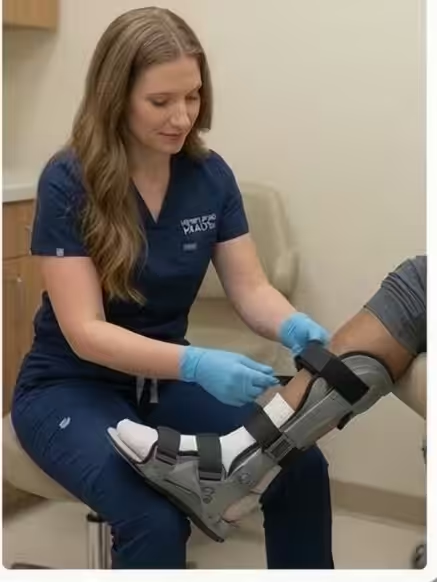
Stable lateral malleolus fractures are treated in a non-weight-bearing cast for 2–4 weeks, transitioning to a walking boot at 4–6 weeks with progressive weight bearing. Serial radiographs at 1, 2, and 6 weeks confirm maintenance of anatomic alignment. Displaced or unstable fractures diagnosed at delayed follow-up may still be amenable to anatomic reduction and fixation within 10–14 days of injury before soft tissue compromise from swelling precludes primary closure.
Ankle Fracture Evaluation at Balance Foot & Ankle
Dr. Biernacki at Balance Foot & Ankle evaluates ankle fractures with on-site weight-bearing and stress radiographs, providing definitive stability assessment and surgical versus conservative management recommendation at the first visit. Fracture fixation and post-operative management are performed within the practice. Call (810) 206-1402 immediately for evaluation of ankle injuries — early accurate diagnosis matters.
Ankle Fracture Evaluation — Balance Foot & Ankle
Serving Southeast Michigan from our Bloomfield Hills and Howell offices.
📞 (810) 206-1402 |
📧 Get Dr. Tom’s Free Lab Test Guide
Discover the 5 lab tests every person over 35 should ask their doctor about — explained in plain English by a board-certified physician.
📍 Located in Michigan?
Our board-certified podiatrists treat this condition at two convenient locations. Same-day appointments often available.
Insurance Accepted
BCBS · Medicare · Aetna · Cigna · United Healthcare · HAP · Priority Health · Humana · View All →
Howell Office
4330 E Grand River Ave
Howell, MI 48843
Get Directions →
Bloomfield Hills Office
43494 Woodward Ave, #208
Bloomfield Hills, MI 48302
Get Directions →
Your Board-Certified Podiatrists



Ready to Get Back on Your Feet?
Same-week appointments available at both locations.
Book Your AppointmentMore Podiatrist-Recommended Foot Health Essentials
Hoka Clifton 10


Max-cushion everyday shoe — podiatrist favorite for walking and running.

OOFOS Recovery Slide

Impact-absorbing recovery sandal — wear after long days on your feet.
As an Amazon Associate, Balance Foot & Ankle earns from qualifying purchases. Product recommendations are based on clinical experience; prices and availability shown above update live from Amazon.
When to See a Podiatrist
If foot or ankle pain has been bothering you for more than a few weeks, home care alone may not be enough. Balance Foot & Ankle offers same-week appointments at our Howell and Bloomfield Hills clinics — no referral needed in most cases. Bring your current shoes and a short list of symptoms and we’ll build you a treatment plan in one visit.
Call Balance Foot & Ankle: (810) 206-1402 · Book online · Offices in Howell & Bloomfield Hills
Watch: Dr. Tom explains
Podiatrist-recommended products
As an Amazon Associate, Dr. Tom earns from qualifying purchases.
Supportive insole for boot-to-shoe transition.
View on Amazon →Ankle stability during return to weight-bearing.
View on Amazon →Post-op swelling control.
View on Amazon →Topical relief during rehab.
View on Amazon →Related resources
Ready to solve this? Book today.
Same-week appointments · Howell & Bloomfield Hills · 4.9★ (1,123+ reviews)
☎ (810) 206-1402Book Online →In-Office Treatment at Balance Foot & Ankle
When conservative care isn’t enough, Dr. Tom Biernacki and the team at Balance Foot & Ankle offer advanced, same-day options — including Foot & Ankle Fracture Repair Michigan at our Howell and Bloomfield Hills clinics.
Same-day appointments available. Call (810) 206-1402 or book online.
Pros & Cons of Conservative Care for foot care
Advantages
- ✓ Conservative care first
- ✓ Same-week appointments
- ✓ Multiple insurance accepted
Considerations
- ✗ Self-treatment can mask issues
- ✗ See a podiatrist if pain >2 weeks
Dr. Tom’s Recommended Products for foot care
Affiliate disclosure: As an Amazon Associate, Balance Foot & Ankle earns from qualifying purchases. We only recommend products we use with patients.
Footnanny Heel Cream Dr. Tom’s Pick
Best for: Daily moisturizer for cracked heels
Ready to Get Back on Your Feet?
Same-day appointments in Howell + Bloomfield Hills. Most insurance accepted. Dr. Tom Biernacki, DPM & team.
Book Today — Same-Day Appointments Available
Call Now: (810) 206-1402
About Your Care Team at Balance Foot & Ankle
Dr. Tom Biernacki, DPM · Board-Certified Foot & Ankle Surgeon. Specializes in conservative-first care, minimally invasive bunion surgery, and complex reconstruction.
Dr. Carl Jay, DPM · Accepting new patients. Specializes in sports medicine, athletic injuries, and routine podiatric care.
Dr. Daria Gutkin, DPM, AACFAS · Accepting new patients. Specializes in surgical reconstruction and pediatric podiatry.
Locations: 4330 E Grand River Ave, Howell, MI 48843 · 43494 Woodward Ave Suite 208, Bloomfield Hills, MI 48302
Hours: Mon–Fri 8:00 AM – 5:00 PM · (810) 206-1402
What is Stress fracture?
Stress fracture is a common foot/ankle condition that affects mobility and quality of life. Understanding the underlying cause is the first step in successful treatment. Our podiatrists at Balance Foot & Ankle perform a hands-on biomechanical exam, review your activity history, and use diagnostic imaging when appropriate to identify the root cause—not just treat the symptom. Many patients have been told to “rest and ice” without a deeper diagnostic workup; our approach is different.
Symptoms and warning signs
Common signs of stress fracture include pain that worsens with activity, morning stiffness, swelling, tenderness when palpated, and difficulty bearing weight. If you experience sudden severe pain, inability to walk, visible deformity, numbness or color change, contact our office the same day or visit urgent care—these can signal a more serious injury such as a fracture, tendon rupture, or vascular compromise. Diabetics with any foot wound should seek same-day care.
Conservative treatment options
Most cases of stress fracture respond to non-surgical care: structured rest, supportive footwear changes, custom orthotics, targeted stretching and strengthening protocols, anti-inflammatory medications when medically appropriate, and in-office procedures such as ultrasound-guided injections. We also offer advanced therapies including MLS laser therapy, EPAT/shockwave, regenerative injections, and image-guided procedures. Treatment is sequenced from least invasive to most invasive, and we explain the rationale at every step.
When is surgery considered?
Surgery is reserved for cases that fail 3-6 months of well-structured conservative care, when there is structural pathology (severe deformity, complete tear, advanced arthritis), or when imaging shows damage that will not heal without intervention. Our surgeons have performed 3,000+ foot and ankle procedures and prioritize minimally-invasive techniques whenever appropriate. We discuss recovery timelines, return-to-activity milestones, and realistic outcome expectations before any procedure is scheduled.
Recovery timeline and prevention
Recovery from stress fracture varies based on severity and chosen treatment path. Conservative cases often improve within 4-8 weeks with consistent adherence to the protocol. Post-procedural recovery may range from a few days (in-office procedures) to several months (reconstructive surgery). Long-term prevention involves footwear assessment, activity modification, structured strengthening, and regular check-ins with your podiatrist if you have a history of recurrence. We provide written home-exercise plans and digital follow-up support.
Ready to feel better?
Same-week appointments available in Howell and Bloomfield Hills, Michigan.
Book Your VisitIn-Office Treatment at Balance Foot & Ankle
If home treatment isn’t providing relief for your foot and ankle injuries, our podiatry team at Balance Foot & Ankle can help with same-day evaluations and advanced in-office care.
Same-day appointments available. (810) 206-1402
Ready for Expert Care?
Same-day appointments in Howell & Bloomfield Hills, MI.
4.9★ | 1,123 Reviews | 3,000+ Surgeries
Or call: (810) 206-1402

Dr. Tom Biernacki, DPM is a board-certified foot & ankle surgeon (ABFAS & ABPM) at Balance Foot & Ankle Specialists in Southeast Michigan. With over a decade of clinical experience, he specializes in heel pain, bunions, diabetic foot care, sports injuries, and minimally invasive surgery. Dr. Biernacki is a member of the APMA and ACFAS, and his patient education content on MichiganFootDoctors.com and YouTube has made him one of the most-followed foot & ankle educators on YouTube.