


Achilles tendinopathy is wear-and-tear damage in the tendon rather than short-term inflammation, so rest alone rarely fixes it. A 12-week progressive strengthening program (eccentric heel drops or heavy slow calf raises), a heel lift and smarter training load help most people improve 60–80% within 12 weeks; pain right at the heel bone (insertional) needs a modified program, and a sudden pop needs urgent care. To book at our Howell or Bloomfield Township offices, call (810) 206-1402.
Watch: Achilles Tendonitis & Back of Heel Pain [BEST Home Treatments 2024!] — MichiganFootDoctors YouTube
Quick Answer: Achilles tendinopathy is degeneration of the Achilles tendon — not acute inflammation — caused by cumulative tensile overload that outpaces the tendon’s repair capacity. The gold-standard treatment is a 12-week progressive eccentric or heavy slow resistance (HSR) loading program, often combined with a heel lift, load management, and shockwave therapy for recalcitrant cases. Most patients improve 60–80% within 12 weeks with a structured protocol. Surgery is reserved for complete tears or failed 6-month conservative care. Call (810) 206-1402 for a appointment at Balance Foot & Ankle — Howell or Bloomfield Township.
Ready to be seen? Book a real appointment time online, 24/7 — Howell or Bloomfield Township. Takes about a minute, 24/7.
What Is Achilles Tendinopathy? Pathophysiology Explained
Achilles tendinopathy is a degenerative condition of the Achilles tendon, not an inflammatory one — despite the outdated term “tendonitis” still in wide use. Histopathological studies of painful Achilles tendons consistently show a characteristic pattern: disorganized type III collagen replacing normal type I collagen, increased tenocyte apoptosis, mucoid ground substance deposition, neovascularization with accompanying nociceptive nerve ingrowth, and a conspicuous absence of classic inflammatory cells (neutrophils, macrophages). This degenerative process is termed angiofibroblastic tendinosis.
The mechanism: The Achilles tendon transmits forces equivalent to 6–8x body weight during running and 3–4x body weight during walking. These repetitive tensile loads must be balanced by the tendon’s repair and remodeling capacity. When loading chronically exceeds recovery — due to overtraining, biomechanical dysfunction, inadequate footwear, or intrinsic tendon vulnerability — the degenerative cascade begins. The critical point: once the collagen matrix is disorganized, it loses tensile strength and becomes mechanically inferior, making it vulnerable to further breakdown and eventual partial or complete rupture.
The condition affects approximately 11–23% of runners and is responsible for up to 9% of all sports-related injuries seen by podiatrists. Sedentary individuals are not immune — Achilles tendinopathy occurs in a bimodal pattern, affecting both active athletes and overweight, less-active middle-aged patients whose tendons are chronically underloaded and stiff. The distinction matters for treatment planning.
Anatomy and Classification: Insertional vs. Mid-Portion Tendinopathy
The precise location of Achilles tendinopathy determines the entire treatment approach — which is why blanket “rest and stretch” advice fails so often. Two anatomically and mechanically distinct zones are affected:
- Mid-Portion Tendinopathy (2–7 cm above the calcaneal insertion): The most common location, accounting for ~55% of Achilles tendinopathy presentations. This zone has the poorest intrinsic blood supply and the highest tensile stress during push-off. Clinically: a spindle-shaped thickening or nodule is palpable along the tendon body. The Alfredson eccentric loading protocol was specifically designed for this location and achieves 70–90% success. Cortisone injection into the tendon substance at this location is contraindicated — it dramatically increases rupture risk.
- Insertional Tendinopathy (at the calcaneal attachment): Accounts for ~45% of presentations. Pain is at the back of the heel directly at the bone-tendon junction, often associated with a Haglund’s deformity (a posterosuperior calcaneal bony prominence that mechanically impinges the tendon during dorsiflexion) and/or retrocalcaneal bursitis (inflammation of the bursa between the tendon and calcaneus). Treatment differs significantly: eccentric drops over a step edge AGGRAVATE insertional pain due to compressive forces at the insertion — instead, heavy slow resistance on flat ground is used. Shoe heel counters must be padded or modified to eliminate the bony bump irritation.
Who Gets Achilles Tendinopathy? Risk Factors
Achilles tendinopathy is not caused by a single trauma — it develops through cumulative overload in the presence of one or more risk factors:
- Training load errors: Sudden mileage increases (>10% per week), adding speed work or hill training, transitioning to minimalist footwear, or returning from injury too quickly. The most modifiable and most common cause in runners.
- Gastroc-soleus tightness (equinus): Limited ankle dorsiflexion forces the Achilles to absorb load at a mechanical disadvantage, dramatically increasing tensile stress per step. Every degree of dorsiflexion deficit correlates with increased Achilles load.
- Overpronation / pes planus: Excessive subtalar eversion during push-off creates a “whipping” stress on the medial Achilles fibers, contributing to asymmetric degeneration and increased risk of medial longitudinal tear.
- Fluoroquinolone antibiotic use: Ciprofloxacin, levofloxacin, and moxifloxacin carry an FDA black box warning for tendinopathy and rupture — they inhibit tenocyte matrix metalloproteinase activity and collagen synthesis. Risk is 3–4x higher in patients over 60 and concurrent steroid users.
- Systemic disease: Type 2 diabetes, hyperlipidemia, and gout all increase Achilles tendinopathy risk through tendon glycation (diabetes), lipid deposition (hyperlipidemia), and urate crystal deposition (gout). These patients often present with bilateral involvement.
- Male sex and age 30–50: Men develop Achilles tendinopathy 2–3x more frequently than women. Peak incidence is in recreational athletes aged 35–50 — “weekend warrior” physiology with high sport demand on undertrained tendons.
- Corticosteroid use: Systemic or repeated local steroid exposure reduces tendon mechanical strength and increases collagen degradation. Injecting cortisone into the Achilles tendon body is associated with a significantly elevated rupture rate.
Symptoms of Achilles Tendinopathy — Clinical Presentation
The classic presentation of Achilles tendinopathy follows a predictable pattern that distinguishes it from acute rupture and other posterior heel conditions. Symptoms develop gradually over weeks to months, not suddenly:
- Morning stiffness and pain: The Achilles is painful and stiff with the first steps out of bed — improves after 5–10 minutes of walking (similar to plantar fasciitis, but localized to the back of the heel/tendon, not the bottom).
- Activity-related pain progression: Pain often warms up during the first 5–10 minutes of a run, then returns as activity continues. Post-activity soreness and stiffness lasting 24–48 hours is characteristic.
- Palpable tendon thickening or nodule: Mid-portion tendinopathy produces a fusiform swelling in the tendon body, 2–6 cm above the heel. Insertional tendinopathy causes pain and swelling directly at the heel bone’s posterior border, sometimes with visible bump (Haglund’s deformity).
- Pain with rapid load increases: Jumping, sprinting, or stair climbing dramatically increase symptoms. Pain that suddenly worsens during a run — especially with a snap or pop — requires urgent evaluation to exclude partial or complete rupture.
How We Diagnose Achilles Tendinopathy at Balance Foot & Ankle
Diagnosis begins with a structured clinical examination: precise palpation of the tendon for location and extent of tenderness (insertion vs. mid-portion vs. myotendinous junction), the Royal London Hospital Test (palpating the tendon’s point of maximum tenderness at rest, then again during active dorsiflexion — pain relief with active movement strongly suggests tendinopathy vs. bursitis), Silfverskiöld test for gastrocnemius-specific vs. gastrosoleus equinus, single-leg heel raise test for strength and endurance (inability to complete 25 single-leg heel raises = significant strength deficit), and Thompson squeeze test to rule out complete Achilles rupture (squeezing the calf produces no foot plantarflexion when the tendon is completely torn).
Diagnostic ultrasound in-office provides real-time visualization of the tendon structure: normal Achilles thickness is 4–6 mm; tendinopathy is indicated at 7–12+ mm with loss of normal fibrillar echotexture and hypoechoic (dark) zones representing degeneration. Power Doppler imaging detects neovascularity — abundant new blood vessel ingrowth accompanies nociceptive nerve fibers and correlates with tendon pain severity. Ultrasound also identifies retrocalcaneal bursitis, Haglund’s deformity impingement, and partial tears, all of which alter the treatment plan. We perform ultrasound-guided injections when indicated, ensuring precise delivery of PRP or anesthetic directly to the affected zone.
MRI is used when surgical planning is required, when ultrasound findings are ambiguous, or when partial tear extent needs precise characterization (>50% cross-sectional area involvement changes management from conservative loading to surgical repair consideration). Weight-bearing CT can evaluate Haglund’s deformity geometry and calcaneal morphology for surgical planning in insertional cases.
Achilles Tendinopathy vs. Similar Conditions — Differential Diagnosis
Posterior heel pain has multiple causes that require different treatment — accurate diagnosis before starting a loading program is essential:
- Complete Achilles Rupture: Sudden onset during explosive activity, palpable gap in the tendon, positive Thompson test (no plantarflexion with calf squeeze), difficulty walking. Requires immediate surgical consultation — non-operative management leads to significantly worse functional outcomes in active patients. Never begin an eccentric loading program on an unexamined “Achilles tendinopathy” without ruling out rupture first.
- Retrocalcaneal Bursitis: Inflammation of the bursa between the Achilles tendon and the calcaneus, causing pain and swelling medial and lateral to the Achilles at its insertion. Often coexists with insertional tendinopathy and Haglund’s deformity. Distinguishing feature: pain worsens specifically with shoe heel counter pressure and improves with open-back footwear. Responds to ultrasound-guided bursal injection (corticosteroid is appropriate in the bursa, not in the tendon).
- Os Trigonum Syndrome: An accessory bone posterior to the talus that can become impinged during plantarflexion, causing posterior ankle pain that mimics Achilles insertion pain. Common in dancers and soccer players. Pain worsens with forced plantarflexion (equinus position). Confirmed by X-ray (lateral view) and bone scan/MRI for activity-related inflammation. Requires different management (local injection, activity modification, or surgical excision).
- Flexor Hallucis Longus (FHL) Tendinopathy: The FHL tendon passes immediately deep to the Achilles behind the medial ankle. Pain at the posteromedial heel, worsened by big toe motion (resisted great toe flexion reproduces pain), and sometimes with a triggering or snapping sensation during walking. Common in ballet dancers. Requires targeted FHL rehabilitation, not Achilles loading protocol.
- Calcaneal Stress Fracture: Lateral heel compression test (squeezing the calcaneus side-to-side reproduces sharp pain) distinguishes this from soft tissue Achilles pathology. Risk factors: sudden mileage increases, osteoporosis, female athletes (relative energy deficiency), runners on hard surfaces. X-rays are negative for 2–3 weeks; bone scan or MRI confirms. Requires non-weight-bearing cast — eccentric loading is absolutely contraindicated.
Evidence-Based Treatment Protocol for Achilles Tendinopathy
Phase 1 — Load Management and Pain Control (Weeks 1–4)
The initial phase is not complete rest — it is relative load management. Reduce running volume by 40–50%, eliminate hill running and speed work, shift to softer surfaces (grass, track, treadmill vs. asphalt), and temporarily add a 12–15mm heel lift in both shoes to reduce tensile load at the Achilles insertion. Heel lifts should be used in both shoes to prevent leg length inequality. NSAIDs (ibuprofen, naproxen) may reduce acute pain symptoms in the first 2 weeks but do not alter the underlying degenerative process and should not be relied upon beyond that. Ice after activity (15 minutes) remains a safe adjunct for symptom management.
Footwear assessment is critical at this stage. Worn-out running shoes lose up to 40% of their shock-absorbing capacity before visible wear appears. We recommend maximum-cushion, stable shoes (Hoka Clifton/Bondi, Brooks Adrenaline GTS, New Balance 860) and pad or replace shoe heel counters that cause insertional impingement. Open-back clogs or sandals during daily activities reduce Achilles load between training sessions.
Phase 2 — Progressive Tendon Loading (Weeks 4–12)
The foundation of Achilles tendinopathy treatment. The Alfredson Eccentric Protocol for mid-portion tendinopathy: standing calf raise (concentric) on both legs, lower slowly on the affected leg alone (eccentric) — 3 sets of 15 reps, twice daily, 7 days/week. Perform knee straight (gastrocnemius-dominant) AND knee bent (soleus-dominant) variations. Load through mild-to-moderate pain (3–5/10). Add progressive load (weighted vest or backpack) once 3×15 is pain-free. Duration: 12 weeks minimum.
The Heavy Slow Resistance (HSR) protocol produces equivalent outcomes with better compliance and is now our preferred recommendation: leg press calf raises or machine calf raises at 70–85% of 1RM, 4 sets of 6–15 reps, 3 times per week with rest days between. The slower movement speed (3 seconds concentric, 3 seconds eccentric) promotes superior collagen remodeling compared to ballistic loading. This protocol is preferable for insertional tendinopathy (no step-edge drop required) and for patients who find the Alfredson protocol produces excessive pain.
Phase 3 — Advanced In-Office Treatments (Refractory Cases, 3+ Months)
Extracorporeal Shockwave Therapy (ESWT/EPAT) is the most evidence-supported advanced intervention for Achilles tendinopathy. FDA-cleared. Mechanism: acoustic pressure waves stimulate neovascularization, inhibit pain nociceptors (substance P depletion), and promote collagen remodeling in the degenerative zone. Protocol: 3–5 weekly sessions of 2,000 pulses at 0.12–0.25 mJ/mm². Randomized controlled trials show 60–80% of patients who failed 12 weeks of eccentric loading achieve meaningful improvement with shockwave. We use ultrasound guidance to target the precise degenerative zone.
PRP (Platelet-Rich Plasma) Injection is performed under ultrasound guidance, delivering concentrated growth factors (PDGF, TGF-β, VEGF, IGF-1 at 5–7x normal serum concentration) directly into the degenerative zone. Current evidence: superiority over saline injection and over cortisone for Achilles tendinopathy at 6-month follow-up. PRP is our preferred injection option over cortisone for mid-portion tendinopathy, as cortisone injection into the tendon body carries a documented rupture risk and has shown inferior long-term outcomes in randomized trials.
Cortisone injection remains appropriate for retrocalcaneal bursitis (injected into the bursa, not the tendon), providing rapid pain relief that allows initiation of the loading protocol. It is contraindicated in the tendon body at mid-portion due to rupture risk. One well-placed ultrasound-guided bursal injection can provide 3–6 months of significant pain reduction in insertional cases with bursitis.
MLS Laser Therapy is used as an adjunct for acute pain flares and post-exercise inflammation control. The Class IV dual-wavelength system reduces local nociceptor sensitization and accelerates mitochondrial repair processes. Not a stand-alone treatment for Achilles tendinopathy, but effective as an adjunct that allows faster loading progression.
Phase 4 — Surgical Management (Failed 6+ Months Conservative Care)
Surgery is reserved for cases with confirmed structural degeneration (>50% cross-sectional area on ultrasound or MRI) that have failed well-structured conservative care for 6 or more months. Surgical options depend on location and severity: percutaneous longitudinal tenotomy (multiple stab incisions through the degenerate zone under local anesthesia — stimulates healing response with minimal trauma, 85% success at 1 year in selected cases); open debridement and tenoplasty (excision of the degenerative core with core repair — used for extensive mid-portion degeneration); and Haglund’s deformity resection with retrocalcaneal decompression for insertional cases with impinging bony prominence. Complete Achilles ruptures in active patients are most often repaired surgically within 72 hours of injury for optimal functional outcomes.
Achilles Tendinopathy Recovery Kit
Achilles tendinopathy responds to load reduction + eccentric loading + calf release — the three pillars of every evidence-based home protocol. These six items, in the order we prescribe them at Balance Foot & Ankle:

Promifun Adjustable Heel Lifts
★★★★★ 4.6 · 8,221 ratings
The single most underrated home product for Achilles tendinopathy. A 1/4-inch lift reduces functional dorsiflexion and directly offloads strain at the calcaneal insertion. Adjustable layered design lets you start at full height and wean down as the tendon remodels.
Check Amazon Price →
StrongTek Professional Wooden Slant Board
★★★★★ 4.8 · 1,613 ratings
The eccentric-loading surface required for the Alfredson protocol — 3 sets of 15 controlled-lowering heel drops, twice a day, 12 weeks. Tier-1 evidence for non-insertional Achilles tendinopathy. A stable angled board lets you target the soleus (bent knee) and gastrocnemius (straight knee) separately.
Check Amazon Price →
Hoka Men’s Bondi 9
★★★★★ 4.6 · 1,858 ratings
Max-stack supercritical-EVA midsole with a 12mm heel-to-toe drop — the drop attenuates functional dorsiflexion all day, and the meta-rocker reduces the forefoot lever-arm load on the Achilles at push-off. Our canonical all-day Rx shoe for active Achilles tendinopathy.
Check Amazon Price →
Rymora Calf Compression Sleeves
★★★★★ 4.6 · 23,959 ratings
Graduated calf compression for the active-phase tendinopathy patient — reduces interstitial edema around the tendon, improves proprioception during loading, and keeps the gastroc-soleus warm before eccentric work. Wear during walking, training, and standing shifts.
Check Amazon Price →
TriggerPoint GRID Foam Roller (13″)
★★★★★ 4.7 · 18,868 ratings
A tight gastrocnemius-soleus transmits load straight to the Achilles — calf release is half the home AT protocol. Two minutes per leg before bed, every night, with the knee straight (gastroc) and bent (soleus). Multi-density surface mimics a manual therapist’s hands.
Check Amazon Price →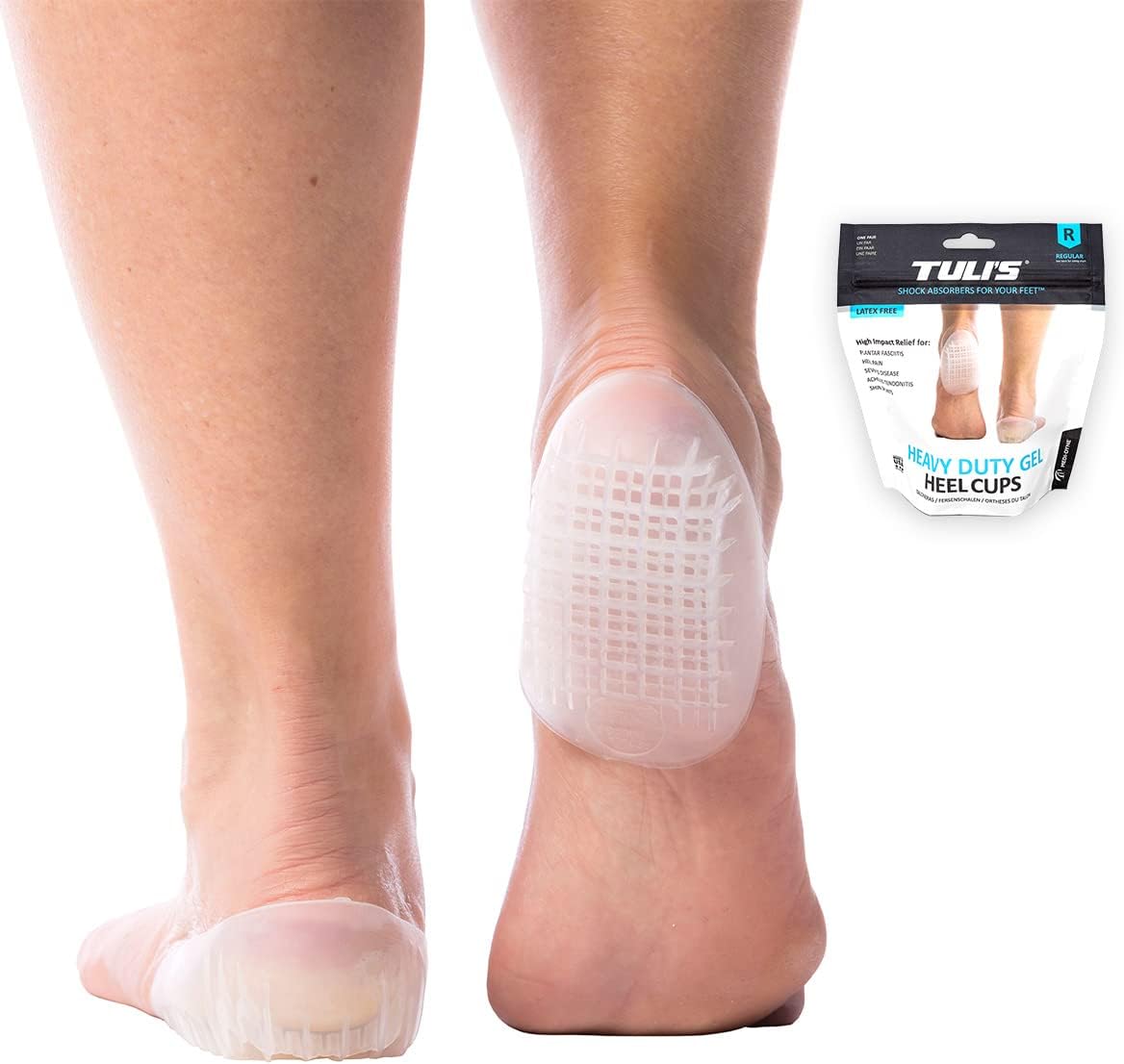
Tuli’s Heavy Duty Gel Heel Cups
★★★★☆ 4.1 · 12,011 ratings
Shock absorption under the calcaneus blunts heel-strike impact that gets transmitted up the Achilles. Layered with the Promifun lift, this is the cheapest two-product home offload you can build in 48 hours – the test we run before escalating to bracing or shockwave.
Check Amazon Price →Affiliate disclosure: Amazon links are affiliate links — we earn a small commission if you buy through them. We only recommend products we actually prescribe to patients at Balance Foot & Ankle.
Related from Balance Foot & Ankle
Most Common Treatment Mistakes
- Getting a cortisone injection into the tendon body: Cortisone temporarily reduces pain but weakens the degenerated collagen matrix — patients often feel dramatically better for 6–8 weeks, then suffer a partial or complete rupture during the return to activity. Cortisone is appropriate for the bursa; it is dangerous in the mid-portion tendon substance.
- Performing eccentric drops over a step for insertional tendinopathy: The compressive forces at the insertion during the lowered position aggravate Haglund’s impingement and insertional degeneration. Using the standard Alfredson protocol without distinguishing location is one of the most common errors in Achilles management — and explains why many patients report that “the exercises made it worse.”
- Returning to full training after symptom resolution without graduated progression: The tendon remodels and gains strength slowly over 3–6 months — pain relief does not equal structural recovery. Returning to full training load immediately after a pain-free week is the leading cause of Achilles re-injury and progression to rupture.
Red Flags — When to Seek Immediate Evaluation
Do not wait — call or come in same day if you experience any of the following:
- A sudden “pop” or snap at the back of the heel during activity: Classic complete Achilles rupture presentation. Inability to push off or rise onto tiptoe. Thompson test positive. Go to urgent care or call us immediately — surgical repair within 72 hours optimizes outcomes.
- A palpable gap or defect in the tendon 2–6 cm above the heel: Strongly suggests complete or near-complete rupture. Do not apply the eccentric loading protocol. Requires urgent imaging and orthopedic or podiatric surgical evaluation.
- Rapid onset severe swelling, bruising, and inability to bear weight: May represent partial rupture (which can still require surgical management depending on extent) vs. complete rupture. Differentiation requires ultrasound or MRI.
- Tendon pain in a patient currently taking fluoroquinolone antibiotics (ciprofloxacin, levofloxacin, moxifloxacin): Stop all Achilles loading activity immediately and contact your prescribing physician — these drugs carry an FDA black-box warning for tendinopathy and rupture, with risk magnified in older patients and concurrent corticosteroid users.
- Pain that does not follow the activity-related pattern — pain at rest, nighttime pain, or pain that is progressive despite rest: May indicate tendon tumor (lipoma arborescens, synovial sarcoma — rare but real), septic tenosynovitis, or seronegative inflammatory arthropathy. Requires urgent workup.
Call (810) 206-1402 for same-day urgent evaluation at our Howell or Bloomfield Township offices.
In-Office Treatment at Balance Foot & Ankle
At Balance Foot & Ankle, Dr. Tom Biernacki (DPM, FACFAS, 3,000+ surgeries) provides comprehensive Achilles tendinopathy evaluation and management at our Howell and Bloomfield Township offices. Every patient receives in-office diagnostic ultrasound, a written and illustrated loading protocol matched to their specific location (insertional vs. mid-portion), footwear analysis and recommendations, and a structured return-to-activity timeline. Advanced in-office options include EPAT shockwave therapy, MLS Class IV laser, PRP injection under ultrasound guidance, and surgical consultation with Dr. Biernacki when conservative care is exhausted. Most diagnostic services and conservative treatments are covered by major insurance plans including Medicare, BCBS, Aetna, Cigna, UHC, HAP, and Priority Health.
In-Office Treatment at Balance Foot & Ankle
If home treatment isn’t providing relief for your Achilles tendon pain, our podiatry team at Balance Foot & Ankle can help with expert evaluations and advanced in-office care.
Book online 24/7. (810) 206-1402
VitaMedica Arnica Gel
Arnica gel plus 15 plant compounds for sore feet, plantar fasciitis flares and post-activity soreness. Apply a thin layer to the sore area.
Shop VitaMedica Arnica Gel →Frequently Asked Questions — Achilles Tendinopathy Michigan
How long does Achilles tendinopathy take to heal?
Mid-portion tendinopathy with a structured 12-week eccentric or HSR loading program: 60–80% improvement within 12 weeks, with full functional recovery typically at 3–6 months. Insertional tendinopathy heals more slowly — expect 4–8 months with optimal protocol. Chronic tendinopathy (>12 months duration, failed prior treatment) may take 6–12+ months. The most important factor: starting the correct, evidence-based loading protocol early and maintaining compliance. Patients who start treatment within 3 months of symptom onset have dramatically better and faster outcomes than those who wait.
Should I keep running with Achilles tendinopathy?
Complete rest consistently delays recovery. Relative load management — not rest — is the correct approach. Reduce running volume 40–50%, eliminate hills and speed work, run on softer surfaces, and apply the loading protocol concurrently. Monitor pain during and after runs: up to 3/10 pain during running is acceptable; pain above 5/10 or pain that takes >24 hours to settle indicates excessive loading. We provide a specific, graduated return-to-running protocol at every Achilles evaluation visit, tailored to your current fitness level and tendon condition on ultrasound.
Does a heel lift help Achilles tendinopathy?
Yes — a 12–15mm heel lift in both shoes reduces tensile load at the Achilles insertion by approximately 15–20%, providing meaningful pain relief during the early treatment phase. Use in both shoes to prevent iatrogenic leg length asymmetry. Wean gradually over 3–4 months as tendon strength and flexibility improve with the loading protocol — long-term dependence without rehabilitation perpetuates the underlying equinus and load vulnerability. Custom orthotics are indicated for patients with structural pronation or leg length discrepancy contributing to asymmetric Achilles loading.
What is the difference between Achilles tendinopathy and tendonitis?
“Tendonitis” implies acute inflammation — but research since the 1990s has definitively shown that chronic Achilles pain is tendon degeneration (tendinosis), not inflammation. Painful tendon biopsies show disorganized collagen, neovascularization, and mucoid matrix changes with no inflammatory cells. This distinction has major treatment implications: cortisone (anti-inflammatory) has limited long-term benefit and carries rupture risk; progressive loading (pro-regenerative) remodels the degenerated tissue. “Tendinopathy” is the accurate term that encompasses all stages from early reactive tendon change through frank collagen degeneration.
Does insurance cover Achilles tendinopathy treatment in Michigan?
Yes — clinical evaluation, diagnostic ultrasound, X-rays, and most conservative treatments are covered by Medicare, BCBS, Aetna, Cigna, UHC, HAP, and Priority Health. Custom orthotics are covered for qualifying structural diagnoses. Shockwave therapy (EPAT) has variable coverage by plan. PRP injections are typically self-pay. We verify your benefits before your first appointment — call (810) 206-1402.
Get Your Achilles Evaluated — This Week
Dr. Tom Biernacki, DPM, FACFAS • Howell & Bloomfield Township • 4.9★ 1,200+ reviews • Most insurance accepted.
Howell: 4330 E Grand River Ave · Bloomfield Township: 43494 Woodward Ave #208
Get Expert Care at Balance Foot & Ankle
Appointments at our Howell and Bloomfield Township offices. Board-certified podiatric surgeons. Most insurance accepted.
Appointments in Howell & Bloomfield Township
Three board-certified podiatric surgeons. 1,200+ five-star reviews. Most insurance accepted.
Related: a runner’s guide to Achilles tendinitis in runners.
Need Achilles tendonitis treatment near you? Balance Foot & Ankle treats Achilles tendonitis and tendinopathy — with eccentric rehab, shockwave (EPAT) therapy, bracing, and regenerative options — at our Bloomfield Township office (Oakland County) and Howell office (Livingston County). Book online or call (810) 206-1402.
Achilles pain that keeps lingering?
The right rehab plan — and advanced options when needed — resolves most cases. In Michigan? our podiatrists can get you back to activity. Appointments in Howell & Bloomfield Township, most insurance accepted.
📅 Book an Appointment 📞 (810) 206-1402★ 4.9 from 1,200+ Google reviews · Book online 24/7 · We’ll check your insurance benefits before your visit.
Achilles tendinopathy responds to loading, not rest — but the dose has to be right, and it depends on your sport and your training block. See how a sports medicine podiatrist builds and progresses a loading programme around a competitive schedule.

Dr. Tom Biernacki, DPM is a board-certified foot & ankle surgeon (ABFAS & ABPM) at Balance Foot & Ankle Specialists in Southeast Michigan. With over a decade of clinical experience, he specializes in heel pain, bunions, diabetic foot care, sports injuries, and minimally invasive surgery. Dr. Biernacki is a member of the APMA and ACFAS, and his patient education content on MichiganFootDoctors.com and YouTube has made him one of the most-followed foot & ankle educators on YouTube.
More questions patients ask
How long does an ankle sprain take to heal?
Recovery time depends on severity: Grade 1 (mild stretching) typically heals in 1-3 weeks, Grade 2 (partial tear) in 3-6 weeks, and Grade 3 (complete tear) in 6-12 weeks or longer. Proper rehabilitation is critical to prevent chronic ankle instability, which affects up to 40% of patients who don't receive adequate treatment. Dr. Biernacki creates customized recovery plans.
When should I see a doctor for a sprained ankle?
Seek professional evaluation if you can't bear weight, notice significant swelling or bruising, hear a pop at the time of injury, have numbness, or if pain hasn't improved after 5-7 days of RICE treatment. X-rays or MRI may be needed to rule out fractures. Dr. Biernacki sees urgent problems. Call 810-206-1402 and we’ll find the soonest opening.
Can a sprained ankle heal without treatment?
While mild sprains may heal with rest and home care, undiagnosed ligament tears and improperly rehabilitated sprains frequently lead to chronic ankle instability, recurrent sprains, and early-onset arthritis. A proper evaluation ensures appropriate treatment and reduces your risk of long-term complications significantly.
What is the difference between Achilles tendinitis and tendinopathy?
Tendinitis implies acute inflammation; tendinopathy is the more accurate modern term describing a degenerative tendon condition with failed healing response. Most chronic Achilles pain involves tendinopathy — collagen disorganization without significant inflammatory cells — which is why anti-inflammatory medications provide limited benefit and why tendon loading exercises are the primary evidence-based treatment.
What is the best treatment for Achilles tendinopathy?
The 2024 JOSPT midportion Achilles tendinopathy clinical practice guideline confirms that progressive tendon loading exercise is the intervention with the highest evidence level. Contrary to older protocols, current research shows no significant advantage of purely eccentric over concentric loading — what matters is progressive load application. In our clinic, we start with isometric holds, progress to isotonic loading, and add shockwave therapy for cases unresponsive to 12 weeks of loading.
Is PRP effective for Achilles tendinopathy?
Current evidence does not support PRP as first-line treatment. A 2025 systematic review found PRP injection did not provide significant benefit over placebo for Achilles tendinopathy. The 2024 JOSPT guidelines also do not recommend corticosteroid injections due to risk of tendon rupture. In our practice, we reserve PRP for patients who have failed 12+ weeks of loading exercise and shockwave therapy.
When should I see a podiatrist for Achilles pain?
See a podiatrist immediately for sudden sharp Achilles pain (possible rupture), inability to weight-bear, or a palpable gap in the tendon. For chronic stiffness and morning pain that doesn't improve with rest in 4–6 weeks, book an appointment. Balance Foot & Ankle offers same-day evaluation in Howell and Bloomfield Township, MI — call (810) 206-1402.
Still have a question about coverage or cost? Book online and we will check your benefits before your visit: Book in Howell · Book in Bloomfield Township. Prefer to talk it through first? Call (810) 206-1402.