Medically reviewed by Dr. Tom Biernacki, DPM
Board-certified podiatric surgeon | Balance Foot & Ankle
Last reviewed: April 5, 2026
Quick answer: Morton’s neuroma is a benign thickening of the nerve between the 3rd and 4th toes that causes sharp burning pain in the ball of your foot. It’s not a tumor — it’s a nerve enlarged from chronic compression. Wider shoes, a metatarsal pad placed behind the metatarsal heads, and a cortisone injection resolve most cases without surgery.
If you’ve ever felt like you were walking on a burning pebble lodged between your toes — and taking your shoe off brought immediate relief — you’ve likely experienced Morton’s neuroma. It’s one of the most common causes of ball-of-foot pain I see in clinic, and one of the most frequently mismanaged. In this guide, I’ll walk you through exactly what’s happening in your foot, why standard advice often makes it worse, and what actually resolves it.
What Is Morton’s Neuroma?
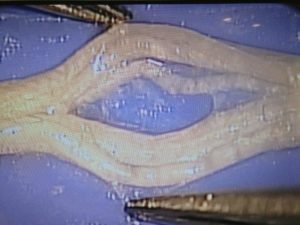
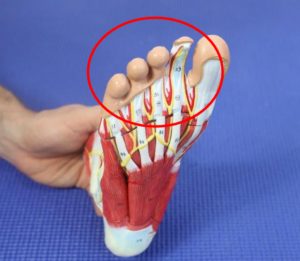
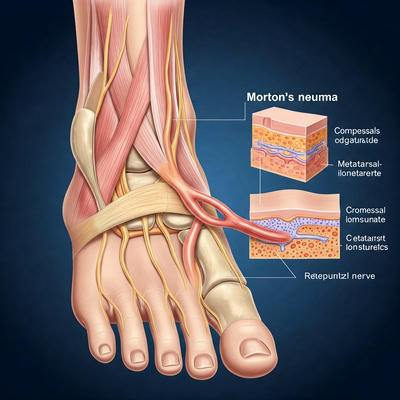
Morton’s neuroma is a benign thickening of the nerve tissue surrounding the common digital plantar nerve — the nerve that runs between your metatarsal bones and branches into your toes. Despite the name, it is not a tumor or true neuroma. What happens is the nerve sheath (perineural fibrosis) thickens in response to repetitive compression between the metatarsal heads, most commonly at the third interspace between the 3rd and 4th toes.
In our clinic, we see this in patients ranging from 45-year-old runners to 60-year-old women who’ve worn narrow-toed heels for decades. What they all share: a nerve that’s been chronically pinched between two bones until it enlarged defensively. Once it’s large enough, it begins pressing against surrounding structures — and that’s when pain begins.
The condition was first described by Philadelphia surgeon Dr. Thomas G. Morton in 1876. The third interspace is involved in approximately 80% of cases. The second interspace accounts for most of the remainder. True first or fourth interspace neuromas are rare and should prompt evaluation for other diagnoses.
Symptoms of Morton’s Neuroma
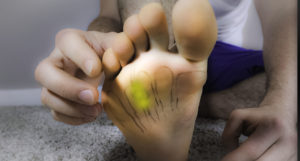
Morton’s neuroma symptoms are distinctive enough that an experienced podiatrist can make a clinical diagnosis before imaging. The hallmark is a sharp, burning, or electric shock pain in the ball of the foot between specific toes — not diffuse forefoot pain across all metatarsal heads. Symptoms typically worsen in tight shoes and improve immediately when you remove your shoe and rub the area.
- Burning or sharp pain between the 3rd and 4th toes (most common) or 2nd and 3rd toes
- Feeling of a pebble or bunched sock under the ball of the foot
- Electric shock sensation that radiates into the affected toes with each step
- Numbness or tingling in the toes (sign of a larger or more established neuroma)
- Immediate relief when removing shoes and rubbing the foot
- Worsening with narrow shoes, high heels, or prolonged standing on hard surfaces
One distinguishing feature: patients often describe feeling something “move” or “click” when they squeeze the ball of the foot — this corresponds to Mulder’s sign, the clinical test we use in the exam room. As the neuroma grows, symptoms become more constant, with pain occurring even in wide shoes or barefoot on hard surfaces.
What Causes Morton’s Neuroma?
Morton’s neuroma develops from chronic nerve compression between the metatarsal heads. Understanding the mechanism matters because it explains why certain patients develop it — and what changes actually stop the cycle. The interdigital nerve sits in a tight space between metatarsal heads with minimal room to spare. Anything that narrows this space or increases forefoot load accelerates nerve thickening over months to years.
- Narrow toe boxes in shoes that compress metatarsal heads together
- High heels shifting body weight forward and increasing forefoot pressure by up to 75%
- Flat feet and overpronation causing abnormal metatarsal motion that compresses the interdigital nerve
- High arches creating a different compression pattern at the metatarsal heads
- Repetitive impact sports including running, tennis, and basketball
- Ballet and dance where en pointe position forces toes into chronic hyperextension
- Metatarsal hypermobility causing excess motion at the 3rd–4th interspace
Women are 8–10 times more likely than men to develop Morton’s neuroma — primarily because women’s footwear creates the exact compressive environment that triggers nerve thickening. This doesn’t mean men are immune; we see it regularly in male runners, especially those who switched to minimalist shoes without gradual transition or who recently increased mileage significantly.
Key takeaway: Morton’s neuroma is a compressive neuropathy — reduce the compression and the nerve can recover. Every treatment strategy, from shoe changes to surgery, aims at the same goal: relieving chronic pressure on the interdigital nerve.
How Is Morton’s Neuroma Diagnosed?
Diagnosis begins with a thorough clinical exam — not imaging. When a patient presents with burning pain between specific toes that disappears when they remove their shoes, the diagnosis is already high on my differential. The physical exam confirms it with Mulder’s sign: I squeeze the metatarsal heads from side to side while pressing upward between them. A palpable click with pain reproduction is pathognomonic for neuroma and requires no further imaging in straightforward cases.
When imaging adds value, here is what we use and why:
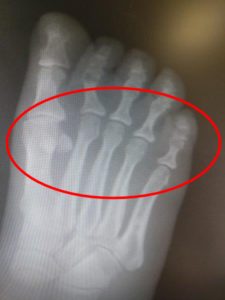
- X-ray (first line in all cases): Rules out metatarsal stress fracture, Freiberg’s disease, and bony pathology. Won’t visualize the neuroma itself, but eliminates critical mimics.
- Diagnostic ultrasound: Can identify neuromas larger than 5mm in real-time. I use ultrasound in-office to confirm diagnosis and guide cortisone injections precisely.
- MRI: Highest sensitivity, reserved for inconclusive ultrasound results or pre-surgical planning. Identifies exact neuroma size, location, and rules out other soft-tissue pathology.
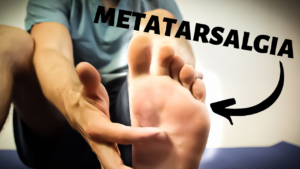
Differential diagnosis — what else could this be? Metatarsalgia causes diffuse aching across all metatarsal heads, not localized burning between specific toes. Capsulitis of the 2nd MTP joint presents as pain under the 2nd toe base without electrical radiation — and a positive drawer test (abnormal toe motion) distinguishes it clinically. Metatarsal stress fracture shows focal point tenderness on the bone shaft, worsens with the bone loading test, and requires a walking boot rather than a pad. Freiberg’s disease (avascular necrosis of a metatarsal head) primarily affects teenagers and is visible on plain X-ray with characteristic flattening of the metatarsal head.
Morton’s Neuroma Treatment Options
Morton’s neuroma treatment follows a stepwise protocol from conservative to interventional: start with footwear modification and OTC support, add in-office procedures if symptoms persist beyond 6–8 weeks, and consider surgery only after genuine conservative failure at 3–6 months. The good news is that most neuromas respond well to conservative management — in our clinic, we avoid surgery in approximately 70–80% of patients who present with an established neuroma.
Step 1: Footwear Modification (Start Immediately)
Switch to shoes with a wide toe box and heel under 1.5 inches today. This single change provides the most reliable short-term relief of any conservative intervention. The toe box must allow toes to spread naturally — many patients discover they’ve been wearing shoes a full size too narrow for years. Brands with consistently wider toe boxes include New Balance (wide widths available), Hoka (natural forefoot spread), Altra (zero-drop, widest toe box in running footwear), and Brooks (wide width options across most models). High heels above 2 inches should be eliminated entirely during recovery.
Step 2: Metatarsal Pad — Placed Correctly
A metatarsal pad is the single most effective OTC intervention for Morton’s neuroma — but only when placed correctly. The pad must go behind (proximal to) the metatarsal heads, not under them. Placing it directly under the heads increases compression on the nerve and makes symptoms worse. Position the pad so its thickest portion sits approximately 1 cm behind the metatarsal heads when standing. This splays the metatarsals slightly apart and decompresses the interdigital space where the nerve lives.
Step 3: Supportive Insoles
An insole with proper arch support reduces overpronation and redistributes load away from the 3rd–4th interspace. I recommend starting with an OTC medical-grade insole before investing in custom orthotics — most patients get significant benefit from quality OTC support at a fraction of the cost.
PowerStep Pinnacle — The OTC orthotic I recommend most in our clinic. Medical-grade arch support at a fraction of custom orthotic cost. Fits most athletic and casual shoes. Some patients combine these with an adhesive metatarsal pad for a complete forefoot offloading solution. View on Amazon →
Doctor Hoy’s Natural Pain Relief Gel — Apply topically over the ball of the foot 3–4 times daily during acute flares. The arnica and camphor formula reduces local inflammation without the menthol burn of Doctor Hoy’s. I keep this in our clinic for post-procedure recovery. View Doctor Hoy’s →
For women’s dress shoes where a full insole won’t fit, Foot Petals Tip Toes provide targeted ball-of-foot cushioning without bulk. They adhere directly to the shoe interior and reduce forefoot impact in heels and flats where neuromas are most aggravated. View Foot Petals →
Step 4: In-Office Procedures
If conservative care has not resolved pain after 6–8 weeks, we move to in-office procedures. Ultrasound-guided cortisone injection into the neuroma reduces perineural inflammation and often provides 3–6 months of significant relief. For patients seeking longer-term results without surgery, alcohol sclerosing injections (a series of 3–7 dilute ethanol injections given every 7–10 days) progressively reduce neuroma size — published success rates of 80% have been reported. We also offer MLS laser therapy, which reduces perineural inflammation through photobiomodulation without injections — particularly useful for patients who cannot tolerate cortisone.
Step 5: Surgical Neurectomy
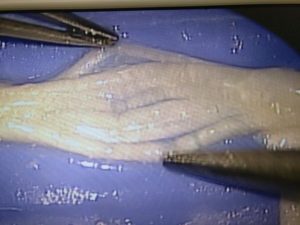
When all conservative options have genuinely been exhausted after 3–6 months, neurectomy (surgical removal of the neuroma and a segment of the affected nerve) is highly effective. We use a dorsal (top-of-foot) approach, which provides excellent visualization and avoids the plantar scar sensitivity associated with older plantar approaches. Recovery involves 2–3 weeks in a surgical shoe followed by gradual return to regular footwear. Permanent numbness between the affected toes is expected and tolerated well by the vast majority of patients. Success rates exceed 80–85% for properly selected candidates.
⚠️ When to see a podiatrist for Morton’s neuroma:
- Numbness between your toes that is becoming constant or spreading to neighboring toes
- Pain persisting beyond 6 weeks despite wearing wide shoes and a correctly placed metatarsal pad
- Symptoms that have not improved after 3 cortisone injections (surgical evaluation indicated)
- Rapid onset of severe burning forefoot pain with no obvious footwear or activity trigger
The Most Common Mistake We See With Morton’s Neuroma
The most common mistake I see is patients placing the metatarsal pad directly under their metatarsal heads — the opposite of where it should go. This compresses the nerve further and reliably makes pain worse. Every week in clinic I see patients who tried metatarsal pads, declared them useless, and scheduled surgery — only to discover incorrect pad placement was the entire problem. With proper positioning behind the metatarsal heads, most of these patients get meaningful relief without any procedure.
The second most common mistake: expecting cortisone injections to provide permanent resolution. Cortisone reduces nerve inflammation but does not remove the structural cause. Without footwear modification, the compressive environment persists and the neuroma re-inflames. Every injection I give comes with the same conversation: the shot buys you comfort and time — the shoe change is what prevents this from coming back.
What Else Could It Be? Conditions That Mimic Morton’s Neuroma
Not every burning ball-of-foot pain is Morton’s neuroma, and getting the right diagnosis matters because the treatments diverge significantly. Several forefoot conditions share overlapping symptoms, and distinguishing between them requires a clinical examination — not just imaging. If you’ve been told you have Morton’s neuroma but treatment isn’t working, ask your provider to confirm the diagnosis with Mulder’s sign and ultrasound before proceeding to injections or surgery.
- Metatarsalgia: Aching pain across the entire ball of the foot at multiple metatarsal heads. No burning between specific toes, no electrical radiation. Responds to cushioned insoles and metatarsal pads.
- Capsulitis (2nd MTP joint): Pain specifically under the 2nd toe base — no electric sensation into toes, positive drawer test. Metatarsal pad helps but placement differs from neuroma management.
- Metatarsal stress fracture: Aching that worsens with activity and improves with rest. Focal point tenderness on one metatarsal shaft, not between the heads. Requires a walking boot, not a pad.
- Freiberg’s disease: Avascular necrosis of a metatarsal head. Usually affects adolescents and young adults. Visible on plain X-ray with characteristic flattening of the metatarsal head.
Ready to Get Morton’s Neuroma Relief?
Same-day appointments available in Howell & Bloomfield Hills, MI
4.9★ | 1,123 Reviews | Board-Certified Podiatric Surgeons
Or call: (810) 206-1402
Frequently Asked Questions About Morton’s Neuroma
What does Morton’s neuroma feel like?
Morton’s neuroma typically feels like a sharp, burning, or electric shock pain between the 3rd and 4th toes (or 2nd and 3rd), often described as walking on a hot pebble or a bunched-up sock. Pain worsens in tight or narrow shoes and with prolonged standing. Most patients get near-immediate relief by removing their shoe and massaging the ball of the foot — this relief with shoe removal is one of the most reliable diagnostic signs.
Will Morton’s neuroma go away on its own?
Small neuromas can improve significantly with footwear changes alone — particularly switching to wide toe box shoes and eliminating heels. However, once the nerve has thickened substantially, it rarely resolves completely without intervention. Most patients with established neuromas need at minimum a correctly placed metatarsal pad and usually one cortisone injection. Without addressing the compressive cause, symptoms persist and the neuroma continues to enlarge with each year of wear in problematic footwear.
How long does Morton’s neuroma take to heal?
With conservative treatment (shoe changes, metatarsal pad, and cortisone injection), most patients see significant improvement within 6–12 weeks. Alcohol sclerosing injections typically require 3–7 sessions over 2–3 months. Surgical neurectomy recovery is 6–8 weeks to full activity. The most important factor is catching the neuroma before it has been symptomatic for more than 2 years — early diagnosis consistently improves outcomes across all treatment approaches.
Is walking good for Morton’s neuroma?
Walking in appropriate footwear does not worsen Morton’s neuroma when the nerve is properly decompressed. The key is wearing wide-toed shoes with a correctly positioned metatarsal pad. Avoid prolonged barefoot walking on hard floors during active flare-ups, as the lack of cushion increases forefoot impact directly on the nerve. High-impact activities like running should be reduced until symptoms are controlled.
What is the best shoe for Morton’s neuroma?
The best shoes for Morton’s neuroma have a wide toe box that allows toes to spread naturally, a heel under 1.5 inches, and a firm midsole. Brands consistently recommended include New Balance (wide width options), Hoka (natural forefoot spread with cushion), Altra (zero-drop with widest toe box in running), and Brooks (wide widths in most models). The most critical feature is toe box width — if your toes are compressed together, the shoe is actively aggravating your neuroma regardless of any other features.
The Bottom Line on Morton’s Neuroma
Morton’s neuroma is a compressive nerve injury, and compression is reversible. Start with the basics today: wider shoes, a metatarsal pad placed behind (not on) the metatarsal heads, and PowerStep insoles for arch support. If pain persists beyond 6–8 weeks, ultrasound-guided cortisone injections provide reliable relief for most patients. Surgery is reserved for the minority who do not respond to conservative care — and it has excellent outcomes in that selected group.
The single most impactful thing you can do right now: take off your narrow shoes, put on the widest pair you own, and position a metatarsal pad just behind the ball of your foot. Many patients walk out of our office with significant improvement from that change alone — and it costs almost nothing when the diagnosis is correct and the pad is in the right place.
Sources
- Bignotti B, et al. “Ultrasound versus magnetic resonance imaging for Morton neuroma: systematic review and meta-analysis.” European Radiology. 2015. PubMed →
- Thomson CE, et al. “Interventions for the treatment of Morton’s neuroma.” Cochrane Database of Systematic Reviews. 2004. PubMed →
- Markovic M, et al. “Effectiveness of ultrasound-guided corticosteroid injection in the treatment of Morton’s neuroma.” Foot & Ankle International. 2008. PubMed →
- Bucknall V, et al. “Outcomes of surgery for Morton’s interdigital neuroma.” Journal of Foot and Ankle Research. 2016. PubMed →
- American Podiatric Medical Association. “Morton’s Neuroma.” APMA.org. APMA →
⚠️ Sharp, burning ball-of-foot pain? Morton’s neuroma is very treatable.
📞 (810) 206-1402 | Book Online →
Same-day appointments. Howell & Bloomfield Hills. Most insurance accepted.
Insurance Accepted
BCBS · Medicare · Aetna · Cigna · United Healthcare · HAP · Priority Health · Humana · View All →
Howell Office
3980 E Grand River Ave, Suite 140
Howell, MI 48843
Get Directions →
Bloomfield Hills Office
43700 Woodward Ave, Suite 207
Bloomfield Hills, MI 48302
Get Directions →
Your Board-Certified Podiatrists
Ready to Get Back on Your Feet?
Same-week appointments available at both locations.
Book Your AppointmentDr. Tom Biernacki, DPM is a double board-certified podiatrist and foot & ankle surgeon at Balance Foot & Ankle Specialists in Southeast Michigan. With over a decade of clinical experience, he specializes in heel pain, bunions, diabetic foot care, sports injuries, and minimally invasive surgery. Dr. Biernacki is a member of the APMA and ACFAS, and his patient education content on MichiganFootDoctors.com and YouTube has reached over one million views.
⚕ Related Treatment: Hammertoe Correction
Morton\'s neuroma and hammertoes are closely linked — both caused by forefoot crowding. When conservative care fails, our podiatric surgeons offer minimally invasive hammertoe correction.
Hammertoe Correction: Surgical & Non-Surgical Options →Does This Sound Like You?
- You have tried stretching, rest, or OTC products for 4-6 weeks with little relief
- Your pain is affecting your daily activities, work, or sleep
- You are not sure if your condition is serious or needs imaging
That is your signal to see a podiatrist.
Book an AppointmentCall (810) 206-1402 — Same-day appointments. Howell & Bloomfield Hills. Most insurance accepted.
Frequently Asked Questions
Why does the ball of my foot hurt when I walk?
When should I see a doctor for ball of foot pain?
Related Treatments at Balance Foot & Ankle
Our board-certified podiatrists offer advanced treatments at our Bloomfield Hills and Howell locations.
Recommended Products from Dr. Tom