
👟 Dr. Tom Also Recommends
Podiatrist Recommended Shoes 2026: Dr. Tom’s Top Picks for Every Condition
The right footwear can make or break your recovery. Dr. Tom’s complete guide to the best shoes for plantar fasciitis, flat feet, neuropathy, bunions & more — with clinical picks for every foot type.
See Dr. Tom’s Top Shoe Picks →Best Diabetic Foot Care Products 2026: A Podiatrist’s Top 12 (Clinically Ranked)
Quick Answer
Diabetic foot care rests on four non-negotiable pillars: seamless moisture-wicking socks, properly fitted diabetic-safe footwear, daily skin inspection, and disciplined moisturizing and nail care. In my Howell and Bloomfield Township clinics I see peripheral neuropathy, dry cracked heels, ingrown toenails, and undetected pressure wounds every single week — and the patients who avoid ulcerations and amputations are almost always the ones who built a boring daily routine with the right tools. The 12 products below are the ones I actually hand out, dispense, or recommend to my diabetic patients — FLAT SOCKS for seamless protection, Orthofeet stretch-knit diabetic shoes, DASS Medical compression for circulation, CeraVe Diabetics’ Foot Cream for skin integrity, a Rescue Foot Mirror for daily self-inspection, and safe nail and wound tools. If you have diabetes and any foot change at all, do not wait — call (810) 206-1402.
FLAT SOCKS — Diabetic-Safe Seamless Sock
Why I recommend it: FLAT SOCKS have NO toe seam — this is the single most important feature for diabetic feet. Seam pressure is the #1 cause of ulcer-triggering friction wounds I pull out of patient socks weekly. The padded sole and low-profile knit fit perfectly inside diabetic shoes without the sagging bunching that generic cotton socks create. Foundation Wellness, USA-made.
Pros
- Zero toe seam — diabetic-critical
- Padded sole absorbs pressure
- Low-profile fit inside any shoe
- Moisture-wicking reduces maceration
Cons
- Not as warm as thick wool socks
- Solid colors only
Orthofeet Coral Stretch-Knit Diabetic Shoes
Why I recommend it: Orthofeet Coral is the diabetic shoe I dispense most often in clinic for patients with neuropathy, bunions, or hammer toes. The stretch-knit upper accommodates deformities without creating pressure points, the extra-depth toe box fits custom or over-the-counter orthoses, and the rocker sole offloads the forefoot — which is where most diabetic ulcers form. Medicare A5500 candidates often qualify for reimbursement.
Pros
- Stretch knit fits deformities
- Extra depth holds custom orthotics
- Rocker sole offloads forefoot
- Often Medicare-reimbursable
Cons
- Styling is conservative
- Break-in period first 3-5 days

- Breathable Stretch Knit Upper: Lightweight fabric flexes and moves with your foot's natural shape, following every curve for a pressure-free fit that feels custom-made for you.
- Seam-Free Interior Comfort: Smooth, padded inner lining eliminates friction and pressure points, making this an ideal everyday sneaker for nurses, walkers, and active lifestyles.
- Designed for Relief: Cushioning and arch support help ease plantar fasciitis, diabetes, bunions, flat feet, heel pain, overpronation, and common pains every step.
- Includes premium orthotic insole with anatomical arch support for proper foot alignment, even weight distribution, and multilayered cushioning in every pair.
- Fit and Sizing: True to size with a wide toe box to accommodate your foot's natural shape comfortably.
As an Amazon Associate, Balance Foot and Ankle earns from qualifying purchases. Product links are affiliate links and we may earn a commission at no extra cost to you. This does not influence our clinical recommendations. Last update on 2026-09-13 / Images from Amazon Product Advertising API
DASS Medical Compression Socks — Diabetic Circulation Support
Why I recommend it: DASS Medical compression is the prescription-grade stocking I hand out to diabetic patients with early venous insufficiency or edema — a very common combination with Type 2 diabetes. Foundation Wellness makes these in 15-20 mmHg and 20-30 mmHg with a seamless toe and a flat knit band that won’t create the tourniquet effect that cheaper compression socks do on diabetic calves.
Pros
- Medical-grade graduated compression
- Seamless toe — diabetic-safe
- Non-binding top band
- Reduces edema and DVT risk
Cons
- Requires proper sizing at calf
- Not for severe PAD without clearance
CeraVe Diabetics’ Dry Skin Foot Cream
Why I recommend it: CeraVe Diabetics’ Foot Cream is formulated with three essential ceramides and hyaluronic acid to rebuild the skin barrier — which is critical because cracked dry diabetic skin is an open door to infection. It has no fragrance, no dye, and the formula is accepted by the ADA Safe at Home program. Apply everywhere EXCEPT between the toes (moisture between toes promotes fungal maceration).
Pros
- Rebuilds ceramide barrier
- Non-greasy — won’t stain socks
- ADA-recognized formula
- Safe for daily use
Cons
- Small tube — buy the 12 oz size for daily use
- Not for between the toes

- [ DIABETIC DRY SKIN CREAM ] Non-greasy, fast-absorbing CeraVe Moisturizing Cream for those with dry skin from Diabetes. Moisturizes & helps to soothe diabetics’ dry skin at application. 90% of users tested said that their skin felt immediately smoother.
- [ 48-HOUR HYDRATION ] Formulated with Urea to help attract and retain moisture and Bilberry as a source of antioxidants. Features patented MVE Technology to deliver hydrating ingredients throughout the day and provide 48 hour moisturization.
- [ GENTLE ON SKIN ] Fragrance free, paraben-free, non-comedogenic, and free of drying alcohol
- [ 3 ESSENTIAL CERAMIDES ] Ceramides are found naturally in the skin and make up 50% of the lipids in the skin barrier. All CeraVe products are formulated with three essential ceramides (1, 3, 6-II) to help restore and maintain the skin’s natural barrier
- [ DEVELOPED WITH DERMATOLOGISTS ] CeraVe Skincare is developed with dermatologists and has products suitable for dry skin, sensitive skin, oily skin, acne-prone, and more.

As an Amazon Associate, Balance Foot and Ankle earns from qualifying purchases. Product links are affiliate links and we may earn a commission at no extra cost to you. This does not influence our clinical recommendations. Last update on 2026-09-13 / Images from Amazon Product Advertising API
Dr. Comfort Diabetic Crew Socks
Why I recommend it: Dr. Comfort crew socks are my secondary diabetic-sock pick for patients who want more calf coverage than FLAT SOCKS — common in Michigan winters. They have a seamless toe, a non-binding top, moisture-wicking yarn, and a white sole so any drainage or wound discharge is immediately visible during a nightly sock check.
Pros
- Seamless toe
- Non-binding top band
- White sole for wound monitoring
- Great for cold weather
Cons
- Thicker than FLAT SOCKS
- Warmer in summer months

- Gentle Graduated Upper: Non-Binding top that promotes blood circulation
- Top Mesh Construction: Ventilated top mesh provides odor control, breathability and heat regulation to keep feet dry.
- Ultra-Soft, All-Day Comfort: Light arch support, padded heel and toe, and smooth seam construction deliver plush foot comfort
- Durable Cuff: One-inch single rib welt reduces constriction and prevents sock from falling down
- Y Gore Construction: Designed with Y Gore in the toe and heel area to eliminate bunching
As an Amazon Associate, Balance Foot and Ankle earns from qualifying purchases. Product links are affiliate links and we may earn a commission at no extra cost to you. This does not influence our clinical recommendations. Last update on 2026-09-13 / Images from Amazon Product Advertising API
O’Keeffe’s Healthy Feet Foot Cream
Why I recommend it: O’Keeffe’s is the heavy-duty cream I reach for when a diabetic patient comes in with deep heel fissures. The glycerin concentration is much higher than typical drugstore lotions, so it draws moisture into the stratum corneum and seals the cracks. I tell patients to apply it at night, sock it in, and let it work while they sleep.
Pros
- Repairs deep heel cracks
- Lasts overnight
- No fragrance or dye
- Good value for size
Cons
- Thick texture — best overnight
- Will grease up socks if you don’t wait to absorb

- Get your feet back: O’Keeffe’s Healthy Feet is a concentrated foot cream that heals, relieves and repairs extremely dry, cracked feet; From the #1 foot cream brand in America*
- Guaranteed relief for extremely dry feet: Creates a protective layer on the skin's surface, locking in moisture to keep even the driest, cracked feet feeling hydrated and healthy
- Hard working foot care: Intense but soothing, our moisturizing cream instantly boosts and retains moisture levels for long term foot care
- Recommended use: Apply the exfoliating foot cream at bedtime and after bathing, as these are known to be the most effective times for moisturizing extremely cracked, dry feet
- Hypoallergenic: O'Keeffe's for Healthy Feet is unscented, non-greasy and safe for people with diabetes; Our 3.2 ounce jar is an ideal travel size so you can take your comfort on the go
As an Amazon Associate, Balance Foot and Ankle earns from qualifying purchases. Product links are affiliate links and we may earn a commission at no extra cost to you. This does not influence our clinical recommendations. Last update on 2026-09-13 / Images from Amazon Product Advertising API
Rescue Foot Mirror — Daily Inspection Tool
Why I recommend it: Daily foot inspection is the single highest-ROI habit in diabetic self-care — catching a blister, hotspot, or early ulcer in the first 24 hours is the difference between a Band-Aid and an amputation. A dedicated long-handled foot mirror lets patients inspect the plantar surface without bending or contorting, which is often impossible for my older diabetic patients with spinal stenosis or obesity.
Pros
- Dirt-cheap ulcer prevention
- Unbreakable acrylic mirror
- Long handle — no bending
- Lasts years
Cons
- Plastic feel at this price
- Won’t help visually-impaired patients (use telehealth instead)

- Rectangular Mirror Size:2.5"*1.7" Extended Length: 34" Collapsed Length: 7.5"
- Telescoping mirror has 2 extra bright LED lights facilitate the inspection of hard-to-see and hard-to reach areas
- Not only is the mirror telescoping and lighted, it also features a 360 degree swivel double ball joint for extra viewing capabilities
- Inspection mirror comes with two CR2032 batteries, Comfortable molded poly handle with soft, nonslip rubber grip
- Inspection mirrors are ideal for toolmakers, machinists, inspectors and mechanics; lights make it especially useful for dark and hard to see places
As an Amazon Associate, Balance Foot and Ankle earns from qualifying purchases. Product links are affiliate links and we may earn a commission at no extra cost to you. This does not influence our clinical recommendations. Last update on 2026-09-13 / Images from Amazon Product Advertising API
Harperton Nippit Toenail Clipper — Heavy Duty
Why I recommend it: Harperton Nippit is the stainless-steel toenail clipper I recommend when patients tell me they’ve been using dull drugstore clippers that are crushing thick diabetic nails. The tall standing handle gives mechanical advantage so patients don’t slip, and the blade stays sharp much longer than dollar-store equivalents. Cut straight across — never curved — to avoid ingrown corners.
Pros
- Cuts thick fungal/diabetic nails cleanly
- Tall handle — good grip
- Stays sharp for years
- Dishwasher-safe for sanitizing
Cons
- Heavier than standard clippers
- Overkill for thin nails

- Precision for Every Cut: Engineered with hand-sharpened stainless-steel blades that cut cleanly through thick nails - no tearing, no splitting. Perfect for tough toenails or delicate fingernails alike.
- Designed for All Hands: Our ergonomic handle and non-slip grip offer control and comfort, even for seniors or users with arthritis. Easy to maneuver and hold steady.
- Built for Travel, Designed for Detail: Each clipper features a built-in nail file for quick smoothing after trimming. Comes with a durable zippered pouch for clean, on-the-go grooming.
- Clean & Hygienic Grooming: Includes separate clippers for toenails and fingernails, helps support hygienic grooming and avoid cross-use between fingers and toes.
- A Gift People Actually Use: With premium design, durable build, and long-lasting sharpness, this clipper set is a thoughtful gift for men, women, seniors, or yourself.
As an Amazon Associate, Balance Foot and Ankle earns from qualifying purchases. Product links are affiliate links and we may earn a commission at no extra cost to you. This does not influence our clinical recommendations. Last update on 2026-09-13 / Images from Amazon Product Advertising API
Tweezerman Pedro Callus Remover + Pumice
Why I recommend it: A Tweezerman Pedro pumice is the ONE callus tool I tell diabetic patients is safe at home — used GENTLY on wet skin in the shower, NEVER with a razor blade or metal callus shaver. Diabetic skin cuts are infection highways. The fine pumice gradually reduces callus pressure without breaking the skin, and the ergonomic handle prevents slipping.
Pros
- Safe alternative to razors
- Fine pumice — gentle on skin
- Cleans easily
- Inexpensive
Cons
- Slower than bladed callus shavers
- Must replace every 6 months

- PREMIUM QUALITY: Effectively removes calluses and smooths feet. Ceramic stone and plastic handle.
- QUALITY DESIGN: Improved design is fully waterproof to use in the shower or tub. Ergonomic and durable, the high-quality Sole Smoother is comfortable to hold, easy to use and long lasting.
- PREP YOUR SKIN: Soak feet to prep and help soften hard skin.
- HOW TO USE: While skin is still soft and damp, use the coarse side to exfoliate especially rough or callused spots. Use the opposite side to smooth bottoms of feet and around toes.
As an Amazon Associate, Balance Foot and Ankle earns from qualifying purchases. Product links are affiliate links and we may earn a commission at no extra cost to you. This does not influence our clinical recommendations. Last update on 2026-09-13 / Images from Amazon Product Advertising API
Medline Sterile Saline Wound Wash
Why I recommend it: Sterile saline is the gold-standard first-response irrigation for any diabetic foot abrasion, blister break, or minor wound. It’s pH-balanced, non-cytotoxic, and won’t damage healing tissue the way hydrogen peroxide or rubbing alcohol does — both of which I tell patients to THROW OUT. Irrigate the wound, cover with a non-stick dressing, and call your podiatrist the same day.
Pros
- Safe on open diabetic skin
- Replaces peroxide/alcohol (which harm tissue)
- Aerosol spray — no contamination
- Shelf-stable
Cons
- Single-use — buy a backup
- Not a substitute for a podiatry visit
⚠️ Diabetic Wound Rule
ANY break in diabetic skin that doesn’t begin to heal in 24-48 hours needs a podiatrist — not a wait-and-see approach. Same-week appointments: (810) 206-1402.

- MediCleanse Sterile Saline Wound Wash: Provides a safe, gentle, and effective way to cleanse minor wounds, scrapes, burns, as well as piercings without stinging or burning
- Promotes Healing: MediCleanse sterile saline wound wash aids in the removal of debris, dirt and foreign material from wounds and promotes healing
- No Stinging or Burning: MediCleanse Sterile Saline Wound Wash is safe to use for all ages, does not contain alcohol, preservatives or fragrances and its PH balanced formula will not sting or burn
- No Hassle 360 Spray Bottle: MediCleanse Sterile Saline Wound Wash uses a controlled pressurized stream that can be used at an angle, including when inverted making it easy to apply to all areas
- Made in USA and FDA Registered: All MediCleanse Products are proudly manufactured in the USA in an FDA Registered Drug Facility to ensure safety and efficacy
As an Amazon Associate, Balance Foot and Ankle earns from qualifying purchases. Product links are affiliate links and we may earn a commission at no extra cost to you. This does not influence our clinical recommendations. Last update on 2026-09-13 / Images from Amazon Product Advertising API
Zeasorb-AF Antifungal Foot Powder
Why I recommend it: Zeasorb-AF is my go-to antifungal powder for diabetic patients with athlete’s foot or interdigital fungal maceration — a serious setup for bacterial co-infection in neuropathic feet. The 2% miconazole nitrate treats active tinea pedis while the absorbent base keeps the web spaces dry. Dust inside shoes and between toes daily.
Pros
- Treats athlete’s foot + absorbs moisture
- Safe between diabetic toes
- Dust in shoes for prevention
- OTC, no prescription needed
Cons
- Dusty application takes practice
- Not for nail fungus (needs oral Rx)
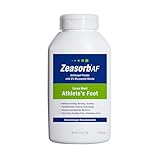
- Specifically designed for athlete’s foot, our super absorbent antifungal powder with 2% Miconazole Nitrate cures most athlete’s foot.
- Targets the fungi that cause athlete’s foot and helps alleviate symptoms like itching, burning, and scaling.
- Zeasorb's super absorbent formula attacks and absorbs moisture, keeping skin drier and less susceptible to fungal growth.
- Beyond treating athlete’s foot, the powder contains patented Odor Control Technology. This dual action powder not only provides relief from the itch but also keeps your feet smelling fresh.
- The talc-free formula contains skin-soothing ingredients like Aloe, Beta Glucan, and Lactobacillus Ferment. Comes in an easy-to-use container that allows for a hassle-free, shake-on application.
As an Amazon Associate, Balance Foot and Ankle earns from qualifying purchases. Product links are affiliate links and we may earn a commission at no extra cost to you. This does not influence our clinical recommendations. Last update on 2026-09-13 / Images from Amazon Product Advertising API
Foot Petals Killer Kushionz — Pressure Point Offload
Why I recommend it: Foot Petals Killer Kushionz are thin gel-foam pads I recommend to diabetic patients who have mild pressure points INSIDE an already-approved diabetic shoe — for example, a hot spot on top of a hammertoe or under a prominent metatarsal head. They’re medical-grade, non-migrating, and won’t add the bulk that pushes diabetic feet into new pressure zones. Foundation Wellness-made.
Pros
- Offloads specific pressure points
- Low-profile — won’t re-fit shoes
- Non-migrating adhesive
- Clinically proven design
Cons
- Not for active wounds
- Single-use adhesive
Have a wound, hotspot, or new pain?
Diabetic foot changes are emergencies. Balance Foot & Ankle offers same-week appointments in Howell and Bloomfield Township. We accept Medicare and most diabetic foot benefits.
How I Built This List
I see roughly 5,000 patients a year in my Howell and Bloomfield Township offices. A large percentage have Type 1 or Type 2 diabetes, peripheral neuropathy, or early peripheral arterial disease. The 12 products above are the ones I personally dispense, recommend at the end of a visit, or hand out in printed discharge instructions.
Selection Criteria
Every product on this list meets four rules: (1) it is safe for insensate neuropathic feet — no seams, no metal blades on-skin, no binding bands; (2) it addresses an ADA Safe at Home category (footwear, skin integrity, circulation, inspection, or wound prep); (3) it is available today on Amazon or through direct Foundation Wellness links; (4) I would personally use it on a family member with diabetes.
What I Left Off
I did not include: over-the-counter medicated callus pads (salicylic acid burns diabetic skin), generic heating pads (burn risk in neuropathic feet), or Epsom-salt soaking tubs (prolonged wet feet macerate skin and promote fungal infection). Every exclusion is clinical.
🚨 Red Flags — Do NOT Self-Treat
If you have diabetes, call your podiatrist the SAME DAY for any of these:
- Any break in the skin that hasn’t started healing in 24-48 hours
- Redness, swelling, warmth, or red streaks moving up the foot
- Foul odor or drainage from a wound or between toes
- New foot pain, especially with fever or chills
- Sudden color change — pale, blue, or dusky-red foot
- Sudden mid-foot deformity or collapse (possible Charcot foot — an emergency)
- Any black tissue or callus with a dark core underneath
Balance Foot & Ankle — same-week diabetic visits: (810) 206-1402
Frequently Asked Questions
How often should a diabetic inspect their feet?
Every single day. I tell patients to make it part of the evening routine — after the shower, before bed, with a Rescue foot mirror to see the bottom of each foot. Look for blisters, red spots, hotspots, cuts, swelling, or color change. If you cannot see your own feet due to vision loss or mobility, a family member or home-health nurse must do this for you. The 24-48 hour window between a small break and a deep infection is what catches ulcers early.
Can diabetics soak their feet?
No — not in Epsom salts, not in hot water, not in footbath machines. Prolonged soaking macerates fragile diabetic skin, promotes fungal infection between the toes, and can cause burn injuries in neuropathic feet that can’t feel excessive heat. Quick lukewarm shower washes are fine. If you have dry skin, moisturize AFTER the shower, not by soaking.
What socks should diabetics wear?
Seamless, moisture-wicking, non-binding. My top two recommendations are FLAT SOCKS (low-profile, padded sole) and Dr. Comfort crew (for cold weather). Avoid standard cotton tube socks — the seam pressure and poor moisture management are the most common triggers I see for ulcer formation. White or light-colored soles are ideal so any drainage is immediately visible.
Does Medicare cover diabetic shoes and insoles?
Yes, for most qualifying diabetic patients. Under Medicare Part B the Therapeutic Shoe Bill covers one pair of diabetic shoes (A5500) and three pairs of heat-moldable inserts (A5512 or A5513) per calendar year. The patient must have a diagnosis of diabetes plus at least one foot complication (neuropathy, callus, deformity, prior ulcer, poor circulation, or amputation). Your podiatrist documents the medical necessity and orders them. Call (810) 206-1402 if you want Balance Foot & Ankle to handle the paperwork.
Is it safe for a diabetic to get a pedicure?
Only a MEDICAL pedicure performed by a podiatrist or a podiatric medical assistant with sterile instruments. Standard nail-salon pedicures are high-risk for diabetics: unsterile foot-spa tubs have caused fungal and mycobacterial infections, cuticle cutting breaks the skin, and metal callus blades cause cuts that insensate patients do not feel. I offer diabetic medical pedicures in both Balance Foot & Ankle locations — it is often covered by Medicare routine foot care for diabetic patients.
What should I put on cracked diabetic heels?
At night, a urea-based or glycerin-based cream (CeraVe Diabetics’ Foot Cream for daily maintenance, O’Keeffe’s Healthy Feet for deeper cracks). Apply everywhere EXCEPT between the toes. Cover with a clean cotton sock overnight so the cream works without rubbing off on sheets. If the crack is bleeding, oozing, or has white soft tissue in the base, that is a wound — not a dry skin problem. Call a podiatrist same-week.
Watch Dr. Tom on Diabetic Foot Care
Dr. Tom walks through the daily diabetic foot inspection and care routine that prevents 80% of amputations.