
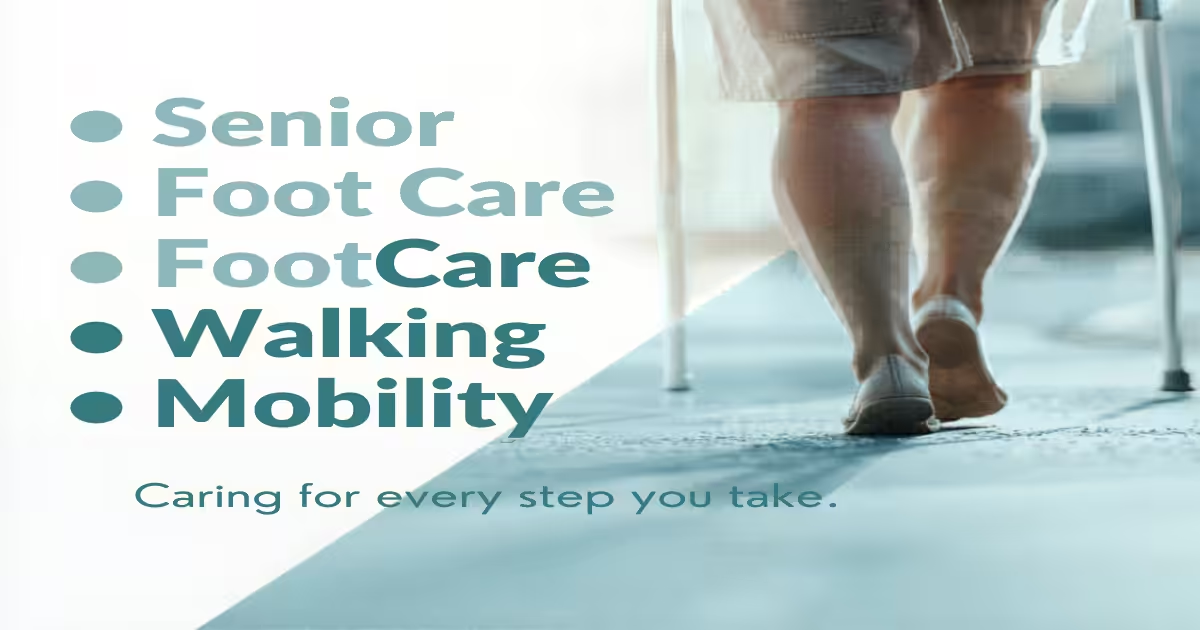
Medicare accepted · gentle, unhurried visits
Book a senior foot-care visit in Howell or Bloomfield Township
You are in the right place. Dr. Tom Biernacki, DPM, FACFAS — board-certified foot & ankle surgeon with 3,000+ surgeries — explains exactly what senior foot care / elderly podiatry means and what actually works. Call (810) 206-1402 for a same-day appointment at our Howell or Bloomfield Township office.
Medically reviewed by Dr. Tom Biernacki, DPM, FACFAS
Board-certified podiatric surgeon | Balance Foot & Ankle | Last reviewed: May 2026
Quick answer: Foot problems affect up to 80% of adults over age 65 and are a leading contributor to falls — the primary cause of injury-related death in older Americans. Age-related changes including fat pad atrophy, skin thinning, ligament laxity, and peripheral circulation decline combine with conditions like onychogryphosis, Charcot neuroarthropathy, and tarsal tunnel syndrome to make senior foot care a distinct clinical discipline. Medicare covers annual diabetic foot exams and therapeutic footwear — use these benefits to prevent complications before they occur.
Can’t get to the office? For homebound and mobility-limited seniors, Balance Foot & Ankle offers in-home (mobile) podiatrist visits across Michigan — nail care, diabetic foot checks, and wound care at home, often covered by Medicare.
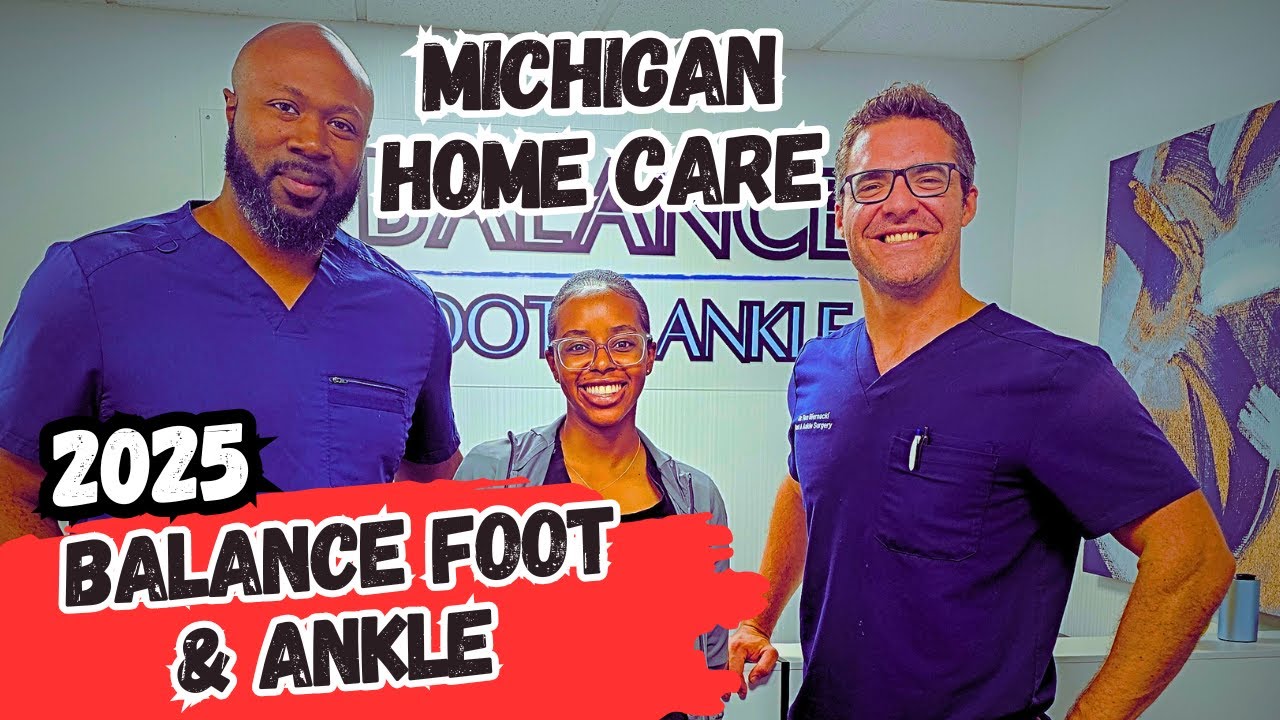
Watch Dr. Tom Biernacki DPM discuss senior foot care, common elderly foot conditions, and fall prevention at Balance Foot & Ankle.
In older patients, nail and callus care is not cosmetic. Thick nails and painful calluses change how you walk, and how you walk is what decides whether you fall. Book online in Howell or Bloomfield Township — the booking form takes about a minute, 24/7.
Age-Related Changes in the Foot: The Physiological Foundation
Understanding why senior feet fail begins with understanding the structural and physiological changes that aging imposes. These changes are not pathological in themselves — they are expected consequences of aging — but they create vulnerability that, combined with comorbidities and medication effects, produces the clinical problems we treat.
Fat Pad Atrophy
The plantar fat pads beneath the heel and metatarsal heads are specialized adipose tissue compartments that absorb and redistribute ground reaction forces. With aging, fat cell volume diminishes and the fibrous septae that compartmentalize the fat become stiffer and less resilient — a process accelerated by corticosteroid use, rheumatoid arthritis, and diabetes. The result is measurable reduction in shock absorption: studies using pedobarography demonstrate that elderly subjects have significantly higher peak plantar pressures under the metatarsal heads compared to younger controls, even without foot deformity.
Clinically, fat pad atrophy presents as painful metatarsalgia (burning, aching pain under the ball of the foot), heel pain with first steps (differentiated from plantar fasciitis by its diffuse distribution over the heel pad rather than medial calcaneal insertion), and intolerance of hard flooring. Treatment: accommodative custom orthotics with metatarsal pads and heel cups, cushioned footwear with rocker-bottom soles.
Skin Elasticity and Integrity Changes
Dermal collagen and elastin content decrease with aging, causing skin to thin, lose elasticity, and become more susceptible to mechanical breakdown. Epidermal cell turnover slows, reducing the skin’s capacity to form protective callus. Sebaceous gland output decreases, producing xerosis (chronic dry skin) — the No.1 dermatological finding in senior podiatric patients.
Severe xerosis progresses to fissuring — deep cracks, most commonly in the heel, that penetrate the dermis. These fissures are painful when not neuropathic and serve as bacterial entry portals when neuropathy is present. They also represent a fall risk on smooth flooring when heel callus edges catch. Treatment: daily moisturization with urea-based creams (20–40% urea has keratolytic properties in addition to moisturizing), professional debridement, and heel cups to reduce callus formation.
Ligament Laxity and Progressive Deformity
Ligament tensile strength and stiffness decrease with aging — partially from reduced collagen fiber cross-linking and partially from disuse. The plantar plate, spring ligament, and intrinsic foot ligaments that maintain arch structure progressively loosen, allowing foot deformities to worsen. Adult-acquired flatfoot (progressive posterior tibial tendon dysfunction) is most prevalent in overweight women over 40. Bunions and hammertoes — often present for decades — accelerate in severity when supporting structures weaken. The combination of deformity and narrowed shoe fitting options creates the pressure point–callus–ulcer cascade in high-risk patients.
Peripheral Circulation Changes
Arterial wall compliance decreases with aging, reducing the vasodilatory response to thermal changes. Venous pump efficiency diminishes as calf muscle mass decreases (sarcopenia) — the calf muscle is the primary driver of venous return from the lower extremity, and its atrophy contributes to dependent edema and venous hypertension. These changes, compounded by diabetes, hypertension, and smoking, predispose seniors to peripheral arterial disease, chronic venous insufficiency, and impaired wound healing.
Nail Changes
Nail plates thicken (onychauxis), become more brittle, and develop longitudinal ridging with aging. Nail growth slows from 3–4 mm/month in young adults to 1–2 mm/month in seniors. The combination of slow growth and thickening creates nail plates that are difficult for seniors to trim safely — particularly with reduced flexibility, visual impairment, or hand arthritis. Fungal infection (onychomycosis) affects 20–25% of adults over 60 and up to 50% over 70, further thickening and deforming nails.
Most Common Senior Foot Conditions
Onychogryphosis (Ram’s Horn Nail)
Onychogryphosis is severe nail dystrophy characterized by extreme thickening, darkening, curving, and twisting of the nail plate — often resembling an animal claw or ram’s horn. It most commonly affects the great toenail and results from chronic neglect (inability to trim), repeated minor trauma, peripheral vascular disease, or severe onychomycosis. The overgrown nail exerts significant pressure against adjacent toes and shoe uppers, causing pain, ulceration beneath the nail plate, and interdigital maceration.
Treatment requires professional mechanical debridement with a rotary burr or nail nipper — home self-care is impossible and dangerous. In cases where the nail is beyond functional salvage or recurrently problematic, permanent nail avulsion (matrixectomy with phenol-alcohol application) provides definitive relief. This is a brief in-office procedure under local anesthesia.
Xerosis and Heel Fissures
As described above — the most common dermatological finding in senior patients. Severe, infected fissures require professional debridement, topical antimicrobial therapy, and offloading. Prevention: daily urea 20–40% cream application, avoidance of prolonged soaking (which removes natural oils), and properly moisturizing footwear. Fissures in diabetic or neuropathic patients are true wounds requiring clinical management.
Charcot Neuroarthropathy
Charcot neuroarthropathy is a rapidly progressive, destructive arthropathy of the foot and ankle occurring in patients with peripheral neuropathy — most commonly from diabetes. The pathophysiology involves repetitive microtrauma to an insensate joint triggering an unchecked inflammatory cascade (neurotraumatic theory) and increased bone blood flow causing osteoclast-mediated bone resorption (neurovascular theory) — the two mechanisms are not mutually exclusive.
The acute phase presents as a hot, red, markedly swollen foot or ankle without open wound — this is the most commonly misdiagnosed presentation in podiatric medicine. It is mistaken for cellulitis, gout, or deep vein thrombosis. The skin temperature differential between affected and unaffected limb is characteristically >2°C. X-rays may appear normal in early acute Charcot — a bone scan or MRI shows hyperemia before bone architecture changes. This distinction is critical: patients treated as cellulitis and sent home to walk on an acute Charcot foot will develop irreversible midfoot collapse (rocker-bottom deformity) within weeks.
Treatment of acute Charcot: complete non-weight-bearing in a total contact cast until temperature differential normalizes (typically 4–6 months). Bisphosphonate therapy (intravenous pamidronate or oral alendronate) to suppress osteoclast activity is used adjunctively. Surgical reconstruction (Charcot reconstructive arthrodesis) is reserved for unstable deformities after the active phase resolves.
Tarsal Tunnel Syndrome in Seniors
Tarsal tunnel syndrome is compression of the posterior tibial nerve within the tarsal tunnel — the fibro-osseous canal posterior to the medial malleolus formed by the flexor retinaculum, medial malleolus, calcaneus, and talus. In seniors, the most common causes are space-occupying lesions (ganglion cysts, lipomas, varicose veins, tenosynovitis of the FHL or FDL tendons), progressive flatfoot deformity (causing traction on the posterior tibial nerve), and systemic edema.
Clinical presentation: burning, tingling, and numbness in the plantar heel and toes, worse with prolonged standing and walking, often with nocturnal exacerbation. Tinel’s sign over the tarsal tunnel (tapping behind the medial malleolus reproduces distal paresthesias) is the most reliable provocative test. Electrodiagnostic studies (NCS/EMG) confirm prolonged distal motor latency and sensory conduction velocity reduction across the tarsal tunnel. MRI identifies compressive lesions. Conservative treatment: custom orthotics with medial arch support (reduces nerve traction), corticosteroid injection into the tarsal tunnel, NSAIDS. Surgical tarsal tunnel release for cases failing 6 months of conservative care — outcomes are significantly better when a compressive structural lesion is identified.
Medicare Coverage for Senior Foot Care
Medicare Part B covers specific podiatric services for seniors that are frequently underused:
- Annual diabetic foot exam (G0245 / G0246): Covered for patients with documented diabetes and evidence of diabetic peripheral neuropathy. Includes comprehensive foot exam with monofilament testing, vascular assessment, and patient education. $0 copay when performed by the patient’s treating podiatrist.
- Routine nail care for systemic conditions: Routine nail trimming and debridement is covered when the patient has a documented systemic condition (diabetes, PVD, immunosuppression) that makes routine care a medical necessity — not a cosmetic service. Class findings documentation required (diminished pulses, neuropathy, etc.)
- Therapeutic footwear (A5500–A5513): Covered for diabetic patients with documented LOPS, PAD, prior ulceration, foot deformity, or poor circulation — one pair of extra-depth shoes and three pairs of custom insoles per calendar year.
- Custom orthotics: Covered with appropriate medical necessity documentation for qualifying conditions.
Fall Prevention: The Foot-Fall Connection
Falls are the leading cause of injury-related death in Americans over 65, accounting for more than 36,000 deaths annually (CDC, 2022). Foot and ankle pathology contributes independently to fall risk through four mechanisms: reduced plantar sensation (impaired somatosensory input), reduced ankle strength and range of motion (impaired ankle strategy balance recovery), painful foot conditions that alter gait (compensatory patterns that destabilize balance), and inappropriate footwear.
Podiatric interventions with documented fall-risk reduction:
- Custom foot orthoses: Multiple RCTs demonstrate that custom foot orthoses in older adults with foot pain improve postural stability and reduce fall rate by 36% (Spink et al., JAGS 2011)
- Footwear assessment: Slip-resistant soles, firm heel counters, and low heel height (<2.5 cm) reduce fall risk. Slippery slippers and flip-flops at home are a common fall hazard.
- Exercise programs: Calf strengthening, intrinsic foot strengthening, and balance training (Otago Exercise Programme) have the strongest evidence base for fall prevention in older adults
- Appropriate management of painful foot conditions: Treating the pain that causes antalgic gait removes a biomechanical fall risk factor
At every senior patient visit, we assess footwear appropriateness and gait stability, and coordinate with primary care for multifactorial fall risk reduction when indicated.
Most Common Mistakes
- Assuming foot pain is “just part of getting older”: Chronic foot pain in seniors is not inevitable — it is treatable. Pain that limits walking reduces physical activity, accelerates sarcopenia, worsens cardiovascular health, and increases depression risk. Every painful foot condition in a senior should be evaluated and treated.
- Home nail cutting in high-risk patients: Seniors with neuropathy, poor vision, reduced dexterity, or anticoagulant therapy should not attempt to cut their own toenails. The injury rate from home nail cutting in this population is significant. Professional nail care at appropriate visit frequency prevents the nail-related wounds that precede major complications.
Red Flags — Seek Same-Day or Urgent Care
- Hot, red, swollen foot or ankle without injury in a diabetic patient: Rule out acute Charcot neuroarthropathy — do not walk on it until evaluated
- Any wound, ulcer, or skin breakdown on a neuropathic or poorly vascularized foot: Evaluate within 24–48 hours
- Sudden inability to walk or severe new ankle pain: Rule out fracture, Charcot, or acute tendon rupture
- Black or blue discoloration of toes without injury: Digital ischemia — urgent vascular assessment
- Heel fissure that is bleeding, draining, or red and warm: Infected fissure wound — requires clinical debridement and antibiotics
Care at Balance Foot & Ankle
We see a high volume of senior patients at both our Howell and Bloomfield Township offices and have structured our care model to address the complexity and frequency of podiatric care that older adults require. We handle Medicare billing directly, maximize covered benefits for each patient, and coordinate with primary care physicians on diabetic foot exam documentation. Our goal is to keep senior patients mobile, pain-free, and out of the hospital.
Call (810) 206-1402 or book online. Both offices are Medicare-participating providers.
Howell: 4330 E Grand River Ave, Howell MI 48843 | Bloomfield Township: 43494 Woodward Ave #208, Bloomfield Township MI 48302
Podiatrist-Recommended Products for Senior Foot Care
- PowerStep Maxx — maximum cushioning and support for aging feet with reduced protective fat pad and arch function
- DASS Medical Compression Socks — gentle graduated compression for elderly patients with venous insufficiency, edema, and diabetic feet
- Doctor Hoy’s Natural Pain Relief Gel — easy-to-apply topical relief for arthritis pain, dry skin, and general foot soreness in older adults
These are the same products Dr. Biernacki recommends in clinic. Available through our partner Foundation Wellness.
Ready to fix this for good?
Reading goes only so far. The fastest path to relief is a 30-minute office visit with Dr. Biernacki — same-day Howell or Bloomfield Township. Call (810) 206-1402 or use our online booking.
In-Office Treatment at Balance Foot & Ankle
If home treatment isn’t providing relief for your senior foot care, our podiatry team at Balance Foot & Ankle can help with same-day evaluations and advanced in-office care.
Same-day appointments available. (810) 206-1402
Learn about our senior & diabetic foot care → | Book online →
Ready for Expert Care?
Same-day appointments in Howell & Bloomfield Township, MI.
4.9★ | 1,123 Reviews | 3,000+ Surgeries
Or call: (810) 206-1402
Foot care getting harder to manage?
Gentle, professional nail and foot care — often Medicare-covered. In Michigan? our team makes it easy and comfortable. Same-week visits in Howell & Bloomfield Township, most insurance accepted.
📅 Book an Appointment 📞 (810) 206-1402★ 4.9 from 1,123+ Google reviews · Same-week visits · We verify your insurance free — most visits are just a copay.
Getting Care at Balance Foot & Ankle
Treated at our Howell and Bloomfield Township offices — same-week appointments available.
- Foot Pain in Older Adults and Seniors 2026 | DPM
- Best Walking Shoes for Seniors & Older Adults 2026 | Podiatrist Picks
- Best Shoe Horns for Seniors & Elderly 2026 | Podiatrist-Recommended
- Foot Care for Seniors Who Can’t Drive — Michigan Podiatry Solutions
- Post-Hospital Rehabilitation Foot Care — Podiatry During Your Recovery
Seen at both offices — Howell (Livingston County) and Bloomfield Township (Oakland County).

Dr. Tom Biernacki, DPM is a board-certified foot & ankle surgeon (ABFAS & ABPM) at Balance Foot & Ankle Specialists in Southeast Michigan. With over a decade of clinical experience, he specializes in heel pain, bunions, diabetic foot care, sports injuries, and minimally invasive surgery. Dr. Biernacki is a member of the APMA and ACFAS, and his patient education content on MichiganFootDoctors.com and YouTube has made him one of the most-followed foot & ankle educators on YouTube.