
Quick answer: The best shoes for top-of-foot pain have a wide, roomy toe box that doesn’t compress the extensor tendons, adjustable lacing to reduce dorsal pressure, and a firm midsole with moderate cushioning. For extensor tendonitis, rocker-bottom soles offload the forefoot and reduce tendon strain with every step.
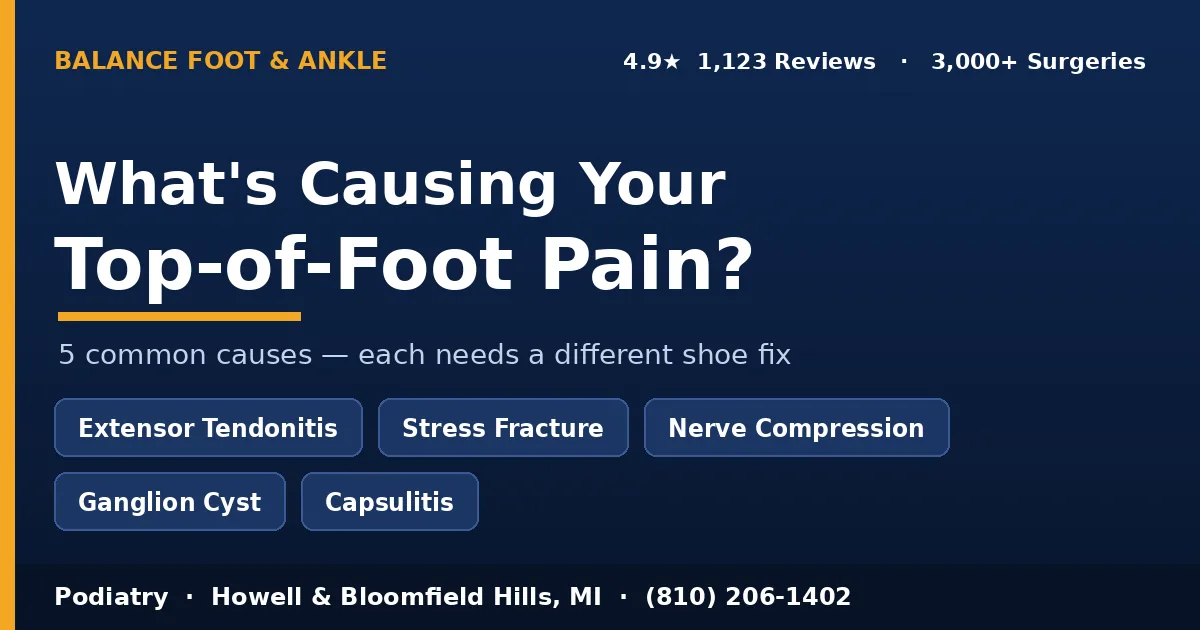
Top of foot pain (dorsal foot pain) is caused by at least five distinct conditions — and each one requires a different shoe feature to resolve the pain. The most common mistake: buying a “cushioned” shoe when the real issue is lace pressure, instep height, or extensor tendon irritation. This guide matches shoe features to the specific cause of your top-of-foot pain.
Top of Foot Pain Causes and the Shoe Feature That Fixes Each
| Cause | How to Identify | Required Shoe Feature | Avoid |
|---|---|---|---|
| Extensor tendonitis (most common) | Pain runs along the top of the foot from midfoot toward the toes; worsened by shoes that press on the instep; tender to touch along the tendon path; worse after running or long walks; pain at the end of a long run, not just at the beginning | Deep toe box with reduced instep pressure; padded tongue; lace-up shoes with ability to skip eyelets at the painful area; soft upper materials (knit or mesh) over the tendon zone; sufficient toe box height | Tight lacing, stiff leather uppers, low-profile shoes that compress the instep, slip-ons that grip the top of the foot |
| High arch (cavus foot) with dorsal compression | High-arched foot that sits too high inside the shoe, pressing the instep against the upper; dorsal midfoot callus in the same location; feet look visibly arched even when relaxed; pain on the very top of the arch, not the sides | High-volume shoe with extra depth at the instep; traditional (not athletic) last shapes; shoes marketed as “wide fit” often have higher insteps; Altra shoes known for extra vertical volume | Low-profile athletic shoes; any shoe that says “anatomic” or “foot-hugging”; trail shoes with aggressive overlays on the upper |
| Foot edema (swelling from prolonged standing, pregnancy, or lymphedema) | Swelling increases throughout the day; shoes feel progressively tighter; pain is worse in the afternoon; both feet usually affected; skin leaves sock marks | Adjustable closure (Velcro, elastic, or wide laces); stretchable upper (knit or mesh); wide toe box; sizing up half size in the afternoon; compression sock worn under shoe to manage swelling volume | Slip-ons without adjustment; leather uppers that don’t stretch; narrow toe boxes; shoes that fit tightly in the morning (will compress by afternoon) |
| Metatarsal stress fracture (dorsal midfoot) | Gradual onset with increasing activity (running, dancing, military training); point-specific tenderness at one spot on the top of the foot (not diffuse); single-leg hop test positive; MRI positive before X-ray (2-3 week lag) | Stiff-soled shoe (post-op shoe or rigid-soled sneaker) to minimize forefoot flexion; no flexible soles; CAM boot if severe; NOT a running shoe until healed | Flexible-soled running shoes; barefoot; any shoe that allows MT flexion; continuing to run on it |
| Sinus tarsi syndrome (lateral midfoot / instep) | Pain slightly lateral, toward the outside of the foot at the sinus tarsi (gap between talus and calcaneus); worsens on uneven terrain; ankle instability; often follows ankle sprain; tenderness at the hollow between the ankle and heel | Lateral arch support and ankle stability; moderate-high heel counter; rigid midfoot; Brooks Adrenaline or similar stability shoe; lateral wedge if indicated | Flexible, neutral cushion shoes; zero-drop shoes; shoes with no lateral support; walking on uneven ground without support |
What Causes Top of Foot Pain
Medically reviewed by Dr. Tom Biernacki, DPM
Board-certified podiatric surgeon | Balance Foot & Ankle
Last reviewed: May 2026
Top of foot pain—medically called “dorsal foot pain”—is one of the most preventable problems in podiatry, yet patients often suffer for months wearing the wrong shoes. Let me walk you through what’s actually happening and why shoe selection matters more than you think.
The top of your foot is crowded with structures: the extensor tendons (which pull your toes upward), the dorsalis pedis artery and vein, the superficial peroneal nerve, and the metatarsal bones. Pain in this region typically has one of these causes:
- Extensor Tendonitis: The extensor digitorum longus and extensor hallucis longus tendons run across the top of your foot. When you lace shoes too tight or wear shoes with aggressive, rigid tongues, these tendons get compressed and inflamed. This is the single most common cause of dorsal foot pain I see.
- Stress Fractures or Metatarsal Stress: The metatarsal bones on top of your foot bear load during push-off. A subtle stress fracture (especially of the second or third metatarsal) creates sharp pain along the dorsum. Running, high-impact activity, or improper footwear accelerates stress fractures.
- Nerve Compression (Sural or Superficial Peroneal): A tight shoe compresses the superficial peroneal nerve as it crosses the top of the foot, causing burning, tingling, or numbness. This is called tarsal tunnel syndrome variant.
- Ganglion Cyst: A benign fluid-filled sac often forms on the dorsal aspect of the foot or ankle. Tight shoes make it worse, while the cyst itself can compress the underlying nerve or tendon.
- Capsulitis or Inflammation of the Metatarsal Heads: The joint capsules on top of the foot become inflamed from repetitive stress or hyperextension of the toes.
The common thread: all of these conditions are aggravated or caused by footwear that creates pressure, compression, or excessive motion across the dorsal foot. Choose the right shoe, and you often eliminate the pain without any treatment.
What to Look for in Shoes When You Have Top of Foot Pain
When I advise patients on shoe selection for dorsal foot pain, I focus on three core features:
- Roomy, Deep Toe Box: Your toes need vertical clearance. There should be at least a half-inch of space between the top of your longest toe and the shoe’s toe box when you stand. A shallow or tight toe box forces your toes to press against the upper, which compresses the extensors and nerves.
- Soft, Flexible Forefoot Upper: The material covering the top of your foot should be breathable mesh or soft leather, NOT rigid synthetic or plastic overlays. Those overlays feel supportive but actually create pressure hotspots. A soft upper that moves with your foot is crucial.
- Low-Profile or Soft Tongue: A rigid, high tongue with aggressive stitching compresses the extensor tendons directly. Look for shoes with flat, smooth, or padding-rich tongues that don’t dig into the foot. Some shoes have gusseted tongues (sewn in on both sides) which feel even better because they move with your foot without creating tension.
- Firm Heel and Midfoot, Flexible Forefoot: You need stability at the heel to prevent excessive motion, but the forefoot should flex naturally. Shoes that are too stiff throughout restrict the natural extension of your toes and aggravate dorsal pain.
- Moderate Arch Support: Too much arch support can push your foot into plantarflexion, forcing your toes into extension and stressing the extensor tendons. A moderate, neutral arch is ideal.
In my clinic, I often recommend trying on 3–5 pairs and walking for 5 minutes in each to feel the difference. You’ll notice immediately which shoes create pressure across the top and which feel neutral.
The Most Common Mistake Patients Make With Top of Foot Pain
Common Mistake: Lacing Shoes Too Tight Across the Dorsum
I’ve seen patients buy the exact right shoe—roomy, soft upper, everything—then lace it so tight that the laces dig directly across the extensor tendons. Within two weeks, they’ve created tendonitis from their own lacing technique. The dorsal foot has zero tolerance for compression.
The fix: Lace your shoes with a looser tension across the top of the foot. Loop the lace over the eyelet without pulling tight until you reach the ankle, where you can pull firmer. Better yet, use a gap-lacing or window-lacing technique (explained below) that avoids compression across the extensors entirely. Your foot should feel hugged, not strangled.
Best Shoes for Top of Foot Pain—Dr. Tom’s 6 Picks
Based on hundreds of patient outcomes, these six shoes consistently relieve dorsal foot pain without modification. Every pick has a wide or anatomically shaped toe box, a soft mesh upper, and a low-profile or gusseted tongue that doesn’t compress the extensor tendons. They’re ordered from the most patient-friendly daily trainers to the most aggressive zero-drop wide-toe-box options.

Altra Torin 8 Best for Extensor Tendonitis
★ 4.4 · 1,500+ reviews on Amazon · APMA Seal of Acceptance
If I had to pick a single shoe for a patient with stubborn extensor tendonitis, this is it. The Torin 8 has Altra’s FootShape anatomical toe box (101.1 mm at the widest point — wider than virtually any mainstream running shoe). Zero drop means your foot sits flat, which eliminates the forced toe-extension that aggravates the extensors when you walk uphill or upstairs. Soft engineered mesh upper, no plastic overlay, gusseted tongue. The Torin 8 also comes in a Wide for patients who need even more dorsal room.
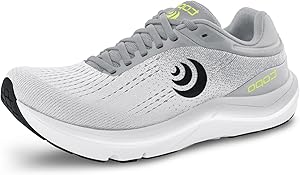
Topo Athletic Magnifly 5 Zero-Drop Alternative
★ 4.4 · 500+ reviews on Amazon
Topo’s Magnifly is the shoe I recommend for patients who want a wide toe box AND zero drop (same anti-extensor-tendonitis benefits as Altra) but who have a narrower heel and have found Altras too sloppy in the rearfoot. Anatomical toe box, dual-density EVA midsole, soft knit upper, no rigid dorsal overlay. A lighter alternative to the Torin 8 — great for patients walking 8–12k steps a day in a normal-weight body who don’t need Hoka-level cushioning.

Saucony Triumph 22 Plush Daily Trainer
★ 4.5 · 2,500+ reviews on Amazon
If the Hoka feels too “tippy” or the Brooks Ghost too firm, the Triumph 22 splits the difference. PWRRUN+ TPU foam is plusher than anything Brooks or New Balance currently makes in this category. The FORMFIT engineered mesh upper is soft over the dorsum, the tongue is low-profile and padded, and Saucony does not use a rigid TPU overlay across the top of the foot. The 10mm drop is higher than the Altra/Topo, but the dorsal protection is what makes this work for top-of-foot pain.
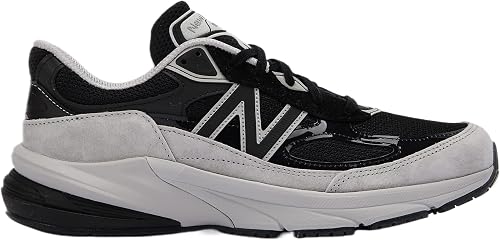
New Balance 990v6 Best Premium Daily Trainer
★ 4.6 · Made in USA · Available in 2E and 4E widths
The 990v6 is what I recommend for patients who want a polished-looking shoe they can wear with chinos and still walk all day without dorsal pain. The mesh-and-suede upper has zero stiff overlays across the instep, and the gusseted tongue stays put without compressing the extensor tendons. ENCAP midsole gives firm structured support, and the available 2E/4E widths matter — wide widths reduce dorsal pressure as much as a wide toe box does for ball-of-foot patients. Higher heel-to-toe drop (8mm) than the Altra, which some patients find easier to tolerate during the transition.

Brooks Ghost 16 Best Wide-Fit Neutral Trainer
★ 4.5 · 5,000+ reviews on Amazon · Available in 2E and 4E widths
When patients can’t tolerate zero-drop and don’t want the rocker geometry of a max-cushion shoe, the Ghost 16 is the safest neutral pick. Brooks specifically redesigned the upper for this version: engineered air mesh with minimal welded overlays and a redesigned tongue that lays flat against the instep. The wide and extra-wide builds (2E and 4E in many colorways) give dorsal room without sacrificing midfoot security. 12mm drop, soft nitrogen-infused DNA Loft v3 midsole — patients describe it as “forgiving without feeling unstable.”

Hoka Bondi 9 Best Max-Cushion Rocker
★ 4.5 · Hoka’s thickest-stack neutral · Available in Wide
For patients whose top-of-foot pain is paired with metatarsal pain, arthritis, or post-surgical stiffness, the Bondi 9 is my go-to. The aggressive Meta-Rocker geometry reduces the demand for active toe extension during push-off — that’s the exact motion that aggravates the extensor tendons. New supercritical foam in v9 is softer than the Bondi 8 without losing structure. Roomy instep, soft padded tongue, no plastic overlays. Comes in 2E Wide. Pair with the Altra Torin for variety: alternate days between zero-drop and max-stack to give the extensors a different work pattern each day.
Quick chooser: Start with the Altra Torin 8 for the zero-drop + wide toe box combination if dorsal pain is severe or chronic. Pick the Topo Athletic Magnifly 5 if you have a narrower heel and find Altras too sloppy in the rearfoot. Choose the Saucony Triumph 22 if you want plush max-cushion impact protection.
Shoe Features That Aggravate Top of Foot Pain
Certain shoe features are red flags if you have dorsal foot pain. Avoid these:
- Tight, Narrow Toe Box: If your toes touch the top of the shoe when you stand, the shoe is too small. This creates chronic compression on the extensor tendons. Even shoes one size too small will cause pain.
- Rigid Plastic or Rubber Overlays Across the Dorsum: Some shoes (especially hiking boots or casual athletic shoes) have reinforced plastic or TPU overlays across the top. These feel “supportive” but create a hard surface that presses directly on the extensors and nerves. Soft mesh is always better.
- Aggressive, High Tongue with Sharp Stitching: A tongue that’s stitched too close or sits too high compresses the extensor tendons on every step. Look for soft, low-profile, or gusseted tongues instead.
- Lacing Eyelets That Sit Directly Over the Extensor Tendons: Some shoes have eyelets positioned right across the top of the foot. When you pull the laces tight, they directly compress the tendons. These designs are particularly problematic for dorsal foot pain.
- Excessive Arch Support That Forces Toe Extension: High arch supports push your foot into excessive plantarflexion, which forces your toes and extensors into extension and creates strain.
- Overly Stiff Forefoot: A rigid forefoot prevents natural toe extension and forces unnecessary tension on the dorsum. Your foot needs to flex.
- Shallow, Fashion-Forward Designs: Slip-ons, loafers, and dress shoes with minimal depth are generally poor choices for dorsal foot pain. You need depth and room.
Lacing Techniques That Reduce Top of Foot Pressure
Here’s a secret that patients rarely know: you can often eliminate dorsal foot pain just by changing how you lace your shoes. Standard lacing (pulling tight across the top) puts direct pressure on the extensors and nerves. Alternative techniques bypass this pressure entirely.
- Gap Lacing (Skip-Lacing): Lace normally from the bottom two eyelets, then skip the next eyelet pair and move to the fourth pair. This creates a gap across the middle of your foot where pressure would normally be. When you pull the laces tight, the gap prevents compression across the extensors. Your foot feels secure at the heel and ankle, but the top of the foot is left alone.
- Window Lacing: Lace the bottom two eyelets normally, skip the middle section entirely, then lace normally again at the top. This creates a “window” across the middle of the foot with zero lace pressure.
- Loose Dorsal Lacing: Thread the laces normally all the way up, but pull with minimal tension until you reach the ankle area. At the ankle, pull firmly to lock down the heel and ankle. This gives you ankle support without compressing the foot.
- Loop Lacing: Instead of pulling the lace tight when threading each eyelet pair, create a loose loop that goes through the eyelet but doesn’t pull the shoe walls together. This allows movement without compression.
I recommend trying gap lacing first—it takes 30 seconds to learn and provides dramatic relief for many patients. Experiment with tension: your foot should feel snug, not strangled.
When Shoes Aren’t Enough — Clinical Treatment Options
![TOP of the FOOT PAIN Home Treatment [Exercises, Massage, Stretches] — Dr. Tom Biernacki DPM](https://www.michiganfootdoctors.com/wp-content/cache/flying-press/07923b806e74fe2e6cc892bee92d4376.jpg)
For most cases of dorsal foot pain from tendonitis or nerve compression, shoes + lacing changes provide 70–80% relief within 2–3 weeks. But some patients need more aggressive treatment. Here’s when I consider additional interventions:
- Custom Orthotics with a Morton’s Extension: If your pain comes from metatarsal stress fracture or first ray limitation, a custom orthotic with a rigid extension under the first metatarsal can unload the dorsal structures and protect the foot during healing. See our complete guide to custom orthotics.
- Taping or Strapping: Athletic tape or athletic wrap applied across the top of the foot can provide support and reduce tendon motion. This is especially helpful during the acute phase while you’re adjusting shoes and lacing.
- Anti-Inflammatory Treatment: Ice therapy, ibuprofen, or topical anti-inflammatory creams reduce inflammation. Apply ice for 15 minutes, 3–4 times daily, especially after activity.
- Physical Therapy & Stretching: Strengthening the intrinsic foot muscles and stretching the calf can reduce compensatory stress on the extensors. Stretching the extensor digitorum longus (by plantarflexing your toes gently) often provides quick relief.
- Corticosteroid Injection: For persistent extensor tendonitis or nerve compression that doesn’t respond to conservative care after 4–6 weeks, a targeted corticosteroid injection can reduce inflammation. This is usually a last resort before considering other options.
- Imaging & Advanced Diagnostics: If pain persists, we may order X-rays (to rule out stress fractures) or ultrasound (to visualize the tendons and identify inflammation). An MRI can definitively identify ganglion cysts, stress fractures, or nerve pathology.
The key: start with shoes and lacing. If you’re still in pain after 3 weeks of proper footwear and good lacing technique, call our office. We can usually resolve the remaining 20% with targeted treatment.
Best Shoes by Activity for Top of Foot Pain
The right shoe for extensor tendonitis depends on what you do in it. Walking shoes need a softer, more flexible forefoot than running trainers. Sandals must avoid straps that cross the inflamed tendons. Slip-ons eliminate lace pressure entirely — often the fastest relief of all. Here is how I guide patients for each activity.
Best Walking Shoes for Extensor Tendonitis
For daily walking, the Brooks Ghost 16 and New Balance 990v6 from my picks above are the two I recommend most. Both come in wide and extra-wide widths for men and women, and both have soft, unstructured uppers that do not press on the dorsum. Women with narrow heels but wider forefeet usually do best in the women’s Ghost 16 — it holds the heel without squeezing the instep.
Best Sandals for Extensor Tendonitis
Choose a recovery sandal with one thick, padded strap — not thin crisscross straps that dig into the extensor tendons. A cushioned rocker sole, like Hoka’s Ora recovery slides, offloads the forefoot the same way a rocker running shoe does. Avoid flip-flops: gripping with your toes works the extensor tendons with every step.
Best Slip-On Shoes for Top of Foot Pain
Slip-on and hands-free shoes remove lace pressure completely, which makes them a smart choice during an acute flare. Look for a stretch-knit upper with a structured heel counter so your foot is not sliding inside the shoe. Many of my patients do well in Skechers Slip-ins — see my review of which Skechers models I approve and which to avoid.
Who Each Shoe Is Not Ideal For
- Altra Torin 8 / Topo Magnifly 5 (zero-drop): not ideal if you have Achilles tendonitis or tight calves — a flat platform increases Achilles strain.
- Saucony Triumph 22: not ideal for severe overpronators who need a structured stability shoe.
- New Balance 990v6: not ideal if you want a light, fast trainer — it is a heavier everyday walking shoe.
- Brooks Ghost 16: not ideal if arthritis demands maximum cushioning — step up to the Bondi 9.
- Hoka Bondi 9: not ideal for narrow feet or balance problems — the tall, soft platform can feel unstable.
Warning Signs You Need More Than New Shoes
Most top-of-foot pain improves within one to two weeks of switching shoes and adjusting your lacing. If your pain does not follow that pattern, something other than footwear is usually driving it — and a few specific signs mean you should be examined instead of continuing to experiment with shoes.
- Pain at rest or at night. Tendon irritation hurts with activity. Pain that wakes you up or aches while you are off your feet points toward a stress fracture, arthritis flare, or another cause that needs imaging.
- Pinpoint tenderness over one spot, with swelling. Sharp pain when you press one exact spot on a metatarsal is the classic stress-fracture sign — keep walking on it and it can become a complete break.
- Numbness, tingling, or burning into the toes. That is a nerve-compression pattern, not tendonitis, and lacing changes alone are often not enough.
- Redness, warmth, or a hot, swollen joint. Sudden severe pain with a red, warm joint can be gout or infection — both need same-day evaluation.
- A visible or growing lump. Ganglion cysts and bone spurs on top of the foot rarely resolve with shoe changes; have them evaluated before they irritate the surrounding nerves and tendons.
If any of these describe your foot, skip the trial and error — call (810) 206-1402 for a same-day evaluation in Howell or Bloomfield Hills.
Frequently Asked Questions
Don’t Let Dorsal Foot Pain Limit You
Dorsal foot pain is one of the most preventable foot problems—it’s almost always caused or worsened by footwear. The good news is that changing shoes and adjusting your lacing technique often eliminates the pain within days. If you’ve been dealing with this issue and haven’t tried the right shoes yet, that’s your first step.
If you’ve made those changes and still have pain, or if you want to rule out stress fractures and confirm the diagnosis, schedule an evaluation with us. We can perform imaging, assess your foot mechanics, and create a targeted treatment plan. Many cases benefit from custom orthotics or targeted physical therapy.
Get Expert Diagnosis and Treatment
Stop guessing. Let’s identify what’s causing your top of foot pain and fix it for good.
Call us at (810) 206-1402
- Howell: 4330 E Grand River Ave, Howell MI 48843 — our Howell office
- Bloomfield Hills: 43494 Woodward Ave #208, Bloomfield Hills MI 48302 — our Bloomfield Hills office
Dr. Tom Biernacki, DPM FACFAS, specializes in foot biomechanics, custom orthotics, and sports podiatry. He’s helped hundreds of patients eliminate dorsal foot pain by identifying the root cause—often footwear—and providing evidence-based treatment. His philosophy: fix the mechanics, and the pain goes away.
⚠️ When Top of Foot Pain Needs More Than New Shoes
- Pain that doesn’t improve within 2 weeks of changing shoes and adjusting lacing — structural extensor tendinopathy or a stress fracture needs imaging to confirm.
- Swelling, warmth, or redness over the top of the foot — this combination suggests active inflammation or possible infection that requires clinical evaluation.
- Pain that started after a specific injury, fall, or twisting event — a navicular or metatarsal stress fracture can mimic extensor tendonitis and is only distinguishable on X-ray or MRI.
- Numbness or tingling extending to the toes — nerve compression from extensor retinaculum entrapment or tarsal tunnel involvement needs a clinical exam, not just better shoes.
- Pain that wakes you from sleep — night pain is a red flag for bone pathology or a systemic inflammatory condition like gout or rheumatoid arthritis.
Dr. Tom’s Picks: Insoles + Relief for Top of Foot Pain
Extensor tendonitis and top-of-foot pain often worsen when arch collapse causes the foot to spread. Pinnacle’s semi-rigid arch prevents this compensatory spreading.
View Details →
Apply directly to the top of foot along the extensor tendons 3-4x daily. Menthol + arnica provides fast-acting topical relief without a greasy residue.
View Details →
As an Amazon Associate I earn from qualifying purchases. Recommendations based on clinical experience.
In-Office Treatment at Balance Foot & Ankle
When home care and the right footwear aren’t enough for extensor tendonitis or top-of-foot pain, our team at Balance Foot & Ankle provides advanced evaluation and treatment at our Howell and Bloomfield Hills locations. Same-day appointments are available for acute and chronic conditions.
Ready to Get Relief?
Same-day appointments available in Howell & Bloomfield Hills, MI
4.9★ | 1,123 Reviews | 3,000+ Surgeries
Or call: (810) 206-1402
Podiatrist Pairing — Best Insole for This Shoe Category
Extensor tendonitis and top-of-foot pain often improve dramatically with metatarsal-relief insoles. The combination of a wider-toe-box shoe plus a contoured insole offloads the dorsal aspect of the foot. Here are the two insoles I most often prescribe alongside this shoe category:
- PowerStep Pinnacle Insoles — the #1 podiatrist-recommended over-the-counter orthotic. Full-length with built-in arch support and a deep heel cradle. Fits inside most running shoes after removing the stock insole.
- Currex RunPro Insoles — runner-specific insole engineered for shock absorption and dynamic support during gait. Three arch profiles (low / med / high) so it matches your actual foot.
Top-of-foot pain is one of many conditions where the right shoe changes the outcome — for Dr. Tom’s complete rankings by condition, activity, and profession, browse the podiatrist-recommended shoes hub.
You can browse every insole and recovery product we recommend in the Balance Foot & Ankle shop.
Sources
- American Academy of Orthopaedic Surgeons. Tendinitis (including extensor tendinitis of the foot). OrthoInfo. orthoinfo.aaos.org
- Effects of rocker-bottom shoes on the gait biomechanics of running and walking: a systematic review. Gait & Posture, 2025. sciencedirect.com
- Footwear toe-box shape and medial forefoot pressures: biomechanical analysis. PMC, 2025. ncbi.nlm.nih.gov

Specialist For This Condition
Dr. Carl Jay, DPM is the Balance Foot & Ankle reconstructive surgeon other doctors refer to when extensor tendonitis or top-of-foot pain doesn’t respond to shoe changes and surgery becomes necessary. Fellowship-trained in complex foot and ankle reconstruction. Call (810) 206-1402 to request at the Howell or Bloomfield Hills office.

Dr. Tom Biernacki, DPM is a board-certified foot & ankle surgeon (ABFAS & ABPM) at Balance Foot & Ankle Specialists in Southeast Michigan. With over a decade of clinical experience, he specializes in heel pain, bunions, diabetic foot care, sports injuries, and minimally invasive surgery. Dr. Biernacki is a member of the APMA and ACFAS, and his patient education content on MichiganFootDoctors.com and YouTube has made him one of the most-followed foot & ankle educators on YouTube.