

👟 Best Walking Shoes for Heel Pain (Quick Answer)
The best walking shoes for heel pain in 2026 are the Brooks Ghost 17, Hoka Bondi 9, and New Balance 990v6. Each offers the heel cushioning, arch support, and stability your plantar fascia needs to heal while you stay active. Full clinical breakdown below.
Heel pain is the number one complaint I see at Balance Foot & Ankle Specialists — and in the vast majority of cases, footwear is either the primary cause or a major perpetuating factor. As a podiatrist in Howell and Brighton, Michigan with over 15 years of clinical experience, I’ve personally evaluated hundreds of shoe models and watched patients recover or relapse based almost entirely on their footwear choices.
The most common cause of heel pain is plantar fasciitis — inflammation of the thick ligament connecting your heel bone to the ball of your foot. Every step you take generates 1.2–1.5x your body weight in load through the heel. Wearing a shoe that doesn’t absorb and distribute that force properly means every walk, every errand, every trip to the grocery store is doing more damage to an already inflamed structure.
Treatment at Balance Foot & Ankle: EPAT Shockwave for Heel Pain →
In this guide, I’ll break down exactly what to look for in a walking shoe for heel pain, then show you the seven best options available on Amazon right now — with clinical explanations for why each one works.
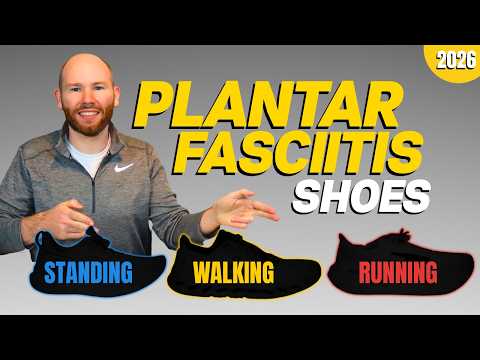
Why Walking Shoes Matter More Than You Think
Most patients assume that walking is gentle enough that any shoe will do. This is one of the most damaging misconceptions in foot health. Walking may generate less impact force than running, but the cumulative load over thousands of daily steps is substantial — and the prolonged ground contact time during walking creates sustained plantar fascia tension that can be more damaging than the brief impact of a running stride.
The plantar fascia experiences its highest strain during the propulsive phase of walking — when your heel lifts and your body weight transfers through the arch. A shoe without adequate support allows the arch to collapse during this phase, causing repetitive micro-tearing at the calcaneal insertion. Over weeks and months, this accumulation of micro-tears becomes the chronic heel pain that brings patients to my office.
5 Features Every Walking Shoe for Heel Pain Must Have
1. Deep Heel Cup
A deep, structured heel cup keeps the fat pad beneath your heel centered under the calcaneus — where it provides the most cushioning. In flat or worn shoes, the fat pad migrates laterally, leaving the heel bone directly exposed to ground impact. A deep heel cup prevents this and also controls rearfoot motion during gait.
2. Cushioned Midsole with Durability
Walking shoes compress their midsoles more slowly than running shoes, but they also last longer per pair. The midsole must be dense enough to provide sustained cushioning through thousands of steps without bottoming out. Foam technologies like Brooks DNA Loft v3, Hoka PROFLY+, and New Balance FuelCell are specifically engineered for this use case.
3. Rigid Torsional Stability
Twist the shoe from heel to toe — it should offer firm resistance. A shoe that twists easily means the midfoot can flex and collapse during the propulsive phase of gait, placing peak strain on the plantar fascia. Torsional rigidity is often overlooked but critical for heel pain prevention.
4. Arch Support (Medial Posting)
The medial arch of the foot must be supported throughout the stance phase of walking. Shoes with medial posting — either through firmness differential in the midsole foam or through structured arch supports — prevent pronation-driven plantar fascia overload. For severe flatfoot, adding a quality OTC insole amplifies this support significantly.
5. Roomy Forefoot
Toe box width affects heel pain indirectly. A narrow toe box causes the foot to compensate by transferring weight toward the heel during toe-off, increasing heel strike force. A wide forefoot allows natural toe splay and reduces compensatory loading through the heel insertion point.
Dr. Tom’s 7 Best Walking Shoes for Heel Pain in 2026
#1 — Brooks Ghost 17 (Men’s): Best All-Around Walking Shoe for Heel Pain
The Brooks Ghost 17 earns the top spot because it does everything right for heel pain without compromising walkability. The nitrogen-infused DNA Loft v3 midsole delivers a plush, responsive stride that absorbs ground impact before it reaches the inflamed plantar fascia. The 12mm heel drop — one of the highest in any walking shoe — dramatically reduces tension through the Achilles-fascia complex. The engineered mesh upper has a structured overlay system that locks the heel in place without restricting the forefoot. For patients who walk 5,000–15,000 steps per day in the context of active heel pain, the Ghost 17 is my first recommendation.

- THIS MEN’S SHOE IS FOR: The Ghost 17 is for runners and walkers alike looking for an everyday companion that provides smooth, reliable comfort. Now featuring an extra 1mm of DNA LOFT v3 in the heel and 3mm in the forefoot to help every mile feel as good as the first. This Brooks Ghost 17 is a certified PDAC A5500 Diabetic shoe and has been granted the APMA Seal of Acceptance. The Ghost 17 is a certified carbon neutral product. Predecessor: Ghost 16.
- SOFT & DYNAMIC CUSHIONING: The Ghost 17 offers neutral support with premium nitrogen-infused DNA Loft v3 cushioning to deliver lightweight softness and feel-good comfort after every mile. Ideal for road running, walking, cross training, travel, and the gym.
- SMOOTH TRANSITIONS: The newly designed midsole incorporates precise flex grooves that enhance the shoe's ability to promote smooth transitions. This innovative feature allows for a more natural flow during toe-off, enabling runners to maintain speed and momentum with ease.
- COMFORT & BREATHABILITY: The double jacquard air mesh upper provides premium comfort and breathability, while the kick-back collar adds support and structure. This design ensures optimal airflow, keeping your feet cool and dry during intense activities, while adapting to your foot’s natural movements for a comfortable snug fit.
- RUBBER OUTSOLE: The innovative rubber compound, crafted with recycled silica, offers a perfect balance of durability, lightweight performance, and responsive rebound, making it ideal for any terrain.
#2 — Hoka Bondi 9: Best Maximum Cushion Walking Shoe
For patients with severe heel pain — the kind that makes the first few steps out of bed genuinely agonizing — the Hoka Bondi 9 is in a class of its own. The stack height on the Bondi 9 is among the highest in any non-orthopedic footwear, providing a level of impact absorption that feels almost like walking on a cushioned track surface. Hoka’s Meta-Rocker sole geometry creates a smooth, forward-rolling motion that reduces the duration of heel contact during each step, further minimizing cumulative fascia load. The extended heel bevel softens the initial heel strike. Despite the extreme cushioning, the Bondi 9 has sufficient midsole structure that it doesn’t feel unstable or wobbly — a concern many patients have with highly cushioned shoes.

- ENGINEERED MESH
- Lining Textile
#3 — New Balance 990v6: Best Stability Walking Shoe
Made in the USA and built with the legendary 990’s emphasis on motion control and durability, the 990v6 is the walking shoe I recommend most for patients who overpronate significantly. The ENCAP midsole technology places a dense polyurethane rim around EVA foam in the heel — providing both cushioning and structured support in exactly the area where plantar fasciitis patients need it most. The FuelCell cushioning in the forefoot provides responsive toe-off without the stiffness associated with older stability shoes. The 990v6 is particularly durable, often lasting 600+ miles for walking use — making its premium price point an excellent long-term investment for patients with chronic heel issues.

- FuelCell foam delivers a propulsive feel to help drive you forward
- ENCAP midsole cushioning combines lightweight foam with a durable polyurethane rim to deliver all-day support
- Reflective accents designed to catch the light
- TPU back tab
- New Balance MADE contains a domestic value of 70% or more. MADE makes up a limited portion of New Balance’s US sales.
#4 — Brooks Ghost 16 (Women’s): Best Women’s Walking Shoe for Heel Pain
The Ghost 16 Women’s remains a top choice specifically because of its female-specific geometry. The women’s last is shaped to match the typical female foot: slightly narrower in the heel, wider through the forefoot, with a lower-volume upper that prevents heel slippage without over-tightening. Heel slippage is a surprisingly significant issue for heel pain patients — each time the heel lifts out of the shoe, the foot must grip with the toe flexors to keep the shoe on, creating a secondary load through the plantar fascia. The Ghost 16 Women’s eliminates this issue with its secure heel counter design.

- THIS WOMEN’S SHOE IS FOR: The Ghost 16 Weatherized offers exceptional traction on both wet and dry surfaces, providing a steady, confident stride with neutral support. Its DWR mesh upper shields you from the elements and regulates temperature, keeping you comfortable and focused, no matter the weather.
- WEATHERPROOF & REFLECTIVE UPPER: The knit DWR mesh upper offers superior weather protection, effectively managing temperature while keeping your feet dry in various conditions. Reflective elements enhance visibility in low-light environments.
- SOFT CUSHIONING: The Ghost 16 Weatherized offers neutral support while providing soft, nitrogen-infused DNA Loft v3 cushioning to deliver lightweight comfort. Ideal for road running, walking, and cross training outdoors.
- SMOOTH TRANSITIONS: The soft midsole and Segmented Crash Pad promote an easy flow from landing to toe-off to provide distraction- free cushioning under your feet with every stride.
- ALL-WEATHER TRACTION: The outsole features enhanced wet/dry traction, providing a secure grip on diverse surfaces to ensure stability and confidence with every stride.
#5 — Brooks Ghost 16 (Men’s): Best Men’s Walking Shoe for Heel Pain
The men’s Ghost 16 shares all the clinical benefits of its female counterpart — DNA Loft v3 cushioning, 12mm heel drop, structured upper — but is built on a wider, higher-volume last suited to male foot anatomy. For men with medium to wide feet and significant heel pain, the Ghost 16 provides exceptional comfort without the “breaking in” period associated with more structured stability shoes. It’s also one of the most accommodating shoes for custom orthotics due to its removable insole and generous interior volume.

- THIS MEN’S SHOE IS FOR: The Ghost 16 Weatherized offers exceptional traction on both wet and dry surfaces, providing a steady, confident stride with neutral support. Its DWR mesh upper shields you from the elements and regulates temperature, keeping you comfortable and focused, no matter the weather.
- WEATHERPROOF & REFLECTIVE UPPER: The knit DWR mesh upper offers superior weather protection, effectively managing temperature while keeping your feet dry in various conditions. Reflective elements enhance visibility in low-light environments.
- SOFT CUSHIONING: The Ghost 16 Weatherized offers neutral support while providing soft, nitrogen-infused DNA Loft v3 cushioning to deliver lightweight comfort. Ideal for road running, walking, and cross training outdoors.
- SMOOTH TRANSITIONS: The soft midsole and Segmented Crash Pad promote an easy flow from landing to toe-off to provide distraction- free cushioning under your feet with every stride.
- ALL-WEATHER TRACTION: The outsole features enhanced wet/dry traction, providing a secure grip on diverse surfaces to ensure stability and confidence with every stride.
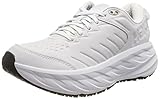
#6 — Hoka Bondi SR: Best Walking Shoe for Healthcare & Service Workers
The Bondi SR (Service & Retail) is Hoka’s slip-resistant walking shoe, designed for workers who spend long shifts on their feet in environments with potential liquid on the floors. The Bondi SR delivers the same maximum-cushion Bondi platform with the addition of a rubber outsole compound that meets ASTM F2913-11 slip resistance standards. This makes it ideal for nurses, doctors, food service workers, and teachers with plantar fasciitis who need both comfort and safety. Several of my patients who work long hospital shifts have reported near-complete resolution of heel pain after switching to the Bondi SR full-time.
- Leather, Synthetic
- Polyurethane
#7 — PowerStep Insoles: Essential Add-On for Heel Pain Support
No matter which walking shoe you choose, the factory insole is the weakest link in the support chain. Most OEM insoles compress flat within 2–4 weeks of regular use, leaving you with essentially zero arch support inside an otherwise well-constructed shoe. The PowerStep insole is the OTC insole I recommend most at our clinic because it provides clinical-grade arch support in a format that fits virtually any walking shoe. The deep heel cup, semi-rigid arch shell, and antimicrobial top cover make it a significant upgrade over any stock insole. For patients who aren’t ready for custom orthotics, this is the next best option.

- The Pinnacle Full length insoles for men & women provide maximum cushioning, from high activity to moderate support. The PowerStep arch support shape provides stability to the foot and ankle, helping to relieve foot pain.
- When you spend all day on your feet, every step counts. PowerStep insoles are a podiatrist-recommended orthotic to help relieve & prevent foot pain related to athletes, runners, Plantar Fasciitis, heel spurs & other common foot, ankle & knee injuries
- The Pinnacle plantar fasciitis insoles offer superior heel cushioning and arch support. The dual-layer cushioning is designed to reduce stress and fatigue, while PowerStep premium arch support is designed for plantar fasciitis relief.
- The PowerStep Pinnacle arch support inserts for men & women can be worn in a variety of shoe types such as; athletic, walking/running, work & some casual shoes. Orthotic Inserts are ordered by shoe size, no trimming required.
- Made in the USA & backed by a 30-day money-back guarantee. PowerStep orthotic inserts for men & women are designed for shoes where the factory insole can be removed. HSA & FSA Eligible
How to Test a Walking Shoe Before You Buy
Online shopping for walking shoes is convenient but removes the ability to do a proper in-store fit test. Here are five tests you can perform on any shoe you receive to confirm it’s appropriate for heel pain — before committing to wearing it full-time.
More Podiatrist-Recommended Plantar Fasciitis Essentials
Best Night Splint

- Plantar fascitis night splint brace heel and foot pain size: Medium
- Medium , men 8 10 1/2 , women 7 1/2 10
- Designed to comfortably position the foot
- Low profile shell is sturdy and breathable
Keeps fascia stretched overnight — the #1 intervention for morning heel pain.
Top Podiatrist-Recommended Insole
- The Pinnacle Full length insoles for men & women provide maximum cushioning, from high activity to moderate support. The PowerStep arch support shape provides stability to the foot and ankle, helping to relieve foot pain.
- When you spend all day on your feet, every step counts. PowerStep insoles are a podiatrist-recommended orthotic to help relieve & prevent foot pain related to athletes, runners, Plantar Fasciitis, heel spurs & other common foot, ankle & knee injuries
- The Pinnacle plantar fasciitis insoles offer superior heel cushioning and arch support. The dual-layer cushioning is designed to reduce stress and fatigue, while PowerStep premium arch support is designed for plantar fasciitis relief.
- The PowerStep Pinnacle arch support inserts for men & women can be worn in a variety of shoe types such as; athletic, walking, running, work & some casual shoes. Orthotic Inserts are ordered by shoe size, no trimming required.
- Made in the USA & backed by a 30-day money-back guarantee. PowerStep orthotic inserts for men & women are designed for shoes where the factory insole can be removed. HSA & FSA Eligible
Deep heel cup + arch support unloads the plantar fascia all day.
Plantar Fasciitis Compression Sock

- Provides continuous support of the Plantar Fascia by gently stretching the fascia tissue.
- Compression zones promote circulation, reduce impact vibration, boost recovery and strengthen feet.
- Lightweight, seamless design with extra cushioning provides support while still being comfortable.
- Supports the heel/arch and overall foot structure while stabilizing the tendon for better performance
- Made from high quality materials, the socks are moisture wicking and breathable.
Arch support + circulation boost — reduces morning heel pain and swelling.
As an Amazon Associate, Balance Foot & Ankle earns from qualifying purchases. Product recommendations are based on clinical experience; prices and availability shown above update live from Amazon.

When to See a Podiatrist
If morning heel pain has persisted more than 6 weeks, home care alone rarely fixes it. At Balance Foot & Ankle, we combine in-office ultrasound diagnostics, custom orthotics, and — when needed — shockwave or PRP to resolve plantar fasciitis that hasn’t responded to stretching and inserts. Most patients are walking pain-free within 4-8 weeks of starting a structured plan.
Call Balance Foot & Ankle: (810) 206-1402 · Book online · Offices in Howell & Bloomfield Hills
Frequently Asked Questions
Should I wear walking shoes or running shoes for heel pain?
Both can be appropriate for heel pain, but the key is matching the shoe to your activity. For daily walking and standing, a walking shoe (typically more structured and durable) is ideal. For jogging and running, choose a running shoe with adequate cushioning and heel drop. Many patients benefit from having both types and rotating based on their activity.
How long should it take for new shoes to help heel pain?
Most plantar fasciitis patients notice meaningful improvement within 2–4 weeks of switching to appropriate footwear. If you’re not seeing improvement after 4–6 weeks of wearing the correct shoes consistently, you likely need additional treatment: custom orthotics, corticosteroid injection, physical therapy, or shockwave therapy.
Are expensive shoes worth it for heel pain?
For plantar fasciitis, quality footwear is genuinely worth the investment. Premium foam midsoles (DNA Loft v3, FuelCell, PROFLY+) maintain their cushioning properties significantly longer than budget foam compounds. A $140 shoe that lasts 500 miles costs less per step than a $60 shoe that loses its cushioning at 200 miles — and it protects your plantar fascia throughout that range.
🦶 Persistent Heel Pain? We Can Help.
New shoes are step one — but if your pain persists beyond 6 weeks, you may need custom orthotics, corticosteroid injections, or shockwave therapy. Dr. Tom offers same-week appointments in Howell & Brighton, Michigan.
Book Your Evaluation →In Our Clinic
In our Balance Foot & Ankle clinic, the typical plantar fasciitis patient is a 40- to 60-year-old who noticed sharp heel pain on their very first steps in the morning or after sitting at a desk. Many arrive having already tried cheap shoe-store inserts and a week of ice without relief. On exam, we palpate the medial calcaneal tubercle, check for a positive windlass test, and rule out Baxter’s neuropathy and calcaneal stress fractures. Most of our plantar fasciitis patients respond to a custom orthotic + eccentric calf loading + night splinting protocol within 6–12 weeks — without injections or surgery.
Watch: Dr. Tom explains
Podiatrist-recommended products
As an Amazon Associate, Dr. Tom earns from qualifying purchases.
Add arch support to walking shoes for heel pain.
View on Amazon →Extra cushion for painful heels.
View on Amazon →Recovery after walks.
View on Amazon →Topical relief after long walks.
View on Amazon →Related resources
Ready to solve this? Book today.
Same-week appointments · Howell & Bloomfield Hills · 4.9★ (1,123+ reviews)
☎ (810) 206-1402Book Online →In-Office Treatment at Balance Foot & Ankle
When conservative care isn’t enough, Dr. Tom Biernacki and the team at Balance Foot & Ankle offer advanced, same-day options — including Plantar Fasciitis Surgery Bloomfield Hills at our Howell and Bloomfield Hills clinics.
Same-day appointments available. Call (810) 206-1402 or book online.

Dr. Tom Biernacki, DPM is a double board-certified podiatrist and foot & ankle surgeon at Balance Foot & Ankle Specialists in Southeast Michigan. With over a decade of clinical experience, he specializes in heel pain, bunions, diabetic foot care, sports injuries, and minimally invasive surgery. Dr. Biernacki is a member of the APMA and ACFAS, and his patient education content on MichiganFootDoctors.com and YouTube has reached over one million views.
Frequently Asked Questions
Can I see a podiatrist for heel pain without a referral?
How long does plantar fasciitis take to heal?
Should I walk on my heel if it hurts?
What does a podiatrist do for heel pain?
- Plantar Fasciitis: Diagnosis and Conservative Management (PubMed)
- Plantar Fasciitis (APMA)
- Diagnosis and Treatment of Plantar Fasciitis (PubMed / AAFP)
- Heel Pain (APMA)
Recommended Products from Dr. Tom