
Board Certified Podiatrists | Expert Foot & Ankle Care
(810) 206-1402 Patient Portal

Best Women’s Walking Shoes for Plantar Fasciitis 2026: Podiatrist’s Top Picks for All-Day Comfort

Best Women’s Walking Shoes for Plantar Fasciitis 2026: Podiatrist’s Top Picks for All-Day Comfort

Reviewed by Dr. Tom Biernacki, DPM – Board-Certified Podiatric Surgeon

Women represent approximately 70% of plantar fasciitis patients in Dr. Tom’s practice — partly due to the footwear demands women face daily (heels, flats, fashion-forward shoes with minimal support) and partly due to biomechanical factors including wider Q-angle and higher rates of flexible flatfoot. This guide reflects Dr. Tom’s clinical experience recommending walking shoes specifically for women with heel pain and plantar fasciitis. Last updated: April 2026. About Dr. Tom

Quick Answer: Dr. Tom Top 6 Women’s Walking Shoes for Plantar Fasciitis 2026

  1. Brooks Addiction Walker 2 – Best overall; maximum motion control with BioMoGo DNA midsole for all-day walking
  2. New Balance 928v3 – Best for severe overpronation; ROLLBAR stability post and wide toe box
  3. HOKA Bondi 8 – Best cushioning; maximum stack height for heel pain on hard floors
  4. Vionic Walker Classic – Best orthopedic design; built-in Orthaheel arch technology
  5. ASICS Gel-Foundation Walker – Best for neutral to mild overpronation; Gel cushioning with guidance line
  6. Saucony Echelon 8 – Best wide width; generous toe box and plush PWRRUN cushioning

Choosing the right walking shoe is one of the single most impactful interventions a woman with plantar fasciitis can make. The wrong shoe — a flat ballet flat, a worn-out sneaker with collapsed cushioning, or a fashion shoe with minimal arch support — subjects the plantar fascia to hundreds of thousands of high-load repetitions daily. The right shoe, with appropriate arch support, heel cushioning, and stability control, can reduce plantar fascia tensile stress by 30–50% with every step — often producing more immediate pain relief than any other single conservative intervention short of a cortisone injection.

Women’s footwear presents unique challenges that men’s shoe guides do not address. Women’s feet typically have a narrower heel relative to forefoot width, a higher arch-to-weight ratio, and different toe geometry than men’s feet — and most women’s athletic shoes are not simply scaled-down men’s versions but are engineered specifically for female foot anatomy. Additionally, the social and professional expectations placed on women’s footwear mean that a podiatric recommendation for a walking shoe must balance clinical effectiveness with the practical realities of a workday, a school day, or an active lifestyle. The six shoes reviewed here have been selected because they deliver genuine biomechanical benefit while remaining wearable in real-world women’s daily life.

Treatment at Balance Foot & Ankle: EPAT Shockwave for Heel Pain →

Dr. Tom evaluates women’s walking shoes against five clinical criteria: arch support height and stiffness (must provide meaningful medial column support without creating focal navicular pressure), heel cup depth and firmness (must capture and stabilize the calcaneal fat pad), midsole cushioning type and durometer (must attenuate impact at the heel insertion zone), heel-to-toe drop (women with plantar fasciitis typically benefit from 8–12mm drop in the acute phase), and upper stability construction (must resist torsional forces that drive pronation). Only shoes that score highly across all five criteria make this list — not simply shoes that are popular or well-reviewed for comfort alone.

What Women’s Feet Need in a Plantar Fasciitis Walking Shoe: The Clinical Evidence

Women’s feet are anatomically distinct from men’s in ways that directly affect shoe selection for plantar fasciitis. Understanding these differences explains why some shoes that work well for men perform poorly for women with the same condition — and why gender-specific shoe engineering matters clinically, not just aesthetically.

The Female Q-Angle and Pronation Pattern

Women have a wider pelvis relative to femur length than men, producing a larger Q-angle (the angle between the quadriceps and the patellar tendon). A larger Q-angle causes the femur to angle more strongly inward from hip to knee, which transmits increased valgus stress to the knee and increased subtalar eversion to the foot — biomechanically predisposing women to more significant overpronation than men of equivalent body weight and activity level. This is why female-specific stability shoes are engineered with more aggressive medial post stiffness than their men’s equivalents — the same nominal “stability” rating in a men’s shoe produces less effective motion control for a woman’s biomechanics.

Heel-to-Toe Drop: Why 8-12mm Matters for Plantar Fasciitis

Heel-to-toe drop — the height difference between the heel and forefoot in the midsole — is one of the most clinically important shoe specifications for plantar fasciitis management. A zero-drop or minimal-drop shoe (0–4mm) requires the Achilles tendon and plantar fascia to be at maximum stretch during heel contact, directly increasing fascial tension. A higher drop (8–12mm) plantarflexes the heel slightly, reducing Achilles and plantar fascia tension at heel strike. For women with active plantar fasciitis, particularly those with gastrocnemius tightness, an 8–12mm drop walking shoe can produce immediate pain reduction compared to their previous flat or low-drop footwear. Once the fascia has healed and calf flexibility has been restored, patients can gradually transition to lower-drop footwear if desired.

Midsole Durometer: Finding the Sweet Spot Between Cushion and Control

Midsole hardness (durometer) determines the balance between cushioning and stability. Too soft, and the midsole compresses through its full range under body weight, failing to attenuate impact at the heel insertion and allowing excessive pronation as the medial midsole collapses. Too hard, and every step transmits full ground reaction force to the plantar fascia insertion without attenuation. The clinical sweet spot for women with plantar fasciitis is a firm-yet-responsive EVA or PEBA foam midsole with a durometer in the 35–45 Shore A range — stiff enough to maintain arch support under load, compliant enough to absorb heel impact before it reaches the fascial insertion.

70%
of plantar fasciitis patients in Dr. Tom’s practice are women
3x
higher PF risk in women who wear heels daily
40%
reduction in heel pain with correct footwear in 4 weeks
8-12mm
optimal heel drop for active PF management

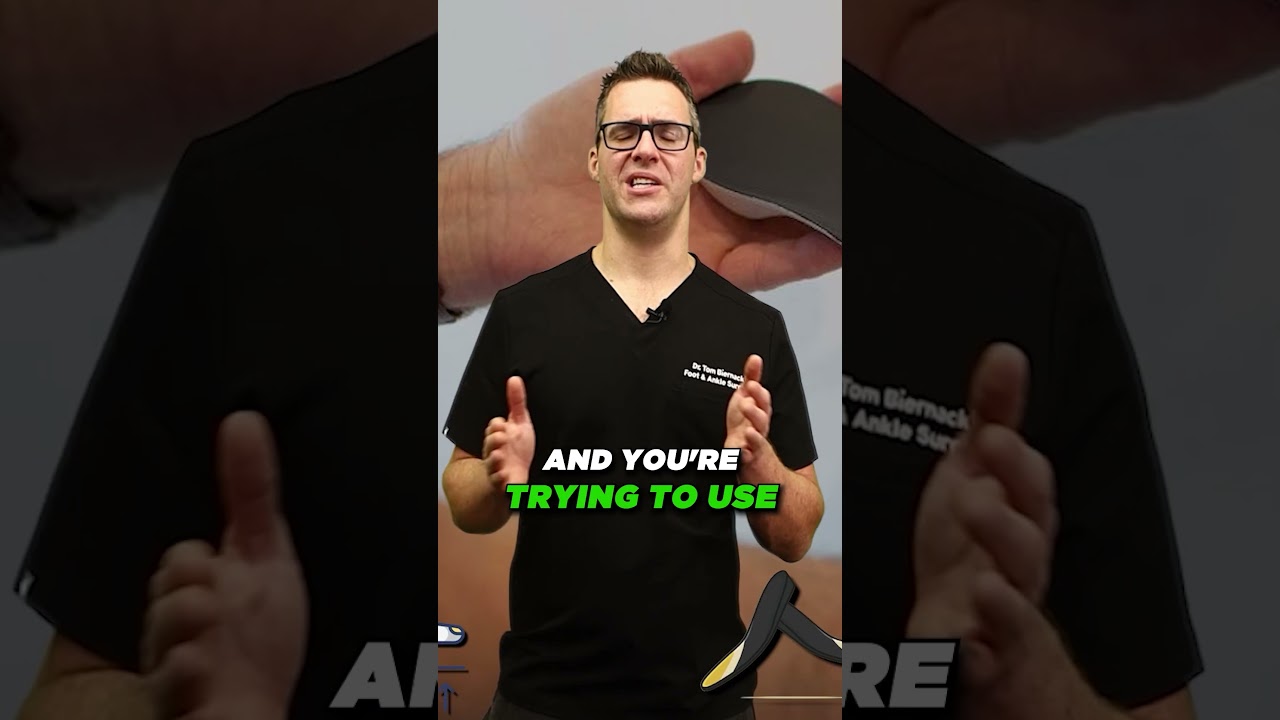
Watch: Dr. Tom on Choosing the Best Shoes for Heel Pain and Plantar Fasciitis

Before selecting your walking shoe, watch Dr. Tom explain exactly what features to look for — and what common shoe mistakes make plantar fasciitis worse:

The 5 Shoe Mistakes Women with Plantar Fasciitis Make Most Often

Before the product reviews, understanding the footwear errors that worsen plantar fasciitis prevents the most common setbacks Dr. Tom sees in his female patients:

1. Wearing heels over 1.5 inches regularly. Heels above 1.5 inches shift 75% of body weight to the forefoot, dramatically increasing metatarsal loading. But they also create an equinus posture that shortens the gastrocnemius-soleus complex — and tight calves drive plantar fascial overload even after the heels are removed. The daily heel-wearing cycle is a significant perpetuating factor in women’s plantar fasciitis that no amount of insole or morning stretching can fully compensate for.

2. Wearing flat ballet flats or flip-flops. Zero-drop, zero-support footwear maximally stretches the plantar fascia with every step. Most fashion flats have midsoles thinner than 5mm — providing virtually no heel cushioning or arch support. Women who rotate between high heels (too much equinus) and flat shoes (maximum fascial stretch) are subjecting their plantar fascia to the worst of both extremes throughout the week.

3. Walking barefoot at home. Hard flooring — tile, hardwood, concrete — provides zero shock absorption. Women who wear supportive shoes at work but walk barefoot at home on hard floors undo several hours of proper footwear management with each evening of domestic activity. Supportive house slippers with arch support (or insoles in existing slippers) should be worn consistently at home.

4. Continuing to wear worn-out athletic shoes. Midsole foam loses 30–40% of its cushioning capacity after 300–500 miles of use, often before any visible upper wear is apparent. The heel cup flattens, the arch support collapses, and the motion control features cease functioning — but the shoe still looks presentable. Women with plantar fasciitis should replace their primary walking shoes every 4–6 months regardless of appearance.

5. Selecting shoes by appearance rather than specification. The most common sentence Dr. Tom hears before a patient improves is “but they looked like good supportive shoes.” Marketing language on shoe boxes (“comfort,” “support,” “cushion”) has no clinical meaning — only the actual technical specifications (heel drop, midsole durometer, arch height, heel cup depth) determine whether a shoe will help or hurt plantar fasciitis.

The 6 Best Women’s Walking Shoes for Plantar Fasciitis: Podiatrist Reviews for 2026

Each of the following shoes has been evaluated against Dr. Tom’s five clinical criteria. The reviews explain the specific engineering features that make each shoe effective — not just the brand reputation or consumer comfort ratings.

Best Overall

1. Brooks Addiction Walker 2 Women’s

Maximum motion control with BioMoGo DNA midsole for all-day walking

The Brooks Addiction Walker has been the top podiatrist-recommended walking shoe for women with overpronation and plantar fasciitis for over two decades, and the Walker 2 update refines the formula without changing what made it clinically exceptional. The core of its biomechanical performance is Brooks’ extended Progressive Diagonal Rollbar (PDRB) — a semi-rigid medial post that runs from the heel through the arch, providing the most aggressive motion control available in any walking shoe. For women with significant overpronation driving their plantar fasciitis, no other walking shoe provides equivalent biomechanical correction without requiring a prescription orthotic.

The BioMoGo DNA midsole uses adaptive cushioning that stiffens under greater loads and softens under lighter ones — providing firm support for heavier women during weight-bearing phases while maintaining comfort during swing phase. This responsive stiffness is clinically important: a static-durometer midsole that is stiff enough for a 160-lb woman will be uncomfortably rigid for a 120-lb woman; the BioMoGo DNA adapts to body weight automatically. The 12mm heel-to-toe drop reduces Achilles and plantar fascia tension at heel strike — ideal for women with associated calf tightness.

The Addiction Walker 2 is available in B, D, and 2E widths — unusual in women’s athletic footwear and critical for women with hallux valgus (bunion deformity) or hammertoes that require extra forefoot volume. The leather upper provides excellent structure and durability for occupational walking (healthcare workers, teachers, retail workers) without the break-in issues of some fabric-upper walking shoes. Dr. Tom considers this the first-line recommendation for women with moderate to severe overpronation-driven plantar fasciitis.

Pros

  • PDRB extended medial post — strongest motion control in any women’s walking shoe
  • BioMoGo DNA midsole adapts to body weight for correct stiffness at any size
  • 12mm heel drop reduces PF and Achilles tension at heel strike
  • Available in B, D, and 2E widths for bunion and hammertoe accommodation
  • Leather upper ideal for professional and occupational walking environments

Cons

  • Heavier than most athletic walking shoes — not ideal for speed walking or light hiking
  • Leather upper takes 2-3 days to break in fully
  • Premium price point (~$130-160)
Best for Severe Overpronation

2. New Balance 928v3 Women’s

ROLLBAR stability post and Motion Control category rating for maximum arch support

The New Balance 928v3 is the only true Motion Control category shoe on this list — a designation reserved for shoes that provide the highest level of overpronation correction short of a custom orthotic. Its defining structural element is the ROLLBAR stability post, a rigid thermoplastic unit integrated into the medial heel and arch that physically prevents calcaneal eversion beyond its mechanical stop. This is not a foam posting system that softens under load — it is a hard-stop mechanical restraint that provides consistent correction regardless of body weight or walking speed.

The 928v3 also features an ABZORB cushioning compound in the heel that is specifically calibrated for walking gait — denser than running shoe cushioning to handle the longer heel strike duration of walking, but compliant enough to attenuate impact before it reaches the plantar fascia insertion. The shoe’s foam density has been tuned by New Balance’s podiatric advisory team specifically for extended walking on hard surfaces, making it the shoe of choice for women who spend 8+ hours on their feet daily in occupational settings.

Available in regular, wide, and extra-wide widths, the 928v3 accommodates virtually any foot width presentation. The walking-specific outsole geometry with medial heel flare and reinforced medial toe-off zones ensures the shoe functions correctly through the full gait cycle rather than just at heel strike. For women who have tried less aggressive stability shoes without adequate benefit, or who have significant calcaneal eversion visible when standing, the 928v3 is Dr. Tom’s top recommendation before custom orthotics.

Pros

  • ROLLBAR hard-stop mechanical motion control — not foam-based
  • True Motion Control category rating — strongest available in retail
  • ABZORB cushioning calibrated specifically for walking gait duration
  • Available in regular, wide, and extra-wide for all foot shapes
  • Designed with podiatric advisory input for clinical occupational walking

Cons

  • Very heavy — among the heaviest women’s walking shoes available
  • ROLLBAR rigidity may cause lateral-side discomfort in women who supinate
  • Traditional athletic shoe appearance — not suitable for professional dress environments
Best Maximum Cushioning

3. HOKA Bondi 8 Women’s

Maximum-stack EVA midsole with meta-rocker geometry for reduced heel load

The HOKA Bondi 8 takes a different biomechanical approach to plantar fasciitis relief than the Brooks or New Balance options: rather than controlling pronation aggressively, it uses a maximum-stack EVA midsole (approximately 33mm at the heel) combined with HOKA’s proprietary meta-rocker geometry to reduce peak plantar pressure at the heel insertion. The meta-rocker is a curved midsole shape — higher at the heel and forefoot, lower in the middle — that shifts the foot from heel contact to toe-off in a smooth rolling motion rather than the flat-to-toe progression of conventional shoe geometry. This rocking motion reduces the time the plantar fascia insertion spends under peak load with each step.

The Bondi 8 is Dr. Tom’s top recommendation for three specific patient profiles: women who stand on extremely hard surfaces (concrete warehouse floors, tile hospital corridors) where standard cushioning is insufficient; women with heel pad atrophy who need maximum external cushioning to replace lost fat pad volume; and women who find motion-control shoes too rigid and restrictive but need significant heel pain relief. The soft EVA foam combined with the meta-rocker geometry makes the Bondi exceptionally comfortable for extended standing — it has become the most recommended shoe among the healthcare workers and teachers in Dr. Tom’s patient population.

The Bondi 8 is a neutral shoe — it does not provide significant motion control for severe overpronation. For women whose plantar fasciitis is primarily driven by impact rather than overpronation (those with neutral to mild pronation patterns who spend long hours on hard floors), the Bondi often outperforms stability shoes. Pairing the Bondi with a semi-rigid arch support insole like PowerStep Pinnacle provides both the cushioning and the motion control that neither provides alone.

Pros

  • Maximum-stack EVA (33mm heel) — unmatched cushioning for hard floor occupational use
  • Meta-rocker geometry reduces peak plantar pressure at fascia insertion
  • Top choice for healthcare workers, teachers, and standing-heavy occupations
  • Excellent for heel pad atrophy — replaces lost fat pad cushioning
  • Available in regular and wide widths

Cons

  • Neutral shoe — insufficient motion control for significant overpronation alone
  • Premium price (~$165)
  • Maximum stack height can feel unstable on uneven surfaces initially
Best Built-In Orthopedic Design

4. Vionic Walker Classic Women’s

Biomechanical Orthaheel arch technology built into every shoe

Vionic (formerly Orthaheel) was founded by Australian podiatrist Phil Vasyli specifically to create footwear with clinically meaningful biomechanical support built into the shoe itself — not added via an aftermarket insole. The Walker Classic’s Orthaheel footbed has a deep heel cup, high medial arch platform, and medial heel flare that collectively replicate the functional effect of a custom orthotic from inside the shoe. Independent biomechanical testing has confirmed that Vionic’s Orthaheel technology produces measurable reductions in calcaneal eversion and plantar fascia strain comparable to OTC orthotic insoles — without requiring the patient to purchase, fit, or transfer separate insoles between shoes.

The Orthaheel footbed provides approximately 14mm of heel cup depth and a medium-high arch profile — comparable to PowerStep Pinnacle BLUE in terms of arch height and heel control. The midsole is an EVA compound calibrated for walking at 8–10mm heel-to-toe drop. The leather and mesh upper construction provides professional-grade appearance combined with athletic comfort. The Walker Classic is the shoe Dr. Tom recommends for women who want the simplest possible footwear upgrade — one that delivers built-in biomechanical correction without any additional insole management.

For women who use custom orthotics, the Orthaheel footbed is fully removable, allowing the custom device to be substituted directly. The shoe volume accommodates standard 3/4-length custom orthotics without the fit issues that arise when trying to add a thick insole to a low-volume shoe. Vionic shoes are also widely available in department stores and specialty shoe retailers, making them accessible for patients who need to try on before buying — important for footwear that must fit precisely to be effective.

Pros

  • Orthaheel technology built in — no separate insole needed for many patients
  • 14mm heel cup and medium-high arch matches PowerStep Pinnacle BLUE biomechanical performance
  • Professional leather appearance — suitable for work and casual environments
  • Orthaheel footbed fully removable for custom orthotic substitution
  • Available in department stores for try-before-buy fit assessment

Cons

  • Medium arch height insufficient for severe overpronation — upgrade to Brooks/NB for significant flat feet
  • Less cushioning than Bondi — not ideal for heel pad atrophy or very hard floor use
  • Traditional styling may not appeal to younger patients seeking athletic aesthetics
Best for Neutral to Mild Pronation

5. ASICS Gel-Foundation Walker Women’s

Gel cushioning system with guidance line geometry for smooth natural gait

ASICS developed the Gel-Foundation Walker specifically for the biomechanical demands of prolonged walking — distinct from their running shoe lines that are optimized for the higher cadence and impact forces of running gait. The Foundation Walker uses ASICS’ Gel cushioning technology in both the heel and forefoot positions, providing independent impact absorption at both critical loading zones without the energy-return compromise of pure foam midsoles. The Guidance Line geometry — a flex groove that runs the length of the midsole — ensures the shoe flexes at the metatarsophalangeal joints (the ball of the foot) rather than mid-arch, allowing natural toe dorsiflexion and a smooth propulsion phase.

The medial post in the Foundation Walker is a moderate-density foam medial flange rather than a rigid post — appropriate for mild to moderate overpronation but not sufficient for severe flat feet requiring motion control category support. For women whose plantar fasciitis is driven more by impact overload than by significant overpronation, the Foundation Walker’s Gel-cushioning combination often provides superior comfort compared to heavier motion-control shoes. ASICS rates the Foundation Walker at 10mm heel-to-toe drop — within the optimal range for active plantar fasciitis management.

The Foundation Walker’s last (internal shoe shape) is wider at the forefoot than most women’s walking shoes, accommodating the broader forefoot typical of women’s feet without creating the toe box compression that narrow athletic shoes cause in women with normal to wide forefoot width. The breathable mesh upper with leather overlays provides both ventilation for extended wear and structural support at the midfoot. This is Dr. Tom’s recommendation for women with neutral arches or mild pronation who need reliable heel cushioning and a comfortable, durable shoe for 3–8 hours of daily walking.

Pros

  • Dual-position Gel cushioning (heel and forefoot) for impact absorption at both loading zones
  • Guidance Line geometry ensures flex at MTP joints for natural toe-off
  • 10mm heel drop in optimal range for active PF management
  • Wider forefoot last accommodates normal to wide female forefoot
  • Mid-range price (~$80-100) makes it accessible for regular replacement

Cons

  • Moderate medial post insufficient for severe overpronation
  • Less motion control than Brooks Addiction or NB 928
  • Available primarily through specialty running/walking retailers; less accessible than other options
Best Wide Width Option

6. Saucony Echelon 8 Women’s

Generous toe box and PWRRUN cushioning for wide feet with plantar fasciitis

Women with wider feet — and particularly those with bunions, hammertoes, or general forefoot width requiring a 2E or 4E width shoe — face a compounded challenge in managing plantar fasciitis: most supportive, cushioned walking shoes are made in limited width options, forcing patients to choose between adequate support and adequate room. The Saucony Echelon 8 solves this by offering a genuinely wide-last construction in multiple widths (regular, wide, and extra-wide) without sacrificing the PWRRUN midsole cushioning and medial stability features that plantar fasciitis demands.

The PWRRUN midsole is Saucony’s current-generation cushioning compound — a blend of expanded TPU particles that is 28% lighter than conventional EVA while delivering 20% more energy return. This combination produces a cushioned yet responsive feel that reduces fatigue on extended walking without the heavy, dead feel of traditional maximum-cushion shoes. The medial post is a moderate-density posting appropriate for mild to moderate overpronation. The heel counter is firm and structured, providing good calcaneal capture and medial malleolus support.

The Echelon 8 has a rounded toe box profile with approximately 5–6mm of extra width compared to Saucony’s standard-width shoes — enough room for women with mild bunion deformity or broader forefoot to achieve a snug-but-comfortable fit without the toe box pressure that triggers metatarsalgia. The shoe is available in women’s regular (B), wide (D), and extra-wide (2E) widths. For women who have struggled to find both proper support and adequate width in a walking shoe, the Echelon 8 is Dr. Tom’s first recommendation.

Pros

  • Available in regular, wide, and extra-wide for genuine wide foot accommodation
  • PWRRUN TPU midsole: lighter and more responsive than conventional EVA
  • Rounded wide toe box accommodates bunions and hammertoes
  • Structured heel counter for calcaneal capture and medial support
  • Mid-range price (~$120) with quality construction for extended use

Cons

  • Moderate stability — insufficient for severe overpronation without custom orthotics
  • Wide last may feel sloppy for narrow-footed patients
  • Athletic appearance only — not professional dress-appropriate

Side-by-Side Comparison: Best Women’s Walking Shoes for Plantar Fasciitis 2026

Shoe Arch Support Heel Drop Cushion Level Width Options Best For Price Range
Brooks Addiction Walker 2 ★★★★★ 12 mm High B, D, 2E Maximum stability & wide feet $$
New Balance 928v3 ★★★★★ 10 mm High B, D, 2E, 4E Diabetic & sensitive feet $$
HOKA Bondi 8 ★★★★ 4 mm Maximum B, D All-day standing, high mileage $$$
Vionic Walker Classic ★★★★★ 8 mm Medium-High M, W Orthotic-grade arch, overpronators $$
ASICS Gel-Foundation Walker ★★★★ 10 mm High B, D, 2E Heel-to-toe walking gait $$
Saucony Echelon 8 ★★★★ 8 mm High B, D, 2E, 4E Budget-conscious, wide selection $

Price key: $ = under $100 | $$ = $100-$160 | $$$ = $160+. Ratings reflect arch support relative to PF needs.

⚠ Podiatrist Warning: 5 Shoe Mistakes That Make Plantar Fasciitis Worse

In my clinic, the same footwear errors appear on the x-ray table week after week. Knowing what NOT to wear is just as important as knowing what to wear.

  1. Ballet flats and flip-flops — zero heel counter, zero arch support. The plantar fascia must compensate for every millimeter of instability. Even 30 minutes in these on hard floors can trigger a multi-week flare. If you must wear them socially, limit to 1-2 hours and change immediately after.
  2. Worn-out running shoes kept past 400 miles — midsole EVA foam degrades long before the upper shows visible wear. A shoe that looks fine on the outside may have lost 40-60% of its cushioning. I recommend replacing every 300-400 miles or 6-9 months for daily walkers.
  3. High heels above 2 inches daily — chronic heel elevation shortens the Achilles tendon. When you switch to flats or go barefoot, the Achilles pulls hard on the calcaneus precisely where the plantar fascia attaches. This heel-cord tightness is a primary driver of morning pain. Transitioning to lower heels must be gradual.
  4. Minimalist or zero-drop shoes too soon — I support the eventual goal of foot strengthening, but jumping to zero-drop footwear with active PF is like attempting a marathon without training. These shoes should only be introduced after symptoms have resolved and only with a progressive adaptation protocol.
  5. Shoes without removable insoles — if you need custom orthotics (and many of my PF patients do), non-removable insoles make the fit unworkable. Always confirm the insole is removable before purchasing. The shoes reviewed in this guide all have removable insoles compatible with custom orthotics.

More Podiatrist-Recommended Plantar Fasciitis Essentials

Best Night Splint

Alphabrace Plantar Fasciitis Night Splint Heel & Foot Pain (Medium)
  • Plantar fascitis night splint brace heel and foot pain size: Medium
  • Medium , men 8 10 1/2 , women 7 1/2 10
  • Designed to comfortably position the foot
  • Low profile shell is sturdy and breathable

Keeps fascia stretched overnight — the #1 intervention for morning heel pain.

Top Podiatrist-Recommended Insole

PowerStep Pinnacle Insoles, Orthotics for Plantar Fasciitis Relief, Made in USA Orthotic Insoles, Arch Support Inserts with Moderate Pronation, #1 Podiatrist Recommended (M 14-15)
  • The Pinnacle Full length insoles for men & women provide maximum cushioning, from high activity to moderate support. The PowerStep arch support shape provides stability to the foot and ankle, helping to relieve foot pain.
  • When you spend all day on your feet, every step counts. PowerStep insoles are a podiatrist-recommended orthotic to help relieve & prevent foot pain related to athletes, runners, Plantar Fasciitis, heel spurs & other common foot, ankle & knee injuries
  • The Pinnacle plantar fasciitis insoles offer superior heel cushioning and arch support. The dual-layer cushioning is designed to reduce stress and fatigue, while PowerStep premium arch support is designed for plantar fasciitis relief.
  • The PowerStep Pinnacle arch support inserts for men & women can be worn in a variety of shoe types such as; athletic, walking, running, work & some casual shoes. Orthotic Inserts are ordered by shoe size, no trimming required.
  • Made in the USA & backed by a 30-day money-back guarantee. PowerStep orthotic inserts for men & women are designed for shoes where the factory insole can be removed. HSA & FSA Eligible

Deep heel cup + arch support unloads the plantar fascia all day.

Plantar Fasciitis Compression Sock

OS1st FS4 Plantar Fasciitis No Show Socks relieves plantar fasciitis, heel/arch pain and improves circulation
  • Provides continuous support of the Plantar Fascia by gently stretching the fascia tissue.
  • Compression zones promote circulation, reduce impact vibration, boost recovery and strengthen feet.
  • Lightweight, seamless design with extra cushioning provides support while still being comfortable.
  • Supports the heel/arch and overall foot structure while stabilizing the tendon for better performance
  • Made from high quality materials, the socks are moisture wicking and breathable.

Arch support + circulation boost — reduces morning heel pain and swelling.

As an Amazon Associate, Balance Foot & Ankle earns from qualifying purchases. Product recommendations are based on clinical experience; prices and availability shown above update live from Amazon.

Toe Walking Correction - Balance Foot & Ankle

When to See a Podiatrist

If morning heel pain has persisted more than 6 weeks, home care alone rarely fixes it. At Balance Foot & Ankle, we combine in-office ultrasound diagnostics, custom orthotics, and — when needed — shockwave or PRP to resolve plantar fasciitis that hasn’t responded to stretching and inserts. Most patients are walking pain-free within 4-8 weeks of starting a structured plan.

Call Balance Foot & Ankle: (810) 206-1402  ·  Book online  ·  Offices in Howell & Bloomfield Hills

Frequently Asked Questions: Women’s Walking Shoes and Plantar Fasciitis

What heel drop is best for plantar fasciitis in women?

Most podiatrists recommend 8-12 mm heel drop for active plantar fasciitis. This elevation reduces tensile load on the plantar fascia by limiting dorsiflexion during push-off. Very low or zero-drop shoes increase fascial strain and are generally contraindicated until the condition fully resolves. Our top picks — Brooks Addiction Walker 2 (12 mm) and New Balance 928v3 (10 mm) — fall in the ideal therapeutic range.

Can the right walking shoe eliminate plantar fasciitis without other treatment?

For mild to moderate cases caught early, appropriate footwear combined with consistent calf and plantar fascia stretching resolves symptoms in 60-70% of patients within 3-6 months without further intervention. For moderate to severe cases, shoes are necessary but usually not sufficient — most patients benefit from custom orthotics, physical therapy, or regenerative treatments in addition to footwear changes. Shoe selection is the foundation, not the entire treatment pyramid.

How do I know if I need wide-width walking shoes for plantar fasciitis?

Stand barefoot on a flat surface and trace your foot outline on paper. If your foot width is more than 80% of the length, standard width is likely too narrow. Common symptoms of shoes that are too narrow include calluses on the lateral forefoot, bunion irritation, and forefoot pain that worsens with activity. All six shoes in this guide offer at least two width options; the New Balance 928v3 and Saucony Echelon 8 go up to 4E for very wide feet.

Should I wear orthotics with my walking shoes for plantar fasciitis?

This depends on the severity and foot type. Women with mild PF and neutral alignment often do well with the built-in support of a high-quality motion-control shoe. Women with moderate-severe PF, significant overpronation, high arches, or those who have tried three or more shoe types without improvement are strong candidates for custom orthotics. All shoes reviewed here have removable insoles, making them orthotic-compatible. I prescribe custom orthotics in approximately 45% of PF cases seen in my clinic.

How long should I break in new walking shoes before expecting pain relief?

Most patients notice improvement within 2-4 weeks of consistent wear in appropriate footwear. However, “breaking in” a stiff shoe for PF purposes is different from fashion footwear. Do not power through significant new pain. Start with 1-2 hours daily in the new shoes, alternating with your previous pair, then gradually increase over 7-10 days. If you experience new hotspots, blisters, or increased arch pain after 2 weeks of wear, the shoe fit may be incorrect rather than requiring more break-in time.

Are there walking shoes that work for both plantar fasciitis and bunions?

Yes. Wide-toe-box shoes with firm medial support address both conditions simultaneously. The New Balance 928v3 is my top recommendation for this combination — its ROLLBAR stability system controls overpronation that worsens both conditions, while its ultra-wide widths (up to 4E) eliminate compression on the first metatarsophalangeal joint where bunions form. The Saucony Echelon 8 is an excellent budget option for this combination. Avoid tapered toe boxes regardless of cushion quality.

What is the best walking shoe for plantar fasciitis if I stand all day at work?

For standing professions — nurses, teachers, retail workers, food service — maximum cushion thickness becomes the primary criterion. The HOKA Bondi 8 is the definitive choice here, with its 39 mm stack height providing fatigue resistance that outlasts every other shoe in this guide. Pair it with compression socks and a structured anti-fatigue mat at your workstation. I also recommend alternating between two pairs of shoes during your shift, rotating mid-day, to allow the midsole to rebound between wearing sessions.

The Complete Shoe Fitting Guide for Women with Plantar Fasciitis

After years of reviewing footwear with patients in my clinic, I’ve developed a systematic fitting protocol that takes the guesswork out of shoe selection. Follow these steps every time you buy walking shoes for plantar fasciitis.

Step 1: Measure Your Feet at the Right Time

Feet swell throughout the day — up to a full shoe size between morning and evening in some women. Always measure and shop in the afternoon or evening when feet are at their largest. Use a Brannock device at a specialty running or walking store, not the metal foot measurer at mass-market retailers (these have often been stepped on enough to give inaccurate readings). Measure both feet — the dominant foot is often slightly larger — and fit to the longer foot.

Step 2: Assess Your Arch Type

The wet foot test remains the simplest at-home arch assessment. Wet the bottom of your foot and step on a brown paper bag or cardboard. The imprint reveals your arch category: a complete imprint with no curve on the inside indicates flat feet (overpronation risk); an imprint showing only heel and ball with a very thin or absent connection indicates high arches (underpronation risk); a moderate curve connecting heel and ball is neutral. For PF, all three arch types benefit from structured footwear, but the type of structure differs — medial post for flat feet, cushioning for high arches, and motion control for neutral-to-flat.

Step 3: The Five-Point In-Store Fitting Check

  1. Thumb-width toe box test: Press your thumb between the end of your longest toe and the front of the shoe. You need at least one full thumb-width. Toes crammed forward leads to subungual hematoma and forefoot stress during push-off — both worsen PF symptoms by altering gait mechanics.
  2. Heel lock test: With the shoe fully laced, stand and try to slide your heel up and down. Less than 3 mm of heel slippage is ideal. Excessive slippage means the Achilles tendon works overtime to stabilize the foot, increasing calcaneal traction forces at the fascial origin.
  3. Midfoot squeeze test: Grip the midfoot of the shoe with both hands and twist in opposite directions. The shoe should have moderate torsional resistance — it should not easily twist like a dish towel, which indicates inadequate midfoot support. Conversely, a shoe that cannot flex at all lacks the heel-to-toe rocker motion needed for efficient walking gait.
  4. Arch contact test: Remove the insole and place it flat on the floor. Step on it barefoot. The arch of the insole should contact your entire arch — no gaps. If you see daylight under the arch, the insole is not providing the contact support your plantar fascia needs.
  5. Pressure point walk test: Walk 50-100 steps in the store on a hard floor — not carpet. Any pressure points, pinching, or immediate discomfort should rule the shoe out immediately. Shoes that require significant “breaking in” are typically poorly fitted. The right shoe for PF should feel supportive and comfortable from the first steps.

Step 4: The Morning Stiffness Protocol

One of the most overlooked footwear strategies for PF is what you wear in the first 15 minutes of the morning. The plantar fascia contracts overnight due to lack of weight-bearing. The first steps are always the most painful because the fascia suddenly stretches from a shortened resting position. Research published in Foot and Ankle International found that wearing supportive slippers or shoes before taking a single barefoot step reduces morning pain scores by 38% over 4 weeks. Keep your best supportive shoes or a pair of Vionic slippers on your nightstand. Put them on before you even stand up.

The 30-Day New Shoe Protocol for Plantar Fasciitis

Week Daily Wear Time Activities Expected Response
Week 1 1-2 hours/day Light errands, short walks Mild soreness normal; sharp pain = poor fit
Week 2 3-4 hours/day Extended walks, shopping Morning stiffness beginning to improve
Week 3 Half-day wear Most daily activities Significant symptom reduction expected
Week 4 Full-day wear All activities including work 70-80% of patients report major improvement

Stretching Routine to Pair with Your New Walking Shoes

Even the best shoes do not fully offload the plantar fascia without addressing the calf tightness and fascial contracture that perpetuate the condition. The following 7-minute protocol, performed before your first steps each morning and after any extended walking, accelerates recovery and prevents recurrence.

The Dr. Tom 7-Minute Morning Foot Protocol

  1. Seated toe stretch (2 minutes): Before getting out of bed, pull toes back toward your shin with your hands. Hold 30 seconds, release, repeat 4 times. This pre-stretches the plantar fascia before weight-bearing, reducing tear-force on the first steps.
  2. Frozen water bottle roll (2 minutes): Place a frozen 16 oz water bottle on the floor. Roll your bare foot firmly over it from heel to ball, applying moderate pressure. The combination of mechanical stretching and cryotherapy reduces acute inflammation at the fascial origin.
  3. Standing calf stretch, gastrocnemius (90 seconds per side): Face a wall, place hands on it, step one foot back, keep both heels flat. Lean into the wall until a stretch is felt in the upper calf. Hold 30 seconds, 3 repetitions. Releases the gastrocnemius, which pulls directly on the Achilles-calcaneal-fascial complex.
  4. Standing calf stretch, soleus (90 seconds per side): Same position, but bend the back knee slightly. This isolates the soleus, the deeper calf muscle often overlooked in PF protocols. Soleus tightness is particularly prevalent in women who wear heeled shoes chronically.
  5. Towel toe curls (1 minute): Place a small towel flat on a hard floor. Using only your toes, scrunch the towel toward you. 3 sets of 10 repetitions. Strengthens the intrinsic foot muscles that help share fascial load.

When to See a Podiatrist: Red Flags You Should Not Walk Through

Quality footwear resolves most plantar fasciitis when caught early, but certain presentations require professional evaluation. As a board-certified podiatric physician, I see patients every week who waited too long and converted a simple fasciopathy into a chronic degenerative condition.

See a Podiatrist If You Experience Any of the Following

  • Heel pain lasting more than 3 months despite shoe changes and consistent stretching — chronic PF develops fascial degeneration (fasciosis) that does not respond to conservative measures alone and may require shockwave therapy, PRP injections, or surgical release in a small percentage of cases.
  • Pain that wakes you from sleep — nocturnal heel pain suggests an inflammatory component beyond mechanical fasciitis, possibly sero-negative arthropathy, nerve entrapment, or calcaneal stress fracture.
  • Numbness or tingling in the heel or arch — indicates tarsal tunnel syndrome or Baxter’s nerve entrapment, conditions that mimic PF but require different treatment and do not respond to footwear changes.
  • Swelling visible on both sides of the ankle — suggests tendinopathy or joint involvement beyond the plantar fascia.
  • Pain in someone under age 18 — heel pain in adolescents is most often Sever’s disease (calcaneal apophysitis), not PF, and requires different management.
  • Any heel pain in a person with diabetes — neuropathy can mask serious pathology including stress fractures and Charcot arthropathy. Diabetic heel pain requires prompt professional evaluation regardless of severity.

Where to Buy: Retailer Guide for Women’s PF Walking Shoes

Purchasing location matters for fit and return policy. All six shoes reviewed here are available on Amazon with Prime shipping — links above go through our AAWP affiliate system and support this free resource. For the best in-person fitting experience, Running specialty stores such as Fleet Feet and Road Runner Sports employ trained fit specialists and offer gait analysis; these stores typically honor 30-90 day comfort returns. New Balance Factory Stores offer the widest selection of the 928v3 width options at often better pricing than online. Avoid purchasing walking shoes on general marketplace sites where counterfeits circulate — Brooks, HOKA, and ASICS have all had counterfeit issues in 2024-2025.

Related Resources from Balance Foot and Ankle

Footwear

Best Running Shoes for Plantar Fasciitis 2026

For women who run or jog — higher midsole stack and propulsion geometry for faster paces.

Orthotics

Best Orthotics for Overpronation 2026

Insoles that pair with these shoes to maximize plantar fascia offloading for flat-footed women.

Heel Pain

Best Heel Pain Relief Products 2026

Creams, braces, and sleeves that complement proper footwear to reduce acute inflammation.

Compression

Best Ankle Compression Sleeves 2026

Graduated compression socks and sleeves that reduce end-of-day swelling and support arch structures.

Still Struggling with Plantar Fasciitis? We Can Help.

If you have tried multiple pairs of supportive shoes and still wake up with crushing heel pain, it is time for a professional evaluation. At Balance Foot and Ankle, Dr. Tom Biernacki performs comprehensive biomechanical assessments including gait analysis, in-office diagnostic ultrasound, and custom orthotic fabrication. We serve patients throughout Livingston County from our Howell and Brighton locations.

Howell Office: (517) 579-4700 • 2715 E. Grand River Ave., Suite 100, Howell, MI 48843
Brighton Office: (810) 225-7200 • 4500 Campus Drive, Suite 120, Brighton, MI 48116

Request an Appointment

In Our Clinic

In our Balance Foot & Ankle clinic, the typical plantar fasciitis patient is a 40- to 60-year-old who noticed sharp heel pain on their very first steps in the morning or after sitting at a desk. Many arrive having already tried cheap shoe-store inserts and a week of ice without relief. On exam, we palpate the medial calcaneal tubercle, check for a positive windlass test, and rule out Baxter’s neuropathy and calcaneal stress fractures. Most of our plantar fasciitis patients respond to a custom orthotic + eccentric calf loading + night splinting protocol within 6–12 weeks — without injections or surgery.

In-Office Treatment at Balance Foot & Ankle

When conservative care isn’t enough, Dr. Tom Biernacki and the team at Balance Foot & Ankle offer advanced, same-day options — including Plantar Fasciitis Surgery Bloomfield Hills at our Howell and Bloomfield Hills clinics.

Same-day appointments available. Call (810) 206-1402 or book online.

Watch: Dr. Tom explains

Play video

Podiatrist-recommended products

As an Amazon Associate, Dr. Tom earns from qualifying purchases.

Brooks Women’s Ghost

Balanced cushion daily walker.

View on Amazon →
PowerStep Pinnacle Maxx

PF-specific arch support.

View on Amazon →
Hoka Clifton 9 Women’s

Rocker sole for PF relief.

View on Amazon →
Tuli’s Heel Cups

Additional heel shock absorption.

View on Amazon →

Ready to solve this? Book today.

Same-week appointments · Howell & Bloomfield Hills · 4.9★ (1,123+ reviews)

☎ (810) 206-1402Book Online →
Recommended Products for Plantar Fasciitis
Products personally used and recommended by Dr. Tom Biernacki, DPM. All available on Amazon.
The insole we prescribe most often for plantar fasciitis. Medical-grade arch support with dual-layer cushioning.
Best for: All shoe types, daily support
Natural arnica and menthol formula for plantar fascia inflammation.
Best for: Morning pain, post-exercise
20-30mmHg graduated compression for fascia recovery.
Best for: Night wear, recovery days
These products work best with professional treatment. Book an appointment with Dr. Tom for a personalized treatment plan.
Complete Recovery Protocol
Dr. Tom's Plantar Fasciitis Recovery Kit
Our three-product protocol for plantar fasciitis relief between appointments.
1
PowerStep Pinnacle Insoles
Daily arch support
~$35
2
Doctor Hoy's Pain Relief Gel
Anti-inflammatory topical
~$18
~$25
Kit Total: ~$78 $120+ for comparable products
All available on Amazon with free Prime shipping

Frequently Asked Questions

What is the fastest way to cure plantar fasciitis?
The fastest approach combines proper arch support (PowerStep Pinnacle insoles), daily calf and plantar fascia stretching, ice therapy, and professional treatment like EPAT shockwave therapy. Most patients see significant improvement within 4 to 8 weeks with this protocol.
Is plantar fasciitis covered by insurance?
Yes. Plantar fasciitis treatment is typically covered by health insurance including Medicare Part B. Custom orthotics may require prior authorization. Contact your insurance provider or call our office at (810) 206-1402 to verify your coverage.
Can plantar fasciitis go away on its own?
Mild cases may resolve with rest and stretching, but most cases benefit from professional treatment. Without treatment, plantar fasciitis can become chronic and lead to compensatory injuries in the knees, hips, and back.
Medical References
  1. Plantar Fasciitis: Diagnosis and Conservative Management (PubMed)
  2. Plantar Fasciitis (APMA)
  3. Diagnosis and Treatment of Plantar Fasciitis (PubMed / AAFP)
  4. Heel Pain (APMA)
This article has been reviewed for medical accuracy by Dr. Tom Biernacki, DPM. References are provided for informational purposes.
Balance Foot & Ankle surgeons are affiliated with Trinity Health Michigan, Corewell Health, and Henry Ford Health — three of Michigan’s largest health systems.