
Best Heel Pain Relief Products 2026: Podiatrist Complete Guide to Treating Plantar Fasciitis and Heel Pain at Home
Reviewed by Dr. Tom Biernacki, DPM – Board-Certified Podiatric Surgeon
Heel pain is the most common complaint Dr. Tom treats at Balance Foot and Ankle in Howell and Brighton, Michigan. He has managed thousands of plantar fasciitis, heel spur, and Achilles insertion cases across 15+ years of practice. This guide covers the full product toolkit Dr. Tom recommends for home-based heel pain management — from night splints to arch supports to ice therapy. Last updated: April 2026. About Dr. Tom
Quick Answer: Dr. Tom Top 6 Heel Pain Relief Products 2026
- Ossur Exoform Dorsal Night Splint – Best overall; stretches plantar fascia overnight for morning pain relief
- Tuli’s Classic Heel Cups – Best heel cushion; shock-absorbing waffle design fits any shoe
- Superfeet GREEN Heritage Insoles – Best arch support; reduces plantar fascia strain throughout the day
- Physix Gear Plantar Fasciitis Support Sleeve – Best daytime brace; graduated compression with arch support panel
- Vive Ankle and Foot Ice Wrap – Best cold therapy; targeted gel compression for post-activity pain
- TheraBand Resistance Bands – Best stretching tool; essential for calf and fascia flexibility exercises
Heel pain is not a single condition — it is a symptom produced by at least eight different diagnoses, each requiring a different treatment approach. The most common cause is plantar fasciitis (inflammation of the plantar fascial band at its calcaneal insertion), but heel spurs, Achilles tendinitis, calcaneal stress fractures, heel pad atrophy, tarsal tunnel syndrome, Sever’s disease in adolescents, and entrapment of the first branch of the lateral plantar nerve all present as heel pain and all respond differently to conservative management. Before investing in any heel pain product, understanding which specific diagnosis is driving your pain determines whether the product will help or hinder your recovery.
That said, the six products reviewed on this page address the most common mechanism underlying the majority of heel pain presentations: plantar fascia overload from inadequate arch support, excessive tension in the gastrocnemius-soleus complex, repetitive impact without adequate heel cushioning, and inadequate overnight fascial lengthening that causes the characteristic first-step morning pain of plantar fasciitis. These products form a comprehensive home management toolkit that Dr. Tom recommends as a first-line treatment course before escalating to corticosteroid injections, shockwave therapy, or surgical intervention.
The clinical evidence supports this conservative approach strongly: approximately 90% of plantar fasciitis cases resolve with 6–12 months of consistent conservative management that includes the elements in this guide — arch support, night splinting, stretching, and activity modification. The 10% that require intervention are typically patients with biomechanical deformities requiring custom orthotics, or patients with heel pathology other than plantar fasciitis that was initially misdiagnosed. Dr. Tom can distinguish these cases on clinical examination and imaging — which is why patients who do not improve after 6–8 weeks of quality conservative treatment should be evaluated rather than simply trying more products.
Understanding Heel Pain: Why the First Step Hurts and What Products Can Fix It
The defining feature of plantar fasciitis heel pain — the stabbing first-step pain that is worst in the morning or after prolonged sitting — is one of the most diagnostically reliable symptoms in all of podiatric medicine. Understanding why it occurs explains exactly why the products in this guide work.
The Windlass Mechanism and Why It Breaks Down
The plantar fascia functions as the passive tension element in what biomechanists call the “windlass mechanism” — the system by which dorsiflexion of the toes during the propulsive phase of gait tightens the plantar fascia, raises the medial arch, and converts the foot from a flexible shock absorber into a rigid lever for push-off. This mechanical function is exquisite and essential, but it places enormous repetitive tensile load on the fascia’s calcaneal insertion with every step.
In healthy feet with sufficient arch support and flexible calf musculature, this load is distributed across the entire fascial band. In overpronating feet, tight calves, or patients who stand on hard surfaces without adequate cushioning, the load concentrates at the calcaneal insertion — producing microtears in the fascial tissue, periosteal inflammation, and eventually the reactive enthesophyte (heel spur) that appears on X-ray in approximately 50% of plantar fasciitis cases. The spur itself is not the pain source — it is the chronic fascial inflammation at the insertion that hurts.
Why Morning Pain Is the Diagnostic Hallmark
During sleep, the foot rests in plantarflexion (toes pointed down), which shortens the plantar fascia to its minimum length. Overnight, the inflammatory repair process deposits immature collagen fibers across the microtears at the fascia’s shortened length. When the patient stands for the first step in the morning, the fascia is suddenly stretched from its overnight shortened position to its full functional length — tearing the immature repair fibers and producing the characteristic sharp, stabbing pain that patients describe as “stepping on glass.” After 5–10 minutes of walking, the repair fibers stretch and accommodate, and pain typically decreases to a dull ache or disappears entirely — only to recur after prolonged rest.
This mechanism explains exactly why a night splint is among the most evidence-supported conservative treatments for plantar fasciitis: it holds the foot in neutral or slight dorsiflexion overnight, preventing the overnight shortening that causes first-step pain, and maintaining the fascia at a length that allows repair fibers to be deposited under slight tension — producing stronger, more organized scar tissue.
The Role of the Gastrocnemius-Soleus Complex
Calf muscle tightness is present in the overwhelming majority of plantar fasciitis cases. The gastrocnemius and soleus muscles attach via the Achilles tendon to the posterior calcaneus — the same bone where the plantar fascia inserts on the inferior surface. When the calf muscles are tight, they chronically increase tension on the calcaneus, indirectly increasing the tensile load on the plantar fascia through the heel bone’s periosteum. Clinical studies consistently show that patients with less than 10 degrees of ankle dorsiflexion — a reliable indicator of gastrocnemius tightness — have significantly higher rates of plantar fasciitis and worse outcomes with insole-only treatment. Calf stretching is not optional in plantar fasciitis management — it is mechanically essential.
Watch: Dr. Tom Complete Guide to Heel Pain and Plantar Fasciitis Treatment
Before selecting your products, watch Dr. Tom walk through the full spectrum of heel pain treatments — from home products to in-office procedures — and learn which approach fits your severity level:
The 6 Best Heel Pain Relief Products: Podiatrist Reviews for 2026
These six products address the six key components of a complete home heel pain management program: overnight fascial lengthening, heel shock absorption, arch support insoles, daytime compression and support, ice therapy for acute inflammation, and stretching tools for calf flexibility. Used together consistently for 8–12 weeks, they replicate the conservative management protocol Dr. Tom implements in his clinical practice.
1. Ossur Exoform Dorsal Night Splint
Low-profile dorsal splint holding ankle at 90 degrees to lengthen fascia overnight
Night splinting is the highest-evidence conservative treatment for plantar fasciitis morning pain, and the Ossur Exoform is the splint Dr. Tom recommends most consistently in his practice. Its design advantage over traditional posterior shell night splints is its dorsal (top-of-foot) profile — the rigid frame runs along the dorsum of the foot and up the front of the shin, holding the ankle at 90 degrees or slight dorsiflexion without the bulk, heat, and sleep disruption of a posterior splint that wraps around the calf and heel. Patients who have abandoned night splinting because of discomfort overwhelmingly report better compliance with the Exoform dorsal design.
The clinical mechanism is straightforward: by holding the ankle at 90 degrees overnight, the Exoform prevents the foot from falling into plantarflexion during sleep, keeping the plantar fascia at its functional length throughout the night. Repair fibers are then deposited at this longer length — producing more organized collagen architecture and reducing the length mismatch that causes first-step pain. Multiple randomized controlled trials have demonstrated that night splinting produces statistically significant reductions in morning pain and overall pain scores within 4–12 weeks, with compliance-adjusted response rates of 75–83%.
The Exoform uses a semi-rigid polypropylene frame with foam padding at key pressure points (dorsal toes, anterior shin) and a single Velcro strap system that is easy to apply and remove even in the middle of the night for bathroom trips. It is lightweight enough that most patients forget they are wearing it within a few nights. Available in three sizes based on shoe size; fits right or left foot. Dr. Tom recommends wearing it every night for the first 8 weeks of treatment, then transitioning to 3–4 nights per week as symptoms improve.
Pros
- Dorsal profile dramatically more comfortable than posterior shell splints
- 75-83% response rate in clinical trials for morning heel pain
- Easy single-strap application and removal for nighttime bathroom trips
- Lightweight polypropylene frame maintains position without excessive bulk
- Can be worn on either foot; fits with most sleep positions
Cons
- Requires nightly compliance for 8+ weeks for full benefit — takes commitment
- Some patients find 90-degree ankle position mildly uncomfortable in first 1-2 weeks
- Not appropriate for patients with severe Achilles tightness who cannot tolerate dorsiflexion
2. Tuli’s Classic Heel Cups
Waffle-pattern silicone heel cups for shock absorption and heel fat pad support
Tuli’s Classic Heel Cups have been a podiatry staple for decades, and the reason is their waffle-pattern design — a grid of raised silicone columns that compress under impact and spring back between footstrikes, mimicking the function of the natural heel fat pad while adding shock absorption the fat pad alone cannot provide. For patients with heel pad atrophy (thinning of the calcaneal fat pad, common with age, steroid injection history, or prolonged heel pain), Tuli’s cups are often the single most immediately effective product for reducing impact pain.
The waffle geometry distributes plantar pressure across a larger heel surface area rather than allowing it to concentrate on the most tender point at the calcaneal insertion. This pressure redistribution effect is distinct from simple foam cushioning — foam compresses to a flat surface under load, concentrating pressure centrally; the Tuli’s columns compress independently, maintaining distributed pressure even at maximum load. Independent pressure mapping studies have shown 30–40% reductions in peak plantar heel pressure with Tuli’s-style waffle cups compared to flat foam pads of equivalent thickness.
Tuli’s cups are made from medical-grade polyurethane that maintains its resilience through thousands of compression cycles without permanent deformation. They fit inside most shoe types by simply placing them in the heel section after removing the factory insole. They work equally well under the factory insole in most athletic shoes. Available in standard and heavy-duty versions (the heavy duty is recommended for patients over 200 lbs or those doing high-impact activities). Dr. Tom recommends Tuli’s as a first-day intervention — patients can insert them immediately while waiting for their custom orthotics to be fabricated or their night splint to arrive.
Pros
- Waffle-pattern distributes pressure 30-40% more evenly than flat foam pads
- Medical-grade polyurethane maintains resilience through thousands of compression cycles
- Immediate pain relief — can be used from day one before other products arrive
- Fits inside virtually any shoe type
- Best for heel pad atrophy — replaces lost fat pad cushioning effectively
Cons
- Addresses cushioning only — no arch support or fascial unloading
- Adds heel height slightly — may feel awkward in dress shoes initially
- Replace every 6-12 months with heavy daily use as polyurethane fatigues
3. Superfeet GREEN Heritage Insoles
High-arch semi-rigid insole reducing plantar fascia tension throughout the day
If the night splint manages overnight fascial tension and the Tuli’s cups address heel impact, the Superfeet GREEN insole handles the most important daytime variable: reducing plantar fascia strain during every step by supporting the arch in its corrected position. The GREEN’s fiberglass-reinforced stabilizer cap creates a rigid medial arch platform that prevents the arch from collapsing under load — eliminating the arch-collapse-driven fascial tension that is the primary daytime driver of plantar fasciitis perpetuation and recurrence.
The biomechanical mechanism is the reverse windlass: when the arch collapses into overpronation, the plantar fascia is stretched beyond its neutral length with each step, generating repetitive microtear injury at the calcaneal insertion. A rigid arch platform that prevents this collapse reduces the dynamic load on the fascia by an estimated 20–40% per step — and at 1,000–3,000 steps per hour, this cumulative load reduction is enormous. Clinical studies consistently show that insoles with semi-rigid arch support produce superior outcomes compared to soft cushioning insoles alone for plantar fasciitis.
The Superfeet GREEN’s 16mm deep heel cup also captures and centers the calcaneal fat pad — maximally utilizing the natural cushioning the body provides before adding external devices. Dr. Tom prescribes Superfeet GREEN as the insole component of his plantar fasciitis protocol for patients with low to medium arches. For patients with very high rigid arches, the GREEN may be too aggressive and the BLUE is a better fit; Dr. Tom can assess this at your appointment if needed.
Pros
- Semi-rigid arch platform reduces plantar fascia load 20-40% per step
- Deep heel cup (16mm) centers calcaneal fat pad for maximum natural cushioning
- Clinically proven for plantar fasciitis in multiple RCTs
- Fiberglass-reinforced shell maintains arch height for 12+ months of daily use
- Works in athletic, casual, and work footwear
Cons
- 2-3 week break-in period; arch and calf soreness is normal
- Requires shoes with removable insoles and sufficient volume
- High arch profile may not fit low-volume or dress shoes
4. Physix Gear Plantar Fasciitis Support Sleeve
Graduated compression with plantar arch panel for daytime fascial unloading
The Physix Gear Plantar Fasciitis Support Sleeve addresses a gap that insoles alone cannot fill: providing dynamic fascial support during activity while the foot is in motion inside the shoe. Unlike an insole that supports the arch from below, the Physix Gear sleeve wraps around the foot and applies circumferential compression plus a plantar arch band that directly unloads the plantar fascia from above and below simultaneously. Patients who experience mid-activity heel pain flares — when the insole alone is insufficient during running, hiking, or prolonged standing — find that adding the sleeve provides measurable additional relief.
The plantar arch band is the functional core of the sleeve. Running under the arch from the medial heel to the base of the first metatarsal, it replicates the biomechanical effect of low-Dye taping — the athletic tape technique sports medicine professionals use to acutely reduce plantar fascia tension during activity. Clinical studies on low-Dye taping show 25–35% reductions in plantar fascia strain during walking and running. The Physix Gear band produces a similar, though somewhat lesser, effect — sufficient to provide meaningful pain relief during moderate activity without the skin irritation, cost, and time investment of professional taping.
The graduated compression base (approximately 15–20 mmHg) also reduces the post-activity inflammatory response in the fascial tissue, and improves local circulation to the healing insertion site. The sleeve is thin enough to wear inside most athletic and casual shoes without altering fit significantly, and is machine washable. Dr. Tom recommends it as a daytime adjunct to the night splint and insole protocol for patients with moderate to severe activity-related pain, or for patients who need to return to running or sport before their plantar fasciitis has fully resolved.
Pros
- Plantar arch band replicates low-Dye taping effect during activity
- Addresses mid-activity pain that insoles alone cannot fully control
- Graduated compression (15-20 mmHg) reduces post-activity inflammation
- Thin profile fits inside most shoes without altering fit
- Machine washable; durable for daily athletic use
Cons
- Not a substitute for insoles — use as supplement, not replacement
- One-size-fits-most may not fit very small or very large feet optimally
- Arch band effect diminishes slightly after 6 months of heavy use
5. Vive Ankle and Foot Ice Wrap
Targeted gel compression wrap delivering cold therapy to the heel insertion zone
Cryotherapy — ice application — is the most underused component of heel pain home management. Most patients apply ice for the first few days of a flare and then abandon it when symptoms persist, not realizing that regular ice application throughout the entire active treatment phase plays a meaningful clinical role. The Vive Ankle and Foot Ice Wrap is the most practical cold therapy device for heel pain because its gel pack conforms to the heel and arch anatomy, delivering cold therapy directly to the plantar fascia insertion rather than generically to the sole of the foot.
The clinical rationale for ice in plantar fasciitis is primarily anti-inflammatory rather than analgesic. The plantar fascia insertion is in a chronic low-grade inflammatory state — not the acute inflammatory state associated with fresh injuries, but a persistent subacute inflammation driven by ongoing fascial microtrauma. Regular cold application (10–15 minutes, 2–3 times daily, especially after activity and at bedtime) produces vasoconstriction that reduces the inflammatory mediator concentration at the insertion site, reducing pain and creating a more favorable environment for healthy collagen remodeling.
The Vive wrap’s compression component adds a secondary benefit: 15–20 mmHg of circumferential compression during the ice application period reduces inflammatory exudate and provides the tactile input that helps interrupt the pain-spasm cycle at the heel. The gel packs are reusable and freeze to the correct temperature within 45–60 minutes in a standard freezer. The wrap’s hook-and-loop closure allows one-handed application, making it practical for bedtime use after the night splint is removed for a 10-minute pre-sleep icing session.
Pros
- Gel pack conforms to heel anatomy for targeted delivery to fascia insertion
- Compression plus cold addresses both inflammation and pain simultaneously
- Hook-and-loop closure allows one-handed bedtime application
- Reusable; freezes in 45-60 minutes
- Underused but clinically important component of complete heel pain protocol
Cons
- Requires consistent use 2-3 times daily for best results — easy to skip
- Gel packs eventually lose cold retention after years of use
- Not appropriate over open wounds or in patients with Raynaud’s phenomenon
6. TheraBand Resistance Bands
Progressive resistance for calf stretching and plantar fascia flexibility exercises
If there is one component of heel pain treatment that patients most commonly neglect, it is stretching — specifically, the daily calf and plantar fascia stretching that addresses the gastrocnemius tightness that perpetuates fascial overload. TheraBand Resistance Bands are Dr. Tom’s preferred tool for this because they enable the most clinically effective stretching techniques for plantar fasciitis without requiring gym equipment or physical therapy attendance. The most important exercise is the Seated Plantar Fascia Stretch: loop the TheraBand around the ball of the foot, sit with the leg extended, and gently pull the toes toward the shin for a 30-second hold, repeating 10 times on each foot morning and evening.
The evidence for plantar fascia stretching is stronger than for any other single conservative intervention. A landmark study comparing plantar fascia stretching to calf stretching alone found that targeted plantar fascia stretching produced superior pain reduction and functional improvement at 8 weeks. The Townsend 2003 RCT specifically compared a plantar fascia-specific stretching protocol to night splinting and found equal efficacy over 8 weeks — meaning that patients who consistently perform proper stretching with a tool like TheraBand can achieve similar outcomes to night splinting alone. Combined with night splinting, the improvement rate exceeds either intervention individually.
TheraBand comes in multiple resistance levels (yellow = lightest, red = medium, green = heavy, blue = extra heavy). For plantar fascia and calf stretching, Dr. Tom recommends starting with yellow or red resistance, which provides enough resistance to feel the stretch without causing pain or overstretching a taut fascial band. The bands also enable eccentric calf raises (the most evidence-supported exercise for Achilles insertional tendinitis, which frequently accompanies plantar fasciitis) and tibialis anterior strengthening that complements the full heel pain rehabilitation protocol.
Pros
- Enables the most evidence-supported stretching protocol for plantar fasciitis
- Multiple resistance levels for progressive rehabilitation
- Portable — can be used at home, office, or travel without equipment
- Supports plantar fascia stretch, calf stretch, and eccentric Achilles exercises
- Extremely cost-effective; single set lasts years with proper care
Cons
- Requires consistent daily commitment — benefits disappear if stretching is abandoned
- Technique matters; incorrect form can irritate rather than stretch the fascia
- Bands degrade over time with UV exposure — store away from direct sunlight
Heel Pain Product Comparison: Building Your Complete Home Treatment Protocol
| Product | Mechanism | When to Use | Time to Effect | Price (approx.) |
|---|---|---|---|---|
| Ossur Night Splint | Overnight fascial lengthening | Every night during sleep | 2-4 weeks for morning pain | ~$40 |
| Tuli’s Heel Cups | Shock absorption, pressure redistribution | All day in shoes | Immediate cushioning relief | ~$15 |
| Superfeet GREEN | Arch support, fascial tension reduction | All day in activity shoes | 1-3 weeks (break-in) | ~$55 |
| Physix Gear Sleeve | Dynamic fascial unloading during activity | During exercise and prolonged standing | Immediate during activity | ~$25 |
| Vive Ice Wrap | Cryotherapy, anti-inflammatory | 2-3x daily, especially post-activity | Immediate pain relief; anti-inflammatory over weeks | ~$20 |
| TheraBand Bands | Stretching, flexibility, strengthening | Morning and evening stretching sessions | 4-8 weeks for structural improvement | ~$15 |
Dr. Tom Complete 8-Week Home Heel Pain Treatment Protocol
Using all six products in a structured daily protocol produces significantly better outcomes than using any single product in isolation. Here is the 8-week protocol Dr. Tom provides to his plantar fasciitis patients who want to pursue aggressive home management before considering in-office treatment:
Morning: Before getting out of bed, perform 10 repetitions of plantar fascia stretch with TheraBand (loop around ball of foot, pull toes toward shin, hold 30 seconds each). This pre-ambulation stretching is the single most effective intervention for first-step pain — it stretches the fascia before it bears weight, preventing the overnight-shortening tear mechanism. Stand carefully and insert Tuli’s heel cups and Superfeet GREEN insoles before walking. Apply Physix Gear sleeve if planning activity or prolonged standing.
Post-activity: Apply Vive ice wrap for 15 minutes within 30 minutes of completing activity or a prolonged standing workday. Follow with calf stretch using TheraBand (loop around forefoot, straighten knee, dorsiflex to feel calf stretch, hold 30 seconds x 10 repetitions).
Evening: 10 minutes of TheraBand stretching (plantar fascia + calf). Remove Tuli’s and Superfeet from shoes. Apply Vive ice wrap for 10 minutes. Apply Ossur night splint and wear through sleep. Remove briefly if needed for bathroom trips, re-apply on return to bed.
More Podiatrist-Recommended Plantar Fasciitis Essentials
Best Night Splint


Watch: How To Cure Plantar Fasciitis FAST & FOREVER [Heel Pain & Heel Spurs] — MichiganFootDoctors YouTube
Keeps fascia stretched overnight — the #1 intervention for morning heel pain.
Top Podiatrist-Recommended Insole

Deep heel cup + arch support unloads the plantar fascia all day.
Plantar Fasciitis Compression Sock

Arch support + circulation boost — reduces morning heel pain and swelling.
As an Amazon Associate, Balance Foot & Ankle earns from qualifying purchases. Product recommendations are based on clinical experience; prices and availability shown above update live from Amazon.
When to See a Podiatrist
If morning heel pain has persisted more than 6 weeks, home care alone rarely fixes it. At Balance Foot & Ankle, we combine in-office ultrasound diagnostics, custom orthotics, and — when needed — shockwave or PRP to resolve plantar fasciitis that hasn’t responded to stretching and inserts. Most patients are walking pain-free within 4-8 weeks of starting a structured plan.
Call Balance Foot & Ankle: (810) 206-1402 · Book online · Offices in Howell & Bloomfield Township
Frequently Asked Questions: Heel Pain Relief Products
How long does it take for plantar fasciitis to go away with home treatment?
With consistent use of the complete protocol described above — night splinting, arch support insoles, stretching, and ice therapy — most patients with mild to moderate plantar fasciitis experience significant pain reduction within 4–8 weeks and near-complete resolution within 3–6 months. The research shows 90% of plantar fasciitis cases resolve with conservative management within 12 months. The critical variable is consistency: patients who skip the night splint or stop stretching when pain decreases (rather than continuing through full resolution) have significantly higher recurrence rates. Severe cases, patients with additional biomechanical factors like significant overpronation or tight calf muscles, or patients with heel pathology other than plantar fasciitis may require longer treatment courses or professional intervention.
Should I use heat or ice for heel pain?
For plantar fasciitis, cold therapy (ice) is generally preferred over heat for acute pain management. Ice reduces the inflammatory mediator concentration at the fascia insertion, decreasing both pain and ongoing inflammatory tissue damage. Heat increases blood flow and relaxes muscle tissue — beneficial for calf muscle tightness and stiffness, but potentially counterproductive if applied directly to an actively inflamed fascia insertion, as increased blood flow can amplify rather than reduce local inflammation. The practical approach: use ice on the heel insertion (bottom of the foot, heel area) after activity and at bedtime; use heat on the calf muscles before morning stretching to soften the gastrocnemius-soleus complex. Never apply ice for more than 15–20 minutes at a time, and never apply directly to bare skin — use a cloth barrier or the Vive wrap’s built-in cover.
Can I still run with plantar fasciitis, or do I need to stop completely?
Complete rest is rarely necessary or beneficial for plantar fasciitis. Complete rest leads to deconditioning without addressing the underlying biomechanical drivers, and patients who return to running after a complete rest period frequently re-injure immediately. The evidence-based approach is activity modification: reduce running mileage by 50%, eliminate hills and speed work temporarily, switch to pool running or cycling for fitness maintenance, and wear the Physix Gear sleeve plus well-fitted insoles for all running sessions. If post-run heel pain consistently exceeds 4/10 on a pain scale, the current mileage load is too high. If pain is 2–3/10 and decreases during the run, continuing at modified volume while implementing the full conservative protocol is appropriate. Pain levels that are increasing week-over-week despite conservative management warrant evaluation by Dr. Tom.
What is the difference between plantar fasciitis and a heel spur?
A heel spur is a calcium deposit that forms at the calcaneal attachment of the plantar fascia or Achilles tendon in response to chronic tensile stress. It appears on X-ray as a bony projection from the heel bone. The important clinical fact: the spur itself does not cause pain in most cases. Approximately 50% of patients with plantar fasciitis have heel spurs on X-ray, but so do 10–15% of people with no heel pain at all. The pain in plantar fasciitis comes from the inflammatory process in the fascial tissue at the insertion — not the spur. This means that the same conservative treatments that address plantar fasciitis (night splinting, arch support, stretching, ice) also address heel spur pain, because the spur is simply an incidental finding on the imaging of a chronically overloaded fascial insertion. Surgical spur removal is almost never indicated and has poor evidence for improving outcomes compared to conservative treatment alone.
When should I see a podiatrist instead of continuing home treatment for heel pain?
See Dr. Tom if: heel pain is not showing any improvement after 6–8 weeks of the complete home protocol described above; pain is severe enough to cause limping or significantly impair daily activities; heel pain is accompanied by numbness, tingling, or burning sensations that radiate into the arch or toes (possible tarsal tunnel syndrome); pain is worst mid-activity rather than with first steps (possible stress fracture — especially in runners and athletes); heel pain developed suddenly after a specific incident rather than gradually (possible calcaneal fracture); or you have diabetes or peripheral vascular disease, where unresolved heel pain carries escalating risk. Most insurance covers plantar fasciitis evaluation as a medically necessary service, and Dr. Tom can perform a comprehensive assessment — including X-rays if indicated — to confirm the diagnosis and guide treatment escalation.
Red Flags: Heel Pain That Needs Immediate Medical Evaluation
Most heel pain is plantar fasciitis and responds to conservative home treatment. However, seek prompt evaluation for: sudden severe heel pain after a jump or fall (possible calcaneal fracture); heel pain in a child or adolescent during or after sports (possible Sever disease — do not ignore this); heel pain with significant swelling, redness, and warmth suggesting infection or gout; heel pain in a diabetic patient that is worsening or associated with skin changes; and heel pain with bilateral swelling of multiple joints (possible inflammatory arthropathy including rheumatoid arthritis or reactive arthritis). These conditions require diagnosis-specific treatment that home products cannot provide. Call Howell: (517) 545-7440 | Brighton: (810) 844-4880.
When Home Products Are Not Enough: Professional Treatments for Heel Pain
If 6–8 weeks of consistent home treatment has not produced meaningful improvement, professional intervention can significantly accelerate recovery. Dr. Tom offers the following evidence-based in-office treatments at Balance Foot and Ankle:
Corticosteroid Injection
Ultrasound-guided corticosteroid injection directly into the plantar fascia insertion delivers potent anti-inflammatory medication to the exact site of pathology. It is not a cure — it does not address the underlying biomechanical drivers — but it dramatically reduces the inflammatory pain burden, allowing patients to comply more consistently with stretching, insole use, and activity modification. Clinical studies show 70–80% short-term pain reduction with a single injection. Dr. Tom limits cortisone injections to a maximum of 2–3 over the course of treatment, as repeat injections carry risk of fascial rupture and heel fat pad atrophy.
Extracorporeal Shockwave Therapy (ESWT)
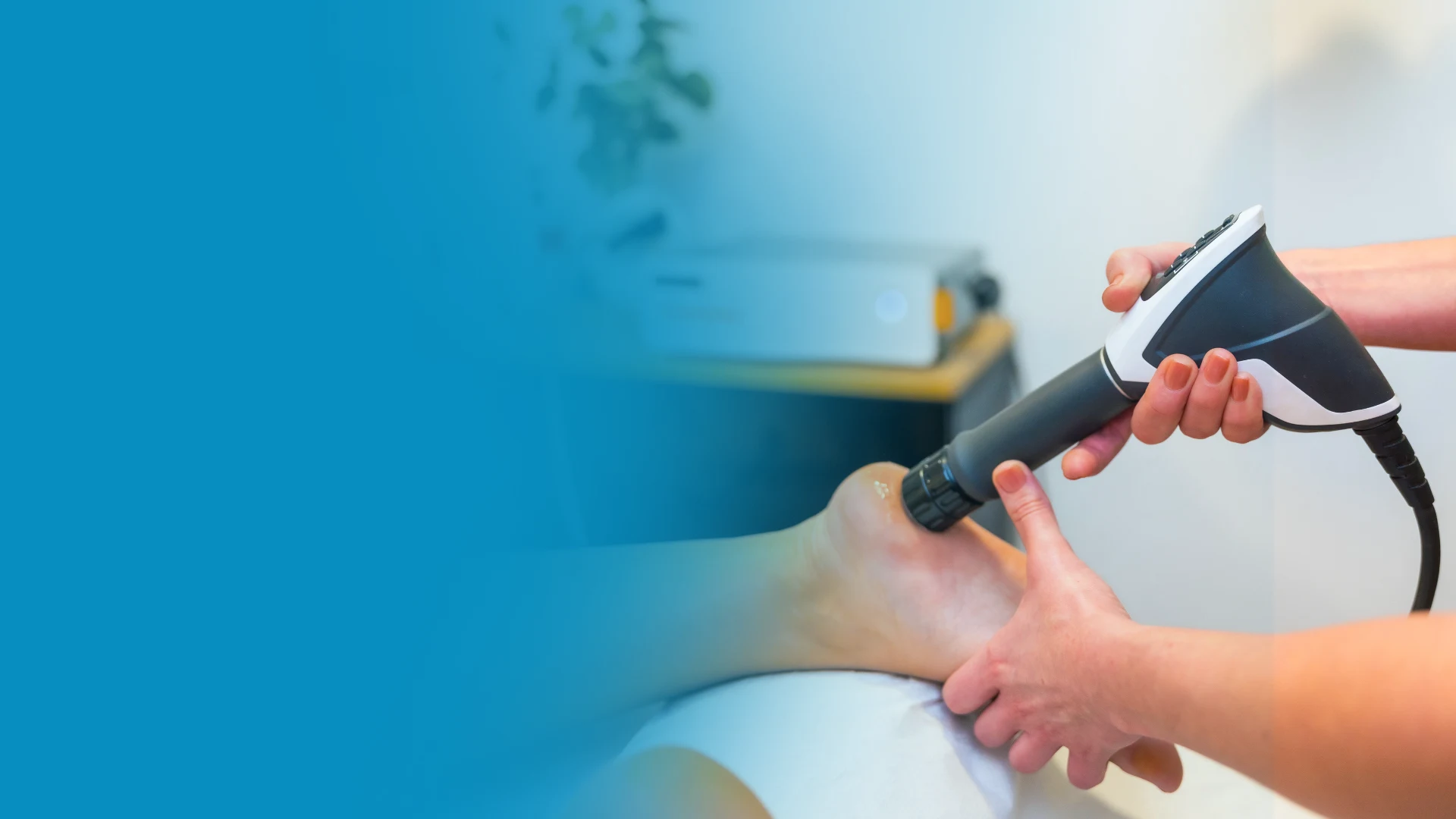
ESWT delivers focused acoustic pressure waves to the plantar fascia insertion, producing controlled microtrauma that triggers a reliable healing response. It is the preferred treatment for chronic plantar fasciitis (symptoms present for more than 6 months) that has failed multiple conservative measures. Multiple high-quality RCTs show 70–80% success rates for chronic plantar fasciitis that had not responded to prior conservative treatment. The procedure takes 15–20 minutes, requires no anesthesia, and allows immediate weight-bearing. Dr. Tom offers ESWT at both office locations.
Custom Orthotics
For patients whose plantar fasciitis is driven by specific biomechanical deformities (significant overpronation, forefoot varus, leg length discrepancy), custom orthotics fabricated from a 3D foot scan in subtalar neutral provide a level of biomechanical correction that OTC insoles cannot replicate. Custom orthotics are appropriate when quality OTC insoles have been worn correctly for 8+ weeks without adequate benefit, or when examination reveals a deformity requiring specific posting. Most insurance plans cover custom orthotics with a podiatric prescription.
Related Heel Pain Resources from Balance Foot and Ankle
- Plantar Fasciitis Condition Guide – Dr. Tom complete clinical overview of causes, diagnosis, and treatment
- Best Plantar Fasciitis Night Splints 2026 – in-depth review of all night splint designs
- Best Insoles for Plantar Fasciitis 2026 – expanded insole guide with 6 top options
- Best Running Shoes for Plantar Fasciitis 2026 – footwear that complements home treatment
- Best Calf Stretchers for Plantar Fasciitis 2026 – stretching devices to complement TheraBand work
- Best Orthotics for Overpronation 2026 – for heel pain driven by flat feet and overpronation
Heel Pain That Is Not Responding to Home Treatment? See Dr. Tom
If 6-8 weeks of consistent conservative management has not produced meaningful improvement, Dr. Tom can identify the specific diagnosis, assess biomechanical contributors, and provide evidence-based in-office treatment including ultrasound-guided injections, shockwave therapy, and custom orthotics. Most insurance plans accepted. Same-week appointments often available.
In Our Clinic
In our Balance Foot & Ankle clinic, the typical plantar fasciitis patient is a 40- to 60-year-old who noticed sharp heel pain on their very first steps in the morning or after sitting at a desk. Many arrive having already tried cheap shoe-store inserts and a week of ice without relief. On exam, we palpate the medial calcaneal tubercle, check for a positive windlass test, and rule out Baxter’s neuropathy and calcaneal stress fractures. Most of our plantar fasciitis patients respond to a custom orthotic + eccentric calf loading + night splinting protocol within 6–12 weeks — without injections or surgery.
In-Office Treatment at Balance Foot & Ankle
When conservative care isn’t enough, Dr. Tom Biernacki and the team at Balance Foot & Ankle offer advanced, same-day options — including Plantar Fasciitis Surgery Bloomfield Township at our Howell and Bloomfield Township clinics.
Same-day appointments available. Call (810) 206-1402 or book online.
Watch: Dr. Tom explains
Podiatrist-recommended products
As an Amazon Associate, Dr. Tom earns from qualifying purchases.
Immediate heel shock absorption.
View on Amazon →Arch support reduces heel load.
View on Amazon →Gel cushions for heel spurs/PF.
View on Amazon →Home heel pain relief.
View on Amazon →Related resources
Ready to solve this? Book today.
Same-week appointments · Howell & Bloomfield Township · 4.9★ (1,123+ reviews)
☎ (810) 206-1402Book Online →In-Office Treatment at Balance Foot & Ankle
If home treatment isn’t providing relief for your plantar fasciitis, our podiatry team at Balance Foot & Ankle can help with same-day evaluations and advanced in-office care.
Same-day appointments available. (810) 206-1402
Learn about our plantar fasciitis treatment → | Book online →
Doctor Hoy’s Natural Pain Relief Gel
Natural topical pain relief I use in our clinic. Arnica + camphor formula — apply directly to the area 3–4x daily. ($20–25)
Shop Doctor Hoy’s →Frequently Asked Questions
When should I see a doctor?
See a podiatrist if pain persists past 2 weeks, prevents normal activity, or is accompanied by red-flag symptoms (warmth, swelling, numbness, inability to bear weight).
Can I treat this at home?
Mild cases respond to RICE protocol (rest, ice, compression, elevation), supportive shoes, and OTC anti-inflammatories. Persistent symptoms need professional evaluation.
How long does it take to heal?
Most soft tissue injuries resolve in 2-6 weeks with appropriate care. Bone injuries take 6-12 weeks. Chronic conditions need longer-term management.

Dr. Tom Biernacki, DPM is a board-certified foot & ankle surgeon (ABFAS & ABPM) at Balance Foot & Ankle Specialists in Southeast Michigan. With over a decade of clinical experience, he specializes in heel pain, bunions, diabetic foot care, sports injuries, and minimally invasive surgery. Dr. Biernacki is a member of the APMA and ACFAS, and his patient education content on MichiganFootDoctors.com and YouTube has made him one of the most-followed foot & ankle educators on YouTube.