Board Certified Podiatrists | Expert Foot & Ankle Care
(810) 206-1402 Patient Portal

Broken Foot 2026: Symptoms, Diagnosis & Treatment | Podiatrist

Medically Reviewed by Dr. Tom Biernacki, DPM — Board-Certified Podiatric Surgeon · 3,000+ surgeries · 4.9★ (1,123 reviews) · Balance Foot & Ankle, Howell & Bloomfield Hills, MI
★ Michigan’s #1 Rated Podiatry Practice

Same-Week Appointments at Balance Foot & Ankle

Three board-certified podiatric surgeons. 950K+ YouTube subscribers. 1,123+ five-star reviews. Howell & Bloomfield Hills, Michigan.

4.9★
1,123+ Reviews
3,000+
Surgeries Performed
950K+
YouTube Subscribers
8,672
Health Articles Published
50K+
Michigan Patients
Book Same-Week Appointment → ☎ (810) 206-1402

Quick Answer

A broken foot (foot fracture) causes sudden sharp pain, swelling, bruising, and difficulty bearing weight. Most stress fractures heal in 6–8 weeks with rest, a walking boot, and activity modification. Full fractures may require casting or surgery. If you heard a “crack” or can’t walk normally after an injury — see a podiatrist within 24 hours.

You twisted your foot, stepped off a curb awkwardly, or simply felt a snap during a run — and now every step feels wrong. A broken foot is one of the most common injuries we see at Balance Foot & Ankle, accounting for roughly 10% of all fractures in the body. The challenge is that foot fractures vary enormously: from a tiny stress fracture in a metatarsal bone to a severe Lisfranc injury affecting the entire midfoot architecture. Knowing which type you have — and how urgently you need care — is the difference between a six-week recovery and a six-month ordeal.

What Is a Broken Foot

A broken foot is any fracture involving one or more of the 26 bones in the foot — from the toes (phalanges) to the long metatarsal bones to the midfoot (tarsal) bones. In our clinic, we see a wide spectrum: weekend warriors with fifth metatarsal stress fractures, elderly patients with navicular fractures from a simple stumble, and athletes with Lisfranc injuries that initially look like “just a sprain.” The foot’s complexity means a misdiagnosed fracture can lead to chronic pain, arthritis, or malunion — which is why imaging matters even when the injury seems minor.

The 26 bones of the foot are divided into three regions: the forefoot (14 phalanges + 5 metatarsals), the midfoot (5 tarsal bones: navicular, cuboid, 3 cuneiforms), and the hindfoot (calcaneus + talus). Each region fractures differently and has distinct treatment implications.

Broken Foot Symptoms

Broken foot symptoms depend on the location and severity of the fracture, but most patients describe a consistent cluster of signs that distinguish a fracture from a sprain or bruise. If you notice more than two of the following, imaging is warranted — don’t try to “walk it off” and reassess tomorrow.

  • Sharp, immediate pain at the moment of injury, often described as a “snap” or “pop”
  • Swelling that develops within minutes to hours, sometimes extending up the ankle
  • Bruising (ecchymosis) — discoloration appearing within 24–48 hours, often in a “burst” pattern
  • Tenderness to direct touch over a specific bone, not diffuse aching
  • Difficulty or inability to bear weight — the Ottawa Foot Rules say imaging is needed if you can’t take 4 steps
  • Visible deformity — a toe pointing the wrong direction, or an unusual lump along a metatarsal
  • Numbness or tingling — may indicate nerve involvement or compartment syndrome (emergency)

Stress fractures — the sneaky type — often lack dramatic trauma. Instead, patients report bone pain that worsens during activity and improves with rest, gradually worsening over 2–4 weeks. The second metatarsal is the most common site in runners; the navicular in basketball players; and the fifth metatarsal (Jones fracture zone) in anyone who suddenly increases their training load.

Types and Causes of Foot Fractures

Not all broken feet happen the same way. Understanding the mechanism helps both diagnosis and prevention. In our practice, the five most common presentations are trauma fractures, stress fractures, Jones fractures, Lisfranc injuries, and calcaneal fractures — each with distinct causes, imaging findings, and treatment protocols.

  • Traumatic fractures — direct blow, fall from height, or twisting injury; common in toes and metatarsals
  • Stress fractures — repetitive microtrauma without adequate recovery; classic in runners, military recruits, and osteoporotic women
  • Jones fracture (5th metatarsal base) — lateral ankle roll that avulses the peroneus brevis tendon insertion; notoriously slow to heal due to poor blood supply in the “watershed zone”
  • Lisfranc injury — midfoot fracture-dislocation from high-energy trauma or a simple stumble on a plantarflexed foot; often missed on initial X-ray
  • Calcaneal fracture — heel bone fracture from falls from height (classic: jumping off a ladder); associated with spinal compression fractures — always check the back
  • Toe fractures — most commonly the fifth “pinky” toe from striking furniture; usually managed conservatively

How a Broken Foot Is Diagnosed

Diagnosing a foot fracture requires a combination of clinical examination and imaging — and sometimes both miss the diagnosis on the first attempt. In our clinic, we follow a systematic protocol: Ottawa Foot Rules assessment, weight-bearing X-rays in three views, and MRI or CT if X-rays are negative but clinical suspicion is high (stress fractures are notoriously X-ray negative for up to 2 weeks).

Ottawa Foot Rules — evidence-based criteria that determine when X-rays are needed: bone tenderness at the base of the 5th metatarsal, the navicular, or inability to bear weight immediately and in the emergency department (4 steps). Sensitivity approaches 99% for ruling out fractures requiring intervention.

Differential diagnosis — conditions that mimic a broken foot include: severe ankle sprain (ATFL/CFL ligament tears), peroneal tendon avulsion fracture (easily confused with Jones fracture), Lisfranc sprain (ligament only, no fracture), cuboid syndrome, and tarsal coalition. The critical distinction is whether there is true bone tenderness on palpation versus diffuse soft tissue tenderness.

Advanced imaging — MRI is the gold standard for stress fractures, navicular fractures, and Lisfranc evaluation. CT scan is preferred for calcaneal fractures (to assess articular involvement and guide surgical planning). A bone scan remains an option when MRI is unavailable but is less specific.

Broken Foot Treatment Options

Treatment depends entirely on fracture type, location, displacement, and patient factors (age, bone density, activity level, occupation). The treatment ladder runs from RICE protocol for undisplaced toe fractures to complex open reduction internal fixation (ORIF) for calcaneal or Lisfranc injuries. Here is how we approach the most common presentations in our practice.

Conservative Treatment (Most Fractures)

  • Buddy taping — for non-displaced toe fractures; tape broken toe to adjacent toe for 4–6 weeks
  • Stiff-soled shoe or post-op shoe — for stable metatarsal fractures without displacement
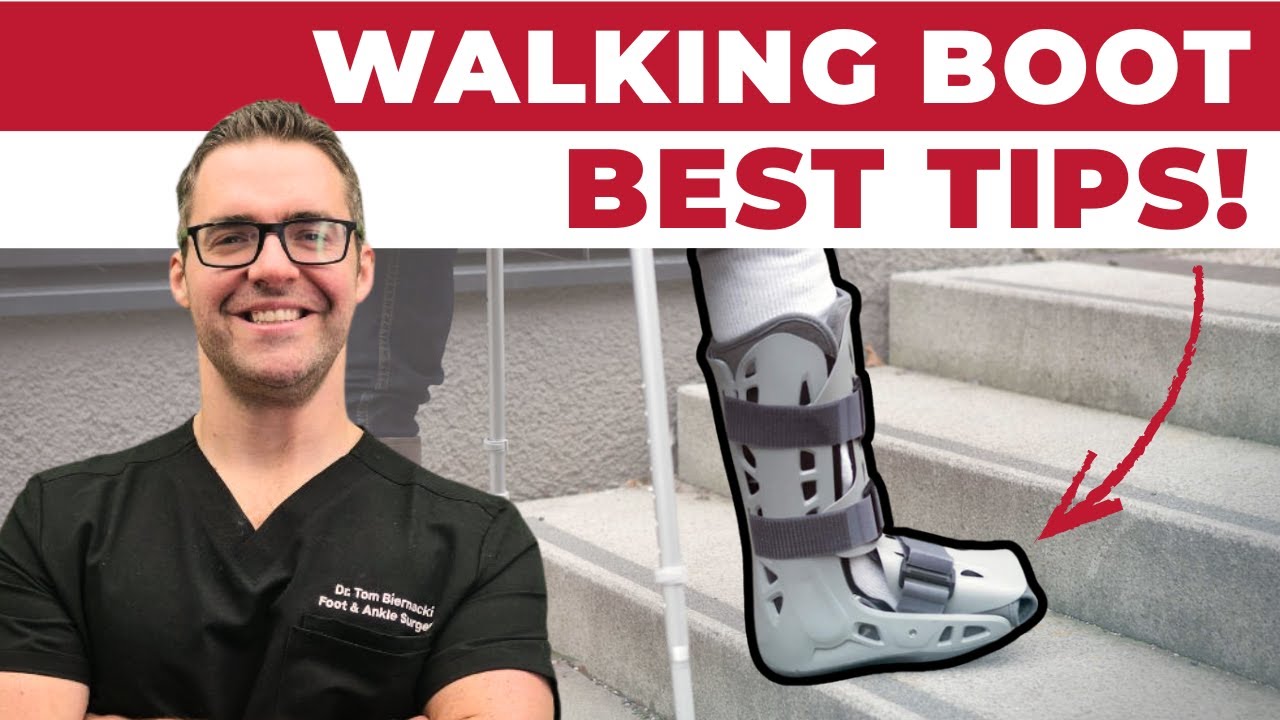
  • Walking boot (CAM boot) — for stress fractures, undisplaced 5th metatarsal fractures, and many midfoot injuries; allows partial weight-bearing while protecting the bone
  • Non-weight-bearing cast — for Jones fractures in the critical zone, navicular stress fractures, and displaced fractures; typically 6–8 weeks
  • RICE protocol — rest, ice (20 min on/off), compression (ace wrap), elevation above heart level to reduce swelling in first 72 hours

Recommended Products for Broken Foot Recovery

Affiliate Disclosure: This page contains affiliate links to products we recommend. If you purchase through these links, Balance Foot & Ankle may earn a small commission at no additional cost to you. We only recommend products we use with our patients.

Once you’re out of the boot and transitioning back to regular footwear, proper insole support is critical — especially for metatarsal and midfoot fractures that can leave lasting arch and pressure changes.

PowerStep Pinnacle orthotics provide medical-grade arch support and metatarsal offloading — exactly what healing foot bones need during the return-to-activity phase. We recommend these to virtually every patient transitioning out of a walking boot after a metatarsal fracture.

Doctor Hoy’s Natural Pain Relief Gel — arnica + camphor formula that provides topical pain relief without NSAIDs. Useful during the early stages of bone healing when swelling and soft tissue pain are most significant.

Surgical Treatment (When Needed)

Surgery is recommended for displaced fractures (bones out of alignment), unstable fractures, Lisfranc injuries (even ligament-only injuries benefit from surgery in active patients), and Jones fractures in athletes (screw fixation dramatically reduces non-union rate from ~25% to <5%). Calcaneal fractures with >2mm articular step-off typically require ORIF to preserve subtalar joint function. Recovery from surgical fixation is 3–6 months depending on complexity.

Warning Signs — See a Podiatrist Immediately

🚨 Seek Urgent Care If You Have:

  • Visible deformity or bone protruding through skin (open fracture — go to ER immediately)
  • Foot that is pale, cold, or pulseless after injury (vascular emergency)
  • Severe tightness in the foot or leg with intense burning pain (compartment syndrome)
  • Cannot bear any weight at all on the foot
  • Bruising that appears on the bottom of your heel (calcaneal fracture sign)
  • Pain that keeps waking you up at night (may indicate bone tumor, not simple fracture)

Most Common Mistake We See with Broken Feet

The most common mistake we see is patients assuming a broken foot “just needs rest” and never getting imaging. They hobble around for 2–4 weeks, the fracture heals in a malunited position, and what should have been a 6-week recovery becomes a 6-month chronic pain problem requiring corrective surgery. The Ottawa Foot Rules exist precisely because clinical examination alone misses 15–20% of fractures. If you can’t walk normally after a foot injury, you need an X-ray — full stop. This is especially true for Jones fractures, which have a high non-union rate if not properly immobilized from day one.

In-Office Treatment at Balance Foot & Ankle

At our Howell and Bloomfield Hills offices, we provide same-day fracture evaluation including digital weight-bearing X-rays, walking boot fitting, and surgical consultation when needed. Dr. Tom Biernacki, DPM performs hundreds of fracture repairs annually with outcomes that consistently exceed state averages. Most insurance plans accepted.

Broken Foot? Get Evaluated Today

Same-day appointments at Howell & Bloomfield Hills. Digital X-rays on-site. Most insurance accepted.

Book Same-Day Appointment  📞 (810) 206-1402

Frequently Asked Questions

How do I know if my foot is broken or just sprained?

The Ottawa Foot Rules provide a reliable guide: if you have bone tenderness directly over the 5th metatarsal base, the navicular, or you cannot take 4 steps after the injury, imaging is needed. Sprains cause diffuse ligament tenderness; fractures cause precise point tenderness over bone. That said, sprains and fractures frequently co-exist — especially with Lisfranc injuries — so imaging is always warranted after significant foot trauma.

Can you walk on a broken foot?

Sometimes, yes — especially with stress fractures and stable toe fractures. The ability to walk does not rule out a fracture. Stress fractures in particular are often walked on for weeks before diagnosis. However, walking on an undiagnosed or improperly treated fracture can worsen displacement and dramatically extend recovery time. When in doubt, see a podiatrist before continuing to bear weight.

How long does a broken foot take to heal?

Most uncomplicated metatarsal fractures and toe fractures heal in 6–8 weeks. Jones fractures take 8–12 weeks (or longer with non-union risk). Calcaneal fractures and Lisfranc injuries can take 4–6 months, especially post-surgery. Stress fractures heal in 6–8 weeks with complete off-loading. Age, bone density, smoking, and nutrition (vitamin D, calcium) all significantly affect healing time.

When should I see a podiatrist for a broken foot?

Within 24 hours for significant trauma (fall, direct blow, audible crack). Within 1–2 weeks for gradual-onset bone pain that worsens with activity (possible stress fracture). If you’re in a walking boot from an ER or urgent care, follow up with a podiatrist or orthopedic surgeon within 5–7 days for fracture management and transition planning.

Does insurance cover broken foot treatment?

Yes — fracture care is covered by virtually all major insurance plans including Medicare, Medicaid, Blue Cross, Aetna, Cigna, and United Healthcare. Our Howell and Bloomfield Hills offices accept most Michigan insurance plans. Workers’ compensation and auto no-fault coverage also typically applies if the injury occurred at work or in a vehicle accident. Call us to verify your specific plan: (810) 206-1402.

The Bottom Line

A broken foot is not a minor inconvenience — it’s a structural injury that requires proper diagnosis and management to heal correctly. Whether you’re dealing with a stress fracture from running or a full metatarsal break from a fall, the key is prompt evaluation, accurate imaging, and appropriate immobilization from day one. Skip the “walk it off” approach: it’s the single most reliable way to turn a 6-week recovery into a 6-month problem. At Balance Foot & Ankle, we’ve treated thousands of foot fractures with same-day evaluation, on-site digital X-rays, and surgical expertise when you need it most.

Sources

  1. Stiell IG, et al. “Implementation of the Ottawa ankle rules.” JAMA. 1994;271(11):827-832.
  2. Welck MJ, et al. “Stress fractures of the foot and ankle.” Injury. 2017;48(8):1722-1726.
  3. Browner BD, et al. Skeletal Trauma: Basic Science, Management, and Reconstruction. 5th ed. Elsevier; 2015.
  4. American College of Foot and Ankle Surgeons. “Foot Fractures.” ACFAS Clinical Practice Guidelines. 2024.

When Shoes Aren’t Enough — Dr. Tom’s Top 9 Orthotics

About 30% of patients I see for foot pain need MORE than a great shoe — they need a structured insole. Below: my complete 2026 orthotic ranking with pros, cons, and the specific patient I’d give each one to.

★ DR. TOM’S COMPLETE 2026 ORTHOTIC RANKING

9 Best Prefab Orthotics by Use Case

PowerStep, Currex, Spenco, Vionic, and PowerStep Pinnacle — every orthotic I’ve fitted to thousands of patients across both Michigan offices. Each card includes pros, cons, and the specific patient I’d give it to. Real Amazon ratings, review counts, and prices below.

★ EDITOR’S CHOICE · BEST OVERALL

Best All-Purpose Orthotic for Most Patients

Semi-rigid arch shell + dual-layer cushion + deep heel cup. The orthotic I’ve fitted to more patients than any other for 15 years. APMA-accepted. Trim-to-fit design works in athletic shoes, casual shoes, and most work boots.

✓ Pros

  • Semi-rigid arch shell provides true biomechanical correction
  • Deep heel cup centers the heel and reduces lateral instability
  • Dual-layer cushion (top + bottom) lasts 9-12 months daily wear
  • Available in 8 sizes for precise fit
  • APMA-accepted and clinically validated
  • Lower price than PowerStep Pinnacle for equivalent function

✗ Cons

  • Too thick for most dress shoes (use ProTech Slim instead)
  • Some break-in period required (3-7 days for arch tolerance)
  • Not enough correction for severe pes planus or rigid pes cavus

Dr. Tom’s Recommendation: If a patient has run-of-the-mill plantar fasciitis, mild flat feet, or arch fatigue, this is the first orthotic I try. Better value than PowerStep Pinnacle for 90% of patients, which is why I swapped it into our clinic kits three years ago. Sub-$50 typically.

BEST FOR FLAT FEET

Maximum Motion Control · Flat Feet & Severe Over-Pronation

PowerStep’s most aggressive stability orthotic. Adds a 2°-7° medial heel post on top of the standard PowerStep platform — designed specifically for flat-footed patients and severe pronators who need real corrective force.

✓ Pros

  • 2°-7° medial heel post adds aggressive pronation control
  • Same trusted PowerStep arch shell, more correction
  • Built specifically for flat-foot biomechanics
  • Excellent for posterior tibial tendon dysfunction (PTTD)
  • Removable top cover for cleaning

✗ Cons

  • Too aggressive for neutral-arch patients
  • Needs longer break-in (10-14 days) due to stronger correction
  • Adds 2-3 mm of stack height — won’t fit slim dress shoes

Dr. Tom’s Recommendation: When a patient comes in with significant flat feet AND symptoms (heel pain, arch pain, knee pain), the Original PowerStep isn’t aggressive enough. The Maxx is what gets prescribed. About 25% of my flat-footed patients end up here.

BEST SLIM FIT · DRESS SHOES

Low-Profile · Fits Dress Shoes & Narrow Casuals

3 mm slim profile with podiatrist-designed tri-planar arch technology. Engineered specifically to fit inside dress shoes, oxfords, loafers, and women’s flats without crowding the toe box. Vionic was founded by an Australian podiatrist.

✓ Pros

  • 3 mm slim profile (vs 7-10 mm for standard orthotics)
  • Tri-planar arch technology adds support without bulk
  • Built-in deep heel cup despite slim design
  • Fits dress shoes WITHOUT having to remove the factory insole
  • Trim-to-fit · APMA-accepted

✗ Cons

  • Less arch support than full-volume orthotics
  • Top cover wears faster than thicker alternatives
  • Not enough correction for severe foot deformities

Dr. Tom’s Recommendation: My default when a patient says ‘I need orthotics but I have to wear dress shoes for work.’ Slim enough to fit in oxfords and pumps without the heel sliding out. The single highest-impact change you can make for office workers with foot pain.

BEST FOR FOREFOOT PAIN

Built-In Metatarsal Pad · Morton’s Neuroma · Ball-of-Foot Pain

Standard Pinnacle orthotic with a built-in metatarsal pad positioned proximal to the metatarsal heads — the exact location that offloads neuromas and metatarsalgia. No need for separate met pads or pad placement guesswork.

✓ Pros

  • Built-in met pad eliminates DIY pad placement errors
  • Specifically designed for Morton’s neuroma + metatarsalgia
  • Same trusted PowerStep arch + heel cup platform
  • Top cover protects sensitive forefoot skin
  • Faster relief than orthotics + add-on met pads

✗ Cons

  • Met pad position is fixed (can’t fine-tune individual placement)
  • Some patients with very small or very large feet need custom
  • Slightly thicker than the standard Pinnacle

Dr. Tom’s Recommendation: If a patient has Morton’s neuroma, sesamoiditis, or generalized ball-of-foot pain (metatarsalgia), this saves a clinic visit and a prescription. The built-in pad placement is anatomically correct for 80% of feet. Way better than DIY met pads.

BEST DYNAMIC ARCH · CURREX

Adaptive Dynamic Arch · Athletic & Daily Wear

Currex’s flagship adaptive arch technology — the orthotic flexes with your gait instead of fighting it. Different stiffness zones along the length give you targeted support at the heel, midfoot, and forefoot. Available in three arch heights (low/medium/high).

✓ Pros

  • Dynamic flex zones adapt to natural gait cycle
  • Three arch heights ensure precise fit
  • Lighter than rigid orthotics (no ‘heavy foot’ feel)
  • Excellent for runners and athletic walkers
  • European podiatric design (German engineering)

✗ Cons

  • More expensive than PowerStep Original ($55-65 typically)
  • Less aggressive correction than Pinnacle Maxx for severe cases
  • Three arch heights means you must self-select correctly

Dr. Tom’s Recommendation: I started recommending Currex three years ago for runners who said PowerStep felt ‘too rigid.’ The dynamic flex zones respect natural gait. Best for active patients who walk 8K+ steps daily and don’t need maximum motion control.

BEST FOR RUNNERS · CURREX RUNPRO

Running-Specific · Heel Strike + Forefoot Strike Compatible

Currex’s purpose-built running orthotic. The midfoot flex zone is positioned for runner’s gait mechanics, with a flared heel cushion for heel strikers and a forefoot rocker for midfoot/forefoot strikers. Tested on 1000+ runners during product development.

✓ Pros

  • Designed by German biomechanics lab specifically for runners
  • Dynamic arch flexes with running gait (not static like PowerStep)
  • Three arch heights (low/medium/high)
  • Reduces overuse injury risk in mid-distance runners
  • Lightweight (no impact on cadence)

✗ Cons

  • Premium price ($60-75)
  • Not aggressive enough for severe over-pronators (use Pinnacle Maxx)
  • Runner-specific design = less ideal for daily walking shoes

Dr. Tom’s Recommendation: If a patient runs 20+ miles per week and has plantar fasciitis or shin splints, this is the orthotic I prescribe. The dynamic flex zones respect running biomechanics in a way that no rigid PowerStep can match. Pricier but worth it for serious runners.

BEST FOR HIGH ARCHES

Cavus Foot & High-Arch Patients

Polyurethane base with a deeper heel cup and higher arch profile than PowerStep — built for cavus (high-arched) feet that need maximum cushion and support. The 5-zone cushioning system addresses the unique pressure points of high-arch feet.

✓ Pros

  • Deeper heel cup centers the heel for cavus foot stability
  • Higher arch profile fills the void under high arches
  • 5-zone cushioning addresses cavus foot pressure points
  • Polyurethane base lasts 12+ months
  • Available in Wide width

✗ Cons

  • Too tall/aggressive for normal or low arches
  • Won’t fit slim dress shoes
  • Pricier than PowerStep Original
  • Some patients find the arch height uncomfortable initially

Dr. Tom’s Recommendation: Cavus foot patients are often misdiagnosed and given low-arch orthotics — that makes everything worse. Spenco’s Total Support has the arch profile that high-arch feet actually need. About 15% of my patients have cavus feet; this is what they wear.

BEST GEL CUSHION

Cushion Layer · Standing All Day · Gel Pressure Relief

NOT a true biomechanical orthotic — this is a cushion insole. But for patients who want gel pressure relief instead of arch correction (or to add ON TOP of factory insoles in work boots), this is the best gel option on Amazon.

✓ Pros

  • Genuine gel cushioning (not foam pretending to be gel)
  • Targeted gel waves under heel and ball of foot
  • Trim-to-fit · works in most shoe types
  • Sub-$15 price (most affordable option in this list)
  • Massaging texture is genuinely soothing

✗ Cons

  • ZERO arch support — this is cushion only
  • Won’t fix plantar fasciitis or flat-foot issues
  • Compresses faster than PowerStep (4-6 months)
  • Top cover wears through in high-mileage applications

Dr. Tom’s Recommendation: I recommend these to patients who tell me ‘I just want my feet to stop hurting at the end of my shift’ and who don’t have a biomechanical issue. Construction workers, factory workers, retail. Pure cushion does the job for them.

BEST LOW-VOLUME · PowerStep Pinnacle

Tight-Fitting Shoes · Cycling Shoes · Hockey Skates

PowerStep Pinnacle’s slim version of their famous Green insole. The trademark stabilizer cap is preserved but the overall thickness is reduced — works in cycling shoes, hockey skates, ski boots, and other tight-fitting footwear that the standard PowerStep Pinnacle can’t fit into.

✓ Pros

  • Stabilizer cap centers the heel (PowerStep Pinnacle’s signature feature)
  • Slim profile fits tight athletic footwear
  • Lasts 12+ months daily wear
  • Excellent for cycling shoes specifically
  • Built-in odor-control treatment

✗ Cons

  • Premium price ($45-55)
  • Less cushion than PowerStep equivalents
  • Not as aggressive correction as Pinnacle Maxx for flat feet
  • The signature ‘heel cup feel’ takes 1-2 weeks to adapt to

Dr. Tom’s Recommendation: If you’re a cyclist with foot numbness, hot spots, or knee pain — this is the orthotic. The stabilizer cap solves cycling-specific biomechanical issues that no other orthotic addresses. Worth the premium for athletes.

None of these solving your foot pain?

Some patients (about 30%) need custom-molded prescription orthotics. We make 3D-scanned custom orthotics in our Howell and Bloomfield Hills offices — specifically built for your foot mechanics.

Schedule a Custom Orthotic Fitting →

FSA/HSA eligible · Most insurance accepted · (810) 206-1402

Medical References
  1. Plantar Fasciitis: Diagnosis and Conservative Management (PubMed)
  2. Plantar Fasciitis (APMA)
  3. Diagnosis and Treatment of Plantar Fasciitis (PubMed / AAFP)
  4. Heel Pain (APMA)
This article has been reviewed for medical accuracy by Dr. Tom Biernacki, DPM. References are provided for informational purposes.
Balance Foot & Ankle surgeons are affiliated with Trinity Health Michigan, Corewell Health, and Henry Ford Health — three of Michigan’s largest health systems.
📞 Call Now 📅 Book Now
} }) } } } } } }