

| Fracture Location | Treatment | Weight-Bearing | Return to Normal Shoes | Return to Sport | X-Ray Healing |
|---|---|---|---|---|---|
| 2nd–4th toe, non-displaced | Buddy tape + stiff shoe | As tolerated | 4–6 weeks | 6–8 weeks | 4–6 weeks |
| 5th (pinky) toe, non-displaced | Buddy tape + stiff shoe | As tolerated | 4–6 weeks | 6–8 weeks | 4–6 weeks |
| Hallux (big toe), non-displaced | Walking boot | Protected with boot | 6–8 weeks | 8–12 weeks | 6–8 weeks |
| Hallux, displaced/intra-articular | Boot or ORIF | NWB if surgical | 8–12 weeks | 12–16 weeks | 8–12 weeks |
| Any toe, open fracture | Surgery + antibiotics | NWB post-op | 12–16 weeks | 16–20+ weeks | 12+ weeks |
| Sesamoid (big toe joint) | Stiff shoe + offloading | Protected | 6–10 weeks | 12–16 weeks | 8–12 weeks |
| Healing Stage | Timeframe | What’s Happening | Activity Level | Warning Signs |
|---|---|---|---|---|
| Inflammatory phase | Days 1–5 | Hematoma formation, pro-inflammatory cytokines, pain + swelling peak | Rest, ice, elevation | Worsening swelling after day 3 |
| Soft callus | Weeks 1–3 | Fibrocartilaginous callus bridges fracture, pain decreasing | Protected weight-bearing | Persistent sharp pain with any WB |
| Hard callus | Weeks 3–6 | Woven bone replaces cartilaginous callus, visible on X-ray | Gradual activity increase | No callus visible on 6-week X-ray |
| Remodeling | Weeks 6–16+ | Woven bone remodels to lamellar bone along stress lines | Return to normal activity | Pain resuming after initial improvement |
| Complete healing | 3–6 months (cortical) | Full cortical density restored; strength equivalent to pre-fracture | Unrestricted | Stress fracture if returned to sport too early |

Foot pain isn't resolving?
Same-week appointments at podiatrist in Howell & podiatrist in Bloomfield Township
⚡ Quick Answer: How long does a broken toe take to heal?
Most broken toes heal in 4–6 weeks with buddy taping and a stiff-soled shoe. Big toe fractures may take 6–8 weeks and sometimes require a walking boot.
Related Conditions
In This Article
- How long does a broken toe take to heal?
- Broken Toe Recovery Time by Toe
- Types of Toe Fractures — How Severity Determines Timeline
- Broken Toe Healing: Week-by-Week Stages
- Broken Toe Treatment: Complete Ladder
- Warning Signs of a Serious Broken Toe
- Most Common Mistake: Walking on a Broken Toe Without Protection
- Recommended Products for Broken Toe Recovery
- In-Office Treatment at Balance Foot & Ankle
- Frequently Asked Questions — Broken Toe Recovery Time
- Sources
- Frequently Asked Questions
- What is Foot pain?
- Symptoms and warning signs
- Conservative treatment options
- When is surgery considered?
- Recovery timeline and prevention
Most broken toes heal in 4–6 weeks with buddy taping and a stiff-soled shoe. The big toe (hallux) takes 6–8 weeks due to its critical role in push-off. Displaced fractures requiring reduction or surgery can take 8–12 weeks or longer. The toe may look normal before it’s fully healed — early return to activity is the most common cause of complications.
You stubbed your toe hard — on the bed frame, a door, the coffee table — and now it’s swollen, bruised, and painful with every step. Or maybe you dropped something on your foot. The question everyone asks is the same: is it actually broken, and if so, how long until I can walk normally again? In our podiatry clinics in Howell and Bloomfield Township, we evaluate broken toes every week. Most heal predictably and well. A few require intervention that the standard “buddy tape it and walk it off” approach misses. Here is the complete, honest guide.
Broken Toe Recovery Time by Toe
Recovery time depends significantly on which toe is fractured, because toes vary dramatically in their biomechanical loading during walking. Here is the breakdown by toe with honest timelines:
| Toe | Typical Healing | Weight-Bearing? | Notes |
|---|---|---|---|
| Big Toe (Hallux) | 6–8 weeks | Limited — stiff-soled shoe or boot | Carries 40-50% of push-off load; always see a podiatrist |
| Second Toe | 4–6 weeks | Yes, with buddy tape + stiff shoe | Buddy tape to big toe |
| Third/Fourth Toe | 4–6 weeks | Yes, with buddy tape + stiff shoe | Most straightforward recovery |
| Fifth Toe (Pinky) | 4–6 weeks | Yes, with buddy tape | Buddy tape to 4th toe; most common toe fracture |
| Any Toe — Displaced Fracture | 8–12+ weeks | Varies — may need cast/boot | Requires reduction; big toe may need surgery |
The big toe deserves special emphasis. Unlike the lesser toes (second through fifth), which carry minimal individual loading during the gait cycle, the hallux bears approximately 40–50% of total body weight during push-off in each step. A simple fracture in the big toe that would be managed with buddy tape in any other toe requires a stiff-soled shoe or walking boot and often podiatric supervision to ensure proper healing in a position that preserves push-off function.
Types of Toe Fractures — How Severity Determines Timeline
Non-Displaced Stable Fracture: The bone is cracked but the fragments have not shifted from their anatomical position. This is the most common type — the result of stubbing, crushing, or direct impact. Most lesser toe fractures are this type. Treatment is buddy taping and protected weight-bearing; healing at 4–6 weeks.
Displaced Fracture: The fragments have shifted. On X-ray, there is a visible step-off, angulation, or rotation of the bone fragments. Displaced fractures of the lesser toes can sometimes be reduced (repositioned) under local anesthetic block — a 5-minute in-office procedure — and then managed with buddy taping. Displaced big toe fractures require more careful management and sometimes surgical fixation. Timeline: 8–12 weeks depending on location and treatment.
Intra-articular Fracture: The fracture line extends into a joint surface — at the interphalangeal joint (between toe bones) or the metatarsophalangeal joint (where the toe meets the foot). Intra-articular fractures carry higher risk of post-traumatic arthritis, especially in the big toe. They warrant podiatric evaluation and careful imaging to determine whether anatomic alignment can be achieved with conservative care or requires surgery.
Open Fracture: The bone has broken through the skin. This is a medical emergency requiring immediate ER evaluation, wound irrigation, tetanus prophylaxis, and antibiotics. Do not buddy tape an open fracture.
Avulsion Fracture: A ligament or tendon has pulled off a small fragment of bone at its attachment. Common in the fifth toe at the base of the fifth metatarsal (often confused with a “broken toe” — this is actually a Jones fracture area) and at the dorsum of the second toe. Most heal well with buddy taping, but specific avulsion locations require careful assessment.
Broken Toe Healing: Week-by-Week Stages
Days 1–3 (Acute Inflammatory Phase): The fracture hematoma forms. Swelling and bruising peak. The toe feels hot and throbbing. Apply ice in a cloth (not directly to skin) for 15–20 minutes every 2 hours, keep the foot elevated above heart level when sitting, and begin buddy taping. Anti-inflammatory medication reduces swelling — take with food.
Week 1–2 (Early Repair Phase): Swelling begins to decrease. A soft callus starts forming at the fracture site. The toe should be buddy-taped continuously during this phase, including while walking. Shoes with a wide, rigid toe box — not flip flops, not sneakers with flexible soles — protect the healing bone. Weight-bearing is allowed in most lesser toe fractures.
Weeks 2–4 (Callus Formation): The soft callus converts to woven bone. Pain during walking should be noticeably improving. Continue buddy tape during activity. X-rays at this stage may show the healing callus, though pain improvement is a better clinical indicator than radiographic appearance at this phase.
Weeks 4–6 (Remodeling Phase): Woven bone hardens to lamellar bone. For most lesser toe fractures, this is the clinical healing window — direct palpation over the fracture site should be pain-free or nearly so. The buddy tape can be gradually discontinued at 4–6 weeks for lesser toes. The big toe should be reassessed clinically and radiographically before the tape comes off.
Weeks 6–12 (Return to Full Activity): Full activity including running and sport is generally cleared at 6 weeks for lesser toes and 8 weeks for the hallux, provided clinical healing criteria are met. Some residual stiffness and discomfort with toe-off and impact activities is normal for 3–6 months.
Broken Toe Treatment: Complete Ladder
Buddy Taping: The foundation of broken toe management. Tape the injured toe to its neighbor using non-stretch athletic tape or medical tape with a small piece of gauze or foam between the toes (to prevent skin maceration). The tape should be snug but not circulation-restricting — you should be able to feel your toes. Change the tape daily or when wet. Tape the second through fifth toes; the big toe does not have an appropriate buddy toe and is managed differently.
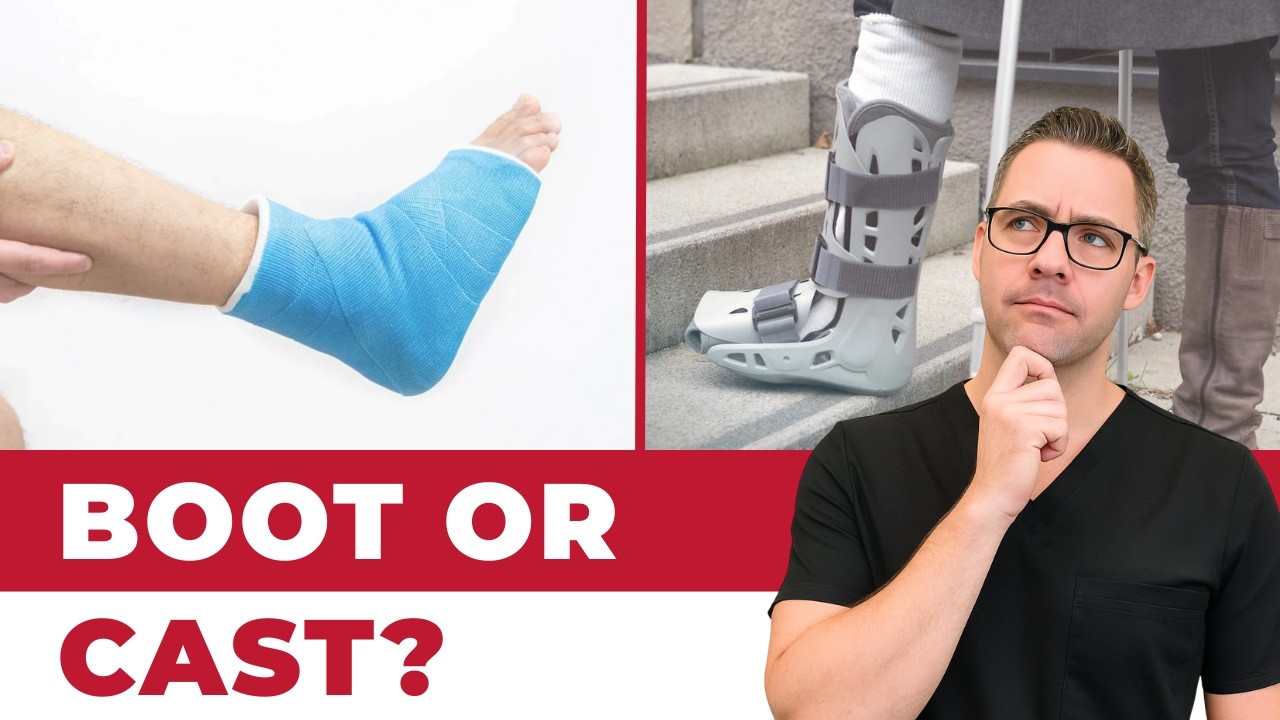
Rigid-Soled Footwear: A shoe with a stiff, flat sole that does not flex at the toes prevents the bending forces on the fracture that delay healing and cause pain. Wooden-soled clogs, post-op shoes with rigid carbon plates, or the forefoot section of a CAM walking boot all work. Avoid soft-soled sneakers, flip flops, and barefoot walking during healing.
Fracture Reduction (For Displaced Fractures): An in-office procedure performed under digital block anesthesia — a few injections at the base of the toe that numb it completely. The podiatrist then manipulates the fragment back to anatomical alignment under fluoroscopic or X-ray guidance. Post-reduction X-ray confirms positioning, and buddy taping maintains it.
Topical Pain Management: For ongoing localized pain during the healing process, Doctor Hoy’s Natural Pain Relief Gel applied to the dorsum of the fractured toe reduces pain and inflammation between ice sessions. Avoid applying directly under tape to prevent skin irritation.
Surgery: Required for: open fractures, severely displaced/angulated fractures that cannot be reduced or maintained, intra-articular big toe fractures with joint incongruity >1–2 mm, and fractures with significant malrotation. Surgical options include percutaneous pinning (K-wire fixation) or open reduction and internal fixation (ORIF) with small plates and screws.
Warning Signs of a Serious Broken Toe
- Open wound with visible bone — open fracture, medical emergency
- Gross deformity or toe pointing in wrong direction — displaced fracture requiring reduction
- Numbness, tingling, or pale/blue color in the toe — possible neurovascular injury
- Pain or swelling at the base of the small toe extending up the foot — possible Jones fracture (5th metatarsal), not a toe fracture
- Big toe fracture with significant pain on weight-bearing — always warrants podiatric evaluation
- Any broken toe in a diabetic patient — neuropathy changes the risk profile; podiatric evaluation required
Most Common Mistake: Walking on a Broken Toe Without Protection
The most common mistake we see — every week — is patients who assume broken toes “just heal on their own” and continue walking in soft shoes or bare feet without buddy taping or rigid sole protection. This is not entirely wrong for minor fractures; most do eventually heal. But unprotected walking on a broken toe allows the fracture fragments to move with each step, forming callus in a slightly displaced or angulated position. The result: a healed toe that is wider than before, overlaps an adjacent toe, or has a painful bony prominence — problems that would have been entirely avoidable with 4 weeks of buddy taping. The fix: tape it, protect it, give it 4–6 weeks. This is simple, cheap, and dramatically changes outcomes.
Recommended Products for Broken Toe Recovery
Topical arnica + camphor for pain management between ice sessions. Apply to the dorsum of the fractured toe 2–3× daily during the healing phase. Effective for the periosteal pain and soft tissue swelling accompanying the fracture, without the GI effects of oral NSAIDs.
Not Ideal For: Application directly under tape (skin maceration risk) or open wounds.
After the fracture heals and you transition back to normal footwear, a semi-rigid orthotic provides even loading distribution and reduces the stress peaks on the healed toe. Particularly useful for big toe fractures where the hallux returns to high-load function, and for patients who had gait compensations during healing that need correcting.
Not Ideal For: Use during the acute fracture phase — you need rigid protection first, then transition to orthotics.
In-Office Treatment at Balance Foot & Ankle
Not every broken toe needs a podiatrist — but the ones that do need one urgently. Any big toe fracture, displaced fracture, fracture with an open wound, fracture in a diabetic patient, or fracture that fails to improve after 2–3 weeks of protected management should be evaluated. We have same-day appointments at our Howell and Bloomfield Township locations, digital X-ray on site, and perform fracture reductions and pinning in-office and in our outpatient surgical suite. We also provide custom protection padding, buddy tape kits, and post-fracture orthotic fitting.
Broken Toe? Same-Day X-Ray and Treatment Available
Balance Foot & Ankle · Howell (810) 206-1402 · Bloomfield Township
Frequently Asked Questions — Broken Toe Recovery Time
How do I know if my toe is broken or just bruised?
Bruised toes and fractured toes often feel identical acutely. Signs that suggest fracture over bruise: severe point tenderness directly over the bone (not just soft tissue), visible deformity or angular change, pain that does not improve at all over 48 hours, or an audible pop/crack at the time of injury. X-ray is the definitive test — a podiatrist or urgent care can determine this accurately within 10 minutes.
Can I walk on a broken toe?
For most lesser toe fractures (second through fifth), walking is allowed in a stiff-soled shoe with buddy taping. Walking barefoot or in flexible shoes re-stresses the fracture with every push-off. For big toe fractures, a walking boot or rigid post-op shoe is needed to protect the high-load hallux during healing. Never walk on a toe fracture without protection.
Do broken toes need to be set or splinted?
Non-displaced fractures do not need to be set — buddy taping maintains alignment without manipulation. Displaced or angulated fractures require reduction (repositioning) under local anesthetic block. External splinting with a commercial toe splint or padded buddy tape achieves the same goal as rigid casting in most toe fractures and is far more practical.
How long does a broken pinky toe take to heal?
A non-displaced fifth toe (pinky) fracture typically heals in 4–6 weeks with buddy taping to the fourth toe and a wide, stiff-soled shoe. The fifth toe carries minimal load during gait, making this one of the most straightforward toe fractures to manage. Swelling and bruising resolve in 2–3 weeks; the bone completes healing at 4–6 weeks.
When should I see a podiatrist for a broken toe?
Always for: big toe fractures, visibly deformed toes, open wounds, toes that are numb or discolored, fractures in diabetic patients, and fractures that don’t improve after 2 weeks of buddy taping. A podiatric evaluation confirms the fracture type, rules out more serious injuries (Jones fracture, Lisfranc injury), and ensures you’re protecting it appropriately for your specific fracture pattern.
Does insurance cover broken toe treatment?
Yes. X-rays, office visits, fracture reduction procedures, orthotics, and surgical treatment when necessary are all covered as medically necessary under major health insurance plans. We verify your specific benefits before your visit and provide upfront estimates for any out-of-pocket costs.
Sources
- van Vliet-Koppert ST, et al. “Demographics and functional outcome of toe fractures.” Journal of Foot and Ankle Surgery. 2011;50(3):307–310.
- Hatch RL, Hacking S. “Evaluation and management of toe fractures.” American Family Physician. 2003;68(12):2413–2418.
- Petrisor BA, Ekrol I, Court-Brown C. “The epidemiology of metatarsal fractures.” Foot & Ankle International. 2006;27(3):172–174.
- Richardson EG. “Hallucal sesamoid pain: causes and surgical treatment.” Journal of the American Academy of Orthopaedic Surgeons. 1999;7(4):270–278.
What does treatment cost?
Most diagnostic visits and conservative treatments are covered by Medicare and major insurers. Out-of-pocket costs vary by your specific plan.
How quickly can I get an appointment?
Most non-urgent cases see us within 5 business days. Urgent cases (sudden pain, possible fracture) typically same or next business day.
Foot pain typically responds best to early podiatrist evaluation, conservative treatments such as supportive footwear and targeted physical therapy, and—when needed—custom orthotics or in-office procedures. Most patients see meaningful improvement within 4-6 weeks of starting a structured treatment plan. Schedule an evaluation at our Howell or Bloomfield Township office for a clinical assessment.
Dr. Tom’s Broken Toe Recovery Protocol
- Doctor Hoy’s Natural Pain Relief Gel — Broken toe pain and periosteal inflammation: arnica + camphor gel applied to the injured toe and forefoot 3-4x daily reduces the inflammatory response during the first 2 weeks of fracture healing.
- FLAT SOCKS No-Sock Insoles — Protecting a buddy-taped broken toe from shoe friction: FLAT SOCKS no-sock inserts create a smooth barrier between the healing toe and shoe upper during the 4-6 week recovery period.
- PowerStep Pinnacle — Return to activity after broken toe: arch support with metatarsal dome redistributes plantar pressure away from the healing fracture site — protecting it during the progressive loading phase.
Broken toe with displacement, significant swelling at 3 weeks, or unable to walk normally? X-ray at Balance Foot & Ankle to confirm alignment and healing progress. Balance Foot & Ankle → (810) 206-1402
Ready to feel better?
Same-week appointments available in Howell and Bloomfield Township, Michigan.
Related Care at Balance Foot & Ankle
Clinical broken toe services at our Howell and Bloomfield Township offices.
Get Expert Care at Balance Foot & Ankle
Same-week appointments at our Howell and Bloomfield Township offices. Board-certified podiatric surgeons. Most insurance accepted.
In-Office Treatment at Balance Foot & Ankle
If home treatment isn’t providing relief for your foot and ankle conditions, our podiatry team at Balance Foot & Ankle can help with same-day evaluations and advanced in-office care.
Same-day appointments available. (810) 206-1402
Same-Week Appointments in Howell & Bloomfield Township
Three board-certified podiatric surgeons. 1,123+ five-star reviews. Most insurance accepted.

Dr. Tom Biernacki, DPM is a board-certified foot & ankle surgeon (ABFAS & ABPM) at Balance Foot & Ankle Specialists in Southeast Michigan. With over a decade of clinical experience, he specializes in heel pain, bunions, diabetic foot care, sports injuries, and minimally invasive surgery. Dr. Biernacki is a member of the APMA and ACFAS, and his patient education content on MichiganFootDoctors.com and YouTube has made him one of the most-followed foot & ankle educators on YouTube.