

| Ligament | Location | Function | Sprain Frequency | CAI Role | Test |
|---|---|---|---|---|---|
| Anterior Talofibular (ATFL) | Anterior fibula to talus neck | Resist inversion + plantarflexion | Most commonly injured (85%) | Primary — laxity causes anterior drawer | Anterior drawer test |
| Calcaneofibular (CFL) | Fibula tip to calcaneus | Resist inversion in neutral | Frequently co-injured (50–75%) | Secondary — talar tilt instability | Talar tilt test |
| Posterior Talofibular (PTFL) | Posterior fibula to talus | Resist posterior talar displacement | Rare (severe sprain only) | Rarely involved in CAI | External rotation stress |
| Syndesmotic (high ankle) | Tibia-fibula distal junction | Resist ankle widening + external rotation | 10–15% of ankle injuries | Different presentation — worse prognosis | Squeeze test, external rotation |
| Spring Ligament | Calcaneus to navicular | Supports medial arch + talar head | Less common | Medial instability if involved | Arch collapse, navicular drop |
| Treatment | Type | Success Rate | Timeline | Best For |
|---|---|---|---|---|
| Supervised Physical Therapy (peroneal + proprioception) | Conservative | 60–70% functional stability | 6–12 weeks | First-line — all CAI patients |
| Lace-Up Ankle Brace (Aircast / ASO) | Conservative — functional support | Reduces re-sprain 50% | Ongoing for sport | Athletes returning to activity |
| Custom Lateral Wedge Orthotic | Conservative — biomechanical | Adjunct — reduces inversion stress | Wear daily | Supinators, cavus foot |
| PRP Injection (ligament) | Conservative — regenerative | 60–75% improvement in laxity symptoms | 6–12 weeks post-injection | Partial ATFL tear, pre-surgical option |
| Modified Brostrom-Gould (open) | Surgical — anatomic repair | 85–95% good/excellent | 4–6 months recovery | Failed 6+ months conservative, structural laxity |
| Arthroscopic Brostrom | Surgical — minimally invasive | 88–92% at 2 years | 3–5 months recovery | Active patients, faster return to sport |
| Lateral Ligament Reconstruction (allograft) | Surgical — reconstruction | 80–88% | 6–9 months | Failed Brostrom, severely lax tissue, revision |
Quick answer:Chronic ankle sprains causing persistent instability are treated with a structured physical therapy program targeting peroneal strengthening and proprioceptive training. When conservative care fails over 3-6 months, lateral ankle ligament reconstruction (Broström procedure) restores mechanical stability with a 90%+ success rate. Call (810) 206-1402.ll (810) 206-1402.
Foot pain isn't resolving?
Same-week appointments at Howell & Bloomfield Hills
Medically Reviewed | Dr. Tom Biernacki, DPM | Board-Certified Podiatric Surgeon | Balance Foot & Ankle, Michigan


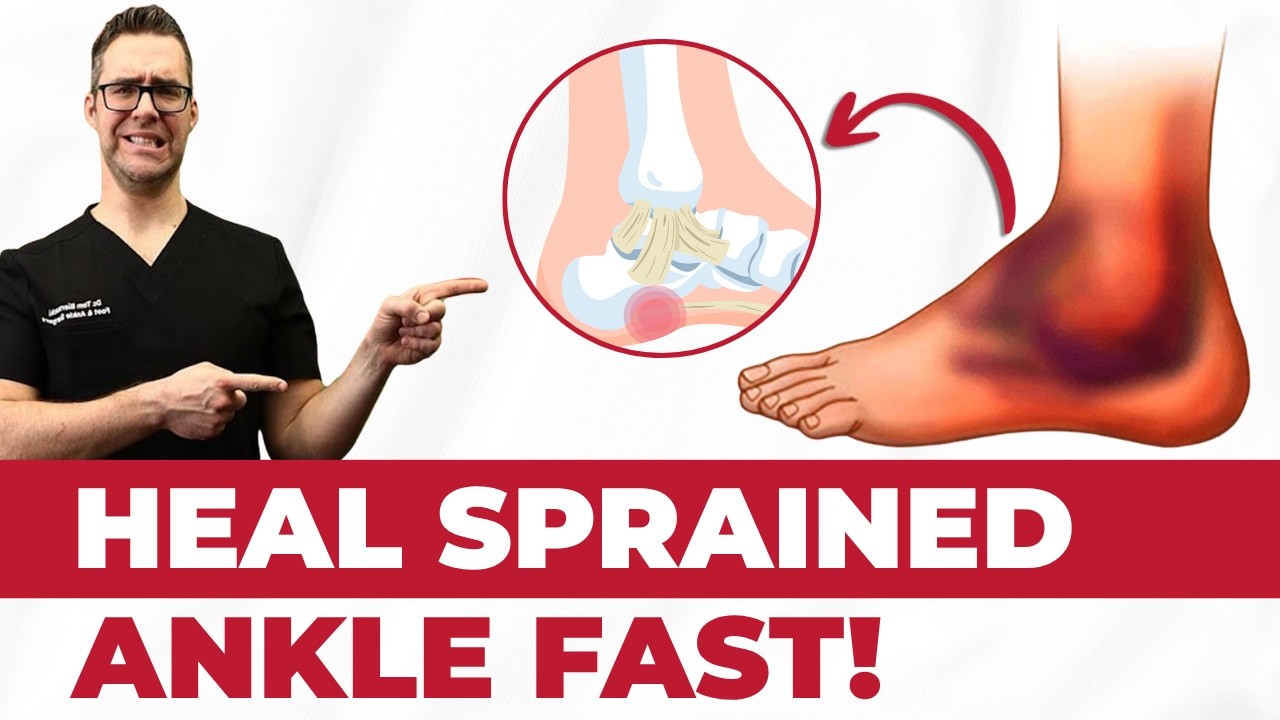
Watch: Fix TWISTED Ankle, ROLLED Ankle or SPRAINED Ankle Ligaments FASTER! — MichiganFootDoctors YouTube
Why Some Ankles Keep Spraining
A single ankle sprain stretches or tears the lateral ligaments — most commonly the anterior talofibular ligament (ATFL) and calcaneofibular ligament (CFL). Most first-time sprains heal with proper rehabilitation. But when sprains recur repeatedly, or when the ankle feels unstable and unpredictable on uneven ground, the ligaments have been stretched beyond their ability to provide mechanical stability. This is chronic lateral ankle instability — a structural problem that requires targeted treatment, not just more rest.
Functional vs. Structural Instability
Dr. Biernacki distinguishes two types of chronic ankle instability. Functional instability exists when ligament integrity is preserved but neuromuscular control — the peroneal muscles’ ability to react quickly to ankle perturbation — is impaired. This responds well to proprioceptive physical therapy, peroneal strengthening, and ankle bracing. Structural instability means the ligaments themselves are lax and cannot provide adequate mechanical restraint. This type requires surgical reconstruction to restore normal ankle mechanics.
Diagnostic Evaluation: Stress Tests and Imaging
Diagnosis includes anterior drawer test (assessing ATFL laxity), talar tilt test (CFL laxity), and bilateral comparison weight-bearing X-rays. MRI is ordered when the clinical picture suggests significant ligament damage, osteochondral defects, or peroneal tendon involvement — all common concurrent findings in recurrent sprains. The imaging guides surgical planning when reconstruction is indicated.
The Broström-Gould Procedure
For structural instability, Dr. Biernacki performs the modified Broström-Gould lateral ankle reconstruction — the gold standard for lateral ligament repair. The procedure tightens and reinforces the stretched ATFL and CFL using the superior extensor retinaculum for additional reinforcement. It’s performed as an outpatient procedure under regional anesthesia. Recovery involves non-weight-bearing for 2 weeks, then a boot for 4 weeks, then physical therapy for 8–12 weeks. Return to sport is typically at 4–6 months with an excellent long-term success rate above 90%.
Dr. Tom's Product Recommendations

ASO Ankle Stabilizing Orthosis
⭐ Highly Rated
Lace-up ankle brace with bilateral stabilizing straps. The most commonly prescribed athletic ankle brace for chronic ankle instability — fits inside most athletic shoes. Dr. Biernacki’s top brace recommendation for functional ankle instability.
Dr. Tom says: “Wore this all soccer season after three sprains. Dr. Biernacki recommended the ASO and I had zero re-sprains the entire season.”
Chronic ankle instability, recurrent sprains, return to sport after sprain
Structural instability confirmed on MRI — requires surgical evaluation
Disclosure: We earn a commission at no extra cost to you.

BOSU Balance Trainer
⭐ Highly Rated
Balance and proprioception training platform for ankle rehabilitation. Essential tool in Dr. Biernacki’s home rehab protocol for functional ankle instability — rebuilds peroneal reaction speed.
Dr. Tom says: “Dr. Biernacki gave me specific single-leg balance exercises on a BOSU as part of my ankle rehab. My ankle stability improved dramatically in 8 weeks.”
Ankle proprioception rehab, peroneal strengthening, functional instability treatment
Acute sprain phase (wait until cleared for balance training)
Disclosure: We earn a commission at no extra cost to you.
✅ Pros / Benefits
- Stress testing and MRI evaluation identifies functional vs. structural instability
- Broström-Gould reconstruction with >90% long-term success rate
- Conservative-first: bracing and PT before surgical consideration
- Returns athletes to full sport activity at 4–6 months post-reconstruction
❌ Cons / Risks
- Surgical reconstruction requires 4–6 months before return to cutting sports
- Concurrent osteochondral defects may complicate recovery and require additional treatment
Dr. Tom Biernacki’s Recommendation
Chronic ankle instability is one of the most common things I operate on — and also one of the most preventable with early proper rehabilitation. The patients who end up needing surgery are almost always those who didn’t do adequate rehab after their first sprain.
— Dr. Tom Biernacki, DPM | Board-Certified Podiatric Surgeon | Balance Foot & Ankle
Frequently Asked Questions
How many sprains is ‘too many’ before I should see a doctor?
Ideally, you’d see a podiatrist after the first significant sprain to ensure proper ligament healing and rehab. Practically, three or more sprains — or any sprain where the ankle feels unstable between sprains — warrants evaluation.
Can I play sports with a brace instead of getting surgery?
Many patients with functional instability do well long-term with bracing and strength training. For structural instability on MRI, bracing is a long-term accommodation but doesn’t fix the underlying ligament laxity.
What does Broström-Gould surgery recovery involve?
2 weeks non-weight-bearing, then 4 weeks in a boot, then 8–12 weeks of physical therapy. Return to running at ~12 weeks and full sport at 4–6 months.
Do I need an MRI before surgery?
Yes — MRI is standard before reconstruction to confirm ligament status, rule out osteochondral defects, and assess peroneal tendon integrity. It’s always done before surgical planning.
Michigan Foot Pain? See Dr. Biernacki In Person
4.9★ rated | 1,123 Reviews | 3,000+ Surgeries
Same-week appointments · Howell & Bloomfield Hills
📞 (810) 206-1402 Book Online →Frequently Asked Questions
When should I see a podiatrist?
If symptoms persist past 2 weeks, affect your normal activity, or are accompanied by red-flag symptoms (warmth, redness, swelling, inability to bear weight).
What does treatment cost?
Most diagnostic visits and conservative treatments are covered by Medicare and major insurers. Out-of-pocket costs vary by your specific plan.
How quickly can I get an appointment?
Most non-urgent cases see us within 5 business days. Urgent cases (sudden pain, possible fracture) typically same or next business day.
What is Ankle sprain?
Ankle sprain is a common foot/ankle condition that affects mobility and quality of life. Understanding the underlying cause is the first step in successful treatment. Our podiatrists at Balance Foot & Ankle perform a hands-on biomechanical exam, review your activity history, and use diagnostic imaging when appropriate to identify the root cause—not just treat the symptom. Many patients have been told to “rest and ice” without a deeper diagnostic workup; our approach is different.
Symptoms and warning signs
Common signs of ankle sprain include pain that worsens with activity, morning stiffness, swelling, tenderness when palpated, and difficulty bearing weight. If you experience sudden severe pain, inability to walk, visible deformity, numbness or color change, contact our office the same day or visit urgent care—these can signal a more serious injury such as a fracture, tendon rupture, or vascular compromise. Diabetics with any foot wound should seek same-day care.
Conservative treatment options
Most cases of ankle sprain respond to non-surgical care: structured rest, supportive footwear changes, custom orthotics, targeted stretching and strengthening protocols, anti-inflammatory medications when medically appropriate, and in-office procedures such as ultrasound-guided injections. We also offer advanced therapies including MLS laser therapy, EPAT/shockwave, regenerative injections, and image-guided procedures. Treatment is sequenced from least invasive to most invasive, and we explain the rationale at every step.
When is surgery considered?
Surgery is reserved for cases that fail 3-6 months of well-structured conservative care, when there is structural pathology (severe deformity, complete tear, advanced arthritis), or when imaging shows damage that will not heal without intervention. Our surgeons have performed 3,000+ foot and ankle procedures and prioritize minimally-invasive techniques whenever appropriate. We discuss recovery timelines, return-to-activity milestones, and realistic outcome expectations before any procedure is scheduled.
Recovery timeline and prevention
Recovery from ankle sprain varies based on severity and chosen treatment path. Conservative cases often improve within 4-8 weeks with consistent adherence to the protocol. Post-procedural recovery may range from a few days (in-office procedures) to several months (reconstructive surgery). Long-term prevention involves footwear assessment, activity modification, structured strengthening, and regular check-ins with your podiatrist if you have a history of recurrence. We provide written home-exercise plans and digital follow-up support.
Ready to feel better?
Same-week appointments available in Howell and Bloomfield Hills, Michigan.
Book Your VisitDoctor Hoy’s Natural Pain Relief Gel
Natural topical pain relief I use in our clinic. Arnica + camphor formula — apply directly to the area 3–4x daily. ($20–25)
Shop Doctor Hoy’s →PowerStep Pinnacle Insoles
Medical-grade arch support. The OTC insole I recommend most in our clinic. Reduces stress on the foot with every step. ($25–35)
Shop PowerStep →OrthoInfo – AAOS: Sprained Ankle
In-Office Treatment at Balance Foot & Ankle
If home treatment isn’t providing relief for your foot and ankle issues, our podiatry team at Balance Foot & Ankle can help with same-day evaluations and advanced in-office care.
Same-day appointments available. (810) 206-1402
Learn about our podiatry appointment booking → | Book online →
Our podiatrists treat the underlying cause, not just the symptom. Same-week appointments at our Howell and Bloomfield Hills, Michigan offices.
Same-Week Appointments in Howell & Bloomfield Hills
Three board-certified podiatric surgeons. 1,123+ five-star reviews. Most insurance accepted.

Dr. Tom Biernacki, DPM is a board-certified foot & ankle surgeon (ABFAS & ABPM) at Balance Foot & Ankle Specialists in Southeast Michigan. With over a decade of clinical experience, he specializes in heel pain, bunions, diabetic foot care, sports injuries, and minimally invasive surgery. Dr. Biernacki is a member of the APMA and ACFAS, and his patient education content on MichiganFootDoctors.com and YouTube has made him one of the most-followed foot & ankle educators on YouTube.