
Medically reviewed by Dr. Tom Biernacki, DPM
Board-certified podiatric surgeon | Balance Foot & Ankle
Last reviewed: May 2026
Quick answer: A corn on the toe is a small, hardened cone of skin that forms from repeated pressure or friction. Hard corns (heloma durum) develop on the tops or tips of toes; soft corns (heloma molle) grow between the toes. Both can be treated at home with padding and salicylic acid, but a podiatrist can remove them permanently and address the underlying cause.
Table of Contents
- What Is a Corn on the Toe?
- Hard Corns vs. Soft Corns vs. Seed Corns
- Symptoms of Toe Corns
- What Causes Corns on Toes?
- How a Podiatrist Diagnoses a Corn
- Home Treatments That Actually Work
- Professional Corn Removal
- Warning Signs: When to See a Podiatrist
- How to Prevent Corns from Coming Back
- Frequently Asked Questions

If you wince every time your shoes press against a particular spot on your toe, you already know the sharp, drilling discomfort that a corn can cause. In our clinic at Balance Foot & Ankle, toe corns are one of the most common complaints we see — and one of the most misunderstood. Many patients have been trimming the same corn for years without realizing that the corn keeps coming back because the pressure causing it was never addressed.
This guide covers everything you need to know: what a corn actually is, the difference between hard, soft, and seed corns, what causes them, and when to treat at home versus when to come in and see us.
What Is a Corn on the Toe?
A corn on the toe is a concentrated area of thickened, hardened skin that develops in response to repeated friction or pressure. Unlike a callus — which spreads across a broad, flat area — a corn forms a tight, cone-shaped core that points inward toward the bone. That inward-pointing core is what makes corns painful: every step compresses it deeper into the sensitive tissue beneath.
Medically, corns are called helomas. The outer layer of skin (the epidermis) responds to pressure the same way a bricklayer builds a wall — it stacks extra layers of keratin to protect itself. When that protective response overshoots, a corn forms. The process is entirely normal, but the result is a lesion that can make walking genuinely painful.
In our clinic, we commonly see corns on the tops of the smaller toes (from shoe friction), at the tips of hammer toes (from toe-box pressure), and in the narrow web spaces between toes (the characteristic “soft corn” location).
Hard Corns vs. Soft Corns vs. Seed Corns
Not all toe corns are the same, and the type determines where it appears and how it should be treated. There are three distinct varieties, and misidentifying them is one of the most common mistakes patients make before coming to see us.
Hard Corns (Heloma Durum)
Hard corns are the most common type. They form a dense, dry, yellowish plug of skin with a clearly defined center. You’ll typically find them on the tops of the smaller toes (especially the fifth toe), at the tips of bent toes, and occasionally on the outer edge of the little toe. The skin around them is usually thick and callused. Hard corns hurt most when direct downward pressure is applied — the classic drilling pain when a shoe presses on them.
Soft Corns (Heloma Molle)
Soft corns develop almost exclusively between the toes — most often between the fourth and fifth toes. Because perspiration keeps the inter-digital skin moist, these corns stay white and rubbery rather than hardening. They’re intensely tender, often described as feeling like a pebble between the toes. Soft corns are frequently mistaken for athlete’s foot or a blister. They’re actually caused by bony prominences on adjacent toe bones pressing against each other, which is why they recur in the same spot.
Seed Corns (Heloma Miliare)
Seed corns are small, discrete plugs of hardened skin — typically 2–3 mm across — that can appear on the bottom of the foot or the toe tips. They’re usually painless unless they sit directly under a weight-bearing point. Seed corns are thought to result from blocked sweat ducts rather than friction alone, which is why they sometimes appear in clusters and respond less predictably to standard corn treatment.
Key takeaway: Hard corns go on top of or at the tip of toes; soft corns grow between toes and stay rubbery from moisture; seed corns are small clusters on the sole or toe tips. Each type needs a slightly different approach.
Symptoms of Toe Corns
Toe corns announce themselves in predictable ways, and recognizing the full picture helps confirm you’re dealing with a corn rather than a wart, cyst, or bursitis. The most consistent symptoms we see in our patients include a clearly defined area of raised, thickened skin with a central hard core, sharp or burning pain when pressure is applied, dull aching pain that persists after the pressure is removed, tenderness when the area is pinched from the sides, and redness or inflammation around the site in more advanced cases.
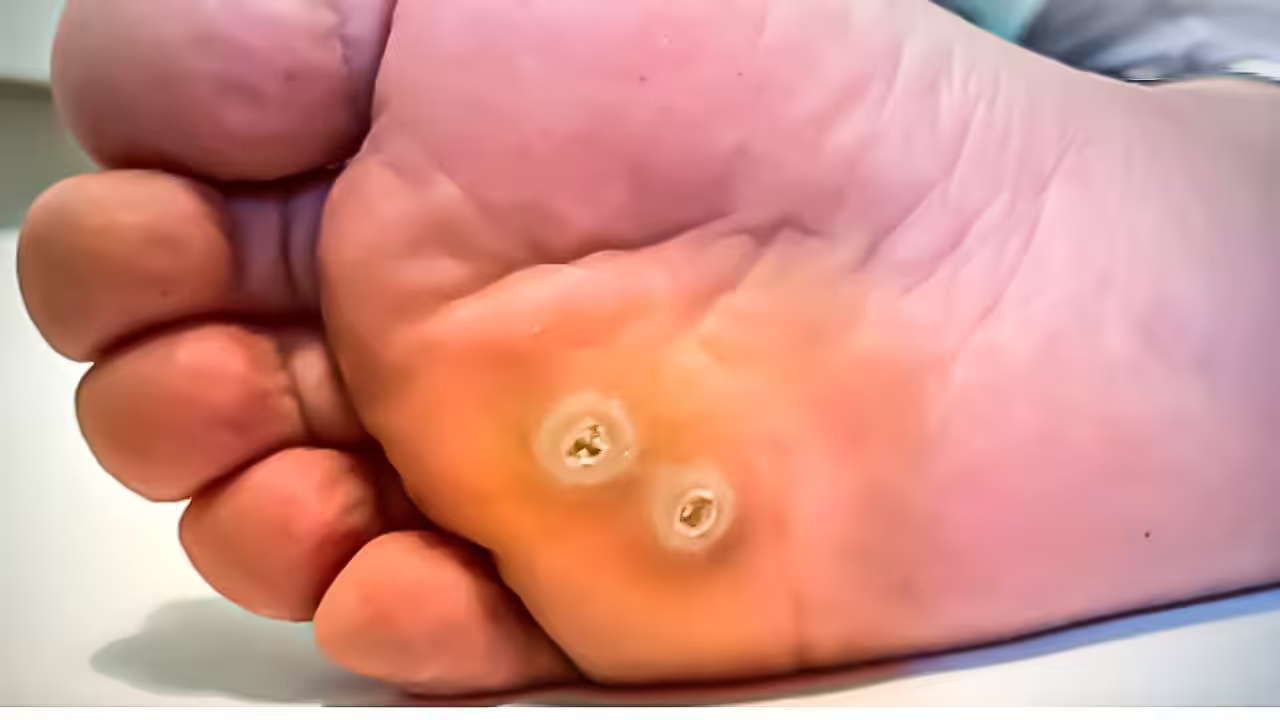
A key diagnostic detail: if you look closely at a corn under good light, you’ll see that it disrupts the normal fingerprint-like skin lines around it. A plantar wart — which is frequently confused with a corn — does the same thing but also shows tiny black dots (thrombosed capillaries) when the surface is pared down. Corns do not have those dots; they reveal a translucent, glassy core.
Soft corns between the toes feel different — more like burning or rawness than a sharp point — and the skin there may look macerated and whitish rather than raised and hard.
What Causes Corns on Toes?
Corns on the toes are almost always caused by some combination of ill-fitting footwear, abnormal toe alignment, and abnormal walking mechanics — and in our experience, it’s rarely just one factor in isolation.
The most common cause we identify is shoes that are too narrow, too shallow in the toe box, or too short. When the shoe compresses the toes laterally or pushes down on their tops, the skin at pressure points begins to thicken defensively. High heels compound the problem by driving the toes forward into the toe box with every step.
Structural toe deformities are the second major driver. Hammer toes, claw toes, and mallet toes all alter how toes sit inside a shoe, creating new friction points at the top of the bent joint. Once a toe buckles, it never un-buckles on its own — the corn will keep returning until the deformity is addressed.
Other contributing factors include: bunions (which crowd neighboring toes), high-arched feet (which concentrate pressure on toe tips), flat feet (which alter toe mechanics), and going barefoot or wearing thin-soled shoes on hard surfaces. Age plays a role too — the fat padding that naturally cushions the toes thins with each decade.
How a Podiatrist Diagnoses a Corn
Diagnosing a corn is usually straightforward, but a podiatrist’s exam goes further than confirming the corn itself — it identifies why the corn formed, which is what determines whether it will come back. At our Howell and Bloomfield Hills offices, our evaluation typically includes visual and tactile examination of the lesion, paring the surface to distinguish a corn from a wart or callus, gait analysis to identify mechanical pressure contributors, and X-rays if a bony prominence is suspected as the driver.
The differential diagnosis matters. Lesions that are commonly mistaken for toe corns include plantar warts (viral, contagious, require different treatment), interdigital cysts (fluid-filled, need aspiration or excision), bursitis (inflamed fluid sac, often over a bony prominence), and epidermoid inclusion cysts (benign but firm nodules under the skin). Treating a wart like a corn — or vice versa — is ineffective and can delay resolution by months.
Key takeaway: A podiatrist does more than remove the corn — they identify the structural or footwear cause so it doesn’t grow back. Misdiagnosis (especially confusing a corn with a plantar wart) is surprisingly common.
Home Treatments That Actually Work
For small, uncomplicated corns in people without diabetes or circulatory problems, home management can provide meaningful relief. Here is what the evidence supports and what we recommend to patients before they come in to see us.
1. Fix the Shoe First
Every other treatment fails if you keep wearing the shoe that caused the corn. Switch to shoes with a wide, deep toe box and low heel — at least temporarily. This alone often reduces pain significantly within a week. Look for shoes where your toes aren’t touching the end of the shoe and can wiggle freely side to side.
2. Toe Padding and Corn Cushions
Non-medicated moleskin padding or donut-shaped corn cushions redistribute pressure away from the corn without introducing chemicals that could harm surrounding skin. Cut moleskin into a donut shape, place the hole over the corn, and secure it. Replace daily. This is our first recommendation for patients who aren’t ready to start salicylic acid treatment.
3. Salicylic Acid (Used Carefully)
Salicylic acid (typically 17–40% concentration) softens and breaks down the excess keratin in the corn. Mediplast pads, Dr. Scholl’s Corn Removers, and similar products work by the same mechanism. The protocol: soak the toe in warm water for 5 minutes, dry thoroughly, apply the pad directly to the corn only, leave for 24–48 hours, then gently file the softened white skin with an emery board.
Two important caveats: do not use salicylic acid on soft corns between the toes — the macerated skin there absorbs the acid too readily and can cause chemical burns. And never use it if you have diabetes, peripheral neuropathy, or poor circulation. These conditions make chemical self-treatment dangerous.
4. Pumice Stone After Soaking
After a 10-minute warm soak, gently file the surface of the corn with a pumice stone or emery board in one direction. Never try to cut or dig out a corn with scissors or a blade — this risks infection and won’t remove the root core. File only until the surface feels smoother; aggressive filing creates new friction and stimulates more thickening.
5. Toe Separators for Soft Corns
For soft corns between the toes, the goal is eliminating the bone-on-bone pressure. Foam or gel toe separators worn inside the shoe spread the toes enough to reduce that contact. Silicone separators hold up better than foam with extended use. Keep the inter-digital space dry — excessive moisture perpetuates the softening that defines these lesions.
Professional Corn Removal
Professional corn removal at a podiatry office is fast, nearly painless, and produces immediate relief. Understanding your options helps set expectations before your appointment.
In-Office Debridement (Most Common)
Using a sterile scalpel, a podiatrist shaves the corn down to its base in minutes. There is typically no bleeding and minimal discomfort because the thickened tissue has limited nerve supply. Most patients walk out of the office with immediate pain relief. The limitation: debridement is not a cure. If the underlying pressure source — the shoe, the toe deformity, the walking pattern — isn’t corrected, the corn regrows within weeks.
Custom Orthotics
When abnormal gait mechanics are contributing to corn formation, custom orthotics can redistribute weight and reduce the focal pressure points that drive thickening. This is particularly effective for seed corns on the ball of the foot and for patients who develop corns despite wearing well-fitted shoes.
Surgical Correction (For Recurrent Cases)
When a corn recurs repeatedly because of an underlying bony prominence or toe deformity like a hammer toe or claw toe, surgery to correct the structural problem is the only permanent solution. Procedures range from minimally invasive condylectomy (removal of a small bony bump) to full hammer toe correction with tendon release. Recovery is generally quick — most patients are back in normal footwear within a few weeks. In our practice, we’ve performed over 3,000 foot and ankle surgeries, and toe deformity correction is among the most satisfying procedures for both patient and surgeon because relief is immediate and durable.
⚠️ When to see a podiatrist:
- You have diabetes, peripheral neuropathy, or poor circulation — never self-treat with salicylic acid or blades
- The corn is draining fluid, bleeding, or shows signs of infection (spreading redness, warmth, pus)
- Pain is severe enough to alter your gait or affect daily activities
- The corn has recurred three or more times in the same location
- You can’t determine whether the lesion is a corn, wart, or cyst
- The corn is on a child’s foot — toe deformities in growing feet need professional evaluation
How to Prevent Corns from Coming Back
The most common mistake we see is treating the corn without addressing why it formed. Prevention requires targeting the source of friction or pressure, not just managing the skin response.
The most effective preventive measures are: wearing shoes with adequate toe box depth and width (your longest toe should have at least a thumb’s-width of space from the end of the shoe), replacing worn footwear that has lost its internal cushioning and structural support, wearing moisture-wicking socks to reduce inter-digital moisture for soft corn prevention, using toe padding prophylactically during activities known to cause friction, and addressing underlying toe deformities before they worsen — a flexible hammer toe that is correctable with conservative care today may require surgery in five years.
Patients with diabetes or structural foot deformities benefit from annual podiatric exams specifically to catch developing pressure lesions before they become complicated wounds.
Frequently Asked Questions
What is the difference between a corn and a callus?
A callus is a broad, flat area of thickened skin without a defined center; it usually doesn’t hurt. A corn has a concentrated hard core that points inward toward the bone, which is what makes it painful. Corns develop on toes; calluses typically form on the ball or heel of the foot.
Can a corn go away on its own?
Rarely, and only if the pressure source is completely eliminated. If you switch to perfectly fitting shoes and the friction stops entirely, a small corn may slowly flatten over several months. In practice, most corns persist or worsen without active treatment because the mechanical factors that caused them (toe shape, gait, footwear) don’t change on their own.
Does corn removal hurt?
In-office podiatric debridement is typically painless because the thickened skin is largely avascular and hyposensitive. Most patients are surprised by how comfortable the procedure is. Some tenderness around the corn margins is possible, but sharp pain during removal is unusual. If significant discomfort is anticipated — for example, in a very inflamed corn — a local anesthetic can be used.
Are corn plasters (medicated pads) safe?
Salicylic acid corn pads are safe for healthy adults with good circulation. They are not safe for people with diabetes, peripheral vascular disease, or neuropathy. They should also not be used on soft corns between the toes, on irritated or infected skin, or on children without professional guidance.
How long does it take for a corn to go away?
After professional debridement, pain relief is immediate. The underlying skin thickening resolves over 2–4 weeks with consistent padding and footwear correction. With salicylic acid home treatment, most corns soften enough for significant relief within 1–2 weeks, though full resolution takes 4–6 weeks. Recurrence within weeks suggests the causative pressure hasn’t been eliminated.
The Bottom Line
A corn on the toe is your body’s protective response to pressure gone too far. The fix isn’t just removing the corn — it’s removing the cause. For most people, that starts with better-fitting shoes, appropriate padding, and careful salicylic acid use. But when a corn keeps returning, when it develops in a person with diabetes or poor circulation, or when an underlying toe deformity is driving the problem, professional care is the right call.
Our team at Balance Foot & Ankle can remove a painful corn in a single visit and walk you through the structural and footwear changes that keep it from coming back. Same-day appointments are available at both our Howell and Bloomfield Hills, Michigan offices.
Sources
- Freeman DB. Corns and calluses resulting from mechanical hyperkeratosis. Am Fam Physician. 2002;65(11):2277-2280. PMID: 12074526.
- Singh D, et al. Mechanical small toe deformities. Foot Ankle Clin. 2011;16(4):689-712. doi:10.1016/j.fcl.2011.08.009.
- Vlahovic TC. Plantar warts: diagnosis and treatment strategies. Clin Podiatr Med Surg. 2016;33(3):337-353. doi:10.1016/j.cpm.2016.02.001.
- Farndon L, et al. A systematic review of the evidence for interventions for foot corns. J Foot Ankle Res. 2013;6(Suppl 1):P8. doi:10.1186/1757-1146-6-S1-P8.
- Levy LA, Hetherington VJ. Principles and Practice of Podiatric Medicine. 2nd ed. Clinics in Podiatric Medicine and Surgery. 2006.
Painful Corn on Your Toe? Get Relief Today.
Same-day appointments available in Howell & Bloomfield Hills, MI
4.9★ | 1,123 Reviews | 3,000+ Surgeries
Or call: (810) 206-1402

Dr. Tom Biernacki, DPM is a double board-certified podiatrist and foot & ankle surgeon at Balance Foot & Ankle Specialists in Southeast Michigan. With over a decade of clinical experience, he specializes in heel pain, bunions, diabetic foot care, sports injuries, and minimally invasive surgery. Dr. Biernacki is a member of the APMA and ACFAS, and his patient education content on MichiganFootDoctors.com and YouTube has reached over one million views.
- Diagnosis and Treatment of Plantar Fasciitis (PubMed / AAFP)
- Heel Pain (APMA)
- Hallux Valgus (Bunions): Evaluation and Management (PubMed)
- Bunions (Mayo Clinic)
Recommended Products from Dr. Tom