

Quick answer: Foot Care Landscapers Outdoor Workers Ground Level Demands is a common foot/ankle topic that affects many patients. Effective treatment starts with a targeted diagnosis, conservative-first treatment, and escalation only when needed. We treat this regularly at our Howell and Bloomfield Township practices. Call (810) 206-1402.
▶ Watch
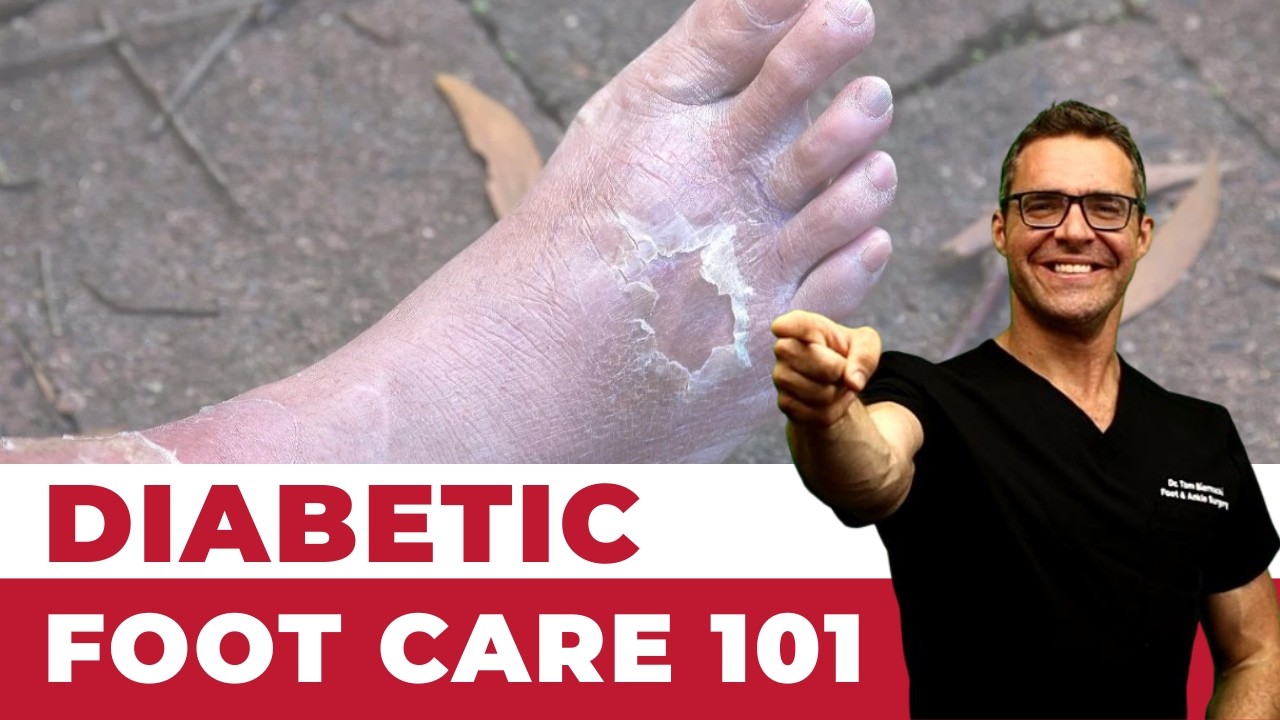
The most important clinical decision with Foot Care Landscapers Outdoor Workers Ground Level Demands isn’t which treatment to start with — it’s identifying the correct subtype. That changes everything. Call (810) 206-1402.
Landscaping and the Foot: Ground-Level Occupational Demands
Medically Reviewed by Dr. Tom Biernacki, DPM — Board-Certified Podiatrist, Balance Foot & Ankle Specialists, Michigan. Last updated April 2026.
Landscapers, groundskeepers, arborists, and outdoor agricultural workers perform physically demanding work on highly variable terrain — grass, gravel, slopes, mud, pavement — often in heavy steel-toed boots carrying vibrating equipment and loads. Michigan’s outdoor work season is compressed into approximately 6-7 months of intense activity, creating the cumulative loading that produces significant foot and lower extremity conditions. At Balance Foot & Ankle in Howell and Bloomfield Township, Michigan, we treat many workers in Michigan’s landscaping and outdoor industries and understand the occupational demands they face.
Equipment and Vibration Effects
Landscape workers regularly operate vibrating equipment — walk-behind and riding mowers, trimmers, backpack blowers, and chainsaw work. Whole-body vibration from riding equipment affects the spine; hand-arm vibration from handheld tools affects the upper extremities; but ground vibration and shock from operating heavy walk-behind equipment transmits through the feet and lower extremities. Prolonged exposure to ground-transmitted vibration contributes to cumulative musculoskeletal loading on the ankle, knee, and hip. The heavy steel-toe boots required for safety compliance add weight that multiplies energy expenditure with every step and fatigues foot and calf muscles.
Terrain Challenges and Ankle Instability
Landscaping work is conducted on maximally variable terrain — slopes, wet grass, root networks, gravel, and uneven ground — creating conditions where ankle sprains are among the most common injuries. Ankle sprains on slopes and uneven surfaces account for a disproportionate share of landscaping worker injuries and lost workdays. Workers with a history of prior ankle sprains have significantly elevated re-injury risk on challenging terrain. Ankle bracing for workers with prior sprains and appropriate lace-up footwear (not slip-on) that provides mechanical ankle support significantly reduces re-injury risk. Custom orthotics for workers with biomechanical risk factors (flat feet, excessive pronation) improve proprioceptive feedback and reduce ankle inversion risk.
Michigan-Specific Seasonal Considerations
Michigan’s compressed outdoor season creates intense spring-to-fall work demands followed by complete winter rest — the reverse of what gradual conditioning programs recommend. Many landscapers develop foot and ankle problems early in the season as they transition from winter deconditioning to full-intensity outdoor work. Starting the season with appropriate stretching, adequate footwear, and attention to early symptoms rather than working through pain prevents acute injuries from becoming chronic conditions. Contact Balance Foot & Ankle at (810) 206-1402 for landscaping worker foot evaluation and orthotic/footwear recommendations that accommodate the demands of outdoor work in Michigan’s climate.
Foot or Ankle Pain? We Can Help.
Balance Foot & Ankle — Howell & Bloomfield Township, MI
📅 Book Online
📞 (810) 206-1402
Insurance Accepted
BCBS · Medicare · Aetna · Cigna · United Healthcare · HAP · Priority Health · Humana · View All →
Howell Office
4330 E Grand River Ave
Howell, MI 48843
Get Directions →
Bloomfield Township Office
43494 Woodward Ave, Suite 208
Bloomfield Township, MI 48302
Get Directions →
Your Board-Certified Podiatrists



Ready to Get Back on Your Feet?
Same-week appointments available at both locations.
Book Your AppointmentMore Podiatrist-Recommended Foot Health Essentials
Hoka Clifton 10

- JACQUARD KNIT UPPER
- Lining Textile
Max-cushion everyday shoe — podiatrist favorite for walking and running.
PowerStep Pinnacle Insole

- The Pinnacle Full length insoles for men & women provide maximum cushioning, from high activity to moderate support. The PowerStep arch support shape provides stability to the foot and ankle, helping to relieve foot pain.
- When you spend all day on your feet, every step counts. PowerStep insoles are a podiatrist-recommended orthotic to help relieve & prevent foot pain related to athletes, runners, Plantar Fasciitis, heel spurs & other common foot, ankle & knee injuries
- The Pinnacle plantar fasciitis insoles offer superior heel cushioning and arch support. The dual-layer cushioning is designed to reduce stress and fatigue, while PowerStep premium arch support is designed for plantar fasciitis relief.
- The PowerStep Pinnacle arch support inserts for men & women can be worn in a variety of shoe types such as; athletic, walking, running, work & some casual shoes. Orthotic Inserts are ordered by shoe size, no trimming required.
- Made in the USA & backed by a 30-day money-back guarantee. PowerStep orthotic inserts for men & women are designed for shoes where the factory insole can be removed. HSA & FSA Eligible
The podiatrist-recommended over-the-counter orthotic.
OOFOS Recovery Slide

- The Original Recovery Footwear.
- Finding Your Size – For your perfect fit, consult the “size chart” link above. Wear a half size? In general, we recommend that women who wear a ½ size size UP, and men who wear a ½ size size DOWN
- OOahh – An evolution of the OOriginal, the OOahh slide features our proven foundation of OOfoam technology + patented footbed design with a slide-style strap that has become a best-seller in the OOFOS line
- OOfoam Technology – Our revolutionary OOfoam technology absorbs 37% more impact than traditional footwear foams to reduce the stress on your feet, joints & back. Plus, the closed-cell foam is machine washable and designed to minimize odor
- Patented Footbed – Our patented footbed cradles and supports arches to reduce energy exertion in the ankles by up to 47% compared to competitors’ footwear. So walking is easier. Recovery is faster. And yOO feel better
Impact-absorbing recovery sandal — wear after long days on your feet.
As an Amazon Associate, Balance Foot & Ankle earns from qualifying purchases. Product recommendations are based on clinical experience; prices and availability shown above update live from Amazon.

When to See a Podiatrist
If foot or ankle pain has been bothering you for more than a few weeks, home care alone may not be enough. Balance Foot & Ankle offers same-week appointments at our Howell and Bloomfield Township clinics — no referral needed in most cases. Bring your current shoes and a short list of symptoms and we’ll build you a treatment plan in one visit.
Call Balance Foot & Ankle: (810) 206-1402 · Book online · Offices in Howell & Bloomfield Township
Frequently Asked Questions
When should I see a podiatrist?
If symptoms persist past 2 weeks, affect your normal activity, or are accompanied by red-flag symptoms (warmth, redness, swelling, inability to bear weight).
What does treatment cost?
Most diagnostic visits and conservative treatments are covered by Medicare and major insurers. Out-of-pocket costs vary by your specific plan.
How quickly can I get an appointment?
Most non-urgent cases see us within 5 business days. Urgent cases (sudden pain, possible fracture) typically same or next business day.
Ready for Expert Care?
Same-day appointments in Howell & Bloomfield Township, MI.
4.9★ | 1,123 Reviews | 3,000+ Surgeries
Or call: (810) 206-1402

Dr. Tom Biernacki, DPM is a board-certified foot & ankle surgeon (ABFAS & ABPM) at Balance Foot & Ankle Specialists in Southeast Michigan. With over a decade of clinical experience, he specializes in heel pain, bunions, diabetic foot care, sports injuries, and minimally invasive surgery. Dr. Biernacki is a member of the APMA and ACFAS, and his patient education content on MichiganFootDoctors.com and YouTube has made him one of the most-followed foot & ankle educators on YouTube.