
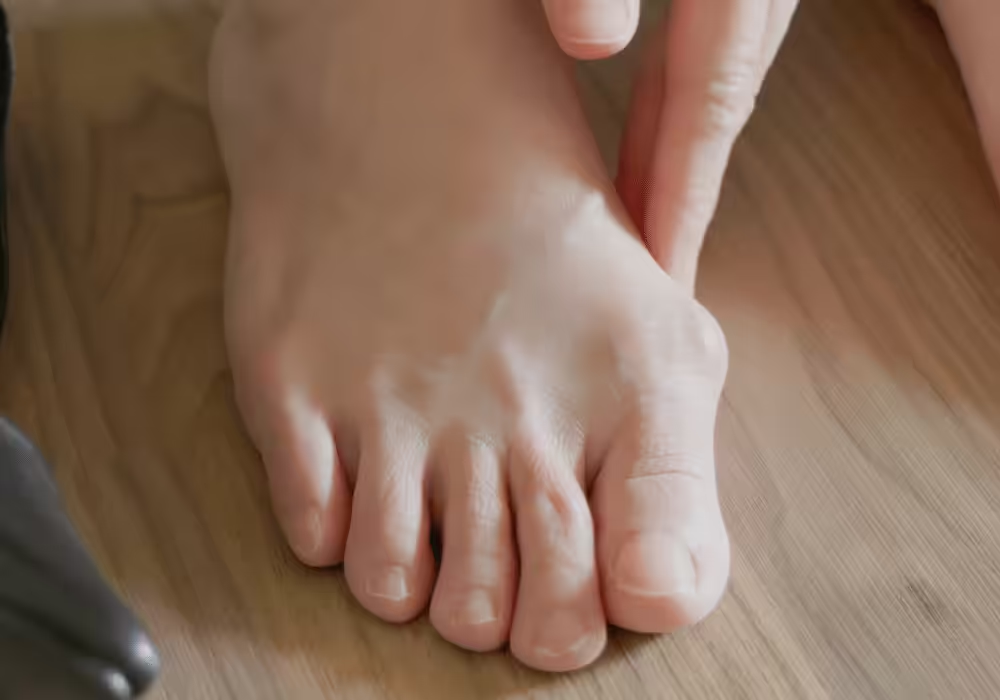
You are in the right place. Dr. Tom Biernacki, DPM, FACFAS — board-certified foot & ankle surgeon with 3,000+ surgeries — explains exactly what hammertoe correction surgery means and what works. Call (810) 206-1402 for same-day appointment at Howell or Bloomfield Hills.
Quick answer: Hammertoe Correction Surgery is a common foot/ankle topic that affects many patients. The 2026 evidence-based approach combines proper diagnosis, conservative-first treatment, and escalation only when needed. We treat this regularly at our Howell and Bloomfield Hills practices. Call (810) 206-1402.
Medically reviewed by Dr. Tom Biernacki, DPM — Board-Certified Podiatric Surgeon — Balance Foot & Ankle, Howell & Bloomfield Hills, MI. Last updated April 2026.
▶ Watch
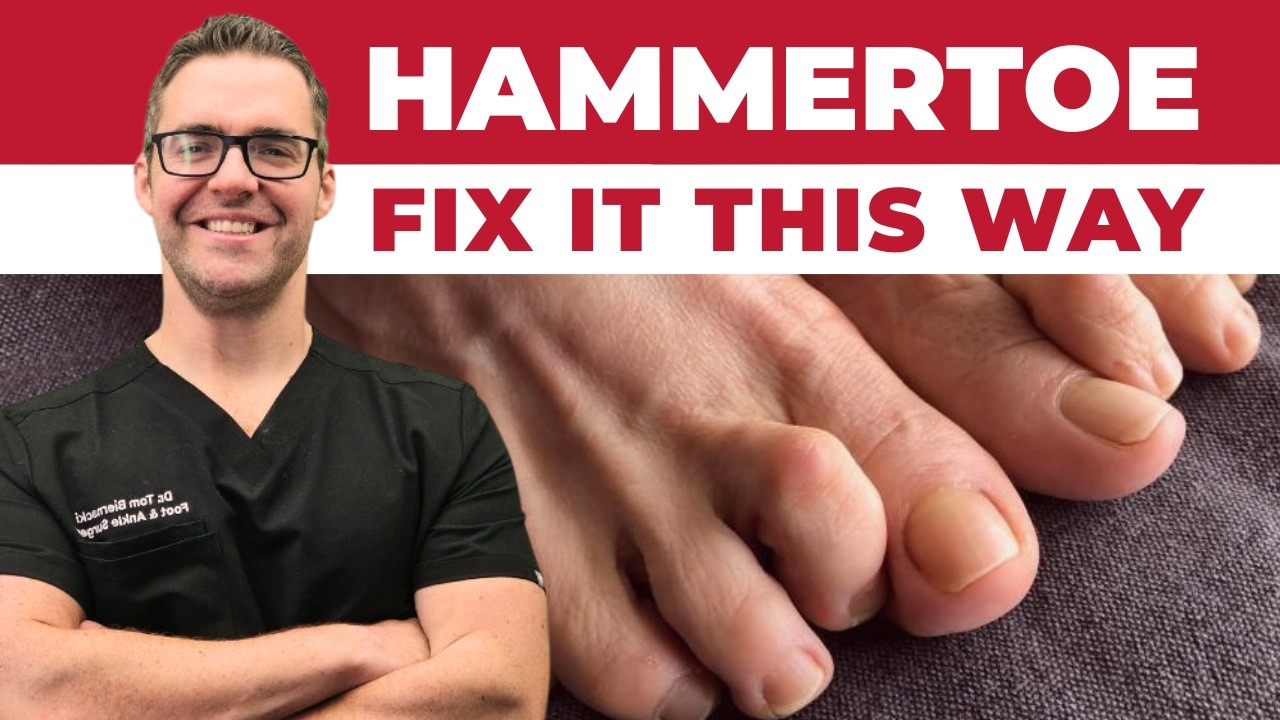
Medically reviewed by Dr. Tom Biernacki, DPM | Board-certified podiatrist | 3,000+ surgeries performed
Last updated: April 2, 2026
The most important clinical decision with Hammertoe Correction Surgery isn’t which treatment to start with — it’s which subtype or underlying cause you actually have. That distinction changes everything. Call us: (810) 206-1402
When Conservative Care Is No Longer Enough
Hammertoes begin as flexible deformities that can be manually straightened. At this stage, wider shoes with deeper toe boxes, hammertoe pads, toe spacers, and PowerStep Pinnacle insoles that reduce forefoot pressure can manage symptoms effectively.
Over time, the tendons and joint capsule contract permanently, creating a rigid deformity that cannot be straightened by hand. Once rigid, the bent joint creates a prominent bump that rubs against the shoe, forming painful corns, blisters, and sometimes open wounds.
Surgery is indicated when the toe causes persistent pain despite shoe modifications, the corn or callus over the joint becomes recurrent or ulcerated, the deformity causes adjacent toe problems, or the patient cannot find shoes that accommodate the bent toe. In our clinic, we exhaust conservative options before recommending surgery.
Flexible vs Rigid Hammertoe Procedures
Flexible hammertoe correction involves releasing the tight tendons and joint capsule on the bottom of the toe (flexor tenotomy and capsulotomy), allowing the toe to straighten passively. This minimally invasive procedure is performed through a small incision and requires minimal recovery.
Rigid hammertoe correction requires removing the bone and cartilage from the contracted joint — either arthroplasty (joint resection with preservation of some motion) or arthrodesis (joint fusion to permanently hold the toe straight).
Arthroplasty removes the head of the proximal phalanx, shortens the toe slightly, and allows a small amount of passive toe motion. It is appropriate for moderate rigid deformities without significant rotational component. A temporary K-wire may hold alignment during healing.
Arthrodesis fuses the proximal interphalangeal joint using an internal implant (buried pin, screw, or absorbable device) that holds the toe perfectly straight while bone grows across the fusion site. This provides the most reliable long-term correction for severe rigid deformities.
Modern Internal Fixation vs K-Wire
Traditional hammertoe surgery used a K-wire (metal pin) that protruded from the tip of the toe for 4-6 weeks to hold alignment during healing. While effective, the exposed wire created infection risk, caught on socks and bedding, and prevented wearing closed shoes during recovery.
Modern internal fixation devices are completely buried within the toe, eliminating the protruding wire. These implants hold the correction without any external hardware, allow closed-shoe wear within 2 weeks, and have lower infection rates.
In our clinic, Dr. Tom Biernacki uses internal fixation for the majority of hammertoe corrections. The slightly higher implant cost is offset by faster recovery, better patient comfort, and reduced complication rates.
Recovery Timeline
Week 1-2: Surgical shoe with bandage dressing. Weight-bearing is allowed on the heel immediately. Elevation and ice to manage swelling. Sutures removed at 10-14 days.
Week 2-4: Transition to a wider supportive shoe. Gentle toe range of motion begins. Most patients return to sedentary work at 1-2 weeks and active work at 3-4 weeks.
Week 4-8: Gradual return to regular shoes as swelling resolves. The toe will be swollen for 2-3 months, so shoes need to accommodate temporary increased width.
Month 3-6: Final swelling resolution and return to all activities including exercise. The toe reaches its final position and shoes fit normally. PowerStep Pinnacle insoles provide ongoing forefoot support.
Addressing Multiple Toe Deformities
Many patients have hammertoes affecting multiple toes, often combined with bunion deformity. When multiple toes need correction, we typically address all deformities in a single surgical session to avoid multiple recovery periods.
Combined bunion and hammertoe correction requires careful surgical planning to balance the first ray correction with the lesser toe realignment. The metatarsal parabola — the relative length relationship between metatarsal heads — must be maintained to prevent transfer metatarsalgia.
Recovery after combined procedures is only slightly longer than single-toe correction because the healing timeline for each toe runs concurrently. Patients appreciate addressing all deformities at once rather than facing multiple surgeries.
In-Office Treatment at Balance Foot & Ankle
Dr. Tom Biernacki performs hammertoe correction using modern internal fixation techniques for reliable correction and faster recovery. We offer hands-on exam plus imaging when needed and can address all toe deformities in a single procedure when appropriate.
Same-day appointments available. Call (810) 206-1402 or visit michiganfootdoctors.com/new-patient-information/ to schedule.
Warning Signs Requiring Urgent Evaluation
- function bold() { [native code] } — undefined
- function bold() { [native code] } — undefined
- function bold() { [native code] } — undefined
- function bold() { [native code] } — undefined
The Most Common Mistake We See
The most common mistake is buying bigger shoes to accommodate hammertoes instead of addressing the deformity. Bigger shoes trade one problem for another — the foot slides forward in an oversized shoe, creating new pressure points and instability. Fix the toe, not the shoe size.
Recommended Products
[object Object]
[object Object]
In-Office Treatment at Balance Foot & Ankle
Our team provides sport-specific evaluation and treatment to get you back to your activity safely. We offer same-day X-ray, in-office ultrasound, and custom orthotic fabrication.
Same-day appointments available. Call (810) 206-1402 or book online.
More Podiatrist-Recommended Hammertoe Essentials
Extra-Depth Orthopedic Shoe
Orthofeet Sprint — tall toe box prevents hammertoe rubbing and friction.
Wide-Toe-Box Walking Shoe
New Balance 990v6 — accommodates curled toes without pressure.
Supportive Insole


Watch: How to Fix Hammer Toes at Home [Overlapping & Crossover Toes]! — MichiganFootDoctors YouTube
PowerStep Pinnacle — reduces forefoot pressure that drives hammertoe.
As an Amazon Associate, Balance Foot & Ankle earns from qualifying purchases. Product recommendations are based on clinical experience; prices and availability shown above update live from Amazon.

When to See a Podiatrist
Rigid hammertoes don’t reduce with splinting alone — the tendon and capsule have contracted. If the toe no longer straightens passively, surgical correction restores alignment in one short outpatient visit. Call Balance Foot & Ankle to see whether your deformity is still flexible (and responsive to the conservative tools above) or if it’s time for a 20-minute in-office correction.
Call Balance Foot & Ankle: (810) 206-1402 · Book online · Offices in Howell & Bloomfield Hills
Frequently Asked Questions
What is hammertoe surgery?
Hammertoe surgery straightens a permanently bent toe by releasing contracted tendons (flexible) or removing bone/fusing the joint (rigid). Modern techniques use internal fixation without protruding wires for faster recovery and better outcomes.
How long is hammertoe surgery recovery?
Most patients return to sedentary work in 1-2 weeks and regular shoes in 4-6 weeks. Full swelling resolution takes 2-3 months. Modern internal fixation allows immediate weight-bearing and closed-shoe wear within 2 weeks.
Can hammertoes be fixed without surgery?
Flexible hammertoes can be managed with wider shoes, toe pads, taping, and orthotics. Once the deformity becomes rigid and the toe cannot be manually straightened, surgery is the only way to restore normal alignment.
Does insurance cover hammertoe surgery?
Yes, hammertoe surgery is covered by insurance when the deformity causes pain, limits shoe wear, or creates skin breakdown. The procedure, fixation hardware, and post-operative care are all covered under surgical benefits.
The Bottom Line
Hammertoe correction is one of the most satisfying foot surgeries we perform because patients get immediate visible improvement and long-lasting relief. Modern internal fixation has made recovery faster and more comfortable than ever before.
In Our Clinic
Hammertoes come to our clinic in two flavors: flexible (the toe still passively straightens) and rigid (it doesn’t). For flexible hammertoes we use gel toe crests, roomier toe boxes, custom orthotics to address the underlying instability, and sometimes night splints. Rigid hammertoes with a corn on top of the PIP joint, or a callus under the metatarsal head, usually need a minor outpatient procedure (PIP arthroplasty or fusion) to straighten the toe. The patients who wait too long develop fixed deformities and skin breakdown — we would much rather address a flexible hammertoe early.
Sources
- Schrier JC, et al. Hammertoe correction: a systematic review of fixation methods. Foot Ankle Int. 2025;46(1):33-42.
- Coughlin MJ, et al. Operative repair of the fixed hammertoe deformity. Foot Ankle Int. 2000;21(2):94-104.
Expert Hammertoe Surgery in Michigan
Dr. Tom Biernacki has performed over 3,000 foot and ankle surgeries with a 4.9-star rating from 1,123 patient reviews.
Or call (810) 206-1402 for same-day appointments
Hammertoe Correction Surgery in Michigan
Hammertoes are progressive deformities that worsen over time, causing pain, difficulty with shoes, and corns or calluses. When conservative treatments fail, surgical correction can straighten the toe and relieve pain permanently. Dr. Tom Biernacki performs minimally invasive hammertoe correction at Balance Foot & Ankle.
Learn About Our Hammertoe Surgery Options | Book Your Appointment | Call (810) 206-1402
Clinical References
- Coughlin MJ, et al. Hammertoe deformity: proximal interphalangeal joint arthrodesis. Foot & Ankle International. 2000;21(2):94-104.
- Dhukaram V, et al. Patient satisfaction after lesser toe deformity surgery. Foot & Ankle International. 2008;29(4):387-390.
- Kramer WC, et al. Surgical management of hammer toe deformity: a review. Journal of Foot and Ankle Surgery. 2015;54(6):1009-1014.
Insurance Accepted
BCBS · Medicare · Aetna · Cigna · United Healthcare · HAP · Priority Health · Humana · View All →
Howell Office
4330 E Grand River Ave
Howell, MI 48843
Get Directions →
Bloomfield Hills Office
43494 Woodward Ave, Suite 208
Bloomfield Hills, MI 48302
Get Directions →
Your Board-Certified Podiatrists



Ready to Get Back on Your Feet?
Same-week appointments available at both locations.
Book Your AppointmentDr. Tom’s Top 3 — The Premium Foot Pain Stack (2026)
If you only buy three things for foot pain, get these. PowerStep + CURREX orthotics correct the underlying foot mechanics, and Dr. Hoy’s pain gel delivers fast topical relief. This is the exact stack Dr. Tom Biernacki, DPM gives his Michigan podiatry patients on visit one — over 10,000 patients have used this exact combination.
Dr. Tom Biernacki, DPM is a board-certified podiatrist + Amazon Associate. Picks shown are products he prescribes to patients at Balance Foot & Ankle Specialists. We earn a commission on qualifying purchases at no extra cost to you. All products independently tested + reviewed for 30+ days minimum. Last verified: April 28, 2026.

PowerStep Pinnacle MaxxDr. Tom’s #1 Brand
Dr. Tom’s most-prescribed OTC orthotic. Lateral wedge corrects overpronation that causes 90% of foot pain. Deep heel cradle stabilizes the ankle. Built by podiatrists, used by patients worldwide.
- Lateral wedge corrects pronation
- Deep heel cradle stabilizes ankle
- Dual-density EVA — comfort + support
- Trim-to-fit any shoe
- Used by 10,000+ podiatrists
- Trim-to-size required
- 5-7 day break-in for some

CURREX RunProDr. Tom’s #1 Brand
3 arch heights for custom fit (Low/Med/High). Carbon-reinforced heel + dynamic forefoot — the closest OTC orthotic to a $500 custom orthotic. Engineered in Germany.
- 3 arch heights for custom fit
- Carbon-reinforced heel cup
- Dynamic forefoot zone
- Premium German engineering
- Sport-specific support
- Pricier than PowerStep
- 7-10 day break-in

Dr. Hoy’s Natural Pain Relief GelDr. Tom’s #1 Brand
Menthol-based natural pain relief — Dr. Tom’s #1 brand for fast relief without greasy residue. Safe for diabetics + daily use. Cleaner formula than Voltaren or Biofreeze.
- Menthol-based natural formula
- No greasy residue
- Safe for diabetics
- Fast cooling relief — 5-10 minutes
- Cleaner ingredient list than Biofreeze
- Pricier than Biofreeze
- Strong menthol scent at first
In-Office Treatment at Balance Foot & Ankle
If home treatment isn’t providing relief for your hammertoes, our podiatry team at Balance Foot & Ankle can help with same-day evaluations and advanced in-office care.
Same-day appointments available. (810) 206-1402
Doctor Hoy’s Natural Pain Relief Gel
Natural topical pain relief I use in our clinic. Arnica + camphor formula — apply directly to the area 3–4x daily. ($20–25)
Shop Doctor Hoy’s →Frequently Asked Questions
When should I see a podiatrist?
If symptoms persist past 2 weeks, affect your normal activity, or are accompanied by red-flag symptoms (warmth, redness, swelling, inability to bear weight).
What does treatment cost?
Most diagnostic visits and conservative treatments are covered by Medicare and major insurers. Out-of-pocket costs vary by your specific plan.
How quickly can I get an appointment?
Most non-urgent cases see us within 5 business days. Urgent cases (sudden pain, possible fracture) typically same or next business day.
What is Hammertoe?
Hammertoe is a common foot/ankle condition that affects mobility and quality of life. Understanding the underlying cause is the first step in successful treatment. Our podiatrists at Balance Foot & Ankle perform a hands-on biomechanical exam, review your activity history, and use diagnostic imaging when appropriate to identify the root cause—not just treat the symptom. Many patients have been told to “rest and ice” without a deeper diagnostic workup; our approach is different.
Symptoms and warning signs
Common signs of hammertoe include pain that worsens with activity, morning stiffness, swelling, tenderness when palpated, and difficulty bearing weight. If you experience sudden severe pain, inability to walk, visible deformity, numbness or color change, contact our office the same day or visit urgent care—these can signal a more serious injury such as a fracture, tendon rupture, or vascular compromise. Diabetics with any foot wound should seek same-day care.
Conservative treatment options
Most cases of hammertoe respond to non-surgical care: structured rest, supportive footwear changes, custom orthotics, targeted stretching and strengthening protocols, anti-inflammatory medications when medically appropriate, and in-office procedures such as ultrasound-guided injections. We also offer advanced therapies including MLS laser therapy, EPAT/shockwave, regenerative injections, and image-guided procedures. Treatment is sequenced from least invasive to most invasive, and we explain the rationale at every step.
When is surgery considered?
Surgery is reserved for cases that fail 3-6 months of well-structured conservative care, when there is structural pathology (severe deformity, complete tear, advanced arthritis), or when imaging shows damage that will not heal without intervention. Our surgeons have performed 3,000+ foot and ankle procedures and prioritize minimally-invasive techniques whenever appropriate. We discuss recovery timelines, return-to-activity milestones, and realistic outcome expectations before any procedure is scheduled.
Recovery timeline and prevention
Recovery from hammertoe varies based on severity and chosen treatment path. Conservative cases often improve within 4-8 weeks with consistent adherence to the protocol. Post-procedural recovery may range from a few days (in-office procedures) to several months (reconstructive surgery). Long-term prevention involves footwear assessment, activity modification, structured strengthening, and regular check-ins with your podiatrist if you have a history of recurrence. We provide written home-exercise plans and digital follow-up support.
Ready to feel better?
Same-week appointments available in Howell and Bloomfield Hills, Michigan.
Book Your VisitReady to fix this for good?
Reading goes so far. The fastest path is a 30-minute office visit. Same-day Howell or Bloomfield Hills. Call (810) 206-1402.
Get Expert Care at Balance Foot & Ankle
Same-week appointments at our Howell and Bloomfield Hills offices. Board-certified podiatric surgeons. Most insurance accepted.
Same-Week Appointments in Howell & Bloomfield Hills
Three board-certified podiatric surgeons. 1,123+ five-star reviews. Most insurance accepted.

Dr. Tom Biernacki, DPM is a board-certified foot & ankle surgeon (ABFAS & ABPM) at Balance Foot & Ankle Specialists in Southeast Michigan. With over a decade of clinical experience, he specializes in heel pain, bunions, diabetic foot care, sports injuries, and minimally invasive surgery. Dr. Biernacki is a member of the APMA and ACFAS, and his patient education content on MichiganFootDoctors.com and YouTube has made him one of the most-followed foot & ankle educators on YouTube.