
Medically reviewed by Dr. Tom Biernacki, DPM
Board-certified podiatric surgeon | Balance Foot & Ankle, Howell & Bloomfield Township, MI
Last reviewed: May 2026
Quick answer: Ingrown toenails develop when the nail edge grows into surrounding skin, causing pain, redness, and sometimes infection. Our Michigan podiatrists provide same-day relief through partial nail removal and permanent matrixectomy — stopping the ingrown edge from regrowing and resolving the problem in a single office visit.
Need the full picture first? Our complete guide to ingrown toenail removal in Michigan walks through the procedure step by step, what it costs with and without insurance, how long recovery takes, and the signs that mean you should be seen today — with same-day appointments at our Howell and Bloomfield Township offices.

Ingrown Toenail: Urgent Care vs Podiatrist vs Home Treatment Decision Guide
Ingrown toenails are treated at urgent care centers, emergency rooms, and podiatry offices with dramatically different levels of expertise, equipment, and long-term outcomes. The critical clinical issue: a standard urgent care ingrown toenail procedure (partial nail avulsion without matrix destruction) has a 60-70% recurrence rate at 1 year. A podiatrist-performed phenol matrixectomy (permanent nail border removal) has a 5-10% recurrence rate. For patients with diabetes, vascular disease, or neuropathy, the treatment location also determines the safety of the procedure — urgent care physicians are generally not trained in the vascular and wound healing considerations that podiatrists manage routinely. Here is the decision framework by severity and patient population.
| Severity / Presentation | Clinical Features | Appropriate Setting | Why This Setting | What to Expect |
|---|---|---|---|---|
| Stage 1 — Mild, No Infection | Early nail border pain with pressure; mild tenderness along nail fold; no erythema beyond immediate nail fold; no drainage; no fever; can walk normally; nail border beginning to press into lateral fold skin | HOME TREATMENT ATTEMPT FIRST; podiatrist if no improvement in 1-2 weeks | Stage 1 without infection may resolve with appropriate soaking (warm water + mild soap 15-20 min 2-3×/day), proper trimming (straight across), and footwear modification (wide toe box, no tight shoes); many Stage 1 ingrown toenails resolve without any professional intervention | Success in 1-2 weeks if truly Stage 1 and compliant; if pain worsens, erythema spreads, or drainage develops → Stage 2 → see podiatrist promptly |
| Stage 2 — Moderate, Minor Infection / Hypergranulation | Moderate pain; erythema limited to nail fold; minimal seropurulent drainage; hypergranulation tissue (pink, raised tissue at nail fold); no cellulitis extending beyond toe; no systemic symptoms; affecting daily activity | PODIATRIST — preferred; urgent care acceptable if podiatrist not available within 24-48 hours | Podiatrist: can perform partial nail avulsion with phenol matrixectomy in-office under local anesthesia — prevents recurrence; removes hypergranulation with appropriate technique; prescribes antibiotics only if indicated (many Stage 2 do NOT require antibiotics — drainage resolves with nail removal); urgent care: may not offer permanent procedure | Podiatrist procedure: 15-20 minute in-office procedure; local anesthesia; minimal post-procedure pain; return to work same day; heals in 2-4 weeks; <10% recurrence with phenol matrixectomy |
| Stage 3 — Severe Infection, Abscess, or Cellulitis | Severe pain; erythema extending BEYOND the toe (onto foot = cellulitis); purulent drainage; possible abscess (fluctuant collection under skin); fever or systemic symptoms; lymphangitic streaking (red line extending up foot/leg) | URGENT CARE or EMERGENCY ROOM immediately; podiatrist same day if available; if lymphangitic streaking or fever — EMERGENCY ROOM | Stage 3 with cellulitis requires: IV or oral antibiotics (IV if cellulitis, sepsis, or immunocompromised); incision and drainage if abscess present; cultures; possible hospital admission for severe cellulitis; podiatrist co-management for nail procedure after acute infection controlled | IV antibiotics if significant cellulitis; hospital admission possible; nail procedure deferred until acute infection controlled; follow up with podiatrist for definitive nail procedure after antibiotics complete |
| DIABETIC or IMMUNOCOMPROMISED patient — ANY stage | Any severity of ingrown toenail in patient with: diabetes (any type), peripheral neuropathy, peripheral artery disease, immunosuppression (steroids, chemotherapy, HIV), renal failure | PODIATRIST immediately — even Stage 1-2; NEVER self-treat; urgent care is second-line only | Diabetic patients: reduced immune response means minor infection progresses rapidly to severe cellulitis or osteomyelitis; peripheral neuropathy masks pain (patient may not feel worsening); PAD impairs healing; podiatrist trained in diabetic foot wound management; urgent care physicians typically lack training in diabetic foot risk stratification | Podiatrist assesses vascular status before any procedure; may order ABI or toe pressure; antibiotics selection considers diabetic foot pathogens (polymicrobial); healing may take 4-8 weeks; monitor for signs of osteomyelitis (probe-to-bone test, MRI if deep infection) |
| RECURRENT ingrown toenail (3rd+ episode) | History of multiple ingrown toenail episodes; may have had urgent care procedures with recurrence; nail anatomy shows permanently curved (involuted) nail plate | PODIATRIST — for permanent matrixectomy; urgent care is not appropriate for recurrent ingrown toenails | Recurrent ingrown = structural nail issue (involuted nail plate, wide nail bed, curved nail shape) that will not resolve without permanent nail border removal; urgent care nail avulsion without matrixectomy guarantees recurrence; podiatrist phenol matrixectomy eliminates the nail border permanently — 90-95% long-term resolution | Phenol matrixectomy is definitive; minimal procedure; 15-20 minutes under local anesthesia; heals in 3-6 weeks; nail appears normal at healed border; 90-95% permanent resolution; appropriate for all ages including children and elderly |
Ingrown Toenail Procedures: Urgent Care vs Podiatrist Comparison
| Procedure Feature | Urgent Care / ER | Podiatrist Office |
|---|---|---|
| Procedure offered | Partial nail avulsion (nail border removed under digital block); nail plate trimmed back; some facilities offer limited drainage; limited scope | Partial nail avulsion WITH phenol chemical matrixectomy (permanent); or nail plate avulsion; or CO2 laser matrixectomy; full scope including complex nail reconstruction |
| Recurrence rate | 60-70% recurrence at 1 year WITHOUT chemical matrixectomy; the removed nail border regrows and re-ingrows because the nail matrix is intact | 5-10% recurrence at 1 year WITH phenol matrixectomy; 15-20% with simple avulsion only; phenol permanently destroys the nail-producing matrix cells at the border |
| Anesthesia | Digital nerve block (local anesthesia adequate); essentially same anesthesia as podiatry office | Digital nerve block (same); may add epinephrine for hemostasis in appropriate patients (NOT in diabetics with PAD); tourniquet for bloodless field during procedure |
| Antibiotic prescribing | Often prescribed for ANY drainage even if only hypergranulation — over-prescribing common; antibiotics do not treat ingrown nail (the nail is the problem), they treat secondary bacterial infection | Evidence-based prescribing: antibiotics only if spreading cellulitis, systemic symptoms, or immunocompromised patient; most Stage 2 ingrown toenails do NOT need antibiotics after nail removal — drainage resolves with nail border removal alone |
| Diabetic foot assessment | Generally limited diabetic vascular assessment; may not check pulses or ABI; wound healing risk stratification often not performed | Comprehensive vascular assessment (pulses, ABI, toe pressures if indicated); coordination with vascular surgery if PAD identified; wound healing timeline adjusted for diabetes; close follow-up scheduled |
| Wait time and access | Urgent care: often same-day, no appointment; walk-in available; accessible nights/weekends; appropriate for Stage 3 when podiatrist not available | May require 24-72 hour appointment (same-day urgent slots often available); best for planned treatment of recurrent or severe ingrown nails; after-hours urgent care for Stage 3 then podiatry follow-up |
| Cost (estimate) | $150-400 for urgent care visit + procedure; ER: $500-1500+; insurance typically covers with copay | $100-300 for office visit + procedure; lower cost than urgent care/ER for comparable treatment; higher value (permanent procedure vs temporary) |
Quick Answer: Ingrown toenail urgent care is needed when you see red streaking up the toe, significant pus, fever above 100.4°F, or rapidly spreading redness — signs of potentially serious infection. A podiatrist performs a partial nail avulsion under local anesthetic in under 20 minutes. Diabetic patients must not wait: call (810) 206-1402 for same-day evaluation.
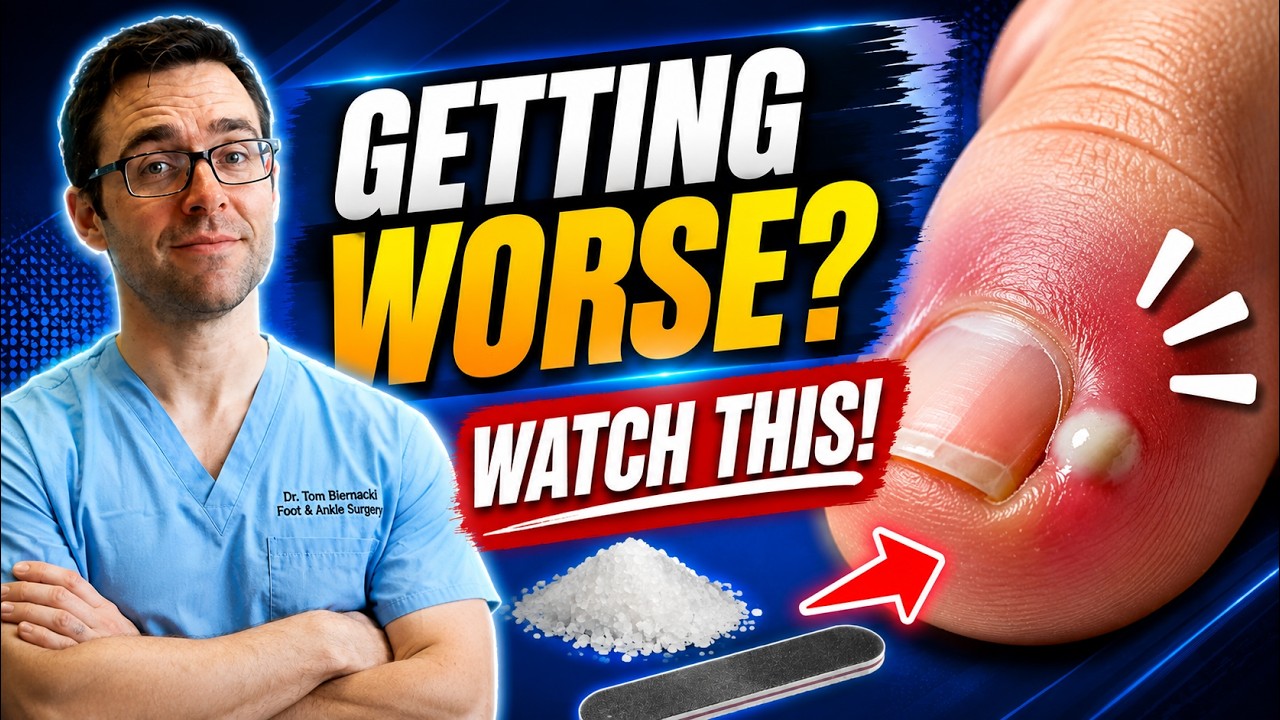
Watch: Ingrown Toenail Self Care & Home Treatment — Michigan Foot Doctors on YouTube
Foot pain isn't resolving?
Same-week appointments at podiatrist in Howell & podiatrist in Bloomfield Township
Related Conditions
In This Article
- Urgent Care vs. Podiatrist — Quick Comparison
- What Urgent Care Can and Cannot Do for an Ingrown Toenail
- When to Go to Urgent Care vs. a Podiatrist
- What Happens at a Podiatrist Visit for an Ingrown Toenail
- Signs Your Ingrown Toenail Is Infected
- Critical Warning for Diabetic Patients
- Red Flags — Seek Emergency or Same-Day Care
- Most Common Mistake with Ingrown Toenails
- At-Home Care While Waiting for Your Appointment
- See a Podiatrist Today — Balance Foot & Ankle
- Frequently Asked Questions
- Sources
- Frequently Asked Questions
Quick Answer
Urgent care can treat mild ingrown toenails with trimming and antibiotics, but cannot perform nail avulsion (partial nail removal) — the definitive procedure that prevents recurrence. A podiatrist offers same-day appointments, in-office nail avulsion under local anesthesia, and infection clearance in a single visit. For most ingrown toenail cases, a podiatrist is the faster and more effective option.
It’s 7 PM on a Wednesday and your big toe is throbbing. The skin beside your toenail is red, swollen, and tender to the touch. You’re wondering: do I need urgent care, or should I wait and call a podiatrist tomorrow? This is one of the most common questions we hear at Balance Foot & Ankle — and the answer depends on a few critical factors that most people don’t know about.
The short version: urgent care can provide temporary relief, but only a podiatrist can fix the underlying problem. And in many cases, same-day podiatry appointments are available just as quickly as urgent care wait times — without the revolving door of providers who won’t see you twice.
Urgent Care vs. Podiatrist — Quick Comparison

| Factor | Urgent Care | Podiatrist |
|---|---|---|
| Availability | Walk-in, evenings & weekends | Same-day appointments available |
| Prescribe antibiotics | ✓ Yes | ✓ Yes |
| Trim the nail edge | Sometimes (basic) | ✓ Yes (precise) |
| Partial nail avulsion (removal) | ✗ No | ✓ Yes — in-office |
| Permanent nail matrix removal (prevent recurrence) | ✗ No | ✓ Yes — phenol procedure |
| Drain abscess/pus | ✓ Basic incision | ✓ Yes + address root cause |
| Nail culture / targeted treatment | Rarely | ✓ Yes |
| Follow-up care | Usually none | ✓ Continuity of care |
| Safe for diabetic patients | Not recommended | ✓ Preferred — specialist care |
What Urgent Care Can and Cannot Do for an Ingrown Toenail
Urgent care physicians and nurse practitioners are trained generalists. For a straightforward ingrown toenail presenting without significant infection, they can provide reasonable first-line care — soaking instructions, nail edge trimming if the nail is accessible, oral antibiotics if early signs of infection are present, and pain management guidance. This is entirely appropriate for mild cases that appear on a weekend when a podiatry office is closed.
What urgent care cannot do is the procedure that actually resolves ingrown toenails definitively: partial nail avulsion. This is a minor surgical procedure performed under local anesthesia in which the offending nail border — the sliver of nail cutting into the skin — is removed down to the nail matrix. When followed by phenol ablation of the matrix, the nail never regrows in that border again. Recurrence drops from roughly 70% (conservative trimming) to under 5% (avulsion with phenolization).
Urgent care also cannot manage the complications that arise from inadequately treated ingrown toenails — namely, paronychia that has spread to the nail matrix, osteomyelitis (bone infection) in chronic or diabetic cases, or hypergranulation tissue (proud flesh) that forms over a chronically irritated nail fold. These require podiatric management.
When to Go to Urgent Care vs. a Podiatrist
The decision comes down to timing, severity, and whether you are in a high-risk group. Here is the clinical framework we use:
Go to Urgent Care if:
- It is after hours and pain is severe (4+/10)
- You have a visible pus pocket needing drainage tonight
- You cannot reach your podiatrist same day
- You need antibiotics started immediately
- The nail fold is red and warm but NOT spreading up the foot
See a Podiatrist if:
- This is a recurring ingrown toenail (you’ve had it before)
- You want permanent resolution — not just temporary relief
- You are diabetic or have poor circulation
- The infection has not resolved after antibiotics
- Swelling/redness is spreading up the toe or foot
- You have a same-day appointment available (call us first)
One point that surprises many patients: same-day podiatry appointments are frequently available — sometimes with shorter waits than urgent care walk-in times. At Balance Foot & Ankle, we hold same-day slots specifically for acute presentations like infected ingrown toenails. Call (810) 206-1402 before defaulting to urgent care — you may get seen faster AND get the definitive procedure in one visit.
What Happens at a Podiatrist Visit for an Ingrown Toenail
We want patients to know exactly what to expect so there are no surprises. A first-visit ingrown toenail appointment at Balance Foot & Ankle runs approximately 30–45 minutes and includes:
- Assessment: Dr. Tom examines the nail, nail fold, and surrounding tissue. He grades infection severity (mild / moderate / severe), checks for granulation tissue, and assesses neurovascular status — particularly important for diabetic patients.
- Local anesthesia: A digital block is placed at the base of the toe — two small injections that numb the entire toe within 2–3 minutes. Most patients describe this as the least comfortable part, and it is brief.
- Partial nail avulsion: The offending nail border is separated from the nail fold using a nail elevator and removed with nail nippers. This is not felt — the digital block provides complete anesthesia.
- Phenol ablation (optional but recommended for recurrent cases): A small amount of phenol solution is applied to the exposed nail matrix for 30 seconds, destroying the nail-producing cells in that border. This permanently prevents regrowth of the ingrown edge.
- Wound care: The toe is dressed with antibiotic ointment and gauze. Healing takes 2–4 weeks depending on infection severity.
- Antibiotic prescription if indicated: Oral antibiotics are prescribed for moderate to severe infections. Cultures are taken for recalcitrant infections to guide antibiotic selection.
Most patients walk out of the office in their normal shoes with minimal discomfort within 30 minutes of the procedure. The toe is sore for 24–48 hours post-procedure — manageable with over-the-counter ibuprofen or acetaminophen.
Signs Your Ingrown Toenail Is Infected
Not all ingrown toenails are infected — some are simply irritated and painful from the nail edge pressing on soft tissue. Distinguishing infection from irritation changes the urgency and treatment approach significantly.
| Finding | Irritation Only | Infection Present |
|---|---|---|
| Redness | Limited to nail fold edge | Spreading beyond nail fold |
| Discharge | None or clear/serous | Purulent (yellow/green pus) |
| Warmth | Mild | Noticeable warmth vs. other toes |
| Swelling | Localized nail fold thickening | Toe or foot swelling |
| Granulation tissue | Absent | Proud flesh (red, bleeds easily) |
| Systemic signs | None | Fever, red streak up foot = EMERGENCY |
Critical Warning for Diabetic Patients
If you have diabetes and develop an ingrown toenail, skip urgent care entirely and call a podiatrist immediately — today, same day if possible. This is not an exaggeration. Diabetic neuropathy means you may not feel how infected the toe actually is; peripheral vascular disease means your immune response and healing capacity are compromised; and a simple nail infection can progress to osteomyelitis (bone infection) requiring amputation within days to weeks in severe cases.
Urgent care providers, while excellent at general medicine, are not trained to assess the diabetic foot with the vascular and neurological evaluation it requires. A podiatrist will assess your pedal pulses, check for sensory neuropathy, and make decisions accordingly — including whether IV antibiotics or imaging for bone infection are needed.
In our clinic, diabetic patients with any nail or skin concern are seen urgently. We do not triage diabetic foot issues as “routine.” Call us at (810) 206-1402 and mention that you are diabetic — we will find a same-day slot.
Red Flags — Seek Emergency or Same-Day Care
Go to the ER or call 911 if you notice:
- A red streak running up the foot or leg — sign of spreading cellulitis or lymphangitis requiring IV antibiotics
- Fever above 101°F with foot/toe infection — systemic infection requiring emergency evaluation
- Rapidly expanding swelling of the entire foot within hours — possible necrotizing fasciitis (rare but life-threatening)
- Diabetic patient with any spreading redness, warmth, or pus — podiatry urgent or ER same day
- Black or gray discoloration of the toe tissue — possible tissue death requiring emergency care
Most Common Mistake with Ingrown Toenails
The most common mistake we see is the “bathroom surgery” — patients using nail scissors or clippers to dig out the ingrown edge at home. This almost always makes the problem worse. Cutting a V-notch in the nail center, rounding the corners, or digging out the embedded edge without sterile instruments introduces bacteria, traumatizes the nail fold further, and usually results in a deeper embedding of the nail spike on the next growth cycle. We see cases every week that started as a simple irritation and became a significant infection after home surgery attempts.
The fix: do not cut ingrown toenails at home beyond trimming straight across the very tip. Soak the toe in warm water for 10–15 minutes, dry well, apply antibiotic ointment, and call a podiatrist for proper treatment. An untreated ingrown toenail that presents early takes 20–30 minutes to fix in-office. One that has been repeatedly dug at home can require multiple visits and more aggressive intervention.
At-Home Care While Waiting for Your Appointment
These measures reduce pain and limit infection spread while you wait for your podiatry appointment. They are supportive measures — not substitutes for professional treatment.
Doctor Hoy’s Natural Pain Relief Gel
Apply a small amount around (not on) the nail fold area twice daily to reduce the inflammatory swelling pressing against the nail edge. The arnica-camphor formula provides topical anti-inflammatory relief without the stinging associated with alcohol-based products. Do not apply to open wounds or active pus — this is for periungual soft tissue inflammation only.
Best for: Periungual soft tissue swelling, mild cases without open skin
Not ideal for: Open wounds, drainage sites, infected tissue with open skin
DASS Medical Compression Socks — Light Grade
After your podiatry procedure, light graduated compression (15-20 mmHg) helps reduce post-procedural swelling and supports healing circulation during the 2–4 week recovery window. Avoid tight socks or athletic socks that create pressure over the treated nail area in the first week — loose-fitting or open-toe post-op shoes are recommended by our clinic for the first 48 hours.
Best for: Post-procedure recovery phase (days 5–14), patients with mild dependent edema
Not ideal for: First 48 hours post-procedure; avoid pressure over the nail until wound is closed
See a Podiatrist Today — Balance Foot & Ankle
At Balance Foot & Ankle, ingrown toenail appointments are available same-day at both our Howell and Bloomfield Township locations. Dr. Tom Biernacki performs partial nail avulsion and phenol ablation in-office — a 30-minute procedure that resolves most ingrown toenails permanently in a single visit. We accept most major Michigan insurance plans and see patients of all ages, including children and diabetic patients who require specialist-level nail care.
Ingrown Toenail Hurting Today?
Same-day appointments available. Dr. Tom Biernacki resolves most ingrown toenails permanently in a single 30-minute visit.
Howell & Bloomfield Township · (810) 206-1402
Frequently Asked Questions
Can I treat an ingrown toenail at home?
Very early-stage ingrown nails — mild redness, no pus, nail barely at the skin edge — can sometimes be managed with warm soaks 2–3x daily, gentle lifting of the nail edge, and proper nail trimming (straight across, not curved). Once there’s infection (pus, significant swelling, or fever), home treatment is insufficient. And once you’ve had two or more recurrences on the same toe, home treatment is no longer appropriate — a permanent matrixectomy is the right intervention.
Does the ingrown toenail procedure hurt?
The procedure itself is nearly painless. We use a local anesthetic — two small injections at the base of the toe — that completely numbs the area within 60 seconds. Most patients are surprised by how comfortable the process is. There’s mild soreness for 24–48 hours afterward, manageable with ibuprofen. The anticipatory anxiety is almost always worse than the actual procedure. The entire visit, start to finish, takes about 20 minutes.
How long does it take for an ingrown toenail to heal after treatment?
Simple nail trimming: most patients are comfortable within 3–5 days. Partial nail avulsion (removing one side permanently): 2–4 weeks for the treated area to heal, no restrictions after 48 hours. Full nail avulsion: 3–6 weeks. The nail typically looks normal 6–12 months later as surrounding tissue fills in. Post-procedure care is straightforward — daily soaks and a non-stick dressing for 2 weeks.
What’s the difference between a simple trim and a permanent matrixectomy?
A simple nail trimming removes the ingrown portion — quick and painless, but 70% recurrence rate. A partial matrixectomy removes the nail edge permanently using phenol to destroy the nail matrix. It has a 95%+ success rate with no recurrence. We recommend the permanent procedure for anyone who has had two or more ingrown nails on the same side of the same toe. The recovery is identical to a simple trimming — the only difference is whether the nail grows back.
Why do ingrown toenails keep coming back?
Four main causes: (1) Nail shape — naturally curved or thick nails are genetically predisposed. (2) Improper trimming — cutting nails curved or too short leaves a sharp edge that digs in. (3) Shoe pressure — narrow toe boxes force the nail into the skin. (4) Trauma — repetitive trauma from sports or work. If you’ve had 2+ recurrences, the nail matrix (growth plate) should be permanently treated rather than repeatedly trimming the same ingrown edge.
Can ingrown toenails be dangerous?
Untreated infected ingrown nails can become serious — particularly in patients with diabetes, peripheral arterial disease, or immune compromise. The infection can spread to bone (osteomyelitis) or soft tissue (cellulitis spreading up the foot). In diabetic patients, any foot infection warrants same-day evaluation. In healthy patients, a mild infection is uncomfortable but manageable; a spreading infection with red streaking up the foot requires urgent treatment and possibly antibiotics.
What causes ingrown toenails in the first place?
The most common causes in our clinic: improper nail trimming (curved or too short), narrow-toed footwear, and genetic nail shape (naturally curved or wide nails). Less common but significant: toe trauma (stubbing, sports impact), tight hosiery, and hyperhidrosis (excessive sweating that softens the skin). In adolescents, rapid nail growth during growth spurts is often the trigger. Once you’ve identified your cause, we can target prevention.
Can children get ingrown toenails?
Ingrown toenails are common in children and teenagers — particularly boys ages 10–16 during growth spurts and with increased sports activity. Treatment is identical to adults: local anesthetic and nail procedure. Children are typically excellent procedure patients once the anesthetic takes effect. We see patients as young as 6 for ingrown nail procedures. If your child has been limping or refusing to wear shoes due to toe pain, don’t wait — infections progress faster in high-activity kids.
Does insurance cover ingrown toenail treatment?
Most health insurance plans — including Medicare and Medicaid — cover ingrown toenail procedures as medically necessary treatment. Even simple trimmings are typically covered under standard outpatient office visit benefits. Coverage is rarely a barrier. Call us at (810) 206-1402 and we’ll verify your specific plan before your appointment. Same-day and next-day appointments are almost always available for acute ingrown nail cases.
How do I prevent ingrown toenails from coming back?
The four rules that prevent recurrence: (1) Trim nails straight across — never curved, never below the skin edge. (2) Keep nails at or slightly above the end of the toe. (3) Wear shoes with adequate toe box width — your toes should never feel compressed. (4) If you’re prone to ingrown nails, consider a permanent matrixectomy on the affected side. Patients who follow these rules after a simple trimming still have a 30% recurrence rate — which is why permanent treatment is worth discussing.
Sources
- Heidelbaugh JJ, Lee H. “Management of the ingrown toenail.” Am Fam Physician. 2009;79(4):303–308.
- Haneke E. “Nail surgery.” Clin Dermatol. 2013;31(5):516–525.
- Rounding C, Bloomfield S. “Surgical treatments for ingrowing toenails.” Cochrane Database Syst Rev. 2005;(2):CD001541.
- Bos AM et al. “Randomised clinical trial of surgical technique and local antibiotics for ingrowing toenail.” Br J Surg. 2007;94(3):292–296.
- American College of Foot and Ankle Surgeons. “Ingrown Toenail.” ACFAS Clinical Practice Guidelines. 2016.
Podiatrist-Recommended Products for Ingrown Toenail Care
- Doctor Hoy’s Natural Pain Relief Gel — soothing topical gel for ingrown toenail pain and surrounding skin inflammation
- Foot Petals Tip Toes — toe protection sleeves that reduce shoe pressure on the ingrown nail margin
- PowerStep Pinnacle — proper toe box width from good arch support reduces nail edge compression
These are the same products Dr. Biernacki recommends in clinic. Available through our partner Foundation Wellness.
Frequently Asked Questions
How long does it take a toenail to grow back?
6-12 months for a full big toenail. Smaller toenails 4-6 months. Speed varies with age, circulation, and nutrition.
Will this affect other nails?
Trauma affects only the injured nail. Fungal infection can spread without treatment. Systemic causes affect multiple nails simultaneously.
Should I cover the nail or leave it open?
Cover with a breathable bandage during work or activity. Leave open at night for healing. Keep dry and clean.
Ready to feel better?
Same-week appointments available in Howell and Bloomfield Township, Michigan.
In-Office Treatment at Balance Foot & Ankle
If home treatment isn’t providing relief for your ingrown toenail, our podiatry team at Balance Foot & Ankle can help with same-day evaluations and advanced in-office care.
American Academy of Dermatology: Ingrown Toenails
Ready to Get Relief?
Same-day appointments available in Howell & Bloomfield Township, MI
4.9★ | 1,123 Reviews | 3,000+ Surgeries
Or call: (810) 206-1402
Urgent care is not the only option. A podiatry office can definitively treat an infected ingrown nail in one visit, which most urgent care clinics cannot. Our guide to finding an emergency podiatrist near you explains the difference and what to expect the same day.

Dr. Tom Biernacki, DPM is a board-certified foot & ankle surgeon (ABFAS & ABPM) at Balance Foot & Ankle Specialists in Southeast Michigan. With over a decade of clinical experience, he specializes in heel pain, bunions, diabetic foot care, sports injuries, and minimally invasive surgery. Dr. Biernacki is a member of the APMA and ACFAS, and his patient education content on MichiganFootDoctors.com and YouTube has made him one of the most-followed foot & ankle educators on YouTube.