
Quick answer: Recurring Ankle Sprain Causes is a common foot/ankle topic that affects many patients. The 2026 evidence-based approach combines proper diagnosis, conservative-first treatment, and escalation only when needed. We treat this regularly at our Howell and Bloomfield Township practices. Call (810) 206-1402.
Medically Reviewed | Dr. Tom Biernacki, DPM | Board-Certified Podiatric Surgeon | Balance Foot & Ankle, Michigan


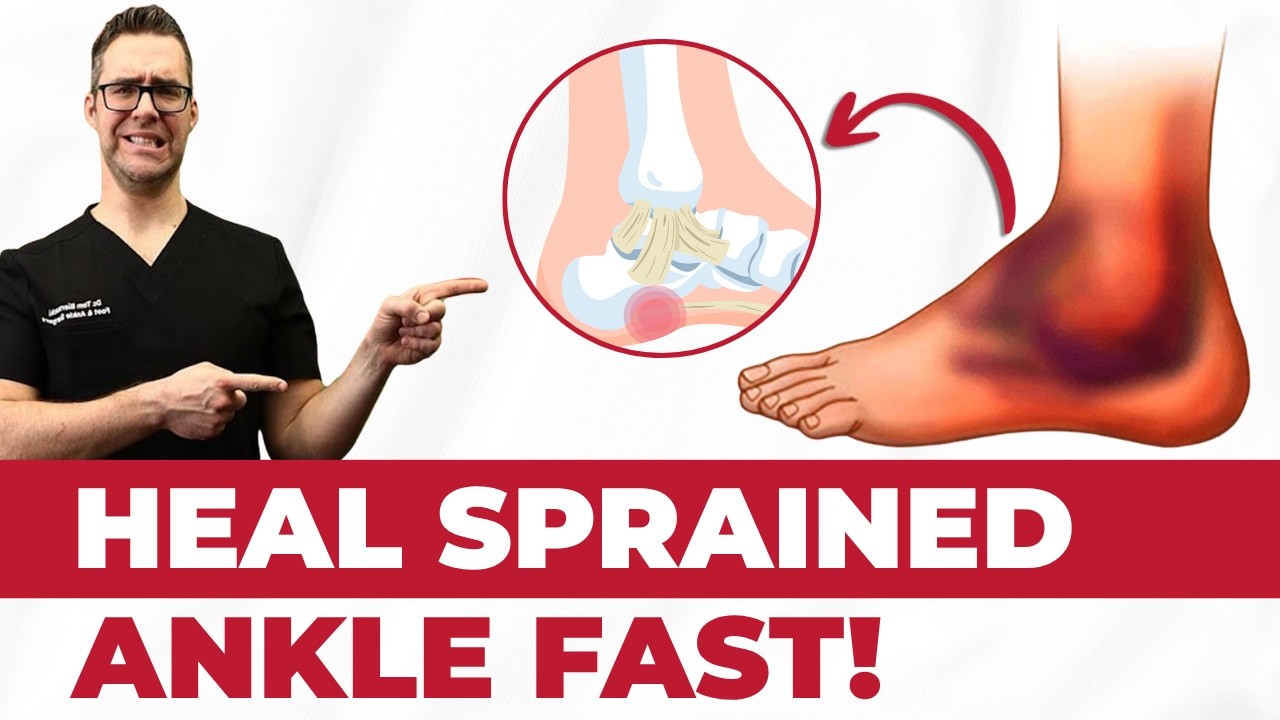
Watch: Fix TWISTED Ankle, ROLLED Ankle or SPRAINED Ankle Ligaments FASTER! — MichiganFootDoctors YouTube
The most important clinical decision with Recurring Ankle Sprain Causes isn’t which treatment to start with — it’s identifying the correct subtype. That changes everything. Call (810) 206-1402.
The Vicious Cycle of Repeated Ankle Sprains
A single ankle sprain doesn’t cause chronic ankle instability—but a single poorly rehabilitated ankle sprain frequently does. The natural history of ankle sprains explains why: the initial sprain damages the ATFL and sometimes CFL ligaments and, critically, damages the mechanoreceptors (proprioceptive sensory organs) within those ligaments. These mechanoreceptors are essential for the rapid neuromuscular reflexes that protect the ankle from giving way.
When a sprained ankle is treated with RICE alone (rest, ice, compression, elevation) and returned to activity as soon as pain allows—without specific rehabilitation of proprioception, peroneal strength, and movement control—the joint becomes vulnerable to reinjury. The proprioceptive deficit (reduced ankle position sense) means the peroneal muscles can’t activate fast enough to prevent the ankle from inverting when the ground suddenly shifts. This deficit can persist for months to years after an incompletely rehabilitated sprain.
The consequence: with each subsequent sprain, the ligaments stretch further and the proprioceptive deficit worsens. Chronic ankle instability develops—characterized by recurrent sprains, persistent feelings of giving way, and eventual mechanical laxity from cumulative ligament stretching.
Diagnosing the Specific Cause of Your Repeated Sprains
Proprioceptive deficit: single-leg balance testing reveals meaningful asymmetry (inability to balance on the affected ankle for 30 seconds compared to the unaffected side). Star Excursion Balance Test (SEBT) quantifies proprioceptive deficits objectively. Proprioceptive deficit is the most common cause of functional ankle instability.
Peroneal muscle weakness: manual muscle testing and isokinetic strength testing reveal peroneal eversion strength deficits of 15–30% compared to the unaffected side in most CAI patients. Peroneal weakness means the primary protective reflex against ankle inversion is inadequate.
Structural mechanical laxity: stress radiographs (anterior drawer and talar tilt stress X-rays) quantify ligament laxity. Talar tilt >10° or anterior drawer >5mm indicates true mechanical laxity. MRI confirms ATFL and CFL integrity. Patients with mechanical laxity that fails neuromuscular rehabilitation may be surgical candidates.
Other contributing factors: subtalar instability (often overlooked—the subtalar joint can be independently lax after ankle sprains); peroneal tendon subluxation or tears (co-existing pathology that requires independent treatment); and sinus tarsi syndrome (posterior residual inflammation from the original sprain).
Breaking the Sprain Cycle: What Actually Works
The evidence is unambiguous: structured neuromuscular rehabilitation is the most effective intervention for preventing ankle sprain recurrence. Key components: proprioceptive balance training (single-leg balance, wobble board, BOSU ball progression); peroneal strengthening (resistance band eversion progression); and functional sports-specific movement training. Programs of 6–8 weeks reduce reinjury risk by 35–50% in athletes with chronic ankle instability.
Ankle bracing during high-risk activities: semi-rigid lace-up braces (Active Ankle, Swede-O) significantly reduce ankle sprain recurrence in athletes—by approximately 50% in randomized trials among athletes with prior sprain history. Bracing does not cause weakness when combined with strengthening; it provides external support during sport while rehabilitation builds internal stability.
If rehabilitation and bracing fail: surgical Brostrom-Gould ligament reconstruction for documented mechanical instability; peroneal tendon exploration for tear or subluxation; sinus tarsi injection or debridement for persisting sinus tarsi syndrome. Surgery should be specifically targeted at the identified pathology rather than performed empirically.
Dr. Tom's Product Recommendations
✅ Pros / Benefits
- Structured rehabilitation breaks the sprain cycle with 35-50% reinjury risk reduction
❌ Cons / Risks
- Most people don’t get adequate rehabilitation after the first sprain—the cycle starts immediately
Dr. Tom Biernacki’s Recommendation
Repeated ankle sprains are almost always a rehabilitation failure, not bad luck. The first sprain damages proprioception; without proper rehab to rebuild it, the ankle can’t protect itself. I tell every ankle sprain patient: the RICE phase is just the first week. The next 6 weeks of proprioceptive and peroneal strengthening is what prevents the second sprain. Skip that phase and you’re starting a cycle that often ends in a Brostrom reconstruction.
— Dr. Tom Biernacki, DPM | Board-Certified Podiatric Surgeon | Balance Foot & Ankle
Frequently Asked Questions
How many times spraining your ankle is too many?
There’s no specific number—the important factor is whether rehabilitation was completed after each sprain. Recurrent sprains with completed rehabilitation suggest true mechanical laxity; recurrent sprains without rehabilitation suggest neuromuscular deficit that can be treated.
Does ankle taping prevent reinjury?
Semi-rigid lace-up bracing reduces reinjury risk by approximately 50% in athletes with prior sprains. Prophylactic taping also provides meaningful protection, though it loses effectiveness as the tape stretches during activity.
Can weak ankles be fixed without surgery?
Yes—for functional instability (normal mechanical laxity with neuromuscular deficit), 6-8 weeks of proprioceptive and peroneal strengthening produces major improvement and breaks the reinjury cycle for most patients.
Michigan Foot Pain? See Dr. Biernacki In Person
4.9★ rated | 1,123 Reviews | 3,000+ Surgeries
Same-week appointments · Howell & Bloomfield Township
📞 (810) 206-1402 Book Online →What is Ankle sprain?
Ankle sprain is a common foot/ankle condition that affects mobility and quality of life. Understanding the underlying cause is the first step in successful treatment. Our podiatrists at Balance Foot & Ankle perform a hands-on biomechanical exam, review your activity history, and use diagnostic imaging when appropriate to identify the root cause—not just treat the symptom. Many patients have been told to “rest and ice” without a deeper diagnostic workup; our approach is different.
Symptoms and warning signs
Common signs of ankle sprain include pain that worsens with activity, morning stiffness, swelling, tenderness when palpated, and difficulty bearing weight. If you experience sudden severe pain, inability to walk, visible deformity, numbness or color change, contact our office the same day or visit urgent care—these can signal a more serious injury such as a fracture, tendon rupture, or vascular compromise. Diabetics with any foot wound should seek same-day care.
Conservative treatment options
Most cases of ankle sprain respond to non-surgical care: structured rest, supportive footwear changes, custom orthotics, targeted stretching and strengthening protocols, anti-inflammatory medications when medically appropriate, and in-office procedures such as ultrasound-guided injections. We also offer advanced therapies including MLS laser therapy, EPAT/shockwave, regenerative injections, and image-guided procedures. Treatment is sequenced from least invasive to most invasive, and we explain the rationale at every step.
When is surgery considered?
Surgery is reserved for cases that fail 3-6 months of well-structured conservative care, when there is structural pathology (severe deformity, complete tear, advanced arthritis), or when imaging shows damage that will not heal without intervention. Our surgeons have performed 3,000+ foot and ankle procedures and prioritize minimally-invasive techniques whenever appropriate. We discuss recovery timelines, return-to-activity milestones, and realistic outcome expectations before any procedure is scheduled.
Recovery timeline and prevention
Recovery from ankle sprain varies based on severity and chosen treatment path. Conservative cases often improve within 4-8 weeks with consistent adherence to the protocol. Post-procedural recovery may range from a few days (in-office procedures) to several months (reconstructive surgery). Long-term prevention involves footwear assessment, activity modification, structured strengthening, and regular check-ins with your podiatrist if you have a history of recurrence. We provide written home-exercise plans and digital follow-up support.
Ready to feel better?
Same-week appointments available in Howell and Bloomfield Township, Michigan.
Book Your VisitOrthoInfo – AAOS: Sprained Ankle
In-Office Treatment at Balance Foot & Ankle
If home treatment isn’t providing relief for your recurring ankle sprain causes, our podiatry team at Balance Foot & Ankle can help with same-day evaluations and advanced in-office care.
Same-day appointments available. (810) 206-1402

Dr. Tom Biernacki, DPM is a board-certified foot & ankle surgeon (ABFAS & ABPM) at Balance Foot & Ankle Specialists in Southeast Michigan. With over a decade of clinical experience, he specializes in heel pain, bunions, diabetic foot care, sports injuries, and minimally invasive surgery. Dr. Biernacki is a member of the APMA and ACFAS, and his patient education content on MichiganFootDoctors.com and YouTube has made him one of the most-followed foot & ankle educators on YouTube.