
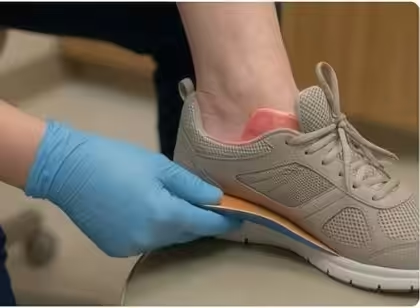
| Insert Type | Material | Correction Ability | Best For | Cost | Lifespan |
|---|---|---|---|---|---|
| Cushion OTC Insert (gel/foam) | Gel, EVA foam | Cushioning only — no biomechanical correction | Normal foot, mild heel discomfort, older shoes | $15–$40 | 3–6 months |
| Semi-Rigid OTC (Superfeet, Powerstep) | Firm polypropylene + foam | Mild arch support, minimal correction | Mild overpronation, early plantar fasciitis | $40–$60 | 6–12 months |
| Custom Functional Orthotic (rigid) | Polypropylene shell + top cover | Full biomechanical — posting, correction | PTTD, moderate-severe overpronation, plantar fasciitis failure, cavus | $400–$700 (often covered by insurance) | 3–5 years |
| Custom Accommodative Orthotic (soft) | EVA, PPT, Poron layers | Offloading, pressure redistribution — no correction | Diabetic foot, fat pad atrophy, elderly patients, post-surgical | $350–$600 | 1–3 years |
| Arizona AFO / Gauntlet Brace | Leather over rigid insert | Significant rearfoot control + arch support | Stage I–II PTTD, severe flatfoot, post-Achilles | $600–$900 | 2–4 years |
| Heel Lift (OTC) | Felt or silicone | Elevates heel — reduces Achilles tension | Achilles tendinitis, leg length discrepancy ≤6mm | $10–$25 | 3–6 months |
| Condition | OTC Insert Adequate? | Custom Orthotic Needed? | Type of Custom Orthotic | Insurance Coverage |
|---|---|---|---|---|
| Plantar Fasciitis (early, <3 months) | Yes — try Superfeet or Powerstep first | If OTC fails after 8 weeks | Functional with medial rearfoot + forefoot post | Often covered — A5512 code |
| PTTD / Adult Flatfoot | No — OTC insufficient | Yes — immediately | UCBL or rigid functional with deep heel cup | Often covered — A5512 |
| Diabetic Neuropathic Foot | No — risk of pressure injury | Yes — accommodative mandatory | Soft multi-layer accommodative | Medicare A5513 — 1/year for high-risk diabetics |
| Morton’s Neuroma | Partially — met pad OTC may help | If neurectomy not chosen | Functional with metatarsal dome + splaying pad | Variable by payer |
| Overpronation (mild) | Yes — semi-rigid OTC often sufficient | If symptoms persist past 3 months | Functional medial post | If symptomatic — A5512 |
| Cavus Foot (high arch) | Partially — extra cushioning | Yes for lateral instability | Accommodative with lateral post | Variable |
| Leg Length Discrepancy (>6mm) | No — heel lifts only for ≤6mm | Yes — built-up custom device | Full-length lift in custom shell | Variable |
Foot pain isn't resolving?
Same-week appointments at Howell & Bloomfield Hills
Board-Certified Podiatric Foot & Ankle Surgeon · Last reviewed: May 4, 2026
Medically Reviewed | Dr. Tom Biernacki, DPM | Board-Certified Podiatric Surgeon | Balance Foot & Ankle, Michigan
Related Conditions
In This Article
- Shoe insert vs orthotic — which do I need?
- OTC vs. Custom: Which Shoe Insert Do You Actually Need?
- What Custom Prescription Orthotics Actually Do
- Conditions That Benefit Most from Custom Orthotics
- Dr. Biernacki’s Orthotic Fabrication Process
- Dr. Tom's Product Recommendations
- Frequently Asked Questions
- Frequently Asked Questions
- What is Foot pain?
- Symptoms and warning signs
- Conservative treatment options
- When is surgery considered?
- Recovery timeline and prevention

OTC vs. Custom: Which Shoe Insert Do You Actually Need?
The shoe insert market is enormous and confusing — there are hundreds of over-the-counter options at every price point, and many patients wonder whether a $15 drugstore insert is meaningfully different from a $500 custom orthotic. The honest answer: for some patients, a well-chosen OTC insert is completely adequate. For others, only a custom device achieves the precise mechanical correction needed. Dr. Tom Biernacki helps patients identify which category they fall into — and never recommends custom orthotics when a high-quality OTC option will accomplish the goal.
What Custom Prescription Orthotics Actually Do
Custom orthotics are medical devices fabricated from a three-dimensional mold of your foot in the corrected position. The material, posting (wedging), and modifications are selected based on your diagnosis, weight, activity level, and footwear. A rigid orthotic made from graphite or hard polypropylene provides maximum motion control for severe overpronation and is appropriate for most dress shoes and athletic shoes. A semi-rigid orthotic balances support with flexibility — excellent for runners, walkers, and patients who need some shock absorption. An accommodative orthotic is soft and cushioned — designed for diabetic patients and those with painful deformities requiring pressure relief rather than correction.
Conditions That Benefit Most from Custom Orthotics
Custom shoe inserts consistently improve outcomes in plantar fasciitis and heel spurs, posterior tibial tendon dysfunction and adult flatfoot, sesamoiditis with metatarsal offloading needs, diabetic foot ulcer prevention, leg length discrepancy, patellofemoral knee pain from overpronation, and chronic shin splints. For these conditions, the specific modifications available in custom fabrication — heel lifts, Morton’s extensions, sesamoid cut-outs, metatarsal domes — aren’t possible in off-the-shelf inserts.
Dr. Biernacki’s Orthotic Fabrication Process
After a complete biomechanical examination and gait analysis, Dr. Biernacki takes a three-dimensional impression of your foot using foam box or digital scanning, then prescribes the exact device specifications — material, intrinsic posting, extrinsic posting, accommodations, and top-cover selection — for the lab. Most custom orthotics are completed in 2–3 weeks. Follow-up adjustments are included at no charge to ensure optimal fit and comfort.
Dr. Tom's Product Recommendations

Powerstep Pinnacle Orthotic Insole
⭐ Highly Rated
Dr. Biernacki’s most-recommended OTC insole for patients with mild to moderate overpronation who don’t yet need custom orthotics. Provides excellent arch support and motion control at a fraction of the custom cost.
Dr. Tom says: “Dr. Biernacki said this was the best OTC option for my flat feet. I’ve had zero heel pain since switching.”
Mild to moderate flatfoot, plantar fasciitis, general arch pain
Severe structural deformity or biomechanical problems needing custom prescription
Disclosure: We earn a commission at no extra cost to you.
CURREX RunPro Insole — Medium Arch
⭐ Highly Rated
Performance OTC insole in three arch profiles for runners and athletes. Dr. Biernacki recommends CURREX as the best performance OTC option before custom orthotics are ready.
Dr. Tom says: “Great until my custom orthotics arrived. Dr. Biernacki helped me pick the right arch profile — my shin splints disappeared.”
Runners, athletes, performance footwear users
Diabetic patients or those needing accommodative (soft) orthotic
Disclosure: We earn a commission at no extra cost to you.
Superfeet CARBON Performance Thin Insole
⭐ Highly Rated
Ultra-thin carbon fiber insole for dress shoes and shoes with minimal volume. Dr. Biernacki’s top recommendation for patients who need support in slim footwear.
Dr. Tom says: “Finally an insert thin enough to fit in my dress shoes without making them too tight. Major upgrade from the foam insoles I was using.”
Dress shoes, slim footwear, low-volume athletic shoes
Those needing full arch support — too thin for plantar fasciitis management
Disclosure: We earn a commission at no extra cost to you.
✅ Pros / Benefits
- Honest assessment — custom orthotics only recommended when OTC won’t achieve the goal
- Three impression methods: foam box, plaster, or digital scanning
- Custom orthotic modifications include sesamoid cut-outs, metatarsal domes, heel lifts
- Free follow-up adjustments until device fits and functions optimally
❌ Cons / Risks
- Custom orthotics require 2–3 week fabrication lead time
- Insurance coverage for orthotics varies by plan — verify benefits before appointment
Dr. Tom Biernacki’s Recommendation
The best orthotic is the one that solves your specific problem without overcorrecting. I see as many patients who come in over-orthosed — with devices that are too rigid for their needs — as under-treated. Getting the prescription right matters as much as getting the cast.
— Dr. Tom Biernacki, DPM | Board-Certified Podiatric Surgeon | Balance Foot & Ankle
Frequently Asked Questions
How much do custom orthotics cost?
Custom orthotics vary by device type and material. Many insurance plans cover them partially or fully when prescribed for a specific diagnosis. We verify your benefits before the appointment and give you a transparent cost estimate.
How long do custom orthotics last?
Most custom orthotics last 3–5 years for adults. The shell typically outlasts the top cover, which can be replaced. Growing children may need new devices every 1–2 years.
Can I use the same orthotics in different shoes?
Often yes — functional orthotics made for athletic shoes typically transfer to casual shoes of similar volume. Dress shoe orthotics require a thinner device. Dr. Biernacki advises on transferability when prescribing.
Are custom orthotics worth the cost?
For conditions that require specific mechanical correction — PTTD, plantar fasciitis, sesamoiditis — yes, the research supports custom orthotics. For mild biomechanical variation, a quality OTC device often performs comparably at far lower cost.
Michigan Foot Pain? See Dr. Biernacki In Person
4.9★ rated | 1,123 Reviews | 3,000+ Surgeries
Same-week appointments · Howell & Bloomfield Hills
📞 (810) 206-1402 Book Online →Frequently Asked Questions
When should I see a podiatrist?
If symptoms persist past 2 weeks, affect your normal activity, or are accompanied by red-flag symptoms (warmth, redness, swelling, inability to bear weight).
What does treatment cost?
Most diagnostic visits and conservative treatments are covered by Medicare and major insurers. Out-of-pocket costs vary by your specific plan.
How quickly can I get an appointment?
Most non-urgent cases see us within 5 business days. Urgent cases (sudden pain, possible fracture) typically same or next business day.
Foot pain typically responds best to early podiatrist evaluation, conservative treatments such as supportive footwear and targeted physical therapy, and—when needed—custom orthotics or in-office procedures. Most patients see meaningful improvement within 4-6 weeks of starting a structured treatment plan. Schedule an evaluation at our Howell or Bloomfield Hills office for a clinical assessment.
What is Foot pain?

Foot pain is a common foot/ankle condition that affects mobility and quality of life. Understanding the underlying cause is the first step in successful treatment. Our podiatrists at Balance Foot & Ankle perform a hands-on biomechanical exam, review your activity history, and use diagnostic imaging when appropriate to identify the root cause—not just treat the symptom. Many patients have been told to “rest and ice” without a deeper diagnostic workup; our approach is different.
Symptoms and warning signs
Common signs of foot pain include pain that worsens with activity, morning stiffness, swelling, tenderness when palpated, and difficulty bearing weight. If you experience sudden severe pain, inability to walk, visible deformity, numbness or color change, contact our office the same day or visit urgent care—these can signal a more serious injury such as a fracture, tendon rupture, or vascular compromise. Diabetics with any foot wound should seek same-day care.
Conservative treatment options
Most cases of foot pain respond to non-surgical care: structured rest, supportive footwear changes, custom orthotics, targeted stretching and strengthening protocols, anti-inflammatory medications when medically appropriate, and in-office procedures such as ultrasound-guided injections. We also offer advanced therapies including MLS laser therapy, EPAT/shockwave, regenerative injections, and image-guided procedures. Treatment is sequenced from least invasive to most invasive, and we explain the rationale at every step.
When is surgery considered?
Surgery is reserved for cases that fail 3-6 months of well-structured conservative care, when there is structural pathology (severe deformity, complete tear, advanced arthritis), or when imaging shows damage that will not heal without intervention. Our surgeons have performed 3,000+ foot and ankle procedures and prioritize minimally-invasive techniques whenever appropriate. We discuss recovery timelines, return-to-activity milestones, and realistic outcome expectations before any procedure is scheduled.
Recovery timeline and prevention
Recovery from foot pain varies based on severity and chosen treatment path. Conservative cases often improve within 4-8 weeks with consistent adherence to the protocol. Post-procedural recovery may range from a few days (in-office procedures) to several months (reconstructive surgery). Long-term prevention involves footwear assessment, activity modification, structured strengthening, and regular check-ins with your podiatrist if you have a history of recurrence. We provide written home-exercise plans and digital follow-up support.
Ready to feel better?
Same-week appointments available in Howell and Bloomfield Hills, Michigan.
Book Your VisitFrequently Asked Questions
When should I see a podiatrist?
See a podiatrist if: foot or ankle pain has lasted more than 2–4 weeks without improvement, you’re changing your gait to avoid pain, you have an open wound or sore that isn’t healing, you notice nail discoloration or thickening, you have diabetes and any foot concern, or pain is severe enough to wake you at night. Most foot conditions are easier and cheaper to treat early — what starts as a minor issue can become a surgical problem with months of delay.
What is the difference between a podiatrist and an orthopedic surgeon?
Podiatrists (DPM — Doctor of Podiatric Medicine) specialize exclusively in the foot, ankle, and lower leg. Orthopedic surgeons (MD/DO) have broader musculoskeletal training but variable foot/ankle subspecialization. For foot and ankle-specific problems, a podiatrist often has more focused training and experience. For injuries involving the leg above the ankle, complex pediatric cases, or multi-level reconstruction, orthopedic consultation may be appropriate. We frequently co-manage patients with orthopedic colleagues.
How do I know if my foot pain is serious?
Signs that warrant same-day or next-day evaluation: severe pain that appeared suddenly without clear cause, swelling, redness, and warmth that appeared suddenly (possible gout, infection, or Charcot fracture), an open wound that looks infected (redness spreading, pus, warmth), inability to bear weight, or any foot problem in a diabetic patient. Pain that’s been present for weeks and is stable is important but not an emergency — schedule within 1–2 weeks.
Can foot problems cause back and knee pain?
Yes — this is a kinetic chain effect. Abnormal foot mechanics (overpronation, supination, leg length discrepancy) cause compensatory changes in knee, hip, and lumbar alignment. Roughly 30% of patients presenting to our clinic with knee pain have a treatable foot-level biomechanical cause. Correcting foot mechanics with orthotics or appropriate footwear often provides significant knee and back relief. If you have chronic knee or back pain and haven’t had your foot mechanics evaluated, it’s worth a consult.
Are orthotics worth it?
For the right conditions, yes — custom orthotics are among the most cost-effective interventions in podiatry. They’re most effective for: plantar fasciitis, flat feet with secondary knee/back pain, leg length discrepancy, metatarsalgia, posterior tibial tendon dysfunction, and diabetic foot pressure management. Quality OTC orthotics ($35–60) resolve symptoms for 60% of patients with mild-to-moderate conditions. Custom orthotics are appropriate when OTC options have failed or when the biomechanical problem is complex. We cast custom orthotics in-office.
How do I choose the right running shoes?
Start with your foot type (flat, neutral, high arch) and running pattern (overpronator, neutral, supinator). Flat feet and overpronators do best in stability or motion-control shoes. Neutral feet do well in neutral-cushioned shoes. High arches need maximum cushioning with flexible soles. Always buy running shoes at the end of the day (foot swelling peaks then), get properly fitted by a specialist, and replace every 300–500 miles. If you’ve been injured repeatedly, a gait analysis can identify the mechanical flaw driving your injury pattern.
What is the difference between a sprain and a fracture?
A sprain is a ligament injury (the tissue connecting bones); a fracture is a break in the bone itself. Both can occur with the same trauma (ankle roll, fall). The old test — ‘if you can walk, it’s not broken’ — is wrong; many fractures are initially weight-bearable. Key differences: a fracture typically produces localized bone tenderness along the bone itself, while a sprain is tender over the ligament. X-ray is the standard to differentiate. High-grade sprains without proper treatment can be as disabling as fractures.
How do I prevent foot and ankle injuries?
The four most impactful prevention strategies: (1) Supportive, appropriately fitted footwear for your foot type and activity. (2) Gradual activity progression — the 10% rule (never increase weekly mileage or intensity by more than 10%). (3) Regular calf and ankle mobility work. (4) Strengthening the posterior tibial tendon, peroneals, and intrinsic foot muscles. Most overuse injuries are preventable; most acute injuries are not — but ankle sprain recurrence (60–70% without rehab) is prevented by balance and proprioception training.
Doctor Hoy’s Natural Pain Relief Gel
Natural topical pain relief I use in our clinic. Arnica + camphor formula — apply directly to the area 3–4x daily. ($20–25)
Shop Doctor Hoy’s →American Podiatric Medical Association: Find a Podiatrist
In-Office Treatment at Balance Foot & Ankle
If home treatment isn’t providing relief for your foot and ankle issues, our podiatry team at Balance Foot & Ankle can help with same-day evaluations and advanced in-office care.
Same-day appointments available. (810) 206-1402
Learn about our podiatry appointment booking → | Book online →
Our podiatrists treat the underlying cause, not just the symptom. Same-week appointments at our Howell and Bloomfield Hills, Michigan offices.
Same-Week Appointments in Howell & Bloomfield Hills
Three board-certified podiatric surgeons. 1,123+ five-star reviews. Most insurance accepted.

Dr. Tom Biernacki, DPM is a board-certified foot & ankle surgeon (ABFAS & ABPM) at Balance Foot & Ankle Specialists in Southeast Michigan. With over a decade of clinical experience, he specializes in heel pain, bunions, diabetic foot care, sports injuries, and minimally invasive surgery. Dr. Biernacki is a member of the APMA and ACFAS, and his patient education content on MichiganFootDoctors.com and YouTube has made him one of the most-followed foot & ankle educators on YouTube.