Board Certified Podiatrists | Expert Foot & Ankle Care
(810) 206-1402 Patient Portal

Stress Fracture in the Foot: Symptoms, Diagnosis & Treatment | Podiatrist 2026

★ Michigan’s #1 Rated Podiatry Practice

Same-Week Appointments at Balance Foot & Ankle

Three board-certified podiatric surgeons. 950K+ YouTube subscribers. 1,123+ five-star reviews. Howell & Bloomfield Hills, Michigan.

4.9★
1,123+ Reviews
3,000+
Surgeries Performed
950K+
YouTube Subscribers
8,672
Health Articles Published
50K+
Michigan Patients
Book Same-Week Appointment → ☎ (810) 206-1402

Medically reviewed by Dr. Tom Biernacki, DPM

Board-certified podiatric surgeon | Balance Foot & Ankle
Last reviewed: April 2026

Treatment at Balance Foot & Ankle: Foot Emergency Guide →

Quick answer: A stress fracture in the foot is a small crack in bone caused by repetitive loading that exceeds the bone’s repair capacity. Symptoms include point tenderness over a specific bone, swelling, and pain that worsens with activity and improves with rest. Treatment requires offloading for 6–8 weeks; high-risk locations (navicular, fifth metatarsal, sesamoid) often require casting or surgery.

What Is a Stress Fracture in the Foot?

A stress fracture is not a typical broken bone from a single traumatic impact. Instead, it’s the cumulative result of repetitive loading — each individual cycle insufficient to break bone, but collectively overwhelming the bone’s ability to remodel and repair. Think of it like bending a paper clip back and forth: any single bend does nothing, but repeated cycles eventually snap it.

The foot and ankle are among the most common sites for stress fractures in athletes and active individuals, accounting for over half of all stress fractures. The metatarsals (particularly the second and third), the navicular, the calcaneus, and the sesamoids are the most frequently affected bones. Each location has different healing characteristics, timelines, and risks — which is why accurate diagnosis is essential.

Stress fractures exist on a spectrum from stress reaction (edema in bone marrow without fracture line) to complete fracture. Catching them at the stress reaction stage — before an actual fracture line forms — means faster healing and avoidance of complications.

Causes and Risk Factors

Stress fractures result from an imbalance between bone loading and bone repair. Two categories of factors drive this imbalance:

Training errors (the most common cause): Sudden increase in training volume, intensity, or frequency — the classic ‘too much, too soon’ pattern. Adding hill running, changing from soft to hard surfaces, or switching footwear dramatically changes load distribution. In our clinic, the history of a recent training change precedes most stress fractures.

Intrinsic risk factors:

  • Low bone density (osteoporosis, osteopenia) — stress fractures can occur even with normal activity levels
  • Female Athlete Triad (energy deficiency, menstrual dysfunction, low bone density) — significantly elevated risk
  • High foot arch (rigid, poor shock absorption) or flat feet (altered load distribution)
  • Leg length discrepancy — the longer leg absorbs more load
  • Vitamin D and calcium deficiency
  • Prior stress fracture — strongest single predictor of new fracture
  • Rapid body weight change
  • Certain medications (corticosteroids, proton pump inhibitors, antiepileptics reduce bone density)

Key takeaway: Training errors — increasing mileage or intensity too fast — account for the majority of stress fractures. The ‘10% rule’ (never increase weekly training volume by more than 10%) exists specifically to prevent this pattern.

Symptoms of a Foot Stress Fracture

The symptom pattern of a stress fracture is distinctive enough that an experienced clinician often makes the diagnosis on history alone:

  • Activity-related pain — starts during exercise and initially resolves with rest; progresses to pain that begins earlier in activity and lasts longer after stopping
  • Point tenderness — pressing directly on the fractured bone reproduces exact pain; this is highly specific
  • Localized swelling — swelling over the specific bone, not diffuse foot swelling
  • Night pain — present in more established stress fractures
  • Antalgic gait — altered walking pattern to avoid loading the painful site
  • No acute injury — symptoms developed gradually over weeks, not from a specific incident

The hop test is a useful clinical screen: single-leg hopping on the affected foot reproduces pain in most lower extremity stress fractures. The tuning fork test (placing a vibrating tuning fork over the bone) may produce or worsen pain by inducing vibration at the fracture site.

Metatarsal stress fractures typically cause pain along the shaft of the second, third, or fourth metatarsal. Navicular stress fractures cause pain over the dorsal midfoot, often described as a dull ache. Fifth metatarsal base fractures produce lateral foot pain. Calcaneal stress fractures cause heel pain that is often bilateral in high-mileage runners.

Diagnosis

Accurate imaging matters enormously because treatment intensity varies dramatically by location. The ‘low-risk’ versus ‘high-risk’ stress fracture distinction determines whether a patient can continue weight-bearing or needs casting, and whether surgical fixation should be considered.

Plain X-rays are the first study — inexpensive and show advanced fractures. However, X-rays are negative in up to 85% of stress fractures in the first 2–3 weeks. A periosteal reaction (hazy line of new bone formation along the cortex) or faint fracture line may appear at 2–4 weeks. Normal X-ray does NOT rule out stress fracture.

MRI is the gold standard — sensitive from day one, showing bone marrow edema even before a fracture line develops. MRI grades stress fractures by severity (grades 1–4: periosteal edema → marrow edema → fracture line → complete fracture), guides return-to-activity decisions, and detects soft tissue injury. Most patients with suspected stress fracture who have negative X-rays need MRI.

Bone scan (triple-phase technetium) is highly sensitive (nearly 100%) but less specific. It shows increased uptake at the fracture site but cannot distinguish fracture grade or show associated soft tissue pathology. Still useful when MRI is contraindicated.

CT scan is excellent for cortical detail — particularly useful for navicular and fifth metatarsal fractures where the exact fracture pattern determines whether surgical fixation is needed.

Stress Fracture Locations and What They Mean

Low-risk stress fractures — metatarsal shafts (2nd–4th), calcaneus, fibula — have reliable blood supply, good healing potential, and typically respond to conservative management.

High-risk stress fractures have poor blood supply, high non-union rates, and often require more aggressive treatment:

  • Navicular stress fracture — the central third of the navicular is a watershed zone with poor blood supply. Non-union and delayed union are common. Treatment: non-weight-bearing cast for 6–8 weeks, with surgical fixation considered for elite athletes or displaced fractures.
  • Fifth metatarsal base (Jones fracture) — the junction of the metaphysis and diaphysis has poor vascularity. High non-union rate with conservative treatment. Surgical fixation with intramedullary screw is often recommended for athletes.
  • Sesamoid stress fracture — blood supply from distal branches only. Avascular necrosis is a risk. Prolonged non-weight-bearing; sesamoidectomy if AVN develops.
  • First metatarsal stress fracture — the first metatarsal bears the most load during push-off; fractures here heal slowly and risk displacement.
Stress fracture foot treatment - podiatrist Balance Foot and Ankle Michigan
Stress fracture evaluation and imaging at Balance Foot & Ankle | Howell & Bloomfield Hills MI

Treatment

Treatment is location-specific and severity-dependent, but all stress fractures share a common foundation:

Conservative Treatment

Activity modification is mandatory — the provocative loading must stop. For most metatarsal and calcaneal fractures, this means switching to low-impact cross-training (swimming, cycling, upper body work) while the bone heals. High-risk fractures (navicular, Jones, sesamoid) require complete non-weight-bearing.

Immobilization: Low-risk fractures can often be treated in a stiff-soled shoe or rigid boot with continued weight-bearing as tolerated. High-risk fractures need cast immobilization, non-weight-bearing on crutches. Total offloading duration: 6–8 weeks for low-risk; 8–12 weeks for high-risk.

Nutritional optimization: Vitamin D (2,000–4,000 IU/day) and calcium (1,000–1,200 mg/day from diet and supplements) are essential for bone healing. Testing and correcting vitamin D deficiency before return to sport reduces recurrence risk.

Bone stimulation: Pulsed electromagnetic field (PEMF) devices or low-intensity pulsed ultrasound (LIPUS) may accelerate healing in fractures showing delayed union. Evidence is strongest for Jones fractures and navicular.

Surgical Treatment

Surgery is indicated for: elite athletes needing fastest return to sport, high-risk locations with established non-union, displaced fractures, and fractures that fail conservative treatment. The most common procedure is percutaneous intramedullary screw fixation — used for Jones fractures and navicular fractures with good outcomes and rapid recovery.

No products found.

Warning: When to Seek Urgent Care

  • Pain that is severe and sudden after impact — may be complete fracture requiring X-ray
  • Visible deformity or inability to bear any weight
  • Suspected Jones fracture (lateral foot pain after rolling the ankle)
  • Athletes with midfoot pain who need rapid diagnosis for competition schedule
  • Stress fracture symptoms with history of osteoporosis or eating disorder
https://www.youtube.com/watch?v=Qy_a3S6XQCE

Frequently Asked Questions

How long does a foot stress fracture take to heal?

Low-risk metatarsal and calcaneal stress fractures typically heal in 6–8 weeks with proper offloading. High-risk fractures (navicular, Jones, sesamoid) require 8–12 weeks or longer. Return to full sport usually lags behind fracture healing by 2–4 weeks as the bone strengthens and the patient rebuilds fitness. Rushing return before healing is complete is the number-one cause of recurrence.

Can you walk on a stress fracture in your foot?

For low-risk fractures (metatarsal shaft, calcaneus), walking in a stiff-soled boot is generally permitted and doesn’t impair healing. For high-risk fractures (navicular, Jones, sesamoid), non-weight-bearing on crutches is required. Continuing to run or do impact activities on any stress fracture risks fracture progression, displacement, and conversion to a complete fracture.

What does a foot stress fracture feel like?

Stress fracture pain is typically a localized aching or throbbing pain that begins during activity and gets progressively worse as the workout continues. Pressing on the exact spot of the fracture (point tenderness) reproduces the pain precisely. It feels different from muscle soreness (which is diffuse and symmetric) and from plantar fasciitis (which is in the heel with first-step pain).

Do you need a cast for a stress fracture in the foot?

It depends on the location. Low-risk metatarsal fractures can be treated in a rigid boot or stiff-soled shoe with weight-bearing. High-risk fractures (navicular, Jones, sesamoid, first metatarsal) typically require a non-weight-bearing cast or boot for 6–8 weeks. The goal is to eliminate the repetitive microloading that caused the fracture — which requires true rest, not just reduced activity.

Can stress fractures heal on their own without a doctor?

Low-risk stress fractures can potentially heal with self-managed rest, but there are significant risks to self-treatment: not knowing if the fracture is low-risk or high-risk, missing a fracture that requires non-weight-bearing or surgery, missing underlying causes (osteoporosis, nutritional deficiency), and returning to activity before complete healing. We strongly recommend evaluation for any suspected stress fracture, especially if symptoms last more than 1 week.

Sources

  • Tenforde AS, et al. Epidemiology of stress fractures. Phys Med Rehabil Clin N Am. 2016;27(1):1-18.
  • Behrens SB, Deren ME, Matson A, et al. Stress fractures of the foot. J Am Acad Orthop Surg. 2013;21(3):142-153.
  • Kaye RA. Stress fractures of the forefoot. Foot Ankle Clin. 2019;24(4):699-711.
  • Nattiv A, et al. American College of Sports Medicine position stand: the female athlete triad. Med Sci Sports Exerc. 2007;39(10):1867-1882.

Ready to Get Relief?

Same-day appointments available in Howell & Bloomfield Hills, MI

4.9★ | 1,123 Reviews | 3,000+ Surgeries

Or call: (810) 206-1402

When Shoes Aren’t Enough — Dr. Tom’s Top 9 Orthotics

About 30% of patients I see for foot pain need MORE than a great shoe — they need a structured insole. Below: my complete 2026 orthotic ranking with pros, cons, and the specific patient I’d give each one to.

★ DR. TOM’S COMPLETE 2026 ORTHOTIC RANKING

9 Best Prefab Orthotics by Use Case

PowerStep, Currex, Spenco, Vionic, and PowerStep Pinnacle — every orthotic I’ve fitted to thousands of patients across both Michigan offices. Each card includes pros, cons, and the specific patient I’d give it to. Real Amazon ratings, review counts, and prices below.

★ EDITOR’S CHOICE · BEST OVERALL

Best All-Purpose Orthotic for Most Patients

Affiliate Disclosure: This page contains affiliate links to products we recommend. If you purchase through these links, Balance Foot & Ankle may earn a small commission at no additional cost to you. We only recommend products we use with our patients.

Semi-rigid arch shell + dual-layer cushion + deep heel cup. The orthotic I’ve fitted to more patients than any other for 15 years. APMA-accepted. Trim-to-fit design works in athletic shoes, casual shoes, and most work boots.

PowerStep Pinnacle Insoles, Orthotics for Plantar Fasciitis Relief, Made in USA Orthotic Insoles, Arch Support Inserts with Moderate Pronation, #1 Podiatrist Recommended (M 14-15)
  • The Pinnacle Full length insoles for men & women provide maximum cushioning, from high activity to moderate support. The PowerStep arch support shape provides stability to the foot and ankle, helping to relieve foot pain.
  • When you spend all day on your feet, every step counts. PowerStep insoles are a podiatrist-recommended orthotic to help relieve & prevent foot pain related to athletes, runners, Plantar Fasciitis, heel spurs & other common foot, ankle & knee injuries
  • The Pinnacle plantar fasciitis insoles offer superior heel cushioning and arch support. The dual-layer cushioning is designed to reduce stress and fatigue, while PowerStep premium arch support is designed for plantar fasciitis relief.
  • The PowerStep Pinnacle arch support inserts for men & women can be worn in a variety of shoe types such as; athletic, walking, running, work & some casual shoes. Orthotic Inserts are ordered by shoe size, no trimming required.
  • Made in the USA & backed by a 30-day money-back guarantee. PowerStep orthotic inserts for men & women are designed for shoes where the factory insole can be removed. HSA & FSA Eligible

✓ Pros

  • Semi-rigid arch shell provides true biomechanical correction
  • Deep heel cup centers the heel and reduces lateral instability
  • Dual-layer cushion (top + bottom) lasts 9-12 months daily wear
  • Available in 8 sizes for precise fit
  • APMA-accepted and clinically validated
  • Lower price than PowerStep Pinnacle for equivalent function

✗ Cons

  • Too thick for most dress shoes (use ProTech Slim instead)
  • Some break-in period required (3-7 days for arch tolerance)
  • Not enough correction for severe pes planus or rigid pes cavus

Dr. Tom’s Recommendation: If a patient has run-of-the-mill plantar fasciitis, mild flat feet, or arch fatigue, this is the first orthotic I try. Better value than PowerStep Pinnacle for 90% of patients, which is why I swapped it into our clinic kits three years ago. Sub-$50 typically.

BEST FOR FLAT FEET

Maximum Motion Control · Flat Feet & Severe Over-Pronation

PowerStep’s most aggressive stability orthotic. Adds a 2°-7° medial heel post on top of the standard PowerStep platform — designed specifically for flat-footed patients and severe pronators who need real corrective force.

PowerStep ProTech Full Length Orthotic Insoles - Medical Grade Arch Support Inserts for Plantar Fasciitis Relief, Heel Pain, Maximum Cushioning, Memory Foam Orthotics, Made in the USA
  • Full Length Support - Our ProTech orthotic insoles support pronation, arch pain, heel pain, plantar fasciitis, and heel spurs.
  • Your Go To Inserts - These orthotics for plantar fasciitis provide full length, total contact support for a number of common foot issues
  • Easily Fix Your Arches - Standard, semi-rigid arch support that fits most shoes including, work boots, dress shoes and sneakers.
  • Enhanced Comfort - Our ProTech orthotic inserts have maximum cushioning featuring ShockAbsorb Premium Foam heel support cushion to increased protection.
  • Support + Comfort - PowerStep ProTech orthotic insoles are designed with built-in arch support, heel cradle, and a perfect balance of support and comfort. Legitimate PowerStep product packaging is marked with a unique US quality control code. If you are concerned that a PowerStep item is not legitimate, please contact PowerStep customer service.

✓ Pros

  • 2°-7° medial heel post adds aggressive pronation control
  • Same trusted PowerStep arch shell, more correction
  • Built specifically for flat-foot biomechanics
  • Excellent for posterior tibial tendon dysfunction (PTTD)
  • Removable top cover for cleaning

✗ Cons

  • Too aggressive for neutral-arch patients
  • Needs longer break-in (10-14 days) due to stronger correction
  • Adds 2-3 mm of stack height — won’t fit slim dress shoes

Dr. Tom’s Recommendation: When a patient comes in with significant flat feet AND symptoms (heel pain, arch pain, knee pain), the Original PowerStep isn’t aggressive enough. The Maxx is what gets prescribed. About 25% of my flat-footed patients end up here.

BEST SLIM FIT · DRESS SHOES

Low-Profile · Fits Dress Shoes & Narrow Casuals

3 mm slim profile with podiatrist-designed tri-planar arch technology. Engineered specifically to fit inside dress shoes, oxfords, loafers, and women’s flats without crowding the toe box. Vionic was founded by an Australian podiatrist.

No products found.

✓ Pros

  • 3 mm slim profile (vs 7-10 mm for standard orthotics)
  • Tri-planar arch technology adds support without bulk
  • Built-in deep heel cup despite slim design
  • Fits dress shoes WITHOUT having to remove the factory insole
  • Trim-to-fit · APMA-accepted

✗ Cons

  • Less arch support than full-volume orthotics
  • Top cover wears faster than thicker alternatives
  • Not enough correction for severe foot deformities

Dr. Tom’s Recommendation: My default when a patient says ‘I need orthotics but I have to wear dress shoes for work.’ Slim enough to fit in oxfords and pumps without the heel sliding out. The single highest-impact change you can make for office workers with foot pain.

BEST FOR FOREFOOT PAIN

Built-In Metatarsal Pad · Morton’s Neuroma · Ball-of-Foot Pain

Standard Pinnacle orthotic with a built-in metatarsal pad positioned proximal to the metatarsal heads — the exact location that offloads neuromas and metatarsalgia. No need for separate met pads or pad placement guesswork.

Vionic Unisex Full Length Active Orthotic Shoe Insole-Comfort, Cushion, Arch Support, Heel Pain Relief, Plantar Fasciitis, Large: Women's 10.5-12 / Men's 9.5-11
  • PODIATRIST DESIGNED! An effective alternative to expensive custom-made orthotics. Innovative biomechanical THREE-ZONE COMFORT technology delivers deep heel cup stability, forefoot cushioning, and ultimate arch support to prevent excessive pronation caused by flat feet. These essential contact points help to realign positioning of feet, aiding to re-establish your body's natural alignment, from the ground up.
  • VIONIC ORTHOTIC INSOLES! These women's and men's shoe inserts offer a convenient, pain-free natural healing solution for many of the common aches and pains associated with poor lower-limb alignment, plantar fasciitis, and arch pain. EVA orthotic with re-enforced, hardened plastic (PE) shell for added motion control and stability. Cushioned shock dot in the heel for added shock absorption. Can be trimmed in forefoot if necessary.
  • DESIGNED FOR EVERYDAY USE! Designed to provide greater control in faster paced activities such as running and fast walking. 4 degree rear foot wedge to provide support and control which helps prevent excess pronation. Odor absorbing cover. Contoured around the heel and arch areas to achieve 100% foot contact. Podiatrist Designed, APMA Seal of Acceptance.
  • COMFORTABLE TO WEAR! Shoe inserts for women and men contoured around the heel and arch areas to achieve perfect foot contact.
  • SIZES AVAILABLE: XS: Women's 4.5 – 6 / Men's 3.5 – 5 S: Women's 6.5 – 8 / Men's 5.5 – 7 M: Women's 8.5 – 10 / Men's 7.5 – 9 L: Women's 10.5 – 12 / Men's 9.5 – 11 XL: Men's 11.5 – 13

✓ Pros

  • Built-in met pad eliminates DIY pad placement errors
  • Specifically designed for Morton’s neuroma + metatarsalgia
  • Same trusted PowerStep arch + heel cup platform
  • Top cover protects sensitive forefoot skin
  • Faster relief than orthotics + add-on met pads

✗ Cons

  • Met pad position is fixed (can’t fine-tune individual placement)
  • Some patients with very small or very large feet need custom
  • Slightly thicker than the standard Pinnacle

Dr. Tom’s Recommendation: If a patient has Morton’s neuroma, sesamoiditis, or generalized ball-of-foot pain (metatarsalgia), this saves a clinic visit and a prescription. The built-in pad placement is anatomically correct for 80% of feet. Way better than DIY met pads.

BEST DYNAMIC ARCH · CURREX

Adaptive Dynamic Arch · Athletic & Daily Wear

Currex’s flagship adaptive arch technology — the orthotic flexes with your gait instead of fighting it. Different stiffness zones along the length give you targeted support at the heel, midfoot, and forefoot. Available in three arch heights (low/medium/high).

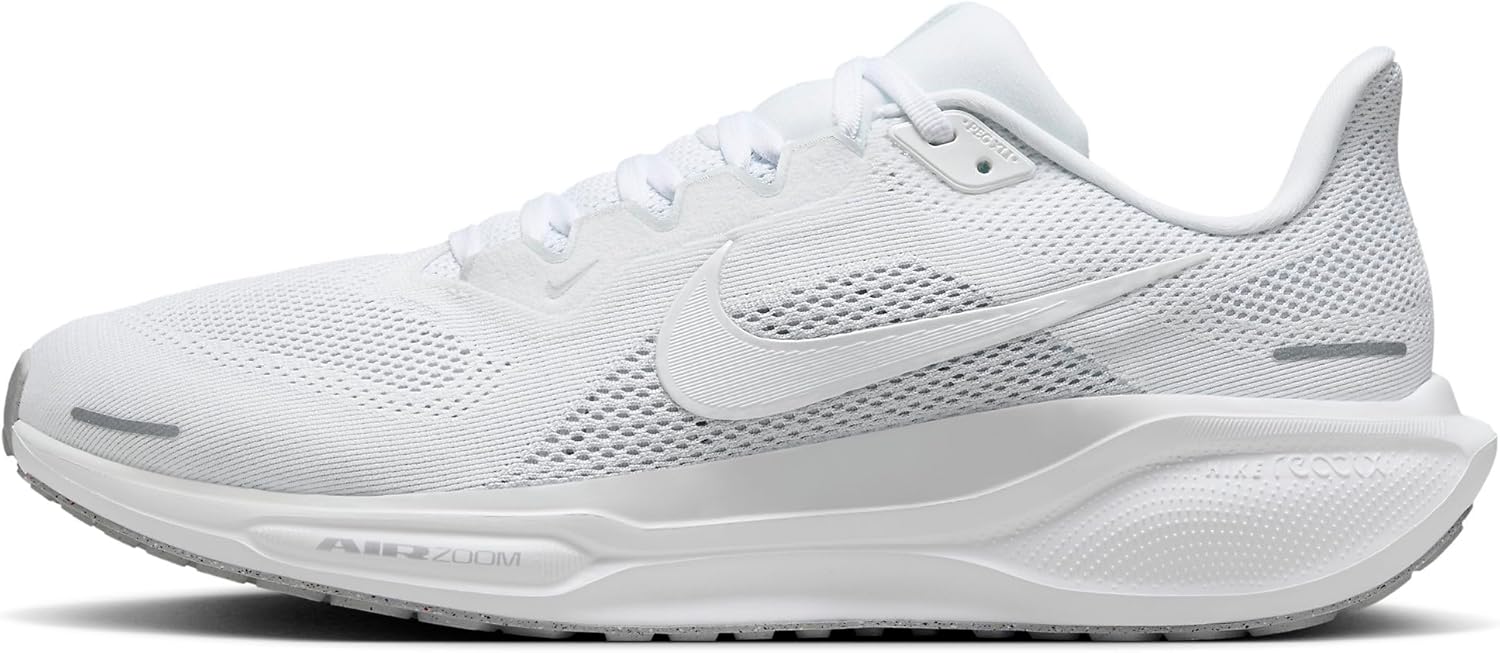
Nike Men's Pegasus 41 White/White/Pure Platinum 10.5 Medium
  • Signature waffle-inspired rubber outsole for traction and flexibility

✓ Pros

  • Dynamic flex zones adapt to natural gait cycle
  • Three arch heights ensure precise fit
  • Lighter than rigid orthotics (no ‘heavy foot’ feel)
  • Excellent for runners and athletic walkers
  • European podiatric design (German engineering)

✗ Cons

  • More expensive than PowerStep Original ($55-65 typically)
  • Less aggressive correction than Pinnacle Maxx for severe cases
  • Three arch heights means you must self-select correctly

Dr. Tom’s Recommendation: I started recommending Currex three years ago for runners who said PowerStep felt ‘too rigid.’ The dynamic flex zones respect natural gait. Best for active patients who walk 8K+ steps daily and don’t need maximum motion control.

BEST FOR RUNNERS · CURREX RUNPRO

Running-Specific · Heel Strike + Forefoot Strike Compatible

Currex’s purpose-built running orthotic. The midfoot flex zone is positioned for runner’s gait mechanics, with a flared heel cushion for heel strikers and a forefoot rocker for midfoot/forefoot strikers. Tested on 1000+ runners during product development.

OS1st FS4 Plantar Fasciitis No Show Socks relieves plantar fasciitis, heel/arch pain and improves circulation
  • Provides continuous support of the Plantar Fascia by gently stretching the fascia tissue.
  • Compression zones promote circulation, reduce impact vibration, boost recovery and strengthen feet.
  • Lightweight, seamless design with extra cushioning provides support while still being comfortable.
  • Supports the heel/arch and overall foot structure while stabilizing the tendon for better performance
  • Made from high quality materials, the socks are moisture wicking and breathable.

✓ Pros

  • Designed by German biomechanics lab specifically for runners
  • Dynamic arch flexes with running gait (not static like PowerStep)
  • Three arch heights (low/medium/high)
  • Reduces overuse injury risk in mid-distance runners
  • Lightweight (no impact on cadence)

✗ Cons

  • Premium price ($60-75)
  • Not aggressive enough for severe over-pronators (use Pinnacle Maxx)
  • Runner-specific design = less ideal for daily walking shoes

Dr. Tom’s Recommendation: If a patient runs 20+ miles per week and has plantar fasciitis or shin splints, this is the orthotic I prescribe. The dynamic flex zones respect running biomechanics in a way that no rigid PowerStep can match. Pricier but worth it for serious runners.

BEST FOR HIGH ARCHES

Cavus Foot & High-Arch Patients

Polyurethane base with a deeper heel cup and higher arch profile than PowerStep — built for cavus (high-arched) feet that need maximum cushion and support. The 5-zone cushioning system addresses the unique pressure points of high-arch feet.

Protalus M100 Original - Patented Stress Relief Replacement Shoe Inserts, Increase Comfort, Relieve Plantar Fasciitis, Anti-Fatigue, Alignment Improving Shoe Insoles
  • The first generation of Protalus's M-100 Insole
  • Patented Alignment Technology: The M-100 features a deep heel cup and contoured arch to correct overpronation and promote better posture, stability, and joint health throughout your body.
  • Comfortable Insoles: The patented stress relief replacement shoe insoles increase comfort and relieve plantar fasciitis and anti-fatigue.
  • Improves Alignment: The shoe insoles help improve alignment and reduce pain in the feet, ideal for low and high arches.

✓ Pros

  • Deeper heel cup centers the heel for cavus foot stability
  • Higher arch profile fills the void under high arches
  • 5-zone cushioning addresses cavus foot pressure points
  • Polyurethane base lasts 12+ months
  • Available in Wide width

✗ Cons

  • Too tall/aggressive for normal or low arches
  • Won’t fit slim dress shoes
  • Pricier than PowerStep Original
  • Some patients find the arch height uncomfortable initially

Dr. Tom’s Recommendation: Cavus foot patients are often misdiagnosed and given low-arch orthotics — that makes everything worse. Spenco’s Total Support has the arch profile that high-arch feet actually need. About 15% of my patients have cavus feet; this is what they wear.

BEST GEL CUSHION

Cushion Layer · Standing All Day · Gel Pressure Relief

NOT a true biomechanical orthotic — this is a cushion insole. But for patients who want gel pressure relief instead of arch correction (or to add ON TOP of factory insoles in work boots), this is the best gel option on Amazon.

Tuli's Heavy Duty Heel Cups, Shock-Absorbing Cushion Insert for Plantar Fasciitis, Sever’s Disease, and Heel Pain, Green, 1 Pair, Large
  • ✶ALLEVIATES HEEL PAIN – Tuli’s Heavy Duty Heel Cups provide heel pain relief caused by plantar fasciitis, Sever’s disease, excessive pronation, Achilles tendonitis, etc. Ideal for those on their feet for most of the day or those looking for added comfort.
  • ✶PODIATRIST PREFERRED – In an independent study conducted by M3 Global Research, podiatrists chose Tuli’s as the clear winner of recommended heel cup brands.
  • ✶SHOCK-ABSORBING DESIGN – The multi-cell, multi-layer design absorbs shock and impact energy, mimicking the natural shock-absorbing system of your feet. As you walk or run, the design reduces the stress on your feet.
  • ✶DOCTOR RECOMMENDED & APMA ACCEPTED – Tuli’s Heel Cups were designed by a leading podiatrist and have the honor of being accepted by the American Podiatric Medical Association.
  • ✶FITS MOST LACE-UP SHOES – Best used in spacious lace-up shoes like athletic shoes / sneakers.

✓ Pros

  • Genuine gel cushioning (not foam pretending to be gel)
  • Targeted gel waves under heel and ball of foot
  • Trim-to-fit · works in most shoe types
  • Sub-$15 price (most affordable option in this list)
  • Massaging texture is genuinely soothing

✗ Cons

  • ZERO arch support — this is cushion only
  • Won’t fix plantar fasciitis or flat-foot issues
  • Compresses faster than PowerStep (4-6 months)
  • Top cover wears through in high-mileage applications

Dr. Tom’s Recommendation: I recommend these to patients who tell me ‘I just want my feet to stop hurting at the end of my shift’ and who don’t have a biomechanical issue. Construction workers, factory workers, retail. Pure cushion does the job for them.

BEST LOW-VOLUME · PowerStep Pinnacle

Tight-Fitting Shoes · Cycling Shoes · Hockey Skates

PowerStep Pinnacle’s slim version of their famous Green insole. The trademark stabilizer cap is preserved but the overall thickness is reduced — works in cycling shoes, hockey skates, ski boots, and other tight-fitting footwear that the standard PowerStep Pinnacle can’t fit into.

Tread Labs Pace Insoles for Plantar Fasciitis Relief & Flat Feet – Firm Arch Support Inserts for Men & Women – Replaceable Top Covers, Million-Mile Guarantee
  • Plantar Fasciitis Relief, Every Step – Firm arch support helps relieve heel and arch pain from plantar fasciitis and supports flat feet and overpronation for better alignment and all-day comfort.
  • Clinical-Grade Biomechanics – Tread Labs 26-33 ARCHitecture delivers orthotic-level stability—custom-orthotic feel without the prescription.
  • Dialed Fit for Any Shoe – Four arch heights (low, medium, high, extra-high) and an easy 3-step sizing guide make selection simple for work boots, sneakers, and everyday shoes—great for standing all day.
  • Built to Last a Million Miles – Durable, recyclable arch supports with our Million-Mile Guarantee; replaceable top covers keep insoles fresh and cost-effective. Unlike foam that flattens, Pace is engineered to last.
  • Trusted Expertise – Designed by Mark Paigen (founder of Chaco). Premium arch support inserts for men and women backed by decades of footwear innovation.

✓ Pros

  • Stabilizer cap centers the heel (PowerStep Pinnacle’s signature feature)
  • Slim profile fits tight athletic footwear
  • Lasts 12+ months daily wear
  • Excellent for cycling shoes specifically
  • Built-in odor-control treatment

✗ Cons

  • Premium price ($45-55)
  • Less cushion than PowerStep equivalents
  • Not as aggressive correction as Pinnacle Maxx for flat feet
  • The signature ‘heel cup feel’ takes 1-2 weeks to adapt to

Dr. Tom’s Recommendation: If you’re a cyclist with foot numbness, hot spots, or knee pain — this is the orthotic. The stabilizer cap solves cycling-specific biomechanical issues that no other orthotic addresses. Worth the premium for athletes.

None of these solving your foot pain?

Some patients (about 30%) need custom-molded prescription orthotics. We make 3D-scanned custom orthotics in our Howell and Bloomfield Hills offices — specifically built for your foot mechanics.

Schedule a Custom Orthotic Fitting →

FSA/HSA eligible · Most insurance accepted · (810) 206-1402

Medical References
  1. Plantar Fasciitis: Diagnosis and Conservative Management (PubMed)
  2. Plantar Fasciitis (APMA)
  3. Diagnosis and Treatment of Plantar Fasciitis (PubMed / AAFP)
  4. Heel Pain (APMA)
This article has been reviewed for medical accuracy by Dr. Tom Biernacki, DPM. References are provided for informational purposes.

Related Treatments at Balance Foot & Ankle

Our board-certified podiatrists offer advanced treatments at our Bloomfield Hills and Howell locations.

Balance Foot & Ankle surgeons are affiliated with Trinity Health Michigan, Corewell Health, and Henry Ford Health — three of Michigan’s largest health systems.
📞 Call Now 📅 Book Now
} }) } } } } } }