
Medically reviewed by Dr. Tom Biernacki, DPM
Board-certified podiatric surgeon | Balance Foot & Ankle
Last reviewed: April 2026

- The Pinnacle Full length insoles for men & women provide maximum cushioning, from high activity to moderate support. The PowerStep arch support shape provides stability to the foot and ankle, helping to relieve foot pain.
- When you spend all day on your feet, every step counts. PowerStep insoles are a podiatrist-recommended orthotic to help relieve & prevent foot pain related to athletes, runners, Plantar Fasciitis, heel spurs & other common foot, ankle & knee injuries
- The Pinnacle plantar fasciitis insoles offer superior heel cushioning and arch support. The dual-layer cushioning is designed to reduce stress and fatigue, while PowerStep premium arch support is designed for plantar fasciitis relief.
- The PowerStep Pinnacle arch support inserts for men & women can be worn in a variety of shoe types such as; athletic, walking, running, work & some casual shoes. Orthotic Inserts are ordered by shoe size, no trimming required.
- Made in the USA & backed by a 30-day money-back guarantee. PowerStep orthotic inserts for men & women are designed for shoes where the factory insole can be removed. HSA & FSA Eligible

- Full Length Support – Our ProTech orthotic insoles support pronation, arch pain, heel pain, plantar fasciitis, and heel spurs.
- Your Go To Inserts – These orthotics for plantar fasciitis provide full length, total contact support for a number of common foot issues
- Easily Fix Your Arches – Standard, semi-rigid arch support that fits most shoes including, work boots, dress shoes and sneakers.
- Enhanced Comfort – Our ProTech orthotic inserts have maximum cushioning featuring ShockAbsorb Premium Foam heel support cushion to increased protection.
- Support + Comfort – PowerStep ProTech orthotic insoles are designed with built-in arch support, heel cradle, and a perfect balance of support and comfort. Legitimate PowerStep product packaging is marked with a unique US quality control code. If you are concerned that a PowerStep item is not legitimate, please contact PowerStep customer service.
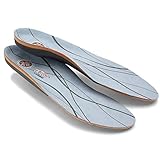
- PODIATRIST DESIGNED! An effective alternative to expensive custom-made orthotics. Innovative biomechanical THREE-ZONE COMFORT technology delivers deep heel cup stability, forefoot cushioning, and ultimate arch support to prevent excessive pronation caused by flat feet. These essential contact points help to realign positioning of feet, aiding to re-establish your body’s natural alignment, from the ground up.
- VIONIC ORTHOTIC INSOLES! These women’s and men’s shoe inserts offer a convenient, pain-free natural healing solution for many of the common aches and pains associated with poor lower-limb alignment, plantar fasciitis, and arch pain. EVA orthotic with re-enforced, hardened plastic (PE) shell for added motion control and stability. Cushioned shock dot in the heel for added shock absorption. Can be trimmed in forefoot if necessary.
- DESIGNED FOR EVERYDAY USE! Designed to provide greater control in faster paced activities such as running and fast walking. 4 degree rear foot wedge to provide support and control which helps prevent excess pronation. Odor absorbing cover. Contoured around the heel and arch areas to achieve 100% foot contact. Podiatrist Designed, APMA Seal of Acceptance.
- COMFORTABLE TO WEAR! Shoe inserts for women and men contoured around the heel and arch areas to achieve perfect foot contact.
- SIZES AVAILABLE: XS: Women’s 4.5 – 6 / Men’s 3.5 – 5 S: Women’s 6.5 – 8 / Men’s 5.5 – 7 M: Women’s 8.5 – 10 / Men’s 7.5 – 9 L: Women’s 10.5 – 12 / Men’s 9.5 – 11 XL: Men’s 11.5 – 13
Stubbing your toe hard enough to fracture it is one of the most surprisingly painful — and surprisingly common — foot injuries. Toe fractures account for a significant percentage of all fractures seen in emergency rooms and podiatry clinics. But not all toe breaks are equal, and “buddy tape it and walk it off” isn’t always the right answer.
At Balance Foot & Ankle, we evaluate toe fractures regularly. The key questions: which toe, where in the bone, how displaced, and does it involve the joint? The answers determine whether you need conservative home care or a more structured treatment plan. This guide gives you the full picture.
Types of Toe Fractures

Toe fractures are categorized by location, displacement, and articular involvement — each factor affects treatment and prognosis.
By Location
- Hallux (big toe) fractures — the most functionally important; fractures of the proximal phalanx, distal phalanx, or sesamoid bones; require more careful management because the big toe bears 40–60% of body weight during push-off
- Lesser toe fractures (2nd–5th toes) — generally less functionally impactful; most heal well with buddy taping; proximal phalanx fractures more significant than distal
- Sesamoid fractures — fractures of the two small bones under the first metatarsal head; often misdiagnosed as bone bruises; require specific treatment
By Displacement
- Non-displaced fractures — bone ends remain aligned; conservative treatment sufficient in most cases
- Minimally displaced — small angulation or shortening; buddy taping often adequate; monitor with repeat X-ray
- Displaced or angulated — significant malalignment; may require reduction (manipulation back into position) under local anesthesia
- Comminuted fractures — bone shattered into multiple fragments; more complex healing; higher risk of malunion
By Articular Involvement
Intra-articular fractures — fractures that extend into the joint surface — are the most important to identify accurately. These carry the highest risk of post-traumatic arthritis if not properly aligned. CT scanning may be needed to fully characterize complex intra-articular fractures.
Key takeaway: The big toe is 5–10x more important than the lesser toes functionally. A non-displaced 5th toe fracture can often be buddy-taped and walked on; a displaced hallux fracture needs proper podiatric management.
Symptoms of a Broken Toe
- Immediate, severe pain at the time of injury
- Swelling — develops within minutes to hours of the fracture
- Bruising (ecchymosis) — appears within hours, typically most intense 24–48 hours post-injury
- Tenderness to direct palpation over the fracture site
- Deformity — the toe may appear crooked, rotated, or shorter than normal
- Difficulty walking — weight-bearing pain, especially with big toe fractures
- Subungual hematoma — blood under the toenail, common with distal phalanx crush injuries
A “badly sprained” toe is a broken toe until proven otherwise. If your toe is swollen, bruised, and painful to walk on, it needs an X-ray. Sprains severe enough to cause significant swelling are much less common in the toes than in the ankle — most significant toe injuries involving these symptoms are fractures.
Diagnosing a Toe Fracture
Diagnosis requires plain X-rays of the foot (anteroposterior, lateral, and oblique views). Three separate views are necessary to see all fracture lines — a fracture visible in only one plane can be missed if only one X-ray is taken.
MRI is reserved for occult fractures (suspected fracture with negative X-rays), stress fractures, sesamoid fractures (to assess vascularity), or soft tissue assessment. CT may be needed for complex intra-articular hallux fractures where surgical planning is required.
Toe Fracture Treatment Options
Conservative Treatment: Buddy Taping
Buddy taping — taping the fractured toe to the adjacent healthy toe — is the standard treatment for most non-displaced lesser toe fractures. The neighboring toe acts as a natural splint, preventing angulation while the fracture heals. Use a thin piece of foam or gauze padding between the toes before taping to prevent skin maceration. Change the tape every 2–3 days.
- Use medical paper tape or athletic tape — not adhesive bandages which are too narrow
- Tape the fractured toe to its closest neighbor (2nd to 3rd, 3rd to 4th, 4th to 5th)
- Do not tape so tightly that it cuts off circulation — the toe should remain pink and warm
- Change tape every 2–3 days and when it gets wet
- Continue buddy taping for 4–6 weeks until pain has resolved
Stiff-Soled Shoes or Post-Op Shoes
A stiff-soled or wooden-soled shoe (sometimes called a “post-op shoe” or “fracture shoe”) protects the toe by preventing it from bending during walking. This significantly reduces pain and protects the fracture from re-displacement. Most patients can walk in a post-op shoe within days of a lesser toe fracture.
Walking Boot for More Serious Fractures
Big toe fractures, significantly displaced fractures, and intra-articular fractures typically require a CAM walking boot for 4–8 weeks. The boot immobilizes the entire foot, protecting the fracture from rotational and bending forces that a stiff-soled shoe cannot control.
Fracture Reduction
Displaced or angulated fractures may need closed reduction — realigning the bone under local anesthesia, then immobilizing in the corrected position. This is a brief in-office or emergency department procedure. A post-reduction X-ray confirms adequate alignment. The toe is then buddy-taped or booted depending on fracture stability.
Surgical Treatment (ORIF)
Surgery (open reduction and internal fixation — ORIF) is reserved for fractures that cannot be adequately reduced by closed means, significantly displaced intra-articular fractures, open fractures (skin broken over the fracture), or fractures with associated tendon injuries. Surgery involves stabilizing the fracture with pins, screws, or plates. Recovery is 6–12 weeks with progressive weight-bearing as healing progresses.
⚠️ When to See a Podiatrist for a Toe Fracture:
- Any fracture of the big toe (hallux) — these require proper evaluation
- Toe that appears visibly crooked, rotated, or shortened after injury
- Pain that prevents weight-bearing after 24–48 hours of rest
- Swelling and bruising spreading beyond the injured toe
- Open wound over the fracture site (open fracture — needs urgent care)
- Blood under the toenail (subungual hematoma) covering more than 50% of the nail
- Suspected fracture in a diabetic patient — any lower extremity injury warrants evaluation
Toe Fracture Healing Timeline
Healing time depends on which toe, fracture type, displacement, and the patient’s overall health.
- Distal phalanx (tip) fractures: 4–6 weeks for pain relief; up to 10 weeks for complete bone healing
- Non-displaced middle/proximal phalanx fractures: 4–6 weeks buddy taping; return to normal shoes at 6–8 weeks
- Displaced or reduced fractures: 6–8 weeks immobilization; 10–12 weeks total recovery
- Hallux fractures: 6–10 weeks in boot; return to normal shoes at 10–14 weeks
- Intra-articular fractures: Bone healing 8–12 weeks; full functional recovery 3–6 months
- Surgical cases: 6–12 weeks protected weight-bearing; 4–6 months full recovery
Key takeaway: Bone healing and pain relief are not the same thing. Pain typically resolves weeks before the bone is fully remodeled. X-ray evidence of complete healing may lag 3–6 months behind pain resolution.
What Happens If a Toe Fracture Heals Wrong
Fracture malunion — healing in a malaligned position — is the most common complication of inadequately treated toe fractures. Consequences depend on which toe and how severe the malalignment:
- Persistent pain with shoe wear — prominent bone callus rubs against shoe uppers
- Post-traumatic arthritis — particularly from intra-articular malunion; causes chronic joint pain and stiffness
- Crossover toe deformity — malunited 2nd toe fractures can result in crossing over the hallux
- Gait alteration — malunited big toe fractures affecting push-off mechanics
- Rotational deformity — toe that points in wrong direction; may require corrective osteotomy
Preventing malunion is far simpler than correcting it. Appropriate immobilization for the first 4–6 weeks and a follow-up X-ray at 3–4 weeks to confirm maintained alignment are the keys to avoiding this complication.
Ready to Get Relief?
Book online 24/7 in Howell & Bloomfield Township, MI
4.9★ | 1,200+ Reviews | 3,000+ Surgeries
Or call: (810) 206-1402
In-Office Treatment at Balance Foot & Ankle
If home treatment isn’t providing relief for your toe fracture healing, our podiatry team at Balance Foot & Ankle can help with expert evaluations and advanced in-office care.
Book online 24/7. (810) 206-1402
VitaMedica Arnica Gel
Arnica gel plus 15 plant compounds for sore feet, plantar fasciitis flares and post-activity soreness. Apply a thin layer to the sore area.
Shop VitaMedica Arnica Gel →Frequently Asked Questions
Can I walk on a fractured toe?
It depends on which toe and how severe the fracture. Most lesser toe (2nd–5th) non-displaced fractures allow weight-bearing in a stiff-soled shoe or post-op shoe from the start. Big toe fractures typically require a CAM boot and modified activity. You should not walk through severe pain — this suggests the fracture may be displaced or inadequately supported.
How do I know if my toe is broken or just sprained?
Significant swelling, bruising within the first few hours, deformity, and inability to bear weight are more consistent with a fracture than a sprain. The only way to confirm is with an X-ray. A rule of thumb: if swelling and pain persist beyond 48–72 hours without improvement, get an X-ray. The Ottawa Foot Rules (validated clinical decision rules) can help providers determine when imaging is necessary.
Can a broken toe heal on its own without a doctor?
Non-displaced 2nd–5th toe fractures in healthy patients without diabetes can often be managed at home with buddy taping and a stiff-soled shoe. However, big toe fractures, displaced fractures, and fractures in diabetic patients should always be professionally evaluated. Home management without diagnosis risks missing displaced or intra-articular fractures that require reduction.
When can I return to running after a toe fracture?
Most athletes return to running 6–10 weeks after a lesser toe fracture. Big toe fractures may require 10–14 weeks before running is comfortable. A gradual return — walking first, then walk-run intervals — is essential. Pain during activity is a signal to slow down. Return before the bone is adequately healed risks re-fracture or stress fracture of the healing bone.
Is it normal for a healed toe fracture to still hurt months later?
Mild discomfort at a fracture site for up to 6 months is common, particularly with weather changes, prolonged walking, or tight footwear. Persistent significant pain at 3+ months should prompt a repeat X-ray to check for malunion, post-traumatic arthritis, or avascular necrosis. Shoe modifications and custom orthotics can reduce load on a healing toe and improve comfort during recovery.
Sources
- Hatch RL, Rosenbaum CI. Fracture care by family physicians. J Fam Pract. 1994;38(3):238-243.
- Van Vliet-Koppert ST, et al. Demographics and functional outcome of toe fractures. J Foot Ankle Surg. 2011;50(3):307-310.
- Mittlmeier T, Haar P. Sesamoid and toe fractures. Injury. 2004;35(Suppl 2):SB87-97.
- Shiel WC. Management of toe fractures. Am Fam Physician. 1996;54(4):1328-1334.
- Petersen W, et al. Treatment of acute ankle ligament injuries. Arch Orthop Trauma Surg. 2013;133(8):1129-1141.
- American College of Foot and Ankle Surgeons. Toe Fractures Clinical Practice Guideline. 2024.
Ready to feel better?
Appointments available in Howell and Bloomfield Township, Michigan.
Book Your VisitGet Expert Care at Balance Foot & Ankle
Appointments at our Howell and Bloomfield Township offices. Board-certified podiatric surgeons. Most insurance accepted.
Appointments in Howell & Bloomfield Township
Three board-certified podiatric surgeons. 1,200+ five-star reviews. Most insurance accepted.

Dr. Tom Biernacki, DPM is a board-certified foot & ankle surgeon (ABFAS & ABPM) at Balance Foot & Ankle Specialists in Southeast Michigan. With over a decade of clinical experience, he specializes in heel pain, bunions, diabetic foot care, sports injuries, and minimally invasive surgery. Dr. Biernacki is a member of the APMA and ACFAS, and his patient education content on MichiganFootDoctors.com and YouTube has made him one of the most-followed foot & ankle educators on YouTube.