


A walking boot for a broken foot can either accelerate your healing or set it back weeks — depending on whether you adjust the straps correctly, take it off at night, and protect the opposite hip.
You’ve come to the right podiatry team. Dr. Tom Biernacki, DPM, FACFAS — board-certified foot & ankle surgeon with 3,000+ surgeries — explains exactly what a walking boot for a broken foot means and what works. Call (810) 206-1402 for same-week appointment at Howell or Bloomfield Township.
Quick answer: Walking Boot For Broken Foot comes up often in our clinics. Effective treatment starts with a targeted diagnosis, conservative-first treatment, and escalation only when needed. We treat this regularly at our Howell and Bloomfield Township practices. Call (810) 206-1402.
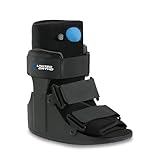
United Ortho Walking Boot
Air-bladder boot — controlled motion + offloading for fractures of the foot.
- Adjustable air bladder
- Rocker bottom
- Water-resistant
- Heavy first day
- Need lift on opposite shoe
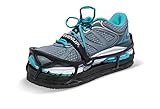
EvenUp Shoe Balancer
1″ shoe balancer for the opposite shoe — eliminates limp + hip pain.
- Quick attach
- Prevents back pain
- Reusable
- Adds 8 oz
- Wears in 3-6 months
Best Boot for Broken Foot: Podiatrist’s 2026 Recommendations
The best boot for a broken foot is a tall pneumatic CAM (Controlled Ankle Motion) walking boot with adjustable air bladders. Top brands: Aircast AirSelect Elite, BraceAbility Tall Pneumatic, DonJoy MaxTrax Air, Ovation Medical Equalizer. The boot immobilizes the foot for healing while still allowing controlled weight-bearing — far superior to splinting for most stress fractures, metatarsal fractures, Lisfranc injuries, and post-surgical recovery.
In my Michigan podiatry clinic, I prescribe CAM boots for 4-6 weeks for most metatarsal fractures and 6-8 weeks for Jones fractures. Critical wear protocol: (1) snug straps (no foot sliding inside), (2) socks under the liner for hygiene, (3) EvenUp shoe balancer on the OTHER foot — without it you’ll get hip/back pain from leg-length discrepancy, (4) sleep WITHOUT the boot unless instructed otherwise. Don’t wear > 8 weeks without medical supervision — muscle atrophy starts.
★ DR. TOM BIERNACKI, DPM, FACFAS · BOARD-CERTIFIED PODIATRIST
Walking Boot for Broken Foot: Quick Answer
A CAM walking boot (Controlled Ankle Motion boot) is the standard treatment for most non-displaced foot fractures — metatarsal stress fractures, jones fractures (zone 1), midfoot Lisfranc sprains, and most ankle sprains. The boot immobilizes the foot in neutral position while allowing some weight-bearing, which speeds healing vs traditional cast immobilization.
Recovery timelines by injury: stress fracture — 4-6 weeks. Pseudo Jones (5th metatarsal styloid) — 4-6 weeks. True Jones fracture — 8-12 weeks (or surgery for athletes). Lisfranc sprain — 6-12 weeks. Severe ankle sprain (Grade 3) — 4-8 weeks. Critical: partial weight-bearing protocols matter — too much weight too early = nonunion; too little = deconditioning. Always confirm fracture pattern with X-ray before self-prescribing a boot.
Medically reviewed by Dr. Tom Biernacki, DPM · Board-Certified Podiatric Surgeon · Last reviewed: April 2026 · Editorial Policy
Quick Answer
Walking Boot for Broken Foot 2026: Podiatrist’s Comple relates to foot/ankle injury — typically caused by trauma or twist. Most patients improve in 4-8 weeks with conservative care. Same-week appointments in Howell + Bloomfield Township: (810) 206-1402.
Walking Boot for Broken Foot
Best Boot for Broken Toe or Broken Foot
Got a Broken Toe or Foot? Don’t Panic — We’ve Got the BEST Walking Boot Tips You Need!
Whether you’re hobbling from a broken toe or limping with a broken foot, choosing the right walking boot can make all the difference in your recovery. In this guide, we break down the top doctor-recommended tips for selecting the best walking boot, how to wear it properly, and what to avoid so you can heal faster and walk with confidence. Don’t risk further injury — find out what actually works!
Let’s get you back on your feet — safely and pain-free!
Schedule Your Consultation Today
Walking Cast Boot for Broken Foot Video
This video goes over walking cast boot tips for a broken foot.
Walking Boot for a Broken Toe or Broken Foot Overview
This video goes over how to use a walking boot for a broken toe or a walking boot for a broken foot.
- It also goes over what is a walking boot for broken foot.
- We go over how to size a walking boot for a broken foot.
- We also go over how to use a sock with the boot and an orthotic to offload the broken toe or broken foot.
Foot Cast vs Boot for Broken Foot Video
This video goes over whether a cast or boot is better for a broken foot or a broken toe.
- We prefer a fiberglass cast or plaster cast for a more severe unstable toe fracture or foot fracture.
- If this is a closed and stable broken toe or a broken foot, then we prefer a walking boot.
Cast or Boot for a Broken Toe or Broken Foot Overview
What’s the difference between a boot or cast? Air Casts are also called CAM walking boots, Aircasts and Air Walkers.
- Some people wear these rather than a cast, which one is better?
- Studies show that a walking boot is becoming more popular, but it depends whether you have a broken ankle, sprained ankle, ankle fracture or even a broken foot.
- Studies show that a walking boot is a great option for smaller injuries like a sprained ankle and some smaller ankle fractures.
- A cast is better for high risk open fractures and dislocated fractures.
- If you have ankle surgery or foot surgery, then a cast may be the better option especially in the short term for your surgery until the incision site heals.
Best Walking Boots for Broken Toes or a Broken Foot
These are our favorite walking boots for broken toes and broken feet.
We also include our favorite walking boot accessories.
📍 Located in Michigan?
Our board-certified podiatrists treat this condition at two convenient locations. Most new patients are seen the same week.


Best Scooters for Broken Toes or a Broken Foot:
These are our favorite scooters for a broken toe or broken foot.



Walk This Way: Trusted Foot & Ankle Information
Learn what’s hurting and how to fix it.
Athlete’s Foot
Ball of Foot
Achilles Tendon
Bunion
Big Toe
Callus
Foot Fungus
Gout
Ingrown
Orthotics
Outside of Foot Pain
Sports Podiatrist
Specs and sizing: our sister site Podiatrist Tested keeps a side-by-side breakdown, with every figure labeled by source, in its shoes to transition into after the boot.
How to Wear and Use Your Walking Boot
A walking boot (often called a CAM boot) only protects the fracture if it is worn correctly and consistently. These are the questions we hear most from patients sent home in one.
How long do you wear a walking boot?
Most foot fractures need the boot for about four to eight weeks — six is common — while a simple toe fracture is often less and a Jones or midfoot fracture frequently longer. Your podiatrist sets the timeline from the specific bone and follow-up X-rays. Don’t stop early just because the pain has eased; the bone heals long before it stops hurting.
How do you put it on correctly?
Sit down, slide your foot back so the heel sits snugly against the back of the boot, and wear a clean, tall sock or the boot’s liner. Fasten the straps from the bottom up — firm enough to hold the foot still, but never so tight that it cuts off circulation or makes the toes tingle.
Can you sleep in a walking boot?
You can usually take it off in bed unless your doctor tells you otherwise — but keep it right beside the bed and put it on before you stand, even for a quick nighttime trip to the bathroom. One unprotected step on a healing fracture can undo weeks of progress.
Can you drive in a walking boot?
Do not drive with a boot on your right foot — it slows your braking and is unsafe. A boot on the left foot is generally fine for an automatic. If you have any doubt about reacting in an emergency, don’t drive.
How much weight can you put on it?
Follow your specific instructions. Some fractures are weight-bearing as tolerated in the boot, while others are strictly non-weight-bearing at first and need crutches or a knee scooter. The boot itself is not automatic permission to walk normally — when you’re unsure, ask before you load it.
Protect your hips and back
A boot is taller than your other shoe, and that height difference can throw off your gait and cause hip, knee, or lower-back pain. Wear a thick-soled or platform shoe on the opposite foot — or a simple “even-up” leveler — to keep your hips balanced while you heal.
Keep it clean and check your skin
Air out the liner, wear a fresh sock each day, and check your skin for redness or rubbing — especially if you have diabetes or any numbness in the foot. New sores or persistent pressure points deserve a call rather than a wait.
Above all, wear the boot every time you are on your feet, for the full prescribed period. The single most common reason a foot fracture heals slowly is a boot that comes off too soon.
Why Choose Balance Foot & Ankle Specialist in Howell and Bloomfield Township?
Our experienced podiatric surgeons combine precision, care, and innovation to deliver successful outcomes in flatfoot reconstruction. With modern facilities, patient education, and compassionate care, we’ve become the trusted choice for foot and ankle surgery in Southeast Michigan. We’re committed to restoring your stride—comfortably and confidently.
Book Your Podiatrist Visit Now

Podiatrist-Recommended Products During Walking Boot Recovery
- PowerStep Maxx — maximum-support insole for the contralateral foot overloaded by boot-side limping
- DASS Medical Compression Socks — medical-grade compression socks that manage the boot-related swelling and edema
- Doctor Hoy’s Natural Pain Relief Gel — topical pain relief for foot soreness during the walking boot recovery and weaning period
These are the same products Dr. Biernacki recommends in clinic. Available through our partner Foundation Wellness.
Ready to feel better?
Same-week appointments available in Howell and Bloomfield Township, Michigan.
