
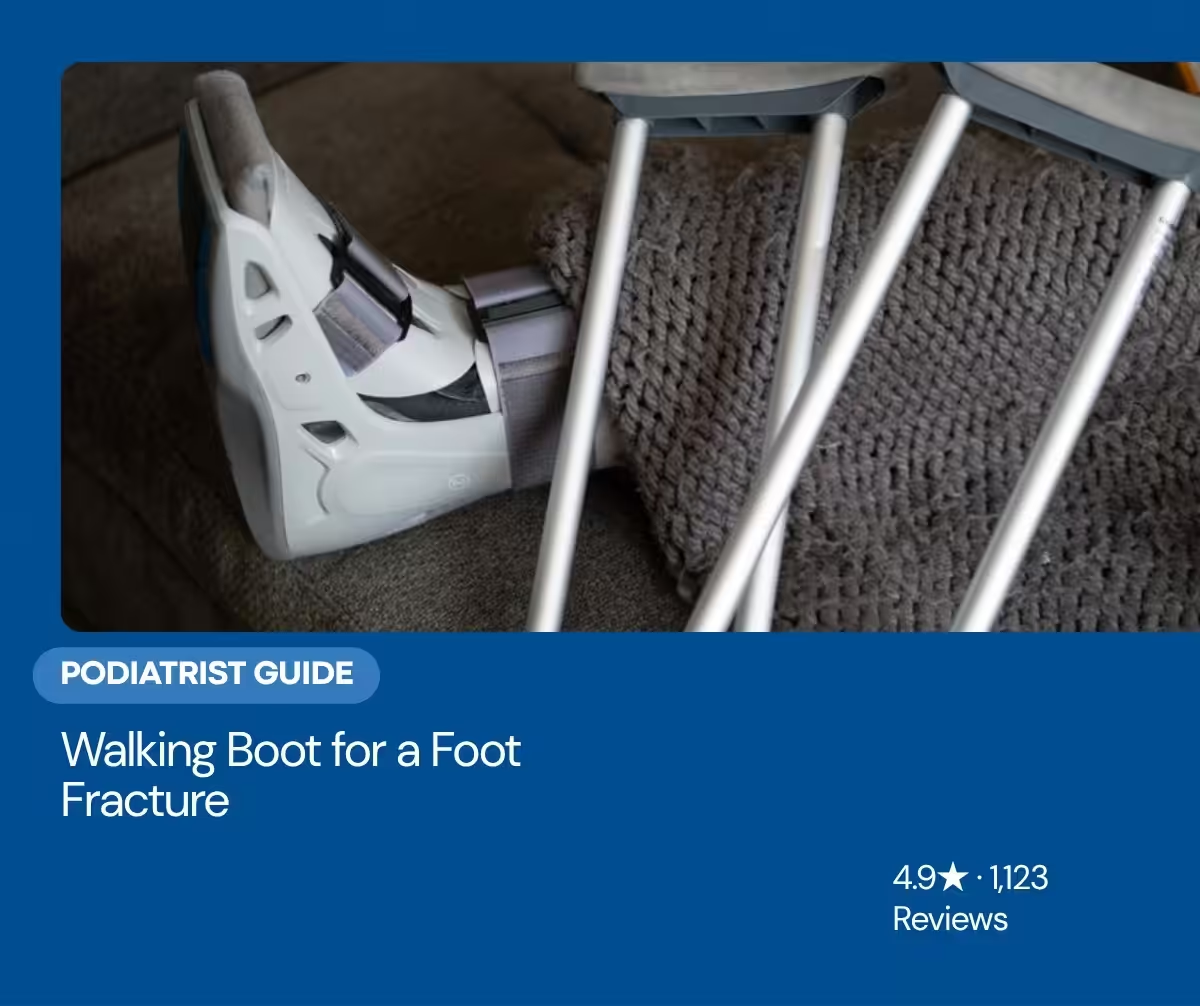
Quick answer: A walking boot (CAM boot) immobilizes a foot or ankle fracture while letting you bear weight as your doctor allows, replacing a cast for many stable fractures. Wear it as directed — typically 4–6 weeks — keep the straps snug, and add a heel balancer to the opposite shoe to protect your hips and knees.
Foot or ankle pain that isn’t getting better? A podiatrist can diagnose it in one visit — pick a real appointment time online, 24/7: Howell or Bloomfield Township. Takes about a minute, 24/7.

| Fracture Type | Boot Duration | Weight-Bearing Status | When to Transition to Shoe | Notes |
|---|---|---|---|---|
| 2nd–4th metatarsal (non-displaced) | 4–6 weeks | WBAT in boot | 6 weeks if X-ray shows callus | Stiff soled shoe for 4 more weeks after boot |
| Jones fracture (5th met Zone II–III) | 6–8 weeks NWB cast or boot | Non-weight-bearing (NWB) | 8 weeks + clinical healing confirmed | Athletes: consider surgical fixation for faster return |
| 5th metatarsal avulsion (Zone I) | 3–4 weeks | WBAT in boot | 4 weeks + pain-free | Stiff post-lace or supportive shoe acceptable |
| Navicular stress fracture | 6–8 weeks NWB | NWB — strict | CT confirmed healing | High non-union risk; surgical fixation often in athletes |
| Calcaneal stress fracture | 4–6 weeks NWB | NWB | MRI or X-ray confirmation | Bone scan most sensitive early |
| Lisfranc sprain (stable, no fracture) | 6 weeks NWB boot | NWB | 6 weeks with clinical/imaging confirmation | Any instability → surgical fixation |
| Toe fracture | 1–3 weeks buddy tape + stiff shoe | WBAT | 1–3 weeks | Walking boot rarely needed for toe fractures |
| Walking Boot Type | Features | Best For | Advantage |
|---|---|---|---|
| Standard CAM boot (low-top) | Rigid shell, air pump bladder, rocker sole | Foot fractures, plantar fasciitis, minor ankle injuries | Easy donning/doffing; good for low-level injuries |
| High-top CAM boot | Extends above ankle; lateral struts | Ankle fractures, Achilles repair, syndesmosis injuries | Better ankle immobilization; controls dorsiflexion |
| Non-pneumatic (no air cells) | Foam padding vs. air bladder | Cost-sensitive patients; mild injuries | Lower cost; simpler |
| Even-up shoe balancer | Height-matching lift for opposite shoe | Anyone in CAM boot walking | Prevents limb-length discrepancy gait; reduces knee/hip pain |
| Darco post-op shoe | Open-toe stiff-soled sandal | Post-surgical dressing changes; toe fractures | Easy wound access; very low profile |
Quick answer: Your doctor handed you a CAM walker boot and said “wear it for six weeks” — and that’s about all the instruction most patients get. The boot is doing far more than immobilizing your fracture: it’s offloading a precise pressure point, and how you wear it (and when you take it off) determines whether you heal in 6 weeks or 12. Below is Dr. Tom’s complete walking-boot recovery roadmap, including the three mistakes that double healing time and the exact week-by-week milestones to watch for. Call (810) 206-1402 to see Dr. Tom in Howell or Bloomfield Township.
Walking Boot for Fracture: Complete Recovery Guide (2026)
MEDICALLY REVIEWED
This article has been reviewed by Dr. Tom Biernacki, DPM FACFAS, a board-certified podiatric surgeon with 15+ years of experience treating foot and ankle fractures at Balance Foot & Ankle, Howell, Michigan.
Quick Answer: Walking Boot Recovery Timeline
A walking boot (CAM boot) immobilizes foot and ankle fractures during healing. Most stress fractures and minor fractures heal in 4-8 weeks in a boot. More severe fractures may require 8-12 weeks. You should bear weight in the boot ONLY if your podiatrist has cleared you — some fractures are non-weight-bearing. See Balance Foot & Ankle same-day for proper fitting and fracture assessment.
This guide covers everything you need to know: types of walking boots, which fractures require boots, week-by-week recovery milestones, weight-bearing progression, proper walking technique, sleep and hygiene tips, driving restrictions, and when you can finally take the boot off.
What Is a Walking Boot and How Does It Work?
A walking boot (also called a CAM boot, controlled ankle motion boot, or orthopedic boot) is a removable orthotic device that immobilizes your foot and ankle while allowing you to maintain mobility during the healing process. Unlike a traditional cast, a walking boot:
- Can be removed for showering, bathing, and sleeping (depending on your fracture type)
- Provides compression to reduce swelling
- Allows controlled weight-bearing once cleared by your podiatrist
- Can be adjusted for comfort and fit as swelling changes
- Protects your foot from re-injury during daily activities
The boot works by distributing your weight evenly across your foot and ankle, reducing stress on the fractured bone. This controlled environment allows the fracture to heal without premature weight-bearing that could delay recovery or cause re-injury.
Types of Walking Boots: CAM vs. Rigid vs. Pneumatic
Not all walking boots are identical. Your podiatrist will recommend the specific type based on your fracture severity and location. Here are the three main categories:
CAM Boot (Controlled Ankle Motion)
Best for: Most common fractures (metatarsal, stress fractures, mild ankle fractures)
CAM boots feature removable insoles, adjustable straps, and rocker soles that allow limited ankle motion. They are the most comfortable for extended wear and daily activities. Most patients can bear weight in a CAM boot after initial swelling subsides (usually 3-5 days). CAM boots typically cost $200-400 and weigh 2-3 pounds.
Rigid Fiberglass Boot
Best for: Severe fractures (displaced fractures, calcaneal fractures, some ankle fractures)
Rigid boots provide maximum immobilization with minimal movement. The hard plastic shell protects against accidental impacts that could re-injure the fracture. These boots are typically prescribed for 6-12 weeks depending on fracture severity. Most rigid boots are non-weight-bearing initially, progressing to partial weight-bearing after 2-4 weeks. They weigh 3-4 pounds.
Pneumatic (Air) Boot
Best for: Severe swelling, soft tissue injury accompanying fracture, or immobilization during acute phase
Pneumatic boots use inflatable chambers to provide graduated compression. They are often used immediately after injury to control swelling, then transitioned to a CAM or rigid boot once swelling decreases. They are lighter (1.5-2 pounds) and more comfortable for acute phase but provide less structural support than rigid boots.
| Boot Type | Best For | Weight-Bearing | Typical Duration | Cost Range |
|---|---|---|---|---|
| CAM Boot | Stress fractures, metatarsal, mild ankle | Full weight-bearing after week 2-3 | 4-8 weeks | $200-400 |
| Rigid Fiberglass | Displaced, calcaneal, severe ankle | Non-weight or partial, week 2-4 | 8-12 weeks | $300-600 |
| Pneumatic (Air) | Acute phase, heavy swelling | Non-weight-bearing initially | 1-3 weeks (transition) | $150-300 |
Which Foot and Ankle Fractures Require a Walking Boot?
Not every foot or ankle fracture requires a walking boot, but most do. Your podiatrist will recommend a boot based on fracture location, severity, and whether the bone is displaced. Here are the fractures most commonly treated with walking boots:
Metatarsal Fractures (5th Metatarsal / Jones Fracture)
Metatarsal fractures are among the most common foot fractures. A fracture of the 5th metatarsal (the long bone on the outer edge of your foot) is especially common in athletes. These fractures typically require 4-8 weeks in a walking boot, with full weight-bearing allowed after initial swelling subsides. Jones fractures (high-risk 5th metatarsal fractures) may require 8-12 weeks of boot treatment.
Navicular Fractures
The navicular bone sits in the middle of your foot. Navicular fractures are serious because they can disrupt blood supply to the bone, leading to delayed healing or non-union. These fractures typically require 8-10 weeks of rigid boot immobilization and may progress to partial weight-bearing around week 4-5.
Calcaneal (Heel) Fractures
Heel bone fractures are among the most painful fractures and require aggressive immobilization. Most calcaneal fractures require 8-12 weeks in a rigid boot, with non-weight-bearing for the first 3-4 weeks, then progression to partial weight-bearing. Read more about calcaneal fractures on our complete calcaneal fracture recovery guide.
Stress Fractures
Stress fractures develop gradually from repetitive stress without a single traumatic event. They are common in runners, military personnel, and athletes. Most stress fractures in the foot heal in 4-6 weeks with a walking boot and activity modification. See our complete stress fracture treatment guide for detailed recovery protocols.
Ankle Fractures (Fibula, Tibia, Malleolus)
Ankle fractures involve breaks in the fibula (outer bone), tibia (inner bone), or malleoli (bony bumps). Simple ankle fractures may heal in 6-8 weeks with a CAM boot, while complex fractures requiring surgery may need 10-12 weeks of rigid boot immobilization. Our fibula fracture surgery recovery guide covers post-surgical boot protocols.
Your specific boot type and duration depend on X-ray findings, whether the bone is displaced, and your overall health. Always follow your podiatrist’s weight-bearing restrictions — progressing too quickly can cause re-injury and extend your recovery.
Week-by-Week Walking Boot Recovery Timeline
Recovery timelines vary based on fracture severity, but here is what to expect during a typical 4-8 week recovery in a walking boot. (Note: Severe fractures may extend this timeline by 2-4 weeks.)
| Week | Milestone | Activity Level | Warning Signs (Stop & Call Doctor) |
|---|---|---|---|
| Week 1 | Boot fitted; swelling peaks; rest phase | Bed rest, boot on 24/7, no weight-bearing unless cleared | Increased pain, severe swelling, numbness, color change, drainage from incision (if surgical) |
| Week 2 | Swelling begins to decrease; initial X-ray healing signs | Limited walking at home with boot, elevate when seated, ice 4x daily | No improvement in swelling, boot feels too tight despite loosening straps, spreading bruising |
| Week 3 | Progress to full weight-bearing (for most boot fractures); boot adjustment for fit | Full weight-bearing in boot, walking 5-10 minutes multiple times daily, return to work if desk-based | Sharp pain with weight-bearing, significant swelling increase, boot slipping, loss of sensation |
| Week 4 | Callus formation visible on X-ray; boot protocol check | Walking 15-20 minutes daily, gentle ankle motion exercises (if approved), standing activities tolerated | Return of severe pain, swelling not reducing, difficulty sleeping due to pain, inability to walk short distances |
| Week 5-6 | Solid callus visible; gradual return to activities; boot-off exercises begin | Increase walking to 20-30 minutes, gentle ankle stretches, balance exercises, return to driving (if pain-free) | Swelling that does not improve with elevation, persistent sharp pain, feeling of instability even in boot |
| Week 7-8 | Boot clearance expected; transition to regular shoes begins; mild activity return | Walking 30-45 minutes, gradual transition to normal shoes (with possibly even-up shoe balancer), light activities | Pain returning, decreased function, swelling worsening, difficulty bearing weight after improvement |
| Week 8-12 | Full clearance for regular shoes; strengthening phase begins; return to light sports/work | Full walking tolerance, return to work full-time, light jogging (if approved), return to sports in progress | Pain with normal activity, swelling returning, loss of progress, recurrent “rolling” of ankle |
Weight-Bearing Progression Protocol: When Can You Put Weight on Your Foot?
One of the most common questions patients ask is: “When can I put weight on my foot?” The answer depends on your fracture type and severity. Your podiatrist will clear you for weight-bearing based on X-ray findings.
Non-Weight-Bearing (Weeks 1-2 or 1-4)
Best for: Displaced fractures, surgical fractures, calcaneal fractures, Jones fractures
In non-weight-bearing phases, your foot should not touch the ground at all. Use crutches or a knee scooter to move around. This phase typically lasts 2 weeks for simple fractures and 3-4 weeks for complex fractures. Keep your boot on 24/7 unless showering (depending on your surgeon’s protocol).
Partial Weight-Bearing (Weeks 2-4 or 4-6)
Best for: Healing fractures progressing well; transitional phase
Partial weight-bearing means you can put some weight on your foot, but not your full body weight. A good guideline is 25-50% of your normal weight. If you normally weigh 200 pounds, aim to put only 50-100 pounds of weight through your injured foot. Use crutches for balance and support. This phase typically lasts 2-3 weeks.
Full Weight-Bearing (Weeks 3-4 Onward)
Best for: Simple fractures healing well; stress fractures; most metatarsal fractures
Full weight-bearing means you can put your complete weight on your foot without crutches. You may walk slowly and carefully, but you can bear 100% of your body weight. Most stress fractures and simple metatarsal fractures progress to full weight-bearing by week 3-4.
Important: Always follow your podiatrist’s weight-bearing protocol. Do not progress faster than cleared, even if you feel ready. Premature weight-bearing can cause re-fracture and extend recovery by several weeks.
How to Walk Properly in a Walking Boot
Proper walking technique in a boot prevents secondary injuries to your hip, knee, and lower back. Many patients experience hip pain, knee pain, or back strain from improper walking mechanics. Here is how to walk correctly:
The Proper Walking Gait in a Boot
- Step length: Take shorter steps than normal. Your boot limits ankle motion, so your stride will naturally be reduced. Do not force a normal stride.
- Weight shift: Roll your weight from your heel to the outside of your foot to the ball of your foot, then push off. The boot’s rocker sole assists this motion.
- Hip level: Keep your hips level. Do not lean to one side or dip your hip — this causes hip pain and knee strain.
- Knee alignment: Keep your knee straight under your body, not bent inward or outward. Turning your toes in or out increases knee stress.
- Speed: Walk slowly and deliberately. There is no benefit to rushing. A slow, controlled gait is easier on your joints.
- Arm swing: Swing your arms naturally for balance. This helps counteract the weight of the boot.
Preventing Hip and Knee Pain: The Even-Up Shoe Balancer
Critical tip: The most common mistake boot patients make is not using a shoe balancer on their opposite foot. A 2-3 inch height difference between your boot (normal walking boot height) and your regular shoe creates hip tilt, hip pain, knee strain, and back pain.
An Even-Up shoe balancer is a simple, affordable solution. It clips under your opposite shoe to match the boot height, keeping your hips level and preventing compensatory injuries. This is one of the most important investments you can make during boot recovery. More details below in the affiliate products section.
Sleeping in a Walking Boot: When Yes, When No
Whether you should sleep in your boot depends on your fracture type and your surgeon’s protocol. Here is the general guidance:
Sleep WITH the Boot On (Non-Weight-Bearing Fractures)
For the first 2-4 weeks after injury or surgery, keep your boot on while sleeping, especially if your fracture is non-weight-bearing. This protects your foot from accidental movement, kicking, or rolling during sleep that could re-injure the fracture.
How to sleep comfortably: Sleep on your back with a pillow under your boot to improve your foot. If you are a side sleeper, place a body pillow between your knees to prevent rolling onto your injured side. Some patients find a wedge pillow helpful for elevation and support.
Sleep WITHOUT the Boot (Weeks 3-4 Onward)
Once you have progressed to full weight-bearing and swelling has significantly decreased (usually weeks 3-4), you can remove the boot for sleeping. This allows your skin to breathe and reduces the risk of skin breakdown. However, some patients prefer keeping the boot on longer for psychological comfort — this is fine as long as your skin stays healthy.
Overnight elevation is critical: Even without the boot, keep your foot elevated on 2-3 pillows while sleeping. This prevents overnight swelling that could slow healing and require boot adjustments in the morning.
Driving Restrictions With a Walking Boot
You cannot legally or safely drive with your right foot in a walking boot. Here is what you need to know:
- Right foot injury: Do not drive for the first 6-8 weeks. Your right foot operates the gas and brake pedals, and a boot prevents the precise foot control needed for safe driving.
- Left foot injury: If your left foot is injured (less common), you may be able to drive once pain-free and full weight-bearing is cleared. Check your insurance and local laws first.
- Calf cramps: Some patients experience calf cramping during driving after the boot comes off. If this happens, stop driving and contact your doctor.
Showering and Bathing With a Walking Boot: Waterproofing Tips
Walking boots are not waterproof. Water inside the boot causes skin breakdown, slows healing, and can promote fungal infections. Here is how to keep your foot dry:
Waterproof Boot Covers
The easiest solution is a waterproof boot cover (like a plastic bag designed for casts and boots). These slip over your boot and seal with elastic cuffs. They are inexpensive ($15-30), reusable, and essential. We recommend having 2-3 on hand so one can air dry while you use another.
Shower Technique
- Put on the waterproof cover before entering the bathroom
- Keep your foot outside the shower or sit on a shower stool and prop your booted foot outside the shower enclosure
- Avoid directing water or steam toward your foot
- Wash your foot with a washcloth and mild soap while the boot is covered (focus on toes, between toes, and ankle)
- Remove the cover immediately after showering and let your foot air dry
- Check between your toes for any moisture — pat dry with a clean towel
What NOT to Do
- Do NOT submerge your boot in water
- Do NOT take a bath while wearing your boot
- Do NOT direct water toward your boot
- Do NOT leave your foot wet in the boot overnight
Boot-Off Exercises: Strengthening While Healing
Weeks 4-8 of your recovery, your podiatrist may clear you to remove the boot periodically for gentle exercises. These exercises prevent muscle atrophy, maintain range of motion, and speed recovery. Always get clearance before starting exercises, and stop immediately if you experience sharp pain.
Gentle Ankle Circles (Weeks 4+)
Sit on a couch or chair with your boot removed. Slowly draw circles with your toes, moving only your ankle. Start with small circles and gradually increase size. Perform 10 circles in each direction, 2-3 times daily. This maintains ankle mobility without stressing the fracture.
Ankle Pumps (Weeks 4+)
Point your toes down, then pull them toward your body. This mimics the walking motion and strengthens calf muscles. Perform 15-20 pumps, 2-3 times daily.
Towel Scrunches (Weeks 5+)
Place a small towel on the floor. Using only your toes (not your whole foot), scrunch the towel toward you. This strengthens intrinsic foot muscles. Perform until fatigued, up to 2-3 times daily.
Balance Exercises (Weeks 5+)
Stand on your uninjured leg for 30-60 seconds (hold a wall or furniture for safety). This strengthens your uninjured leg and prepares you for full weight-bearing transition. Progress to standing on your healing foot once cleared by your podiatrist (weeks 6-7).
When the Boot Comes Off: Transition to Regular Shoes
Boot clearance typically occurs at 6-8 weeks for simple fractures and 10-12 weeks for complex fractures. The transition from boot to regular shoes is gradual:
Week 1 After Boot Removal: Short Walks in Supportive Shoes
Start with 5-10 minute walks in cushioned, supportive shoes (athletic shoes are ideal). Avoid flat shoes, flip-flops, or heels. Your foot has been protected for 6-8 weeks and is not ready for unsupportive footwear yet.
Week 2-3 After Boot Removal: Increase Walking Distance
Gradually increase walking to 15-30 minutes daily. You may experience mild swelling or foot fatigue — this is normal. Ice your foot after walking for 15 minutes, and elevate it when resting. If pain worsens, reduce activity and contact your podiatrist.
Week 4+ After Boot Removal: Return to Normal Activities
Most patients return to full normal activities 2-4 weeks after boot removal. Return to running, jumping, or sports should be gradual, starting with walk-jog intervals. Some patients benefit from custom orthotics to prevent future stress fractures or re-injury. Contact Balance Foot & Ankle for an orthotic consultation.
Common Mistakes: Why Boots Fail (And How to Avoid Them)
Mistake 1: Taking the Boot Off Too Soon
Problem: Removing the boot before clearance can cause re-fracture and extend recovery by 4-8 weeks.
Solution: Follow your podiatrist’s timeline exactly. Even if you feel great, the bone still needs immobilization for complete healing. Your podiatrist uses X-rays to confirm bone healing, not symptoms.
Mistake 2: Progressing Weight-Bearing Too Quickly
Problem: Putting full weight on your foot before cleared can cause re-injury.
Solution: Stick to your weight-bearing protocol. If your podiatrist says partial weight-bearing for 2 weeks, do not switch to full weight-bearing at 1 week — even if friends with similar injuries progressed faster.
Mistake 3: Wrong Boot Height or Poor Fit
Problem: A boot that is too loose slips around, causing re-injury. A boot that is too tight causes skin breakdown and pain.
Solution: Get your boot fitted by a professional. Balance Foot & Ankle offers same-day boot fitting with expert adjustment. Return for re-fitting if swelling decreases (usually week 2-3).
Mistake 4: Not Using a Shoe Balancer on Your Other Foot
Problem: Walking with a 2-3 inch height difference causes hip tilt, hip pain, knee pain, and back strain.
Solution: Use an Even-Up shoe balancer from day 1. This is non-negotiable for preventing secondary injuries.
Mistake 5: Neglecting Boot Care and Hygiene
Problem: Water inside the boot, dirt accumulation, and poor hygiene cause skin infections, which delay healing.
Solution: Use a waterproof cover when showering. Check your foot daily for redness or skin breakdown. Wash your foot daily with mild soap when the boot is off. Keep the boot clean with a damp cloth.
Walking Boot vs. Cast: Which Is Better?
Both walking boots and traditional casts can successfully treat foot and ankle fractures. Here is how they compare:
| Factor | Walking Boot | Cast |
|---|---|---|
| Removable | Yes (for showering, sleeping, exercises) | No (permanent until removal) |
| Immobilization | Excellent for most fractures | Slightly better for severe fractures |
| Comfort | More comfortable (adjustable, allows air circulation) | Less comfortable (heavy, hot, restrictive) |
| Hygiene | Can wash foot daily | Cannot wash; increased infection risk |
| Swelling Management | Better (adjustable compression, removable for elevation) | Requires padding adjustments |
| Cost | $200-600 | $300-500 (plus removals/adjustments) |
| Healing Rate | Equivalent to cast when used correctly | Equivalent to boot when applied properly |
| Skin Health | Better (removable, can air out foot) | Higher risk of pressure sores and infections |
Walking boots are now preferred for most fractures because they are removable, more comfortable, allow better hygiene, and have equivalent healing rates to casts.
Affiliate Product Recommendations for Boot Recovery
These three products can significantly improve your comfort and prevent complications during walking boot recovery:
Even-Up Shoe Balancer
Prevents hip, knee, and back pain caused by height difference between your boot and regular shoe.
Why you need it: Eliminates the 2-3 inch height difference that causes secondary injuries and compensation pain. One of the most important investments for boot recovery.
Cost: $20-35
View on AmazonWaterproof Boot Cover
Protects your boot from water during showers and prevents skin breakdown.
Why you need it: Water inside the boot causes skin maceration, fungal infections, and healing delays. Essential for 6-8 weeks of recovery.
Cost: $15-30 (buy 2-3 so you have a backup while one dries)
View on AmazonSeamless Cast Socks
Provides cushioning between your skin and the boot, reducing irritation and blisters.
Why you need it: Seamless design prevents pressure points and blisters. Soft, moisture-wicking material keeps skin healthy throughout recovery.
Cost: $15-25 per pair (buy 2-3 for rotation and washing)
View on AmazonFrequently Asked Questions
What injuries require a walking boot?
Walking boots are used for: stress fractures of the metatarsals or calcaneus, acute ankle sprains (grade 2–3), Jones fractures, Lisfranc sprains, posterior tibial tendon insufficiency, plantar fasciitis refractory to other treatments, Achilles tendinopathy, post-surgical protection, and Charcot foot. The common thread is controlled immobilization that allows walking while protecting healing tissue. Each condition has a different expected duration in the boot and different weight-bearing instructions.
How long do I have to wear a walking boot?
Duration varies by diagnosis: metatarsal stress fracture 4–6 weeks, Jones fracture 6–8 weeks, severe ankle sprain 3–6 weeks, Achilles tendinopathy exacerbation 2–4 weeks. The boot duration is a starting point — we reassess at each visit and extend or progress based on clinical and imaging findings. Coming out of the boot too early is the single most common cause of re-injury. We establish clear criteria (pain level, imaging, strength testing) for when boot progression is appropriate.
Should I wear the walking boot all day, including when sleeping?
For most fractures: yes, including sleeping, for the first 2–4 weeks. The rationale — nighttime movement without the boot can undo the day’s protected healing. Some patients sleep more comfortably without it after the initial acute phase, which is fine for stable stress fractures but not for unstable fractures or acute injuries. We’ll give you specific sleeping instructions based on your injury. If not told otherwise, wearing it to bed is always the safer default.
Can I drive with a walking boot on my right foot?
We advise against it — and many insurance companies consider it comparable to impaired driving. A boot on the right foot significantly slows braking reaction time. If your boot is on the right foot, arrange alternative transportation for the boot period. Left-foot boots don’t affect driving mechanics in most vehicles. Automatic transmission cars with a left-foot boot are generally manageable; standard transmission is more complex. When in doubt, don’t drive — your safety and legal liability are at stake.
What is an Aircast boot vs. a standard walking boot?
Aircast and similar air-bladder boots (CAM walkers) allow inflation around the ankle for customizable compression and stability — particularly useful for ankle sprains and soft tissue injuries where swelling fluctuates. Standard rigid boots offer fixed immobilization more appropriate for fractures requiring strict positional control. We select the boot type based on injury mechanism and healing requirements. For most fractures, a rigid CAM boot is standard; for ankle ligament injuries, an air stirrup design is often preferred.
Will I lose muscle while wearing a walking boot?
Yes — disuse atrophy begins within 48–72 hours of immobilization. Calf muscle volume can decrease 3–5% per week in a boot. This is normal and expected. Upper-body workouts, swimming, and seated exercises maintain cardiovascular fitness during boot wear. After boot removal, a structured rehabilitation protocol (typically 4–8 weeks of progressive calf loading and balance training) rebuilds strength. Patients who do formal physical therapy post-boot return to full function 4–6 weeks faster than those who just stop wearing the boot.
How do I keep my other leg and back from hurting while in a boot?
The boot’s heel height (typically 3–4cm) creates a limb length discrepancy that stresses the opposite knee, hip, and lower back. Two solutions: (1) Use a boot with a rocker bottom sole to reduce gait compensation; (2) Add a heel lift to the opposite shoe to equalize leg lengths. Most patients who develop contralateral knee or back pain during boot wear benefit immediately from a 1–2cm heel lift in the non-booted shoe. We provide these at your boot fitting appointment.
What is a stress fracture and why does it need a boot?
A stress fracture is a micro-crack in bone caused by repetitive loading rather than acute trauma — common in the 2nd and 3rd metatarsals, calcaneus, and navicular in runners and active individuals. Unlike a full fracture, stress fractures don’t always show on X-ray initially; MRI is the gold standard diagnosis. The boot protects the healing fracture from the repetitive stress that caused it, allowing the micro-crack to fill in. Continuing to load an unprotected stress fracture risks complete fracture, which may require surgery.
Can I shower with a walking boot?
Most walking boots are not waterproof — the foam lining holds moisture, which softens skin and creates maceration risk. Remove the boot for showering, using a shower chair or crutches for balance if non-weight-bearing. Wrap the leg in a plastic bag secured above the knee for protection if needed. Completely dry the foot and liner before replacing. Some patients use a waterproof boot cover (DryPro) to shower with the boot on — acceptable for stable injuries but not for acute fractures where positioning matters.
When can I return to sports after using a walking boot?
Return-to-sport timing depends entirely on the diagnosis. For stress fractures: typically 4–8 weeks after X-ray or MRI confirms healing, then a graduated 4–6 week return-to-run program. For ankle sprains: functional testing (single-leg hop, agility) guides return rather than time alone. We use a structured protocol: walking → jogging → running → sports-specific drills → full return. There’s no universal timeline — we establish return criteria at your initial visit so you have a roadmap.
Related Conditions
In This Article
- Quick Answer: Walking Boot Recovery Timeline
- What Is a Walking Boot and How Does It Work?
- Types of Walking Boots: CAM vs. Rigid vs. Pneumatic
- Which Foot and Ankle Fractures Require a Walking Boot?
- Week-by-Week Walking Boot Recovery Timeline
- Weight-Bearing Progression Protocol: When Can You Put Weight on Your Foot?
- How to Walk Properly in a Walking Boot
- Sleeping in a Walking Boot: When Yes, When No
- Driving Restrictions With a Walking Boot
- Showering and Bathing With a Walking Boot: Waterproofing Tips
- Boot-Off Exercises: Strengthening While Healing
- When the Boot Comes Off: Transition to Regular Shoes
- Common Mistakes: Why Boots Fail (And How to Avoid Them)
- Walking Boot vs. Cast: Which Is Better?
- Affiliate Product Recommendations for Boot Recovery
- Frequently Asked Questions About Walking Boots and Fracture Recovery
- When to Call Your Podiatrist: Red Flags
- Expert Care at Balance Foot & Ankle
Frequently Asked Questions About Walking Boots and Fracture Recovery
How long do I have to wear a walking boot for a stress fracture?
Most stress fractures heal in 4-6 weeks with a walking boot and activity modification. Some high-risk stress fractures (like navicular stress fractures) may require 8-10 weeks. Your podiatrist will determine the timeline based on X-rays showing bone healing progression. Never remove the boot early — stress fractures can become complete fractures with premature activity.
Can I sleep without my walking boot after 2-3 weeks?
It depends on your fracture type and your surgeon’s protocol. For non-weight-bearing fractures, keep the boot on for sleeping for the first 4 weeks. For weight-bearing fractures, you can typically remove the boot for sleeping after week 3-4 once swelling has significantly decreased. Always ask your podiatrist before making changes to your boot protocol.
What if my foot swells after I start walking in the boot?
Mild swelling is normal for the first 4-6 weeks. If you notice your foot becoming more swollen after increasing activity, reduce activity and elevate more frequently. Take breaks from walking, ice your foot for 15 minutes, and elevate on 2-3 pillows. You may need to return to the podiatrist for boot strap re-adjustment. Significant swelling can indicate overactivity — your podiatrist may recommend reducing walking or regressing your weight-bearing status.
Is it normal to have pain weeks into boot recovery?
Mild discomfort is normal, but significant pain is not. Pain should gradually decrease each week. If pain is worsening or not improving by week 3-4, contact your podiatrist. Pain could indicate improper weight-bearing progression, a loose boot, an unhealed fracture, or a secondary injury. Do not “push through” severe pain — get it evaluated.
Can I return to running immediately after the boot comes off?
No. Even though your fracture is healed, your muscles have atrophied from 6-8 weeks of immobilization. Return to running gradually using walk-jog intervals. Week 1 after boot removal, walk for 5 minutes. Weeks 2-3, alternate 2 minutes jogging with 1 minute walking. Weeks 4-5, progress to 5 minutes jogging, 1 minute walking. By week 6-8, you can return to continuous jogging. Full return to running typically takes 8-12 weeks after boot removal. This gradual progression prevents re-injury.
What if I experience sharp pain in the boot?
Sharp pain is a warning sign and should not be ignored. Stop the activity that caused the pain, remove the boot, and inspect your foot. Check for pressure points, redness, skin breakdown, or swelling. If you see obvious issues (pressure sore, significant redness), contact your podiatrist immediately. If nothing is visible but pain persists, the boot may be too loose (allowing movement) or fit incorrectly. Contact your podiatrist for a re-fitting appointment.
Why does my boot smell bad? What can I do about it?
Boot odor is caused by bacteria and moisture buildup inside the boot. To prevent and reduce odor: (1) Wear seamless cast socks and change them daily, (2) Wash your foot daily when the boot is off, (3) Allow your foot to air dry completely before putting the boot back on, (4) Spray the inside of the boot with antibacterial spray designed for casts/boots, (5) Place crumpled newspaper or activated charcoal inside the boot overnight to absorb moisture and odor, (6) Do not wear your boot 24/7 longer than necessary. If odor is accompanied by itching, redness, or unusual discharge, contact your podiatrist.
What if my toes feel numb or tingly in the boot?
Numbness or tingling can indicate two things: (1) The boot is too tight and compressing nerves, or (2) Swelling inside the boot is pressing on nerves. Loosen all the boot straps and check if the symptoms improve. If they do, your boot is too tight — return to your podiatrist for strap adjustment. If loosening does not help, you may have swelling that is compressing nerves. Remove the boot, improve your foot for 30 minutes, ice for 15 minutes, then reassess. If numbness persists, contact your podiatrist.
Can I travel by airplane in a walking boot?
Yes, but with precautions. TSA allows boots through security. Notify TSA officers that you are wearing a boot, and they will inspect it. On the plane: (1) Elevate your foot on a pillow or carry-on bag to prevent swelling, (2) Flex your ankle and wiggle your toes every 30 minutes to prevent blood clots, (3) Remove the boot if possible while seated to reduce pressure, (4) Stay hydrated and avoid excessive salt to minimize swelling, (5) Wear compression socks if your podiatrist recommends them. For flights longer than 4 hours, discuss with your podiatrist — you may need compression stockings or medication to prevent DVT.
My podiatrist cleared me to remove the boot, but it still feels unstable. Is this normal?
Yes, this is very normal. Your ankle has been protected and immobilized for 6-8 weeks, so proprioception (your sense of position and balance) has diminished. Balance and stability exercises will quickly restore this. Start with standing on your uninjured leg, then progress to standing on your healing leg with support. Within 1-2 weeks, most patients regain normal stability. If instability does not improve or you are experiencing “rolling” or “giving way” of your ankle, mention this to your podiatrist — you may benefit from ankle bracing or custom orthotics.
When to Call Your Podiatrist: Red Flags
Contact Balance Foot & Ankle immediately if you experience any of the following:
- Severe pain that does not improve with ice and elevation
- Worsening swelling after improvement, or swelling that does not decrease after 6-8 weeks
- Signs of infection: increasing redness, warmth, drainage, or fever
- Significant skin breakdown, open sores, or loss of skin integrity inside the boot
- Numbness or tingling that does not improve with strap adjustments
- Boot slipping or not supporting your foot properly
- Increased pain when weight-bearing after improvement phase
- Inability to walk or function that is worsening instead of improving
- Chest pain, severe calf swelling (possible blood clot), or shortness of breath
Balance Foot & Ankle offers appointments for boot-related issues. Call (810) 206-1402 or visit our website to schedule.
Expert Care at Balance Foot & Ankle
Walking boot recovery does not have to be complicated. The team at Balance Foot & Ankle specializes in fracture treatment and has fitted thousands of patients in custom-selected walking boots. We provide:
- Same-day boot fitting and molding
- Expert fracture assessment with in-office X-ray
- Week-by-week follow-up and strap adjustments
- Weight-bearing progression protocols tailored to your fracture
- Boot-off exercises and strengthening guidance
- Transition to regular shoes with custom orthotic options
- Return-to-activity planning for running, sports, or work
Call (810) 206-1402 to schedule your appointment today. Available in Howell and Bloomfield Township, Michigan.
- Calcaneal (Heel Bone) Fracture Treatment and Recovery
- Complete Guide to Foot Stress Fractures: Diagnosis and Recovery
- Fibula Fracture Surgery Recovery: Timeline and Boot Protocol
- Navicular Fracture: Treatment, Recovery, and Return to Activity
- Expert Tips for Wearing a Walking Boot Comfortably
Get Expert Care at Balance Foot & Ankle
Appointments at our Howell and Bloomfield Township offices. Board-certified podiatric surgeons. Most insurance accepted.
Appointments in Howell & Bloomfield Township
Three board-certified podiatric surgeons. 1,200+ five-star reviews. Most insurance accepted.

Dr. Tom Biernacki, DPM is a board-certified foot & ankle surgeon (ABFAS & ABPM) at Balance Foot & Ankle Specialists in Southeast Michigan. With over a decade of clinical experience, he specializes in heel pain, bunions, diabetic foot care, sports injuries, and minimally invasive surgery. Dr. Biernacki is a member of the APMA and ACFAS, and his patient education content on MichiganFootDoctors.com and YouTube has made him one of the most-followed foot & ankle educators on YouTube.